Dyatlov Pass: New Clues Emerge in 1959 Deaths
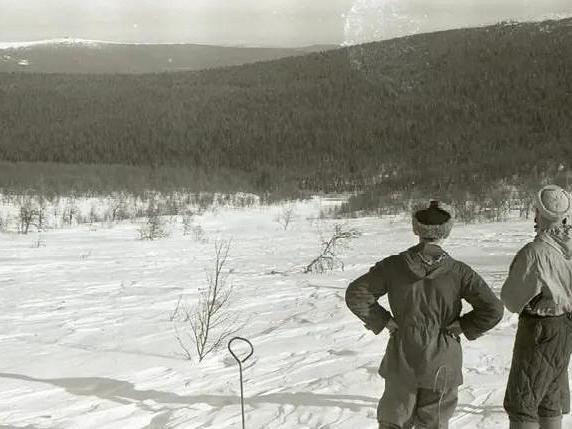

New details continue to surface in the Dyatlov Pass mystery.
A secret will left by a Soviet investigator and a brutal KGB staging operation — new revelations have upended the investigation into the deaths of the Dyatlov group. What really happened on the slope of Kholat Syakhl (Dead Mountain, Northern Urals), why did a suffocating gas from a military capsule drive the students to slash their tent, and how did cleanup crews fake the tracks of freezing tourists in the snow? We examine the man-made disaster theory that has forced the Dyatlov Pass mystery to be discussed with renewed intensity.
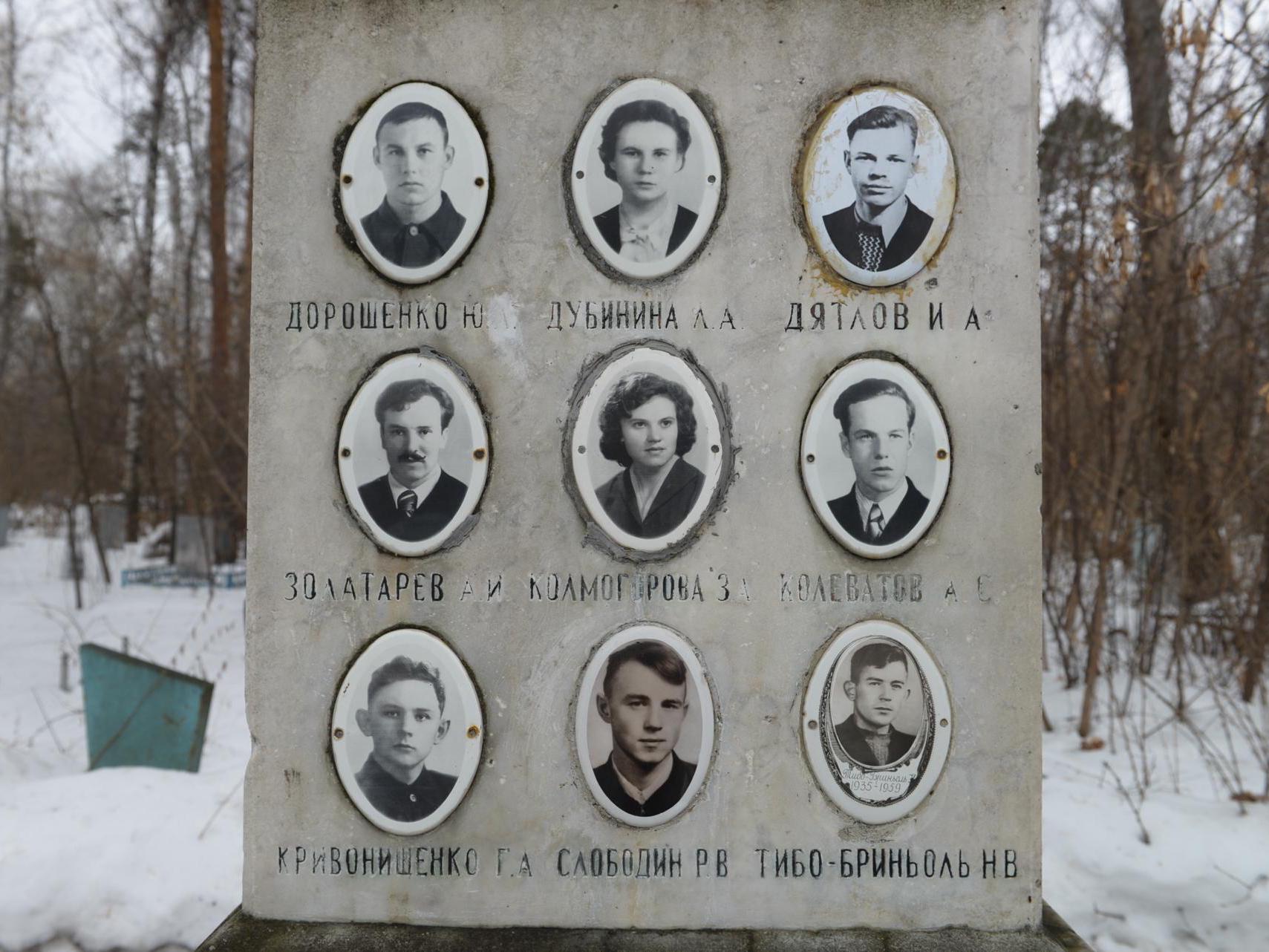
The incident at Dyatlov Pass claimed the lives of nine people.
«The corpses were the color of red brick»
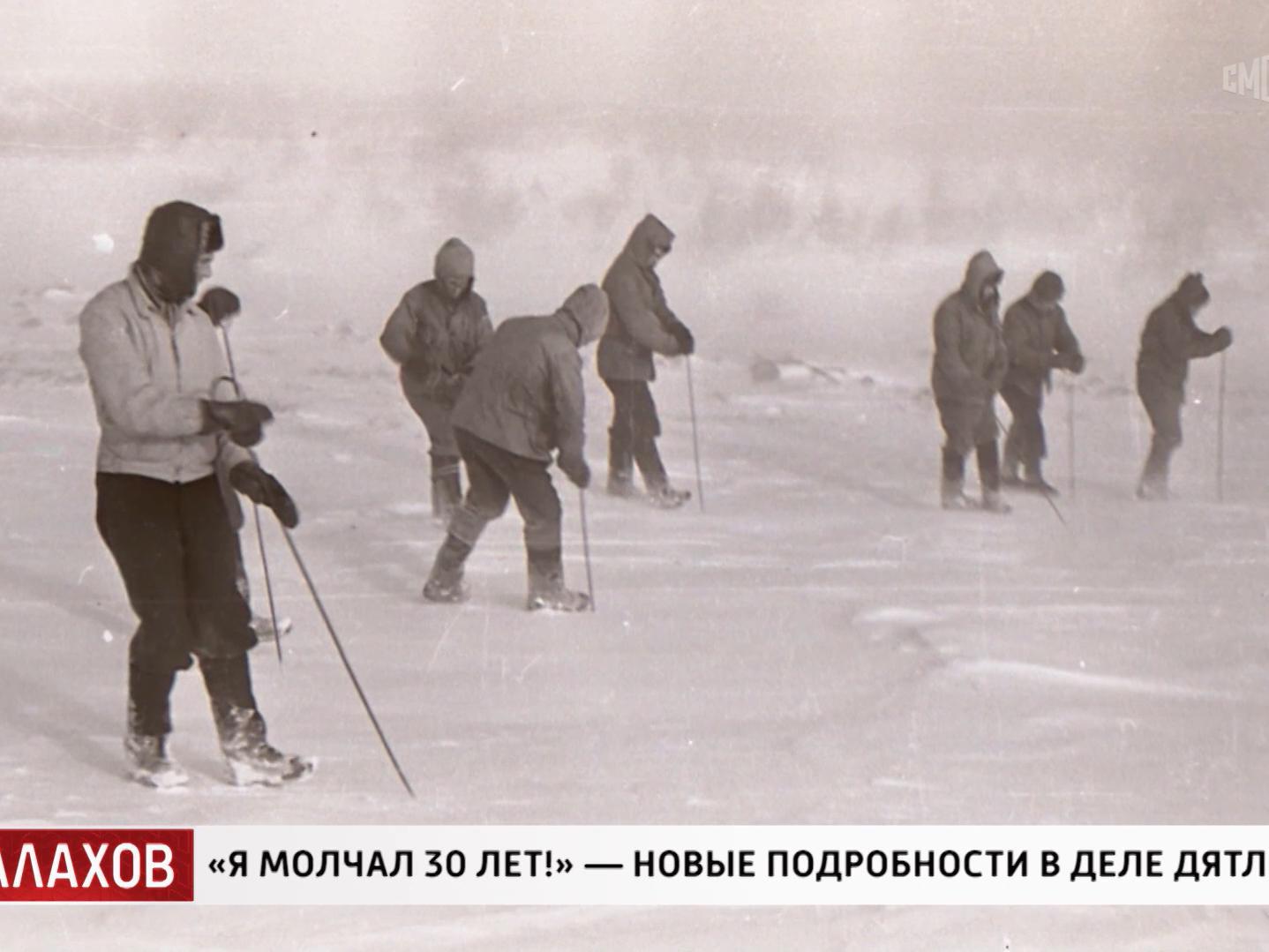
According to Viktor Iosifovich, the soldiers who went to search for the Dyatlov group carried bags with gas masks, which raises some questions.
For nearly 70 years, searchers and researchers have struggled to unravel the deaths of the Dyatlov group in the Ural Mountains, and each theory forces a fresh look at the situation. Not long ago it was said that the students were poisoned, and now other details of the high-profile case have emerged — they were revealed on the program «Malakhov» (16+).
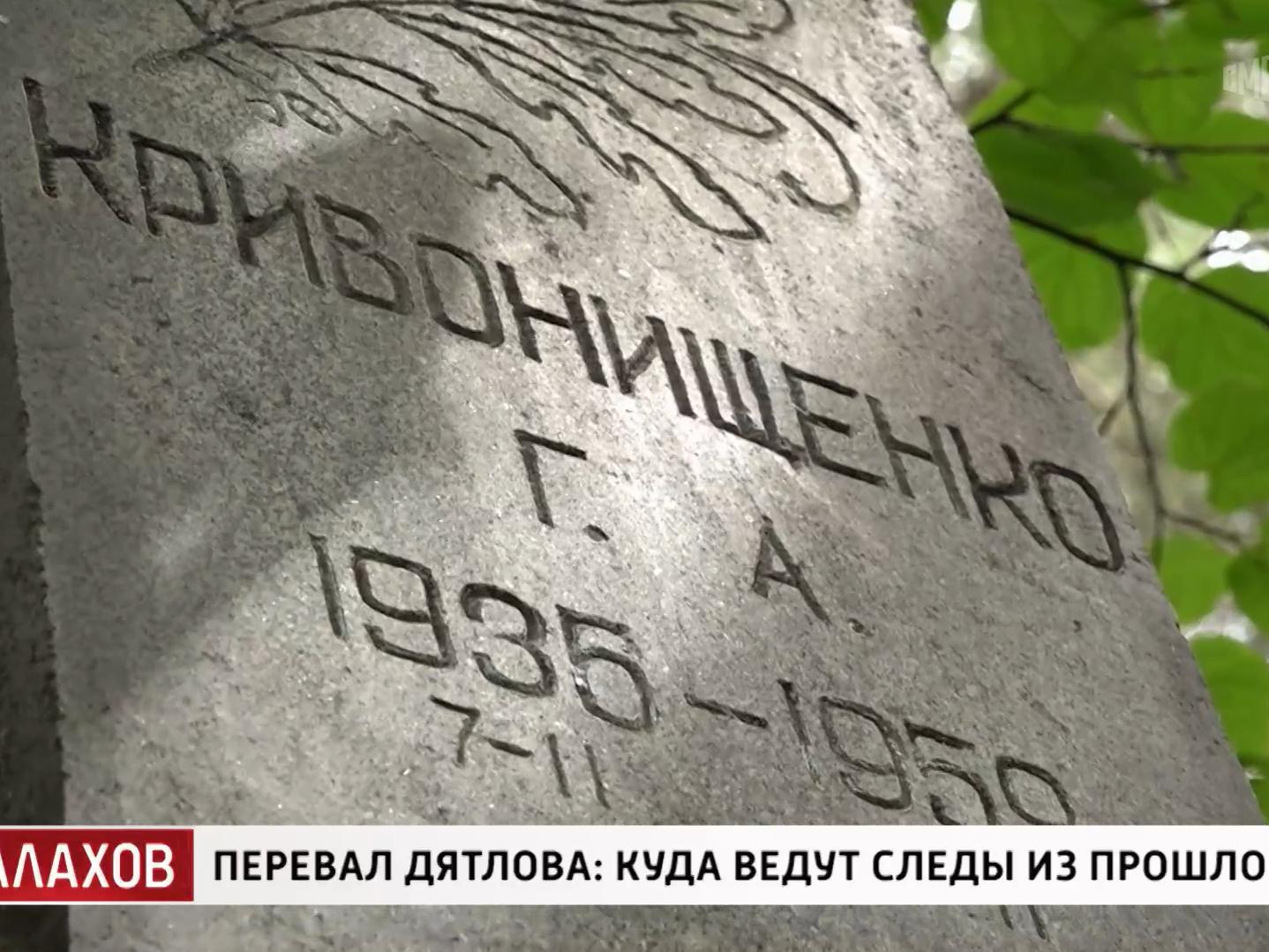
The radiation level at Georgy Krivonishchenko«s grave turned out to be higher than on the ground nearby.
This time the discussion concerns the testing of new weaponry. Researchers found eyewitnesses who worked in the same area as the Dyatlov group and claim they saw a fireball, while the tourists« relatives recall that the victims» bodies were brick-colored, indicating chemical burns.
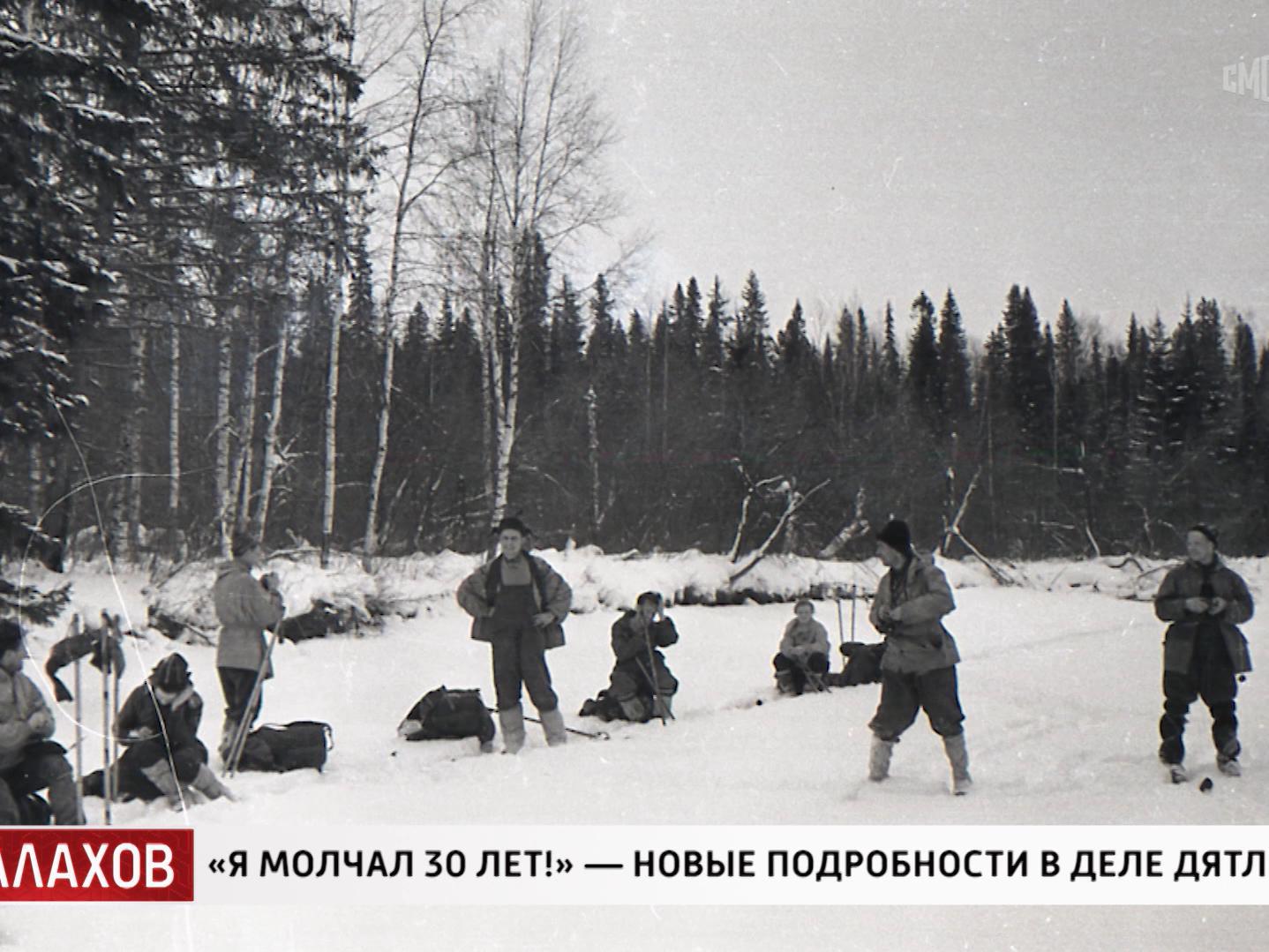
The mystery of the Dyatlov group«s deaths still gives researchers no peace.
Writer and researcher Oleg Arkhipov, author of four documentary books on Dyatlov Pass, spoke with geologist Eduard Khodorchenko, who worked near the site of the Dyatlov group«s deaths in February 1959. The man described how he was once resting after a shift when he suddenly saw «a huge, huge red ball» in the window, and soon after that planes began flying in the sky.
— Then a few days later they tell us that students have gone missing. They search for them, the Mansi start dragging things around, saying they cut the tent with knives. And then, when the searches began, there were no planes, they weren«t flying, — says Khodorchenko. — I flew a lot and am familiar with pilots» maps. A red square right in that area — flights are prohibited. At the time there was a theory that they were testing some kind of bomb that destroys oxygen in the air. Now I recall all this, connect it together. My deep conviction is that this is a catastrophe connected with the development of new military technology.
Alexander Shevchenko — a great-nephew of one of the Dyatlov group, Alexander Kolevatov — also speaks of weapons testing. His family never even considered other theories.
— Aunt Vera (Alexander Kolevatov«s sister. — Editor»s note) always told only one version: that it was a weapons test. Those same balls — where did they come from? Plus she also said she saw the corpses, and they were the color of red brick. And as a chemist she said that this indicates precisely chemical burns. Possibly either an oxidizer or fuel had been spilled, — says Shevchenko.
«They were all contaminated»
Viktor Iosifovich also speaks of military tests of the newest type of weaponry. This man calls himself a close friend of prosecutor Boris Chudny, to whom investigator Lev Ivanov, before his death, bequeathed the task of publicizing the true causes of the tourists« deaths. According to him, the epicenter of the events was the area known as the Wild Goose valley — it was there that a powerful controlled explosion of a special capsule occurred.
Immediately after detonation, a military detachment moved into the affected zone. The task of the special services included the rapid collection of samples of air, soil, and local water to assess the effectiveness and consequences of the secret weapon«s use.
Advancing along the assigned route and climbing the slope of Kholat Syakhl, the soldiers noticed a dim light in the darkness. Approaching closer, they stumbled upon the camp of Sverdlovsk students. The Dyatlov tent had already been brutally slashed from the inside, but the young people themselves were not nearby — the camp was completely empty.
Viktor Iosifovich claims the KGB acted with lightning speed. Immediately after the incident, the special services conducted a large-scale operation to fully decontaminate and clean the entire surrounding territory to destroy any clues.
— When this terrible event happened, the KGB took measures to clean the territory of traces. They removed all of it, — says Viktor Iosifovich. — There were no other victims besides the tourists. But there were animal deaths. Wolverines, bears, and deer were there. They cleaned everything up and threw all the animals into a stream so they would decompose faster. So near this place there is no one and nothing.
The witness finds it difficult to say exactly where the contaminated debris was taken and disposed of. But he adds that when the capsule exploded, there was a chain reaction.
— And the powder that remained on the tourists« clothing is the precipitation of the substance after the explosion. That is, they were all contaminated by radiation, — the man asserts.
Alexey Koskin, chairman of the board of the Dyatlov Group Memory Foundation, went to the cemeteries where the Dyatlov group members are buried to measure radiation levels on their graves. At the burial site of Georgy Krivonishchenko, the dosimeter showed 18 microroentgens per hour.
— This is within background levels, it is not dangerous, — Koskin assured.
For comparison, the specialist placed the dosimeter on the ground in another location — it showed 6 microroentgens per hour. At Zolotarev«s grave — 12. Alexey Koskin conducted the same experiment at Mikhailovskoye Cemetery, where most of the Dyatlov group is buried. At the grave of Nikolai Thibeaux-Brignolle, the dosimeter showed 15 microroentgens per hour. On the ground further away — 6.
— It is difficult to draw conclusions here, but some reflections have a right to exist, — noted Koskin.
«Died under strange circumstances»
In addition, Alexey Koskin spoke about the fate of pilot Gennady Patrushev, who took part in the aerial search for the Dyatlov group and was one of the first to find the tent and the bodies. The pilot threw himself actively into the work and until the end tried to find out what had happened at Dyatlov Pass. But he never finished what he started.
— Unfortunately, in May 1961, two years after the tragedy, Gennady Patrushev died in a plane crash. His wife claims he died under strange circumstances. He flew not in his own plane — they gave him another one, and there was a malfunction. According to the widow, he was deliberately sent on a faulty plane. And he never returned from that flight, — Koskin said.
Soon after Patrushev«s death, his friend — KGB captain Sergei Misharin, who had helped the pilot in the searches — also died. Misharin committed suicide.
— It is quite strange that both of these people, according to the testimony of their friends and relatives, were actively involved in this topic and they died almost simultaneously, — notes Koskin.
In our time, researcher and traveler Vladimir Rykshin conducted an expedition to search for pilot Patrushev«s plane. After learning from a local resident that there were remnants of a plane not far from the site of the Dyatlov group»s deaths, he and colleagues went there.
— They went there with good equipment, with a metal detector, with radiological equipment, and they found the remnants of the plane, and they had a fairly high radioactive background. They even got scared and moved away from the spot because the background was high, — says Koskin.