Volgograd Drivers Face Winter Diesel Fuel Shortage
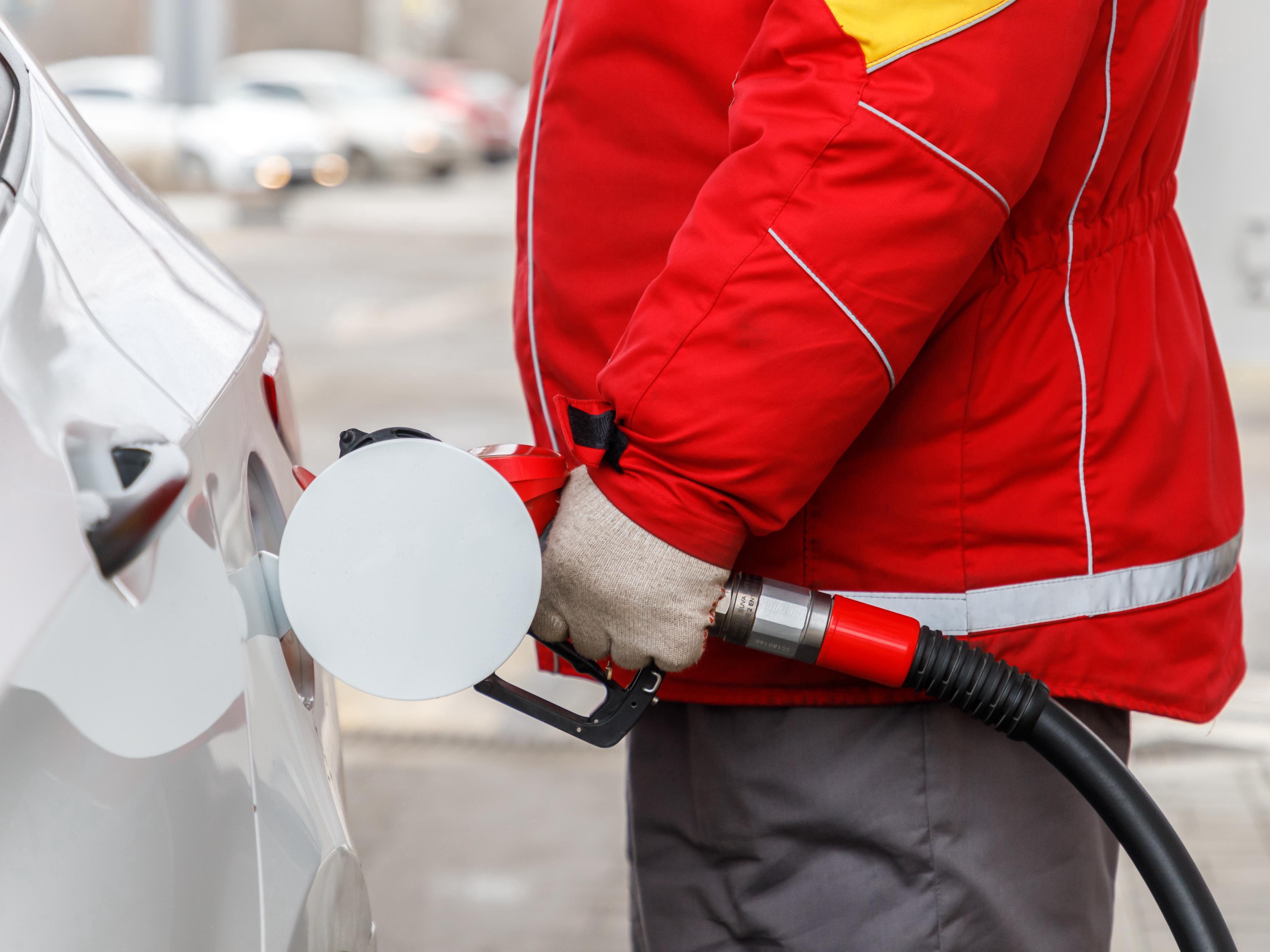

Owners of diesel cars in Volgograd have encountered an unexpected problem: winter diesel fuel cannot be found at some gas stations. Warning signs are even posted on the pumps, but station employees cannot say when frost-resistant diesel will appear.
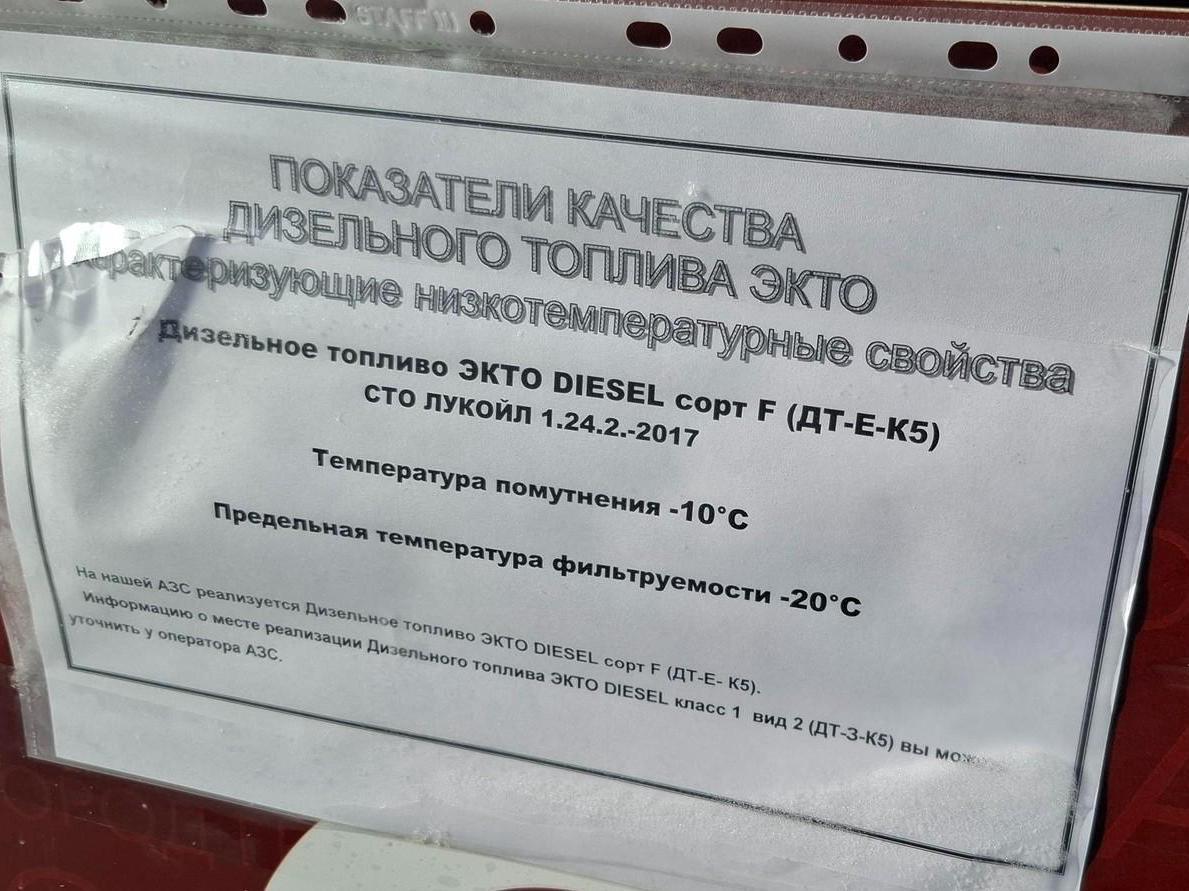
«Check with the gas station operator for information»
According to motorists, a shortage of winter diesel, which does not cloud in cold weather, has been observed for several weeks. Against the backdrop of cooling temperatures and rising prices, warnings are posted at some Lukoil stations: the fuel being sold may not withstand cold down to −30°C (-22°F).
«Our station sells EKTO DIESEL grade F (DT-E-K5) diesel fuel. Cloud point −10°C (14°F), cold filter plugging point −20°C (-4°F). Information on where EKTO DIESEL class 1 type 2 (DT-3-K5) diesel fuel is available can be obtained from the gas station operator.»
Station employees, in a conversation with a journalist who arrived under the guise of a customer, confirmed that the diesel being sold is off-season and may not cope with the frost. They recommended going to another station of the same network to find the winter grade.
At a Gazprom station, they stated that the fuel is winter-grade, with a cloud point of −20°C (-4°F). At one of the Rosneft stations, they also promised to fill up with frost-resistant diesel that can withstand down to −30°C (-22°F).
An official inquiry has been sent to the press service of Lukoil-Yugnefteprodukt to clarify the reasons for the shortage and delivery delays.
«The engine won«t be damaged. It just won»t start»
Large landowner and diesel car driver Arkady Dudov reported that he does not experience difficulties refueling at «red» stations. According to him, even in severe frosts, the equipment starts without problems.
«I basically only refuel at two stations. At the corner of Hiroshima and Parkhomenko, as well as at the Samara junction. I«m not really a fan of any promotions or advertising, but I haven»t seen any announcements,» the landowner noted. «Even if there is off-season diesel there, the equipment starts right up, and there are no problems with fuel in general. The real cold was four years ago, around −28 degrees (-18°F). I drove in such temperatures both to the farm and to the collective farm, nothing froze. I don«t use other stations, especially since if something happens, you know who to hold accountable.»
Auto consultant Vladimir Mityaev explained what can result from refueling with fuel that is «not for the weather.» Although he does not forecast serious engine damage, some elements of the fuel system may require replacement.
«The simplest diesel fuel withstands temperatures down to −5°C (23°F). Otherwise, paraffinization begins in the tank. When fuel starts to «paraffinize,» it thickens, and it«s impossible to return it to a liquid state until it can be thawed,» commented the auto consultant. «The original state can only be restored in a warm garage or box. The first things affected are the fuel supply tubes and filters. The channels get clogged, and the car won»t be able to «pump» the diesel. This won«t affect the engine at all, because it simply won»t start. Nowadays, special materials are used that supposedly can help, but it«s unknown how this will affect injector operation in the future. Even incorrect refueling of modern diesels with gasoline or chemicals can disable them.»
«It«s just not profitable»
The auto consultant also explained the difference between winter and summer diesel fuel and suggested possible reasons for the shortage.
«Winter diesel differs from summer diesel in sulfur content. Depending on the amount, it prevents the diesel from «paraffinizing» at lower temperatures and makes the fuel more «fatty.» During the Soviet era, there was «Arctic» diesel fuel with high sulfur content, but it was not eco-friendly. If there is no sulfur at all, the injectors will fail right before your eyes,» the expert clarified. «The price of diesel intended for northern regions is 30% higher than regular diesel — this is publicly available information. Volgograd is considered a southern region, so it«s not profitable for them to sell the fuel here. Previously, when I worked at another enterprise, I already encountered a shortage of »winter diesel« specifically at this network; it»s not delivered everywhere. I had to transport the SUV on a tow truck a couple of times during the winter and take fuel filters «just in case.»»