Why children forgot how to play alone
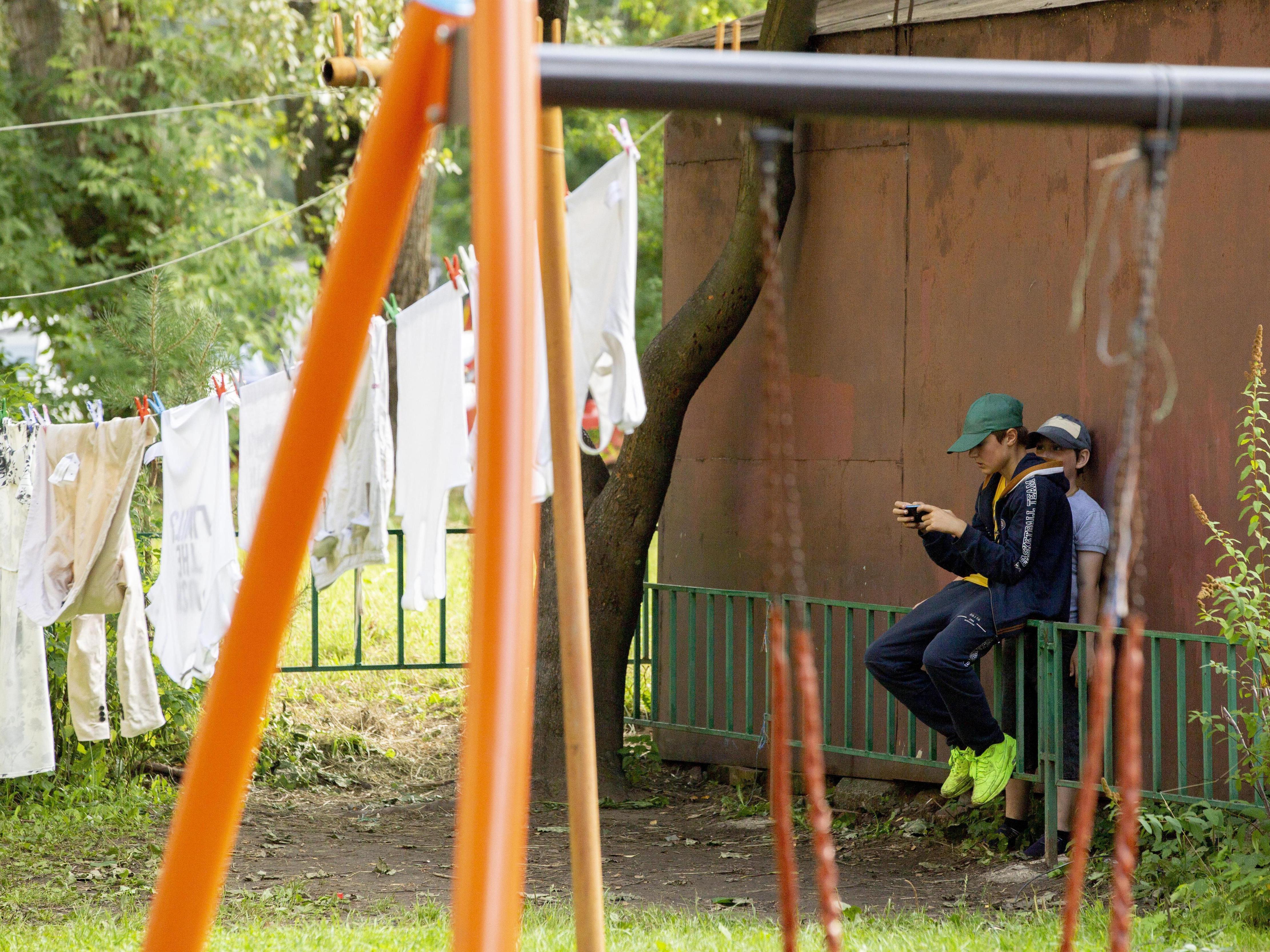

This year, for the first time, I caught myself having a thought that I«m even ashamed to say out loud. I»m counting the days until September 1. Not because I don«t love my son. Quite the opposite. He»s 11. He didn«t go anywhere for the summer. No camp, no trip to grandma»s, no familiar school routine. I work from home. He«s at home too. Every day.
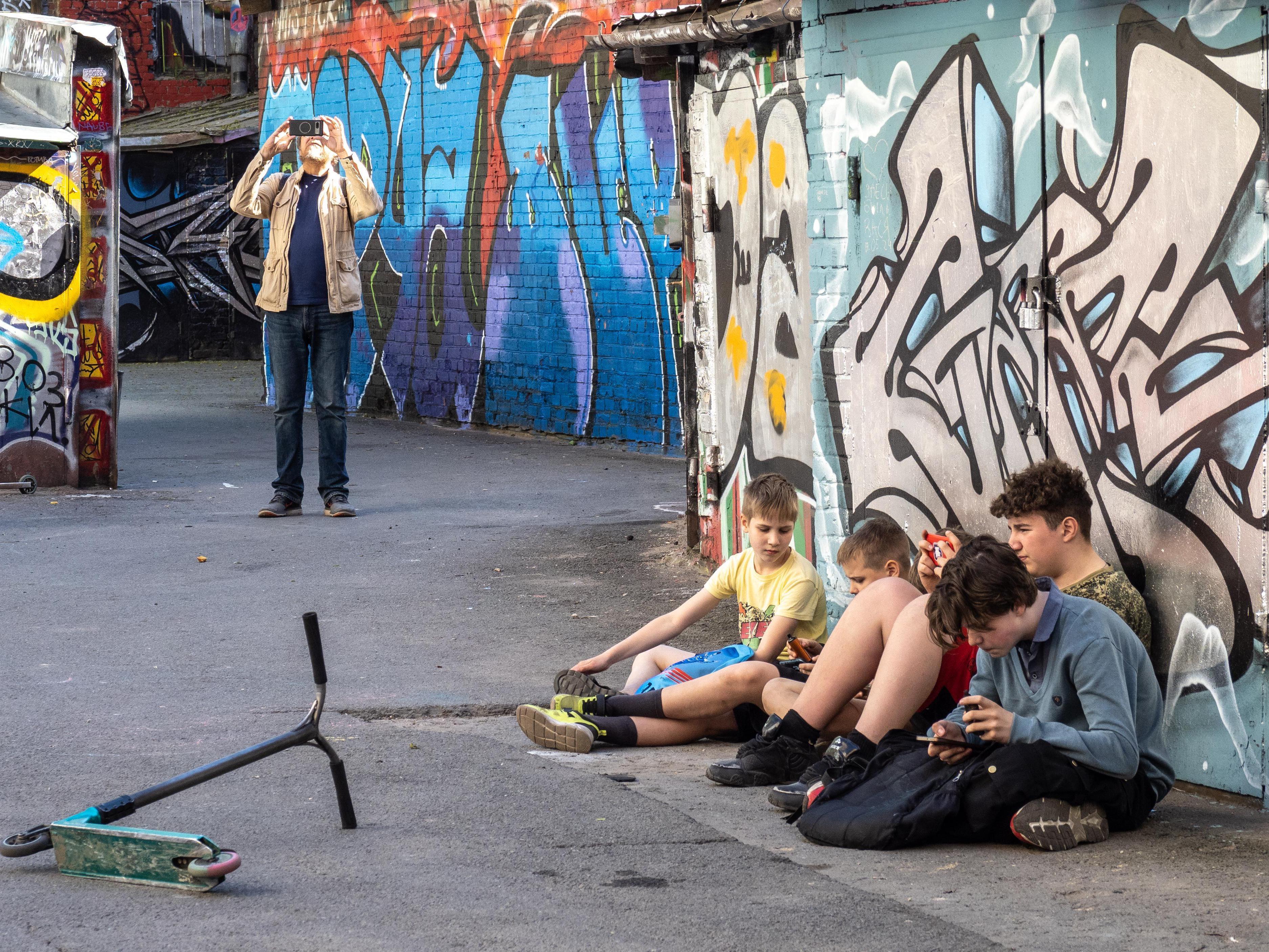
At first I threw myself into battle. It seemed the problem was simple: just come up with more interesting activities. We went for walks, found new places, rode bikes, went to the Volga. I checked city event listings more often than my work email. But soon enough, the same phrase echoed again: «Mom, I«m bored...»
Honestly, at first I took those words as a personal failure. Does that mean I«m not trying hard enough? Not entertaining enough? Am I a bad mom? Then I noticed a strange thing: the more I tried to fill every free minute, the faster my son got bored again.
At some point I stopped blaming myself and decided to figure it out. Maybe modern children really experience free time differently? And why exactly in summer do parents confess to each other that they dream of the start of the school year?
With these questions, our colleague from 63.RU turned to psychologists, doctors, and educators. And it turned out that the problem is much deeper than it seems.
Why children aged 10–12 are more often bored
Eleven years old is almost an adult age. The child already goes to the store alone, stays home alone, knows how to use a smartphone better than his parents. But experts call this age one of the most difficult. The child has outgrown simple games but has not yet learned to organize his own life.
Doctor-psychiatrist-narcologist, founder of Dr. Kalyuzhnaya«s Clinic, Marina Kalyuzhnaya says that parents often misunderstand the very nature of boredom: «When a child says, »I«m bored,» adults perceive it as a request to immediately find entertainment. In fact, most often he is reporting something entirely different: it is still difficult for him to come up with something to do on his own. This is a normal stage of growing up. The skill of organizing one«s free time does not appear on its own.»
According to the specialist, modern children generally have a harder time than previous generations. Twenty years ago, summer was spent in courtyards where games arose spontaneously. You had to negotiate, come up with rules, find ideas. Today, most entertainments are ready-made — just open your phone. And that is precisely why a child finds it unusual to be left alone with his thoughts.
«Boredom is not an enemy but a very important state, — continues Marina Kalyuzhnaya. — It is in such moments that imagination begins to work. As long as an adult does not interfere every five minutes, the child gradually learns to find ideas on his own.»
This sounds unexpected. But specialists say: boredom is not a problem that needs to be urgently eliminated. It can become the beginning of independence.
Why ordinary life seems boring after the phone
However, there is a reason why modern children really find it harder to tolerate free time. Gadgets.
And it«s not about the phone being evil. Experts claim the problem is different. The screen constantly offers ready-made emotions. Every few seconds — a new image, a new video, a new game, a new story. The brain gets used to receiving pleasure almost without effort.
Psychologist Evgeny Guryev explains: «Attention works much like muscles. If a person stops training, it becomes difficult for him to perform even habitual loads. The same happens with concentration. When a child spends hours switching between short videos, it becomes harder for him to engage in one activity for a long time — reading a book, building something with his hands, or simply playing without a ready-made script.»
Psychologist Kubat Kanimetov notes that over time, the gadget begins to perform not only an entertainment function for the child but also an emotional one.
«Very quickly, the phone becomes a way to cope with almost any experience. Bored — opened a video. Sad — turned on a game. Anxious — started scrolling through a feed. Gradually, the child gets used to not living through emotions but switching away from them with the help of the screen.»
According to the specialist, that is why the task of parents is not just to limit time with gadgets but to help the child master other ways of dealing with his feelings.
«When a child learns to experience boredom, wait, fantasize, find an activity on his own, he develops emotional stability. And it is this skill that helps him in the future to cope with stress without the constant need to be distracted by the screen.»
That is why, experts explain, after several hours on the phone, an ordinary day can seem too slow, too quiet, too boring. In fact, the world around has not changed. The brain«s expectations have changed.
Why parents start waiting for September 1 in summer
When I first started collecting comments for this article, I thought the main problem was children«s boredom. But almost every expert unexpectedly turned the conversation to parents. Because it is adults who by mid-July are most often emotionally exhausted.
During the school year, family life is organized clearly. In the morning everyone goes their separate ways. School. Work. Clubs. Homework. Even if parents are tired, each has their own space. In summer, this system collapses. Children stay home. Parents continue to work. And suddenly it turns out that the adult must simultaneously hold a meeting, cook lunch, answer work emails, and come up with something for the child to do. Not once. But every day. For weeks.
That is why many parents catch themselves thinking: «When will summer be over?» It«s scary to say it out loud. It seems that such thoughts mean a lack of love. But psychologists say the opposite: love and fatigue can perfectly coexist. A parent also has the right to be tired.
Psychologist Larisa Verchinova says that in summer the amount of emotional load sharply increases: «During the holidays, an adult often finds himself in several roles at once. He remains a parent, continues to work, becomes an entertainment organizer, a teacher, a driver, a cook, and the person responsible for literally every free minute of the child. Such constant switching very quickly depletes emotional resources.»
It is especially hard for those who work remotely. For a child, mom or dad is at home. That means they are available. For an adult, it is a workday. But explaining this difference to an eleven-year-old child is not always easy. Every twenty minutes comes: «Mom... Look... Can I... I«m bored...» At some point, it is not the request itself that starts to irritate, but its endless repetition. And this is an absolutely normal reaction.
Family psychologist Rodion Chepalov believes that in summer many families face an unexpected problem — too much free time: «Parents think that the child has finally gotten the long-awaited freedom. But freedom is also a skill. If a person has never learned to plan the day independently, it is difficult for him to suddenly manage twelve free hours.»
According to the specialist, that is why children need benchmarks. Not a strict schedule planned to the minute, and not complete chaos, but an understandable structure for the day. For example, the child knows that in the morning he helps around the house, then goes for a walk, after lunch he can play or meet friends, in the evening the family spends time together. Such simple agreements reduce the number of conflicts. And importantly, they gradually teach the child to manage his time.
The parent is not an entertainer
The hardest feeling, familiar to almost every mother, is guilt. The child is bored. That means I organized the holidays poorly. The neighbors« children go to camps. Friends have new photos from excursions every day. On the internet — perfect parents who come up with something incredible every week. And involuntarily you start comparing.
Psychologist Olga Ivanova believes that many parents try to instantly relieve the child of boredom because they themselves feel anxiety: «It seems to us that if a child is bored, we have missed something. But in fact, the desire to immediately fill every free minute is rather an attempt by the adult to cope with his own feeling of guilt.»
According to the specialist, sometimes the best way to help a child is to stop rescuing him from every minute of boredom.
«If an adult constantly offers ready-made activities, the child gets used to expecting ideas to come from outside. And when we pause for a little while and do not rush to intervene, he has the opportunity to come up with a game on his own, find an interesting activity, or simply be alone with his thoughts. This is how independence gradually forms.»
Why social media makes us feel like bad parents
Psychologist Nika Bolzan is sure that today the feeling of parental guilt is largely fueled by social networks. We see beautiful photos. Trips. The sea. Camps. Family picnics. It seems that everyone around is having the perfect summer. Except us.
«In fact, we compare our real life with someone else«s shop window, — the specialist explains. — No one posts photos of tantrums, fatigue, or days when the whole family just sat at home. Because of this, a feeling arises that only we are not coping.»
That is why the psychologist advises to stop evaluating your holidays through other people«s posts. For a child, it is much more important not the number of trips, but the feeling of security, a calm atmosphere at home, the opportunity to talk, a shared dinner, an evening walk. These are the moments that children most often remember years later.
What to do if patience runs out
Marina Kalyuzhnaya suggests starting not with the child but with oneself: «Parents often try to stay calm until the last moment, and then they snap. It is much more useful to notice the moment when fatigue just begins to accumulate and give yourself a short pause.»
It could be just ten minutes. Drink tea. Sit in silence. Step out onto the balcony. Take a few deep breaths. Such a short rest helps not only the adult. It allows you not to transfer your irritation onto the child.
Nika Bolzan adds that it is very important to honestly talk to children about your state. Not shouting. Not giving long lectures. But calmly explain: «I am tired now. I need a little time to rest. We will talk later, for sure.»
Such words are much better understood by a child than an irritated shout. And at the same time, he learns an important skill — to respect other people«s boundaries.
Sometimes the best day is the most ordinary
While I was writing this material, I caught myself thinking that most of my childhood memories are not at all connected with expensive entertainment. I almost don«t remember the cost of trips or the menu in cafes. But I remember perfectly evening games in the yard, trips for ice cream, the smell of hot asphalt after rain, conversations in the kitchen.
Perhaps that is the main secret of a good summer — not to make it perfect, but to live it together. Without a constant race for impressions. Without the feeling that every day must be a holiday. Because a child needs a calm adult nearby much more than a tired entertainer who is afraid to leave him alone with boredom.
Should children study in summer or be left alone?
Perhaps no question causes as much controversy among parents as summer activities. Some believe that three months without studying is too long a break. Others are sure: the child worked all year and deserves a full rest. Where is the truth? As it turned out, both sides are right in their own way.
Teacher Anna Soldaeva believes that the main mistake of parents is to perceive summer as a continuation of the school year: «When vacations turn into a second school, the child very quickly loses motivation. It is important to maintain interest in knowledge, not to force him to complete as many assignments as possible.»
According to the specialist, in summer learning can look completely different. Without notebooks, without grades, without tests. Math — during shopping. Geography — while traveling around your hometown. Biology — during a walk in the park. History — when talking about old buildings in Samara. The child continues to learn. He just doesn«t notice it.
Why some knowledge really does get lost
At the same time, specialists do not advise completely forgetting about studying. Teacher Lyudmila Dragonevskaya reminds of a phenomenon called summer slide — a decline in academic skills during the summer: «After three months of rest, children really do find it harder to return to their usual workload. This is especially true for reading, writing, arithmetic, and foreign languages. But this does not mean that in summer you need to solve dozens of examples daily. It is much more effective to study a little but regularly.»
For example: read for 15–20 minutes a day, solve a few interesting problems, play logic board games, listen to audiobooks, keep a travel or observation diary. This way, the child retains the skill without feeling that the vacation ended early.
Curiosity is more important than grades
Nataliya Koz«yakova suggests parents ask themselves a simple question: what is more important — that the child completes a hundred exercises or that he still wants to learn something new?
«A good summer is not the one after which the child solved a thousand examples. It is the summer after which he wants to ask questions and seek answers.»
According to the expert, vacations offer a unique opportunity to go beyond the school curriculum. If a child is interested in space, he can study space. Loves animals — look for information about animals. Into technology — take apart how mechanisms work. Interest becomes much stronger than any coercion. That is why specialists advise in summer to bet not on control but on curiosity.
«If a child read five books over the summer of his own free will, that is much more valuable than fifty pages that he slogged through with a «I don»t want to.«»
What you can do for free
And what should parents do now? The answer is unexpectedly simple: stop thinking that a good summer must be bought.
In summer there are plenty of free events: city festivals, library programs, family master classes, outdoor film screenings, excursions, museum promotions. But psychologists say: do not turn every week into a compulsory cultural program.
Sometimes it is enough just to change the usual route. Instead of a shopping mall — a walk through the old town. Instead of another hour on the phone — a bike ride along the embankment. Instead of a cafe — a picnic in the park. You can invite the child to come up with a route himself, find the oldest building on the street, photograph unusual balconies, count monuments, compile a map of favorite places.
Such walks do not require large expenses but teach you to notice the city in which we live. And sometimes that is exactly what modern children lack.
Checklist for parents
Do not try to fill every minute of the child«s day;
Do not be afraid of the words «I«m bored»;
Do not compare your summer with other people«s photos on social media;
Do not try to replace friends, the yard, camp, and the whole world;
Maintain a clear sleep and meal schedule;
Make sure the child drinks enough water and moves every day;
Talk. Read together. Cook together;
Allow the child to make mistakes, look for ideas, and sometimes do nothing;
And be sure to leave time for yourself. A tired parent does not become better from guilt.
Boredom is sometimes useful
When I started writing this material, I thought it would be about how to entertain a child in summer. But it turned out to be a completely different story. It turned out that children do not always need new impressions. Sometimes they need pauses. Time without a schedule. The opportunity to come up with something on their own.
And parents, perhaps, need to allow themselves not to be perfect. Not to be entertainers. Not to be organizers of an endless holiday. But just moms and dads.
As Marina Kalyuzhnaya said: «If we rescue a child from every minute of boredom, we deprive him of the opportunity to learn to create something himself.» That is probably the main discovery of this summer.
Yesterday my son said again: «Mom, I«m bored.»
I smiled: «Well, be bored. They say sometimes it«s useful.»
About forty minutes later I looked out into the yard. In the middle of the plot stood a strange fortress made of old boxes, boards, and a clothesline. Nearby lay a hammer, a plastic bucket, and a pile of some «very necessary» sticks.
«What is this?» I asked.
«I don«t know yet,» he replied. «But I»m already curious to see what happens.»
And it seemed to me that this is exactly what a real summer should look like.