Siberian Woman Grows 563 Tomato Varieties
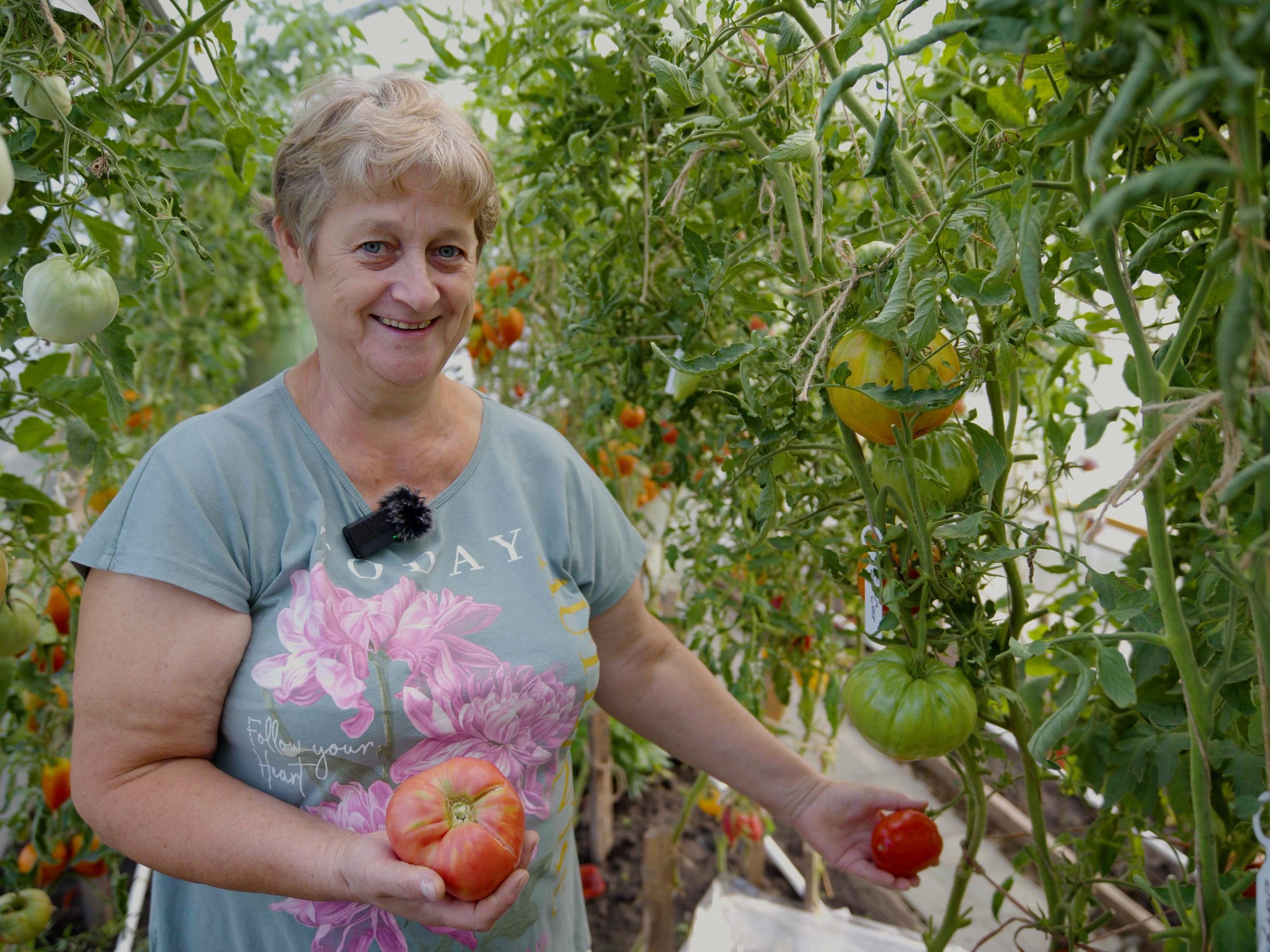

Natalia Semchuk is 61 and happily tends her garden in retirement
For several years now, gardeners around Novosibirsk have known the name Natalia Semchuk. Among themselves, they have nicknamed her the Tomato Queen — and with good reason: the Siberian woman«s collection contains more than 500 tomato varieties, from popular ones to the rarest. She grows tomatoes in three greenhouses and sells the seeds at garden fairs. People are willing to not just stand in line for them, but even travel from abroad. NGS correspondents visited Natalia at home to learn the secrets of growing a rich and tasty harvest.
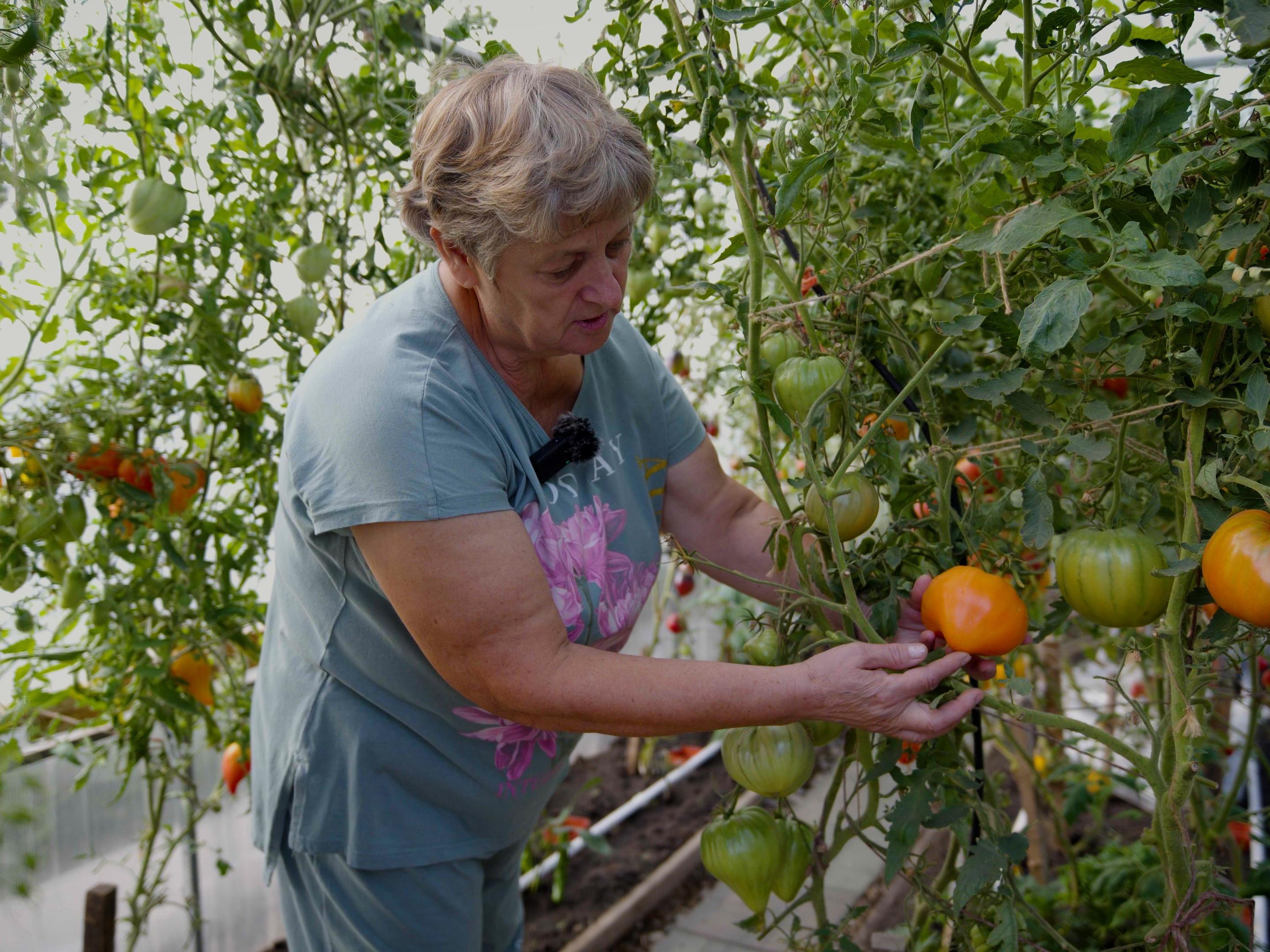
The key to tomato care is proper watering and pruning
“Enough to keep my pants up and put butter on my bread”
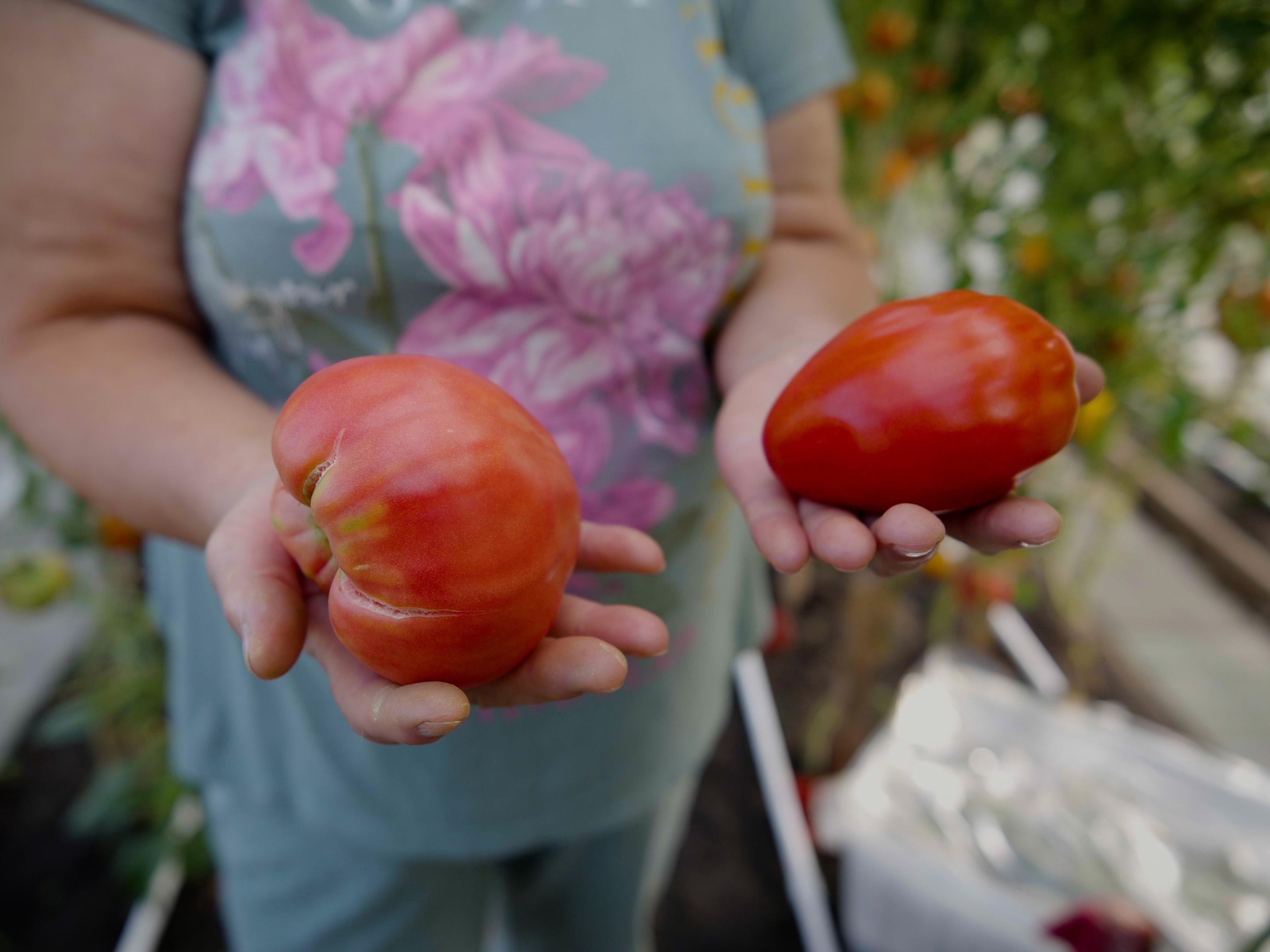
Some tomatoes can weigh more than a kilogram
In 2018, Natalia Semchuk and her husband moved into a private house with her father-in-law to help him with the household. The move proved fateful for the woman. The man was passionate about growing tomatoes and quickly got his daughter-in-law involved. Together they began expanding the garden on just 0.18 hectares (0.44 acres). They enthusiastically discussed while watching TV what to plant and which varieties to “order.” That is exactly what they did — they waited for the desired seeds by mail from collectors all over Russia.
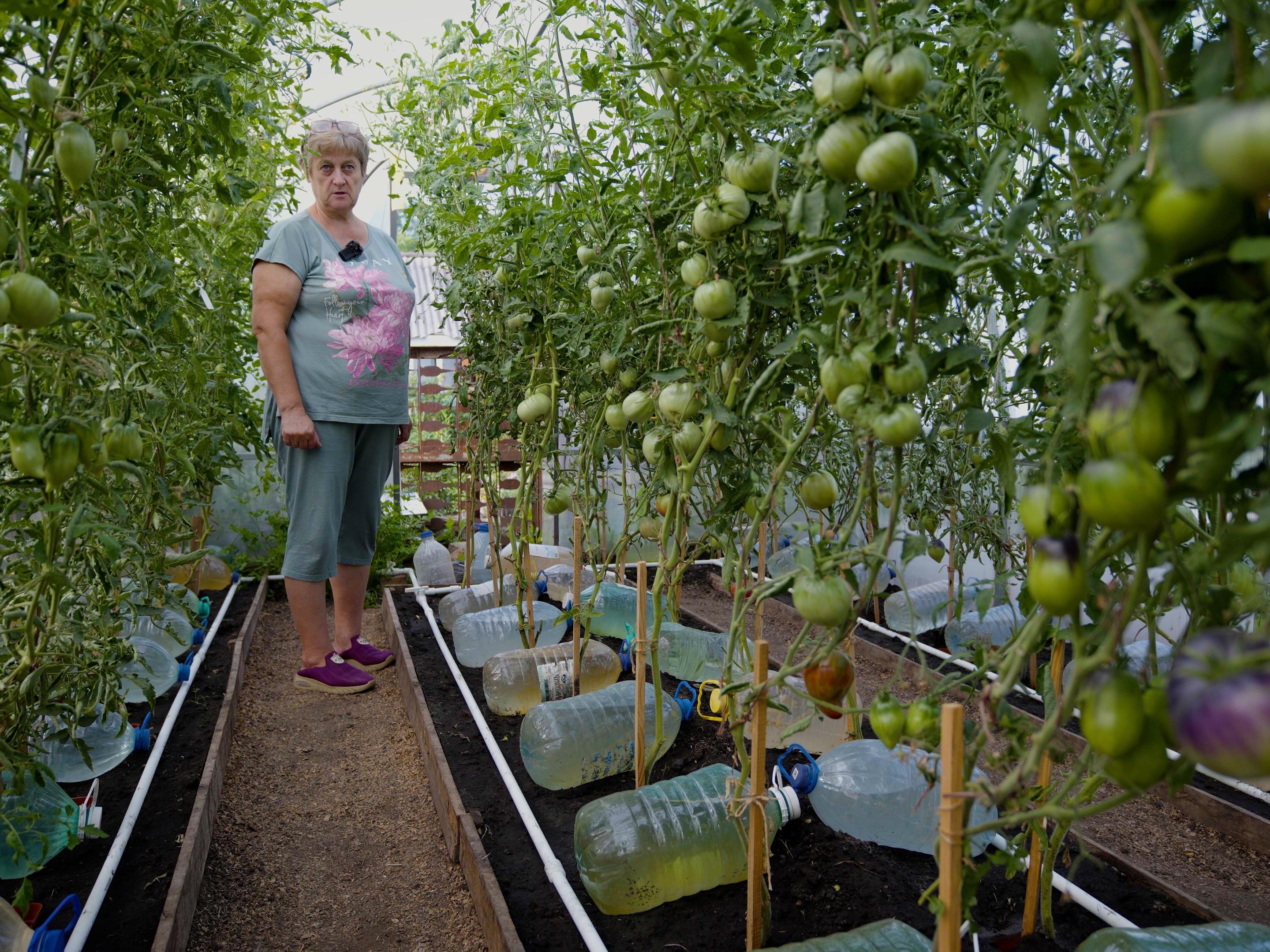
Bottles of water help maintain the optimal temperature in the greenhouse
Gradually, the number of packets exceeded one hundred. The father-in-law passed away five years ago, but Natalia did not abandon the collection. On a tiny plot, she managed to fit three greenhouses, leaving part of the land for an open garden.
A walk through Natalia«s tomato greenhouses
“According to my latest count, I now have 563 varieties. I don«t plant them all every year, but that is everything in the collection. There are favorite varieties that I grow every year. And there are new ones,” Natalia Semchuk noted.
She emphasized that she grows varieties, not hybrids. The difference between them is significant. Varietal plants have stable traits, and their seeds retain all the properties of the parent bush. A hybrid is the result of crossing several lines. If you take seeds from such a bush, it will easily split back into those parent lines.
“You can plant varieties, harvest seeds, and get the same plant a year later or 10 years later,” the specialist noted.
Natalia prepares seeds every year, with help from her husband and three grandchildren. Her fourth granddaughter is only two years old, and her help so far consists of eating cherry tomatoes straight off the bushes. Asked how much one can earn selling seeds, the Siberian woman answers evasively.
“You can«t even call it a business. I just enjoy the growing process itself. I like going into the greenhouse and being glad that I have both yellow and fully green ripe fruits. There are striped ones, and ones with yellow skin but red inside — all kinds of tomatoes,” the woman lists. “Enough to keep my pants up and put butter on my bread.”
“Everyone got drawn in”
Natalia is now retired, but before that she worked for 20 years in an auto parts store. She once graduated from an aviation school and worked as a dispatcher for meeting and boarding airline passengers. It was at the airport that she met her husband, a meeting she recalls with particular warmth. The couple married just a month after they met and have now been together for 43 years. Yuri Anatolyevich helps his wife set up the greenhouses, care for the bushes, and prepare seeds. But at first, he tried to talk her out of the hobby.
“At first he said: ‘What«s this for? Why do you need it?’ And then everyone got drawn in,” Natalia laughs. “Two of our greenhouses now have heating. You turn on the cable for four days, the soil temperature reaches +16°C (61°F) — and you can plant. I plant tomatoes early; by the end of March they are already in their permanent spot.”
Natalia proudly shows off her greenhouses. At the entrance we are greeted by a special “device” — a wooden stick: with it, the woman determines whether watering is needed. It is enough to stick it in about 7–10 centimeters (3–4 inches) and pull it back out: if it is dirty, no watering is needed, but if no soil sticks to it, it is time to add moisture.
Also in the greenhouse are 5-liter containers of water: during the day the water absorbs excess heat, and at night it releases it. A thin covering material is laid on top inside the greenhouses to protect against condensation. It is clear that the vegetable grower approaches the matter not only with knowledge but also with love.
“I«m a tomato nut, as they say,” Natalia smiles, admitting that she talks to her plants. “When the first cluster swells to the size of a walnut, I remove the leaves. I come in with scissors: ‘All right, girls, the haircut has only just begun,’ and I start trimming them.”
“I feel proud that I«m not the only one who grew all this”
This year Natalia has many new varieties: “Minusinsk Flat Hearts,” “Alyonka Minusinskaya,” “German Taiwan.” Among her favorites are “French Cluster with a Nose,” “Minusinsk Brikadeiki,” “Uncle Chan«s Bull»s Heart,” and “German Red Strawberry.” She harvests hundreds of kilograms from her plot but does not count the exact yield. Part goes to seeds, part to neighbors, family, and preserves.
She added that there are no special secrets to growing them. Trimming leaves and side shoots, weeding, watering — that is all the care required. She applies fertilizers very sparingly. The Siberian woman is sure that every gardener can handle tomatoes, even if they make mistakes the first year.
“In the fall I prepare the soil in the greenhouse, because I start working with seedlings early. I fertilize with chicken manure before digging. And I add nothing else. When the seedlings are ready, I add wood ash to each hole. After that I watch the condition of the seedlings. For example, if there is blossom-end rot, I need to feed them calcium. And for the tomatoes to be sweet, I need to add potassium,” she readily shared her experience.
Asked how she rates store-bought tomatoes, Natalia begins to frown and shrug.
“They are just wooden tomatoes. At New Year we bought tomatoes for the holiday and lost them in the fridge. Three months later we took them out, and they were exactly as they had been — they hadn«t softened anywhere, hadn»t ripened fully. Wood is wood,” Natalia said indignantly. “But your own are your own. I«ve prepared pots; I want to plant some for the winter. And I»ll bring them into the house.”
The Siberian woman regularly sells seeds at fairs. Over the years, gardeners all over Russia and even abroad have learned about Natalia. People asked for seeds to be sent to Germany, Switzerland, and Denmark, and foreigners came to the exhibitions and fairs.
“When people come to an exhibition who have already bought seeds from me and say: ‘Wow, I grew them — I got such great tomatoes,’ I feel proud that I«m not the only one who grew all this, but other people too,” the woman smiles.
Natalia has no intention of stopping adding to her collection. She is sure there is still something interesting for her to try growing.
Interesting things about the garden
Bark cracking and scab appearing: how to save apple trees and the harvest — an agronomist«s advice.
A capricious but tasty berry: what zemklunika is and whether it is worth growing.