Pick Green: Harvest Tomatoes in Greenhouse and Garden


With the onset of the third decade of July, gardeners face new chores — it is important to harvest tomatoes on time to avoid losing them to fungal diseases. At the same time, they do not want to do it too early and obtain the maximum possible harvest. We look into the nuances of tomato care in the second half of summer together with an agronomist.

When to harvest tomatoes in the garden
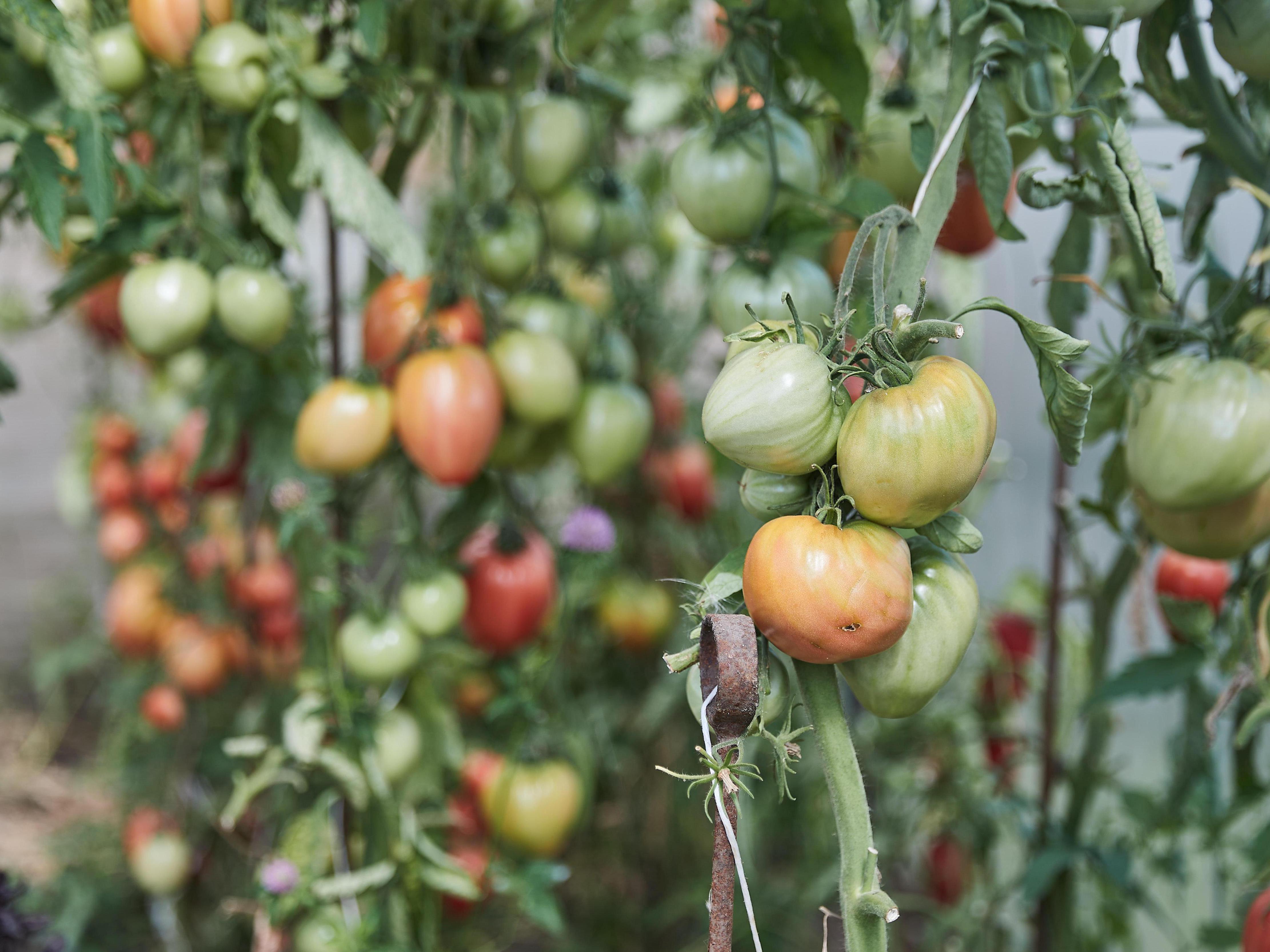
Because of the hot summer this year, tomatoes even manage to ripen outdoors, but you should not delay harvesting.
«It is also not worth picking too early. The weather is warm, nights are warm — let them ripen. As soon as the tomato reaches technical ripeness, that is, the mass according to the variety description, then you can pick it,» advises Lyudmila Shubina, agronomist and candidate of agricultural sciences. «There are varieties with a mass of 100 grams, and there are those up to 600 grams, that is what you need to focus on. Pick these tomatoes because they take strength from the bush for the growth of other fruits.»
You should also pick all tomatoes that have begun to change color — turn yellow or brown. They will ripen very quickly at home.
In Siberia, cold nights usually begin in the second decade of August. It is at temperatures of +9…+10°C (48–50°F) that late blight begins to actively develop and spread. Fruits damaged by the fungus cannot be saved.
«They can turn black even a couple of days after picking because the fungus develops quickly,» the agronomist warned. «Such black tomatoes are not suitable for dishes or preserves. You will simply have to throw them all away.»
The specialist advises picking most of the tomatoes in open ground by August 7–10, and by August 20 remove the entire harvest from the garden to prevent the spread of late blight.
When to pick tomatoes in the greenhouse
In the greenhouse, tomatoes need to be cut gradually — in clusters, starting from the very bottom so that the top ones have time not only to form but also to grow the required mass.
«The first cluster can usually be cut already in the first decade of August. The tomatoes have time to gain mass and even begin to turn red,» the agronomist explained. «If you gradually remove the first two clusters with about a week difference, then the bush will have strength for the rest.»
It is important to continue to remove side shoots from the tomatoes in time, as well as to cut off leaves that have outlived their usefulness. It is advisable to cut off all the green mass at the bottom that touches the ground to prevent the spread of fungus.
«Late blight quickly transfers from the soil to the leaves and can reach the fruits in about three days,» the specialist warned. «If the greenhouse was well treated in the fall and before the start of the season, then there should be no problems. Cut off everything yellow and spotted — and that will be enough, let the tomatoes ripen on the bush.»
In August, you can reduce watering in the greenhouse to once every 10 days, provided that daytime temperatures do not exceed +28°C (82°F).
«When watering, you need to make sure that water does not splash on the leaves. Carefully apply moisture to the root and then loosen the soil. Water provokes the development of diseases,» noted Lyudmila Shubina.
What to feed tomatoes
Both in the greenhouse and in the garden, tomatoes do not need additional fertilizing if everything necessary was applied at planting and in the first half of summer. Gardeners who want to get stronger fruits with a rich taste can apply phosphorus-potassium fertilizer once.
«You can take monopotassium phosphate now. It contains about 50% phosphorus and 33% potassium. This will improve both the taste of the tomatoes and their storage quality,» explained Lyudmila Shubina. «Enough 2-3 liters of fertilizer at the root after the main watering.»
For dilution, take 20 grams of fertilizer per 10 liters of water. In the second half of summer, organic fertilizers or mineral fertilizers with nitrogen cannot be applied, as this will lead to tomatoes becoming lush (putting all energy into foliage). The plants will start to grow green mass instead of fruits.
What else to read about the garden
Cucumber treatment: what to do with downy mildew, chlorosis and other diseases — agronomist«s advice.
Tomato treatment: what to do with late blight and other diseases — important instructions.
The garden turned yellow: what to do with leaves of pumpkin, grapes and eggplant that have lost color.