Explosion and Panic After Drone Attack in Novaya Adygea

Late in the evening on 20 January, residents of Novaya Adygea near Krasnodar heard a series of explosions. At that moment, people in the small village were preparing for bed. Some were cooking dinner in the kitchen, taking a shower, or trying to fall asleep, tossing and turning under their blankets. The streets were deserted, «because it was already late,» locals say, «and it was cold outside.»
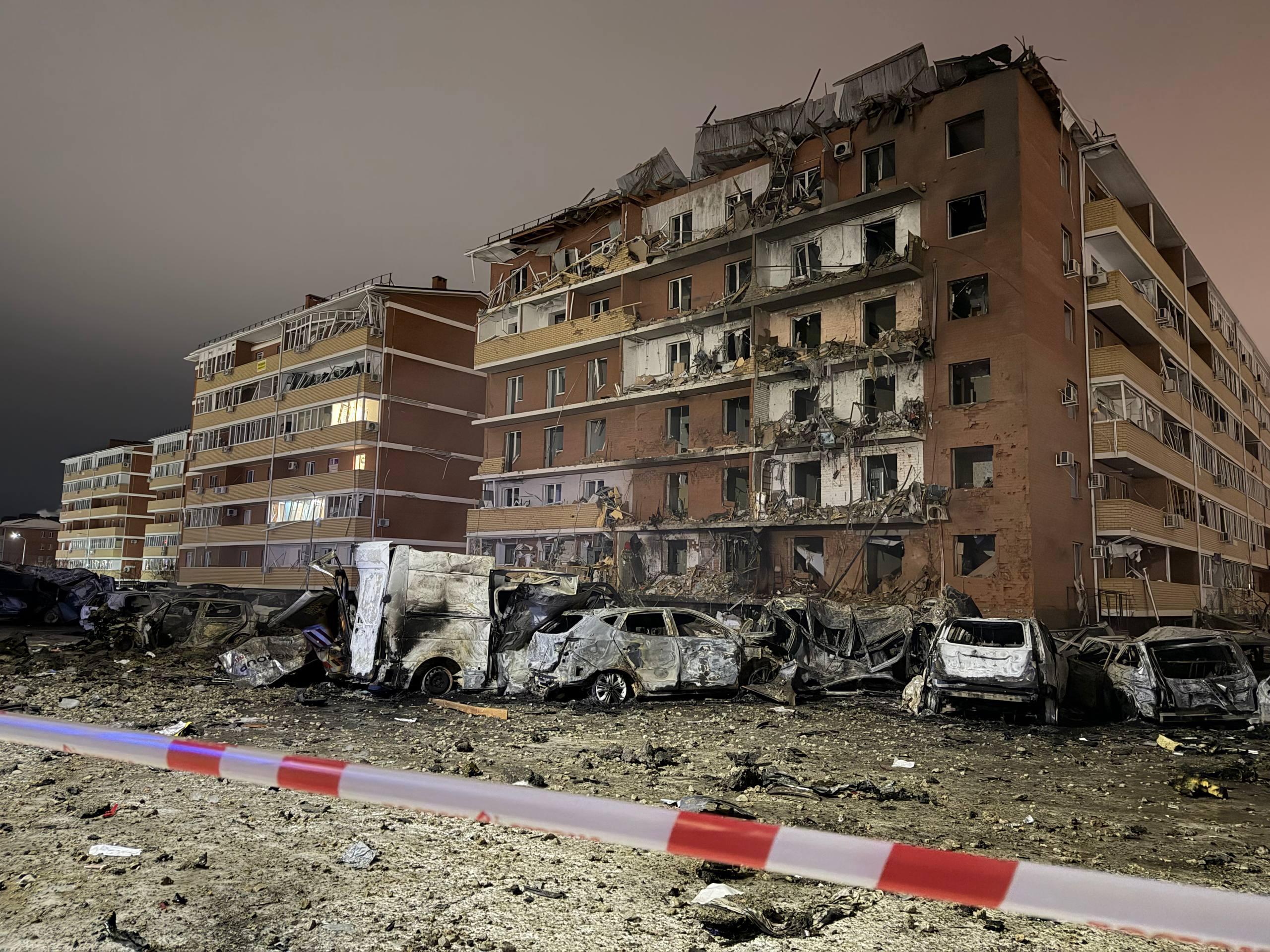
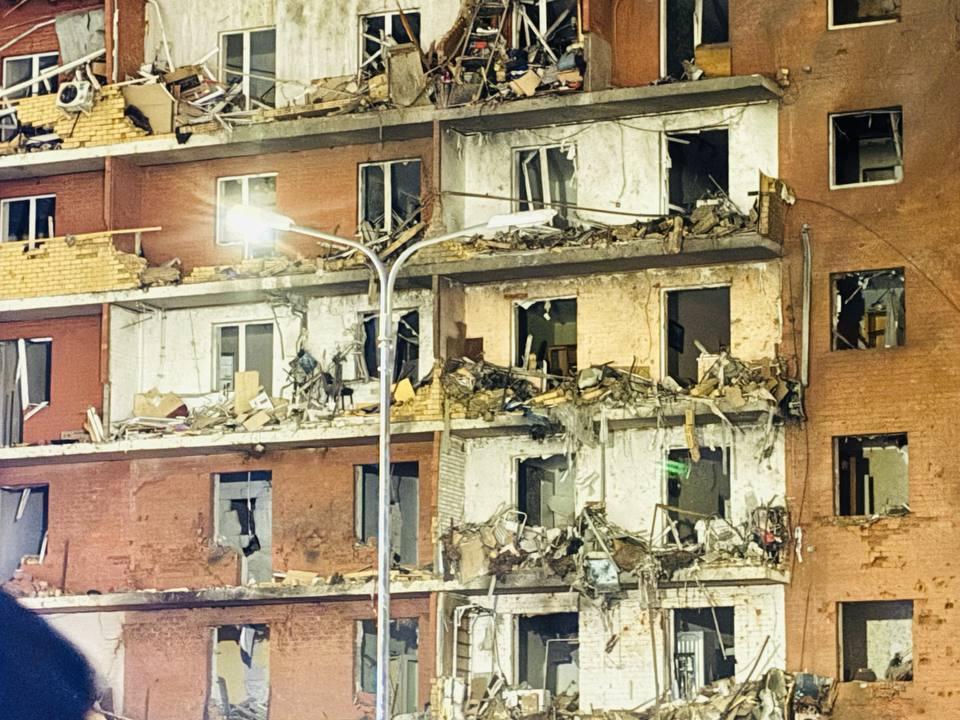
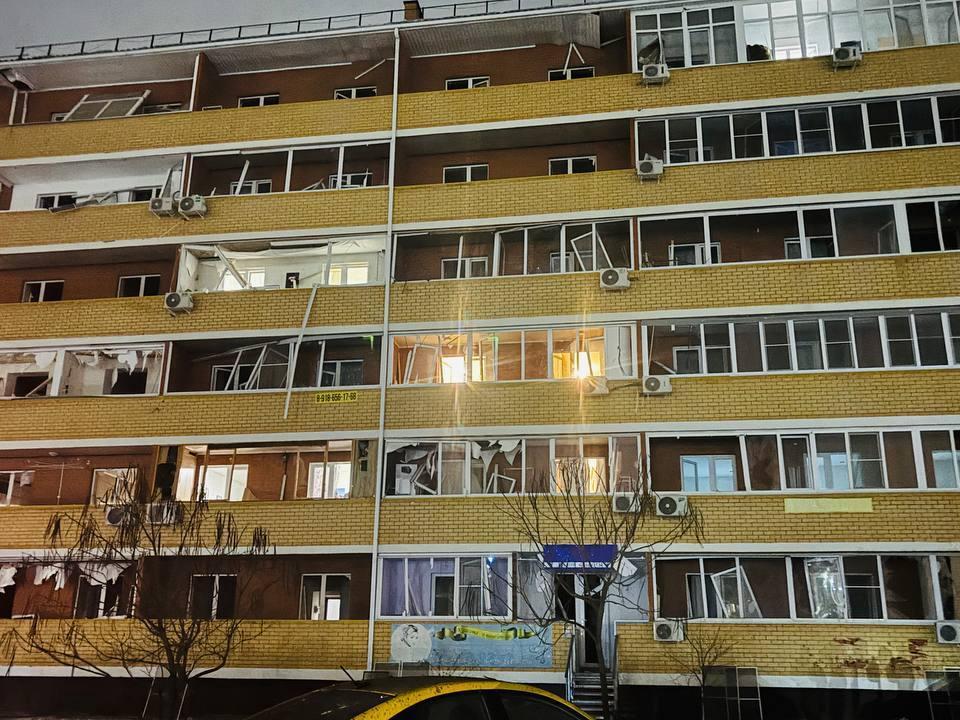
Simultaneously with the explosions, windows in the apartments of a six-story residential complex, which consists of four rectangles separated by a small vacant lot, began to shatter. The blast wave overturned cabinets, tables, chairs, and blew out windows, doors, and lock cylinders from those doors. When people ran outside, it became clear that at least four buildings had been damaged by the explosion.
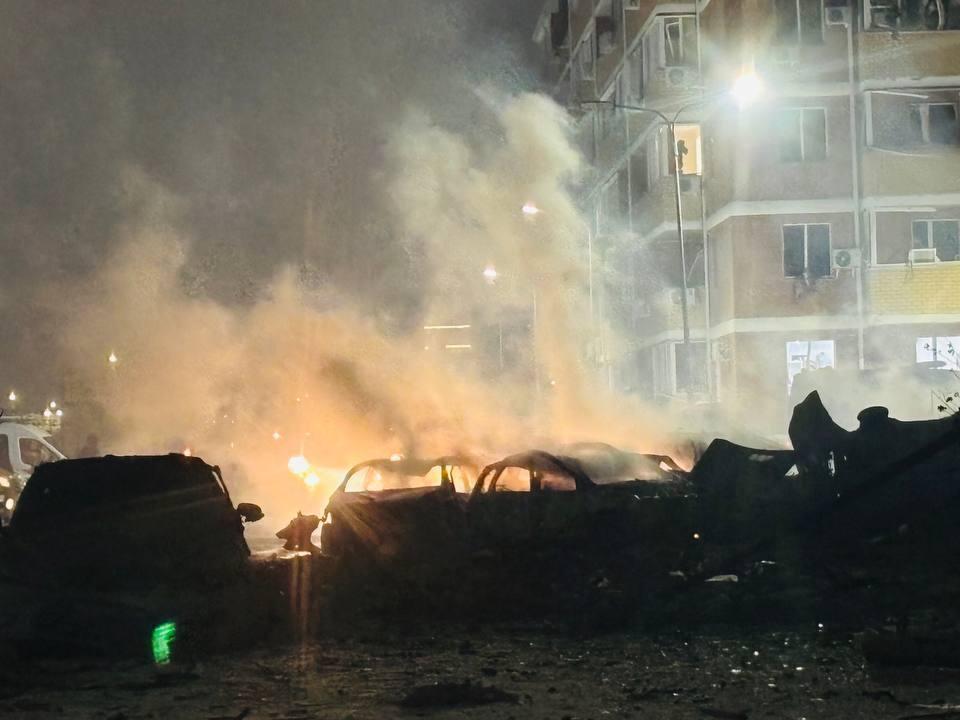
In an instant, a fire broke out in the street. In the glow of the blaze, people with their pets tried to take shelter in corridors or bathrooms. Others frantically shoved documents into bags or plastic sacks hastily packed with belongings. And outside the window, the fire continued to grow.
A little later, the authorities of Adygea would say that a UAV (unmanned aerial vehicle) arrival was recorded in the Takhtamukaysky District of the republic. As a result, 13 people were injured. Nine people, including two children, were hospitalized.
“Fortunately, there are no serious casualties. People are not in any danger. Mostly they have shrapnel wounds, light ones,” the head of the Takhtamukaysky District, Asker Savv, would say, standing in the assembly hall of the local school, where a temporary accommodation center was set up in the first hours after the explosion.
And by around three in the morning, the screams at the explosion site would die down, and the countless onlookers would disperse to their homes. The residents of the damaged apartments would retell stories similar to each other and think together about what to do next.
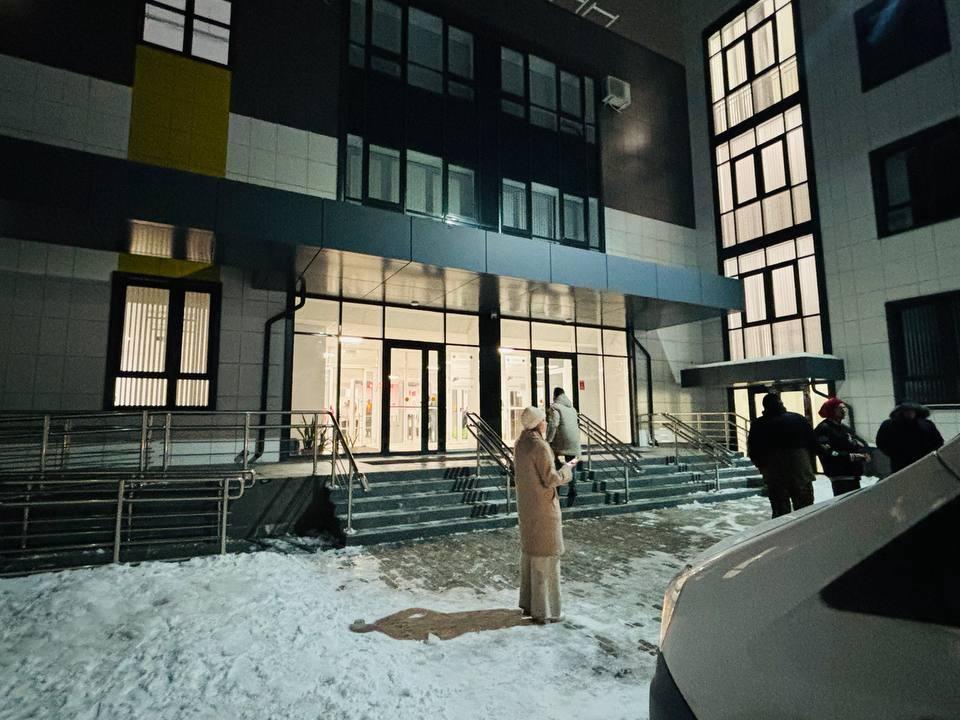
The portal 93.RU shows and tells what happened in the small and quiet village in the first hours after the explosion.
Explosion

The first explosion thundered around 10:40 p.m. It was so powerful that the sound wave reached neighboring Krasnodar, whose residents initially thought an emergency had occurred in the city. Then, eyewitnesses reported several more explosions, but they were in the sky over Adygea.
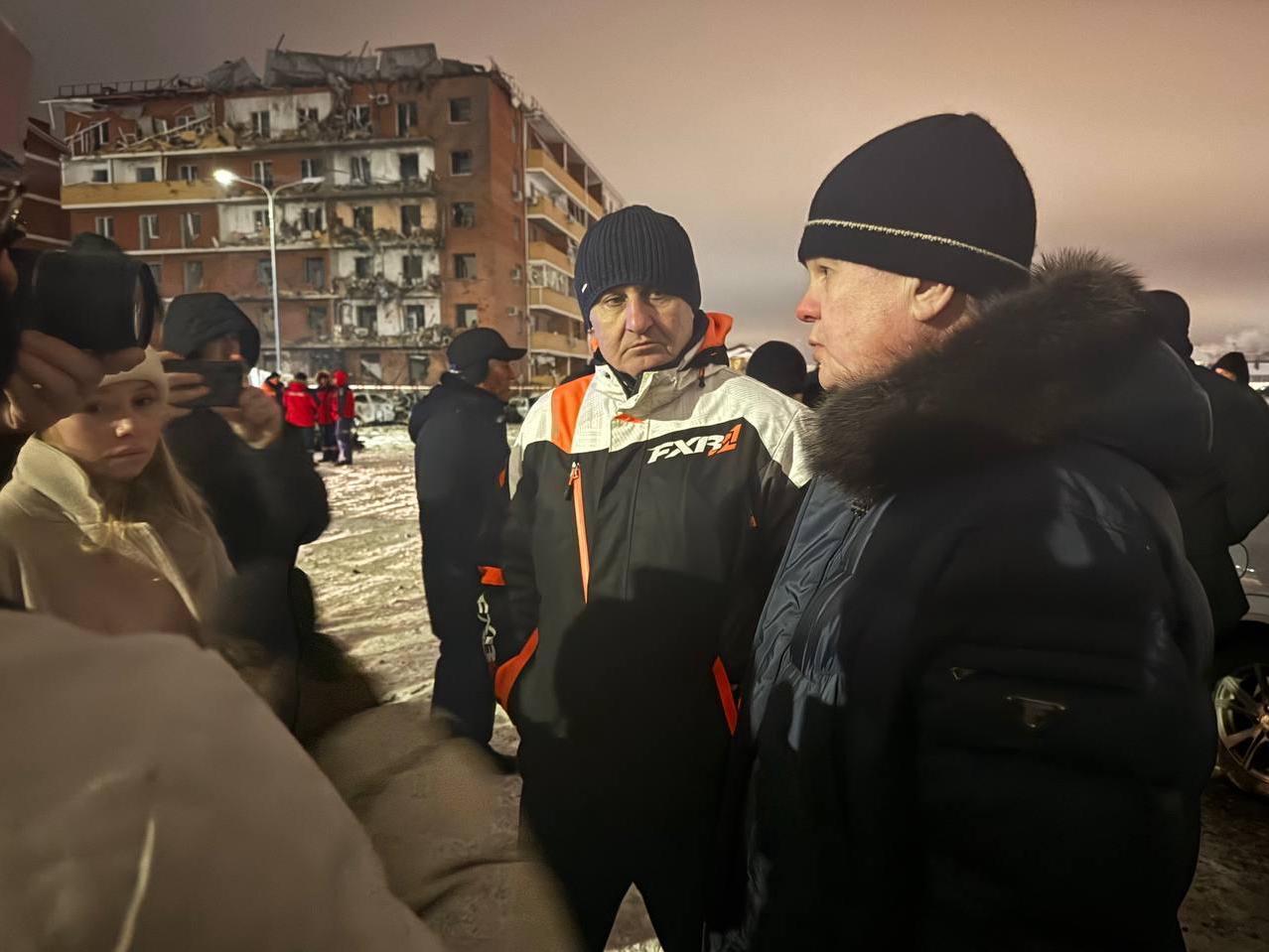
Geographically, the village of Novaya Adygea is located on a bend of the Kuban River, across the river from the Yubileyny neighborhood of Krasnodar— in the Takhtamukaysky District. Further, the river makes a couple more bends and goes to the Shapsugskoye Reservoir.
And when it gets dark, residents of Krasnodar can see from their southern and southeastern windows the lights of the private sector of Novaya Adygea, beyond which the apartment buildings begin.
Svetlana, a resident of one of the four six-story buildings that sustained the most damage, was with her daughter and Casper—a small curly-haired white Bichon dog—during the attack. Closer to midnight, an explosion sounded from the opposite side of her building.
After the woman came to her senses, she began to gather her belongings. And her daughter, together with Casper, ran to hide in the bathroom.
“He wasn’t even scared, he sensed my panic more,” the girl says.
In that time, Svetlana managed to pack two suitcases, but, she says, “they’re mostly Casper’s things.”
Svetlana’s brother lives in the adjacent entrance of her building. At that time, he was preparing dinner.
“I was in the kitchen at that moment. The wave blew out my windows and the balcony door. At first I didn’t understand what was happening, then I saw burning cars in the parking lot, then fire appeared on the fifth or fourth floor of the building, I don’t remember. Someone’s apartment caught fire,” he recounts.
At first, Svetlana and her brother tried to save the car that was parked in the residential complex’s parking lot. Very close by, flames were blazing, reaching up to the second floor.
“At that time, we didn’t quite understand what was happening,” Svetlana says. “We made our way to the parking lot and tried to push the car away from the fire. But it’s no use, it’s all smashed up. If the car were intact, we would have immediately gotten in and driven away. We have a house, not far, in a stanitsa (Cossack village). We have to work somehow, and I work remotely,” the woman recounts.
Blood
Another resident of this house, Sergei (name changed), says that at that moment he was preparing for bed. During the explosion, the window frames along with their hinges were blown out in his apartment. He hastily covered the opening with whatever came to hand and ran outside with his mother.
“Glass was flying, cacti fell from the windowsill. On another window lay my mother’s hearing aid. I didn’t have time to take it, we ran out immediately. Mom can’t hear at all without it. The front door was wide open, it wouldn’t close—it was deformed, everything bent,” the man recounts.
Sergei’s neighbor says that a few minutes before the explosion she came out of the bathroom. Then she heard the explosion, fragments flew in all directions. And people started running along the floors. They knocked on apartments and asked if anyone needed help, if there were any dead or wounded. They also helped open doors deformed by the blast wave.
“When I was running out of the apartment, someone was being carried down the stairs in a blanket. These were ordinary residents who oriented themselves and provided first aid… A woman was coming down from the upper floor. Covered in blood, with a child in her arms… She went down to the first floor, there was a hole… And the door was all in blood. Whose it is, I don’t know,” the woman says.
Fire
After the explosions (local residents say there were four, and the sound was heard from different directions) people poured out into the street. Some froze, watching the growing fire, others tried to extinguish a car. Still others ran from entrance to entrance in search of victims who needed help.
In the air, eyewitnesses say, a smell appeared, something like burnt rubber or burnt insulation. Human screams drowned in the sounds of car alarms, mixed with the voices of dozens of people.
After 40 minutes, Ministry of Emergency Situations (EMERCOM) vehicles would arrive at the explosion site (here eyewitness accounts vary. Some say the fire trucks arrived after 40 minutes, others—after an hour). One after another, ambulances with flashing lights would begin to arrive.
Behind the broken windows of neighboring houses, New Year«s lights that had not yet been taken down flickered in time with the flashing lights.
Tears
A little later, police would cordon off the emergency site and push people back to a safe distance. From this safe distance, residents would look at the facade of their building. And all the damage could finally be seen. Not a single intact pane of glass remained on the side of the building. Most of the balconies lost their brickwork.
“Right there, right there it fell,” says Daria (name changed), pointing her hand towards the still smoking cars. “We, as soon as we heard the explosion, ran outside with my friend. I just can’t.”
Dasha looks about 20. She is wrapped in a scarf, from behind which her eyes, red from tears, peek out.
“She’s just sensitive,” her friend recounts. “We miraculously escaped injury.”
At that moment, the sound of a loudspeaker comes from the direction of the cordoned-off parking lot. Someone informs residents about the opening of a temporary accommodation center at the local school, about one kilometer from the explosion site. People in small groups begin to make their way to the buses that shuttle between the residential complex and the school.
Most people remain on the spot. Some of them are onlookers who came to see what happened here.
About an hour and a half after the explosion, police officers would again push people back to a safe distance. They try to come even closer.
Metal
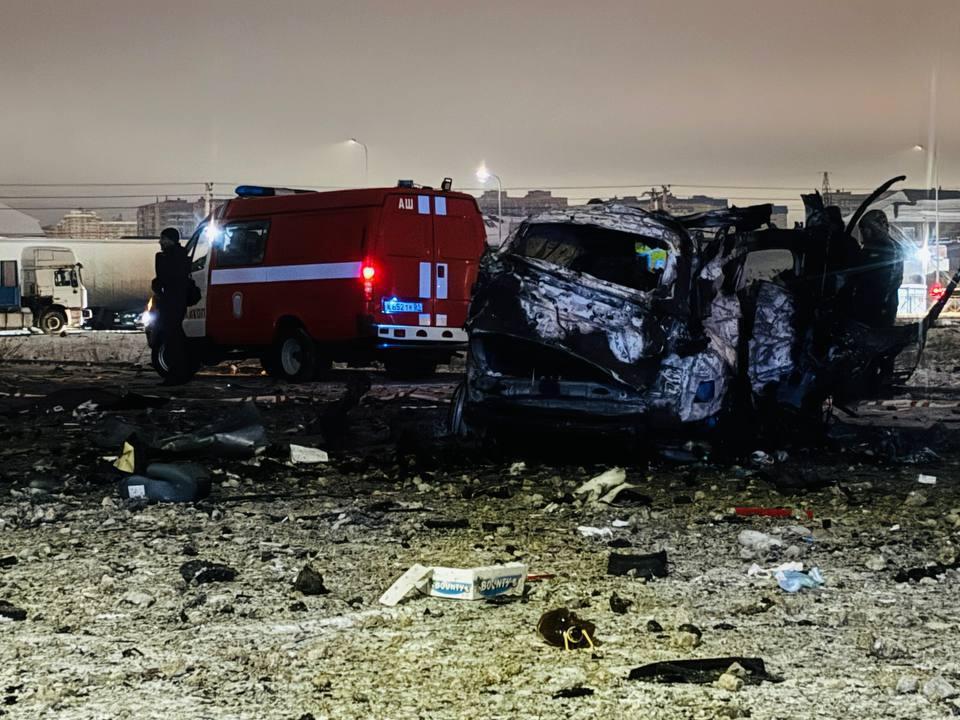
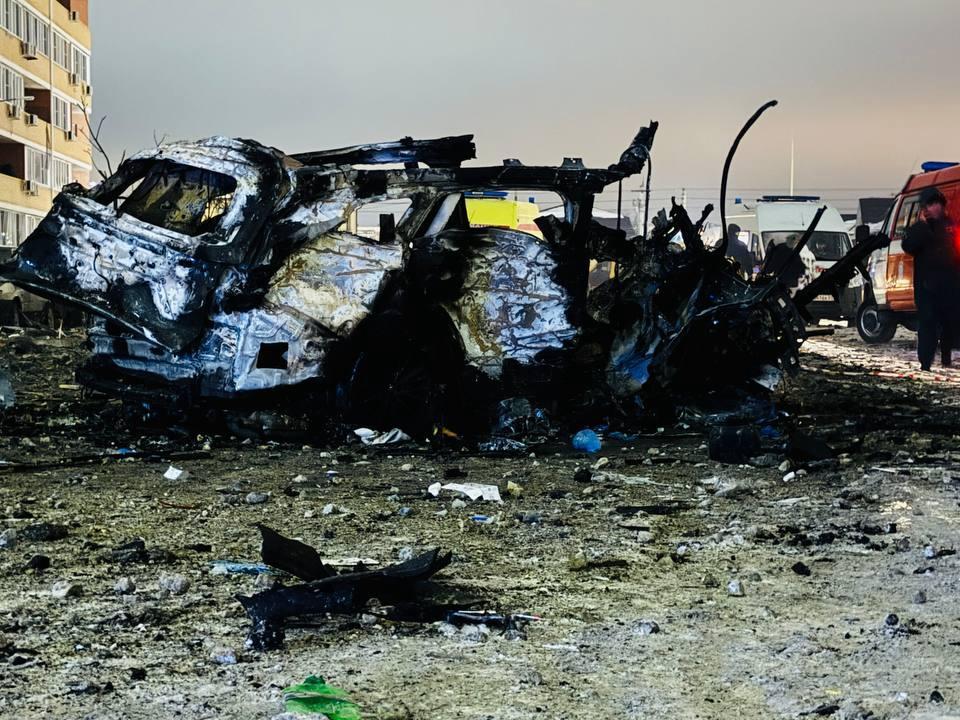
Even closer—the cordon tape around a small patch that serves as a parking lot for local residents. According to official data from the authorities of Adygea, 15 cars burned completely because of the explosion, and another 25 were damaged.
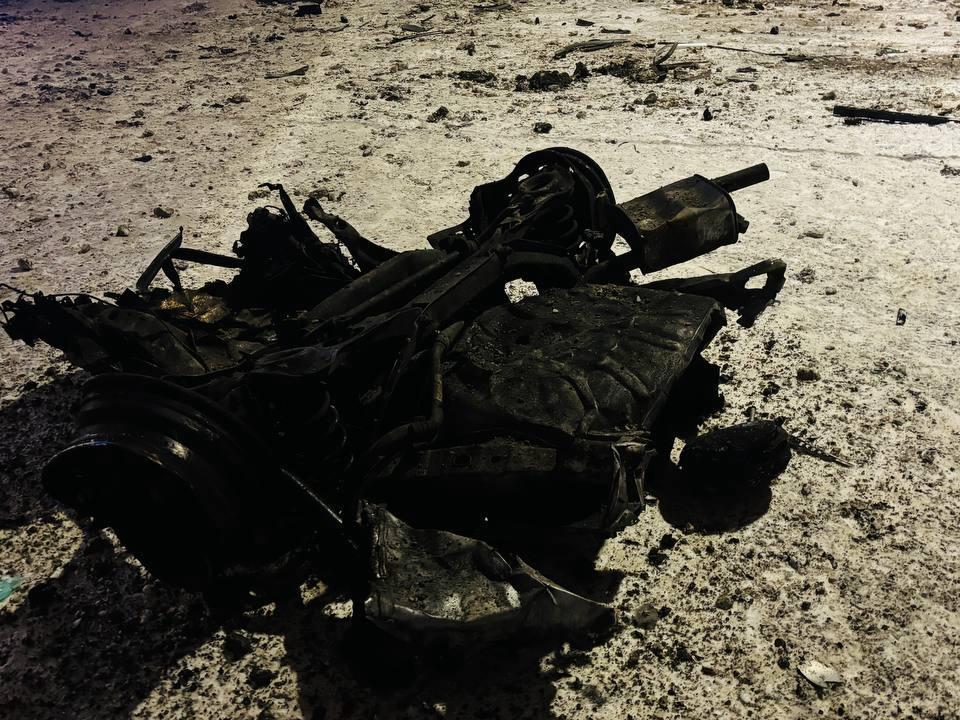
Some cars are damaged and deformed to such an extent that it is impossible to identify the make. In the middle of the parking lot lies a rear axle part blackened by fire. Around on the ground are scattered tires, metal and plastic car parts.
Surprisingly, near the very epicenter of the explosion lies an electric bicycle almost undamaged. All the snow around is black from soot.
“Everything Is Fine”
About an hour and a half after the explosion, buses begin to arrive at the village school, which for this night became the first temporary accommodation center, with those who have nowhere to go.
People are taken to the assembly hall, where they are offered tea, candy, sandwiches.
“The second bus has just arrived. There aren’t many people yet. There have been no injured so far. Here you can get food, warm tea, and a place to sleep. We are waiting for the camp beds to be delivered, we will place people in the gym,” says an employee of the temporary accommodation center, helping an elderly woman carry a bag of belongings to the second floor.
At that time, no more than 15 people had gathered in the assembly hall, but people were arriving.
To the right of the entrance to the assembly hall—a table with food and tea. Three meters from the door, right in front of the stage—a registration table, and to the left, leaning against the wall, sits a man in sweatpants, a light jacket, and a red hat. In his hands he holds a ginger cat that unsuccessfully tries to escape.
From time to time he says to him: “Everything is fine, everything is fine, bro, don’t be afraid,” and kisses him on the nose.
Together with another group of people, volunteers and medics enter the assembly hall. The former brought clothes and essential items. The latter offer help or simply measure the blood pressure of elderly people.
Removing the blood pressure monitor from the arm, the medic tells one of the women: “Blood pressure 140,” then goes for the medical bag that he left on the stage of the assembly hall.
Cold
Later, the head of Adygea, Murat Kumpilov, would report that a temporary accommodation center for citizens evacuated from the emergency site in the village of Novaya Adygea is open on the territory of the local recreation base “Shapsug.”
“The municipal administration is introducing a district-level state of emergency… In the morning, comprehensive work will begin to assess the damage and develop a plan for returning to normal life. Access for citizens to their homes and apartments will be carried out in stages, as the inspection by law enforcement representatives is completed. To ensure safety and protect property, the area is cordoned off by the Ministry of Internal Affairs,” the head of the region would write on his social media.
In the building most affected by the explosion, it is dark and cold. It has been disconnected from water supply and heating. The water was drained from the pipes to prevent it from freezing.
Closer to two in the morning, there are no onlookers left near the damaged building. Police and security forces are standing everywhere. Occasionally, local residents are allowed into one of the entrances accompanied by an officer—to retrieve documents from their apartments.
It becomes quiet, so that from the empty window openings comes the sound of falling glass fragments.
All news about the UAV attack in Novaya Adygea, 93.RU continues to collect in a special section.