Arctic Region Grapples with Massive January Power Outage

On the evening of January 23, Murmansk Oblast faced a large-scale failure in the power supply system. Murmansk, Severomorsk, and several suburban areas were suddenly left without light, and with them, people—without stable heating, water, and communication. The accident occurred in the midst of the polar winter and quickly turned from a technical glitch into a serious test for thousands of residents in the region. Details are in the material from Murmansk colleagues at 51.RU.
What caused the outage
According to preliminary data, the accident occurred on January 23 between 4:00 and 15:00 approximately seven kilometers from Murmansk towards Severomorsk-3. In this section, five power line poles collapsed at once: two built in 1966, two—in 1982, and one—in 1988. The service life of such poles, according to investigators, is about 40 years, after which they should undergo regular inspections.
Investigators are now finding out whether these inspections were carried out and safety standards were observed. The version of ice on the wires, which could have led to the accident, is also being checked. The management of Rosseti Severo-Zapad (North-West Grid Company) has already been interrogated.
First decisions and emergency measures
After the poles collapsed, part of Murmansk and Severomorsk was completely de-energized. Authorities decided to temporarily cut off electricity in residential areas to redirect power to boiler houses, water utilities, and medical facilities. The main task became preserving heat, water, and the ability to provide medical assistance.
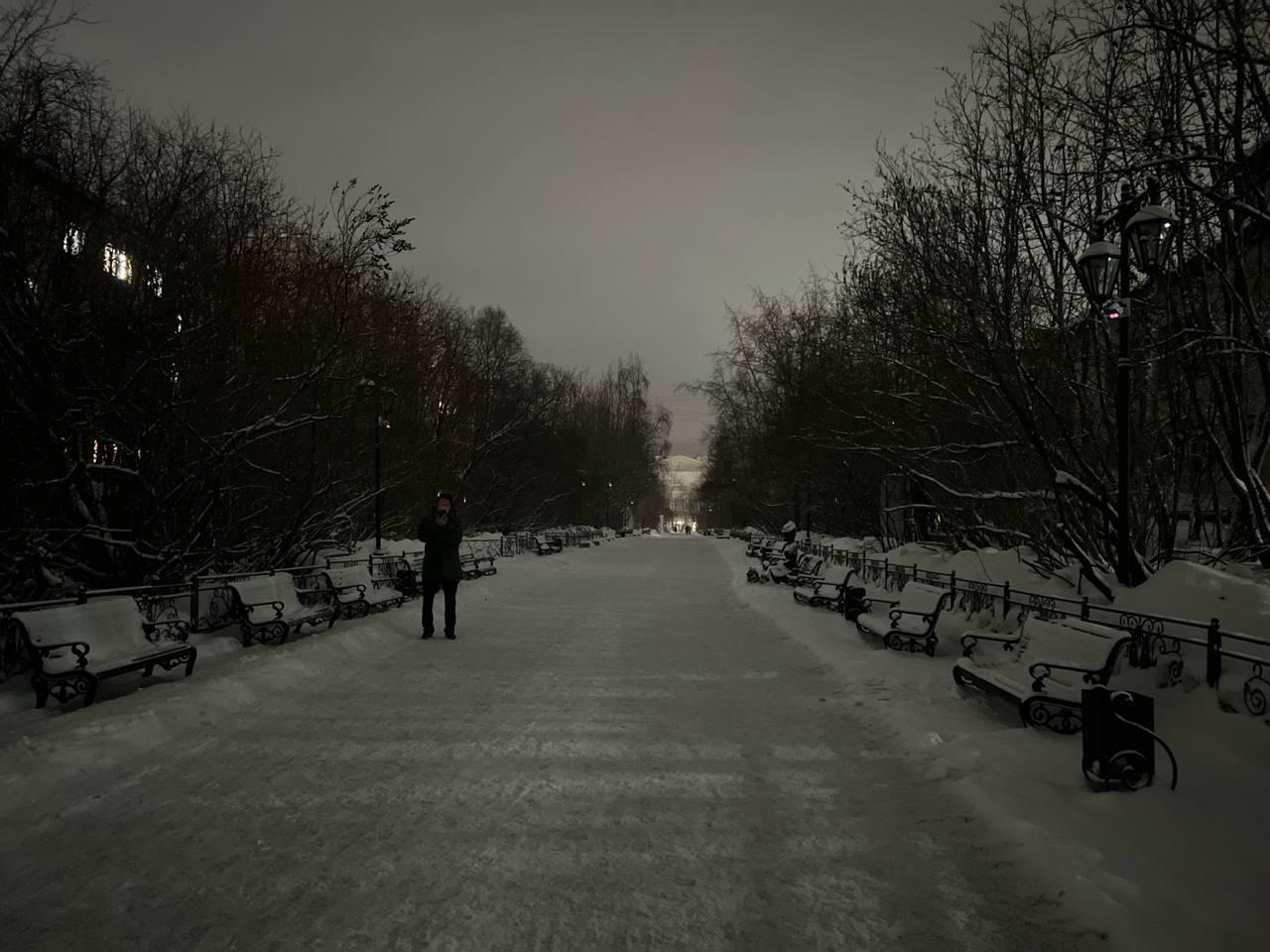
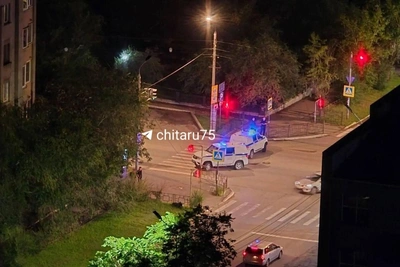
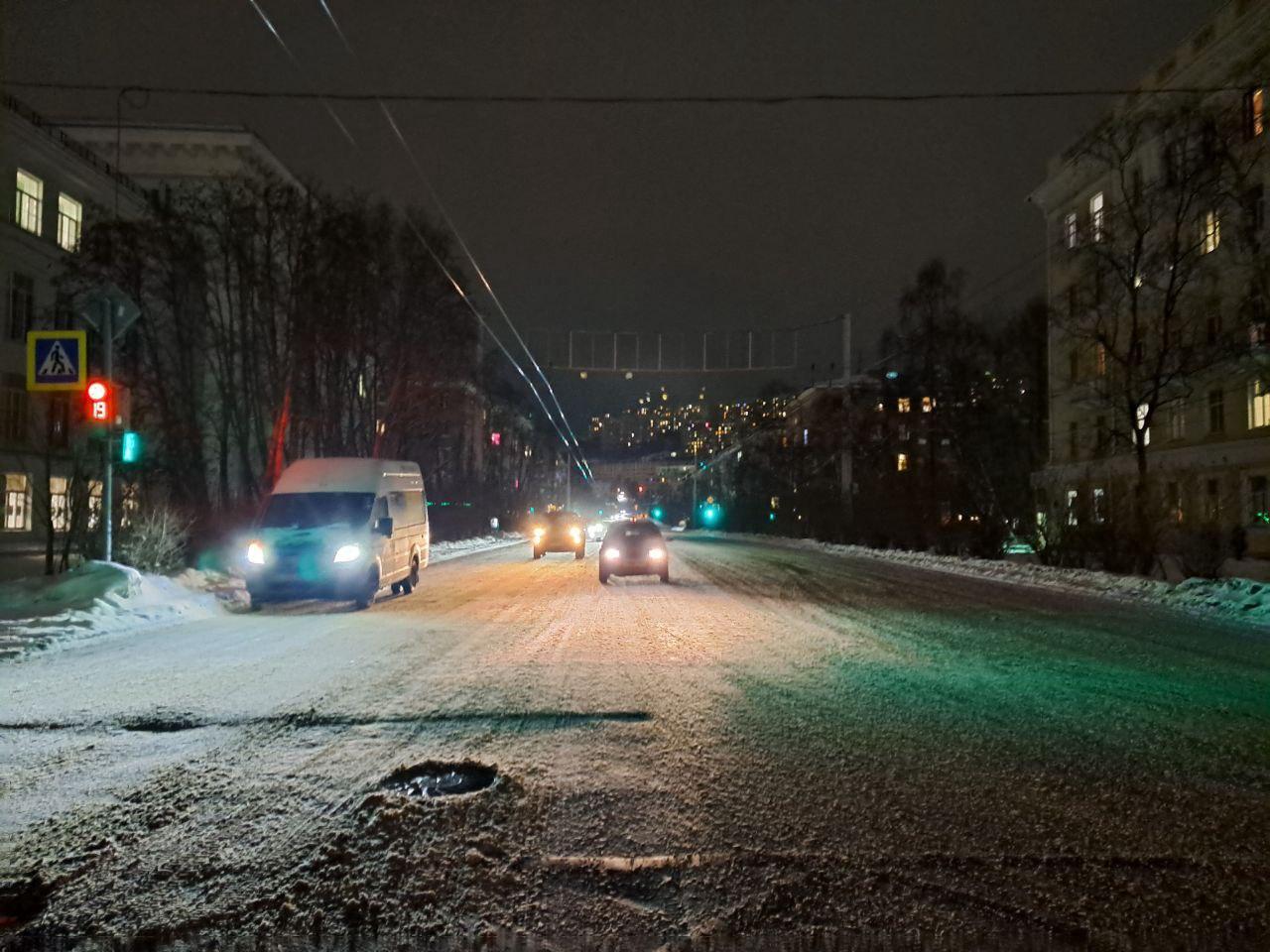
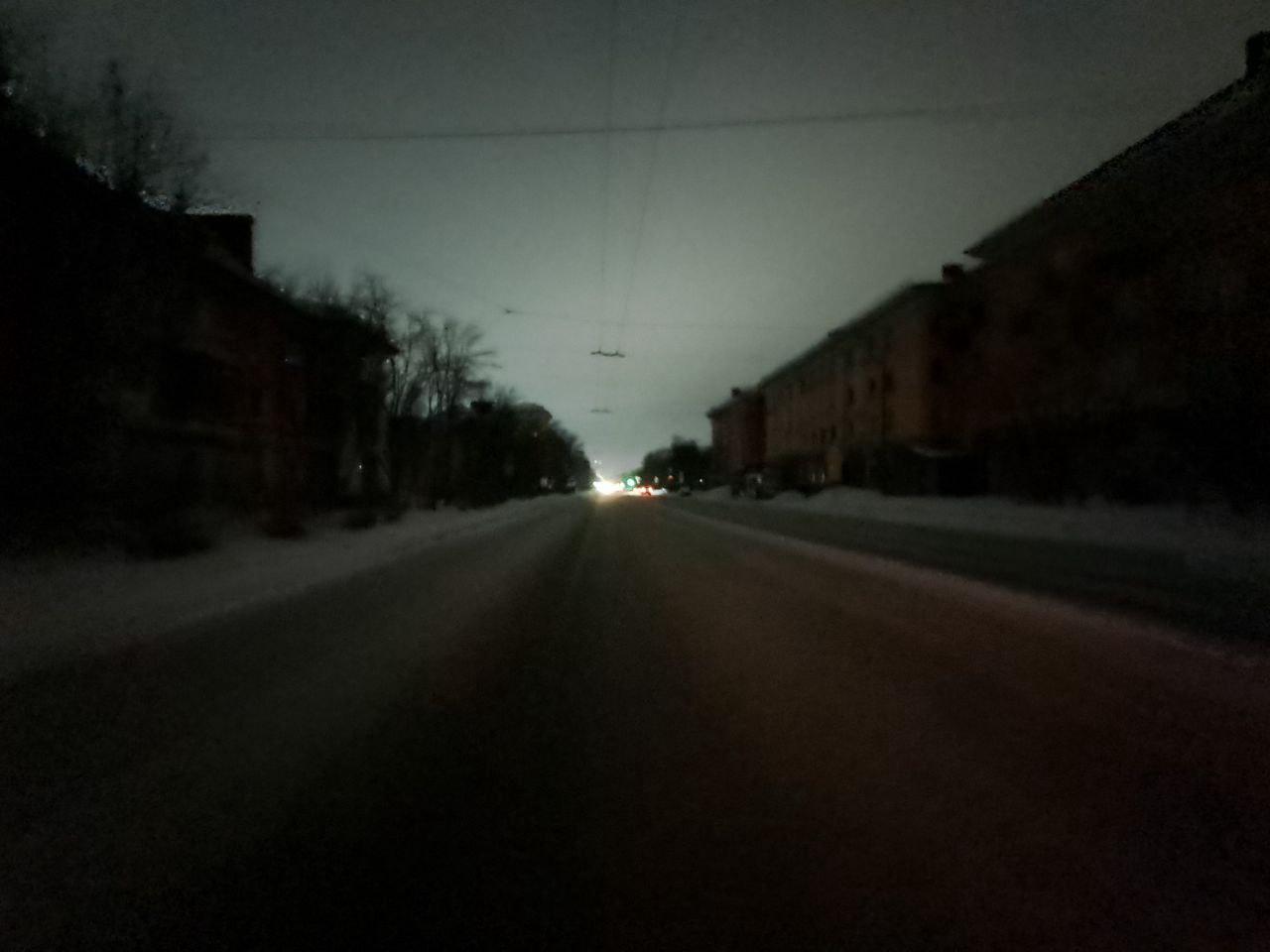
To save electricity, street lighting was temporarily turned off. Pedestrians were asked to be careful and wear reflective elements. Police officers are on duty at major intersections.
Where the situation was most difficult
The hardest hit were the Oktyabrsky and Leninsky districts of Murmansk, Roslyakovo (a suburb of Murmansk), and Severomorsk. In the Leninsky district, since January 24, a rotation of power supply has been introduced: electricity is turned on in different buildings on a schedule, approximately for six hours. However, residents note that they never saw a clear and understandable schedule.
Without stable power supply and heating, according to residents, extensive areas remain: the Leninsky district, Karl Marx Street, Severny Proyezd, almost all of Gora (a neighborhood in Murmansk), Roslyakovo, and Severomorsk. The supply of electricity appears uneven: somewhere power is given during the day, somewhere—only at night.
The accident has also affected city life in general. Public transport is working unstably: trolleybuses are breaking down. Schools and kindergartens have switched to different modes of operation: some institutions are working remotely, some—in person.
Against the backdrop of unstable power supply, the accident on the third day turned into part of the daily life of thousands of people—with cold apartments, darkness, and constant anticipation of the next power turn-on.
“Survival Mode”: how people cope without light
A reader of 51.RU shared her experience with the editorial office. According to her, daily life in the city now more resembles survival mode.
“We cook on a gas burner. Some still don«t have water and heating, some have had something restored, but everything constantly gets turned off.”
She notes that in the Leninsky district, the presence of gas slightly eases daily life, but it doesn«t solve the problem of cold.
“Yes, there is gas, cooking is easier. But many don«t have heating and hot water. Even if light appears, it doesn»t mean the house becomes warm.”
According to the woman, in her house on Karl Marx Street, there was no heating and hot water for a whole day; now they have been restored, but the situation for neighbors remains difficult. Due to constant outages, the family is practically not at home: with a small child, she is forced to go to her father«s or to a hotel, where she spends days at the reception.
Additional difficulties are created by non-working elevators: the child has to be carried in arms from the eighth floor. Even when electricity appears briefly, using elevators is scary: due to sudden outages, people have already been stuck in them for half a day.
“There is no schedule for power supply. They only talk about it, that it supposedly exists, but no one has seen it.”
Darkness as an “experiment”
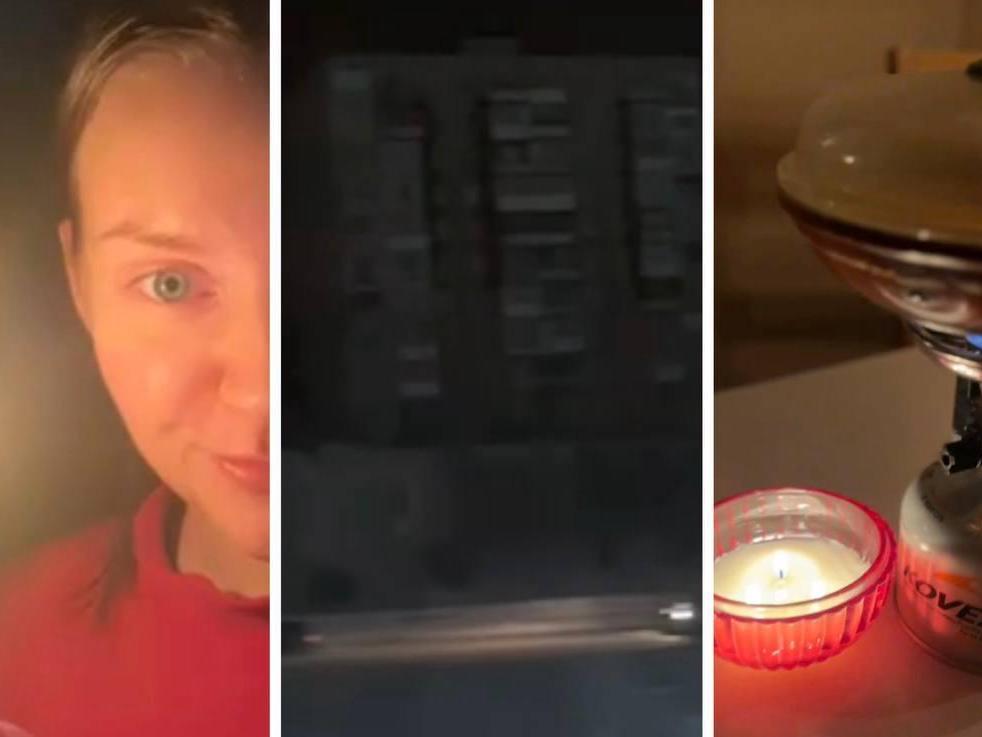
Against the backdrop of fatigue, irritation, and uncertainty, more calm, almost philosophical assessments of what is happening are also heard. Murmansk resident Arina, who lives on Severny Proyezd, showed what her evening without electricity in the apartment looks like.
According to her, in the house, they have to walk with a candle.
“There is something romantic in this. And this is how it looks. It«s a bit frightening, such an interesting experiment,” said Arina.
Darkness, silence, and rare lights create a special atmosphere. At the same time, she emphasized that there is no reason for panic.
“Everything will be fine, we will manage,” concluded Arina and urged city residents not to worry.
Severomorsk: short light and mutual aid
Severomorsk resident Yulia said that light was given for the first time for about 20 minutes after a long time since the outage.
“Severomorsk has emerged from the gloom! The first time since the outage, light was given 20 minutes ago, and it became possible to enter Telegram normally. In Severomorsk, without Wi-Fi, only VK (VKontakte, a social network) is available. Batteries are normal. Water was available all the time, both cold and hot. I«ve never seen so many people helping each other. Most likely, in a couple of hours, we»ll be in darkness again.”
Complaints about uneven outages
Residents continue to ask questions about power supply schedules.
“Where are the outage schedules? Where is the promised rolling blackout? Khalatina, 10 and 12, as an example. In house 10, the light was cut off about 3–4 hours later, turned on in both houses equally. Now Khalatina, 12, is without light, Khalatina, 10, which is 30 meters away, is all shining,” writes an anonymous user.
Maria, a resident of Chumbarova-Luchinskogo Street, talked about the complete isolation of her house.
“Oh, I wish everything would be fixed quickly. We«ve been sitting without any connection for days. We are completely cut off. On the first day, we could charge small devices and LED bulbs were shining a bit. At 23:00, we were completely cut off. There was no electricity, no hot water, no heating. The light was turned on around 8–9 in the morning and until 12 noon. The radiators warmed up a bit. We are very lucky that we have gas, and we can at least cook something to eat. All of my husband»s relatives have electric stoves. And their power supply is even worse than ours.”
Assistance points and support
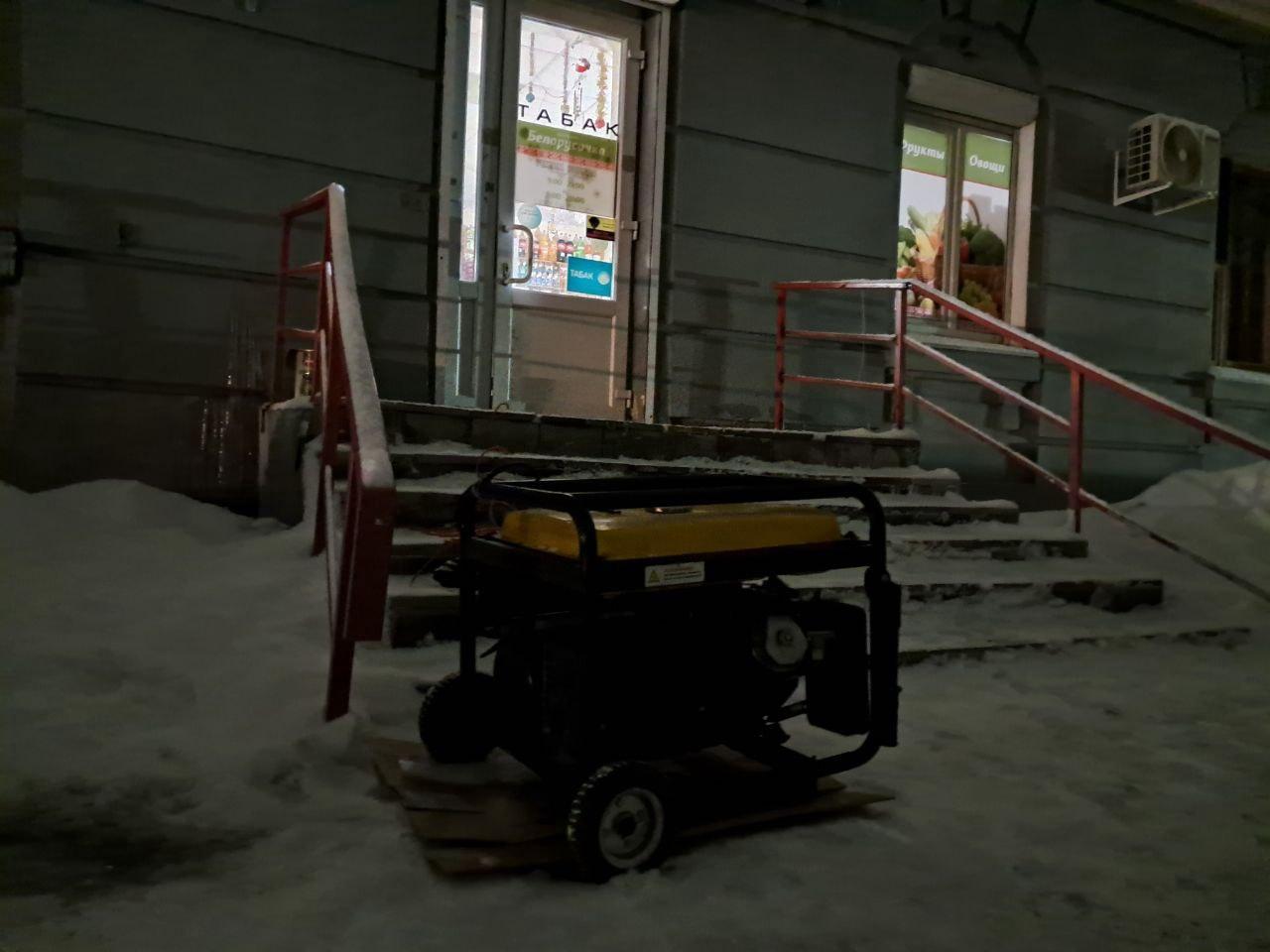
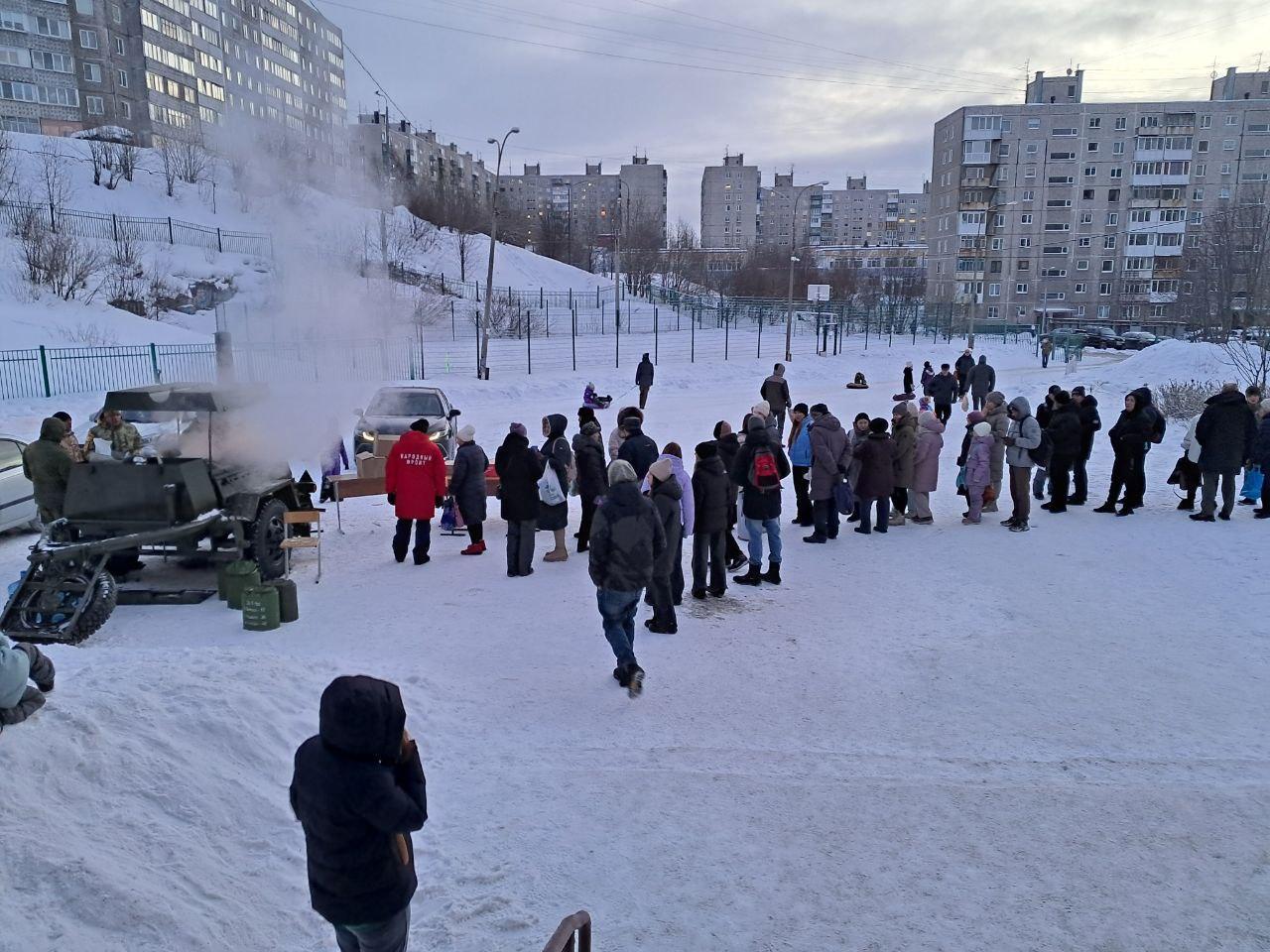
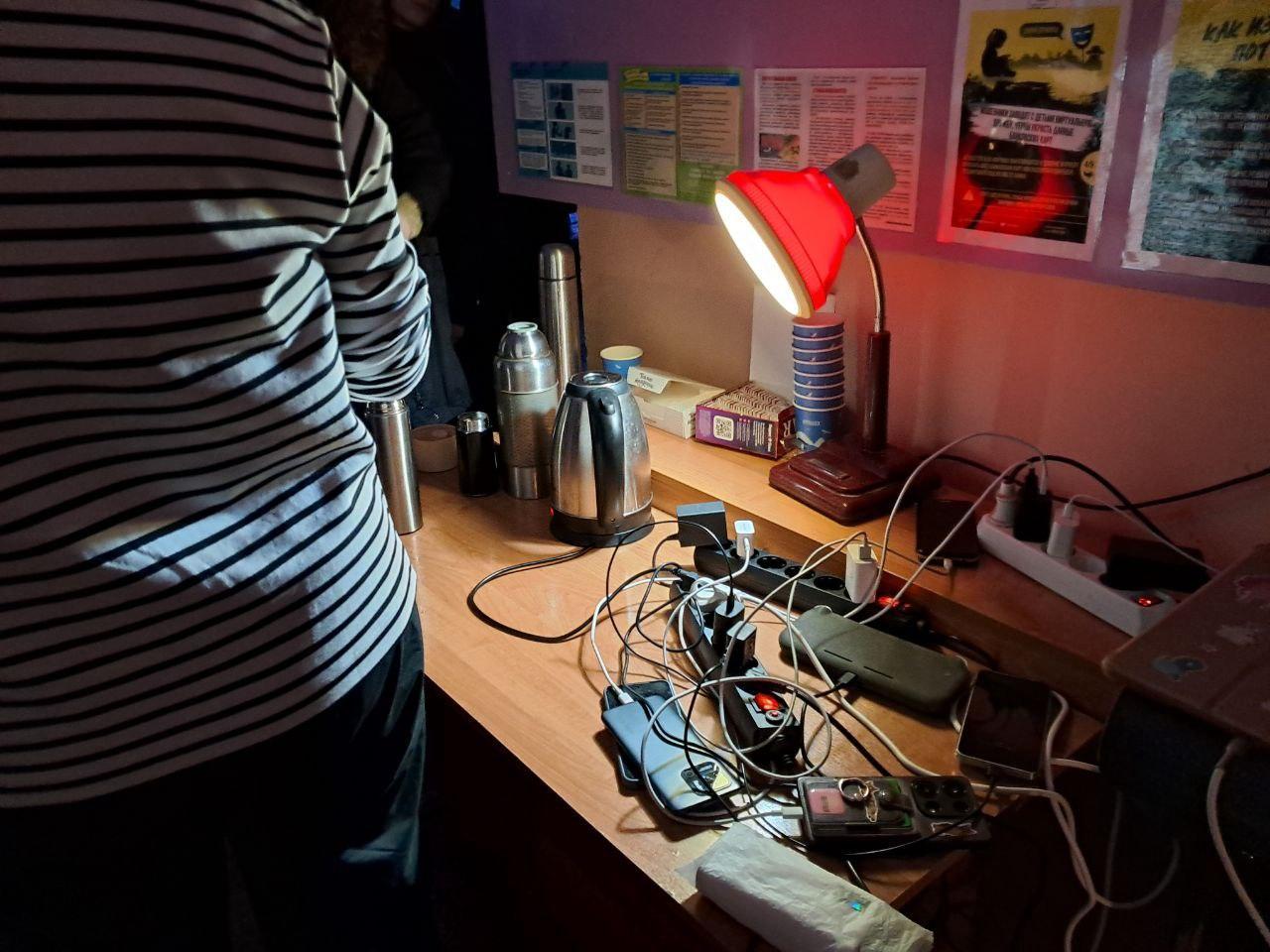
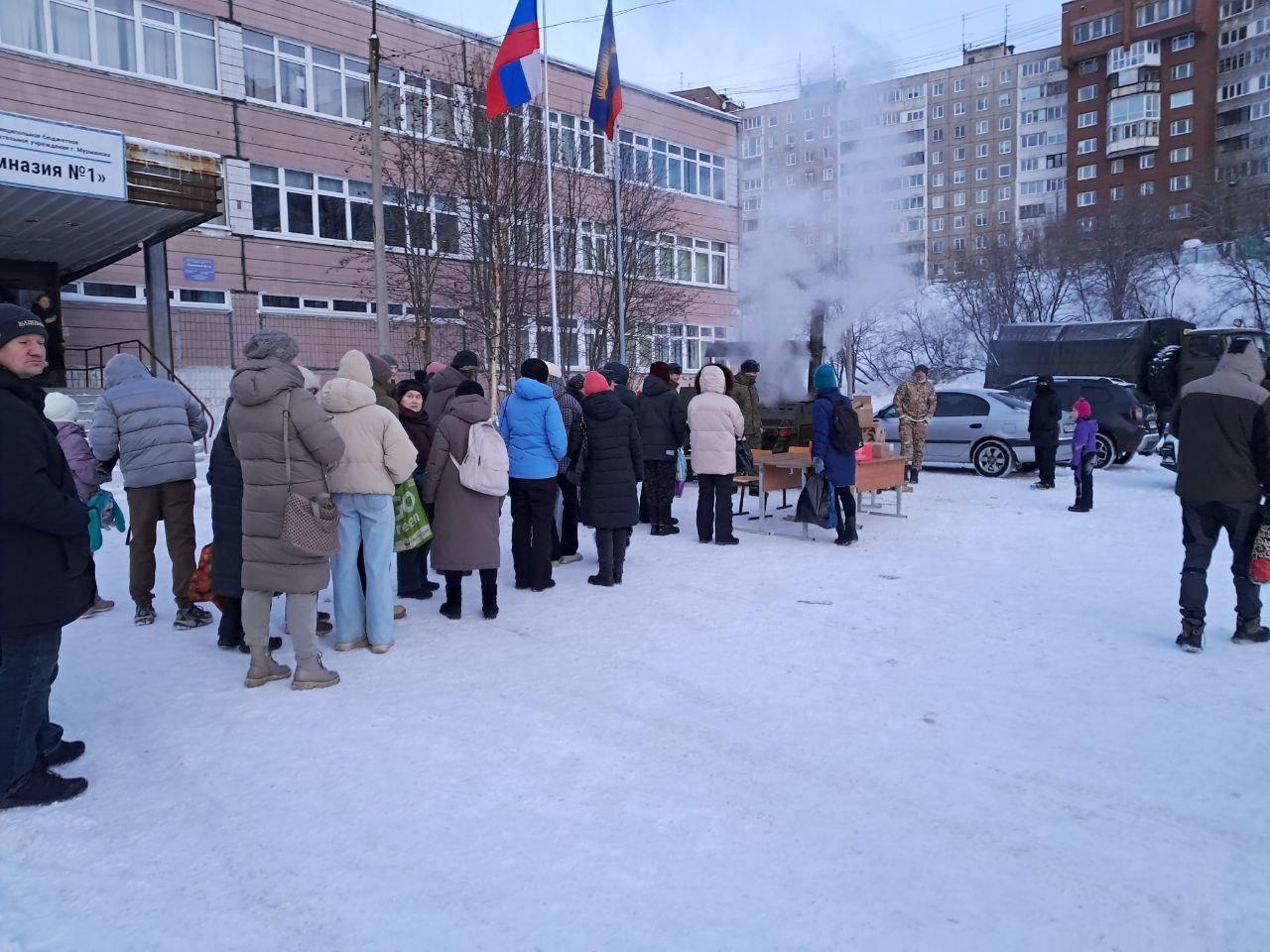
Field kitchens and warming points are operating in the cities. For the convenience of residents, interactive maps have been created, marking working stores, places with phone charging options, and food points.
Round-the-clock warming points are open at the DK “Sudoremontnik” in Roslyakovo and at the Children«s Art School on Polyarnoy Divizii Street, 1.
How restoration work is proceeding
While residents share their experiences and try to adapt to life without stable electricity, specialists from Rosseti Severo-Zapad continue round-the-clock work. Forty-nine emergency teams, 83 units of equipment, and nine diesel generators are on standby. The second pole out of five has already been installed.
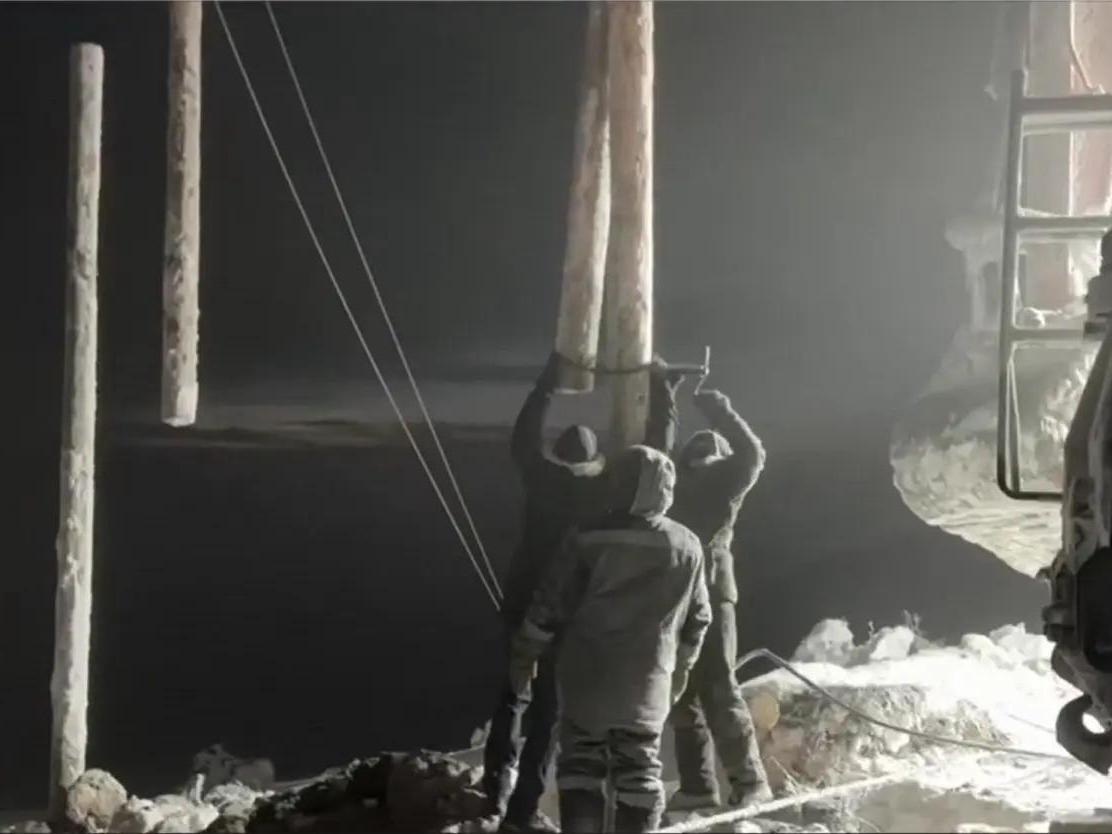
The work is complicated by tundra conditions. Whole poles cannot be delivered to the power lines, so the structures were moved in parts on all-terrain vehicles. Heavy elements were lifted with an excavator, and in the most difficult sections—practically by hand.
“On site, a pole was assembled from 82 elements. Several installation attempts were unsuccessful. Due to extreme tundra conditions, even special equipment broke down. Despite squally wind and the need to install directly on stones, the pole was installed. Now, preparation is underway to lift the second structure,” the company reported.
Forecasts and restoration timelines
The governor of Murmansk Oblast, Andrey Chibis, reported that the Northern Fleet and engineering troops are involved in the work. Help for the Arctic region has also come from Arkhangelsk Oblast.
According to the head of the region, five poles are damaged, effectively putting three power lines out of service. Main structures are planned to be delivered by helicopters.
“Taking into account all the conditions in which this emergency situation is being eliminated, the optimistic scenario—that with a temporary scheme, with temporary poles, this work will take at least a day.”
Final restoration of power supply with the installation of stationary metal poles will take significantly more time.
In parallel, the prosecutor«s office of Murmansk Oblast is conducting an inspection to establish the causes of the mass power outage. Work to restore power supply continues. The editorial office of 51.RU will continue to monitor the situation.