Undercover in a Ryazan Rehab Center for a Day
A YA62.RU correspondent posed as a drug addict to spend a day as a resident at the Rehab Center Resheniye in Ryazan, learning how patients live and fight addiction behind closed doors.
Oct 23, 2026 0
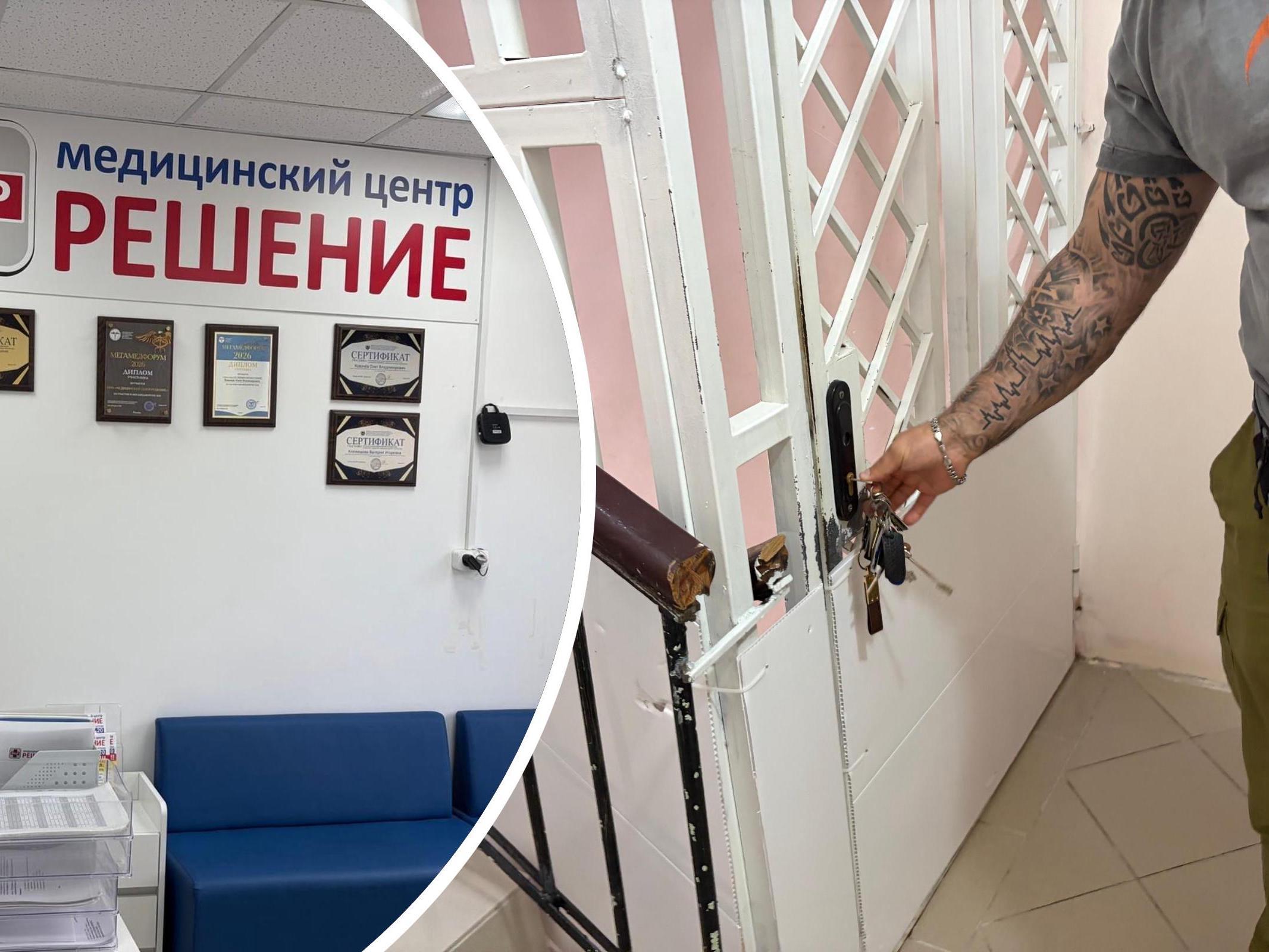

A person who has hit rock bottom must one day make a decision and agree to be locked away and not released until they recover
Source:
YA62.RU journalist Darya Khodosevich continues to explore the social bottom of Ryazan — the places and destinies people usually prefer not to discuss out loud. In previous articles, she examined how people end up on the very edge, and now she decided to see what happens to those trying to climb out.
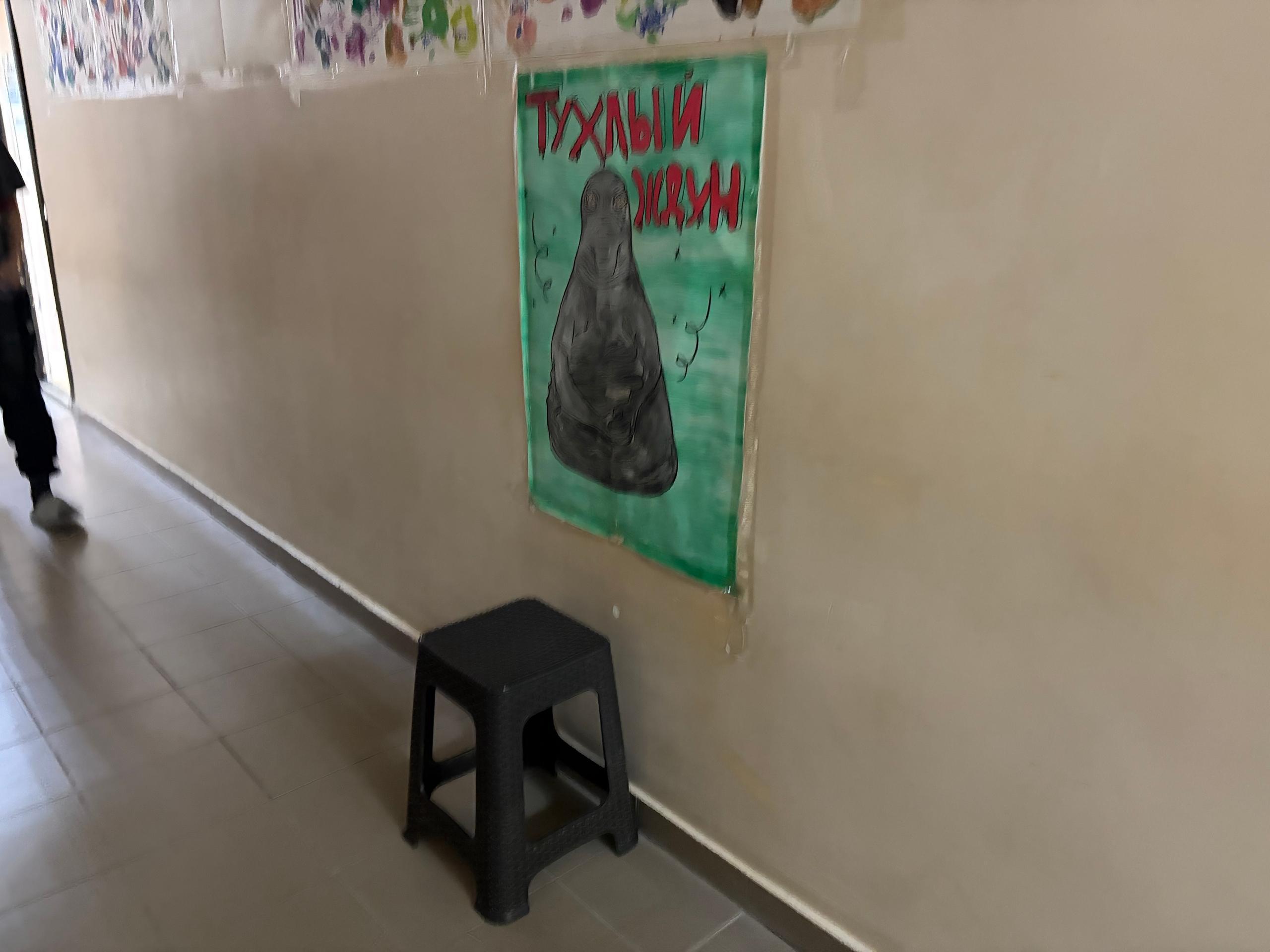
A patient sits on this chair for an entire day as part of a prescribed training
Source:
This time Darya went undercover to a rehabilitation center for drug addicts. For 24 hours she became one of the residents: she underwent medical procedures, was assigned a mentor, completed assignments, took part in group sessions, and tried to understand through her own experience how life works for people battling addiction.
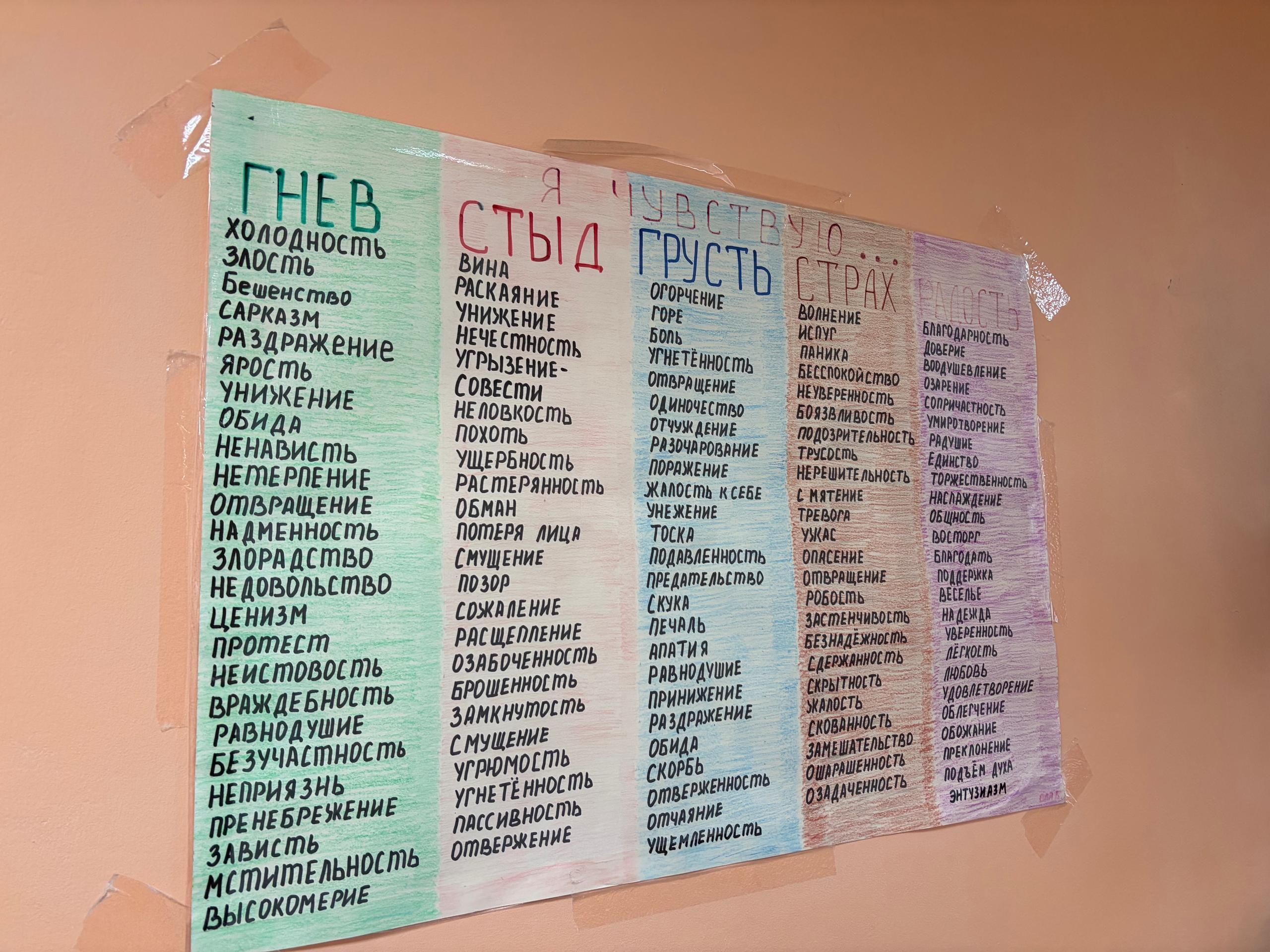
Patients follow this table when completing their written assignments
Source:
What happens inside a closed rehab? Why do patients have to spend hours unpacking their own emotions? Why are some of them ready to give a newcomer their last cookie — and is there really a path to a new life hidden behind the strict rules and endless «polozhnyaki» (written assignments)? Darya spent a full day at the rehab center and describes what she saw.
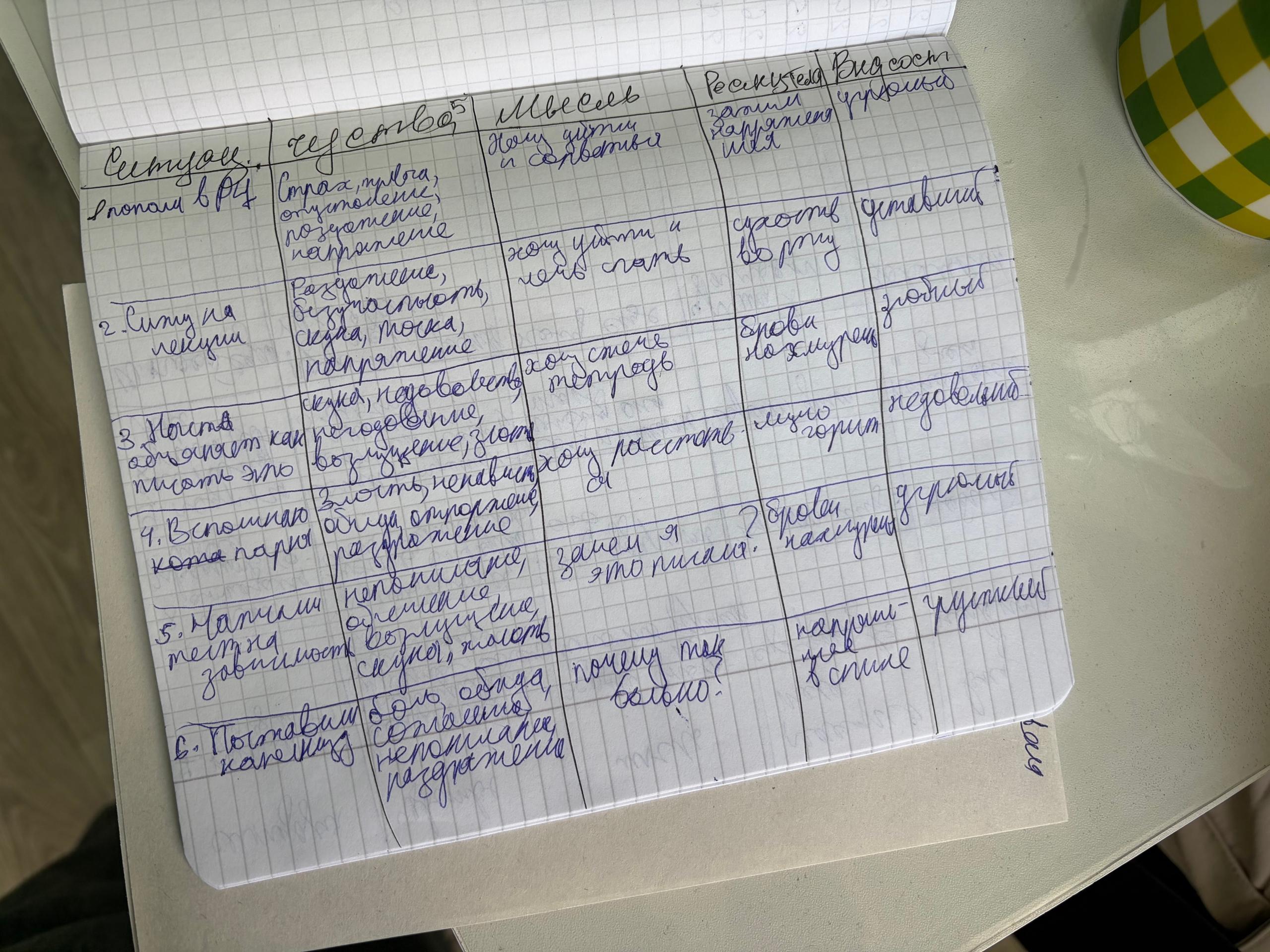
The reporter«s »feelings diary,« much of which was invented for the cover story
Source:
The standard initial procedure before admission to the Resheniye Rehab Center (Ryazan) is an examination by a psychiatrist, after which the doctors decided I was in an adequate state and sent me for IV drips. They were pumping vitamins into me, but it did not work on the first try — or even the third. It turned out I have very thin veins that burst from a thick needle. The kind-hearted nurse worried and studied my arm intently, trying to figure out where else she could stick me.
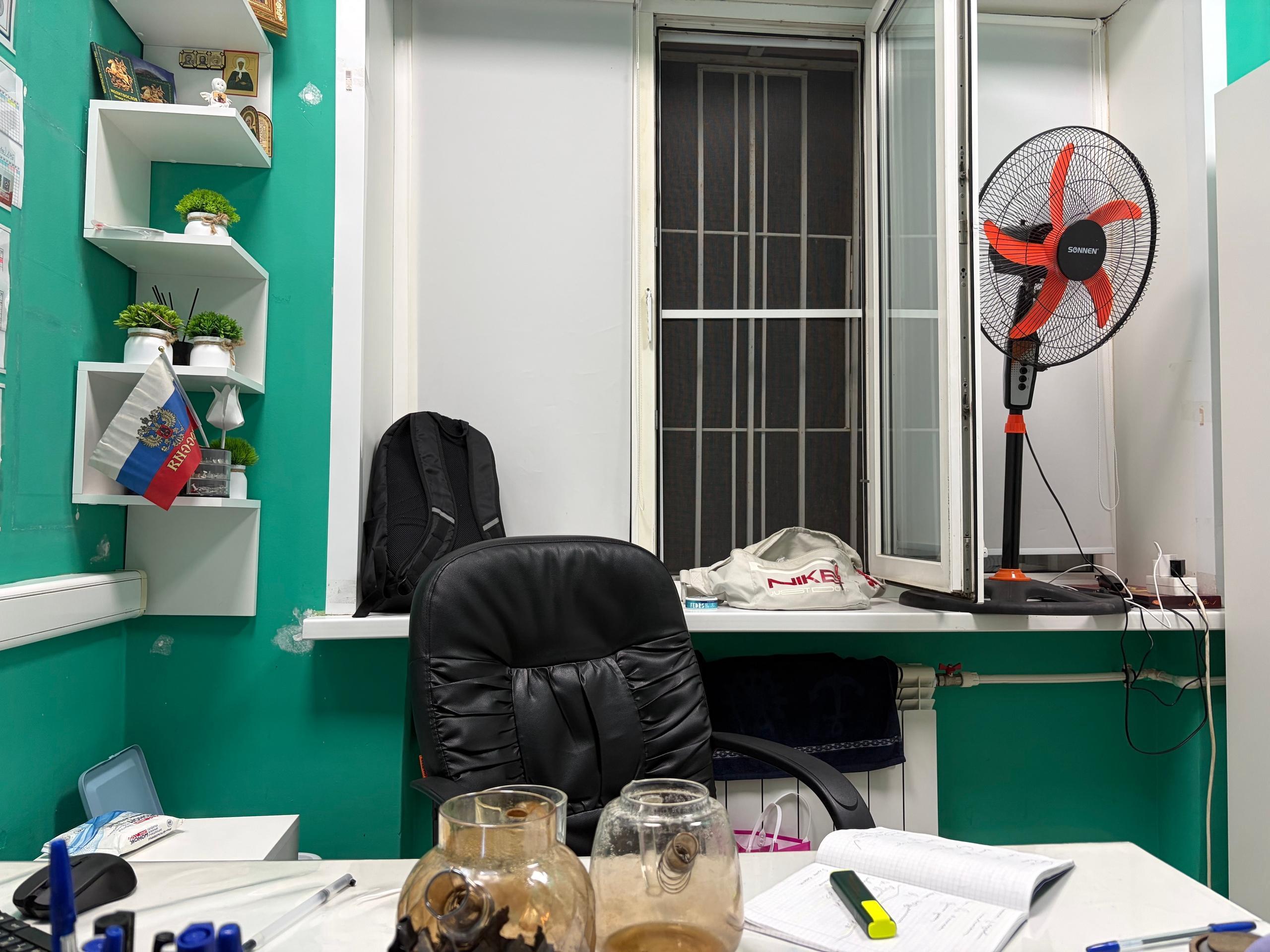
Individual therapy sessions are held in the consultant«s office
Source:
«My God, I used to work as a surgical nurse, I have 10 years of experience! This is just shameful…» the woman said in a high, upset voice.
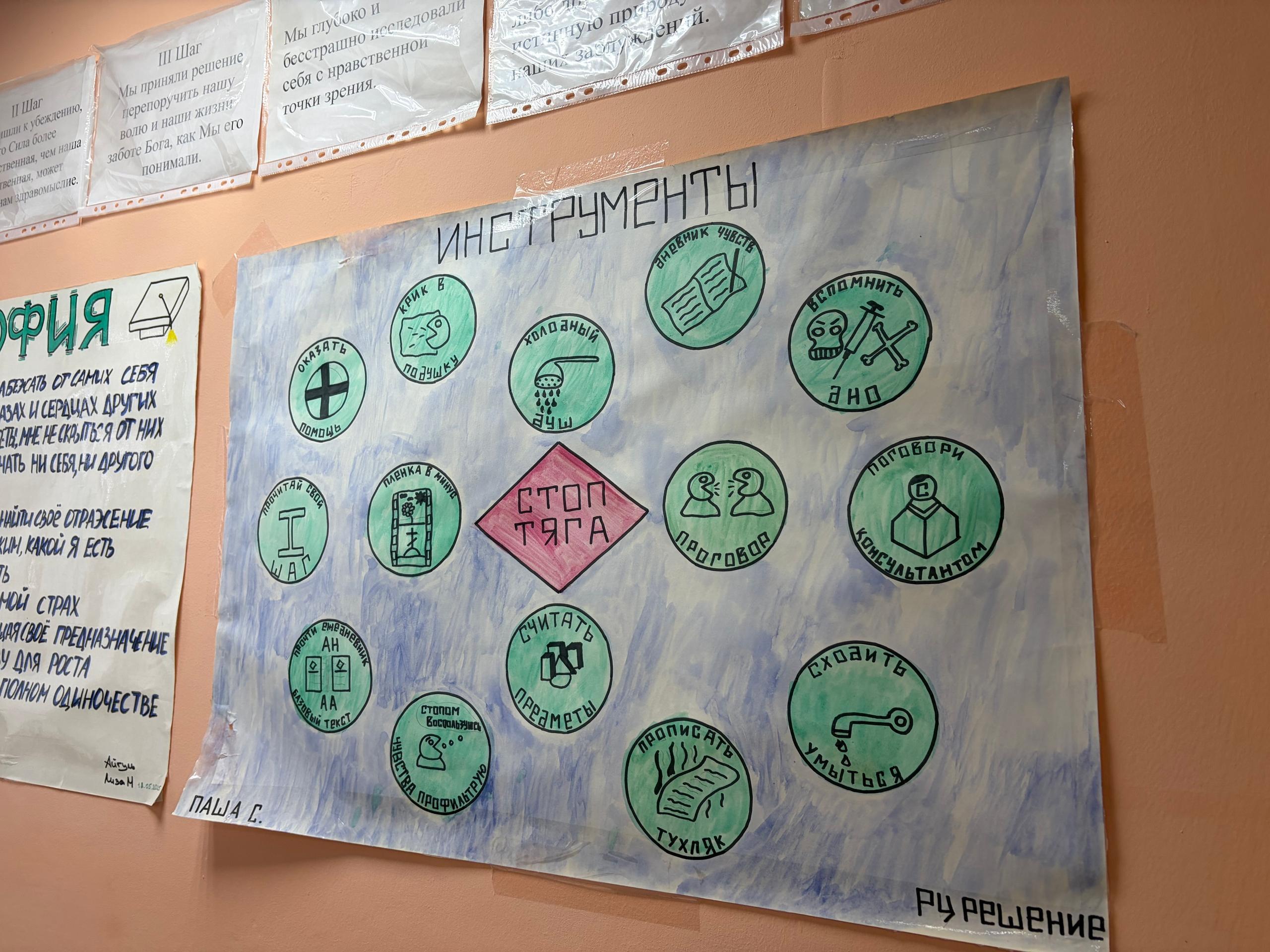
These tools help people with addiction cope with cravings to use
Source:
I try to calm her down, but the nurse only exhales when the solution starts entering my body without a searing pain in my arm. Because of the tiny needle, the drip takes almost an hour instead of 30 minutes. The swollen bruises on my arms will not fade for a long time.
After all the medical procedures, a consultant hands me everything necessary for therapy — a notebook, a pen, and printouts with forms for assignments. I am required to hand over my phone and lighter. As a newcomer, I am assigned a mentor — Alina. She has been lying here for more than a year and will soon move on to the adaptation program. That is when a person who has just left rehab is housed in a separate apartment so they can reintegrate into society.
Alina and I already know each other — we met at the anniversary of Narcotics Anonymous. She greets me like an old acquaintance, with all warmth and a sincere smile. At one time the girl represented the world«s oldest profession — and no, journalism is not it. Alina is an alcoholic and a drug addict; over her years of using, she has served time in prison, traded her own daughter for a fellow user, and lost her husband. She repeats these words like a mantra every time someone in the group passes her the »filter« (a talking stick). It is like a hot potato, except instead of a ball it is a reminder of what you have done in life and who you are. This happens more than 10 times a day; Alina has lain here for almost 360 days. That means roughly 3,600 times she has reminded herself and everyone around her of her misdeeds while using.
According to my cover story, I had been using since June this year, but a few weeks ago I came to my senses, went to Narcotics Anonymous meetings on my own, and asked for help there in recovering from addiction. However, I am now going through a difficult period and really do not want to relapse, which is why I checked into the rehab for a day so they could talk some sense into me.
Alina showed me the room where I was supposedly going to stay, and there I was met by my roommate Vika. The girl looked me up and down with a slight squint, assessing my condition. Later, in the smoking area, she would tell me that she herself had recently relapsed and that she used everything, including hard drugs. Vika is short, with round features, and her skin and teeth bear the consequences of use. Because of her intense, angry stare, I decided she was hostile toward me. As it turned out, she was simply in withdrawal. During our conversation in the smoking area she praised me and said she admired that I had come here myself instead of relapsing. «I wish I could do the same…» the girl said through her teeth, staring at one point ahead of her and taking a drag.
During the introductory tour of the center, my mentor and I notice that the other patients keep giving me strange sidelong glances and mistake me for a volunteer — a person who comes to help at the rehab while on the adaptation program. Ten minutes later Alina clutches her head, takes me by the hand, and leads me to her room. The girl gives me micellar water to remove my makeup and a hair tie, tells me to take off my earrings, and goes off in search of slippers.
A face without makeup, a braided ponytail, no jewelry, and soft slippers instead of sneakers — and just like that I was accepted as one of their own. I was already dressed in baggy jeans and an oversized T-shirt, so there was no issue with that; in general, revealing outfits are forbidden at the rehab. There is also a ban on relationships of any kind here, even friendship. And if a person feels they might have trouble following this rule because of someone, they set «boundaries» with that person. This means those people are not allowed to communicate in any way for the entire rehabilitation period.
While Alina was showing me around the center, I notice a young man sitting on a low chair in the corridor, stubbornly staring at a poster featuring a gray character from an old meme, above which is written: «Stale Zhdun» (the Waiting One).
«That training is called exactly that. He will sit here all day, and no one can talk to him. He only gets up for the toilet and meals; otherwise he just sits and stares at the wall,» Alina explained.
The patients« entire day consists of endless activities with breaks for free time, but it is free in name only. In reality, during that time people fill out mandatory assignments in their notebooks and report on them to consultants throughout the day. As a newcomer, my first task was to fill out an addiction test with questions like: »Did anyone in your family use?« »Did you use alone?« »Did you want to reach the most extreme state?« and so on.
Meanwhile, the patients listen to a video lecture about their disease in the common room, and my mentor prompts me on how to answer each question so that the result marks me as a person with addiction. The people gathered here are diverse: Alexei has no leg and sits in a wheelchair instead of a chair, a group of very young guys always stays together, and the girls keep «apart.» They are a minority here, as are actual drug addicts.
«It»s not the season right now; most people here are old alcoholics,« Alina explains the near-total absence of young people hooked on »fashionable« substances.
Residents, as patients are called here, are required to sit on different couches — this is also part of the ban on relationships at the center. After the lecture their «free» time begins, and patients write «polozhnyaki.» These are assignments they regularly complete day after day. The main goal is to restore neural connections after drug use and teach patients to recognize their emotions and cope with them in a healthy way.
I start with the feelings diary. Alina draws me a table with five columns in my notebook and explains how to do this assignment correctly. You write down a situation that happened to you and then describe your emotions, your body«s state, and the thoughts you had at that moment. In a single day, residents must write 20 such situations — and that is just one of many »polozhnyaki« per day.
Soon the reading out of the morning assignments, which patients have managed to complete by then, begins. It is led by a consultant, who selects those who will answer and those who will give feedback. Residents also give feedback according to a special format: they must not be interrupted, and the person answering must offer constructive criticism. During the activity, two people — a girl and a young man — are standing, while everyone else is comfortably seated on chairs.
«This is a special training assigned to those who did not follow the center»s rules. They will stand all day and are not allowed to sit at all,« my mentor says.
Later, one of the residents will share with me that she stood like that for several days in a row. Without losing her optimism, the girl will say that her back did not hurt at all afterward, unlike her legs.
Soon after the reading, we head to lunch, which was prepared by patients on kitchen duty. Everyone enters the dining hall in order of queue, but newcomers and their mentors are always let through first, since a newcomer has no right to move around without their mentor. Alina is very happy about this fact and, with her head held high, briskly bypasses the entire line, leading me by the hand. The food tastes like cafeteria fare but is not meager — there is soup, pasta with meat for the main course, vegetables with bread, and tea.
Time flows slowly in rehab, especially when you are here for the first time. One hour feels like two. It seems to me that days in a pretrial detention center must pass the same way. The cycle of activities and writing «polozhnyaki» never ends, and by evening your head is spinning from them. You endlessly recall situations that agitated you during the day, try to listen to your body and mind — what am I feeling, what emotions? You must write at least five feelings in every assignment. Alina prompts me at every stage, but she has to write her own «polozhnyaki» at the same time, so her workload today is doubled.
«But I love being with newcomers; they often assign me to them. So you are not bothering me at all, don»t worry,« my mentor reassures me.
In her free time, before sitting down to write another assignment, Alina leads me to a board hanging in the corner with the words «Pull up.» She asks me to write down our names and says that at the end of the day I will voice my complaints about her behavior. Everything happens in a rush, because right after that my mentor explains another assignment called «manifestation of the disease.» In it, you must record the instances during the day when your addiction showed itself. I write down the moments that alarmed me, my reaction to them, what type of addiction manifestation it was, how I managed to overcome it, and of course, the five emotions I felt before resolving the situation and after.
Other residents periodically sit down next to me, introduce themselves, and offer their support — and many even express admiration that I came to get treatment on my own. Most of them arrive here in a state of complete oblivion. So severe that some have no idea which part of the city they are in and think they are on some vacant lot far from civilization. That was the case with Alina too: her ex-husband brought her here while she was lying on the back seat of the car, completely unaware of who and where she was. This year in rehab became her first year of sobriety after a long period of use.
The consultants are also hard at work — the senior staff member on shift continuously calls one person after another into their office to give assignments or have a conversation. Toward evening, a sheet of paper with handwritten names flew over to me — about 20 of them, mostly male. These are the people who have set «boundaries» with me, and I am now forbidden to communicate with them.
Whenever a lull in free time drags on too long, one of the patients jumps up and «starts» a chain by saying: «I will use the stop, I will start the chain…» Then they list the 12 steps of the Narcotics Anonymous program or read quotes from Tolstoy or the rehab«s rules. The other patients fall silent at that moment and repeat after them, always thanking everyone at the end. In this commotion I finish my »polozhnyaki.« A couple of times Alina pushed me into the center of the common room so that I too would start such chains, loudly drawing the attention of all the residents hunched over their notebooks.
After dinner there is a self-help group. A fairly large number of people staying at the rehab split in two and go to separate halls. The facilitator, Katya, now a volunteer, runs the group, reading out the rules and regulating the time of each participant«s statement. Patients speak for three minutes each, releasing from their minds the emotions they experienced during the day. Many thank those who helped them today, and some share negativity as well.
«It was hard this morning; there was a strong craving. But by evening it all passed, thanks to you. Clean today, thank you,» Vika, who told me in the smoking area that morning about her recent relapse, ends her statement.
«We love you,» everyone present answers in unison.
During the group, the enormous amount of new experience I had gained over the nearly completed day made itself felt. My eyelids became unbearably heavy, my head spun, and it was rapidly heading toward a horizontal position. Alina wordlessly offers me her shoulder so I can close my eyes for a short while.
After the group, tea time awaited me — tea was being poured in the dining hall and everyone was given two cookies. Dipping them with pleasure into the drink and chewing the softened «Leningradskoye» cookie, I was continually surprised by the residents. Four people came up to me with an offer I could not refuse after such a day. They gave me their cookies, as a newcomer. «That»s the way it«s done here,» my mentor explained.
The daylight hours had long ended, but ours was not even close to over. After 9 p.m., patients have the longest activity of all — the day«s results and »Pull up.« The first to come forward are the girls who were on kitchen duty today. They wrote each other»s names on the complaints board 30 times over the whole day. The participants stand facing each other, hands behind their backs, and according to a certain protocol take turns voicing their complaints about the behavior of the resident opposite. Over this shift, a lot of them had accumulated.
«Katya, I treat you with kindness and respect, but today I noticed your negative behavior: I asked you to put the rice on to cook for the pilaf, I redid a whole bunch of things, but you never carried out my request,» one of them begins. With 30 «pull ups,» the tension between the participants feels like a taut string in the air, but by the end of their statements it disappears. That is the essence of this training — to teach patients to express their negativity in what is called an «eco-friendly» way.
At the day«s results, each participant reports on their »polozhnyaki« and other assignments. The activity lasted from 9 p.m. until almost 11. After that, patients had a little free time during which they could take a shower and visit the smoking area, and then lights out awaited them. But not the consultants, who continued working even after midnight. Someone urgently needed to talk, someone needed to be calmed or encouraged. And until at least 2 a.m. the center»s staff stayed awake, carrying out their direct duties.
At that time I left Resheniye and headed home with a head absolutely like cotton wool from all the information I had received that day. It seems that just one day in rehab turned my whole life upside down — and I still have to process it.
Read more