Paying with Pain for Shame: Why People Endure and Avoid Proctologists


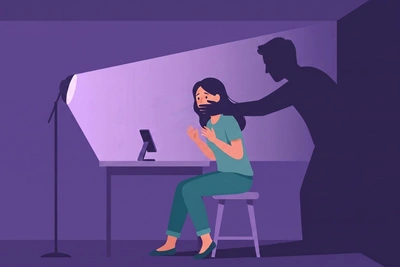
The main issue in proctology isn«t the complexity of treatment but the fact that patients arrive too late and end up in serious conditions. Others stay silent and endure for years due to embarrassment and fear.

At SMT Clinic they know how to address this problem. The team of professional coloproctologists not only treat but also create a calm and trusting atmosphere. We spoke with three doctors to find out why people wait until the last moment, how dangerous stress is, and why hemorrhoids are nothing to be ashamed of.

Stress is to blame
It turns out that hemorrhoids are directly linked to nerves. Even positive stress can trigger a flare-up. «The intestines are connected to the nervous system,» explained Anastasia Nikolaevna Yakovleva. So all worries affect its functioning: constipation, loose stools—these all chain-react to cause anal fissures and other conditions.
Coloproctologist Anatoly Anatolyevich Tregubov confirmed his colleague«s words, noting that years of experience show 96% of external hemorrhoid flare-ups are stress-related. Less common triggers include flights, alcohol, and lower back issues.
According to SMT Clinic experts, Russians are gradually getting used to proctologist exams and fear them less. However, this mainly applies to younger people, while the older generation still faces the problem alone until hemorrhoids reach an advanced stage.
In such cases, doctors invite patients in and honestly say that a physical exam is unavoidable, but it can prevent worse problems. The main thing is not to scold the patient for coming late, but to reassure and provide psychological support, comments Anastasia Nikolaevna. Patients are also advised not to panic and to relax.
— A patient who endures and waits for the nodes to grow deprives themselves of the chance to have simpler procedures. The more advanced the stage, the harder the pain during daily routines and the more unpleasant the treatment itself. They could have solved the problem easily—walk in and out—but for their shame, they pay with pain and worry, told Anatoly Tregubov.
Signs you can«t ignore
The clinic reminds that after 35, any unpleasant symptoms should be monitored; after 45, exams should be as routine as dental cleanings. Anatoly Anatolyevich jokes that sometimes it«s more important than renewing a passport. Pay special attention to:
blood on toilet paper;
pain or discomfort during bowel movements;
lumps or swelling;
prolapse of nodes;
fever and flare-ups—go to the hospital immediately.
These signs are hard to miss, but people often ignore them.
Women need to stay alert
Women have even more reason to monitor their health, especially during pregnancy. Hemorrhoids often flare up or appear for the first time during this fragile period and after childbirth. Doctors advise: if you had symptoms before planning a pregnancy, see a doctor beforehand to reduce risks. Don«t wait for worsening or subject yourself to extra discomfort. In early stages, doctors treat hemorrhoids without surgery—this allows you to have a more comfortable nine months and postpartum period.
Women also often fear seeing a proctologist and self-medicate. Tamara Anatolyevna advises monitoring bowel movements and adding fiber to the diet if constipation occurs. Pregnant women should not avoid a bandage—it can be a lifesaver against hemorrhoids.
— Many girls are fussy and don«t want to wear it, but it relieves pressure on the lower back and the pelvic floor muscles of the hemorrhoidal tissue, explained Tamara Anatolyevna.
How treatment works
At SMT Clinic, you can come with any problem at any stage—they have all modern treatment methods. Early stages use minimally invasive options: ligation (rubber band on the node), foam sclerotherapy (injection that seals the node), and laser. All done without anesthesia right in the office. Later stages require surgery, but it«s minimally traumatic. The operation lasts about an hour. The patient gets anesthesia, the surgeon removes the nodes, and by evening the patient is home, according to the doctors.
— We try to avoid keeping patients in the hospital. In the evening, surgery—by 21:00 they«re home. Even though our hospital is very comfortable, patients almost always prefer to recover at home, so we accommodate them, explains Anatoly Anatolyevich.
The clinic«s doctors are increasingly moving away from old hemorrhoid treatments and using modern techniques with lasers and cutting-edge equipment. Proctology experts tailor individual treatment and avoid surgery whenever possible.