Paramedic: Hopelessness hardest part of job


The paramedic believes fate led her to ambulance work
For twenty years, Viktoria Kirdan has worked as an ambulance paramedic in Barnaul. During that time, she has saved lives in various situations, faced aggressive patients, and found herself in stories resembling crime series plots. About why she has never regretted her choice and why medics are leaving the profession today — in this NGS22.RU article.

Viktoria Kirdan has dedicated her career to emergency medicine
“If I don«t get a job on the ambulance, I»ll leave medicine”

Viktoria says the hardest part is accepting you cannot help
Initially, Viktoria did not plan to connect her life with ambulance service. Her twin sister, who also works on an ambulance but in Moscow, was the first to choose this profession.

The paramedic describes the emotional toll of fatal calls
When the girls were five years old, Viktoria became seriously ill and spent nearly six months in the hospital. It was then that the arrival of an ambulance crew became decisive for the sisters« futures:
— A man who looked like Grandfather Mazai arrived. My sister, seeing him, became inspired by the idea of working on an ambulance. From the age of fourteen, she started working as a nurse«s aide in a hospital, studied chemistry, and got involved wherever she could. I, on the other hand, brushed off the idea; I didn»t want to follow her path at all. But life decided otherwise: in the 1990s, you needed to establish yourself somewhere, so I took a job as a nurse«s aide in the trauma department of the motor plant hospital, and a few months later, the head physician insisted I enroll in a medical college and continue working as a nurse.
After graduating from college, Viktoria worked at a railway hospital for nearly ten years. During that time, she served as a treatment nurse, ward nurse, and duty nurse, but eventually felt the work had become routine and boring.
— I didn«t want to waste my life on something that had ceased to be interesting, she recalls.
Then she set herself a condition: if she couldn«t get a job on the ambulance, she would leave medicine. Getting in was not easy: she had to wait four months for a vacancy.
— My only regret is that I didn«t join the ambulance service earlier. If it»s your calling, no matter how much you run, life will still lead you to where you«re meant to be.
During her first shift, within 24 hours Viktoria encountered everything some medics don«t see for months. For the first time in her practice, she dealt with a difficult resuscitation, a heart attack, pulmonary edema, and a major blood-loss injury.
— My first day was «fun,» of course. And it felt like it lasted ten years. I remember running into my first resuscitation case: an 89-year-old woman, already bluish, not breathing, and her son shouting, «Hurry, hurry, we need to save Mom!» I ran for the resuscitation kit, called for backup crew, and started providing care. When they arrived, they literally had to pull me off that grandmother. The doctor said, «Let her go, stop tormenting the body.» I replied, «I still have five minutes.» My hands were shaking so much from adrenaline that I couldn«t even write. After that, I had almost no such terrifying resuscitations, except one: recently we buried an 11-year-old boy who was electrocuted on a garage roof.
“No matter how hard you try, you can«t help a cancer patient”
Over the years, ambulance doctors inevitably get used to death and learn to treat it more simply: over time, they understand that it«s as much a part of life as birth.
— We are all mortal. I will die, my children, my grandchildren — it«s inevitable. When you encounter clinical death in an adult, you do everything possible to fight that bony old hag. But you realize it»s biochemistry, and everything has its limits.
Even after 20 years of experience, cases where children die remain the hardest to handle.
— It«s difficult, especially when a child dies not after a long illness but due to some absurd tragedy, like in the case of the electrocution on the garage. But apparently, that»s how fate works, Viktoria reflects.
One of the most challenging calls for her was the first encounter with a child whom medicine could no longer help. About five years after starting on the ambulance, the paramedic responded to a call with the preliminary reason «a person felt unwell.» On site, she saw a nine-year-old girl with a brain tumor:
— I have never seen such beautiful children since. By the time I arrived, the girl was sleeping after an epileptic seizure. She looked like an angel, but instead of golden curls, she had black ones, with drains visible among them, placed to slightly reduce brain swelling. I remember having to talk to her father and explain that the situation was so serious that they needed to be prepared for the worst outcomes, and soon. Two weeks later, the girl was gone.
The hardest part, according to Viktoria, is realizing that nothing can be done to help the child, which creates a feeling of complete helplessness:
— Even if I had arrived when she first felt unwell, I could only have stopped the seizures. That«s it. That feeling of hopelessness is probably the hardest in our work. I remember leaving, sitting in the car, and just bursting into tears, scaring the driver. That»s why I don«t like calls to seriously ill cancer patients. Every time, you understand: no matter what you do, no matter how hard you try, you can»t help the person. In the hospital, they might provide palliative care or pain relief, but globally, the ambulance can«t change anything.
In addition to emotionally heavy calls involving cancer patients, ambulance crews are increasingly treated as consultants and are called not only when a person is in danger:
— Once we arrived at a call for a newborn, and there was a 17-year-old mother who had just been discharged from the maternity ward; the baby was five days old. She and her husband, with eyes full of horror, said, «She»s crying. We don«t understand what to do with her.» And I spent an hour explaining to these young parents how to care for their newborn daughter: why she cries, how to swaddle her, wash her, how the mother should massage her breasts so the baby can feed properly. I understand it«s not my duty, but I can»t just turn around and leave: they«ll be alone with the baby afterward. We often get calls to come and help, for example, turn a grandmother to treat bedsores. But she weighs 100 kilograms; how can I help? — Viktoria reflects.
“Only enthusiasts remain”
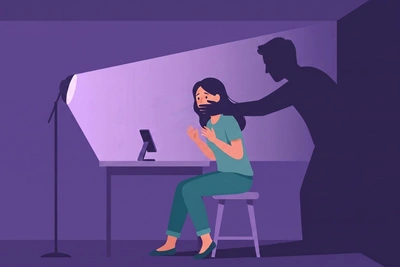
Time and again, ambulance paramedics face threats and even attacks. During one call, Viktoria suffered a neck injury:
— The woman was with her daughter, both drunk. I remember she attacked me from behind because she didn«t want us to help her daughter. She pulled my hair and twisted my neck. I had a long recovery afterward. It went as far as filing a police report.
Despite the difficult calls, staff shortages, and emotional strain, Viktoria has never seriously considered quitting.
— I always joked that we are the special forces of medicine. There«s no other way to put it, says Viktoria.
According to her, the workload on the ambulance is always high: on average, over 24 hours, the crew makes at least 13 calls, but that number changes daily.
— If someone doesn«t quit the ambulance service in the first three years, they»ll definitely work for a decade. The ambulance is a very specific part of medicine where only enthusiasts remain. Otherwise, you just can«t endure it, she says.