HPV Vaccine: Worth the Cost? A Personal Account

A reader shares her personal experience with HPV diagnosis and the expensive vaccine.
Curing HPV is virtually impossible, but it is entirely possible to protect yourself through vaccination. Prices for one shot in Russia range from 10,000 to 20,000 rubles (about 110–220 USD at current rates) depending on the region and clinic. The full course consists of 2–3 injections, depending on the chosen vaccine. A reader shared her story of fighting the virus with MSK1.RU. We explain why HPV is dangerous, how the vaccine works, and when to get it.
According to statistics, the virus can be present in 80% of sexually active people. According to data from the Ministry of Health of the Russian Federation (MoH), the detection rate of oncogenic HPV types in Russia ranges from 13% to 40%. Meanwhile, about 600,000 new cases of cervical cancer caused by HPV infection are registered annually worldwide.
As noted by gynecologist-surgeon Vladislav Taranov, assistant at the Department of Obstetrics and Gynecology of the Institute of Surgery of Pirogov University, there are about 100 HPV subtypes. The most dangerous of them are types 16 and 18, which account for 55–60% and 10–15% of cervical cancer cases, respectively.
«My story with the virus has been going on for five years. The most frustrating thing is that I didn«t catch it through sexual contact. That would at least make a story. The virus was passed to me from my mother. I found out about it after a visit to the gynecologist when I got tested,» Rita told an MSK1.RU correspondent.
Rita was found to have a dangerous type. Under such conditions, treatment must be immediate. The doctor immediately warned her that the virus would only go into «hibernation.»
«My partner also got tested, and he turned out to be «clean.» As the doctors explained, he has strong immunity. My treatment lasted about six months. There were various medications, procedures, tests. In general, not the most pleasant thing that happened to me. But it helped. Indeed, after a few months of fighting, the titers went down, and I breathed a sigh of relief.»
Thereafter, on the doctor«s advice, Rita got tested every six months. Everything was fine until three months ago, when the virus returned. But this time, in addition to it, dysplasia appeared (a precancerous condition in which atypical cells appear on the mucous membrane. — Ed.).
«I thought I«d get the usual tests: cytology and HPV test. And then, like a bolt from the blue, the doctor blurted out the titer and a precancerous condition. That I was scared is an understatement. I was again prescribed pills and sent for additional tests and colposcopy. The results didn»t show any titers, but mild dysplasia remained. How did that happen? The doctors threw up their hands, blaming problems in the lab, stress, etc. I understood only one thing: the female body is a mystery.»
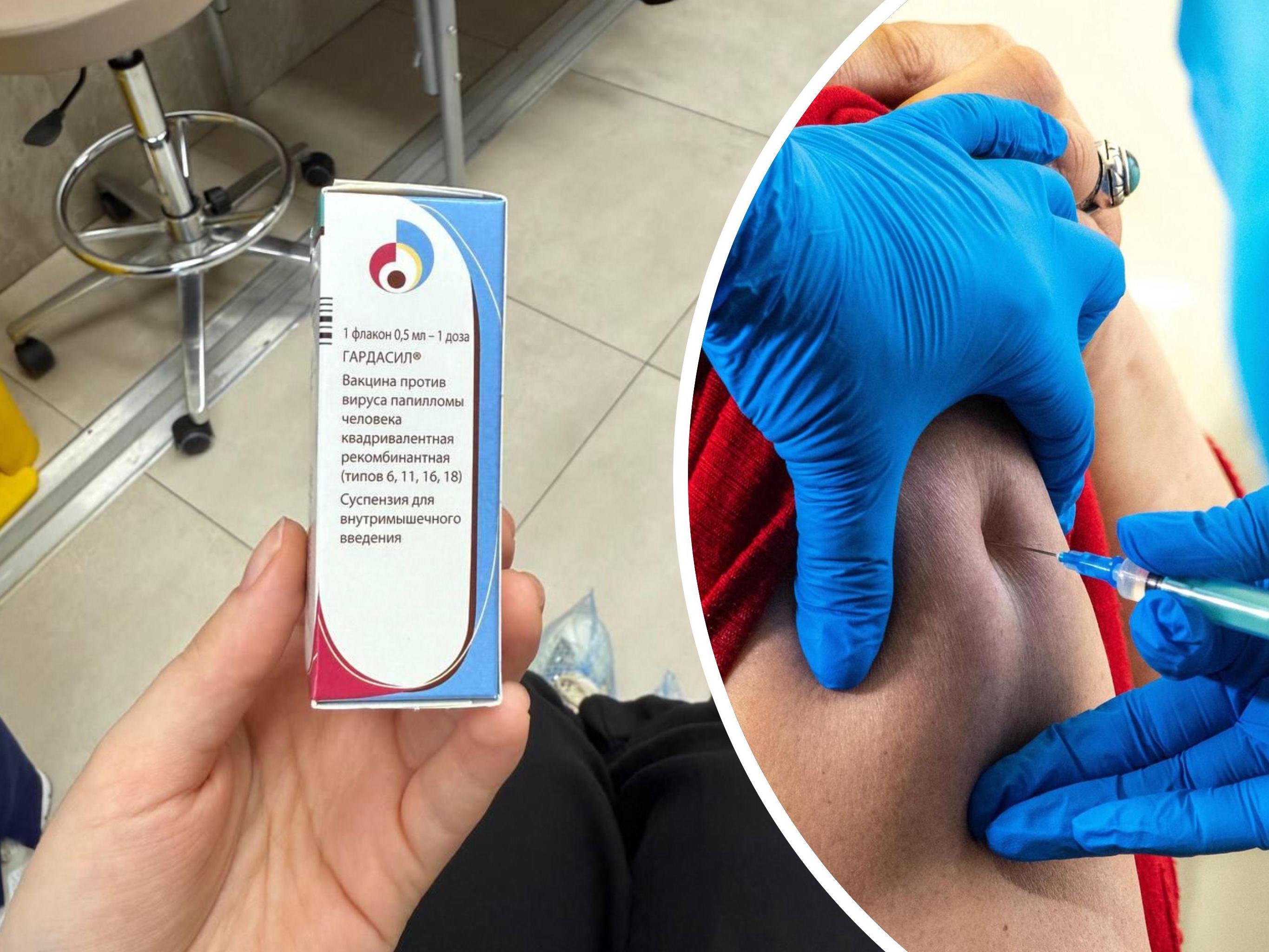
Nevertheless, as a preventive measure, Rita was sent for vaccination — the vaccine helps prevent infection with other types of the virus and reduces the risk of other HPV-associated diseases. On the advice of doctors, Rita has so far managed to get only one shot.
«They give the shot in the left shoulder. It«s a bit painful, but not as much as paying 17,000 rubles (about 190 USD at current rates) for one vaccine. They decided to give me Gardasil. I»ll need two more shots: one in a month, the second in two months. Then more tests and checks for dysplasia.»
What is HPV and why is it dangerous?
Rita«s story is just one example of how the human papillomavirus (HPV) manifests. We asked doctors to explain how dangerous this infection is, how it is transmitted, and whether the vaccine can really protect against severe consequences.
According to obstetrician-gynecologist and WHO expert Lyubov Erofeeva, HPV is one of the most common viral infections. However, it is not always a disease — many people are merely carriers.
«But some strains behave very unpredictably and aggressively. When they reach the surface of the cervix, they can cause cancer that remains almost asymptomatic for a long time,» the doctor explains.
Obstetrician-gynecologist and endocrinologist Olga Kaplina clarifies that more than 200 types of HPV are known today. The most dangerous are considered to be types 16, 18, 31, 33, and 45, as they are associated with the development of cancer.
Moreover, the virus is dangerous not only for women but also for men: HPV causes cancer of the cervix, vagina, penis, and anal area.
How is the virus transmitted?
The main route of HPV transmission is sexual contact. But the question of whether the virus can be transmitted from mother to child remains a subject of debate. For example, according to Lyubov Erofeeva, intrauterine infection is impossible.
«The virus is transmitted through contact, mainly sexual. It is not transmitted from mother to fetus,» the expert says.
Olga Kaplina takes a more cautious position. According to her, most people do become infected during intimacy, but the likelihood of transmission to a child still exists, although it remains very low.
Can HPV be cured?
There is no specific treatment that can completely rid a person of the virus.
«In 80% of cases, the body can clear HPV on its own within a few years. But the longer the virus persists in the body, the higher the risk of developing cancer. Antibiotics do not work on viruses, and methods to completely cure HPV have not yet been developed,» notes Olga Kaplina.
Lyubov Erofeeva explains that the virus hides in the mucous membranes and does not circulate in the blood, making it difficult for the immune system to recognize it.
«The body as if «does not see» the threat. That is why the vaccine helps build immune protection,» she clarifies.
At the same time, specialists emphasize that even in the absence of complaints, women should undergo regular preventive checkups. During reproductive age, it is recommended to visit a gynecologist every six months, and later at least once a year. During the visit, the doctor may order a cytological examination and, if necessary, colposcopy, which allows assessment of the cervix under magnification.
How does HPV manifest?
The virus does not always make its presence known. According to Olga Kaplina, laboratory tests help determine its presence.
«A PCR test is used for diagnosis. Based on the results, the doctor decides whether additional examinations, including colposcopy, are needed,» the specialist explains.
Meanwhile, at the state women«s clinic or polyclinic at the woman»s place of registration, women aged 21 to 49 can undergo free HPV diagnostics. The screening can detect the most dangerous strains that can lead to cancer.
It is important to remember that some types of infection can also manifest externally.
«The virus can cause the appearance of condylomas and warts. Such growths necessarily require medical attention,» notes Lyubov Erofeeva.
Can the vaccine eliminate the virus?
Doctors emphasize: the vaccine does not treat an existing infection, but it significantly reduces the risk of infection with the most dangerous HPV types and the development of associated cancers.
«Vaccination should be given to both women and men. It does not eliminate an existing virus, but protects against infection with other HPV types. The optimal age for vaccination is from 9 to 14 years, but it can be done later, even if a person is already a carrier of one of the strains,» says Olga Kaplina.
Lyubov Erofeeva notes that historically, vaccination was primarily aimed at girls, because in women HPV more often leads to severe consequences.
«Men are carriers; they can bring this disease. Women get the full bouquet of suffering. So initially we are essentially protecting the victim,» the expert concludes.
As Lyubov Erofeeva explained, in 2027, Russia plans to include HPV vaccination in the national immunization schedule. This will make it free. Currently, imported vaccines — Gardasil and Cervarix — are registered and used in the country.
Read about what steps to take to prevent cancer and how often you need to get tested.