'Better Than Private Centers': Pediatrician Moves to Village


Anna Bogacheva, 33, is a pediatrician at a district hospital. After receiving her education in the city, the medic deliberately moved to live and work in a village. In an interview with our colleagues at 76.RU, Anna talked about the specifics of practicing as a children«s doctor in the countryside, gave advice to parents for the summer season, and explained why she doesn»t want to return to the city.

Started in the City
Anna moved to the village from Yaroslavl, where she graduated from the pediatric faculty of a medical academy in 2017. She now lives and works in the neighboring Kostroma Oblast.
— I managed to work for about a year at a children«s clinic, where I came right after university after getting accreditation. That clinic was the one I went to as a child. There was a good team, I could ask for help without any problem. There was a good head physician who gave me a start in work, training me in practice. When I come now, I often stop by, — the doctor shares.
In the village where the medic lives, there is a House of Culture, a feldsher-midwife station (a rural medical post), a school, a kindergarten, a post office, and a library. She moved there after getting married.
— While I was on maternity leave, I was still registered in the city. But I had been drawn to the village even before. During the leave I somehow got used to it, and after that I came here — to the district hospital as a district pediatrician. I joined through the Zemsky Doctor program (a federal program to attract doctors to rural areas) and received a payment. I«ve been working here ever since. The team accepted me well, and the district»s chief pediatrician helped me, — she says.
Anna drives to work in the neighboring village, which is five kilometers from her home.
How Work in the Village Differs from the City Clinic
According to the pediatrician, the difference in work is significant. It concerns both the schedule and the workload. In fact, every doctor at the district hospital is a generalist. For example, an ophthalmologist at the hospital sees everyone: both children and adults.
— At first it was difficult in terms of adaptation. For example, there is a shortage of pediatric specialists in the countryside. Not long ago, a diagnostic and treatment center opened at the regional hospital, there are specialists there, but not many visits — not everyone has the ability to travel here. So the pediatrician ends up being practically for all specialists, except for those who are at the hospital. If additional examination or hospitalization is needed, we, of course, refer to the regional center, — she shared.
At the district hospital where Anna works, there are four pediatricians on staff. Three of them manage their assigned districts and see patients, while one oversees schools.
Among other features, the medic highlights the work schedule — essentially 24/7.
Pediatricians make house calls to patients. And here too there are differences between the city and the countryside.
— In the city there are more calls, but the catchment area is small. For example, there could be three calls in one building entrance. But here the spread can be quite large — kilometers of travel. Daytime cars are a lifesaver — when they are free, you can use them, — added Anna.
«People Simply Can»t Get There«
A feature that city residents hardly ever think about is how to get to an appointment at the scheduled time. You get an appointment slip — you come. In the village, it«s different.
— There are morning or evening appointments. But not everyone can come in the evening. We have buses that run from distant villages twice a day. That means parents can only bring their child in the morning and then pick them up at lunch or in the evening. So at those times, even if my appointment hasn«t started yet, I still see them because I understand they can»t just come at another time. They have to travel from a faraway village. It«s not like in the cities — strictly at the scheduled time. I see everyone, — pediatrician Anna Bogacheva said.
What Problems Parents Come With
In this sense, there is no difference between city dwellers and villagers: everyone gets sick roughly the same way.
— The illnesses are no different from city ones. There is seasonal flu, and we have it too. September, October, November — that«s ARVI with cough, runny nose, and fever. Parents may come from villages from the feldshers, as they, within their capabilities, are incompetent in some matters and refer them to our district hospital, — explained Anna.
Why the Young Doctor Loves Her Work
On this matter, Anna opened up. The pediatrician adores her profession and seems to throw herself into it wholeheartedly. At the same time, she herself is a mother of two children.
— I love it for the response. Most patients are very grateful and understanding. The children are wonderful. For those who aren«t very patient during appointments, I give out stickers that I buy specially. As a kind of incentive for those who don»t want to let me listen to them or show their throat, — Anna Bogacheva shares the tricks of pediatrics.
Probably not everyone would find pleasure in listening to other people«s problems. But Anna sees this as a plus of her work — helping to relieve emotional tension.
— Sometimes you need to be a bit of a psychologist. No one has canceled postpartum depression, for example. Moms worry a lot, with or without reason, and don«t understand how to manage the baby. And you calm them down, explain the peculiarities of a newborn, that many physiological conditions are not scary but are a normal variant, — the pediatrician explains.
She also explained why it is important not just to treat, but to build trusting relationships with patients.
— As my nurse used to say, our common task is to raise your healthy children. Doctors give recommendations, but we don«t know if they are followed at home. Trusting relationships between doctor and patient are important, — Anna emphasized.
A Frightening Case with a Newborn
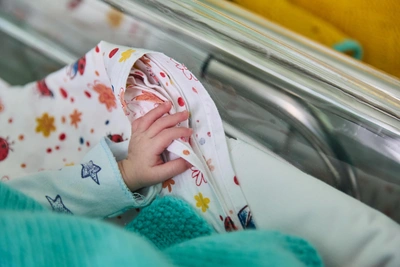
Anna also told about a rare case she encountered in practice. In her first year working at the rural hospital, she received a call on a day off to a newborn. The condition was frightening: vomiting, the baby was rolling its eyes.
— The baby was born normal and healthy. Discharged home. We were in touch with the parents, exchanged contacts. They wrote to me that something was wrong with the child: vomiting, rolling eyes. The child«s father came to pick me up then. On the spot, I understood that something was wrong with the infant, but couldn»t immediately say what. I insisted on hospitalization. At the regional center, they examined and found that an intraventricular hemorrhage in the brain had occurred, — the pediatrician recalls.
According to the doctor, this condition is extremely dangerous, even fatal.
Intraventricular hemorrhage is an excessive accumulation of blood in the brain cavities due to rupture of immature blood vessels. The clinical picture depends on the stage of the disease: the mildest can be asymptomatic. In more severe cases, the hemorrhage is followed by multiple manifestations — from strabismus to respiratory depression.
— The condition was dangerous, few survive it. They were treated for a very long time. The child was given a disability, but he is now in quite good condition. A good boy. We still have warm relations with the family. Great parents, a very strong mother, what she went through. I remember how many tears I shed, let alone them... When a child is in intensive care, they don«t let you in. But thank God the doctors took over and operated. Now he is compensated. The most important thing is that he is alive, yes, with a disability, but he runs, jumps, goes to kindergarten.
Why She Doesn«t Want to Return to the City
Anna has come to love both the rural life with its atmosphere — her own vegetable garden, nature around, and expanse — and the work at the district hospital. As she notes, earnings in the hinterland are similar to a doctor«s income in the city.
— Of course, we communicate with colleagues from the city, meet at conferences. I observe their work. But at our district hospital, they did a gorgeous renovation with hand-painted murals on the walls in the pediatric consultation room — it was sponsored by a local jewelry company. And now it«s no worse, even better than private centers. Clean, tidy, there»s a mother and child room with a changing table. The waiting time with children is comfortable because there are special playhouses with all sorts of things. Our pediatric consultation is like Narnia — a separate world. There«s a TV, you can watch cartoons, a good bathroom. I go to work with great pleasure.
Advice for Parents for the Summer Season
In conclusion, the pediatrician gave recommendations to moms and dads on what to pay special attention to in their children«s health.
— I would advise paying attention to several problems. The first is ticks, there are quite a lot of them. Especially near bodies of water, which are abundant in rural areas. Always check yourself and your children. In practice, there was a case where a tick bit a newborn on the head. As it turned out, a cat brought it. Thank God it turned out to be uninfected. I was shocked that a baby who just lies there had a tick.
The medic also highlighted other dangers that can be encountered in the warm months:
Intestinal infections and rotavirus. Summer is the season for fresh berries and fruits, and with that comes an increased risk of food poisoning;
Sore throats from excessive ice cream. The child gets hypothermia, which makes it easier for viruses to take hold;
Heatstroke — wherever children are, they should be wearing headgear;
Injuries: bicycles and electric scooters are a separate threat. Children don«t know the traffic rules, they don»t dismount at crosswalks, which is very dangerous;
Stress in teenagers during exam periods, against which illnesses also worsen.
— Children in the first years of life should not be left in direct sunlight. It happens that a child is covered, but one leg sticks out from under the hood — resulting in a burn. There are also allergies to the sun, — the doctor concluded.