Yaroslavl forager finds unusual edible bracket fungus
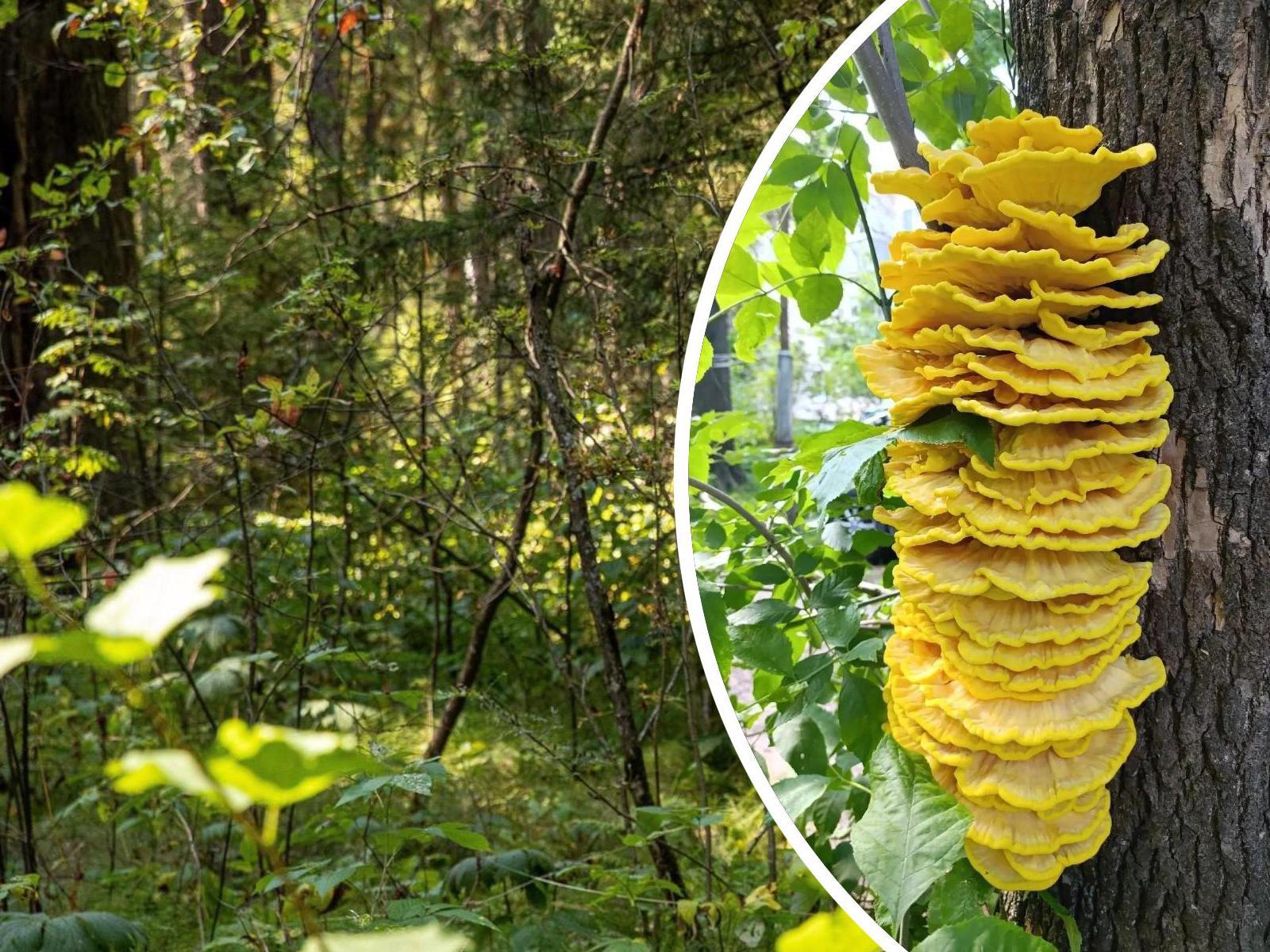

A Yaroslavl woman found an unusual mushroom in the forest — is it edible?
A resident of Russia«s Yaroslavl region found an unusual fungus in the forest. The woman did not rush to cut it into her basket — first she asked experienced foresters for advice. She published a photograph of the find in a group for fans of quiet hunting.
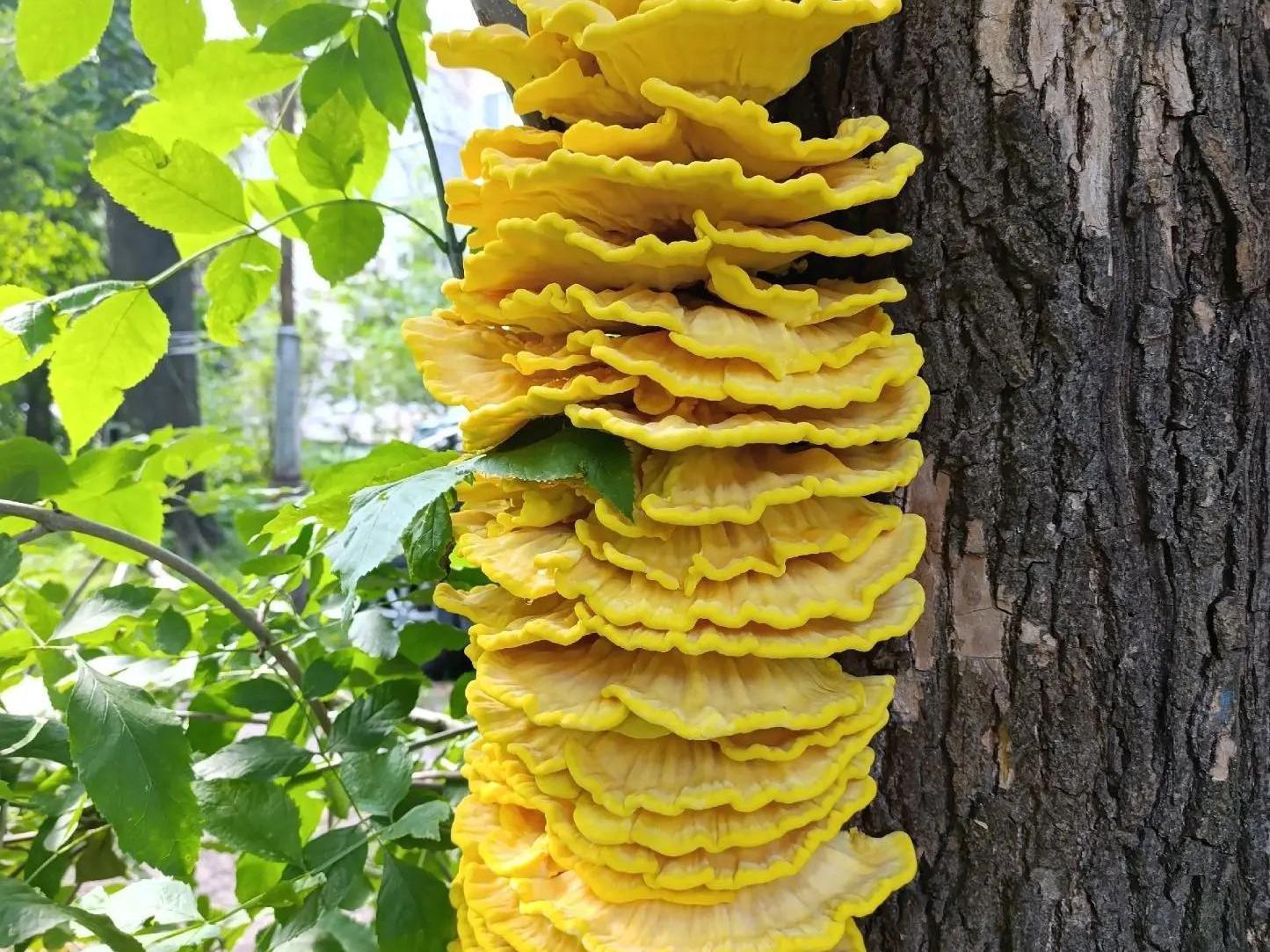
The mushroom grows on a tree
“Tell me, what kind of mushroom is this?” Natalya, a resident of Yaroslavl, wrote under the picture.
In the middle of the frame, a yellow-grey growth sat on a tree. By its size, it looked quite large.
In the comments under the post, people suggested the picture showed a bracket fungus (tinder fungus). Yaroslavl mycologist Olga Lazareva confirmed this in a conversation with a 76.RU correspondent.
“The photograph shows a bracket fungus, or Laetiporus sulphureus (sulphur-yellow bracket fungus), one of the most commonly encountered bracket fungi in the Yaroslavl region,” the expert said.
According to the mycologist, the fungus parasitizes the trunks of living deciduous trees: most often oaks, lindens, and elms, and less often the trunks of bird cherries, willows, poplars, and others. The growth destroys the tree, causing brown rot of the wood.
“The mushroom is edible and tastes like chicken meat. However, it can only be eaten when young, while it looks like fairly soft cones, lumps, or weakly defined ‘fans,’” Olga Lazareva explained.
The bracket fungus usually develops from May to September. The color of the pores and the surface of the edible stage of the fungus should be bright yellow.
With age, the mushroom becomes pale yellow or cream-colored, as if it has “faded.” The fruiting body takes on a rubbery consistency and a sour or bitter taste.
“Mushrooms collected from willow and poplar are considered unpalatable. The bark and wood of these trees contain large amounts of bitter substances (for example, salicin, from which acetylsalicylic acid (aspirin) was synthesized in the 19th century), which pass into the mycelium of the mushrooms,” the mycologist told a 76.RU correspondent.
The bracket fungus must be prepared using a special technique. So that mushrooms collected from willow or poplar are not bitter, they must first be squeezed well and then stewed for 1.5–2 hours. Fruiting bodies taken from other tree species can be fried without preliminary boiling.
“You can also boil the ‘wood chicken.’ If you add dill, the mushroom will taste like boiled squid that does not have a ‘rubbery’ consistency,” the mycologist said.
Earlier we told how a Yaroslavl resident mistakenly brought home a life-threatening mushroom, confusing it with a popular edible one. We also told where you can gather several buckets of chanterelles and showed photos of Yaroslavl residents’ haul. And here you can see where wild strawberries grow in the Yaroslavl region.