Heresy of Loyalty: Leningrad Professor Punished for Refusing to Denounce Husband
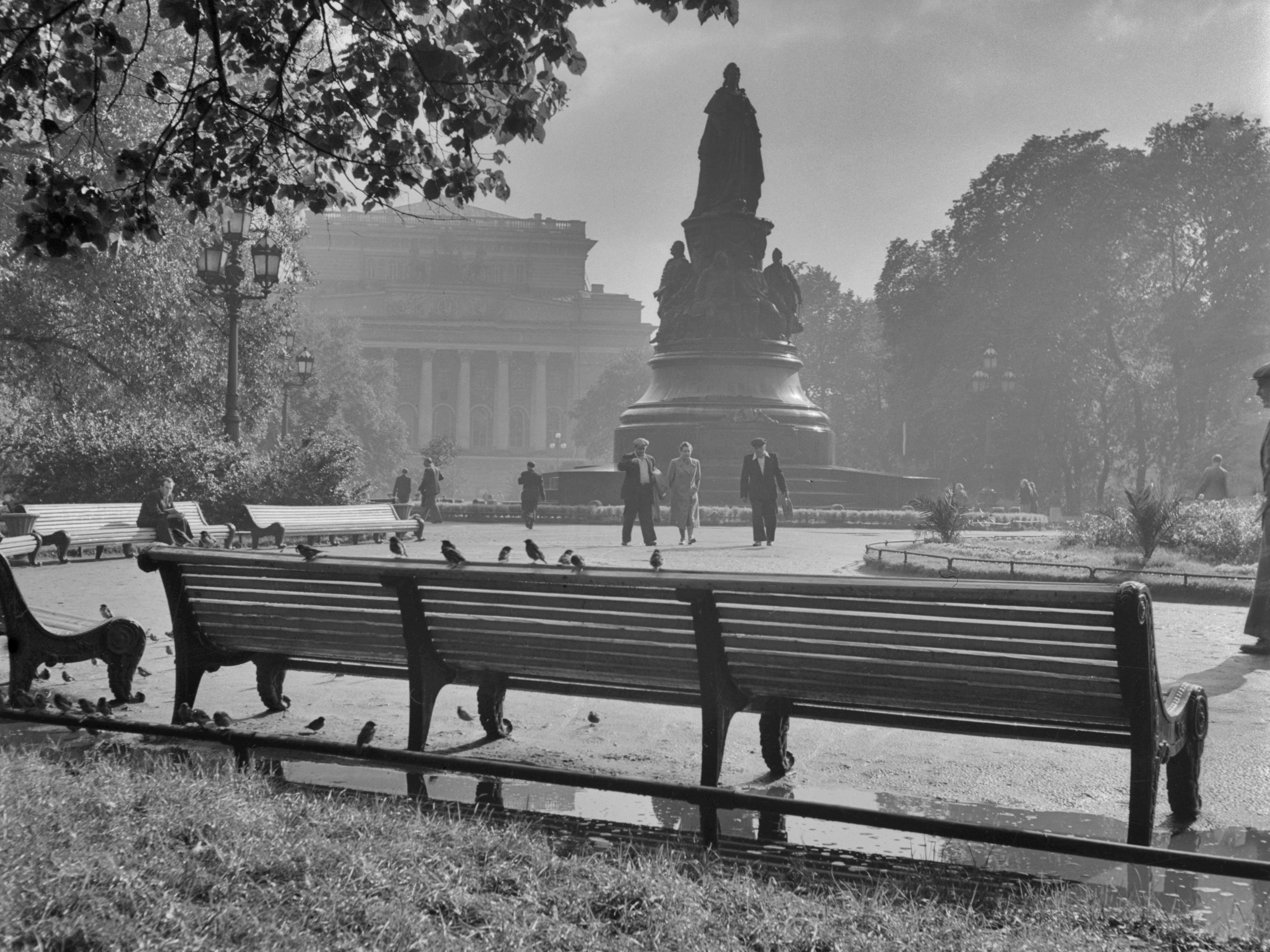

In 1950, at the Vasileostrovsky District Committee of the All-Union Communist Party (Bolsheviks) on the 9th Line, building 10 — now the site of St. Petersburg Customs — the fate of a docent in the Department of USSR History at Leningrad State University named after Zhdanov was being decided. Yevdokiya Markovna Kosachevskaya, born in 1906, stood before a party meeting.
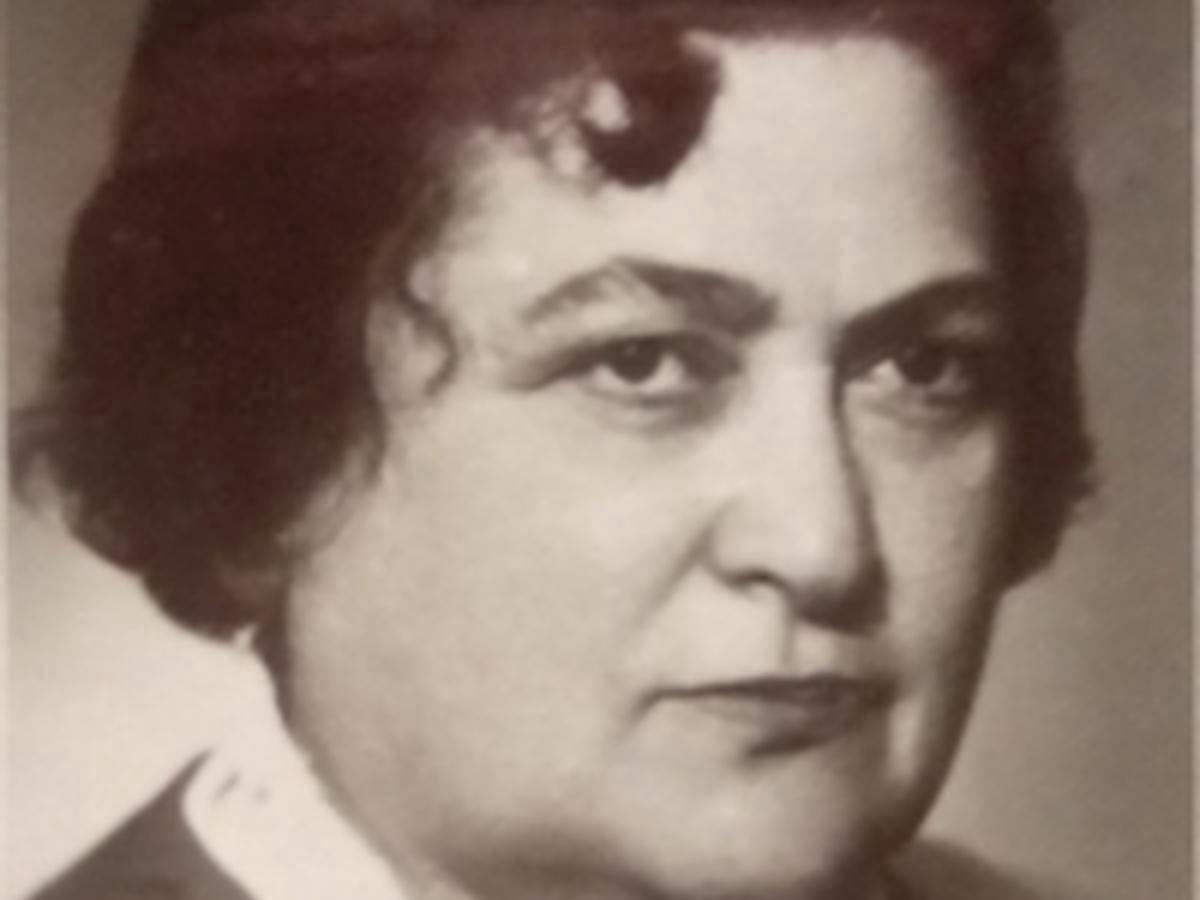
Yevdokiya Kosachevskaya. Severe, but this is after her release. One can see she was a beauty.
By that time, Adler Prospect, named after the Austrian socialist, had reverted to Bolshoy Prospect. That day, February 9, was unusually warm — nearly zero degrees Celsius (32°F) during the day.
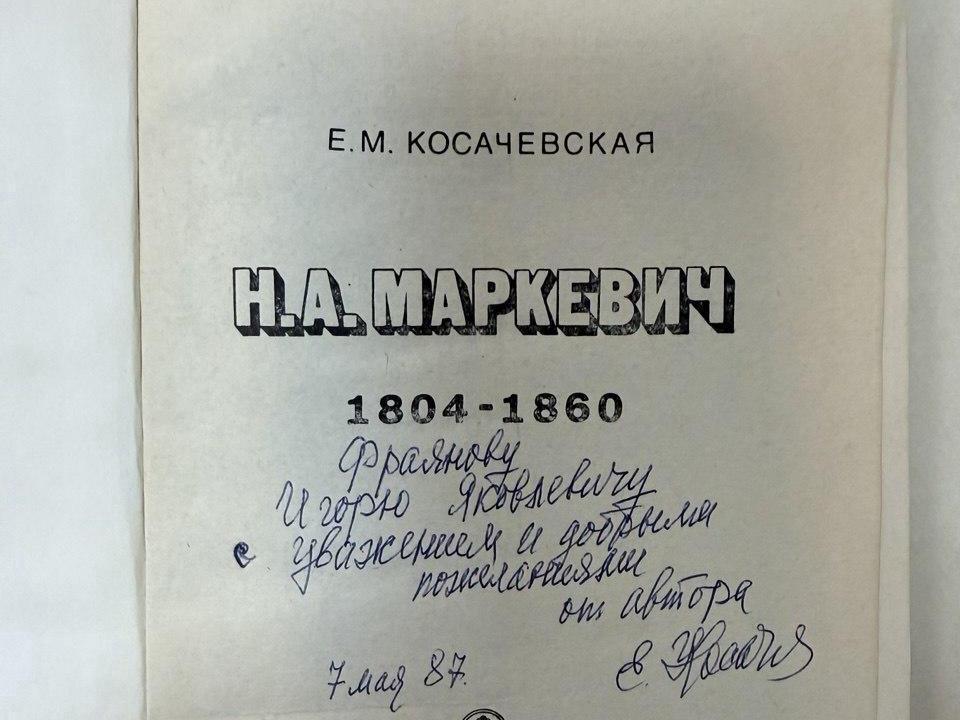
Dedication inscription — to Igor Froyanov. He was the permanent dean of the History Faculty from 1982 to 2001. Removed from his post thanks to Boris Yeltsin«s criticism in the book Dive into the Abyss. Became an ultraconservative calling for the removal of Repin»s painting Ivan the Terrible and His Son Ivan from the Tretyakov Gallery as denigrating traditional values.
Yevdokiya Markovna«s biography was full of drama. She was born in Ukraine and graduated from Kharkov University. By the start of the war, she was already teaching at Leningrad State University. In besieged Leningrad, on the basis of the History Faculty on Mendeleevskaya Line, she organized a hospital where she lectured to the wounded. In 1943, she defended her dissertation, and that same year her brochure Song of Zhdanov was published, containing the lines: “With you, Leningrad will not be broken, with you it will survive everything!”
At the district committee meeting, she was given a severe reprimand for loss of political vigilance, expressed in the fact that she “did not expose” the university rector, “enemy of the people” Aleksandr Voznesensky. However, on December 28, a higher party authority changed the wording: Kosachevskaya was expelled from the party. The formal reason was her “close relations” with Voznesensky, whom she “considered her husband.”
The Leningrad Affair, which gave rise to these accusations, was launched in 1949. Nikolai Voznesensky, chairman of the USSR State Planning Committee, and his brother Aleksandr, minister of education, were shot. Hundreds of people were broken. The organizer of this campaign, Minister of State Security Abakumov, was arrested and shot a year later.
Among the charges brought against Kosachevskaya was the note that she knew Voznesensky “contrasted Leningrad University with Moscow University,” believing that their university should have “its own face and independent programs.”
Historians still debate the origins of the Leningrad Affair. Lev Lurie, for example, insists on the version that it was provoked by the Leningrad leadership«s conviction in the city»s special mission. It is telling that even during the blockade, streets were returned to their historical names, and 25th October Prospect once again became Nevsky Prospect.
From the work of historian Gessen, we know of Voznesensky«s mood before his arrest. He was “murderous.” Kosachevskaya tried to comfort him: “Why are you so despondent? Well, they»ll remove you from your job, expel you from the party. We«ll go to Siberia. We»ll teach in school — I«ll teach history, you literature.”
When her husband was arrested, she was expected not just to repent but to denounce the man she loved and cooperate with the investigation. Any other behavior — silence or tears — would have been regarded as disloyalty. Kosachevskaya, contrary to the stereotypes of the time, openly denied her husband«s guilt.
The protocols of the party meeting record her statement: “until recently she believed that Voznesensky«s arrest was a fatal mistake and that he was not guilty.” Moreover, she uttered a phrase that predetermined her sentence: “better that five innocent people suffer than one guilty person be missed.”
Following this, she was blamed for maintaining contact with Voznesensky«s sons after his arrest and providing them with material assistance. She was also reproached for, as a member of the party bureau of the History Faculty, “not playing an active role in exposing enemies of the people” — Reikhardt, Rosenfeld, Stein, Gukovsky. This was despite the fact that an anonymous article in the newspaper Leningrad University had castigated professors Reikhardt and Stein, after which more than a thousand book titles were removed from the History Faculty library.
The climax was that Kosachevskaya “asked to be kept as a member of the All-Union Communist Party (Bolsheviks).” This was perceived as heresy. In the end, she was expelled from the party, which at the time meant only one thing — the hope that she would not be arrested.
The “troika” under the USSR Ministry of State Security handed down its verdict only in December 1950. She was convicted under Article 58-1 for counterrevolutionary activity and sentenced to eight years in the camps.
She was released in 1953, after Stalin«s death. The “fierce” Article 58 was repealed only in 1961. In the spring of that year, Gagarin»s “Let«s go!” was heard, and in the autumn the leader»s body was removed from the Mausoleum.
Returning to Leningrad, Kosachevskaya managed to find work again as a docent at the History Faculty, after working for a year in Ashgabat. But in 1968, she was once again expelled from the university.
The reason was the refusal of historian Yuri Margolis to testify against his colleague accused of anti-Soviet agitation. Margolis was summoned to the KGB and then criticized at a party meeting. Kosachevskaya spoke out against his expulsion from the party and dismissal. In the end, both were fired from the university — she and Margolis. They remained friends until death.
After that, Kosachevskaya continued her scholarly work. She died in 1994, in an era when one could openly speak of one«s principles, but throughout her life she was guided by a saying from Gogol: “First, absolutely no benefit to the fatherland; second… but second, too, there is no benefit.”
It is symbolic that in November 1941, in encircled Leningrad, her article about Suvorov appeared in the newspaper Strike at the Enemy. In it, she quoted the famous phrase of the commander, which sounded like a prophecy about Kosachevskaya herself: “Yes, we are Russians, we will overcome everything.”
Decades later, the story found an unexpected continuation. Businessman Aleksandr Voznesensky, grandson of the executed chairman of Gosplan and son of the repressed Ernest, created the famous public space Sevkabel Port in St. Petersburg. In the late 1980s, he studied at the Leningrad Financial and Economic Institute named after his grandfather, and the department was headed by his father, a doctor of sciences who had served time.
The author of this publication found Kosachevskaya«s book with her autograph (scientific editor — Yuri Margolis). The book will be given to Aleksandr Voznesensky. Yevdokiya Kosachevskaya outlived her accusers, including NKVD officers who later themselves fell under the wheels of repression. The past was left with its nose out of joint.