One-day trip to Elista reveals unique culture and city's poverty

Travel is always an anticipated event, with new impressions and interesting places, especially when you go to see sights and get acquainted with another people«s culture. A correspondent from 26.RU went to neighboring Kalmykia from Stavropol and shared her impressions.
The trip was one-day — the most optimal option for those who don«t want to leave for long, bother with accommodation, and spend a lot. The journey was group-based. We paid a travel agency that takes people to neighboring regions and shows interesting places. Everything was memorable, but how positive were these emotions?

«We Expected an Unforgettable Journey»
The wake-up was early. When you travel for just one day, it«s optimal to arrive at the destination early and see more. Departure from Stavropol was around 4:30 a.m. This means waking up much earlier to make it to the meeting point. Since we took a group tour, we had to travel by bus with strangers. Perhaps for some this is a problem, but for others, it»s an extra reason to socialize.
The road from Stavropol to the capital of Kalmykia, Elista, takes about 3.5–4 hours. It all depends on the weather and type of transport, so sometimes you can get there faster, for example, if you«re by car and not by bus. In the morning on the road, you can sleep, but the organizers from the first minutes make the trip active, helping everyone get acquainted, so for most of the time, sleep wasn»t appealing.
We were told the approximate travel plan and where we would stop. Since Kalmykia is a region where the main religion is Buddhism, we expected to fully immerse ourselves in an unfamiliar culture. What came of it?
Syakyusn-Syume
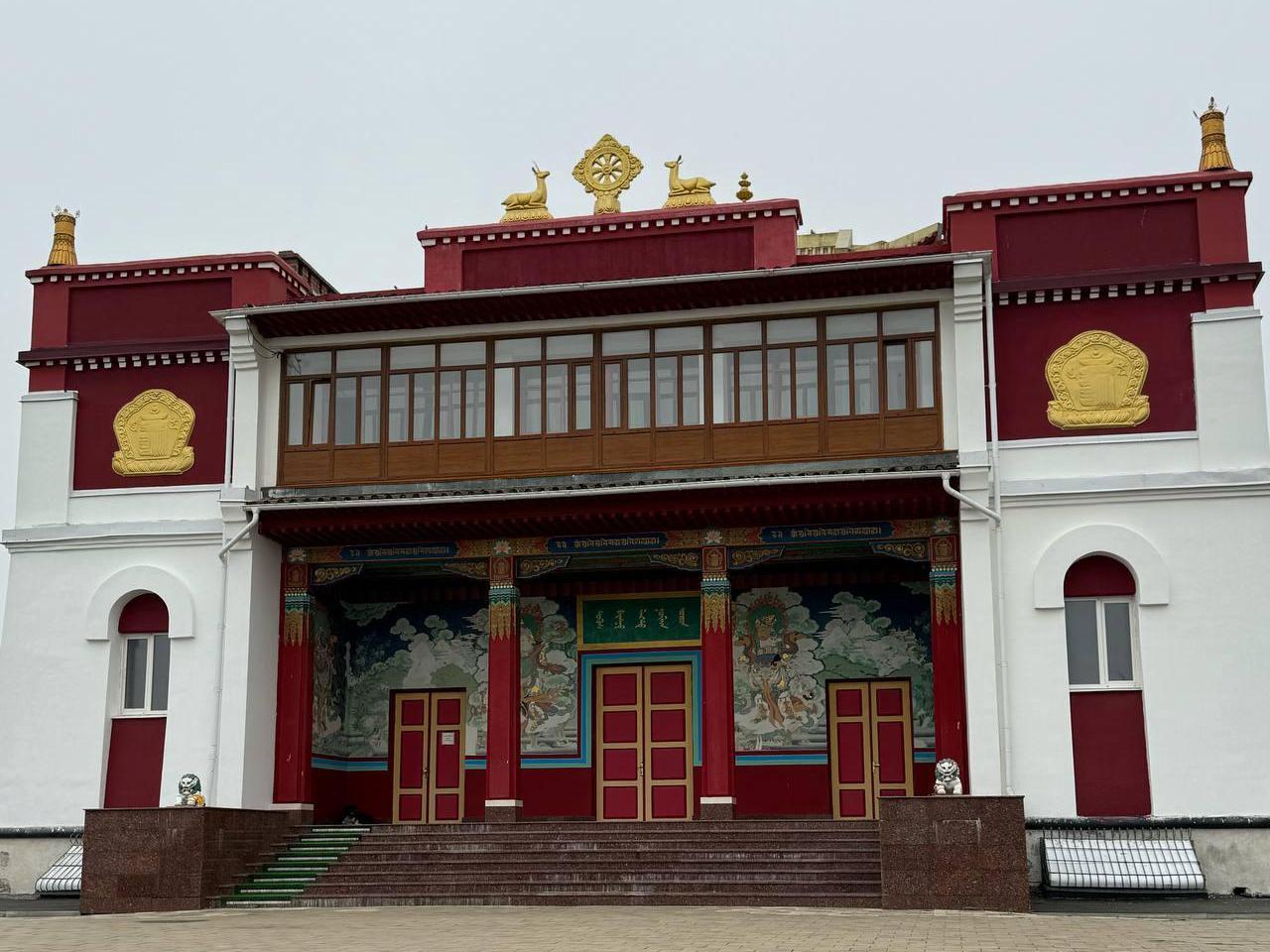
The first stop was the Buddhist temple, or khurul, Syakyusn-Syume. This is a two-story building about 20 meters (66 feet) high. On the first floor, there is a prayer hall, an altar, in the center of which is a large statue of Buddha Shakyamuni. Interestingly, inside, filming video or taking photos is prohibited, but outside it is allowed. Important: visiting khuruls is free, but bring some coins with you. Why — we«ll tell later.
The first impression of the temple was unforgettable, as I had never encountered such architecture before. It«s amazing that in a neighboring region, there is literally another world, a different, unfamiliar culture to me.
In front of the temple entrance, kürde — prayer drums — are installed. You place a coin and pass each one, spinning them. Inside the drum are sacred texts — mantras — and spinning replaces reading them. The drums are spun for good luck.
There were practically no people here. Possibly because in Elista, there is another, largest temple, and everyone goes there. But more on that later.
Even though photographing inside is not allowed, we simply must describe what the khurul looks like. For an Orthodox person who has been to a church at least once, it«s customary to see murals, icons, and various religious scenes in such a place. But in a Buddhist temple, everything is completely different. Colored walls, on which you can often see animals — this is how gods are depicted. Bright patterns strongly attract attention. There are also mandalas — symmetrical drawings. Similar murals are outside as well.
A Buddhist temple is a bright place, uniquely captivating. Here it«s quiet, peaceful, you just want to sit and enjoy.
Golden Abode of Buddha Shakyamuni
The tour of Syakyusn-Syume wasn«t very long. The weather let us down — it was too windy, cold, and raining. This is normal for Kalmykia, as it»s a steppe region. Wind is not uncommon here. If you plan to come here in spring, dress warmer.
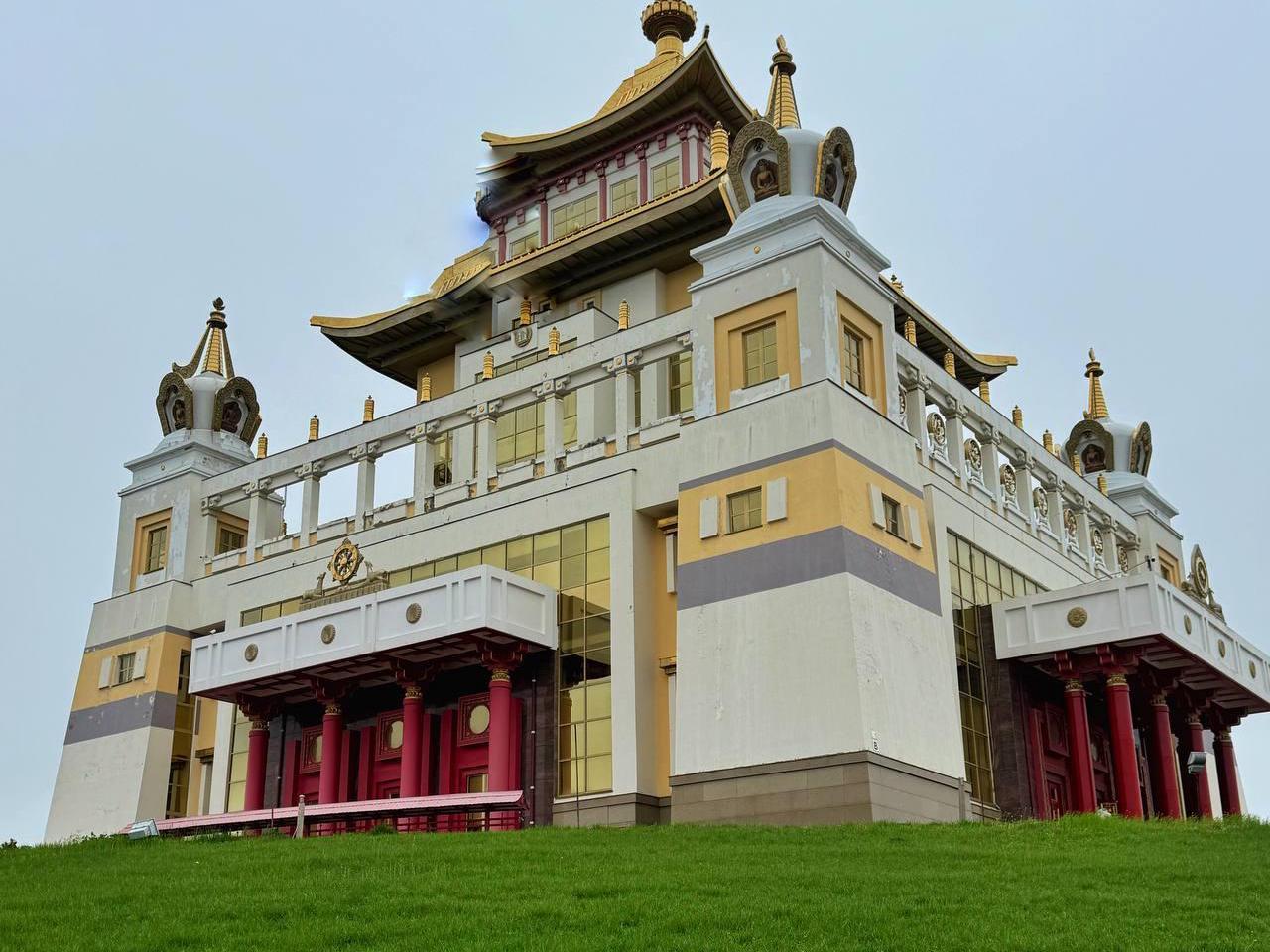
Next, we went to the center of Elista, where another khurul is located — the Golden Abode of Buddha Shakyamuni. This is the largest Buddhist temple in Kalmykia and Europe.
The height of the building is about 63 meters (207 feet). The view and scale of this place are impressive. Around the perimeter, the khurul is enclosed by a fence with alternating snow-white stupas. There are 108 in total. Here, there are four entrances, located according to the four cardinal directions. The southern gate is the main one. The entire architectural plan of the monastery is executed in the form of a mandala. Also, the building is surrounded by 17 pagodas with statues of great Buddhist teachers from the Nalanda monastery.
Usually, tourists are let in calmly, as our guide told us, who has taken groups to this place not for the first time. However, that day clearly didn«t go well, because we were prohibited from entering the prayer hall, where the second largest in Russia 9-meter (30-foot) Buddha statue is located. It turned out that at that time, a service was taking place. The group decided to wait, and in the meantime, go to another part of the temple where there is a museum. But here too, we encountered rudeness. It»s surprising how people working in such a place are not averse to pushing you (out of dislike).
Without much joy, they explained to us that tours need to be booked in advance (although the guide claimed that previously there were no problems with this), and now other people would come. It would have been fine, we asked to just go in and look — we don«t necessarily need to be accompanied. The staff condescended and allowed it, however, conflict couldn»t be avoided. This temple was the most anticipated place, but unfortunately, it also left the most unpleasant impressions.
Later, we managed to get into the prayer hall. Of course, the view is impressive: a huge statue, altars, murals — all this looks completely incredible and unusual for a person of another religion. At that moment, even those unpleasant emotions we got in the museum were forgotten.
«The City Looks Poor»
After the khurul, we walked on foot towards Friendship Park, where the famous Golden Gates are located. This structure, like all Buddhist attractions in Elista, is bright and painted in different colors. Here, in pictures, the brief history of the Kalmyk people is depicted. There is a belief that you need to pass through the gates and make a wish. If a bell rings, then it will definitely come true. Of course, many of us decided to try our luck. Considering that it was raining and windy, for many, the bell rang. Let«s hope that it»s not just nature«s mischief, but signs of fate — and our wishes will definitely come true someday.
Popular tourist locations in the city are truly unusual, especially for a person who is encountering this Eastern culture for the first time. However, the city itself doesn«t evoke a storm of positive emotions. Compared to Stavropol, it looks poor, at least somewhat outdated, neglected. Of course, this is a subjective opinion, but many trip participants were in solidarity with it. Perhaps the unsuccessful weather and the »aftertaste« after the conflict in the khurul influenced it.
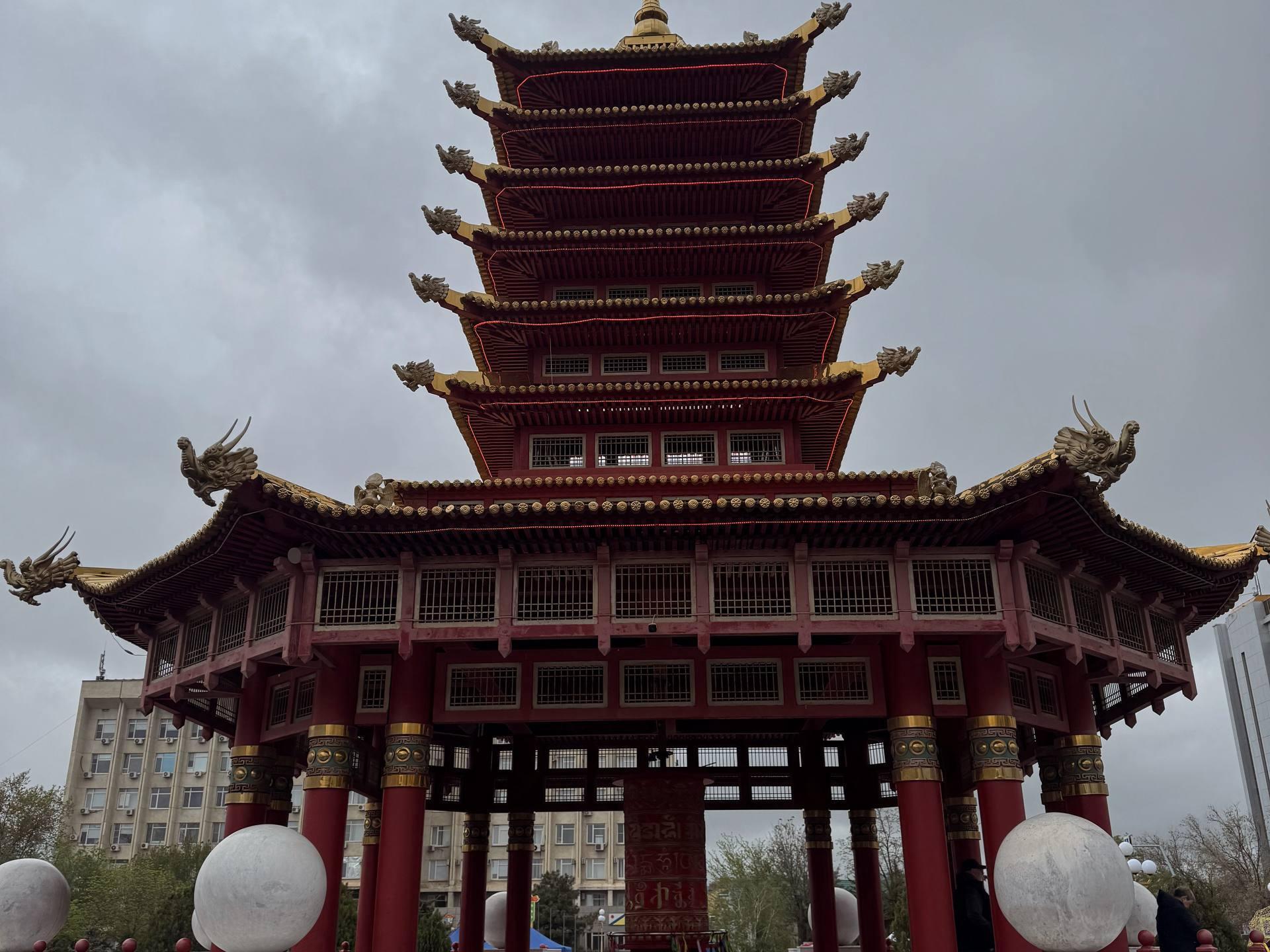
But then we went to Lenin Square, where the Pagoda of Seven Days is located. The name is associated with the seven buddhas who came to our world. Here, a «kürde» drum is located. Its body is adorned with a prayer written in three languages. It is an appeal to the Buddhist god Avalokiteshvara. The pagoda«s dome consists of 7 tiers, each dedicated to a specific day of the week, speaking to the cyclicity of human life.
At that time, there was some festival here, so we even managed to watch performances by folk groups. National costumes, dances, and songs truly impressed, because for us, Stavropol residents, it was something completely new.
Come Here for the Tulips
The Tulip Festival is an annual celebration held in Kalmykia and dedicated to these plants. Tulips bloom in mid-April — imagine a bright, wind-swaying sea of flowers. I missed the tulip festival because I was in Kalmykia already at the end of April. And last year, by this time, everything had already faded. The festival dates always depend on the weather; tulips can bloom earlier or later than usual. Therefore, if you want to see oceans of flowers, follow the forecasts.
Service is Non-Existent
The culmination of the trip was visiting a restaurant. This is agreed upon in advance with the organizers. Spending the whole day on the road and not eating is quite difficult, so they took us to a specific place. According to the guide, they regularly bring tourists here, however, this time something went wrong here too.
We had to wait for orders literally for hours. At that, half of the dishes were never brought — we had to ask to remove them from the bill. When asked when at least something would be ready, they answered: «We»re already making it,« but 1–1.5 hours passed, and still no food.
Unfortunately, the end of the journey left an unpleasant impression. There were no questions for the organizers, as they are not responsible for the kitchen«s workload and the establishment»s operation. However, at that moment, I wanted to return home faster.
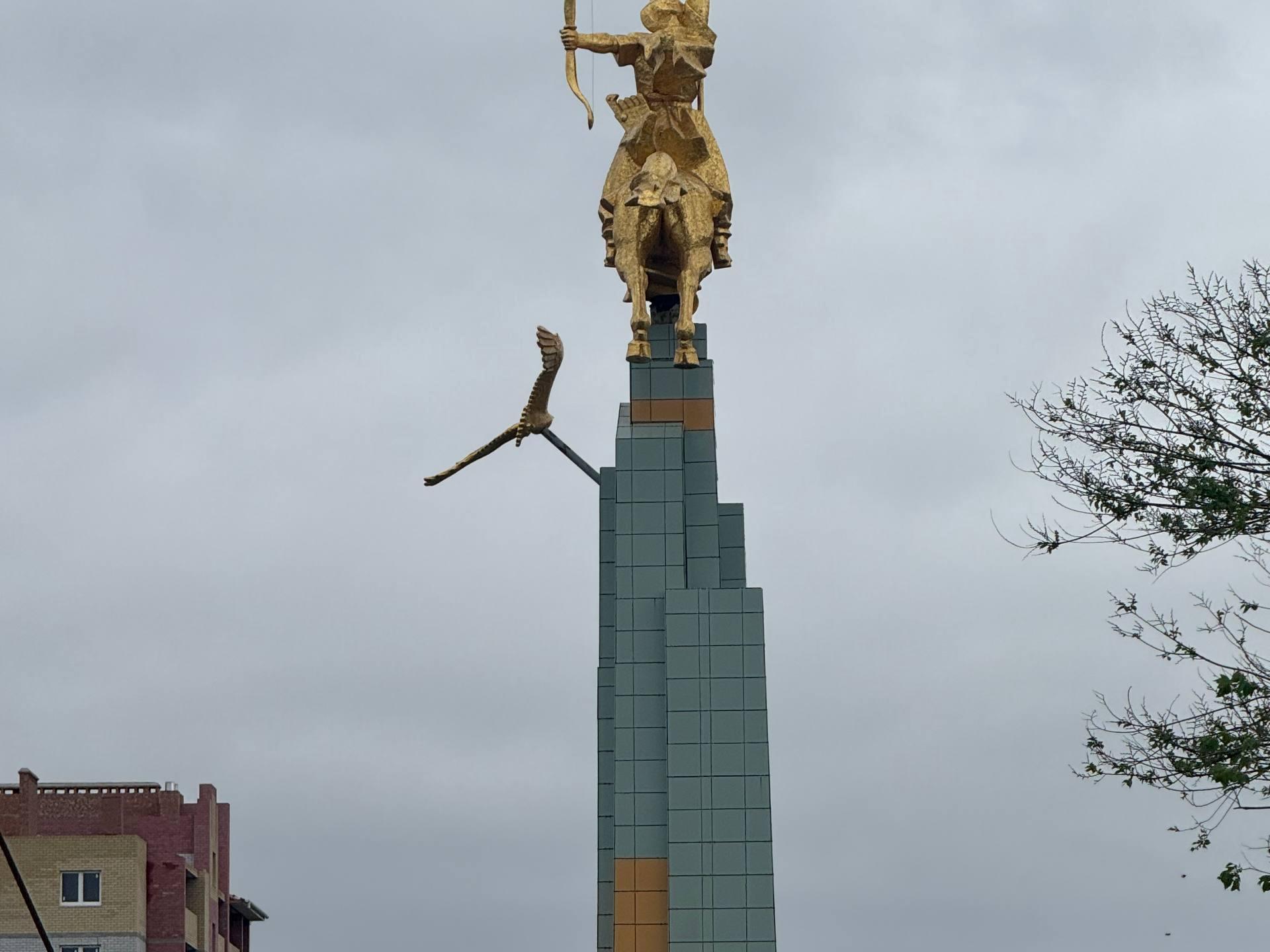
Already on the way back, we stopped to look at the sculpture of the Golden Horseman — a monument to the hero of the folk epic «Jangar». Covered in gold leaf, it is located on a 15-meter (49-foot) stele installed on an artificial mound.
This is the embodiment of courage, bravery, and valor. According to the architects« concept, the horseman soars in the sky, guarding the steppe pearl Elista and its residents. In his right hand, he holds a banner, and in his left — a Mongolian bow.
With that, our journey through Elista ended. It«s worth saying that coming here for just a day is the right decision. All attractions can easily be covered in a few hours. We paid little — about 2,900 rubles (approximately $31 at current rates) per person. Food and souvenirs were not included in the cost. It»s not certain that there will be a desire to return here again, but once, it«s still worth visiting, because seeing such temples and immersing yourself in another culture is priceless.