Where Arkhangelsk Residents Should Invest in 2026 to Beat Inflation
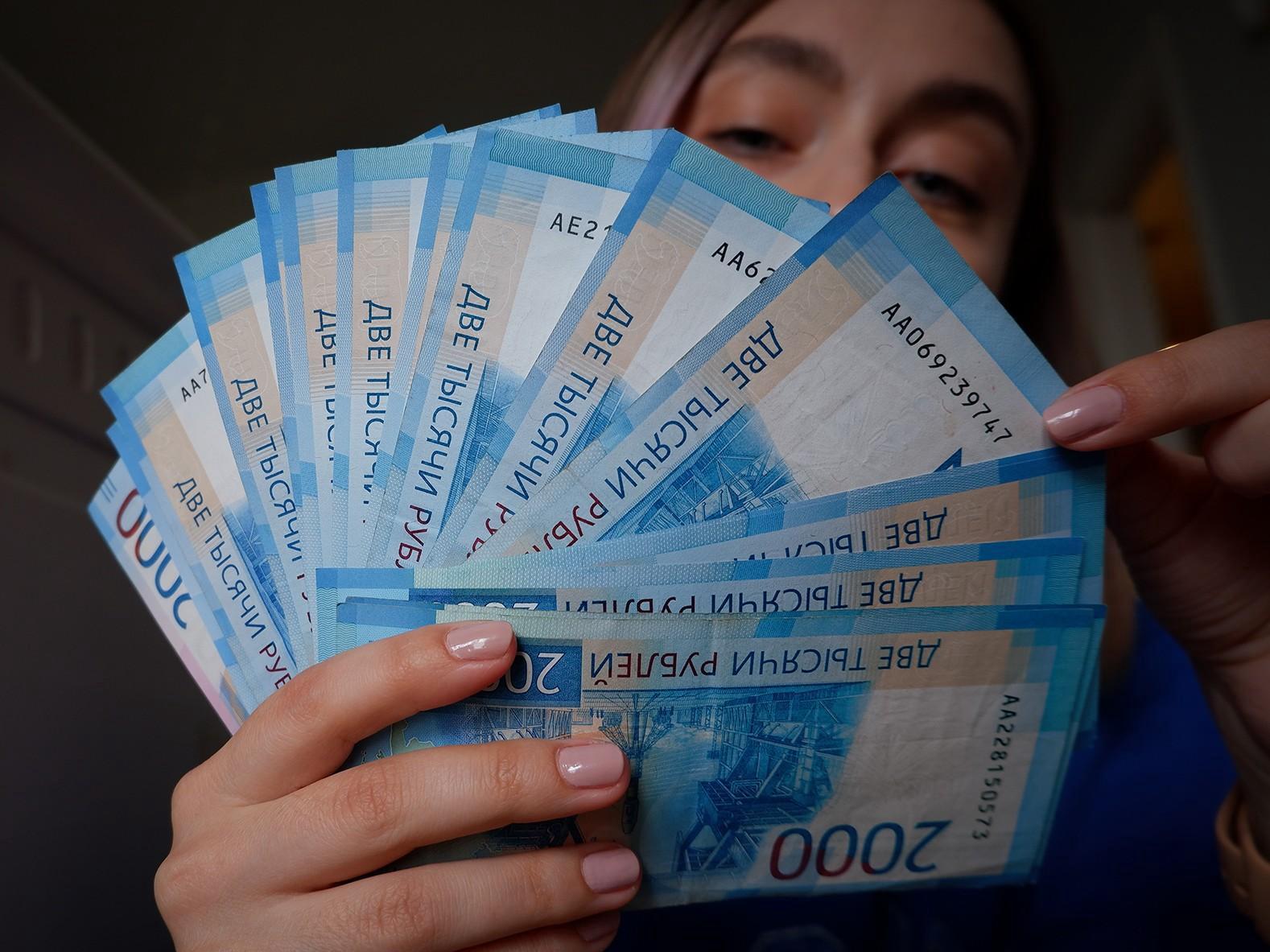

After two years of tight monetary policy, the Central Bank of Russia (CBR) has finally started lowering its key rate. The indicator has already dropped from 21% to 16% per annum, and according to economists and financiers, by the end of 2026 it could fall to 12%, along with bank deposit rates. Over time, interest rates will cease to look attractive to citizens with spare money, and they will start looking around for more profitable places to invest.
Experts believe this process is unlikely to be massive and agree that 2026 will largely be a transitional year: much will depend not only on the economy but also on politics. The focus is on bonds, gold, and ruble instruments, with preparation for a gradual return of interest in stocks. Details are in the material from our colleagues at Fontanka.
Rate and Geopolitics – Two Key Benchmarks
According to Sergei Rogozin, head of investment and special product development at Alfa-Capital Management Company, in 2026 the market will primarily focus on two factors – the pace of the Central Bank«s monetary policy (MP) easing and progress on the geopolitical agenda.
«The easing of MP does not determine changes in geopolitics, but changes in geopolitics determine the further vector of MP,» emphasizes the expert.
In the baseline scenario, based on current data and forecasts, the key rate could drop to 12–13% by the end of 2026. This, he says, will support the bond market – primarily long-term federal loan bonds (OFZ) and the segment of high-yield bonds (HYB). Cheaper debt refinancing will reduce credit risks for issuers and increase the attractiveness of such securities for investors.
At the same time, decisions on the rate will still depend on inflation and inflation expectations. Annual inflation, Rogozin notes, is declining, but the population«s expected price growth over the year remains high – in December, citizens» inflation expectations rose by 13.7%. Additional pressure comes from the overheated labor market – as it cools, wage growth will slow, which could also contribute to lower inflation.
Bonds – In Focus, Stocks – Conditional
The most understandable and relatively conservative instrument for private investors in 2026 remains bonds. Rogozin calls long OFZ and diversified portfolios of corporate papers (sets of bonds from companies in different economic sectors) interesting. Those willing to take on higher risk can consider high-yield bonds – but with mandatory assessment of the issuers« credit rating, indicating the company»s ability to meet its obligations. One option is investments through mutual funds, where professional managers handle asset selection and rebalancing.
The situation with stocks is more complicated. According to the expert, they could become attractive with substantial positive progress in geopolitics. Otherwise, increased interest in the stock market is possible only as the key rate consistently decreases – to levels where bonds and deposits begin to lose competitiveness.
«The closer we get to the neutral rate, the less attractive bonds will be and the more attention will shift to stocks,» notes Rogozin.
Currency and Gold
A separate question is whether to bet on currency. The expert from Alfa-Capital believes that for investors with ruble incomes and expenses, it is more logical to remain in ruble instruments. An exception is a scenario of ruble weakening.
If the exchange rate exceeds 90 rubles per dollar, good dynamics, he says, could be shown by substitution bonds – issued instead of Eurobonds under sanctions, with their face value and coupons expressed in foreign currency but payments made in rubles. With a stronger ruble, preference again remains with ruble assets. As a universal protective instrument, he also names gold purchased on the Moscow Exchange, which simultaneously provides currency exposure. That is, its value is protected from a decline in the ruble exchange rate.
The rally in the gold market that began in 2025, in his estimation, could continue. Geopolitical tensions support demand, and among buyers, in addition to the largest central banks, a new major participant has appeared – the company Tether, which uses gold in reserves.
Recall that experts forecast an average exchange rate in 2026 at the level of 85 rubles per dollar. Spikes to 90 rubles and beyond are possible, but how sustainable this dynamic is – it«s hard to say. Also, in stress scenarios, analysts allow for extreme ruble strengthening (to 65–70 rubles per dollar) or extreme depreciation (to 105–110 rubles). In the second case, the Central Bank will respond by raising the key rate.
Real Estate and (or) Deposits
Real estate remains a traditionally interesting asset. As Rogozin notes, historically the market, especially in Moscow, has not shown significant declines, although risks remain. The decrease in the key rate will support demand, and prices for residential real estate in the capital, according to estimates, could rise by 10–15% in 2026.
«Investing in real estate in 2026 at current rates and prices makes sense, however, in recent years the very format of such investments has changed significantly. If 4–5 years ago a retail investor with a limited budget could buy an apartment at the stage of a shared-equity construction agreement and earn by reselling through assignment in 1–1.5 years, today such strategies have become more risky and bring income at the level of official inflation,» says Sergei Duvanov, head of projects in the financial markets and investments department of the consulting company NF GROUP in St. Petersburg.
According to the expert, the market can still offer solutions to an investor who has from 1 to 10 million rubles (approximately $11,100 to $111,100 at current rates) of free money, but in such cases, it«s not about high yields, but primarily about diversifying the investment portfolio and reducing risks. With such a budget, collective instruments are relevant for the investor – real estate mutual funds, as well as shares, formalized as a separate unit-studio in hotel real estate projects. For example, in hotels where the investor, by buying a share – a hotel room – immediately transfers it to the management of a management company. The investor essentially acquires the right to receive part of the rental income from the business.
Net yield in such formats, as a rule, is 10–12% per annum. Although funds often promise yields of 15–20% or more, this is not a realistic picture, explains Duvanov. This is «gross» income before deducting the services of the management company, property taxes, the investor«s income tax, and similar expenses. At the same time, shares and units are more liquid compared to apartments and classic premises. The investor can relatively quickly exit the project or, conversely, increase their share and income.
«For comparison: classic residential real estate brings an average of 5–7% per annum from rent. At the same time, it is important to note that since the beginning of the 1990s, the cost of apartments both in Moscow and in the regions has not shown a steady decline, which makes this asset more protective than income-generating,» notes the expert.
Higher yield in residential real estate is possible, but is associated with significantly larger budgets and risks. For example, the flipping strategy – buying problematic or heavily worn apartments at a discount, subsequent renovation, and resale. The budget for such projects, as a rule, starts from 10 million rubles (approximately $111,100 at current rates) in Moscow and St. Petersburg. In commercial real estate, the entry threshold for the investor is even higher – from 20 million rubles (approximately $222,200 at current rates). Cheaper offers are often associated with illiquid objects, encumbrances, or complex legal structures and are not suitable for mass private investors.
«As a result, for investors not ready to engage daily in searches, management, approvals, the range of available low-risk instruments is significantly limited. That is why in 2026 collective forms of real estate investment remain one of the few relatively simple, accessible, and understandable options for investing in real estate with adequate yield,» emphasizes Duvanov.
So for now, bank deposits in terms of yield continue to compete with real estate and money market instruments. Most likely, the best strategy for an active investor will be a combination of these instruments. «We expect growth in both deposits and, accordingly, investment products,» said Kirill Tsaryov, first deputy chairman of the board of Sberbank, at the final conference. – «Diversification has not been canceled.»
Economy and IPO: What Awaits the Stock Market
The stock market is acquiring strategic significance. The state is actively involved in bringing companies to the exchange. Russian President Vladimir Putin instructed to develop stimulation measures for issuers and support for foreign investors who would like to invest in the Russian market.
Discussing stocks must be done with an eye on the macroeconomic context. According to Vitaly Sergeychuk, a member of the board of VTB Bank, since the beginning of 2025, industries oriented towards external demand remain in the negative zone: extraction, wholesale trade, and pipeline transport. At the same time, construction has reached a plateau at a high level, and most other «consolidated» industries continue to grow, although at more restrained rates than in 2023–2024.
In extraction, signs of revival have been noticeable since autumn – this is facilitated by the easing of restrictions under the OPEC+ deal. The construction sector in the medium term could be helped by the implementation of the high-speed railway (HSR Moscow – St. Petersburg) project.
As for the IPO market, Sergeychuk emphasizes that placement activity will directly depend on geopolitics and the Central Bank«s policy. With stable and – especially – faster than the market expects, reduction of the key rate in 2026, a noticeable revival of IPOs is possible.
Now, he says, more than 10 issuers are preparing to go public, awaiting favorable conditions. These include both companies of the «new» economy, knowledge and data economy, and representatives of traditional industries. At the same time, the sizes of deals, with rare exceptions, are unlikely to exceed 3–10 billion rubles (approximately $33.3 million to $111.1 million at current rates).
The key limitation remains the depth of investor demand. Specifically, the participation of institutional investors focused on medium- and long-term investments, Sergeychuk calls a necessary condition for sustainable market development and improvement in the quality of placements.
More on the Economy
«The down payment is not enough»: how much money is needed to take out a mortgage in Arkhangelsk.
The director of «AGD Diamonds» told where precious stones are sold from Arkhangelsk Oblast and how this industry affects the region«s economy.
«They go to work in stores»: why schools in Arkhangelsk Oblast lack teachers.
Couriers surpass IT specialists in salary: how much employers offer them in Arkhangelsk Oblast.