A blow to marketplaces? How VAT on Chinese goods will change online trade
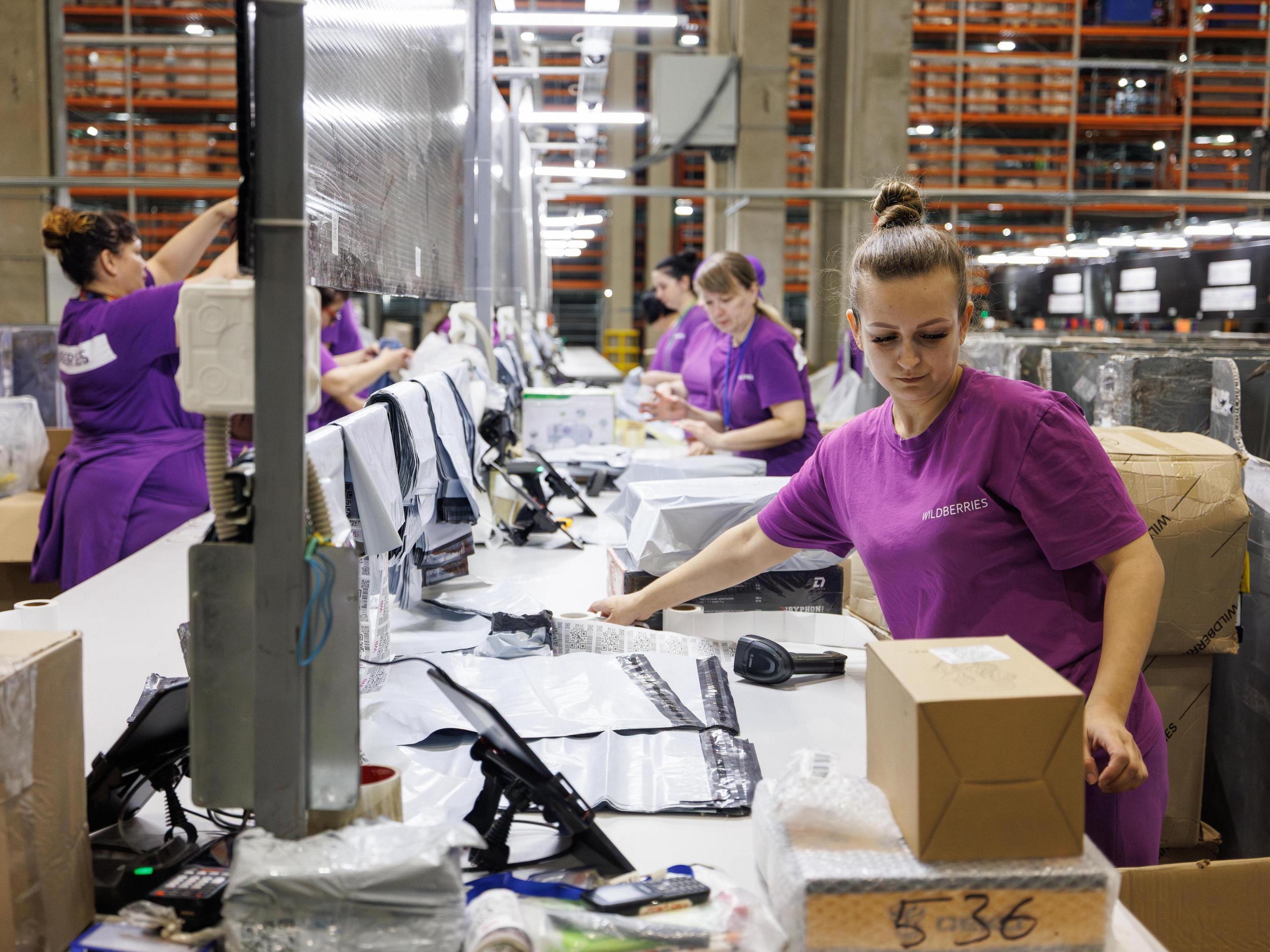

The volume of work on online marketplaces may decrease as a result of proposed tax changes.
The Ministry of Finance and the Ministry of Industry and Trade are discussing the introduction of VAT on all goods purchased by Russians through cross-border trade on marketplaces. This concerns orders from abroad, primarily from China, which in many cases are not taxed today and therefore end up significantly cheaper than similar goods in offline stores and from official distributors.
A wide range of goods falls under the potential changes: «gray» iPhones and other electronics, cosmetics, clothing, accessories. It is precisely these categories that generate mass demand and create the price advantage of marketplaces. While traditional retailers pay VAT, customs duties, and bear certification costs, cross-border sellers essentially operate under softer conditions.
According to authorities« estimates, introducing VAT could bring the budget up to 440 billion rubles a year (about $4.9 billion at current rates). Formally, the initiative»s goal is to level the playing field between online and offline trade, as well as to increase market transparency. In practice, however, this means increased costs, which are typically passed on to the end consumer.
The main question is whether cheap goods will disappear from marketplaces altogether and whether the tax reform will lead to real budget revenues or merely to a contraction in demand and product range. This is the question MSK1.RU posed to experts.
Opinions are polarized, ranging from hot optimism to catastrophism.
«The tax will be passed on to the buyer, and some sellers will simply leave»
Andrei Kogan, founder of the «Everything from China» company and chairman of the China committee at the Association of Exporters and Importers, assesses the potential consequences very harshly: «To put it bluntly, without complicated phrasing, the scenario here is quite clear. Introducing VAT on goods that Chinese sellers currently trade on our marketplaces will almost immediately be reflected in the price. These costs will simply be passed on to the buyer. For some sellers from China, the economics will no longer add up—their margin is already small, and with an additional tax it will become unprofitable to operate. They will start leaving the platforms, and this will happen quite quickly.»
According to Kogan, a reduction in the number of sellers automatically changes market dynamics: «When there is less competition, the market starts to »breathe« differently. Russian sellers, freed from the pressure of cheap cross-border imports, will gain room to raise prices. This is not a question of greed—this is how any market with shrinking supply works.»
Kogan also doubts that the calculations for increased budget revenues will be justified: «Rising prices almost always lead to a drop in demand: people start buying less frequently, postpone purchases, or look for alternatives. Fewer orders mean less turnover, and consequently, the tax base may shrink. In such a scenario, expectations for additional income may not be met.»
«Many familiar »bargain« offers will become more expensive»
Entrepreneur and private investor Mikhail Spektor holds a similar, though more restrained, position. He notes that the product range will not disappear completely, but the cheapest items will become rare: «If VAT is introduced for foreign goods on marketplaces, buyers will first feel it in the price. Many familiar »bargain« offers will become more expensive, since they are currently sustained precisely by the absence of taxes.»
At the same time, he says a softer adaptation scenario is possible: «A phased introduction of the tax is being discussed—starting with a reduced rate and gradually increasing over several years to the standard VAT rate, so the market has time to adapt. For consumers, this means price increases will be stretched over time rather than happening all at once.»
However, he also emphasizes the uncertainty of the final effect. According to Spektor, the stated amount of additional budget revenue is an estimate, and only practice will show the real numbers.
«Much will depend on how demand changes and how many sellers remain in the legal field,» the expert concludes.
«The market will mature, but the era of ultra-cheap goods is ending»
Miroslav Radkevich, co-chairman of the Association of E-Commerce Market Participants (AUEC) for marketplace seller development, considers the initiative a logical continuation of state policy: «This step was to be expected; it was only a matter of time. The state has long spoken about leveling competition with cross-border trade to support Russian suppliers and manufacturers.»
He does not expect a sharp price spike and points to the complexity of the marketplace ecosystem: «The marketplace market does not operate on the scheme »tax introduced—price raised.« It is a complex ecosystem: competition between sellers, currency fluctuations, logistics, promotions, platform co-investment. All of this smooths out the burden.»
Radkevich also reminds of upcoming changes in the regulation of online purchases within the Eurasian Economic Union (EAEU). Starting July 1, 2026, the threshold of €200 for duty-free purchases remains. That is, cheap mass-market goods will still be available, and the market will simply become more structured, the analyst notes.
«The era of duty-free imports is coming to an end»
Vitaly Lavrinovich, business analyst and communications expert at PRoud.365, views the situation more broadly—as part of a general tightening of rules in e-commerce: «The Finance Ministry»s initiative solves a long-standing problem of unequal competition. Large retail chains have been paying all taxes for years, while small sellers using cross-border schemes entered the market with prices 20–30% lower.«
At the same time, he doubts the scale of the fiscal effect. According to his estimates, the volume of cross-border trade in Russia is about 400 billion rubles a year (about $4.4 billion at current rates)—less than 1% of the entire retail market.
«Some purchases will inevitably go into the shadows or simply won»t happen,« says Lavrinovich. The outcome, in his opinion, is fairly clear for the consumer: cheap Chinese goods on marketplaces will become more expensive, and the price advantage of foreign platforms will diminish.
Lavrinovich«s conclusion is not comforting for online shopping enthusiasts: »The era of duty-free imports via marketplaces is coming to an end.«