Spring frost probability soars in Rostov region
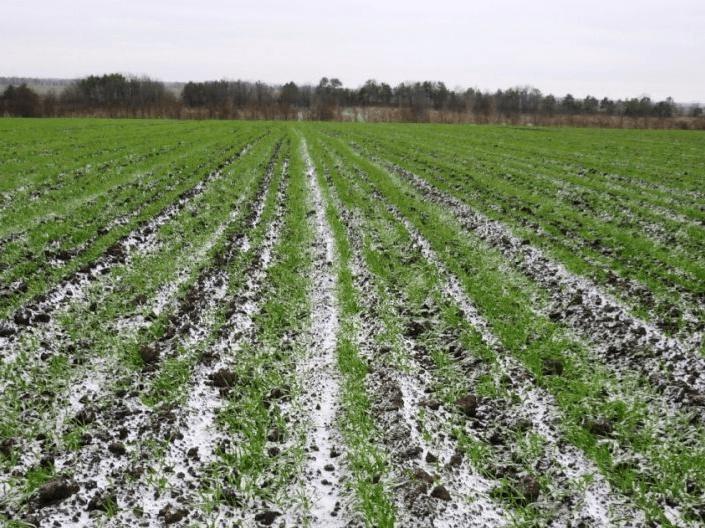

Leading research fellow of the Southern Scientific Centre of the Russian Academy of Sciences (SSC RAS), Candidate of Geographical Sciences Lyudmila Dashkevich concluded in her article that over the past 30 years, the probability of spring frosts in the Rostov region has increased multiple times.
According to the research, while the risk of frosts in April and May decreased during the period from 1931 to 1960, in the modern period (1991–2020) the situation has changed sharply.
‘However, in the modern period (1991–2020) compared to the second half of the 20th century, April has seen up to a 2.5-fold increase in the risk of temperatures below 0°C (32°F), mainly due to frosts in the first half of the month. But more dangerous are frosts in May: the probability of frosts down to -2°C (28°F) has increased multiple times, and there is almost a twofold increase in the probability of frosts below -2°C (28°F),’ writes Dashkevich in the article Long-term Dynamics of Return Frosts in the Lower Don.
The threat to agriculture is exacerbated by overall climate warming. Due to the earlier onset of spring, the vegetative period of plants begins earlier, making crops more vulnerable to return frosts.
‘Frosts in the region in early April (especially in the north) are not critical for the vegetation of spring and winter crops. However, such temperatures (from -4°C to -8°C, or 25°F to 18°F) in the second half of April already have a negative impact on wheat in the stem elongation phase,’ notes the researcher.
In the south of the Rostov region, frosts in late April and May can lead to a reduction in grain yield by 10–50% depending on the crop«s development phase.
According to the scientist, the main measure to protect the harvest from frosts is breeding work to develop crop varieties resistant to weather anomalies such as drought, frosts, and dry winds.
In 2024–2025, return May frosts, followed by summer drought, led to a significant decrease in grain harvest in the Rostov region. The gross grain harvest became the lowest in the last 10 years, damage to farmers exceeded 4 billion rubles (approximately $44.4 million at current rates), and a state of emergency was declared in a number of districts.