How Volunteers Save Altai Rocks from Tourist Graffiti
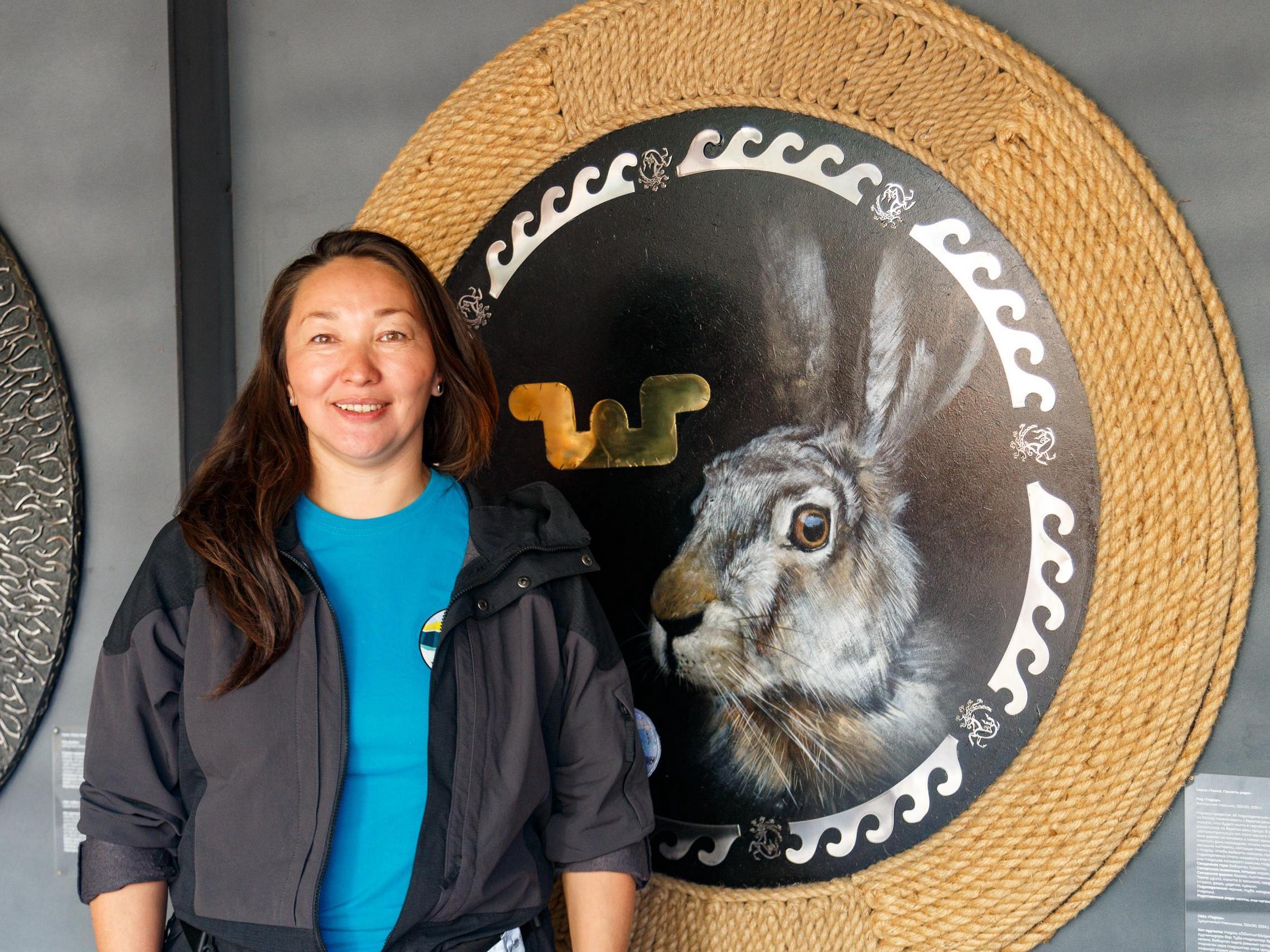

For seven years, 42-year-old Inna Muklayeva has been working with other volunteers to clean the rocks of the Altai Mountains of inscriptions left by tourists. In 2019, she founded the Clean Altai project, which has removed hundreds of graffiti.
Read the interview with NGS22.RU about how a resident of the republic became a leader of a public movement, why inscriptions on rocks are dangerous, and why fines do not work.
‘Nature is a temple for us’
Inna Muklayeva was born and raised in the Altai Republic.

— My childhood was spent between Chemal and Aktash — we often drove over the Chike-Taman Pass. Even then, I remembered the clean, untouched rocks, impressive in their pristine form, she shared.
The idea for the project was born by chance. The company where Inna worked suggested she take part in a competition of environmental initiatives.
— I went on an expedition along the Chuya Highway to Chike-Taman together with the Katun Nature Reserve. We went through difficulties and mistakes, but we saw the result — the first two square meters of clean rocks, the heroine recalls.
That experience, as Inna recalls, inspired her. But she had no concrete plan at the time. She returned home and at first did not know what to do next. However, the initiative received such a strong response from locals that leaving the project was impossible.
— People said: ‘Continue, you need to do this.’ And I continued, said the resident of Altai.
In 2019, Inna launched a project to clean the rocks, which she called Clean Altai.
— Nature is a temple for us, and these are not empty words. We live in unity with nature. A connection to it is embedded in us at the genetic level. Stones, rocks, mountain passes — everything is alive; spirits live there. Each place is guarded by its own deity, she emphasized.
According to the heroine, they had to start from the very beginning.
— I was just a mother on maternity leave who did not understand at all what was happening in this life. We looked for funds and opportunities, added the founder of the project.
From ‘Omsk 2025’ to historical evidence
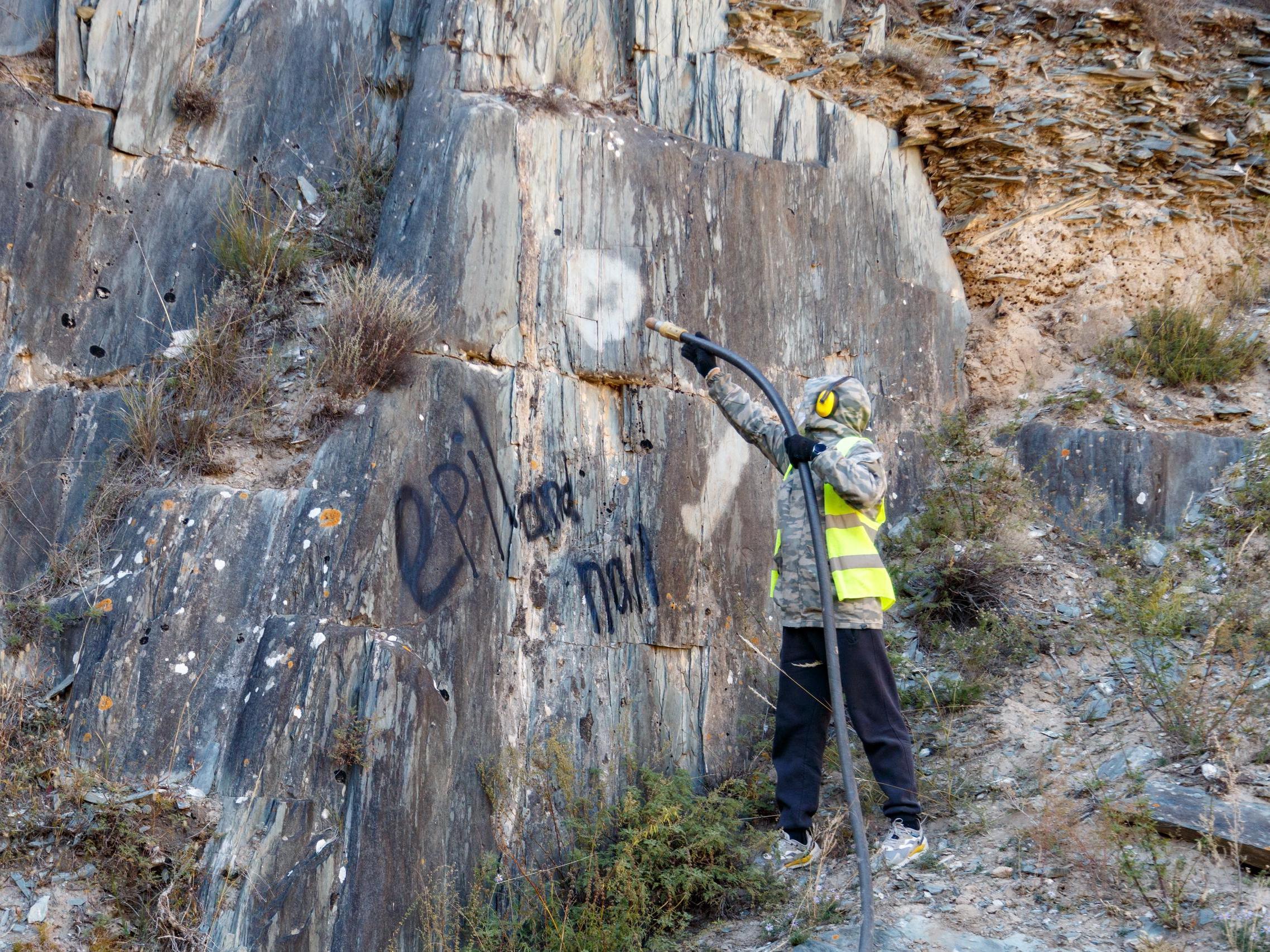
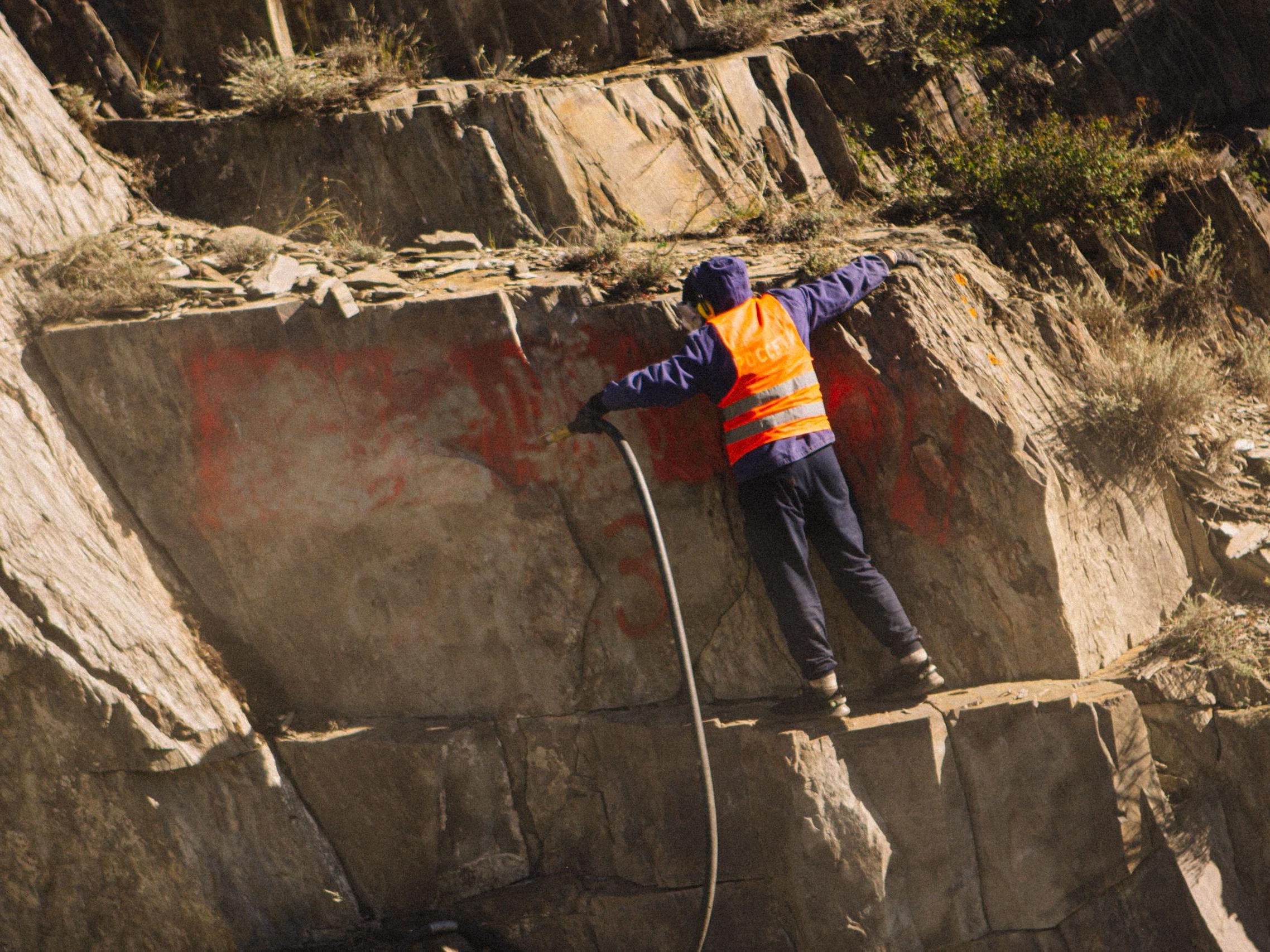
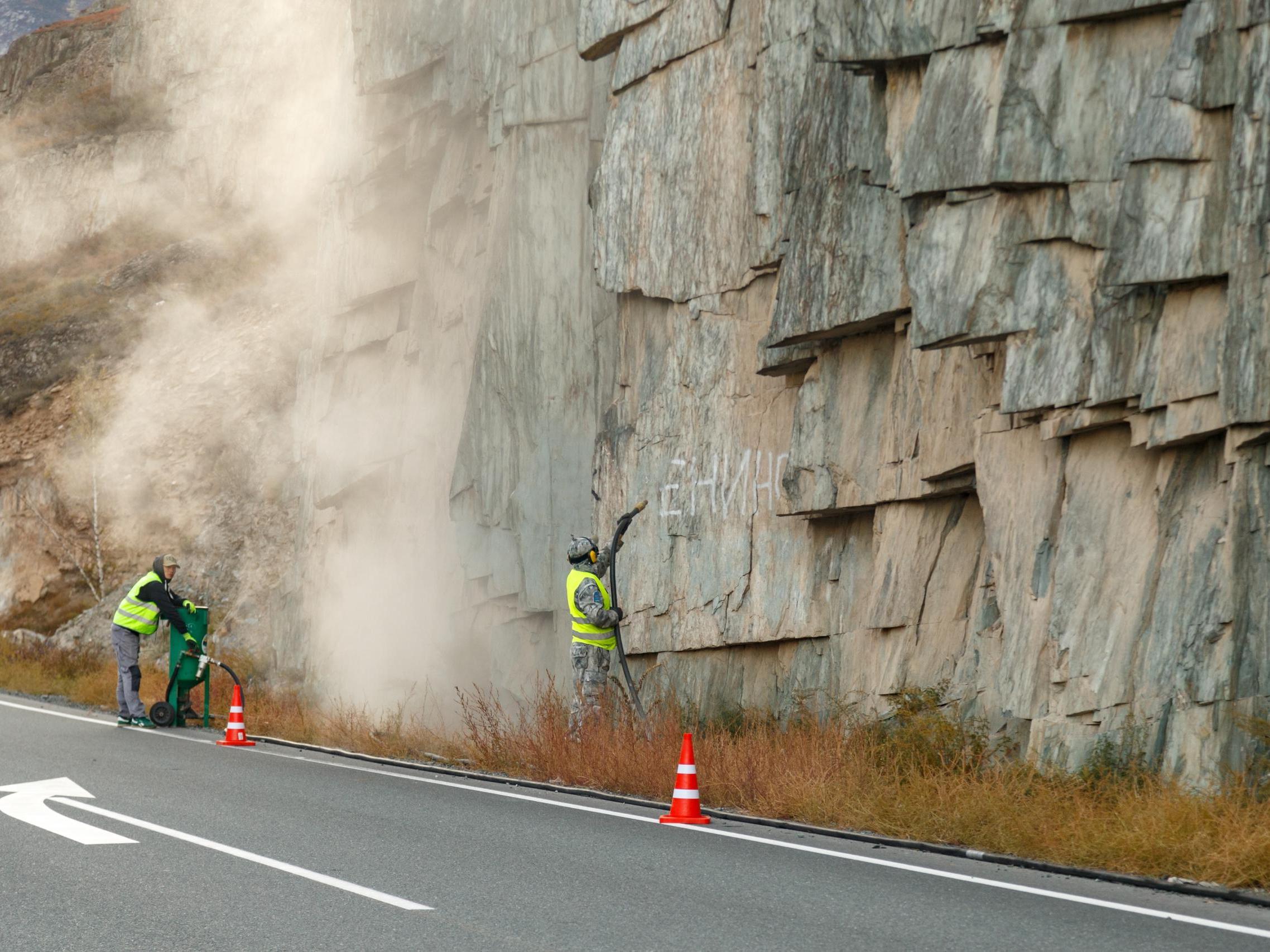
Cleaning rocks is a difficult and expensive job. The team uses a sandblasting machine and a special abrasive — copper slag. They pay 3,000 rubles ($34) per hour for renting a large diesel compressor, and they buy 10 tons of abrasive at a time.
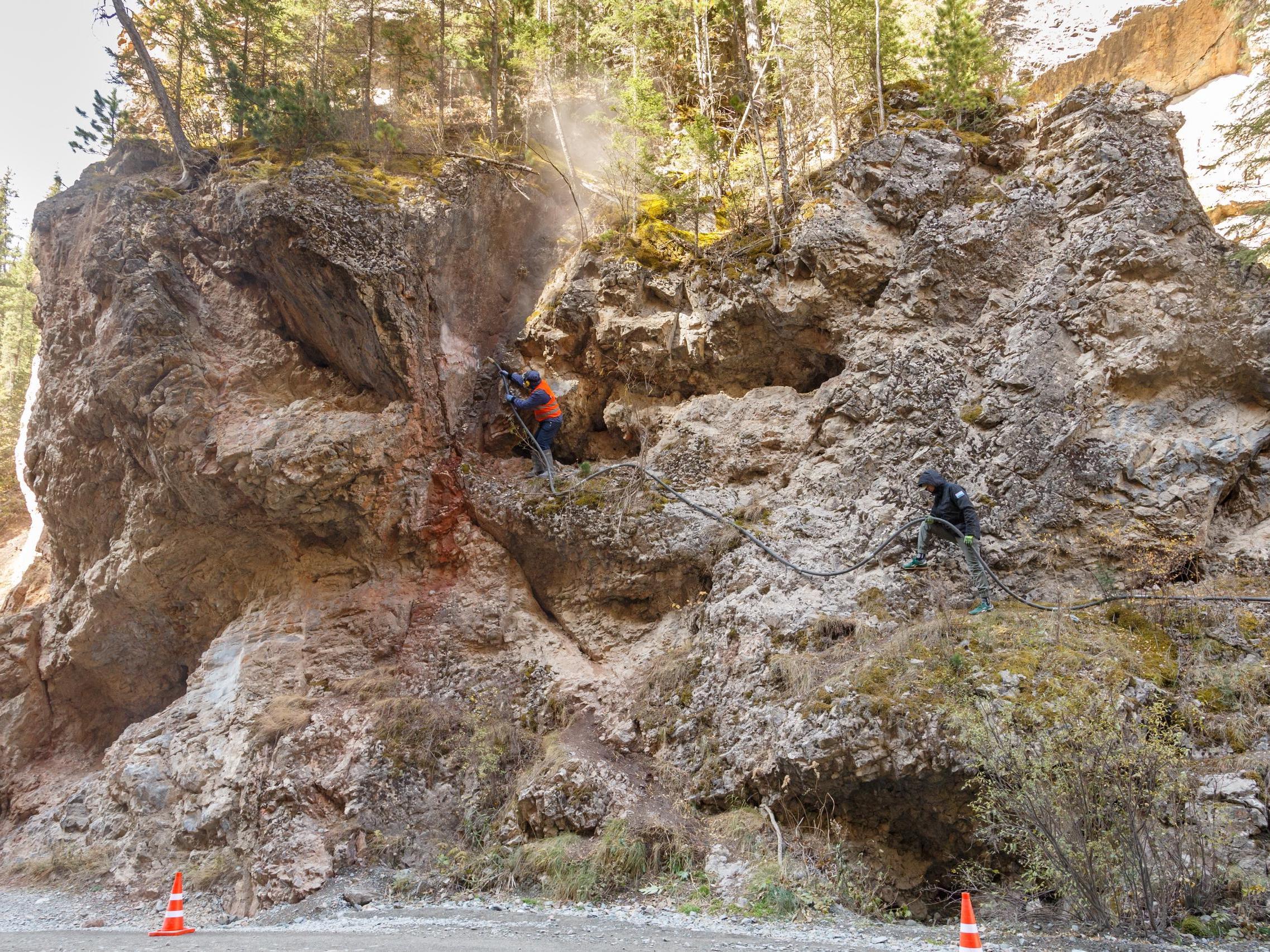
— We work with a vibrating hose under pressure. The abrasive hits the rock and repels the paint. It all flies into your face, legs, and body. Protective gear is mandatory: helmets, headphones, masks, filters. It is very hard physical labor, Inna explained.
Sometimes, to reach tourists’ handiwork, volunteers have to climb to the height of a three-story building, and also use a truck-mounted aerial platform, ladders, or climbing equipment. In some places, people work on sheer cliffs with harnesses and safety ropes.
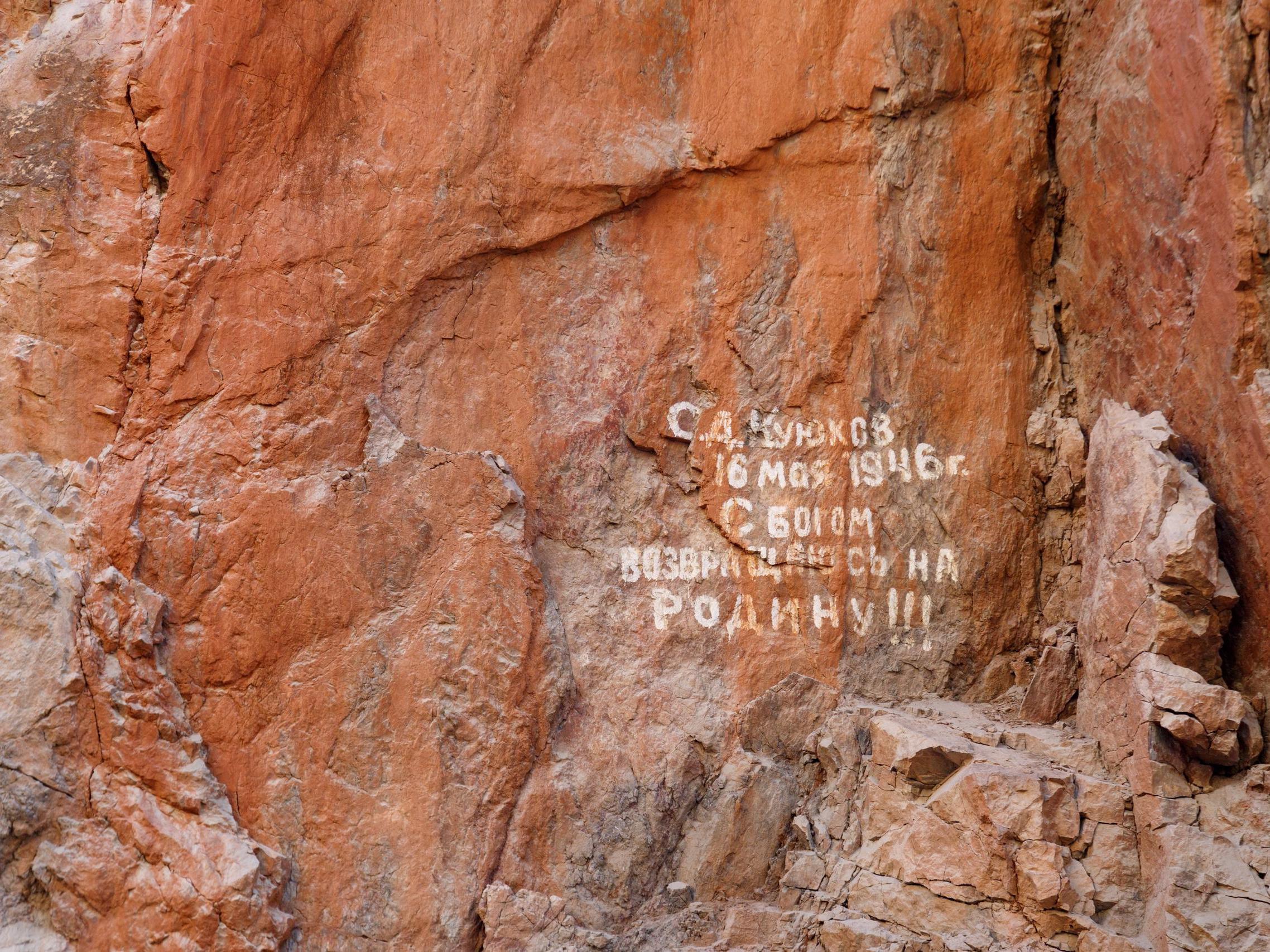
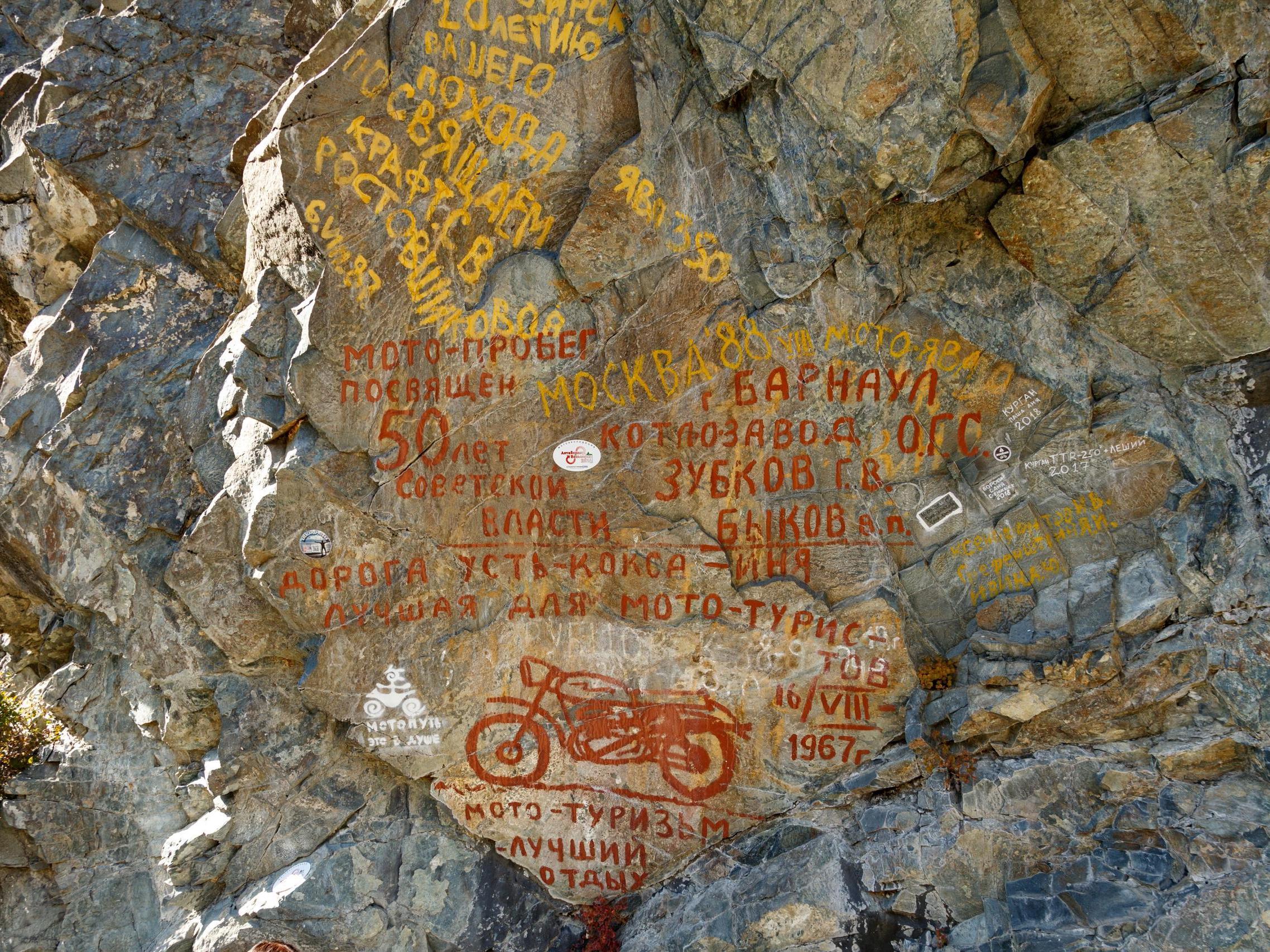
Over the years, Inna and her team have compiled a kind of ‘classification’ of vandal inscriptions. Most often people write the name of the city they came from, the year, names and initials, as well as love confessions. However, there are also truly historical inscriptions.
— All of this is meaningless garbage that has no value. But we also find historical inscriptions. For example, a soldier was returning from the war in 1946 and wrote: ‘I am returning home with victory.’ Or the inscription ‘Mongolia — Biysk, cattle drive’ — this is already evidence of a historical process, noted the founder of Clean Altai.
Regarding such inscriptions, the project team consults with local residents — if it is important to them, they do not touch anything.
— But ‘Katya + Vova, I love you’ — that is not history. That is vandalism. And we remove it, added the heroine.
Why Altai does not tolerate vandalism
Inna emphasizes that for her and her team, cleaning inscriptions is a defense of sacred space.
— When people write on rocks, they insult our shrines. It is as if I came to your city and wrote on your opera house or on your car: ‘I was here,’ she argues.
The heroine says that when she catches vandals red-handed, she asks them: ‘If I came to your city and scratched my name on your car, would you be happy?’ After that, according to her, people usually fall silent and leave.
According to Inna, when the project was just starting, the maximum fine for vandalism on rocks was 3,000 rubles ($34). However, thanks to the efforts of Clean Altai, they managed to raise it to 5,000 rubles ($56).
— But that is still too little. Russia does not have serious environmental fines. People are not deterred, lamented the founder of the project.
There were cases, as the heroine recalls, when they managed to punish vandals through the prosecutor’s office. However, this takes a lot of time and effort: it is necessary to record the violation, write a statement, go to the administrations, and also participate in commissions.
— And if you don’t do this, no one needs it. Only we are doing this, she noted.
More effective than fines, according to Inna, has been the collective responsibility of Altai residents for their land. The heroine notes that people themselves have begun to actively monitor that tourists do not paint inscriptions on rocks and mountains.
Against this background, a funny incident even happened to Inna. One night, she and her brother and another volunteer were cleaning a stone with a small portable sandblaster. Over four hours of work, 18 cars stopped near them.
— People stopped, thinking we were writing something on the rocks. But seeing that we were cleaning, they smiled, honked, and gave a thumbs-up. That is also a big success. We realized that we are involving people in observation. And it works, added Inna.
Warning signs that the team hangs after cleaning have also, according to Inna, already proven their effectiveness and usefulness. For example, one of the places with such a warning has remained clean for two years.
‘Altai is holy’
Currently, the Clean Altai team has about 15 regular participants. Inna’s brother became the main ‘technical brain’: he modernized the equipment, learned to quickly train newcomers, and began eliminating local shortcomings.
— When my brother got involved, I became a big director of this whole enterprise. I sign us up for grants, do public work, and educate people. I especially like going to children’s camps with lectures about ecology, shared the heroine.
Inna’s main dream is that everyone who comes to Altai knows that in the region it is forbidden to write on rocks, litter, or pull out plants. She wants this information to be in the air of the republic.
— Altai is holy. Nature for us is pristine, pure. We carefully preserve it. And we want everyone to know about it, emphasized the founder of the project.
The project’s next expedition is planned for September — volunteers plan to clean the Katun Trail, where vandals have left many inscriptions, including motorcyclists who advertise their clubs on the rocks.
— We will not stop until there is at least one dirty rock left in Altai, said Inna.
And the project is successfully moving toward its goal. Currently, volunteers have cleaned 70% of the inscriptions in the region. Through the efforts of Inna and her people, the road to Lake Teletskoye, the Chike-Taman Pass, the Chuya Highway, and many other locations have regained their cleanliness.