Utkin Book Author on Soviet Sport, Legend's Final Days
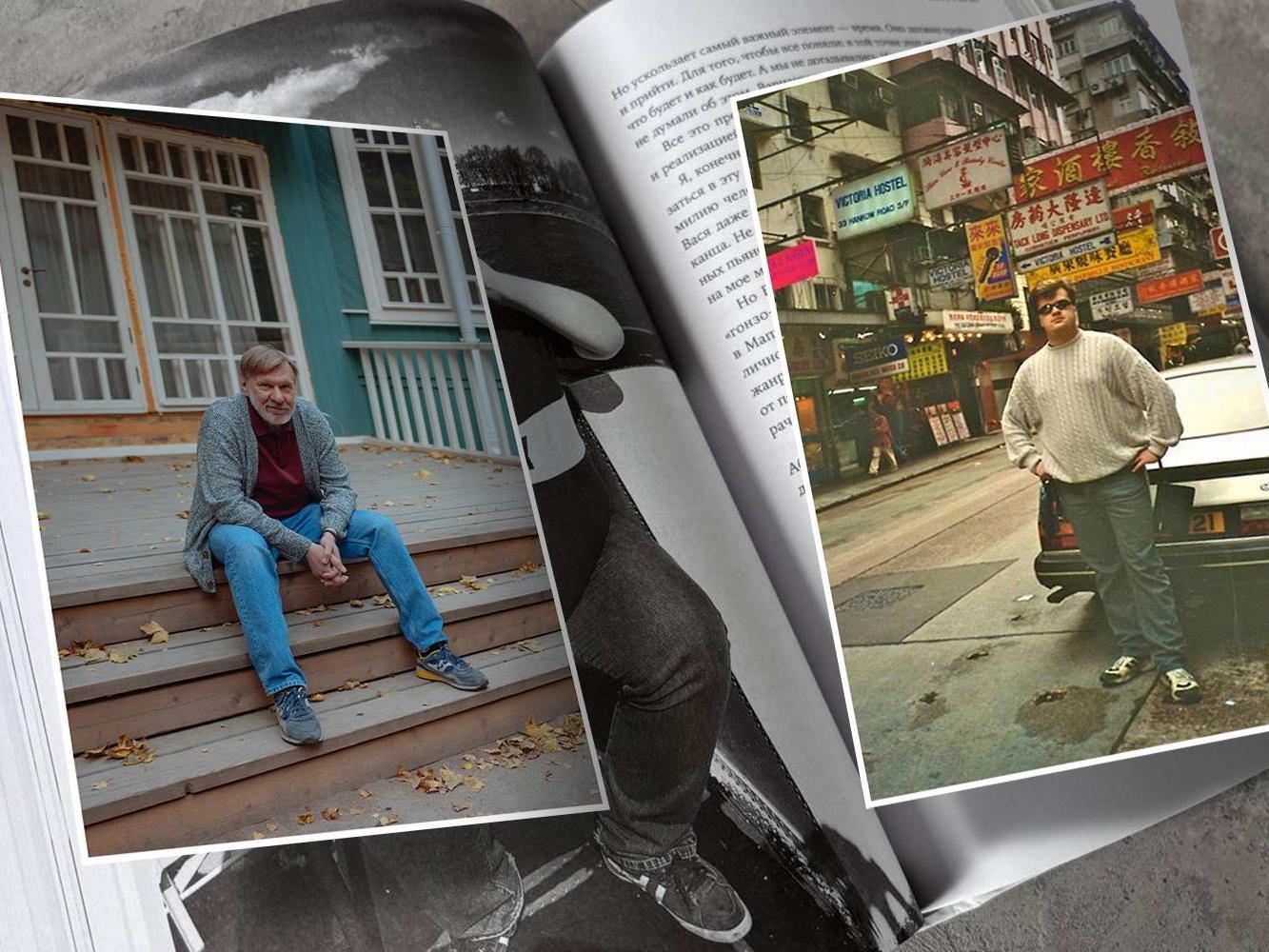

Stanislav Gridasov (left) presents the book about Vasily Utkin in Yekaterinburg
In March 2024, sports commentator Vasily Utkin passed away — the man thanks to whom many in Russia fell in love with football. In his broadcasts, he did not simply recount events on the pitch but turned the game into life itself. With the phrase «Did you think we»re here playing football? We«re here living life,» Vasily 14 years ago sent London«s Chelsea into a victorious Champions League final, and now those words have made it onto the cover of a book about the legendary sports journalist.
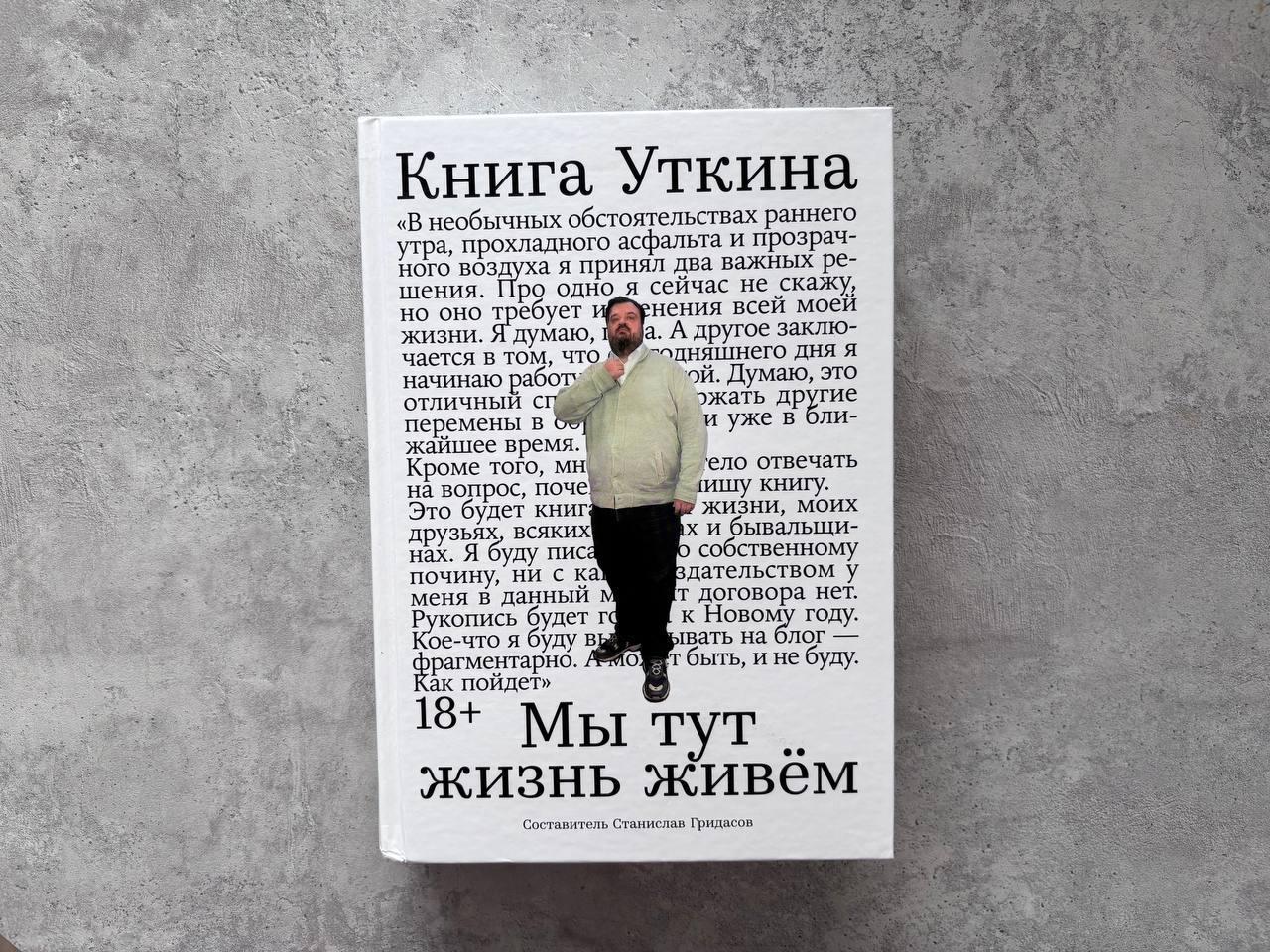
The book has 664 pages
We spoke with historian, Sports.ru founder, and former PROsport magazine editor-in-chief Stanislav Gridasov about this publication, his friendship with Utkin, Sverdlovsk sport, and much more. At the end of this week, he will speak to guests of the fourth Red Line book festival, which will be held in Yekaterinburg from 21 to 23 August, and present «Utkin»s Book: We«re Here Living Life.»
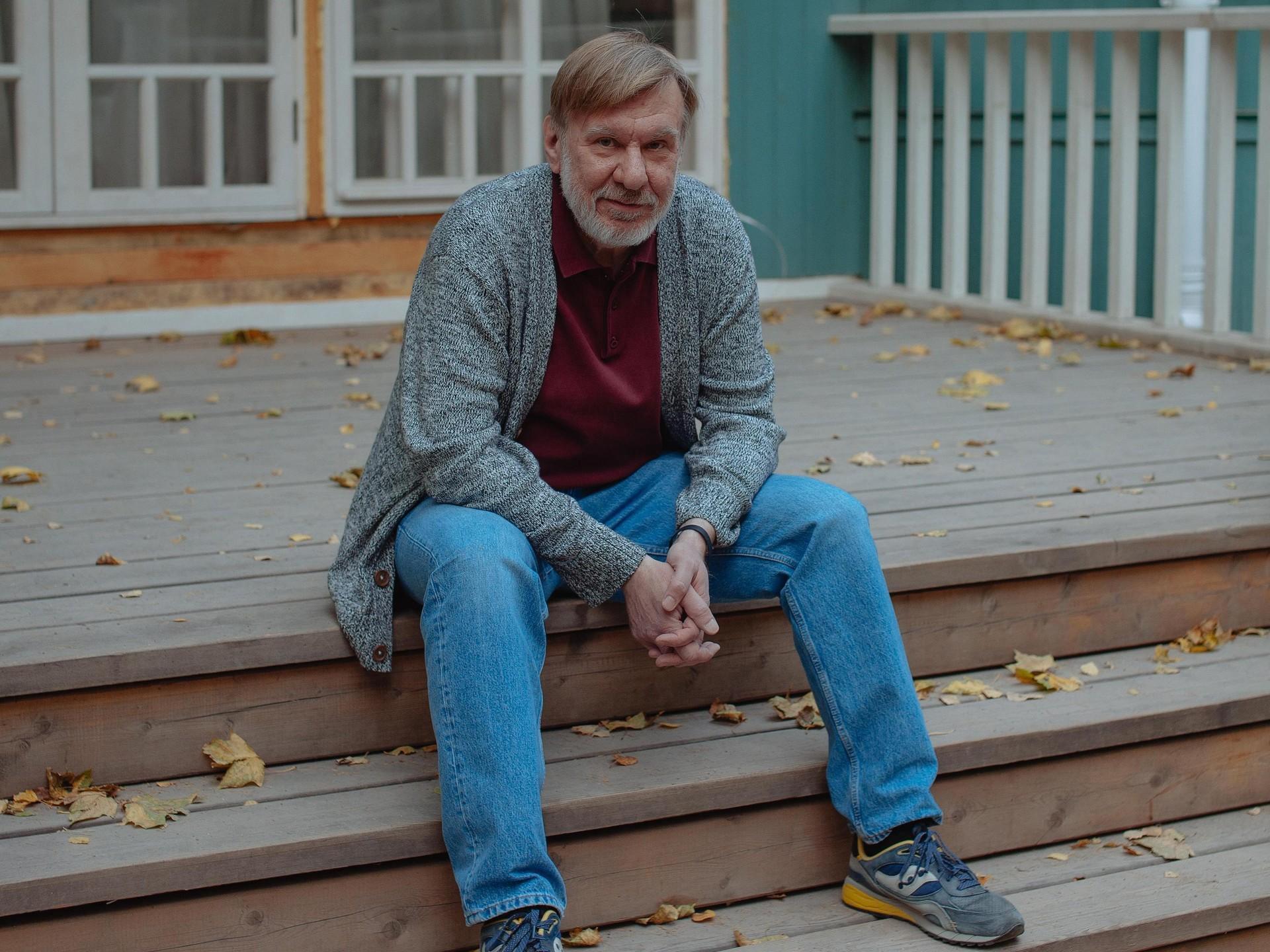
Stanislav Gridasov is one of Vasily Utkin«s close friends
Stanislav Gridasov was born on 12 March 1968 in Engels (Saratov Oblast). He began practicing journalism while still in school, writing about hockey and football. He worked as a correspondent for many well-known media outlets. He founded the Sports.ru website in the winter of 1998 and served as its editor-in-chief until 2006. He also studies sports history, primarily Soviet and Russian hockey. He is married and has a son.
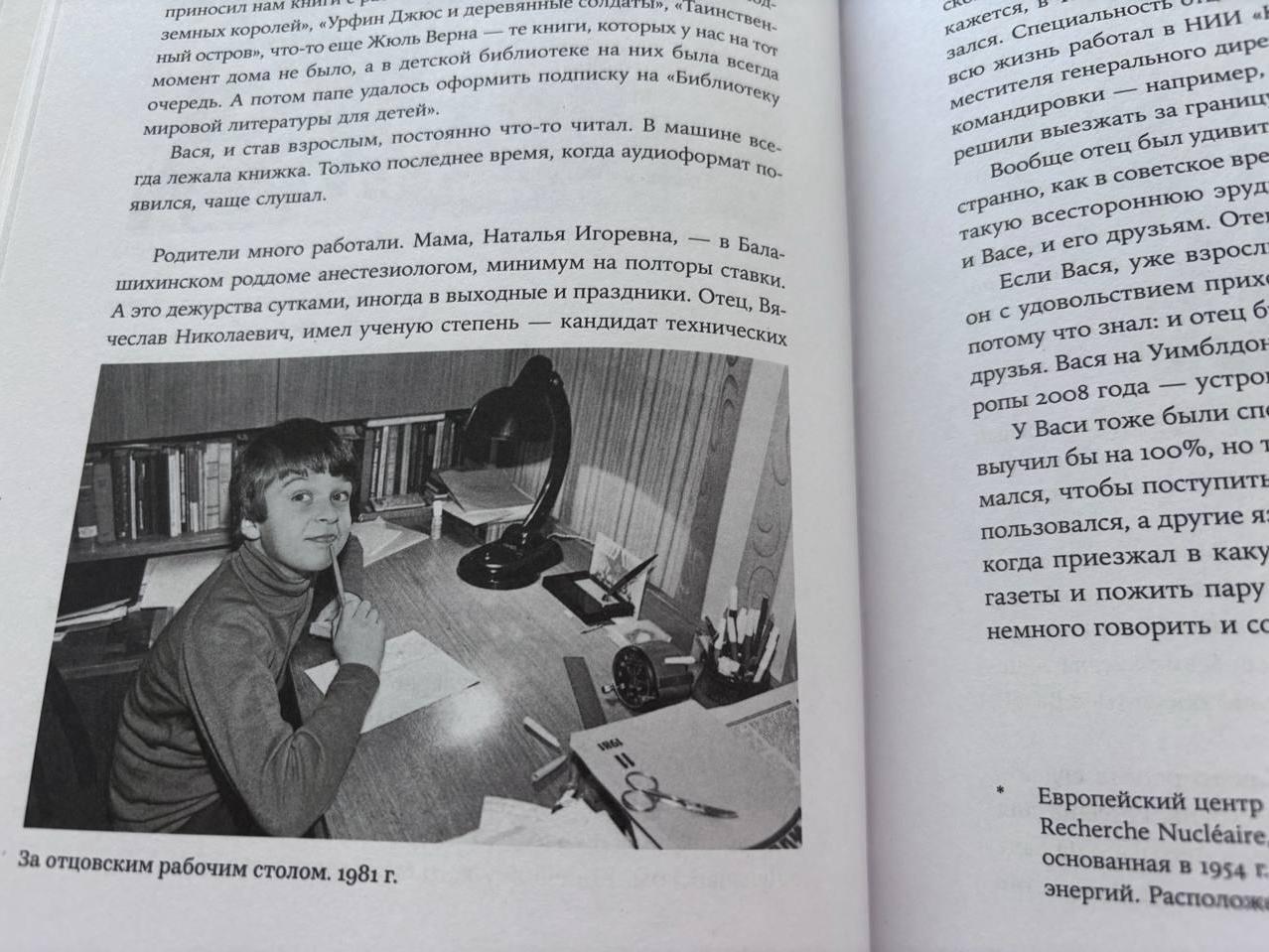
Vasily Utkin in childhood
«For many, this was their first close death»
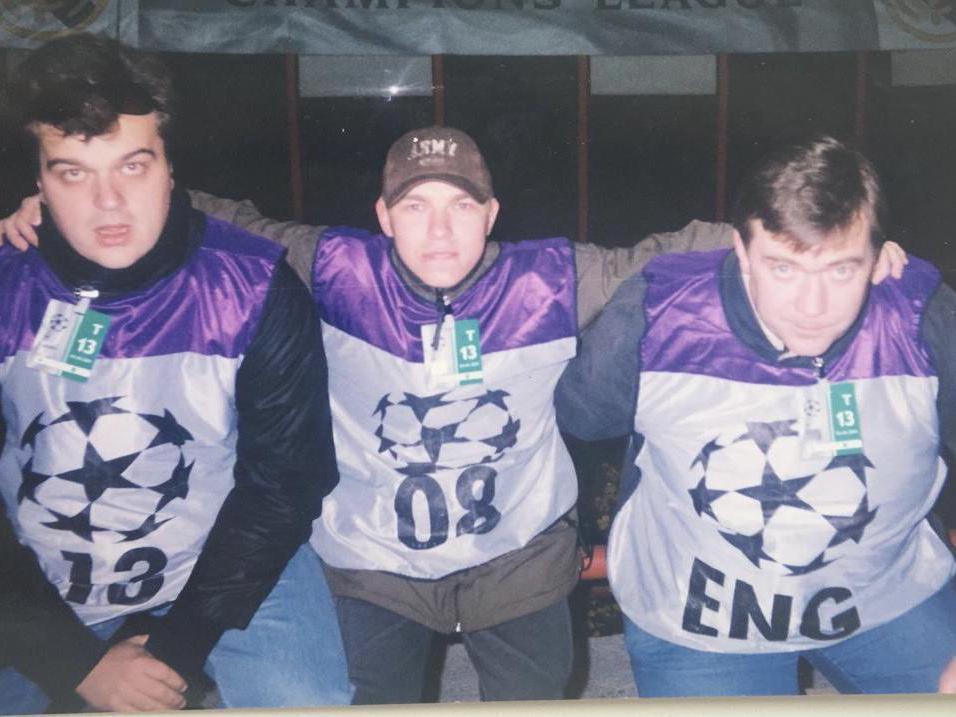
Vasily with colleagues in Istanbul. Photo from 2001
— Stanislav Vladimirovich, how did you come up with the idea to create a book about Vasily Utkin?
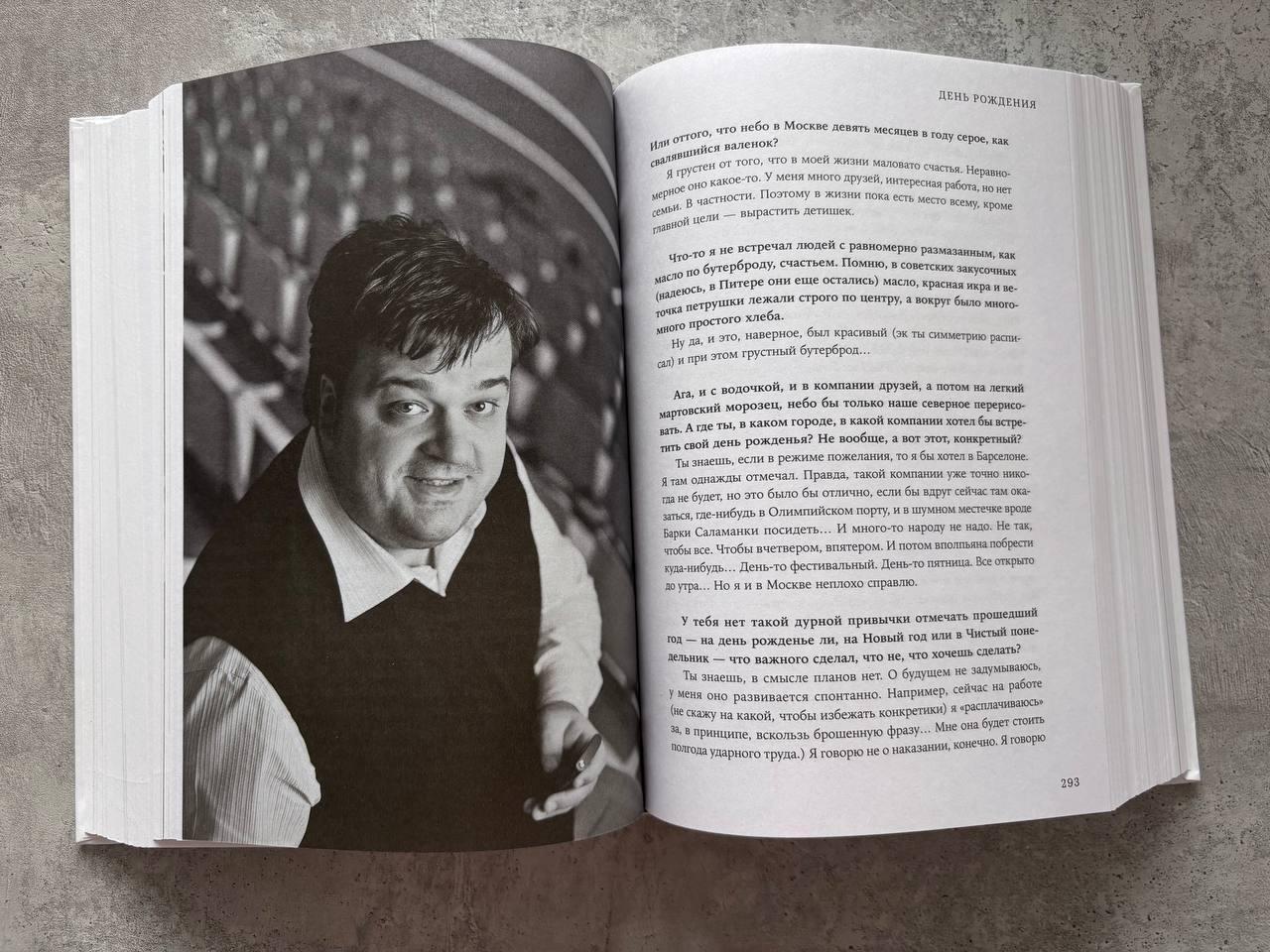
Many loved Vasily for his honesty and openness
— When Vasya died, many websites approached me asking me to write an obituary, and I refused. They also invited me on air, and I also said «no.» There were so many different feelings connected with Vasya«s passing, and it was very hard for me to put them into the kinds of words that are expected in such cases. A few days later, a mutual acquaintance of ours called — a fairly wealthy man who is into football. He said he would help financially if I sat down to write the book.
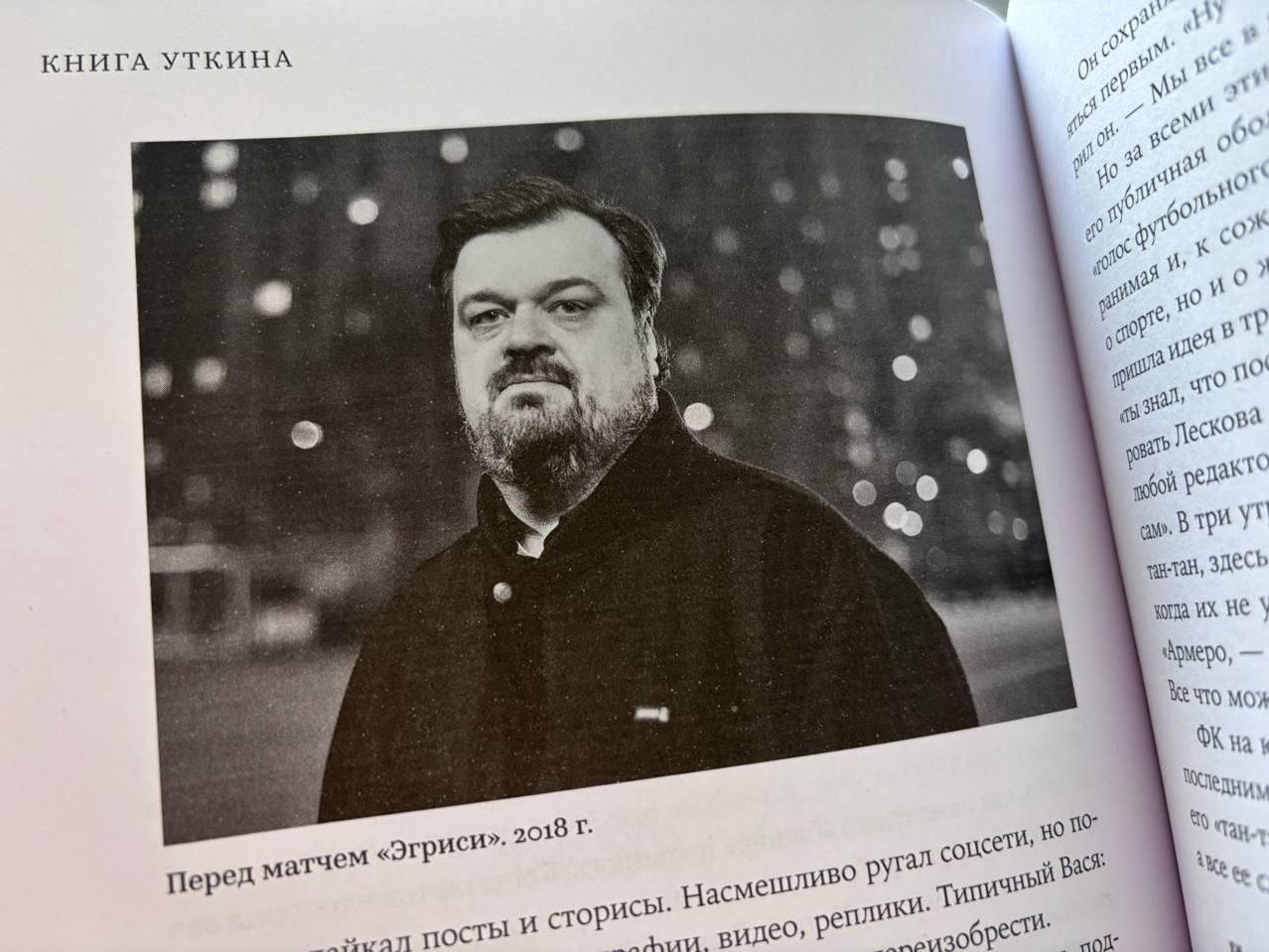
Utkin acted in theater and appeared in films
I also refused him, because I was not ready to write about Vasya as a character in a book. I couldn«t even write anything on my Telegram channel »Gridasov with a Beard« except a short line. Even when the book was already going to the publisher (Alpina Non-Fiction. — Editor»s note), my texts weren«t in it. The publisher insisted that there absolutely had to be a preface. Naturally, no one other than me, as the compiler, could write it.
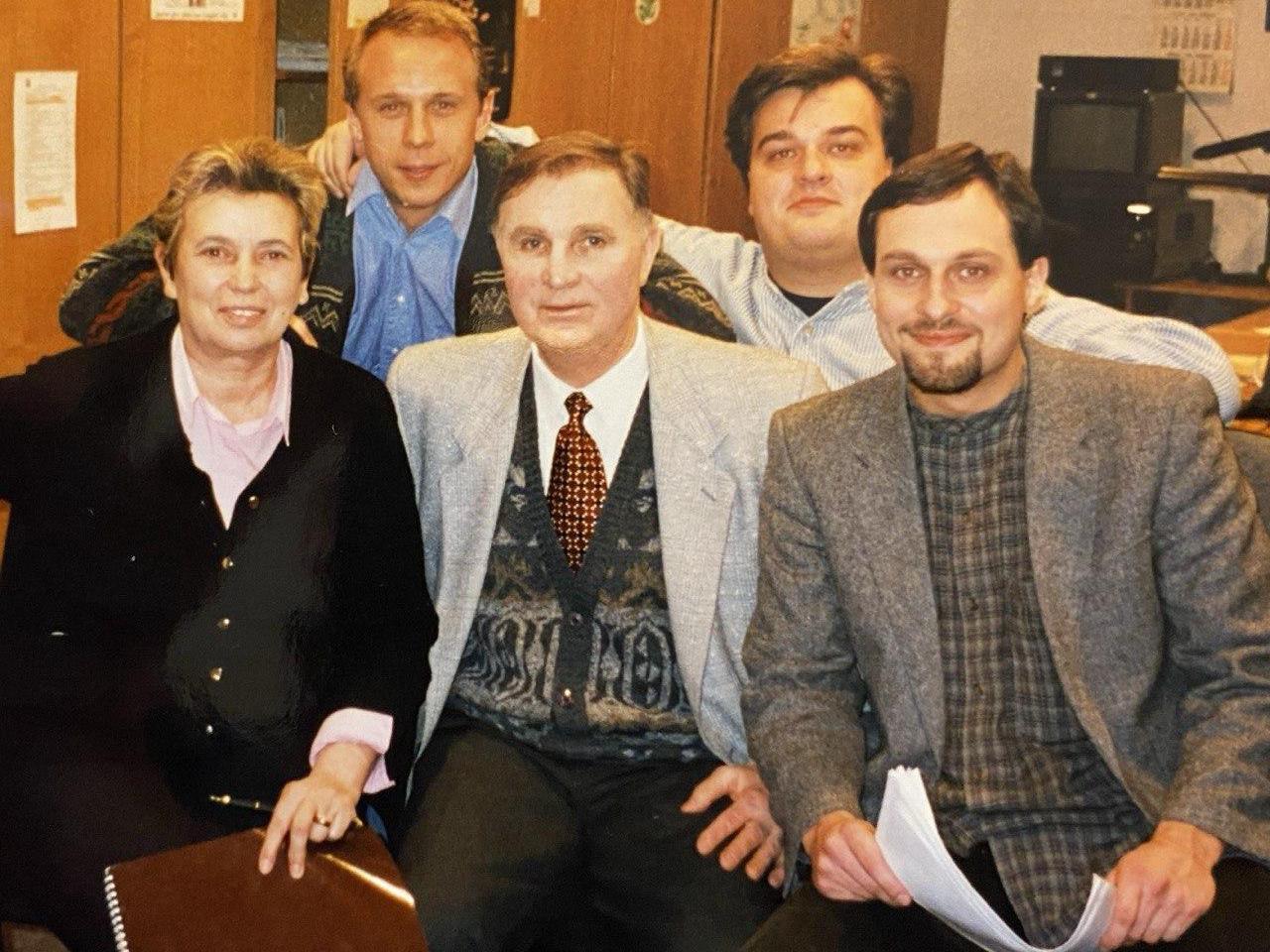
Colleagues call Vasily Utkin «the voice of modern sports journalism»
Vasily Utkin was born on 6 March 1972 in Balashikha, near Moscow. He became widely known in the nineties as a commentator, sports journalist, and host of the program «Football Club,» which after its cancellation on television he produced on a YouTube channel. He worked for NTV, STS, Match TV, and other television channels. He appeared in the film «Election Day,» and in 2017 became president of the media football club Egrisi. According to a number of colleagues, he created the image of modern sports journalism in Russia. He died on 19 March 2024.
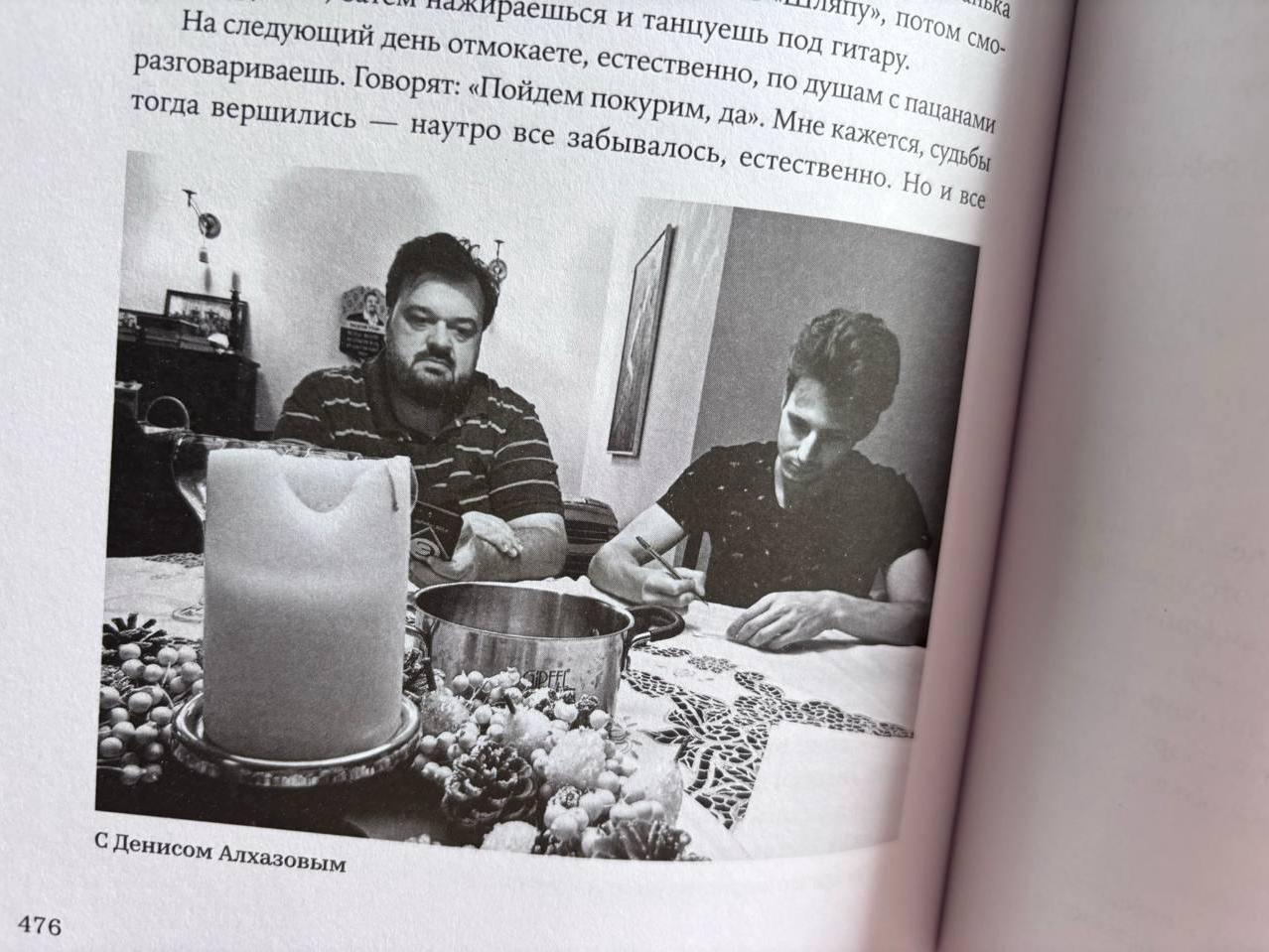
Vasily Utkin and his fellow commentator Denis Alkhasov
And then, at the very last moment, I was able to string some words together into sentences. For me this remains a very difficult and personal subject. Everything I wanted to say about Vasya, about his life, I translated into this form of a collection — that is, I told it through other people«s voices, other people»s texts, and Vasya«s own texts.
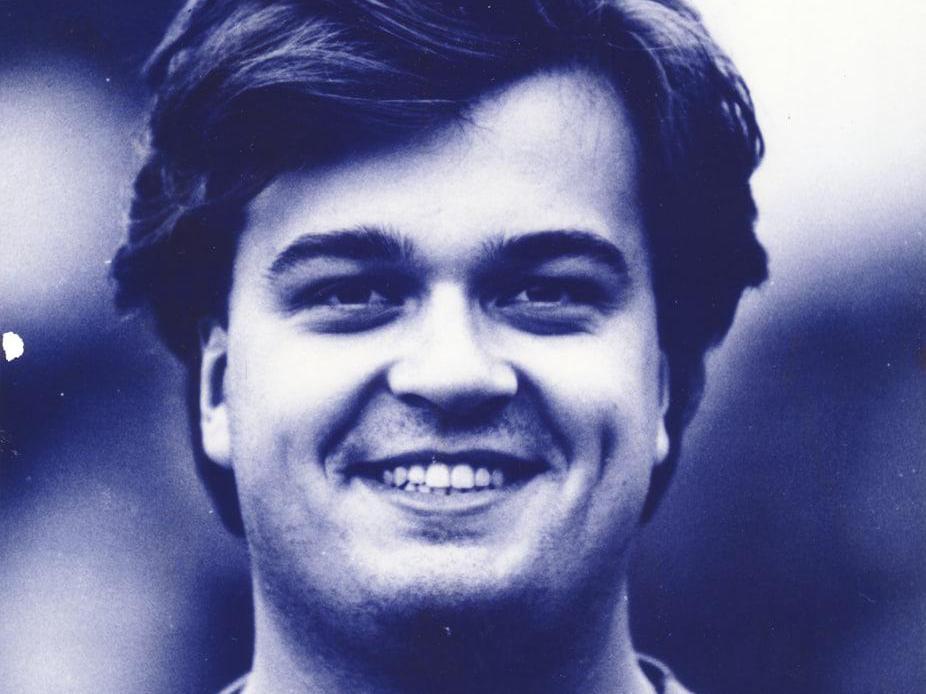
Vasily trained dozens of sports commentators
The idea for the book arose by chance; I wasn«t planning to do it. After Vasya»s death, literally a day or two later, I was asked to meet with our former shared students. They were struggling. For many, this was their first close death; they needed to talk, to be supported, and to think about what to do next.
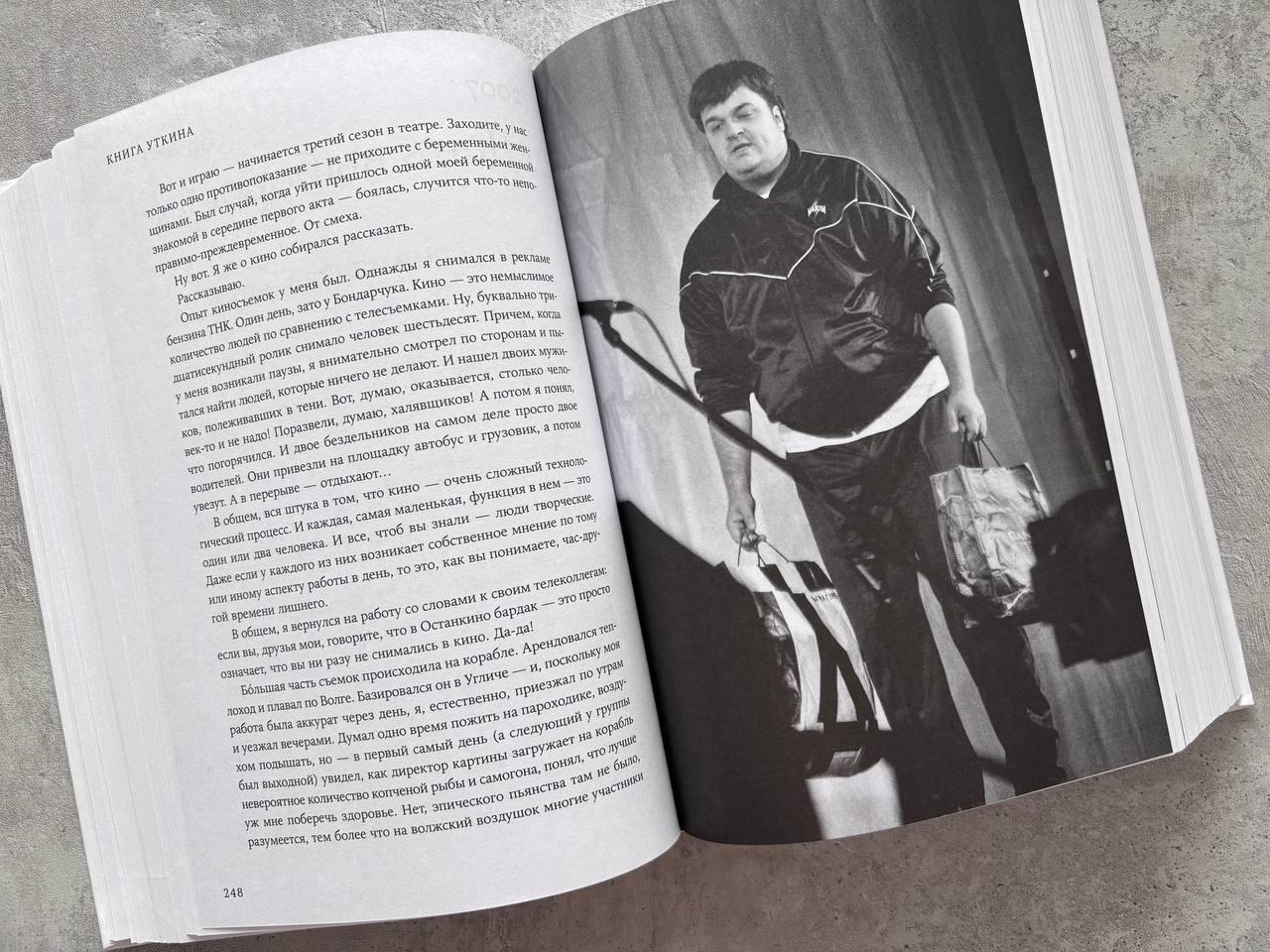
Vasily Utkin in one of his theater roles
We met in that same pub where we once held classes with Vasya, and the guys decided that they had to continue his work: to produce «Football Club,» to run the Telegram channel. For about a year I kept an eye on their work and read the comments on the channel. I was struck that people six months, a year later wrote as if he had died yesterday. Their feelings toward Vasya remained just as raw.
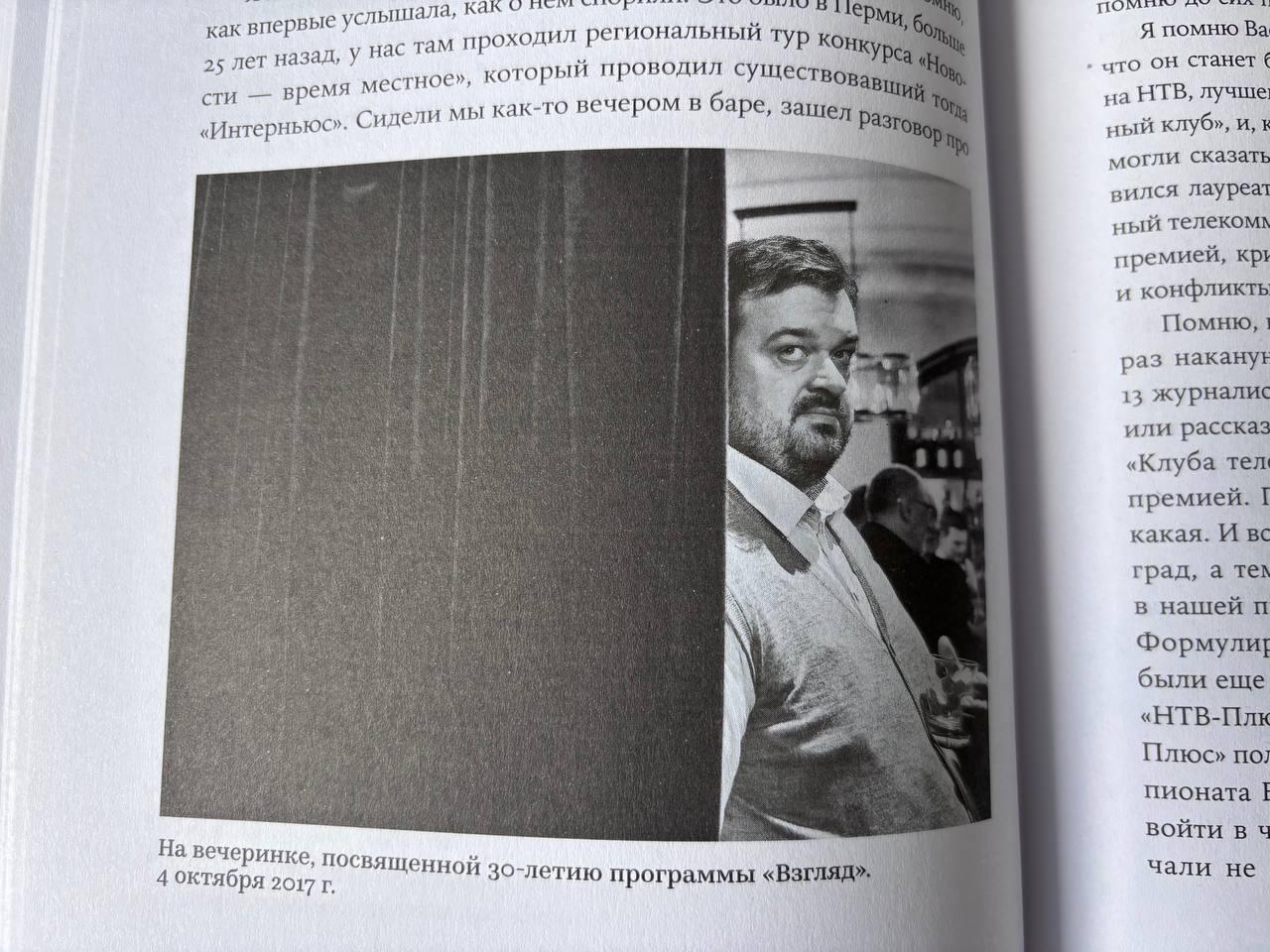
«Football Club» was an information and analytical television program that Utkin hosted from 27 May 1994. Its format was a lively discussion of football events, with a vivid and ironic presentation of the material. Vasily and his team moved away from the standard showing of only goals and highlight moments toward interesting and problematic stories, which in the nineties was a breakthrough. In 2013, Utkin closed the project, and five years later revived it online.
Observing and reading such comments led me not even to a thought but to a kind of instantaneous flash: a book about Vasya is needed by people. Let it not be a biography but a collection — it is needed. I suppose I can call myself the author, because the book can be perceived as my statement.
— When reading the book, one gets a sense of Vasily Utkin«s presence nearby. As if he is personally telling you the contents.
— Thank you. It is based on Vasya«s own texts, after all. When I was selecting them, I realized that most often he wrote immediate responses to current events: matches, scandals, other situations. Now they require deep immersion in context, so I decided that the book should include not only football texts but also what he wrote about life.
Vasya once formulated himself that he wanted to write «a book about my life, my friends, various encounters and happenings.» That was my starting point when collecting his texts. They really do create a very trusting language of communication with the audience. That is why people loved him. Very dear, human, ironic toward both himself and all the situations he found himself in. He was a wonderful storyteller.
The most important thing Vasya would have wanted to tell about himself, he tells himself in the texts and interviews that also made it into the book — and we only supplement him with our contextual insertions.
«They drank ice-cold vodka, snatching raw fish from the river»
— Which part of the book did you work on the most? What was the hardest?
— The hardest part, of course, was the ending. That is the chapter «The Last Correspondence.» I reconstructed the last weeks, days, hours, minutes of Vasya«s life. It is very hard to read. I even had doubts about whether to include it in the book. I showed this chapter to my editor and literary agent. They wrote to me that they cried, but nevertheless it had to be published.
That last March I visited Vasya, congratulated him on his birthday. I saw him, talked with him, exchanged messages with him almost every day. True, we had a certain falling-out at the time, which did not interrupt our correspondence, but some tension arose.
— Is there a chapter or passage that you like most?
— I really love Vasya«s yarns. A great deal made it into the book, including that legendary trip to Yekaterinburg for the Uralmash football tournament.
This refers to an amateur tournament where Vasily was the backup goalkeeper of one of the teams. Due to an injury to the starting keeper, he had to take the field. Former FC Ural president Grigory Ivanov recalled this story after Utkin«s death.
This is already not a spoiler, the story is ancient. It turned out that his teammates deliberately put him in goal and let him face a penalty, because the game had to be thrown. Vasya was not warned.
Of course, the story of how he visited pop-star-turned-governor Mikhail Yevdokimov in Altai also stuck in the memory — how they drank ice-cold vodka there, snatching raw fish from the river and breaking it over their knees. Of course, I heard all these stories many times in various company, and Vasya sometimes told them slightly differently.
These are very captivating stories; I listened to them with pleasure. Behind them lies a young, beautiful life: the nineties, the early two-thousands. Not everything made it into the book, but even so it turned out enormous.
I also love his later stories. The 2018 FIFA World Cup, about Xavi (Spanish footballer and coach. — Editor«s note) and the airplane. Or that lesser-known text about the teapot. It is wonderful and very, very sad.
— About the size, by the way, I agree with you. When I placed a pre-order, I thought it would be standard, and then I went into Chitai-Gorod, and an employee pulled out from under the counter not just a book but a tome. I was pleasantly surprised. It definitely stands out on the shelf.
— When I was assembling the book, I wasn«t thinking about its size. I was looking for some inner logic, thinking about whether this book corresponded to Vasya. I assembled this enormous Word file, and when I told the publishers how many characters were in it, they were a bit stunned. Before layout began, I had to cut about 30 percent, even though that assembled file had already gone through internal censorship in terms of cuts. I already understood that not everything would fit.
I even fought for the last texts, tried to squeeze in a couple more stories. I managed it, but the publisher is right: the book is already enormous.
— I heard you managed to sneak in either five or six texts.
— Yes, I felt very sorry that Vasya«s so-called culinary off-topics wouldn»t fit. He had a series of posts about cooking on his blog, and it«s not just a collection of recipes (a pinch of this, mix it with that, and so on) — they are funny and spirited stories about life. They reveal traits of Vasya»s character.
It was a living and creative process, but not endless. It is not a website, after all, where you can stuff in all sorts of things. Selection was very important to me. Each individual author brought their own intonation, their own story or factual material. I tried to spread all the authors across chapters so that each recollection related to a specific time period or told about some traits of Vasya«s character, without repeating.
«I was expecting serious hate»
— Have you encountered negative reviews of the book? There«s a sense that everyone loved it. Everywhere there are only positive assessments, and the print run sold out in a flash.
— There are negative and neutral, restrained reviews too — I simply don«t know about all of them. Surely someone thinks badly of the book or of how I prepared it. There were reviews saying there»s nothing new in it: old texts that everyone has already read. This seems a bit strange to me, because over 30 years Vasya published thousands of texts. How can one remember them all so well? In reality, the book contains a great deal that is new even for those who read Vasya all their lives, watched «Football Club,» and saw him in films.
And there really are few negative reviews. For me this was a surprise — I was expecting serious hate.
— Tell us about Vasily, about your friendship with him. Surely you had different views on some things. How did you get through that?
— Of course, we are different, in some ways completely unlike. We looked at many things differently, whether professional matters, politics, or religion. We had disagreements, but that did not prevent us from being friends and communicating. Yes, sometimes tension arose because of various situations, but it never led to conflicts or a breakup.
Perhaps he thought something like that about me, but he never shared it — I can only guess. In a sense, the book became a continuation of our conversation during his lifetime.
«I was extremely negative toward Avtomobilist»
— Before the interview you said you had never been to Yekaterinburg. Do you follow Ural sport?
— To be honest, not that closely, of course. I don«t follow modern Russian sport at all, though I know HC Avtomobilist perfectly well, from Soviet times. My first live hockey match in Moscow that I saw in person was a game between Spartak and Avtomobilist. It was the late seventies. Many times in Saratov I went to Avtomobilist matches, because at some point it was one of our main rivals in the fight for promotion to the top league. In that sense I was extremely negative toward Avto.
I still remember the first live hockey fight I ever saw. It was between Saratov«s Kristall and Avtomobilist. By childhood impressions, it was a real massacre on the ice. It went on for no less than 15 minutes; they even turned off the lights in the palace so the spectators wouldn»t see it, and called the police.
Of course, I have known about Ural sport since childhood. At one time I was invited to the VHL«s Russian Classic, which was held in Nizhny Tagil, when Sputnik was coached by the Saratov coach Vladimir Golubovich. Not only ice hockey but also bandy: Ural Trubnik (Pervouralsk), Mayak (Krasnoturinsk) — I know these teams well. And of course Ural basketball: Kandel, Yeryomin, Belov — these are all names I have known since childhood too.
— You have a podcast, «Sport of the Soviets,» where you spoke about a plane crash in Sverdlovsk in which a hockey team died. Why did you decide to investigate this?
The VVS MVO team (one of the strongest in the league at the time) died on 7 January 1950 in the vicinity of Sverdlovsk. The players were flying on a Li-2 aircraft to Chelyabinsk, for a USSR championship match against the local Dzerzhinets. Due to abnormally severe frosts and poor visibility, the crew commander decided to land at the alternate airfield Koltsovo, but during the attempt to land on the runway he missed. The aircraft hit the ground with such force that no one survived. The tragedy was classified. It became known only years later.
— It was a podcast not specifically about the plane crash, but an eight-episode series about Vasily Stalin (sports patron, Soviet military pilot, youngest son of Joseph Stalin, commanded the Air Force of the Moscow Military District in 1948–1952. — Editor«s note) and the history of the creation of the VVS hockey team. Yes, an entire episode, even a bit more, is devoted to the team»s death. At one time I managed to find and see documents related to the investigation of this disaster.
My plans, when I come to Yekaterinburg, are to visit the memorial (the mass grave is at Koltsovo Cemetery. — Editor«s note) and stand there for a bit. If possible, I will go there right after landing.
Unfortunately, we have not fully studied this story. In 1979, Vsevolod Bobrov died, who did not fly with the team and survived. Some say that before the flight he went on a bender and overslept; others say he was not taken because of unfinished documents. The versions differ. I had a strong desire to do a long interview with his half-brother. Unfortunately, he recently passed away.
Before that I had been in contact with him, wanting to hear his account of Vsevolod Mikhailovich, about Stalin, about those times, and about that terrible flight. Unfortunately, he was feeling unwell and could not receive me, even though we lived not far from each other in Moscow. It didn«t work out. The story of the VVS team and its death has always been very important and interesting to me.
— Do you have plans to return to this investigation?
— In terms of the podcast — not for now. Preparing, recording, and editing that series took us almost three months. I did it just like that, and managed to raise a little money through the Telegram channel for the project. Right now there is no opportunity, because the process requires a lot of time and effort, but it is terribly interesting.
— Before Red Line, you will also speak in Yekaterinburg at Domna. What will that be about?
— FC Ural invited me separately to give a lecture about our sport in the mid-1930s. I am very interested in that period in the life of the country and Soviet sport. First, that was when the entire system of our modern sport took shape: that pyramid from school physical education lessons and youth sports schools to professional teams.
We still use that pyramid, and it all began in the thirties under Joseph Vissarionovich. That was when the first professional athletes appeared in the USSR, although they could not be called that at the time. In the language of those years, «master of sport» was a designation for an athlete who received a salary for training.
Also read the recollections of well-known Ural residents about Vasily Utkin. And in this article we gathered everything his colleagues and friends said about his death.