Ustye Art Residence on Lake Baikal
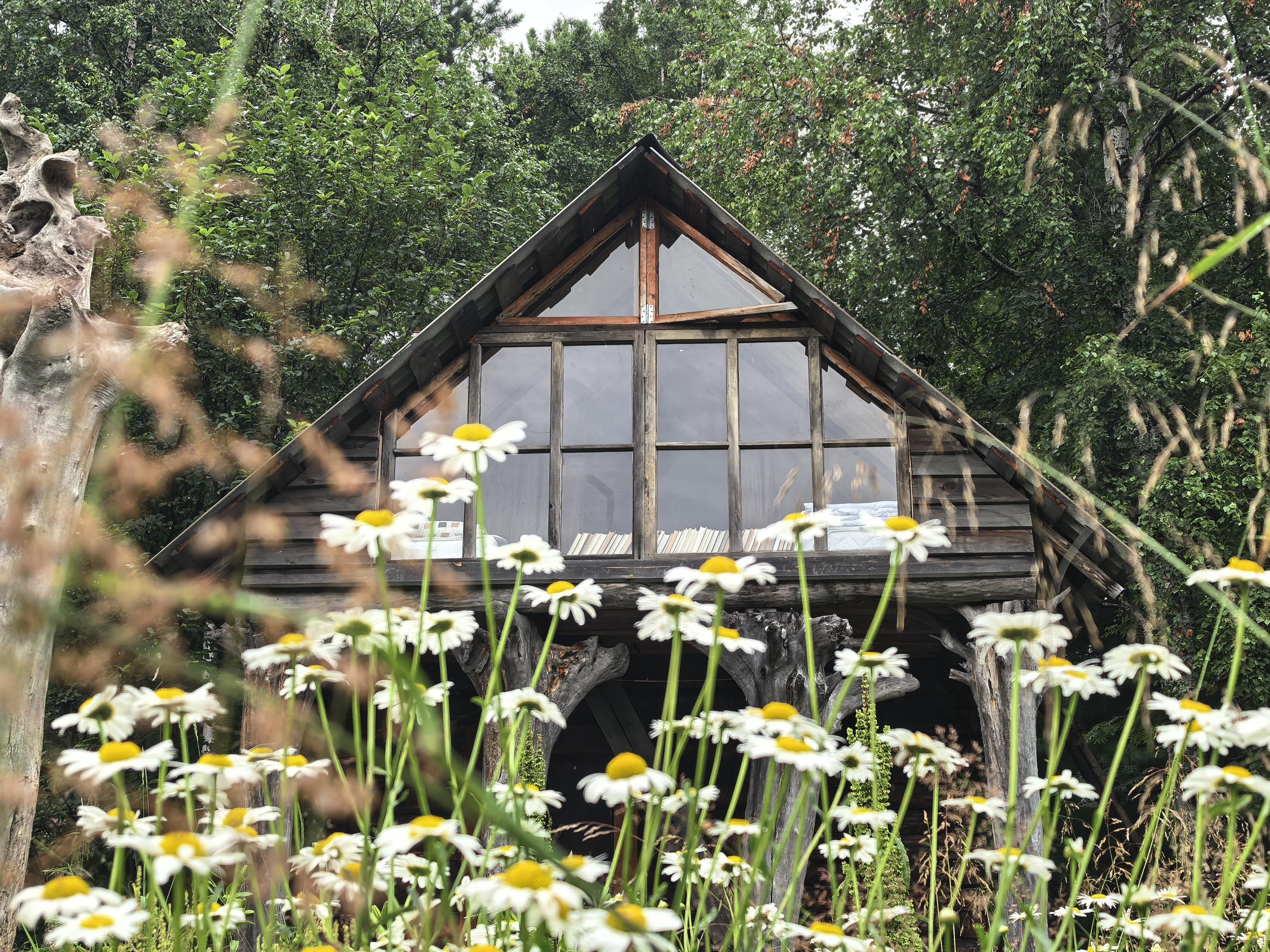

Artist created the Ustye art residence on the shores of Lake Baikal
«I like to layer meanings,» says Ivan Kravchenko, who created the Ustye art residence on the shores of Lake Baikal, giving new life to his ancestors« land. The story, closely tied to its founder»s family, has long outgrown the idea of making a workshop on the site of his great-grandmother and great-grandfather«s homestead. Now artists from all over Russia create their art objects here, tourists drop by for excursions, and for locals the residence has become a gathering point. We met with Ivan and saw for ourselves what Ustye is.
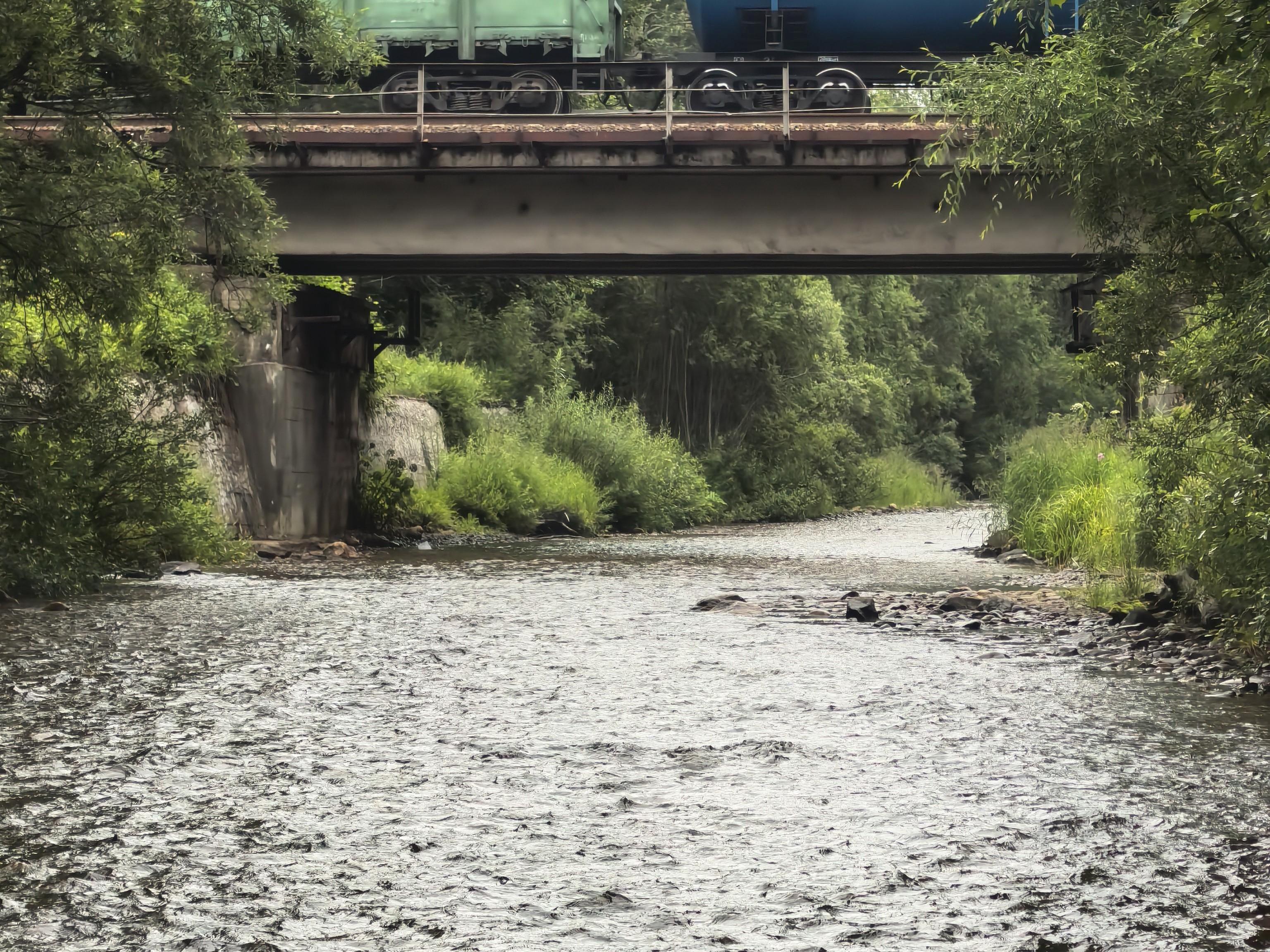
The Kurkavka River, which must be «floated» along to reach Ustye
Not drive, but «float»
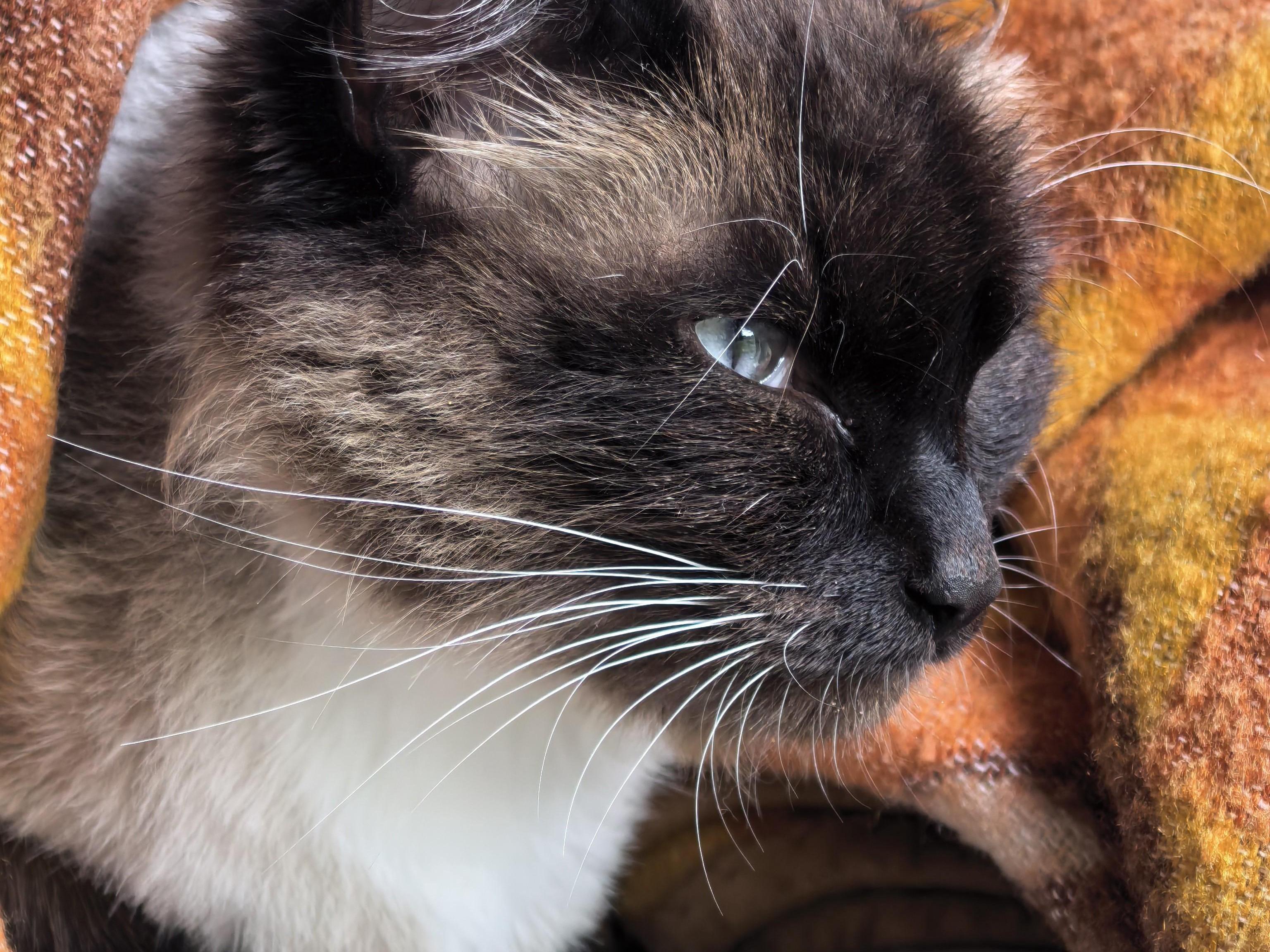
A local resident who is shown respect and honor by all
To get to Ustye in the village of Kedrovaya-Sibirskaya, you need to find the turnoff, drive along a narrow forest road, and then «float» along the Kurkavka River under a railway bridge.
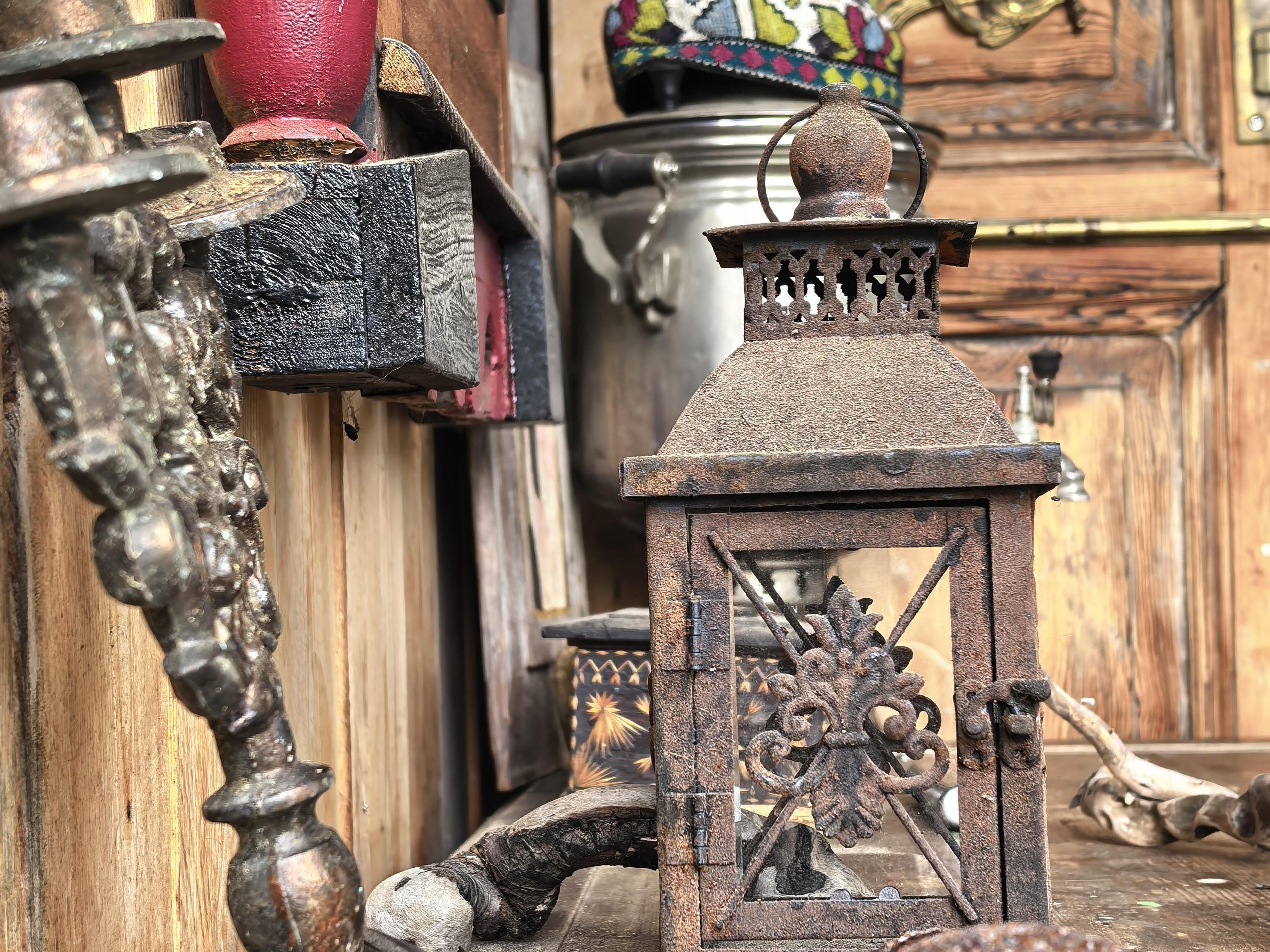
There are many vintage items in Ustye
— It«s not that easy to get here, — I share my impressions with a group gathered at the gazebo of the local banya.
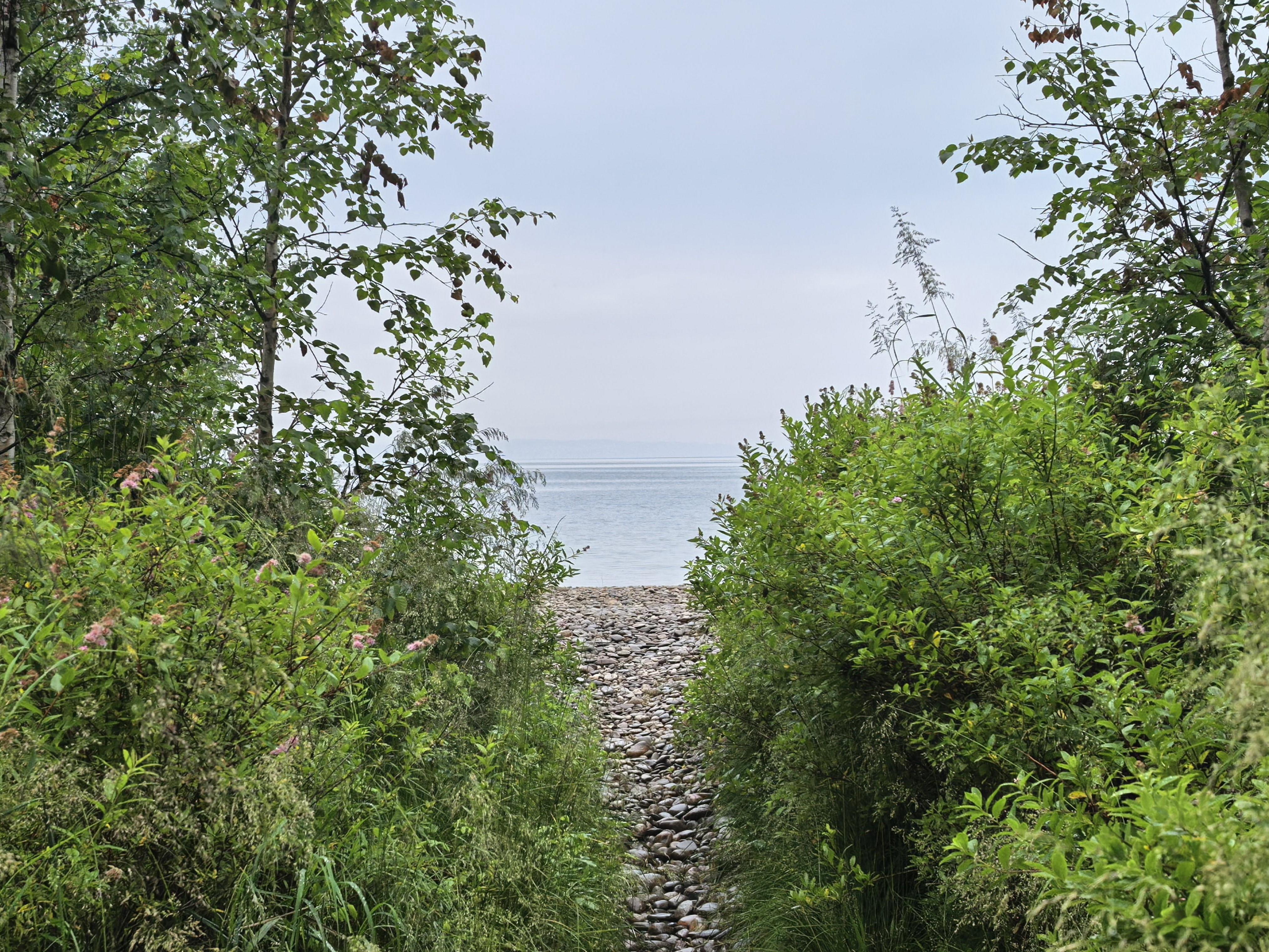
Path to Lake Baikal
— That«s the point. No extras here, — responds one of the guests. A middle-aged man who comes here regularly from Tomsk.
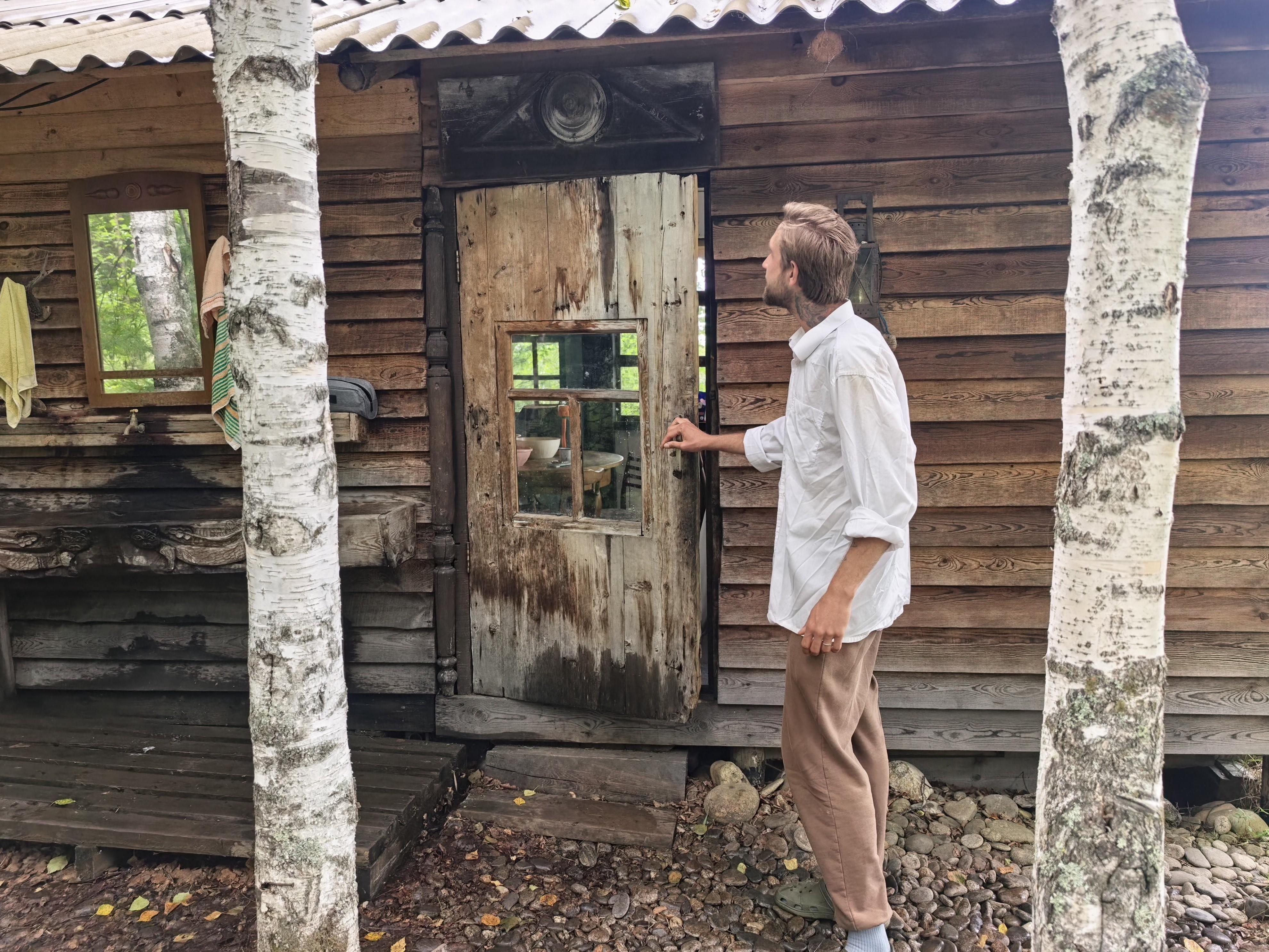
«Much in Ustye happens by intuition,» says Ivan
Why this place draws people is perfectly clear. The shore of Lake Baikal, forest right there, the mouth of the Kurkavka River. And the slow flow of time and space. As if there«s nowhere to rush. Everything a artist needs when the creative process kicks in. Ivan Kravchenko started the art residence when he was only 23. In 2018 he began construction, and in 2021 the first guests arrived.
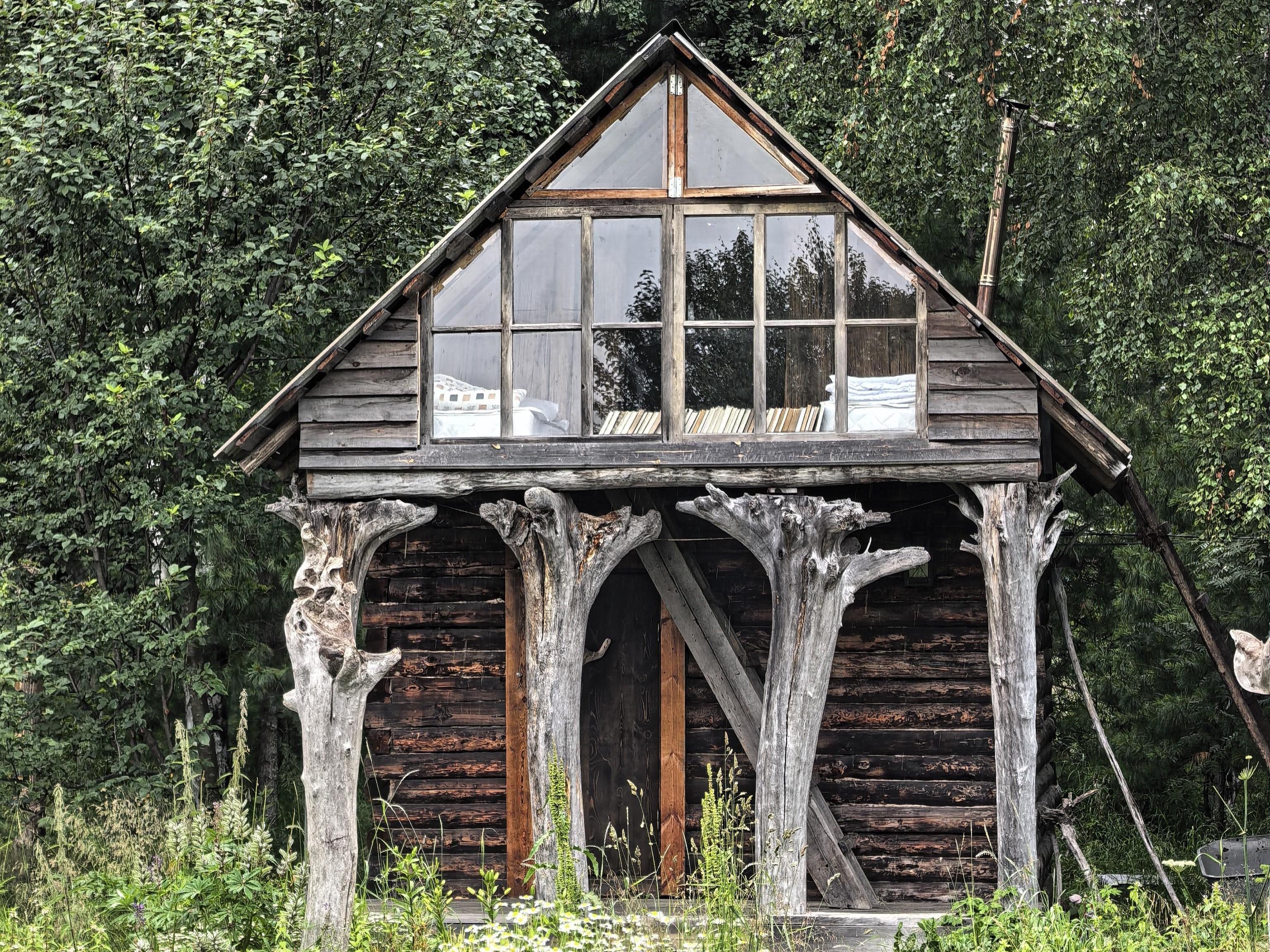
The famous house itself
— At that point I was searching for myself, got into ceramics, and wanted to make a workshop for myself. I had no money or space then, so I remembered the plot on Baikal, thought I«d throw something together here, at least work in the summer, — he says.
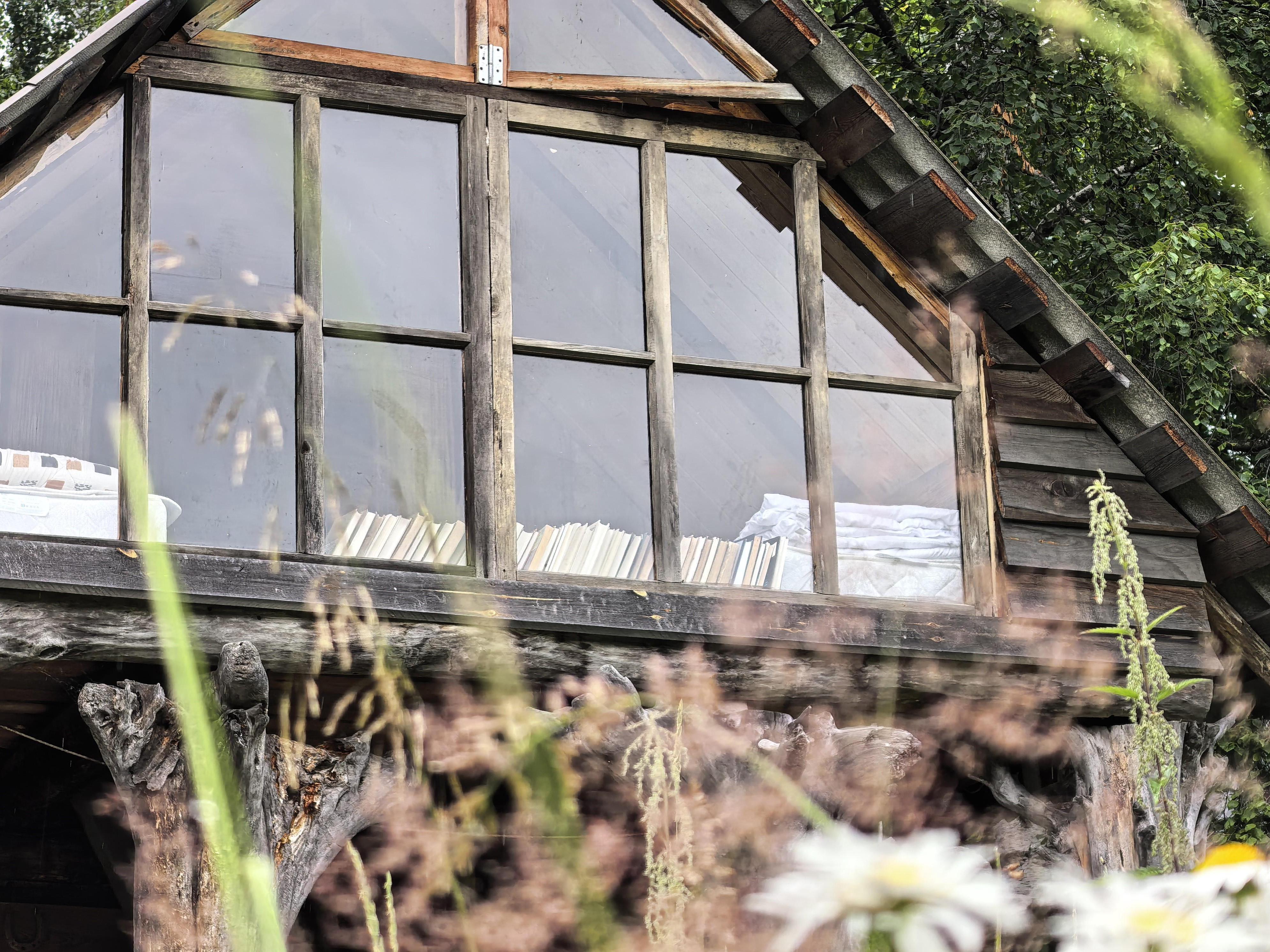
And the attic with a panoramic window
From here, from this place, Ivan«s family»s Baikal story began. His great-grandmother and great-grandfather lived in Ukraine, were dekulakized and exiled to Siberia, where they traveled on foot along the old Moscow Highway for about six years with a cart given from the farm for their belongings.
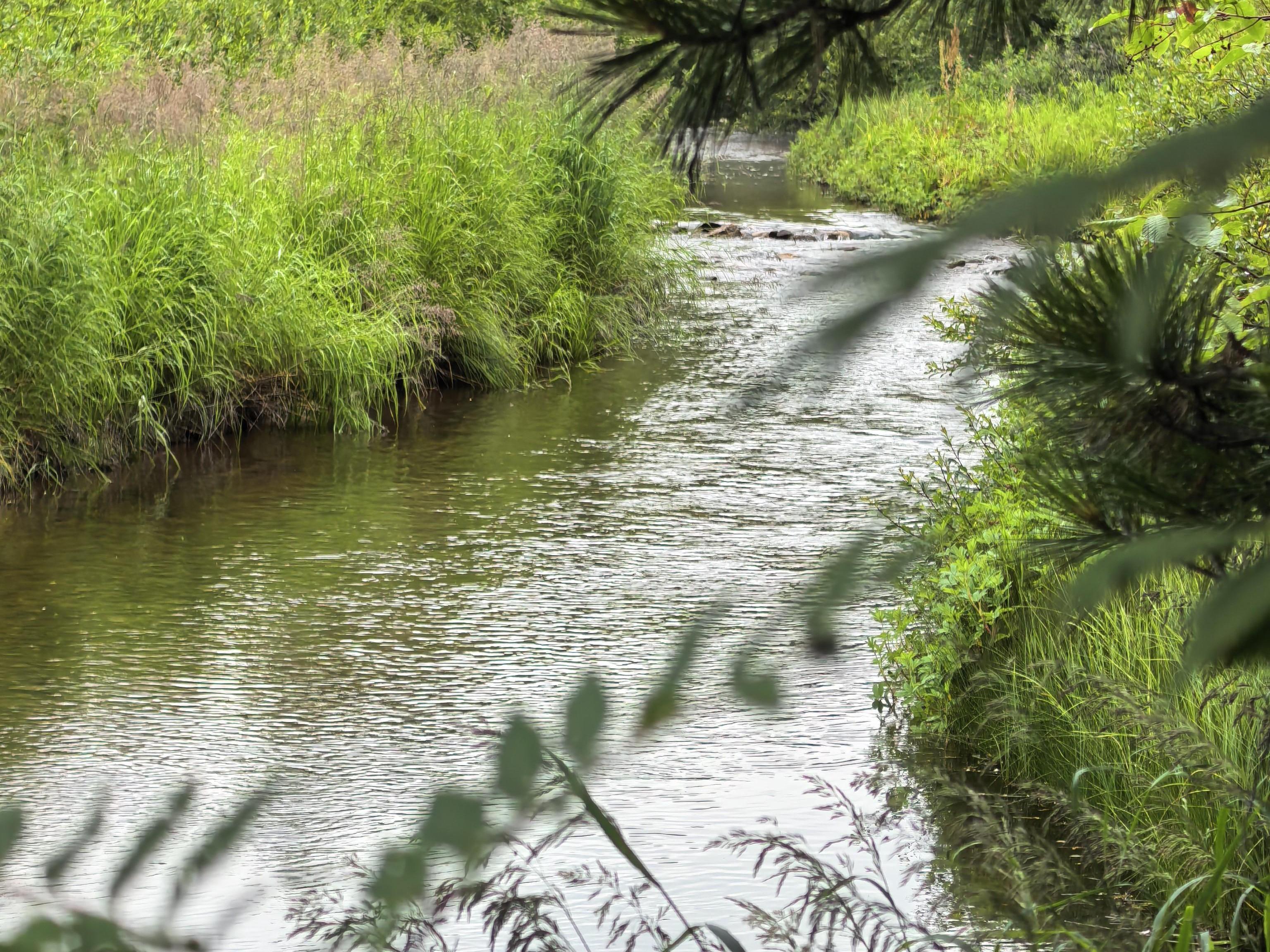
The Kurkavka flows toward Baikal
— On top of everything, they were Old Believers, so they brought ancient icons, handwritten prayer books, some furniture. My great-grandmother had an icon on one wall and a portrait of Stalin on the other, — Ivan says.
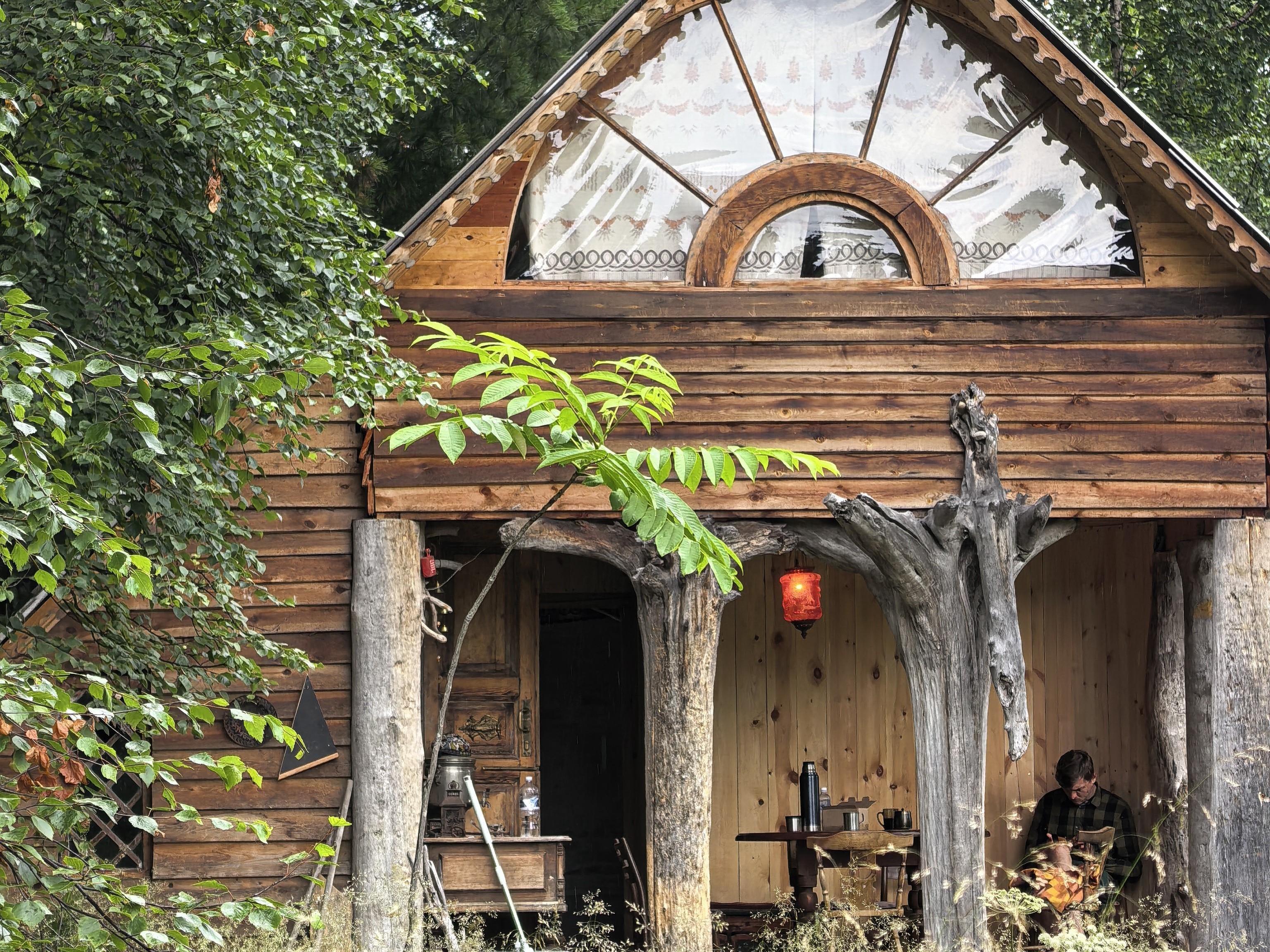
Banya
At Kedrovaya-Sibirskaya then stood a coachman«s house that served the Moscow Highway, and Ivan»s relatives settled on two plots here. His great-grandmother passed away a year before her great-grandson was born. Ivan, by the way, was born and grew up in Ulan-Ude, and spent all his childhood summers in Kedrovaya-Sibirskaya.
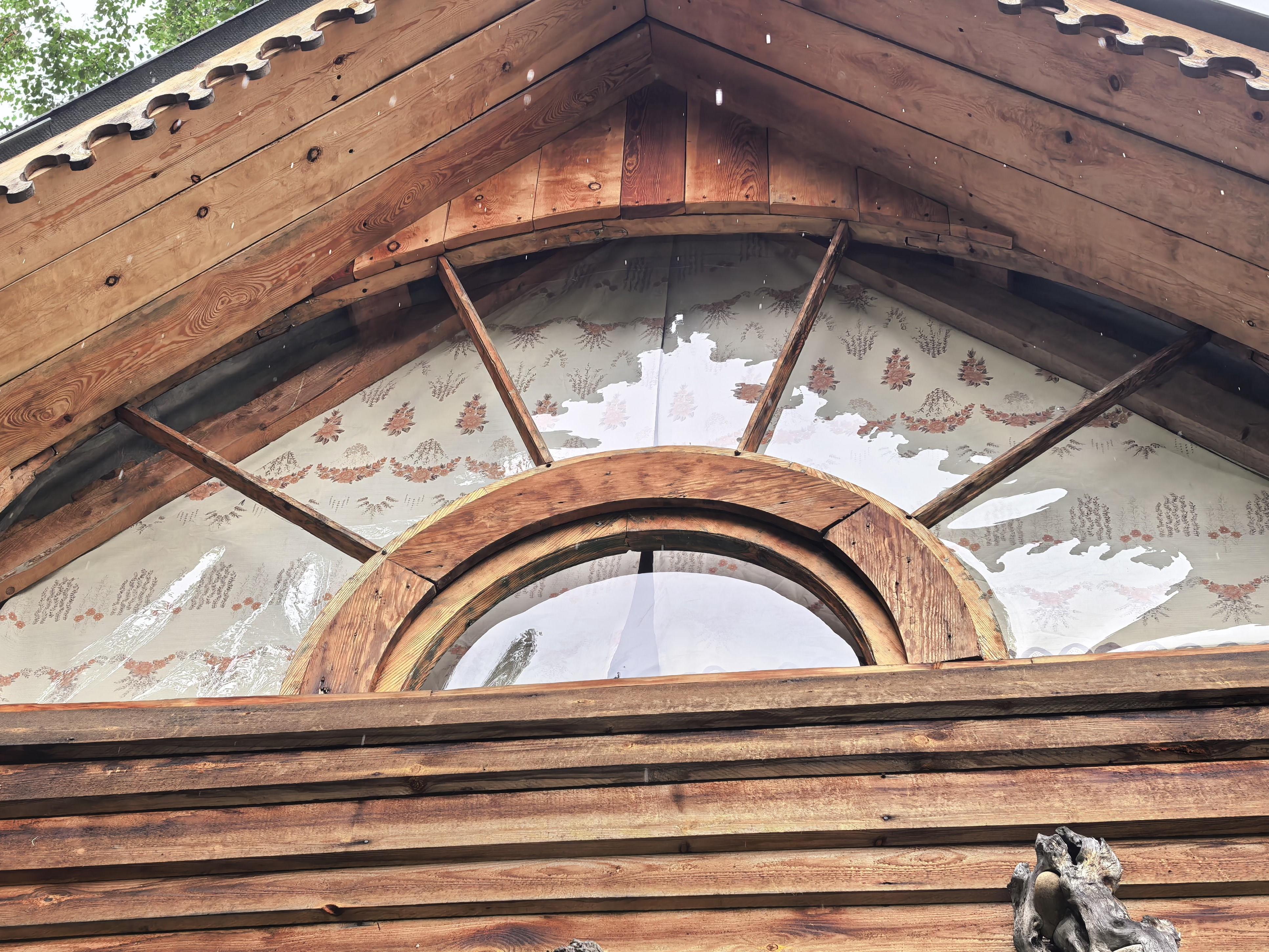
Saved Moscow window
— It was the only resort my parents could afford, so we came here constantly. I remember my great-grandmother«s house, beautiful furniture, a bunch of old things. I remember the garden was overgrown with grass up to my neck. The village also looked abandoned then, — Ivan shares. — I remember trees seemed to embrace the road in a ring, the clearing was very small. For me as a child, it was the most magical place. There was something mystical about it: all those strange objects, everything half-rotten, ancient, odd. Plus my father told various family legends, stories about Baikal. I think this largely influenced me as a person and the concept of Ustye.
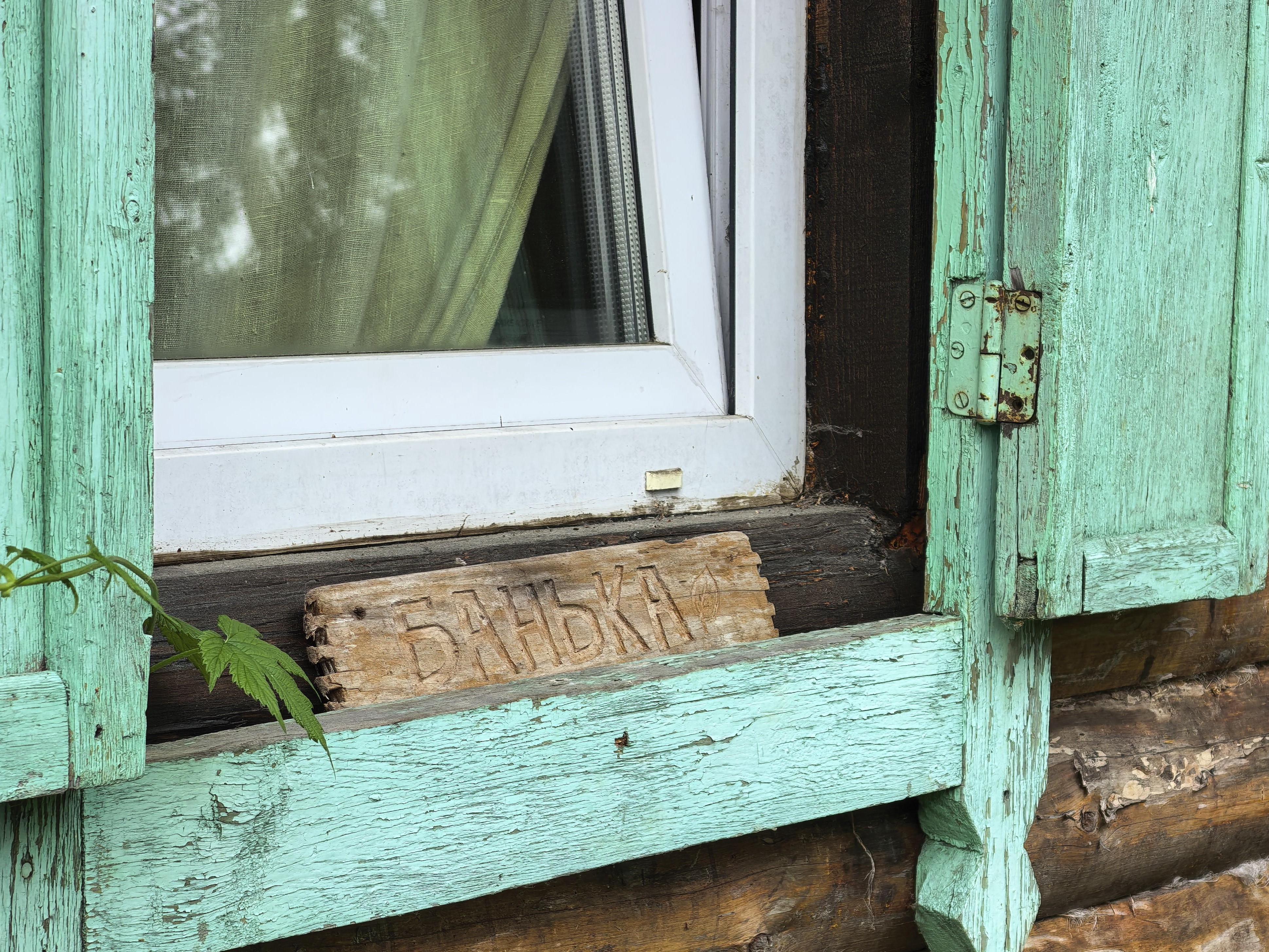
The banya here is unmistakable
Ivan grew up and left to study in Irkutsk. The family, busy with daily cares, hadn«t visited the plot right on the shore of Baikal for a long time. It stood abandoned. Until Ivan came up with the idea of making a workshop.
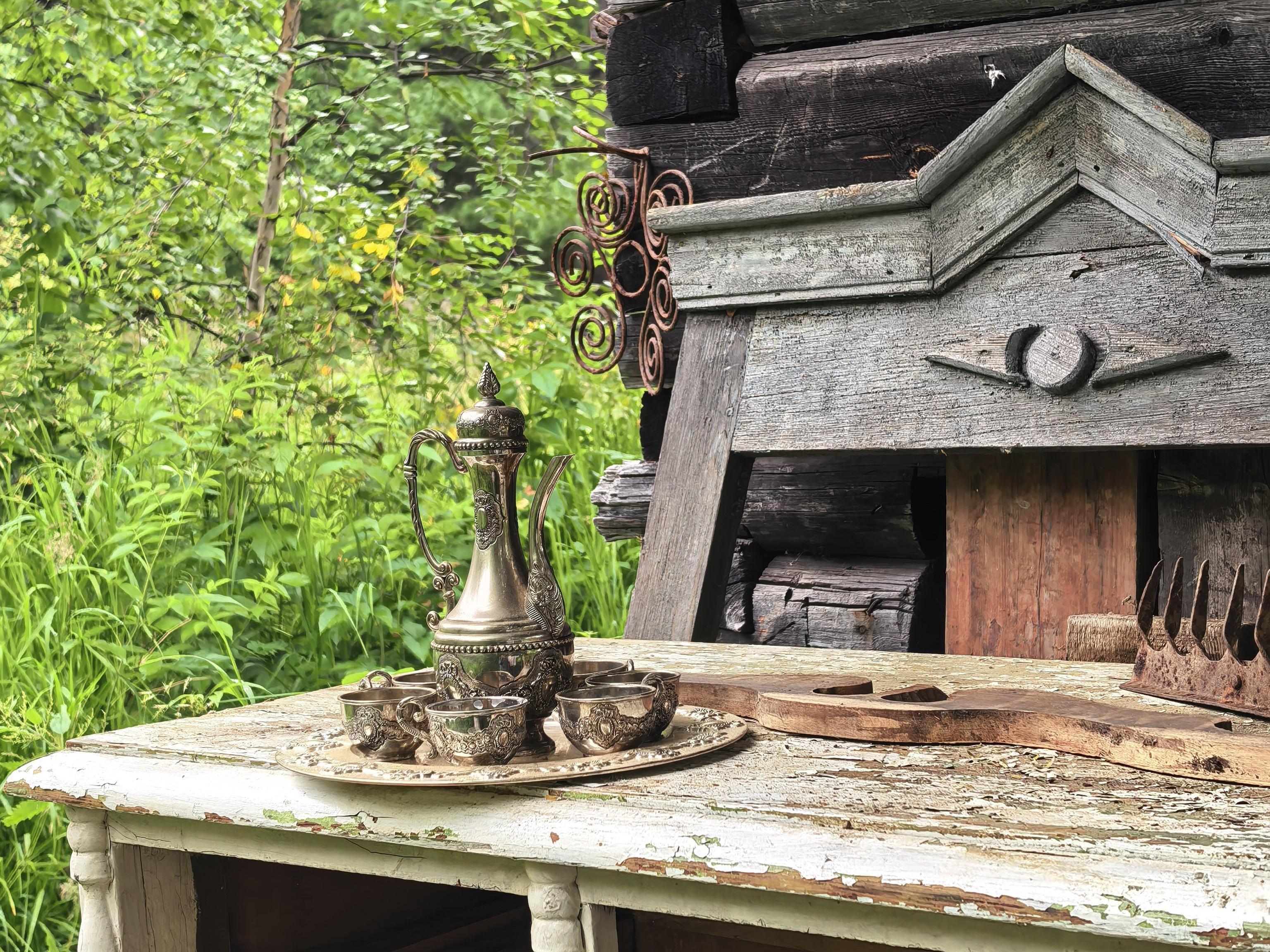
Ivan finds many things for Ustye by chance
Columns with roots up
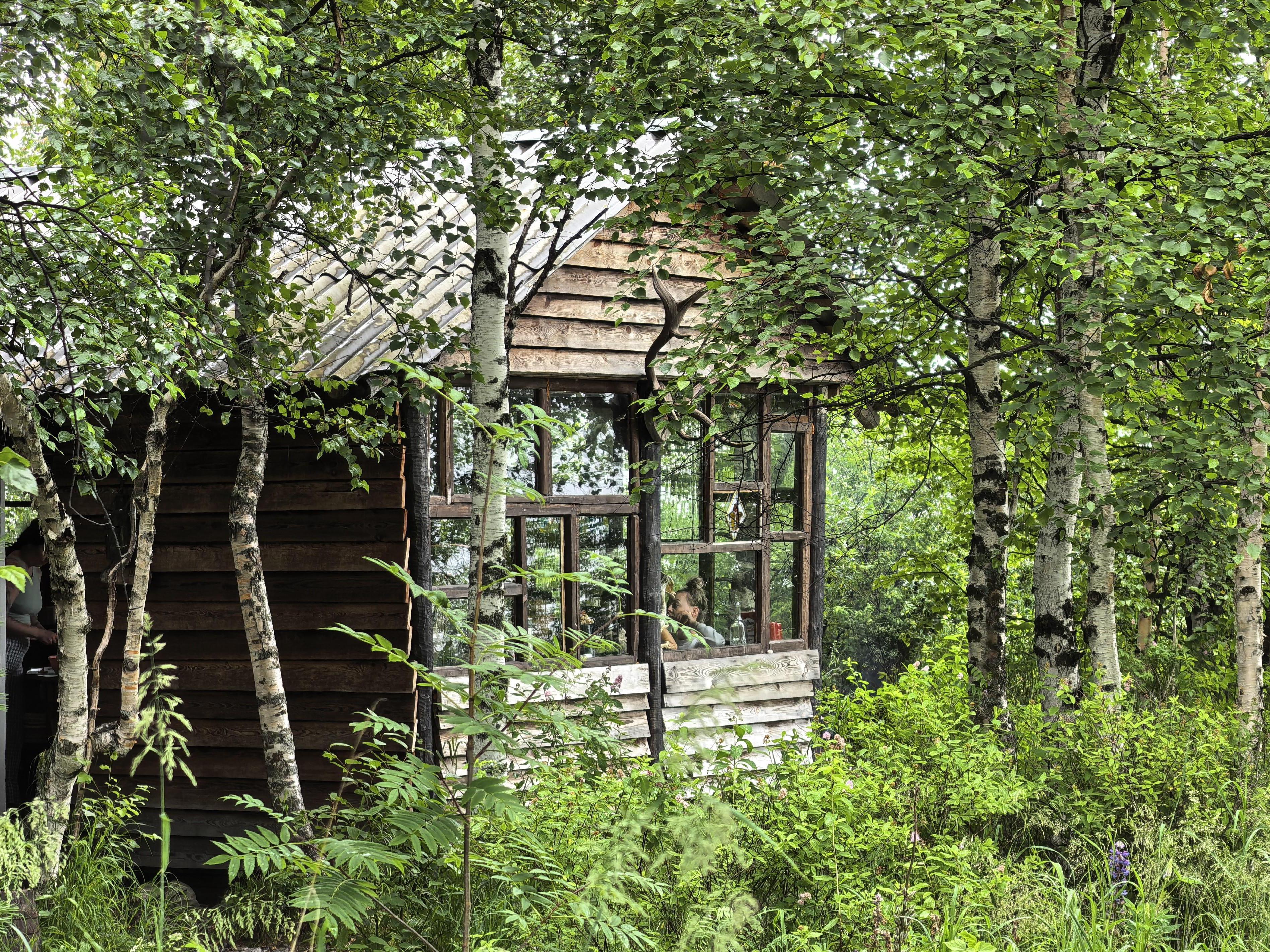
Summer kitchen with Tetris-like windows
In search of himself, Ivan Kravchenko met the muralist artist Maria Kuznetsova, author of several mosaics on the streets of Irkutsk. She opened the young man«s world to project activities and crowdfunding, the School of Ecological Entrepreneurship, and the very concept of an art residence.
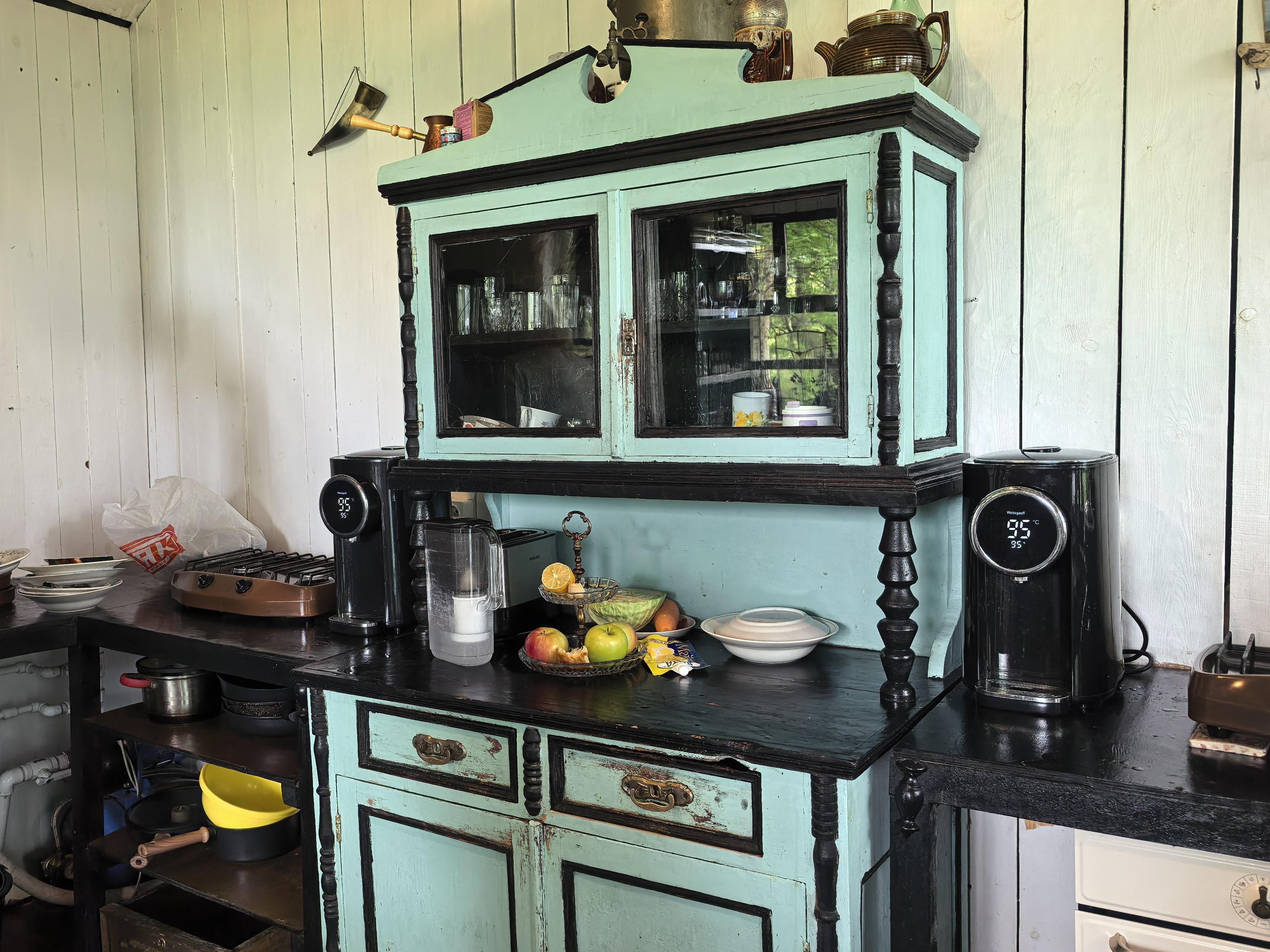
Such a sideboard could have stood in Ivan«s great-grandmother»s kitchen
— I gathered artists from my circle and said: «So and so, let»s build a common workshop.« I planned it to be from a hayloft that still stood here in my childhood, and we»d live in the pre-revolutionary house inherited from my great-grandmother, — Ivan says. — I had 30,000 rubles in my pocket, I bought stewed meat, some pasta, a minimal set of tools. We arrive, and the house is falling apart, it«s been torn apart, no floors, no roof.
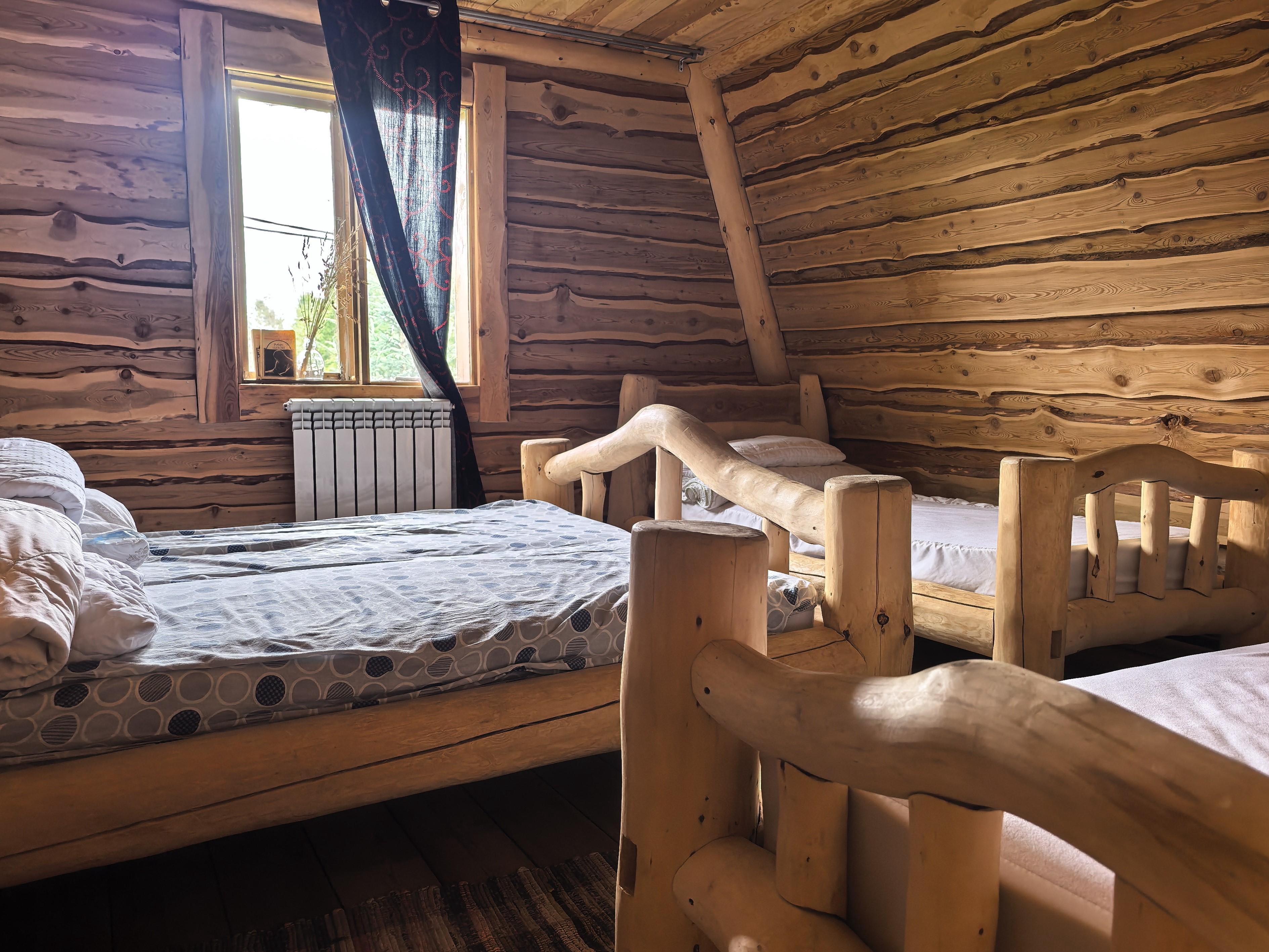
Furniture made by the old owner of the house
This, of course, upset the artists, but didn«t make them give up. The old house was dismantled, preserving everything that could be saved. The boards weren»t thrown away as unnecessary — they became the basis for guest houses in the form of simple A-frames. But the first was the house that made Ustye recognizable on social media: the one with columns made of driftwood — sunken logs.
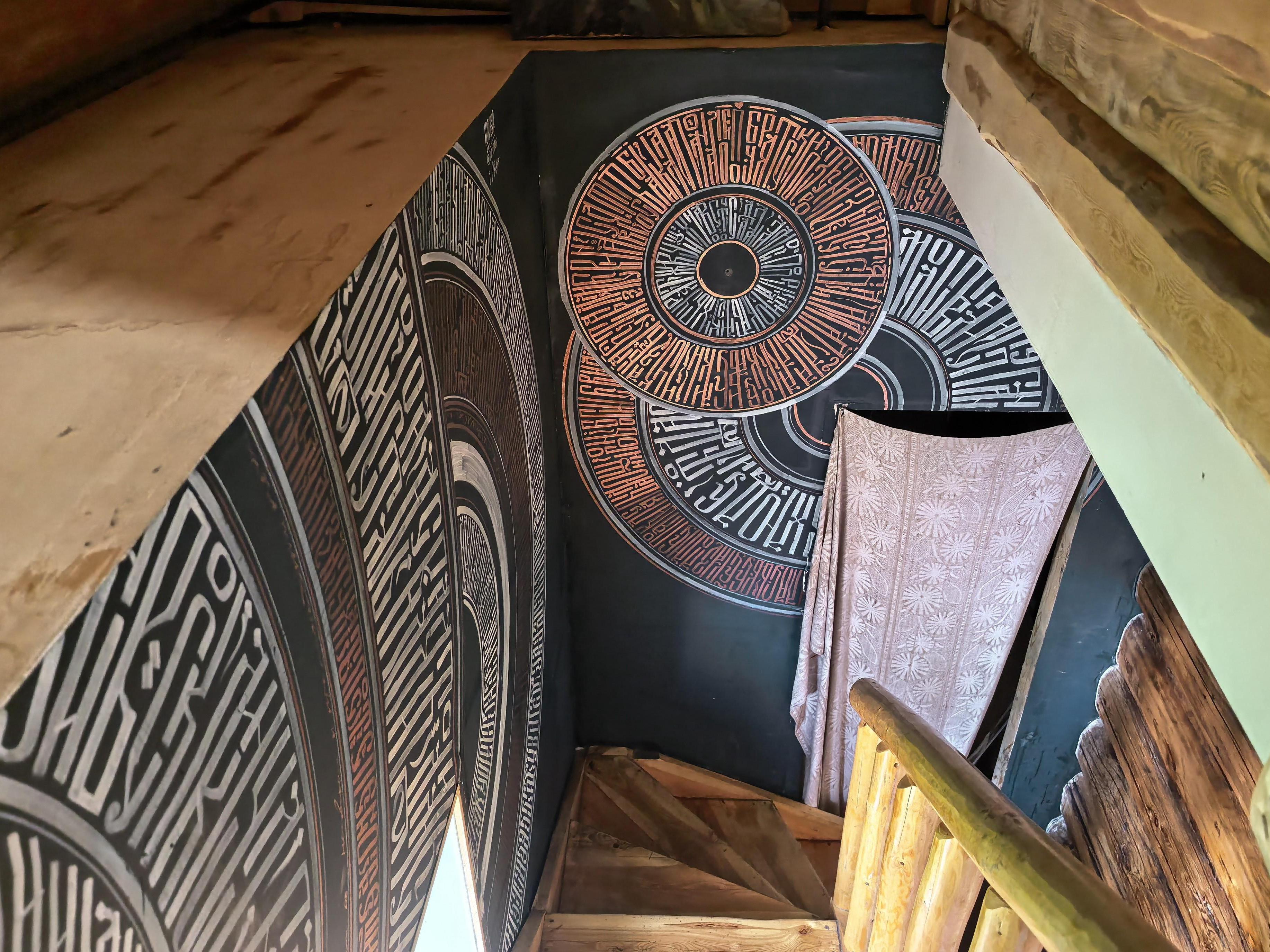
Legend of Baikal in calligraphy technique
Even as a child, Ivan thought it would be great to build a dwelling from such driftwood, but of course, this wood isn«t suitable for construction. So the house was built with his father in Ulan-Ude and brought to Kedrovaya-Sibirskaya. And the driftwood organically became decor.
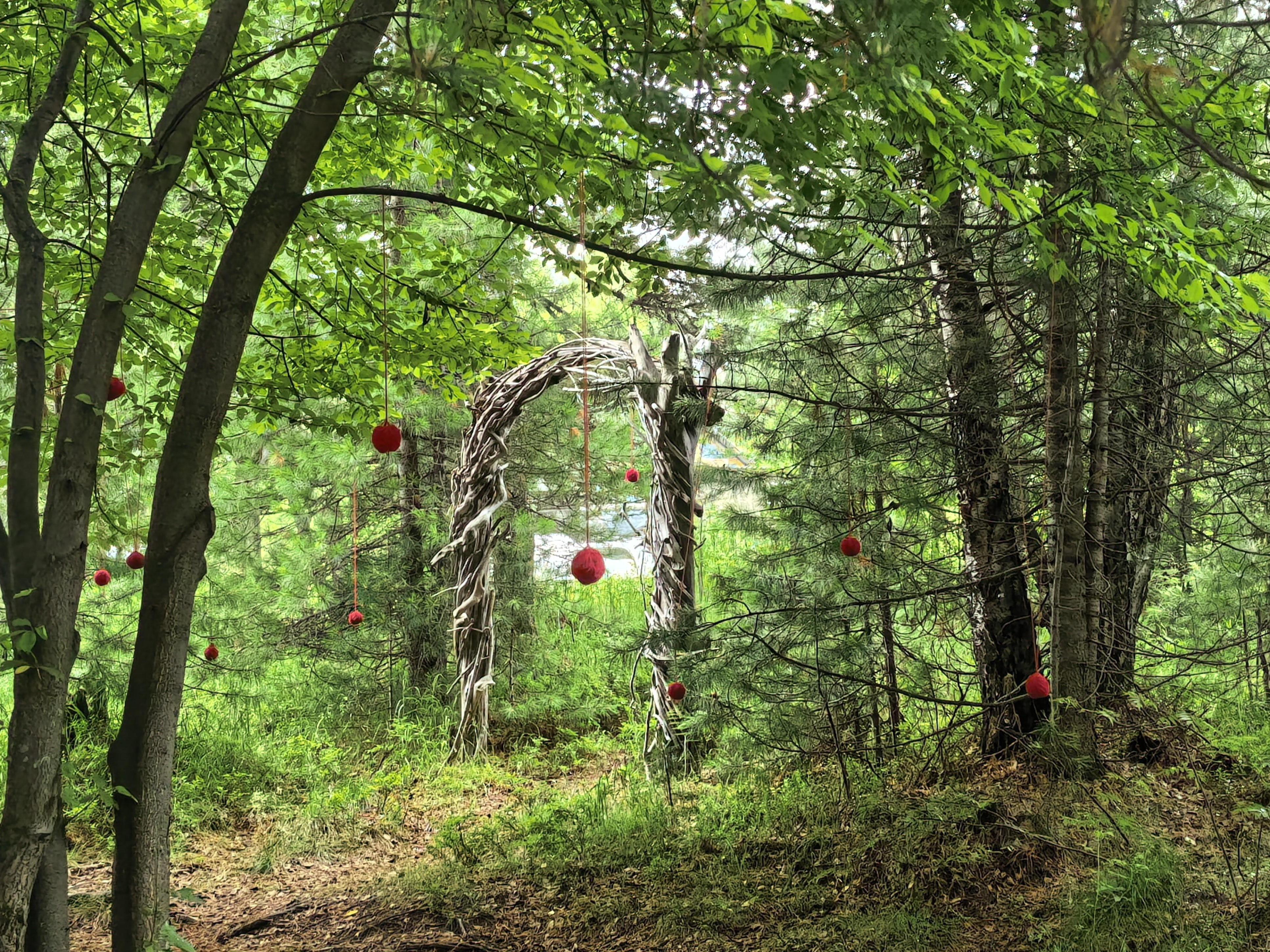
That very path to Baikal
— We decided to place them roots up not just for looks. First, it«s visually more appealing. Second, I wanted to embed the idea of generational connection. This is my great-grandmother and great-grandfather»s land, they are my roots, — Ivan explains. — Since we live and think in a Christian paradigm, we have the idea that deceased relatives are in heaven. Turning the logs roots up, we show symbolically that we draw energy and inspiration from there. And the trunks pointing down are a symbol that our earth blooms.
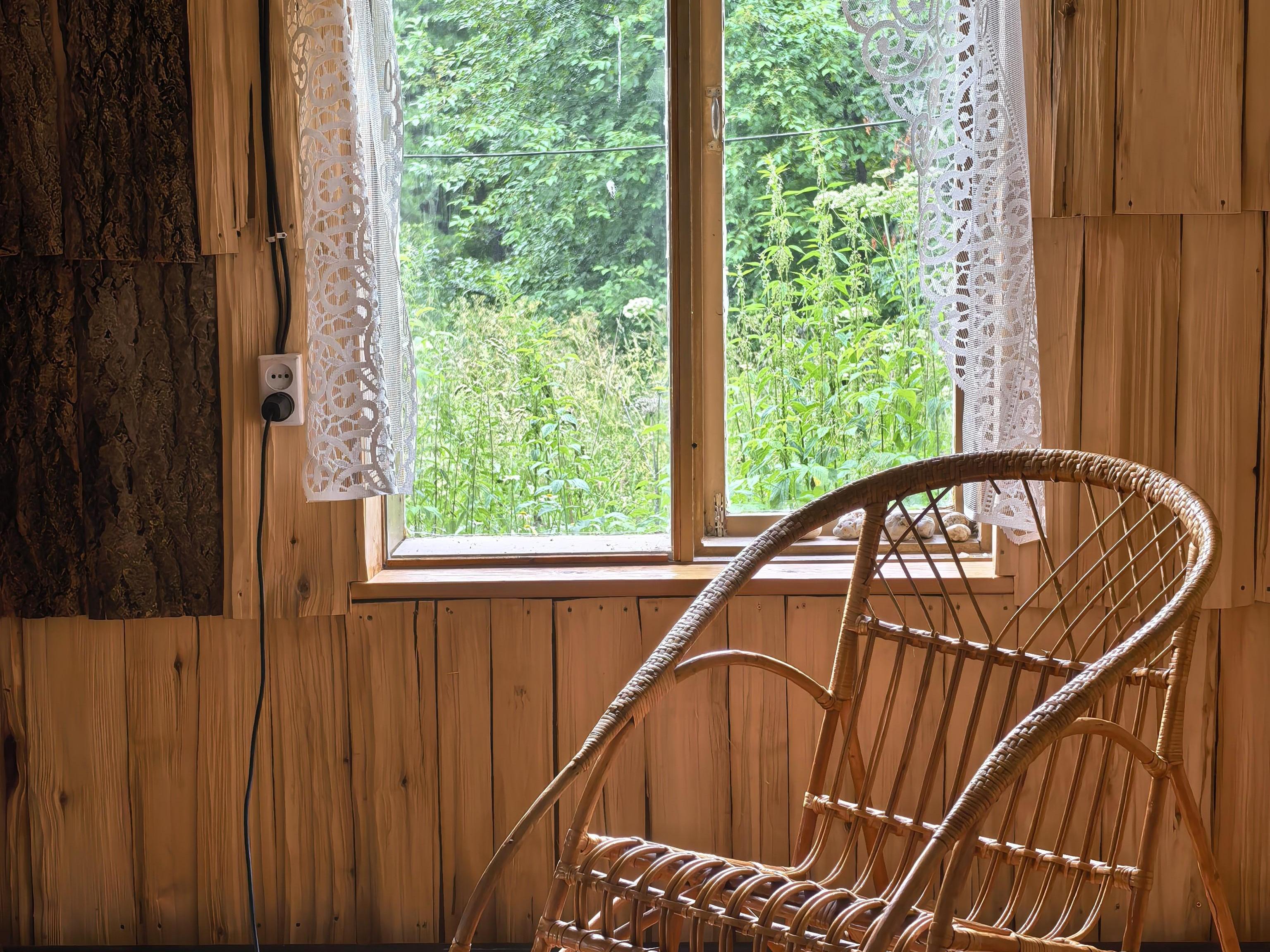
What creates the atmosphere
The famous attic with panoramic windows and books by the window appeared by chance, and this story seems to confirm Ivan«s words about his family connection. When building the new house, there weren»t enough gable boards, and help came from his great-grandmother«s house, from which two frames miraculously survived.
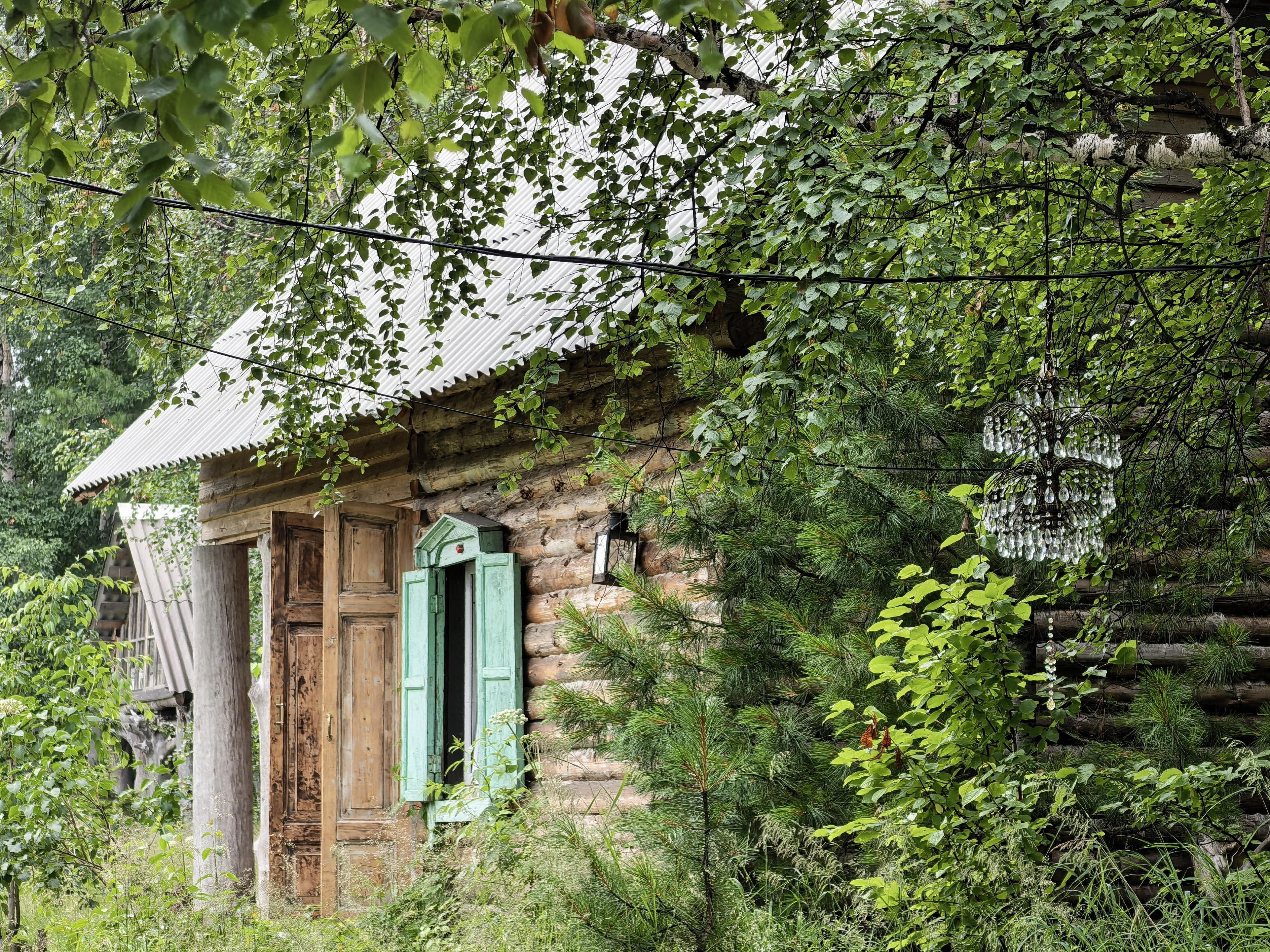
In Ustye, some details are not seen at first glance
— I jokingly tried them on the house and said: «Oh, now there»ll be a panoramic window.« And they fit so well here. This panoramic window appeared, and we realized this attic wouldn»t be a storage for junk but would become the first guest house. So it turned out that we settled the first guests in the attic, while on the first floor were the kitchen, storage, tools, and we lived there ourselves, — Ivan says.
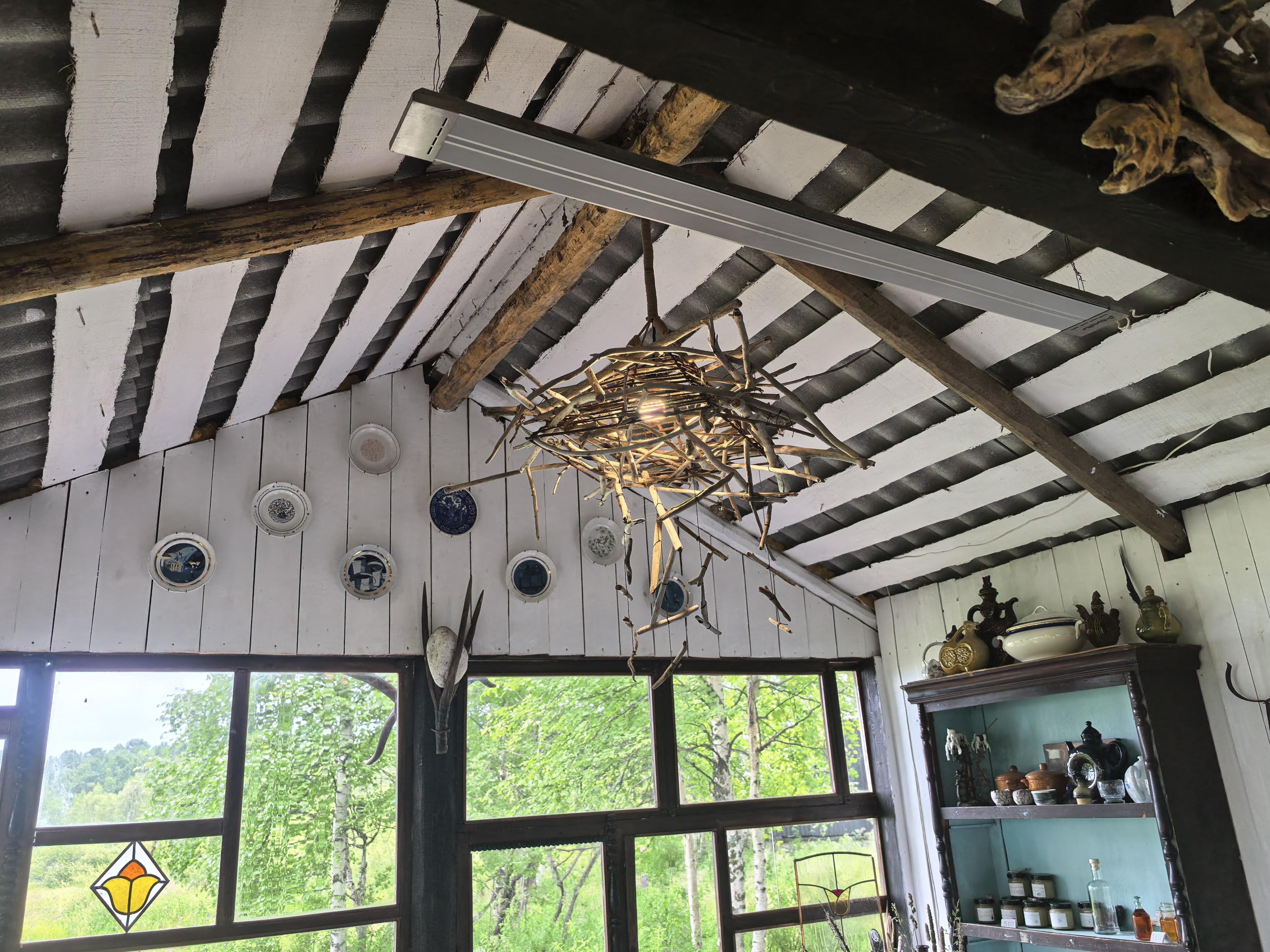
Creativity in the summer kitchen
The name suggested itself. Too much symbolism in it. And direct: the plot isn«t just on the shore of Baikal, it»s at the mouth of the Kurkavka, which flows right here into the lake. And metaphorical: a small group of people, like the little Kurkavka River flowing into the big Baikal, trying to make a big project. And familial.
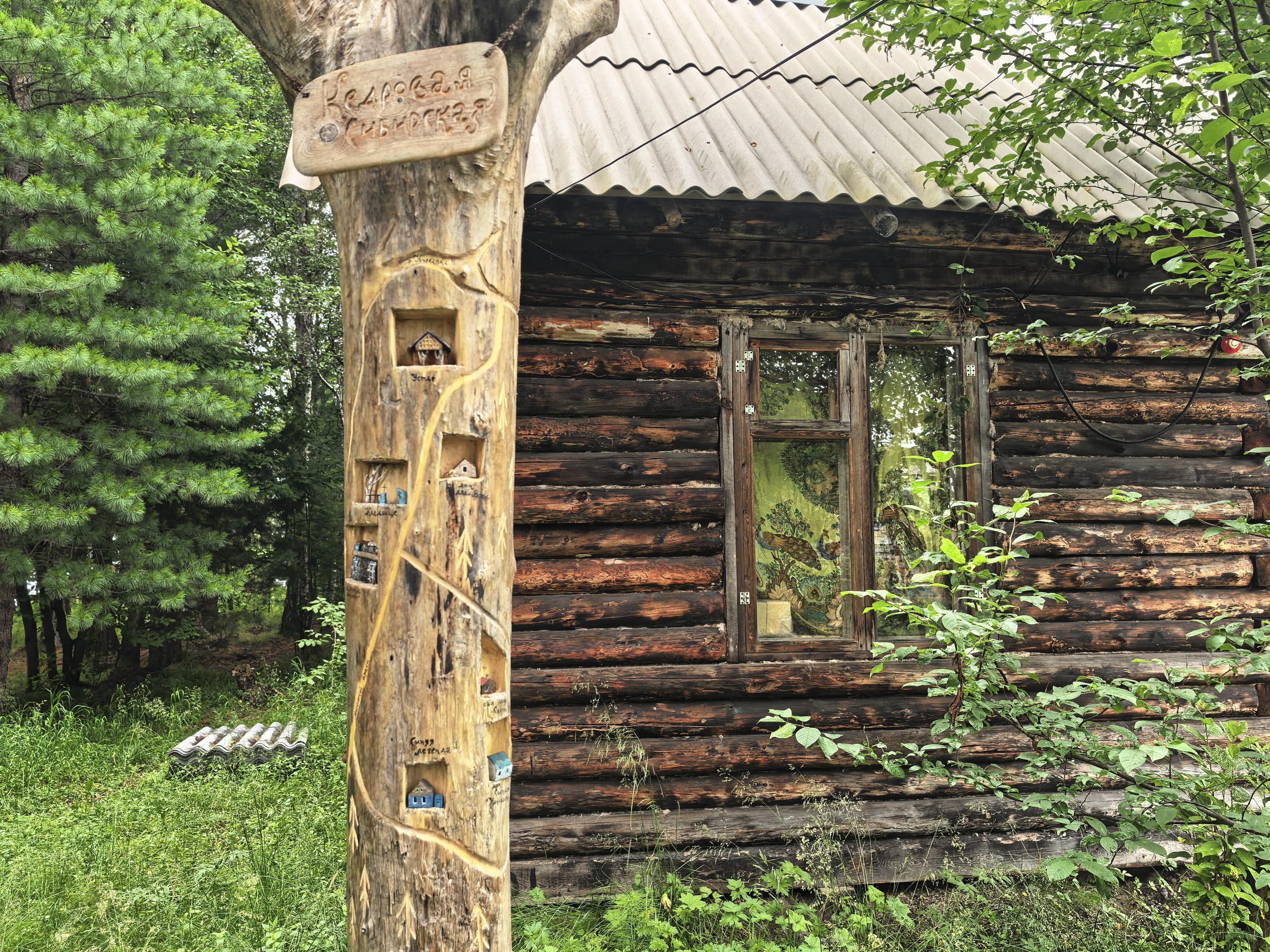
Such a «map» of Kedrovaya-Sibirskaya was created by artist Vika Khton
— When we were getting ready to come here with my parents, we always said: «We»re going to Kedrovaya.« I thought for my father, who also grew up here, the name »Ustye« would sound strange. But it turned out that as a child he and his friends said: »Let«s go fishing at the Ustyes.» For me that was goosebumps. We seemed to have come up with the name as a team, and it hit the mark, — Ivan shares.
Irkutsk resident turned ancestral land into an art residence
«The Ustye miracle»
Gradually, other buildings appeared in Ustye. The banya arose on the site of the old banya of Ivan«s great-grandmother and great-grandfather. And this is no accident either. The banya in Russian culture has always had special significance, and in Ustye it also became the center of the space.
— That«s why there»s a table in the gazebo. I brought it from Moscow, where I worked as a ceramicist; it«s an exact copy of another table. It»s like a portal between the Moscow workshop and this place. The window also came from Moscow — from the same «Stalinka» where the table stood. When they were replacing windows there, I saved several old frames, dismantled them, and brought them here. They spent some time in a datsan, so they seem «charged» with Buddhist meanings, — Ivan says.
The «Stalinka» whose windows Ivan brought to Ustye is from the 1930s, the very period when his ancestors were dekulakized. Therefore artifacts from there have special significance. It«s a kind of small historical justice.
— Objects from a house built for some people are now here and have acquired a different story, — Ivan shares, adding that from these little things, like thin threads, the fabric of Ustye«s meanings is woven.
All these details that can be found in the art residence: boats with strawberries planted in them, glass pendants on trees shimmering in sunlight, a vintage candle lantern, a sideboard in the summer kitchen, decor details found in abandoned places, flea markets, and classified ad sites — they seem to form the image of the great-grandmother«s house. It certainly didn»t look exactly like this. But it«s precisely this atmosphere of mystery and wonder from childhood, not only Ivan»s, that the space immerses you in.
— In general, many things that happen in Ustye, at the construction site and in other events, happen simply by wind, by intuition. It seems like a random coincidence, but in the end you get some everyday magic, when something happens by itself because it should be so, — Ivan shares. — We even have the concept of «the Ustye miracle.» That«s how it was with the summer kitchen.
It arose on the site of a podium with a view of Baikal, originally created for calm sports. But quite quickly guests started having lunch here. Then a canopy appeared. And then — the kitchen. The building, Ivan says, was constructed without assuming the windows would be where they are now. But in the end, by some miracle, they ended up exactly as needed.
The neighboring plot across the road is also part of Ustye«s territory. But initially it didn»t belong to the family; it had another owner who also started tourism in Kedrovaya-Sibirskaya. The neighbors didn«t see eye to eye on values.
— Their guests were very noisy, behaved unculturedly, littered. In the end, I closed their passage to Baikal through our plots. What didn«t happen after that, a real war. In the end, I sold my apartment in Irkutsk and bought this plot. The house still needs a lot of work, the floor here is rotten, but in perspective we can accommodate guests here in winter too. The former owner, credit to him, was very handy, made beautiful furniture, we kept it, — Ivan Kravchenko shares.
Also, the walls in the house were painted by Ulyanovsk artist Yuri Volf, encrypting the legend of Baikal in calligraphy technique.
Conceptual tourism
Ivan leads me along a path — a contemporary of the old Moscow Highway. It leads to the old house of Ivan«s second cousin grandfather, and now — to the workshop. The artists decorated the tree roots as if the art objects had always existed. A bit further, Ivan leased a plot with forest for 49 years. The trees will remain in place, but the space, of course, will be reimagined by artists.
— I called it «Art Park Portal.» So far it«s only a concept, no work started, but I see it like this: we»ll immerse a person from portal to portal, when you move from one space to another. How it will look will be clear later. But actually, our classic doors from room to room perform the same function. Or a window — that«s also a portal. I don»t know when we«ll start this, but I really like this idea, — Ivan muses.
For a long time Ustye existed in one paradigm. Now, its creator admits, the concept is somewhat changing. For Ivan, not only art but also the sphere of hospitality turned out to be interesting. Surprisingly, these two stories have much more in common than it might seem.
— I love that people come to me: I treat them, show something. And it turned out that in tourism there are many of the same problems as in art. In both, there are many local communities that for some reason fight each other instead of uniting. Someone came up with something cool but fixates on it being «mine,» and in the end there«s no development. But these problems can be solved mutually beneficially; tourism and art residence can coexist together, — Ivan says.
Tourism on Baikal, he continues, has always been, is, and will be, despite the fact that infrastructure can«t keep up with demand. Another question is what this tourism will be like, and that depends on those who engage in it. And Ustye can be an example of how it can be beautifully wrapped, filled with meaning and value for the tourist, made not just a means of making money.
— Projects like ours can unite in a single chain and make the southern Baikal, which is now greatly undervalued, more popular. But tourism needs to be brought here conscious and interesting. I think a person who doesn«t appreciate art might also treat Baikal with some disdain, the local context, the population. So we»re actually creating a conditional tourist filter, so as not to overwhelm Kedrovaya-Sibirskaya with guests, but to make it a point of attraction for those who appreciate the place, — Ivan muses.
Such examples exist in world practice — when artists change seemingly completely abandoned space and open it for tourists, breathing second life into the place. But there«s another component Ivan Kravchenko didn»t initially think about.
— I thought we«d start building something in the village, give some small work to locals. At least they now bring us fish, berries. We build something, they can help us with construction. Then I realized that for locals we»re becoming a kind of community center, because our events are completely free for them, — he says. — And now I understand that we can act as an accelerator for locals and tell them: you can not just gather and sell berries, but process them, come up with a story, add value — and that«s already a small local project.
And this means that the small village of Kedrovaya-Sibirskaya, where in summer there are at most 90 people, and in winter 5 families remain, will not just continue to live, but can start developing. And in this is the great power of «we» — it«s this pronoun that sounds constantly during our conversation with Ivan about Ustye. »We« — is the core of people working on the concept and space of the art residence, and the artists who leave their contribution in the form of art objects, and the tourists who, coming to rest, help monetize the project, and the locals.
Without «we,» Ivan is sure, creating such a space is simply impossible.