"Specific in Everything": Director Who Filmed Perkop Explains What's Wrong With Yaroslavl
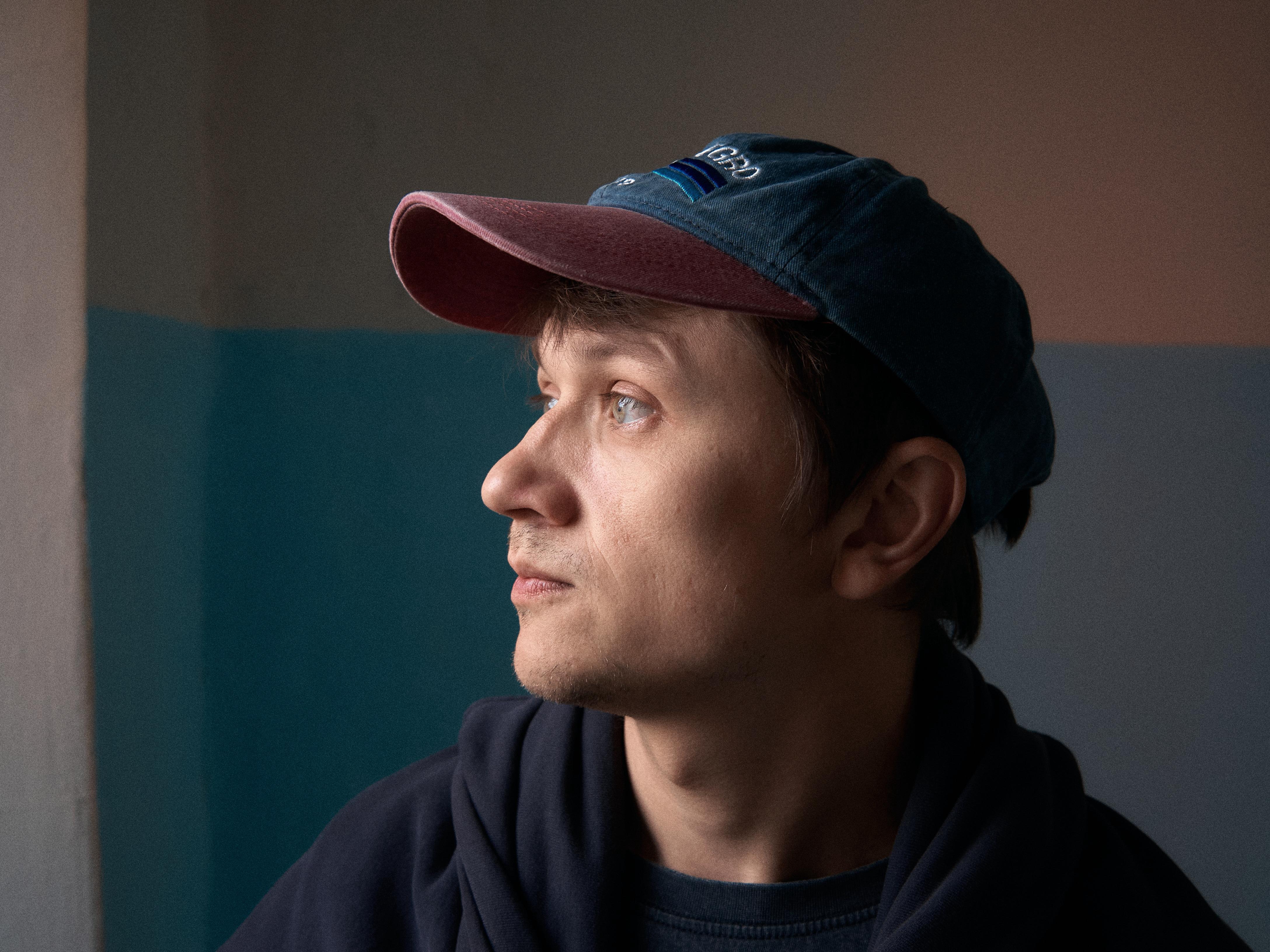

Yaroslav Lobachev made a film about places in the Krasnoperekopsky district that no longer exist
How many films have been made about the residents of Perkop? One that comes to mind is the documentary about the history of the Yaroslavl Bolshaya Manufactory — «We Are the Karzinkin Descendants». Or the film «The Thief», in which Perkop became the backdrop for a tragic story that was once nominated for an Oscar.
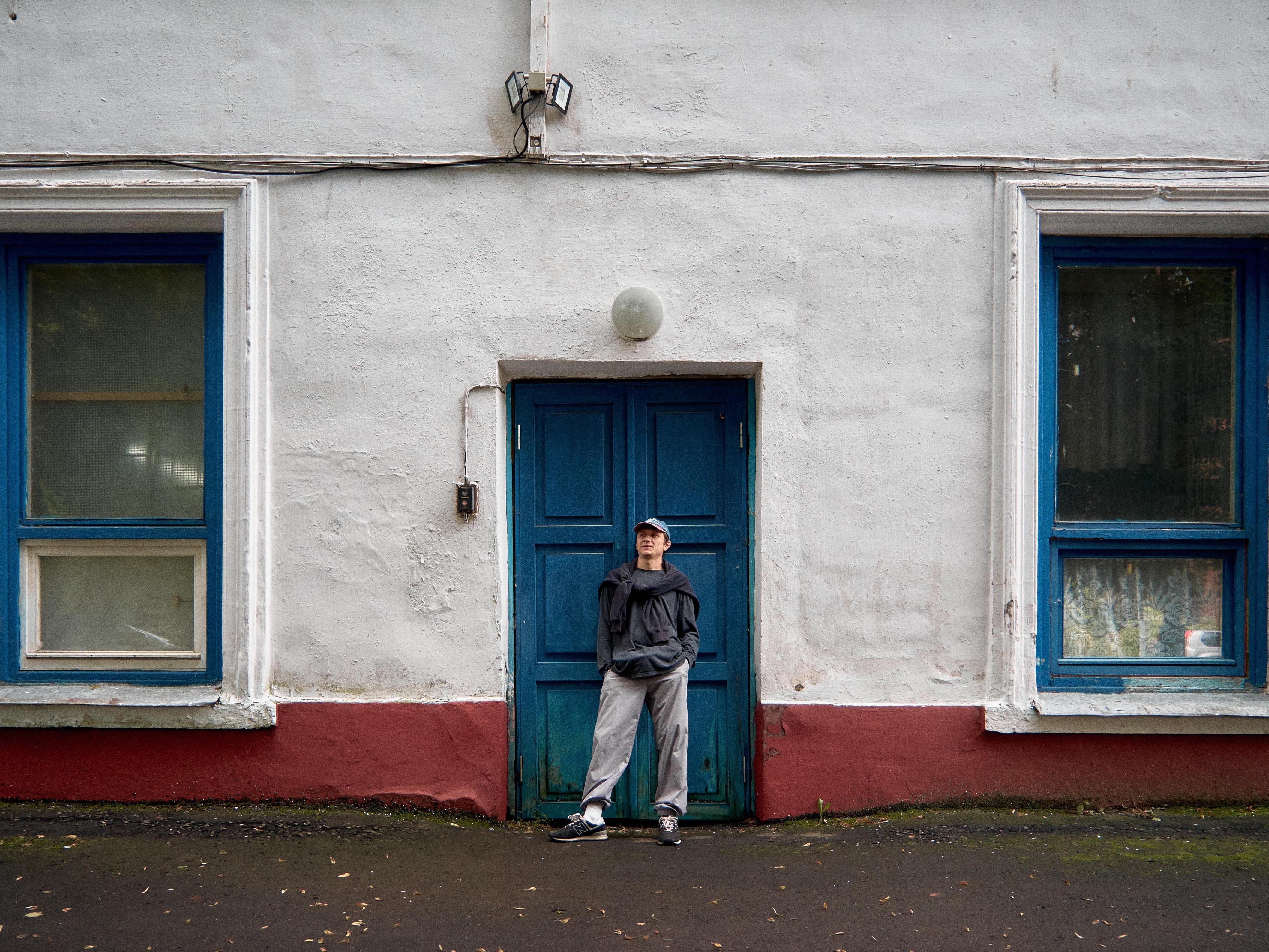
Yaroslav«s childhood began on Sakhalin, but his key memories were formed already in Yaroslavl
One of the most recent films is known to few. «Warp Threads» (2022) was made by Yaroslavl director Yaroslav Lobachev, 35. It tells the story of what no longer exists — the creation of a museum and art space called Textil in the post-industrial space of the 300-year-old «Krasny Perekop» factory. Filming took place in one of the district«s residential buildings, which, four years after the film»s release, burned down.
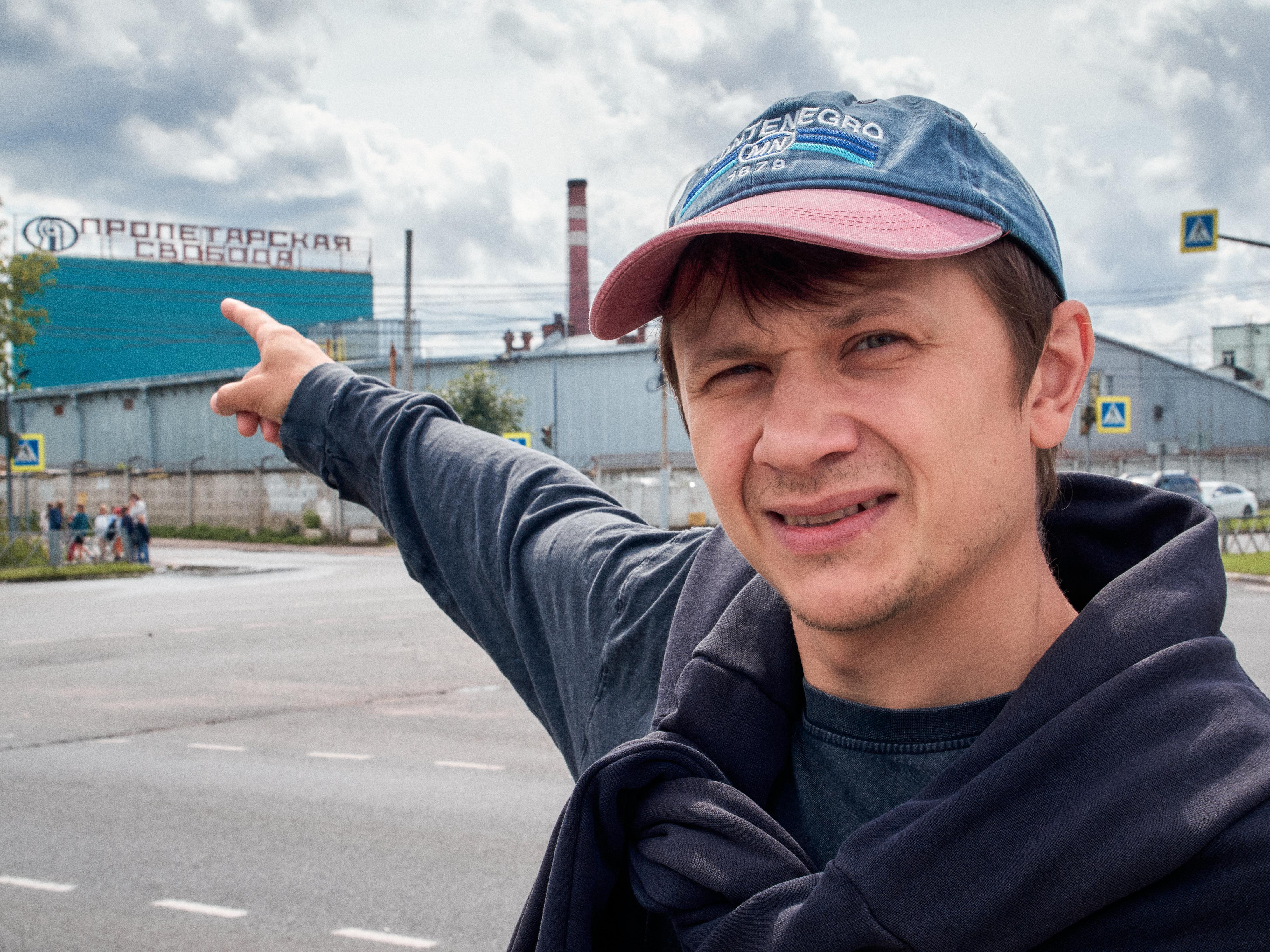
In his youth Yaroslav did side jobs at the «Proletarskaya Svoboda» factory
The film appeared at numerous festivals: at the international «Light to the World» festival, at the 17th international «Prvi kadar» festival in Bosnia and Herzegovina, at the Smyrna Movie Festival in Turkey, and at an independent film festival in India. All of that in a single year, 2023.
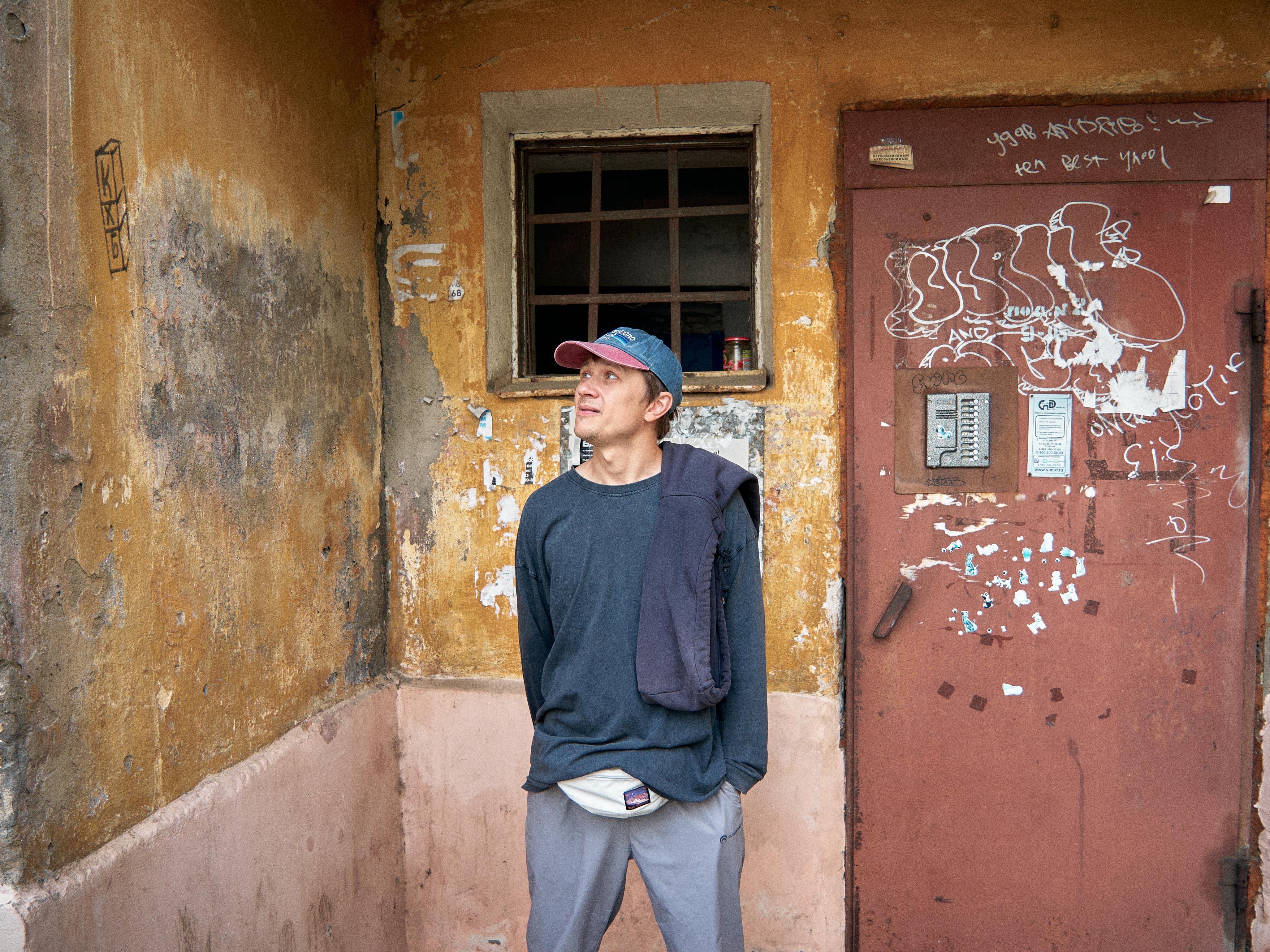
The 90s remained in Yaroslav«s memory as grim scenes
In an interview with 76.RU, Yaroslav Lobachev talks about how the 90s in Perkop shaped his entire life. And also — how to start making local cinema and why one should do it at all, and why he does not want to stay in Yaroslavl in the future.
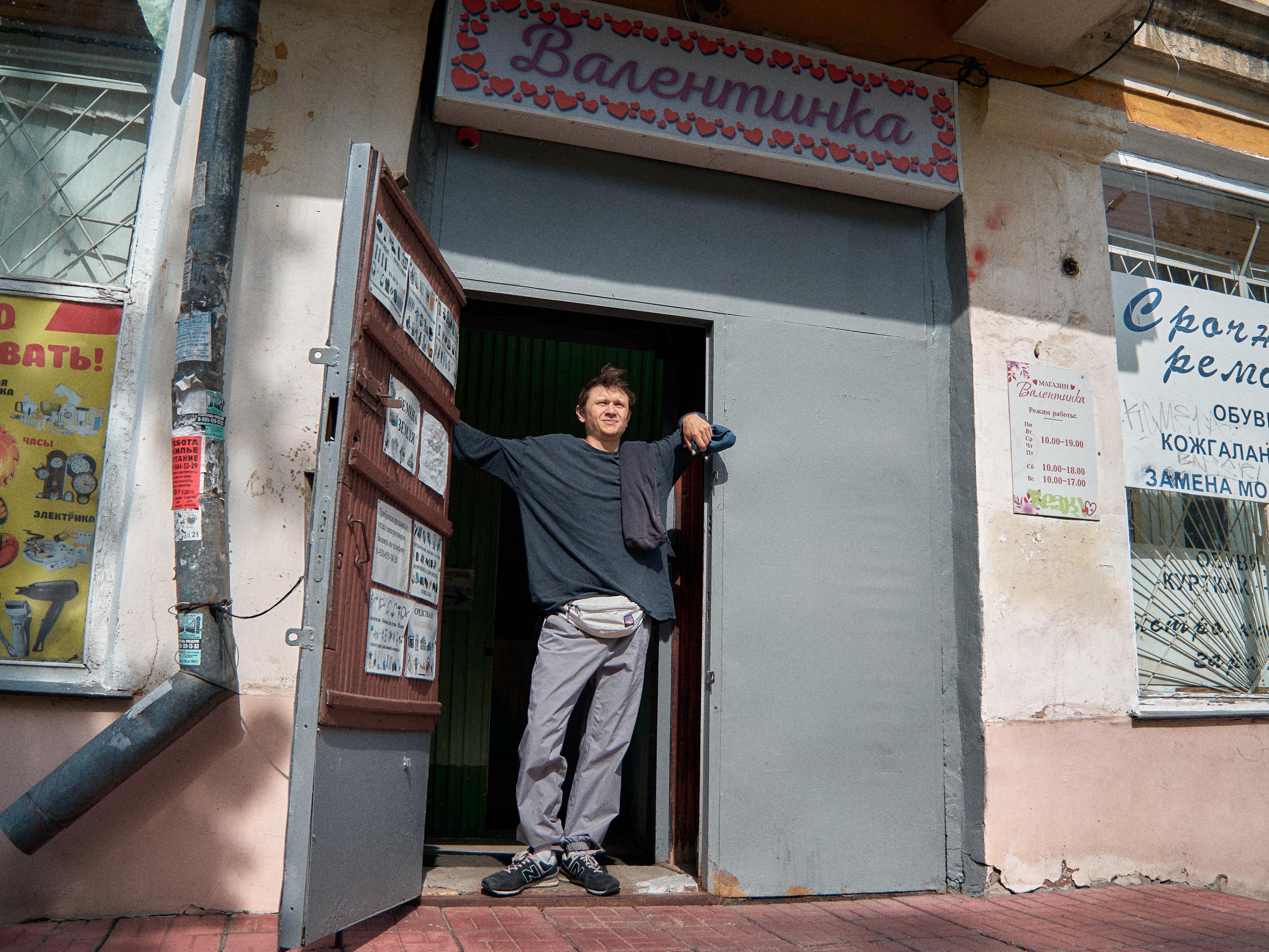
In the past, work in production united the residents of Perkop
His Mother Got Him Hooked on Cinema
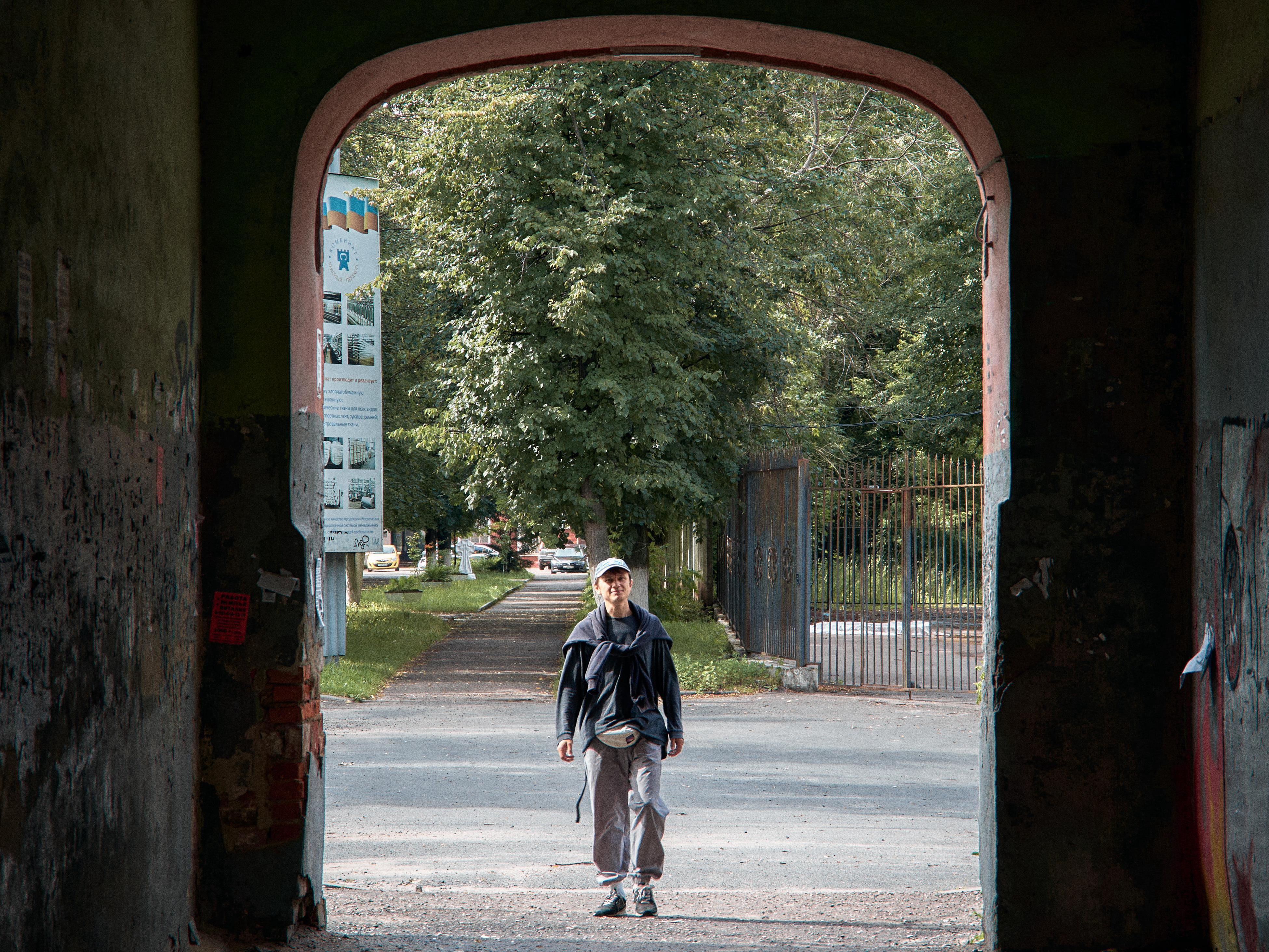
The director considers it important to record the most unremarkable details of daily life that make up history
Yaroslav himself is both a local and not a local. He was born on Sakhalin in 1991. He then moved to Yaroslavl and lived for a long time at 60 Stachek Street. There he also finished eight grades at School No. 40, and in his upper grades transferred to the Orthodox Gymnasium of St. Ignatius Brianchaninov.
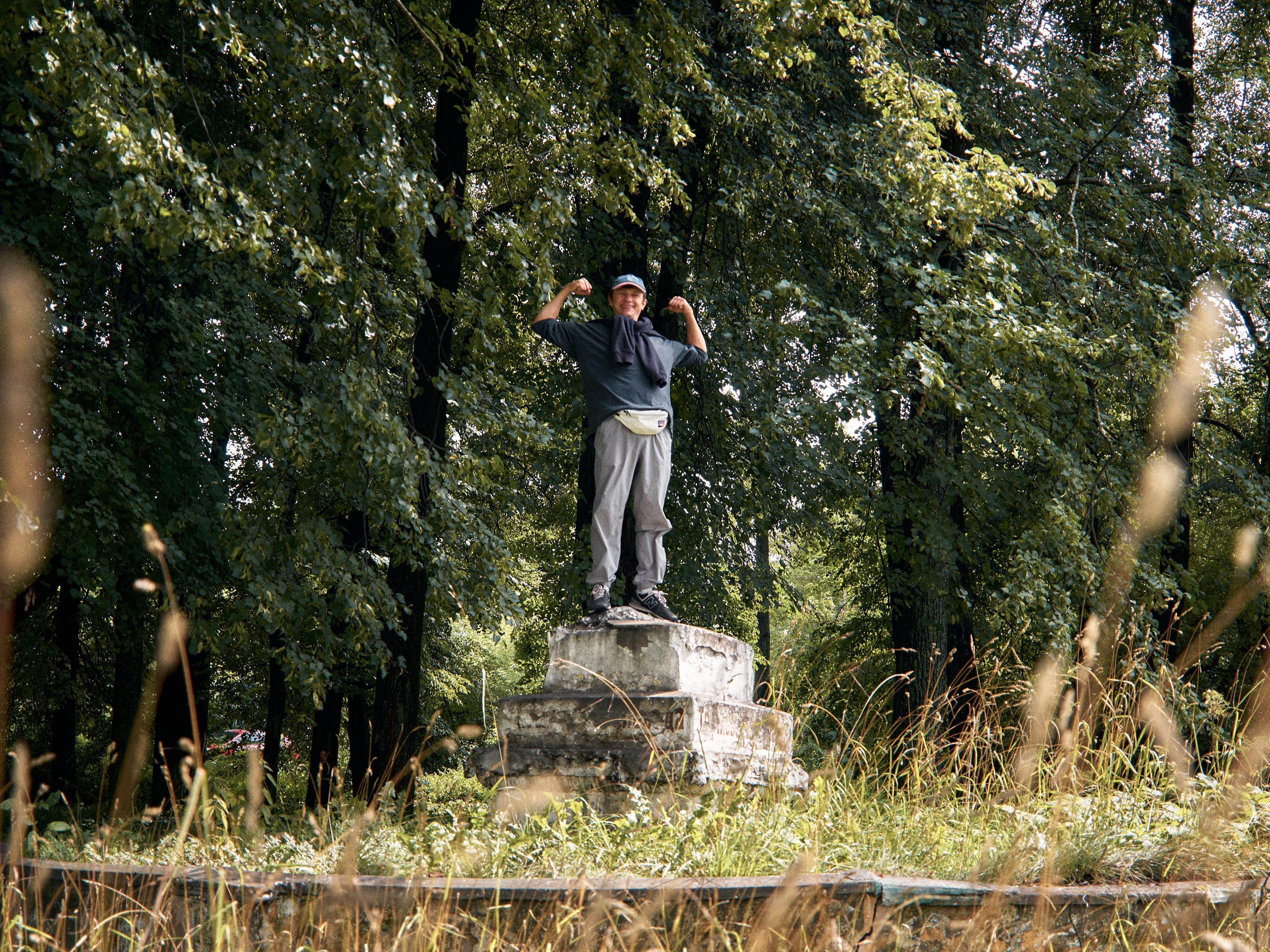
History can sink into oblivion all too quickly
Films about Yaroslavl were also made by his mother — she largely instilled in the young boy a striving for cinema.
— Is your family from Sakhalin?
— From Yaroslavl. My mother ended up on Sakhalin back in Soviet times. Many people went to the Far East or the north in search of a better life. She graduated from a cultural education college, then the Khabarovsk Institute of Culture, and continued living on Sakhalin in the city of Okha. That is where I was born.
— Why did you move to Yaroslavl?
— After the collapse of the Union, life there became harder, and then there was an earthquake that destroyed the neighboring city of Neftegorsk. Okha was also affected and our house was in a state of emergency, after which my mother decided to return to Yaroslavl. She was born in Yaroslavl.
So I have several branches of family from here. There are relatives from the other side of the Volga, the village of Rogovo — the Blinov peasants. The earliest mention I found in open sources is from the first half of the 19th century. There is also the Borisoglebsky district, the settlement of Berezniki, my roots are from there too.
— Does your mother also make films?
— She got into television journalism on Sakhalin. From 1991 she worked at a local TV channel. And then, when we came here, she started working at our «City TV Channel». She often took me with her. I remember well how I hung around there. I sat in the editing room, watched how they edited — back then still on cassettes. When they filmed news segments, I often went with her too.
The «Zebra» children«s clothing store operated for many years in the center of Yaroslavl at 24 Trefoleva Street. Its catchy commercials were seen by many residents. The store was so popular that after it closed, nostalgic videos about it appeared online. Many recalled coming here in childhood as if to a museum. Here they sold huge LEGO sets, Barbie dolls, and other world-famous brands that were not so easy to get in the early 2000s. The exact closing date of the store is unknown, but according to Yandex Panoramas, it operated at least until 2020.
— What did you dream of becoming as a child?
— I did not really dream of anything in particular. I remember this question was often asked in childhood. What do you want to be? Maybe a cosmonaut or a policeman? You know, those classic questions from adults. And they always stumped me. Because I did not dream of anything like that.
I spent a lot of time at the dacha. We had a house near Shirin. It had no electricity. In many ways this place shaped my love of nature. Because I ran so wild there in the summer that I would sometimes go barefoot into the forest to pick mushrooms or look at some beaver lodges. I would disappear there all day, and at night I read by candlelight.
Into Cinema — After the Army
— Your first film came out in 2017. How did you end up in cinema, and what did you do before that?
— At school I loved history and took part in olympiads. Then I enrolled in the history department at Demidov [Yaroslavl State University], studied for two semesters. For some reason I decided to withdraw my documents and enrolled in social work instead. I finished it. But I did not really like that course of study. So I just drifted along in parallel. I worked at Proletarka, then at a car wash, then sold greenhouses. I also helped my parents on shoots. They were making docs (documentary films — Ed.) back then. I myself did not know what to do.
After university I went into the army on contract — to the Northern Fleet, served three years. That period allowed me to rethink my life somewhat. Because I was a signalman, I had a signal-observation watch. I stood outside the ship and admired the beauty of the sea.
At some point a film crew came to us to shoot about the ship. I was very envious of them. Something awakened in me then, and I decided that maybe I should try my hand at cinema after all.
When I returned, my parents supported me. They gave me a camera, a small one. And it was with that camera that my first film, «Clean Field», was shot. A short film about a landfill near Shuya, and on that environmental theme it got into the «Golden Unicorn» festival.
Then there was a screening at VDNKh. I thought then: «God, what a low level my work is, and such great films are being shown here». But it was something that gave me hope. Even without an education, one can try oneself in this direction.
The Destructive Perkop of the 90s
— Why did you decide to make a film about Perkop?
— In 2022 a desire began to mature in me to make something about Perkop, because it is the place where I was formed. Because even then it had begun to change very much compared to my memories.
My mother also has a film about this district, «Zatrapeza», and on its shoot I met Nadezhda Balueva — an activist, historian, and popularizer of Perkop. An active woman, she impressed me very much.
I talked with her shortly before her death and recorded that conversation as an interview, which I later lost. But that conversation gave me the motivation to make my debut film about Perkop. When we were saying goodbye, Nadezhda Nikolaevna took my hand and said: «A good hand, I believe in you, that you will make something about Perkop».
Well, and I did, basically. Her singing is in the film and she appears in a couple of shots too.
Much later, one could say by chance, I met producer Alexander Gundorov at the «Light to the World» festival in Yaroslavl. And literally a couple of months later he wrote to me: «You have an idea, you have a week to write a synopsis, there is a competition here». It was the first competition of the regional cinematography support fund. My application won, and the opportunity appeared to make my first film — «Warp Threads». A film about Perkop and about the «Fabrika» museum.
— What is special about this district?
— When we moved to Perkop, I was very impressed. At school everything was different, the other kids too. Here everything was more wild, somehow. People«s consciousness was more free, more crazy. There was less supervision and control over children.
I learned what a low social stratum was. On the second floor of our building they sold alcohol. Various marginalized individuals hung around the entrance and near it. Some died there. There were periodic knife fights in the stairwell. The echo of the 90s could still be heard. All of this left a strong imprint on me.
Many descended into alcoholism, destructive processes set in. Even in the 2000s they continued. Most of these people simply died out before my eyes. Not all, but many. One cannot say that everything was bad for everyone: it depended on a person«s inner core, on their strength.
— What attracts you to Perkop?
— I was always impressed by how well people know each other. There is a certain community here. Probably because people worked at the factory and helped each other.
I also remember how in childhood, when we gathered as a family, there were very many people, we had a heap of children and a heap of adults. We would gather, sing songs, on big holidays, on New Year or even at funerals. There were very many of us, and now we no longer gather like that, and that makes me sad. My child no longer sees this, for example. It is a great pity. We are losing our connection with each other.
— Can cinema change that?
— I do not know whether cinema can help solve this problem, but it can set off some reflexive processes inside the viewer. It is art, and it influences not directly, but somehow, maybe subconsciously it works, gradually.
Unfortunately, there was no screening of «Warp Threads» in Perkop. Due to various circumstances. Maybe it will still happen in the future; I would very much like to show this film to the people of Perkop.
What surrounds you is ordinary and simple for you, though in fact it is unique and important. «Warp Threads» is a local film, but at the same time it was shown at foreign festivals, and in Sarajevo it was very well received, noted by the jury. It was a wow effect. I told the story of Perkop in Serbia. Then in India I also received an award at a festival, and in Turkey it was noted as well.
— Why do you do this?
— I have a calling that gives me the meaning of life. I am not drifting back and forth. You know, I talk to many of my peers, friends, who may by now have earned themselves some capital.
They are better off than me: good cars, they are starting families too, but at the same time people have an inner need to express themselves somehow. And I fulfill that need. And it gives me strength.
I understand that no matter how hard it gets at some point, whatever turbulence happens in the world, I have a calling that I live by. It is my boat in the sea of life.
Every director must have a super-task. It is something that must be formulated for oneself. The question that you answer in your creative work.
I understand that I am recording what is passing away, and this too is my contribution to eternity. Let it sound pompous, but still. I deposit my films with the State Film Fund of the Russian Federation for storage, and they can be seen 10, and 20, and 30 years from now. The film shows, for example, Perkop as it was in 2020–2022. And the district has already changed a great deal. This building burned down recently, and I have footage from inside it in the film, and footage of the residents of that building.
The reference is to a fire in a residential building at 61 Stachek Street. It was built in 1918. It has 2 entrances and 30 apartments. The building«s overall wear was estimated at 69% in 2014. After the 2026 fire its residents were rehoused.
Everything passes so quickly… I do not know how it will be further. And the «Fabrika» museum is already closed. I told its story, and now this cultural space no longer exists. A certain fragility of life — that is what is very important for me to highlight. The fact that I did not finish my history studies may be some kind of unfinished business for me, and this research of mine is also an attempt to leave a mark in history.
What Other Films He Makes
— What are you working on now?
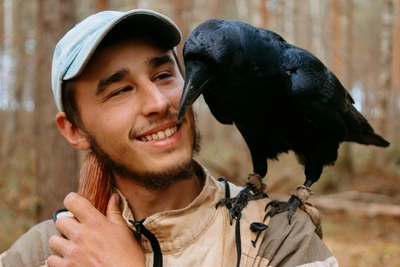
— I am currently working on a film under the working title «A Gopher Story». It is also a documentary about how, in the Bryansk region near the «Bryansk Forest» nature reserve, a colony of the rapidly dying-out speckled ground squirrel is being created.
And it is dying out because our life has changed very much. It needs short grass to survive, and there used to be such grass because people practiced free-range cattle herding, there was a great deal of livestock in the European part of Russia, and the ground squirrels spread after it as far as Kolomenskoye.
Now the livestock mostly stands in stalls, and the ground squirrels« habitat has sharply shrunk. And also there are the events of the last four years, since their colonies were on the border. The ground squirrels suffered greatly from them. The hero of the film — Igor Petrovich Shpilenok — is saving them. He created a colony of ground squirrels in his village, and that is what I am filming now. It is being made with the support of the regional cinematography support fund.
— How is documentary cinema doing in Yaroslavl Region?
— I have an opinion that proximity to Moscow is both a gift and a curse. Because, on the one hand, one can easily go there and many do go there to work. Videographers, directors, cameramen. But that city draws them in, and few return to Yaroslavl.
When I first started filming, I could not find people, like-minded people, so I started alone. I edited myself, filmed myself, because I did not know who I could jump into this with. I think many are in that state, especially beginning authors. We exist, but we are cut off from each other.
— Would you move to Moscow or further, to Europe, maybe Hollywood, if you were offered work there?
— Right now I live in Yaroslavl, but I am not sure I would want to stay here forever. Because Yaroslavl is a very specific city in many ways and I often feel very sad here. To see the dynamics of what is happening with the city, how it is changing. It causes me mourning when some architectural monuments perish. This wooden architecture that is disappearing here. It makes me feel wistful.
I even thought that one could make some kind of documentary film club. I could pass on my experience, but right now I am not ready to devote myself to it.
Creatively, of course, I would move. Because it is undoubted growth. I very much want to grow. Staying here, most likely, I will get stuck at some particular stage.
I would gladly jump into larger global industries; there are even more creative people there from whom one can learn. And I need that. And then later, if God wills it and I last to a certain age, when I have closed my creative unfinished business, I would return to develop something further here. Right now what keeps me here more than anything is my family, my close ones.
I made «Warp Threads» in Yaroslavl. The next film, «Soyma», was shot on Ilmen, near Veliky Novgorod. The third film I am shooting in Bryansk Region. But I know that abroad too there is something to tell about. And not only in Europe — there is also Asia, and the whole world in general.
On the evening of the same day the interview took place, there was a screening of two films Yaroslav had made: «Soyma» (director) and «Red Data Book» (producer). He came to the cinema accompanied by his entire huge family. Yaroslav«s son filmed everything he saw with a small camera — the very camera with which Yaroslav had made his first documentary.