Sergei Starostin: folk traditions help survive hard times
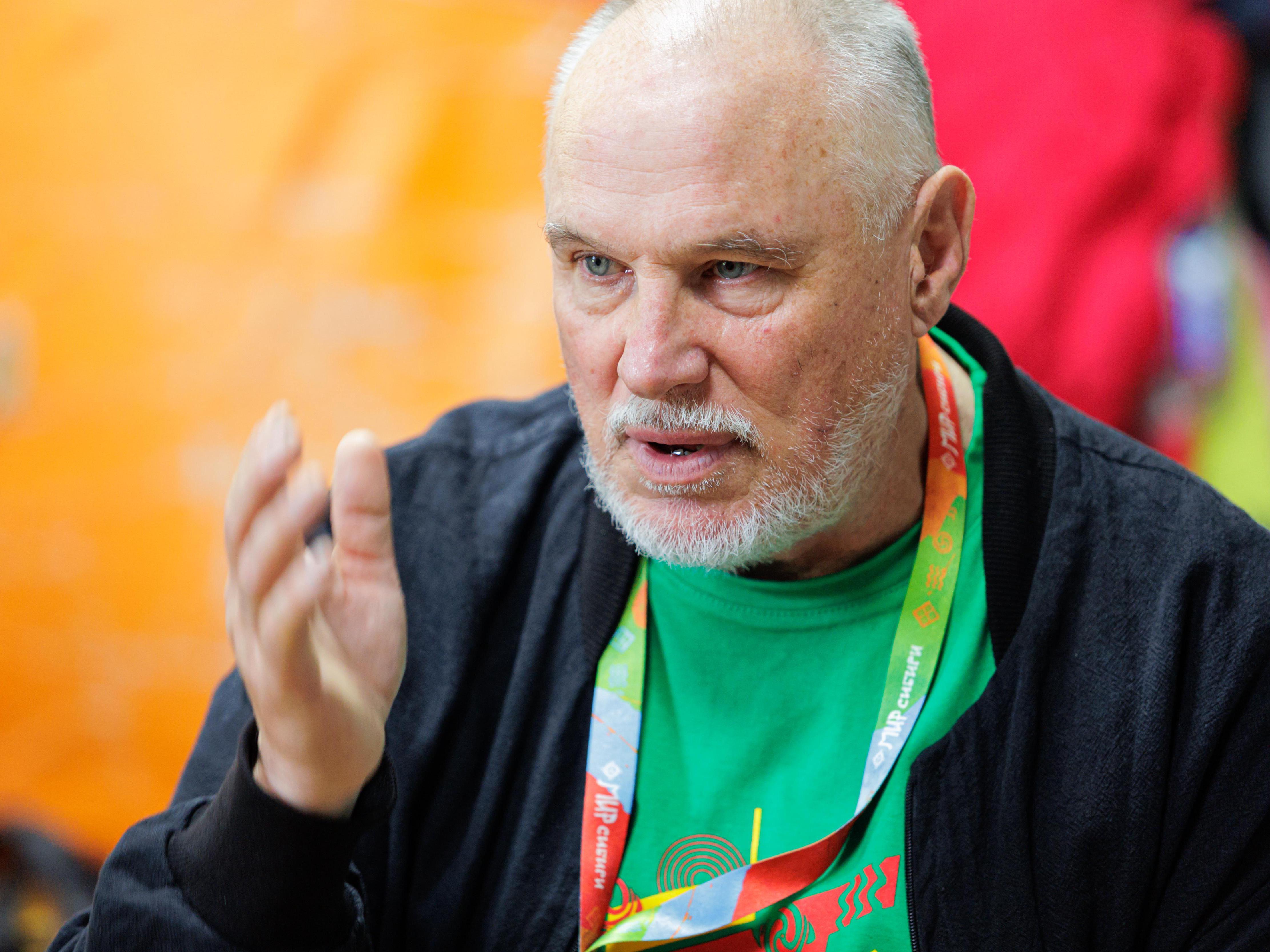

Sergei Starostin — a legendary musician and folklorist, respectfully called Ded (Grandfather). NGS24.RU caught up with him at the Mir Sibiri (World of Siberia) festival and learned how we became orphans with living parents, whether the imposition of traditional values has any effect, whether the village will die out, and how artificial intelligence can help.

Cultural Orphanhood

— A year ago we met here with Inna Zhelannaya. And the first question was about the time of traditional values that are being imposed on us now. Over the year, it seems nothing has changed, but we«re interested in your opinion. Tell me, how does all this affect the demand for traditional folk music, for folk?

— The demand for traditional music, traditional culture exists regardless of what slogans are being put forward today. This is simply a certain need of the time and of each new generation that replaces the previous one.

At some stage in life, young people ask themselves: what foundation to lean on? What point to start from? The modern generation — not just one generation, but several — has found itself in such a situation. I don«t know about other cultures, maybe it»s less noticeable there. But in Russian culture, it«s absolutely obvious to me.

In the Soviet period, a gap occurred between generations. Above all, in the inheritance of traditions. This may sound abstract to a modern person, but for me it«s like becoming an orphan with living parents. A paradoxical feeling.

Fortunately, I was lucky. I caught that generation. Although neither my father nor mother could pass on traditional culture to me — they had moved to the city. They retained only separate memories of village life. But there was my grandmother nearby — a true village person. She turned on that mechanism in me that inseparably connected me with a thread to previous generations. Thanks to her, an interest in the history of my family line, my family, and then in what our people lived by, what they nourished themselves spiritually, appeared.

Sergei Starostin is a Russian folk musician and ethnographer, born in 1956. He graduated from the Moscow Conservatory in clarinet, and became interested in folklore during student ethnographic expeditions. He plays the clarinet and folk instruments such as the zhaleika, gusli, and kalyuki (Russian folk instruments). He has collaborated with various groups — including the Moscow Art Trio, Auktsion, and Otava Yo, and founded the ensemble Virtual Village. Since 2005, he has headed the jury of the Mir Sibiri festival.

In folklore circles, Sergei Starostin is called Ded (Grandfather) because of his authority and role as a guardian of traditions.

A major change occurred in my life. Having been an academic musician and raised on academic music, I once decided to take a step aside and see: what is going on among the people? What do the people think, how do they express their thoughts? What is their worldview? How do they hear this world — the big one and the one next to them? How do they live with their neighbors? And the people taught me a lot.

I seem to have strayed a bit from the given question… But the modern generation indeed experiences cultural orphanhood. Therefore people go to extremes, looking for something to lean on. Some turn to Buddhism, some to Judaism, some to something else.
All this happens because a person did not receive their cultural code — neither from father, nor mother, nor from grandmother and grandfather. That knowledge simply wasn«t passed on to them.
And yet here, on this territory, everything already existed. One only needs to turn a little to one«s ancestors. It»s enough to go through the museum in Shushenskoye (a village in Krasnoyarsk Krai) and see how peasants lived at the end of the 19th century. They lived normally. They had everything: morality, culture, agricultural structure, culture of relationships.
The modern generation is cut off from this. And it is forced to fill this void with surrogates. Because the line of cultural code abhors a vacuum — it will be filled by something anyway. And the person begins to fill it themselves, but often not with what it would be worth passing on to the next generation.
— I don«t know how correct the comparison is, but all this also happened in the 1990s? When pseudo-folk groups like »Zolotoe Koltso« (Golden Ring) appeared, or some Vika Tsyganova with ultra-patriotic songs about vodka.
— Don«t confuse God»s gift with scrambled eggs. Everything related to pop music has always existed. It«s a commercial tool to influence the masses for entertainment, sometimes for dumbing down. But it has no relation to fundamental things.
Folk culture, folk music — this is not another musical genre, alongside pop music, jazz, or academic music. It is a separate, self-sufficient phenomenon, a whole world that can be inherited and lived inside. You don«t even have to be a musician for that.
In the village, only someone who played an instrument was called a musician. And a person who sang — even beautifully — was not considered a musician. Because singing was a natural part of life. If a person had a voice, they sang, participated in rituals, adorned their daily life with song. It was not stage art — it was life itself. Because life was hard, physical labor was very heavy. And it was culture, its content, that saved.
Take, for example, prichet (lamentation). Do you know what that is? It«s a special genre of folk culture associated with extreme, borderline moments of life: death or wedding. For a girl, a wedding meant a real transition. She became a woman. She left her parental home for a strange family, and no one knew how it would turn out. Literally like death. Why do you think the veil is white? And this transition was mourned — both by the bride herself and her relatives.
Similarly, there was a lament for the deceased person. It was an artistic response to the heaviest events of life. And it acted as real therapy. If it weren«t for this, people would have gone crazy long ago. To cope with the number of losses that befell them then would have been impossible otherwise. Today many save themselves with psychotropic drugs or visits to psychologists. But before, all this existed within the tradition.
When a grandmother sits before me and laments her son who burned in the hut, I see two things at once. On one hand, it«s painful to listen. On the other, with this lament she heals herself. Her psyche remains healthy precisely because of the artistic language.
— And how is death conceptualized in traditional culture?
— It is not conceptualized — it is lived. The person makes this step, and the one who remains here keeps the memory and continues to live. This can be seen in lullabies: not in «The little gray wolf will come» — there were much scarier texts:
«Ai-bai-bai, fall asleep quickly,
Bai-bai-bainki, sleep, my little one, left without mommy.
We»ll go to the dark little forest, under the willow bush,
We«ll dig a little hole, we»ll bury mommy…«
It seems scary. But how often did a woman die in childbirth in the village? And how to live on? But you have to live. The person who took care of the child sang this lullaby not so much to the baby — but to themselves. To learn to live with it, despite all fears and horrors. We all walk under God, right? Today you«re here, tomorrow you»re not. The main idea of such a song: the child is not left alone. We will remember the mother, but you are not an orphan. I take responsibility for you and will hold you in this world.
«Ilyich points to the liquor store»
— Is it easier to adopt traditions now than thirty years ago?
— It«s a complex and very individual question. But probably it»s a little easier today. The turning point came in the mid-eighties. I don«t know if it»s directly related to perestroika or just coincided…
I«m a Soviet person. Above us constantly — both literally and figuratively — hung the slogan: »Forward to the victory of communism.« We grew up among posters »Glory to the CPSU,« »Lenin is alive, Lenin will live.« Even when no one really understood what communism was and where we were going, it was still believed that we were going exactly there. As some joked: »We have Ilyich (Lenin) pointing right at the liquor store, you can«t get lost.»
And then — bang — it turned out we didn«t build communism. The posters disappeared. And no one said: »What are we building now? Where are we going next?« We were used to living inside an ideology, and suddenly it was gone.
And then many thought for the first time: isn«t there anything left in the depths of our own culture? So in the mid-eighties and early nineties a folklore movement arose. Today a third generation of people connected with it has already grown up. Children who take the stage no longer reflect. For them, it»s natural. They know: this is the culture of our grandmothers and great-grandmothers, we like it, we love it.
But for us, everything was different. We searched. Some went into Buddhism, some left for Africa, some sought meaning in other cultures. Many left not for money — they were looking for a meaning of life, a foundation they couldn«t find here.
Now the folklore movement is almost half a century old. But return always happens much slower than loss. You can lose instantly, but restoring is very difficult. Therefore the festival [Mir Sibiri], which has been held for the twenty-second time, is a very serious phenomenon. I always feel sorry when there are few spectators in the meadow during the competition program. Most come to watch the pop music, dance, have fun, but many haven«t grown to the meaning yet.
And it«s not entertainment. Traditional culture deals with something else — it fills those very internal voids, that very cultural orphanhood.
— Are there any modern performers who help people come to traditional culture?
— It«s probably better to ask the listeners. I»m in a slightly different situation. I know root music, I understand its philosophy and depth. It«s hard to captivate me with external effects.
— Zventa Sventana, for example?
— Yes, they work well. I know Tina Kuznetsova (the band«s vocalist) well. Moreover, in a sense, I once sent her on this path. She used to sing American jazz, and now she has become a folk pop diva. She works thoughtfully with the material. And it»s good if, thanks to her music, someone wants to turn to the original sources.
«The village way of life is being destroyed»
— You«ve been going on expeditions to villages for material for many years. How have they changed in that time?
— Have you been to a village yourself lately? Or at least driven by? You«ve seen boarded-up houses, right? That says it all, what»s there to answer? The village way of life is being destroyed. And happy are those places where some love of people for their land still remains, where they remain devoted to it and where the village is still alive in some form. But practically no one sings in the villages anymore.
There is another problem. Over the last hundred plus years, researchers have collected a huge musical heritage — thousands of recordings, enormous archives of folk culture. However, all this has never become publicly accessible. I call this academic history: recordings are stored in archives, scientific institutions, used mainly for research. Sometimes for very narrow practical work.
But the heritage left to us by hundreds of thousands of people — grandmothers and grandfathers who lived in specific villages and hamlets, having their own names and destinies — has not reached their own grandchildren and great-grandchildren. There is no connection between them.
— And probably never will be?
— I don«t know. But if these archives ever open, a real miracle could happen. Just the opening of archives would be a huge thing, but it»s not enough to simply open them. You also need to prepare people, talk about it, spread information.
Remember what a boom there was a few years ago on compiling family trees. Archives were literally flooded with requests. People were searching for their ancestors, special search programs and services appeared. During the pandemic, my daughter took it seriously and found fifty-two new relatives for our family. And archival records are not just pieces of paper. They are voices of your grandmothers and grandfathers.
Imagine being told: there is a possibility that your grandfather«s voice was recorded sometime, and that recording is still kept in the archive. I would give a lot to hear such a voice.
If you are a believer, remember how the Creed ends: «I look for the resurrection of the dead and the life of the world to come.» That is, «I hope to meet those who have passed one day.» Where that will happen — here or there — I don«t know. But the 20th century unexpectedly gave us such an opportunity already now. We can hear the voices of our ancestors. People are gone, but their voice is preserved. Isn»t that a miracle?
But this is hindered by the most ordinary bureaucratic barriers. Archives say: this is our heritage, we do science, it doesn«t concern you. How does it not concern? If the voice of my grandmother is recorded there, why can»t I hear it?
«Know the tradition — and you won»t be dumbed down«
— There«s a lot of talk about neural networks now. What threat do you think they pose?
— I don«t know if they pose a threat at all. Everything depends not on neural networks, but on the person using them. If we talk about our field (ethnography), artificial intelligence can bring enormous benefit. Old folklore recordings are often in very poor condition. Tapes are damaged, sound quality is low. Artificial intelligence can clean up a recording, restore the voice, make it almost alive.
— … like in the «last Beatles song» with cleaned Lennon vocal.
— What was practically impossible for humans before is now becoming possible. Of course, it won«t replace human brains, but on an applied level it can solve many tasks.
— But many people fear that neural networks will eventually make people stupider.
— Know the tradition — and no dumbing down threatens you. There is a wise thought: if you take a pig as your guide, you«ll spend your life in garbage dumps. The question is always whom you follow. If you lean on tradition, you lay the foundation of wisdom that the people created over centuries, you won»t become stupid. The people seemed to say to the following generations: «Here are the rules of life. Use them.»
There is a folk song where a mother sends her son Vanya to reap the spring field. You«re already a big lout, she says, go reap. But Vanya goes the wrong way, enters the wrong field, starts reaping someone else»s, then instead of working lies down with a girl. He gathers only one sheaf, the job isn«t done. Mother scolds him, he hurriedly cuts his hands with a sickle until they bleed, rushes home, on the way a bridge collapses — one trouble after another.
A simple story, and everyone laughs at it. But I ask: «What»s funny here? Vanya cut his hands, broke his legs, apparently. And why did all this happen to Vanya?«
— He didn«t listen to his mother.
— Yes. The main idea of the song is simple but obvious. You don«t honor your parent, so you»ll get it full from life. Through simple moralizing: «Ai-ai-ai, listen to your mother» — that wouldn«t work. The meaning is conveyed through an artistic image, through a story in the song. And it works much stronger: a person sees a deeper thought behind the plot.
— But are all parents wise? Should all parents be listened to?
— Well, if parents never sober up all their life, probably it«s not worth seeking special wisdom in that. But a person, even in such a situation, can become wise themselves by analyzing others» experience. When I talk about parents, I mean the entire experience of ancestors.
Today many try to modernize folk songs, make them fashionable. And I always ask: «Don»t you think that hundreds of generations of people who lived before you might be somewhat wiser than you today? Why did you decide that the collective wisdom of the people is less valuable than your own ideas?« There»s no need to improve folk culture. First, be nourished by it, and only then create something of your own. But don«t improve, God forbid.
— But each generation changed things anyway, didn«t they?
— Not «improved.» Each generation existed very individually. In one generation, an outstanding singer might not appear, and in the next a true talent was born. Then they said about him: «Now that»s a singer. A singer among singers.«
But even the most talented person never destroyed the foundation. He didn«t break the architectonics of the phenomenon itself. He gave the song his own shade thanks to his talent, but the main laws remained unchanged. If a person is given a talent — it can»t be buried. It must be realized. But realized within tradition, not contrary to it.
Sometimes students, jazz musicians, or authors of modern arrangements say to me: «Folk music is primitive. It»s all the same.« Then I suggest a simple experiment. »You«re all ears, so listen.» I sing an ordinary round dance song: the simplest refrain, understandable mode, identical words. And I ask them to listen carefully: at what point do I literally repeat myself?
Usually they get lost around the twenty-fifth verse. They ask: «How is that? It seems you»re singing the same thing all the time, but you never repeated yourself.« Exactly. And you say it»s boring.
Imagine a person placed in solitary confinement. A desperate person, without a root, without a core, will go crazy alone. Another, an optimist by nature, understands that in the cell you can walk like this, and zigzag, and circle, and oval — that there are an infinite number of options to preserve one«s psyche.
The same applies to folk music. It seems primitive. But if a performer sees only the primitive form, they perform it primitively. That«s why it»s boring. But the one who understands its depth, knows its internal laws, never literally repeats themselves. That«s who is interesting to listen to.
«There will be no return to the past»
— You travel a lot around Russia. What meanings do people live by now? Is there anything that unites them?
— People are very different, but there is one common trend. Quite a number of city dwellers are consciously leaving megacities and starting a new life in rural areas. They create their own space, their own cultural landscape, their own community. Of course, this is no longer the village it was a hundred years ago, nor the collective farm village of Soviet times. But these people fundamentally want to leave urban neighborhoods and are beginning to turn to traditional culture.
— Will a moment come when there is nothing left to record in the villages? Or is folklore an endless process?
— Folklore has been buried for a very long time. But it«s easier to talk about it for those who have never truly communicated with bearers of traditional culture. Yes, such places are becoming fewer. In many villages today, mostly summer residents live. So it»s hard to say whether tradition will be able to reproduce itself as before.
Let«s hope that some internal self-preservation mechanisms will work. But there will be no return to the past, of course. We won»t return to that wealth of traditional culture that once existed.