He Lived on Mount Athos to Save Rare Photographs
Kostas Asimis brought his exhibition 'Our Athos' to Chelyabinsk, sharing rare photographs taken after months living among monks on Mount Athos.
Jul 24, 2026 0


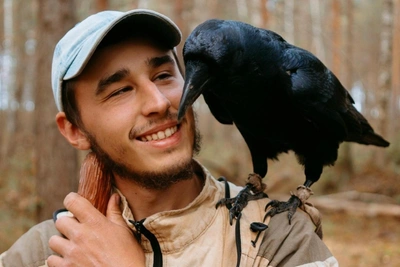
Photographer Kostas Asimis lived on Mount Athos and brought a collection of unique images to Chelyabinsk.
Source:
He can talk for hours about each photograph. The world«s most ancient relics. The Monastery of St. Paul, where the Gifts of the Magi are kept. Historical moments, lost relics, and rare shrines not shown on regular tours. Photographer Kostas Asimis brought to Chelyabinsk a truly unique exhibition called »Our Athos.« Here, documentary evidence of an entire era intertwines with beautiful legends, and some images are so incredible it»s hard to believe they aren«t photomontage.

Kostas first saw the old photo lab at the monastery in 1985.
Source:
Until the end of July, residents of the Southern Urals can immerse themselves in the amazing world of life on Mount Athos. How did he manage to preserve priceless archives, and why did a Soviet photographer, far from religion, suddenly find himself in a holy place and live for months among novice monks? The author of the exhibition tells his story.

The artist lived among the monks for weeks and months, keeping a photographic chronicle.
Source:
— What started your passion for photography?

The exhibition «Our Athos» is on display in Chelyabinsk until 30 July.
Source:
— I have been into photography since I was twelve. In Tashkent, I had a neighbor who kept turning on some red light in his pantry. I was so curious about what he was doing, why exactly red light? I pestered him, he kept shooing me away, and at some point, he let me in. When I saw him put something into an enlarger—I later learned the name—shine light on something unclear, then dip paper into water and an image appeared, it was magic for me! That was it—I was hooked. My first camera, the Smena 6, still works to this day.

— How did you end up on Mount Athos?
— I had a friend, also born in Tashkent, who worked at a state hospital in Thessaloniki. One day, monks came there and didn«t know the language. He spoke Russian, so he helped them, and then went to visit them on Mount Athos a couple of times. At that time, I was helping him at the hospital, photographing all the most complex surgeries; my friend later showed them to his students. He invited me along. He said, »For a photographer, it«s exotic.» I arrived, and it was complete ruin, only six monks. I stayed to help them and ended up with Elder Paisios of Mount Athos. I remember all the monks going in to him and whispering. I was surprised; I didn«t yet know what confession was. Then he came out to me and said, »What brings you here?« I said, »Everything«s great, only one problem—photography and video are forbidden here.» To which he answered, «Choose a monastery that suits you and live with the brethren; everything will work out.» I stayed, at first hiding my camera. Icons and relics were not allowed to be photographed before. But the monks themselves started coming up, asking me to photograph one icon or another—for a little postcard. And I was happy to do it, and so it went. I collected collections from all the monasteries, all shot from the original.
— The exhibition also includes old shots taken before you were born?
— The monastery archive dates back to 1850, when photography was first invented. At the time, there were opportunities: all the innovations that appeared in Europe and the world were donated to the monasteries by princes and tsars. The monks photographed all the events that took place in their monastery and others. That includes World War I—here are two French seaplanes landing in front of the monastery. And the Russo-Turkish War. After the exhibition in St. Petersburg, many people came up to me and pointed out, «That»s our great-grandfather.« So when I first saw this archive in 1985, I realized I had to preserve it, bring it into order. Because it was scattered, unwanted by anyone. The most valuable glass ambrotypes with images were lying trampled, much had been stolen. Back then, still far from religion, I set out to save it all. Of course, I first went to study how to handle this glass, because I could do more harm than good. I studied in Athens for three months. The photos preserve that first photo lab; now I have built a new stone building with the most modern equipment. I scanned some of the negatives. There was broken, scratched glass, but after restoration, a clear photograph emerges. Now each piece of glass is wrapped in special paper, stored fifteen to a box, all boxes in stainless steel drawers in special cabinets. They won»t be lost for the next thousand years.
— How many are there in total?
— We have the largest archive—5,000 such glass plates. But there are no people to continue working on them.
— Are there things in those archival shots that no longer exist on Mount Athos, that have disappeared?
— Yes, and a lot. Manuscripts, old books. People… In the past, there were 2,500 monks on Mount Athos. The photographs show that at every obedience, the brethren did everything themselves. They worked in the fields, cast iron parts in a foundry, made nails, locks. I have photos of fires when the whole mountain burned. There was a case when they were restoring a church, but before the restoration they built showers and toilets. And the fire reached that spot, jumped over, and struck directly at the buildings. «What»s the point of building toilets? First build the temple,« it seemed to say.
— You were a non-believer when you arrived on Mount Athos. How did your attitude toward religion change?
— At first, only the archive kept me there. And if Elder Paisios had told me back then, «Read this, memorize that,» I would never have done it. A person must come to it themselves, understand it themselves. And so he gradually led me to something; I began to understand what they were talking about in the services. But I did not become a monk; I am not worthy of that.
— What are the Athonites like?
— Silent. There is a rule in the monastery: no monk has the right to contact pilgrims. There is a person appointed to do that; it is his obedience. He can meet people, give a tour. A monk will walk past you, bow his head like this, and fly by. You can shout, «Father, Father!» but he doesn«t hear you.
— How is it decided who gets which obedience?
— Every year there is a council: «You will be in the garden now, and you will take his place as cook.» This year I was the cook. Even if you don«t know anything, you must go through it and learn. On Mount Athos, it is generally believed that the cook should be bad, so that the monk does not think about delicious meals during the service (smiles).
— Over the years of living there, you must have seen and heard a lot?
— For example, there is a record in the monastery. A monk asked for a blessing to go to an elder in another monastery. He walks along a path he had known for years, and suddenly—a clearing, beautiful flowers, some elder sitting under a tree. He is surprised: «How is this? I»ve walked here so many times and never seen this.« They started talking, and the elder invited him for tea. They sat, and the monk said, »Father, forgive me, but I must go, I will return to the monastery.« He goes to his cell—the key doesn»t fit. He knocks, another monk comes out, the abbot is called, and he says, «Where did you come from? You disappeared 36 years ago!» And here is a photo of the hermits« daily life. These are monks who leave the monasteries. Once we found a cave where someone was living, keeping a vow of silence. He heard us coming and fled. He slept on a piece of Styrofoam. We were kind, decided to help him, bought him a folding cot with a mesh so bats wouldn»t land on him. We set everything up, left him a backpack of food, and left. We walked around the area, went down, got in the boat, and saw our cot floating. Later he sent word that he didn«t come here to sleep on a bed. As they say, when in Rome, do as the Romans do.
— What do you like to photograph most?
— I love the night. As soon as there«s a full moon, I immediately run over the rooftops, shooting. This red streak in the sky—it»s an airplane. Usually we see it flying and blinking. But when the aperture is open, everything that moves during the shot becomes a streak. The same way you can show the movement of stars. And when someone asks me which photo I like best, which is my favorite, how can I choose? I can tell a story about every photo and every person. Someone might say, «Why so many?» But I love this place, I love these people, and I could talk about them for days. I«ve been with them for 43 years.
You can see the photo project «Our Athos» at the Artists« Union Exhibition Hall at 34 Tswillinga Street until 30 July.
Read more