Author of Trilunye Started Writing on a Bet
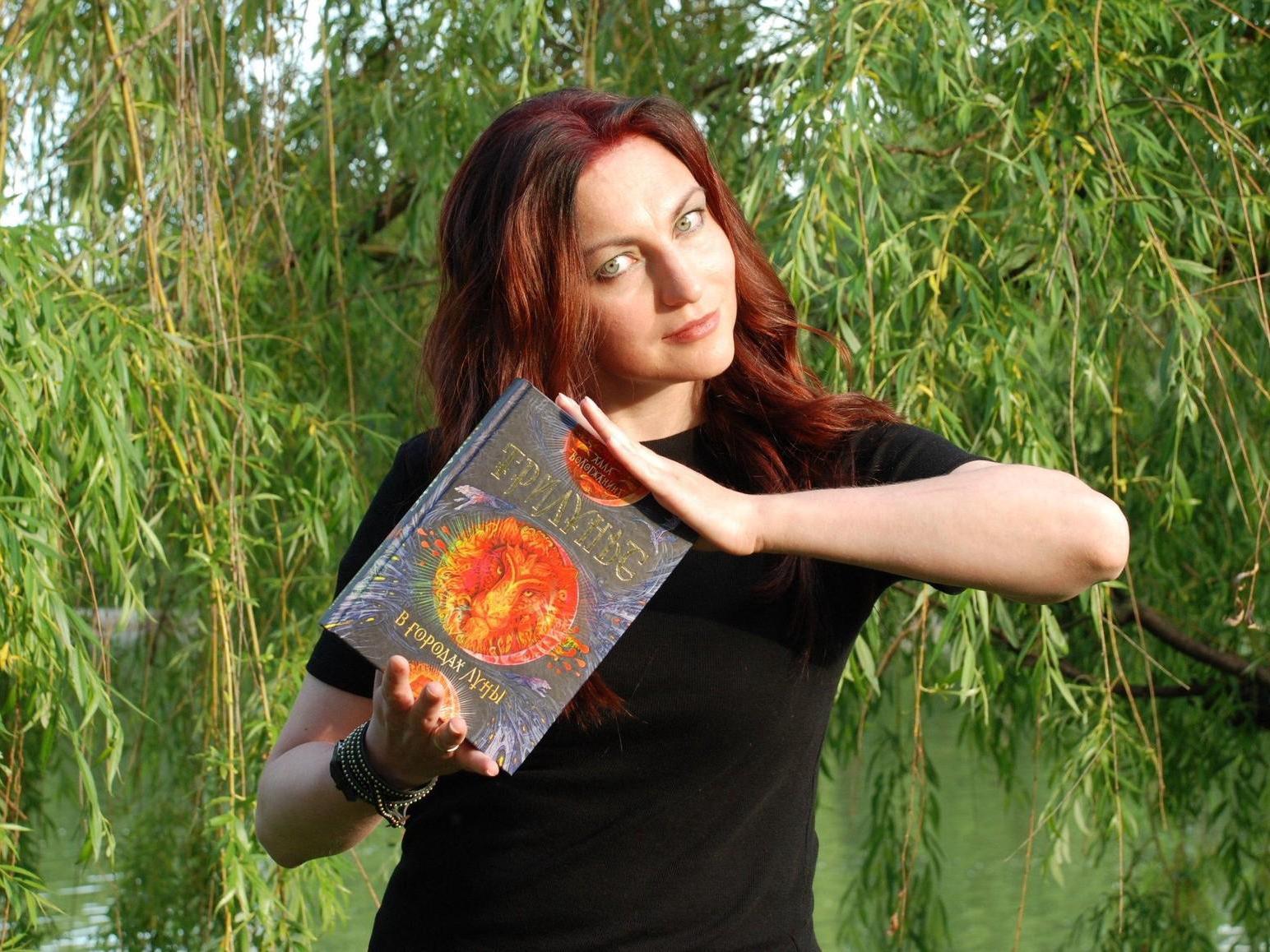

In the Cities of the Moon—the second book written by Alla Vologzhanina
If your children love fantasy—and perhaps you do too—you have likely read or heard of the novel series Trilunye and The Coffee Witch. Their author is Alla Vologzhanina. Few know that the writer lived and worked in Perm for a long time.
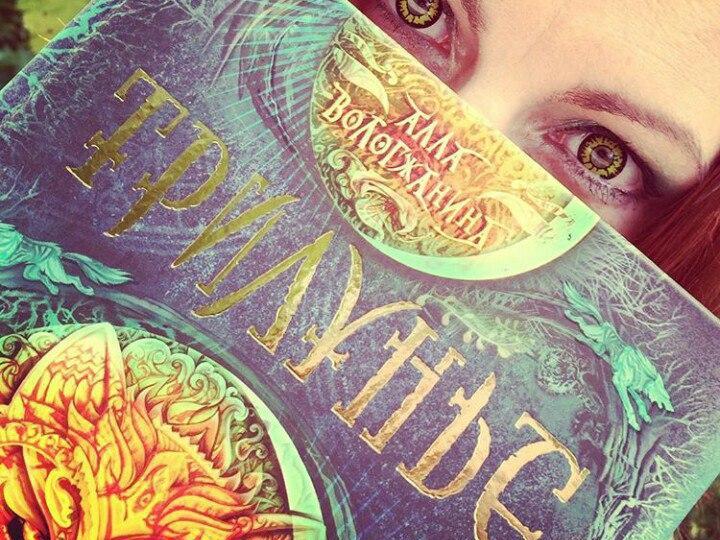
Alla has magical green eyes—matching her books
Alla Vologzhanina was born in Zlatoust, Chelyabinsk Oblast. She graduated from the Faculty of Foreign Languages in Magnitogorsk and came to Perm to teach English at a university. At the same time, she worked as a journalist for the publication Telenovosti.
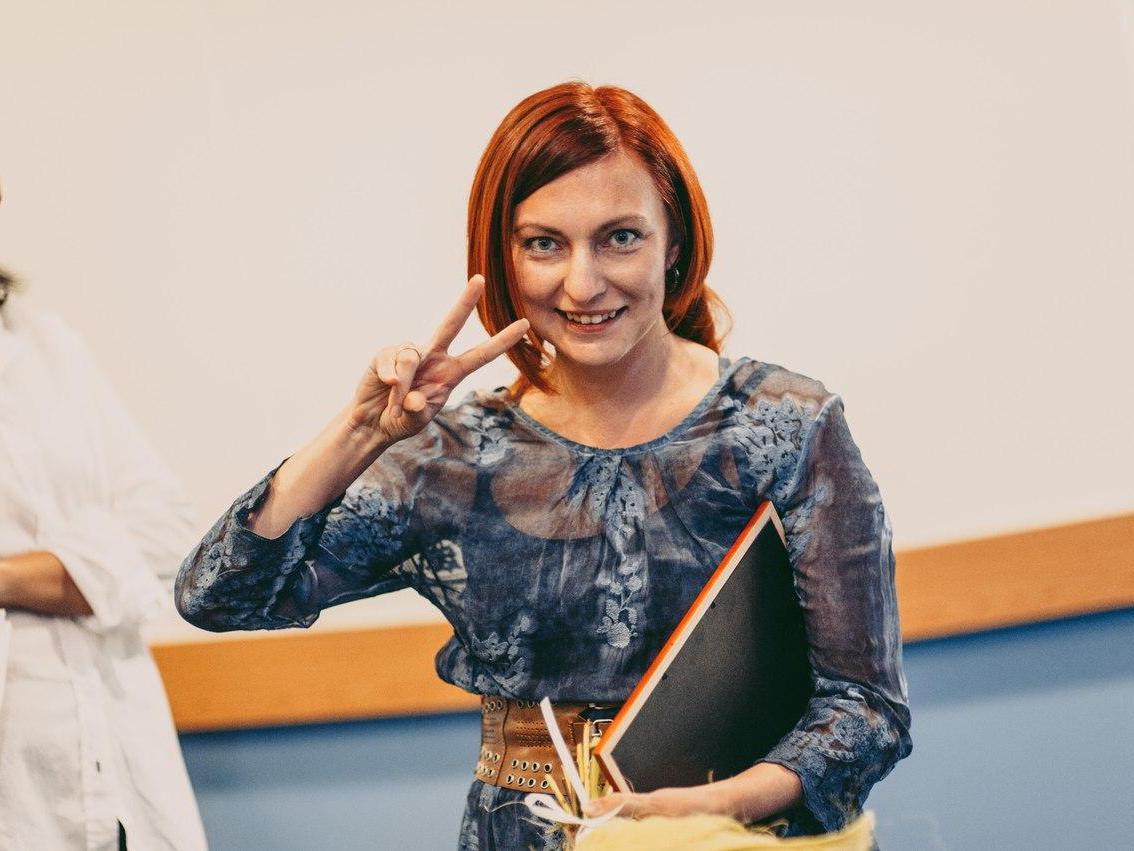
Alla Vologzhanina at a creative meeting
In 2011, she moved to Moscow, where she took up writing. Soon her first book appeared on store shelves—On the Moon«s Path. It was the first volume of the fantasy trilogy for teenagers, Trilunye. Other books followed, quickly gaining popularity.
We spoke with Alla about how a foreign languages teacher became a writer, where she lives now, and what she is doing.
Writing for Herself
Alla loved science fiction since childhood—the Strugatsky brothers, Belyayev, Yefremov, Heinlein, Kuttner, and others. In her teens, fantasy was added to that. Among her favorite writers, Alla also names Nina Dashevskaya and Perm science fiction writer Sergei Shcheglov.
When Alla was looking for something new to read on a fantastical theme, a friend advised her to follow the release of new novels published as part of a competition held by the Rosman publishing house. Alla went to the competition«s forum and found herself on a battlefield.
«There was heated discussion about whom you needed to be friends with and which doors you had to go through to get published in that competition,» the writer recalls. «I took it as a bet—I said that what mattered was not connections but talent, and I offered to prove it by my own example.»
Alla set herself an ambitious goal: to write a book in a month and a half—exactly the time remaining until the competition final. She immersed herself completely in writing, and the novel On the Moon«s Path (12+) was born. The book took second place in the Rosman competition and was quickly published.
The first competition print run was small—those were times of economic crisis, when books were printed on yellow paper. But the volume was well designed, and it sold out easily, and was even reprinted later.
«I got so much pleasure from working with the text that I took on the continuation—the next two volumes,» the writer told 59.RU.
One after another came In the Cities of the Moon (12+) and The Islands of the Moon (12+). All three books made up the Trilunye series. The trilogy became popular, the writer was invited to creative meetings, asked for autographs, and gained fans. Later she wrote another novel, The Coffee Witch (12+), which was also published—and also loved by readers.
The plot of the Trilunye trilogy (12+) is based on the story of Karina Radova—a werewolf hiding in the ordinary human world. Together with her faithful friend, the white wolf Mitka, she accidentally finds a passage into an unusual four-dimensional reality lit by three moons.
The main character of the novel The Coffee Witch (12+) is an ordinary girl, Sasha Ferber, who earns extra money telling fortunes from coffee grounds. At first she does it to give clients psychological support, but soon her usual life is turned upside down. Sasha discovers she has the true gift of a coffee witch.
Alla«s characters appeared in different ways—there were those she mentally constructed for a role.
«You seem to assemble them, you think—would he act this way in such-and-such a situation, or would he not, and here would he shout or whisper?» Alla says.
There are also characters who had real-life prototypes.
«Mitka from Trilunye resembles my childhood friend Andryukha,» Alla shares. «I can«t say he»s exactly the same, because Andryukha was grumpy and serious, while Mitka is more of a mischief-maker. And there are characters—kind of “Frankensteins” in the good sense—I«ll borrow one character trait from someone, a detail of appearance from another, a phrase or behavioral pattern from a third.»
“You Should Not Feel Bad”
Alla has a whole pool of fans. Mostly they are teenagers; they created a community on VKontakte, write to the writer, send drawings, and sometimes ask very grown-up questions.
«They ask a lot about the characters« relationships, about love,» Alla says. «And I always tell them that in no relationship—whether it»s first love, a crush, or an established family—should you feel bad. Long-term relationships should be started when your head has matured enough to understand and distinguish where you are truly miserable and where there are just minor things and rough edges that normal people can cope with.»
“My Human Cub and My Book Cub Were Being Born”
Besides writing, Alla continued to work—she taught English in Moscow and later ran an English language school.
«People asked me: how do you manage everything?» Alla says. «But I was terribly sleep-deprived and running on some kind of creative drive. Trilunye was illustrated by artist Olga Zakis. Once she calls me and asks how best to place the wolf in the picture—running toward the forest or the city. She asked in detail about the details, and I answered. At the end Olya added: “Oh, sorry, I didn«t even ask if you have a minute.” I replied: “It existed, but it»s about to end, because I«m giving birth.” Indeed, I was in the maternity ward, and my water had already broken—so my human cub and my book cub were being born at the same time. It was fantastic.»
According to the author of Trilunye, writing brings in a small income.
«Of course, they pay money for it, but the question is whether you can live on it,» the author reflects. «If you«re Sergei Lukyanenko, then yes; if you»re Alla Vologzhanina, then no. I would rather call writing a monetized hobby. As far as I know, online authors—those who publish on the internet, bypassing book publishers—can organize their work so as to live on income from writing. I don«t know how luxurious that life is—to me it»s an ordinary human life, equivalent to a normal salary, but it«s very hard. Even my most famous colleagues working in the genre of teen and romantic fantasy don»t quit their main jobs. Personally, I always worked and taught, interrupting only for maternity leave.»
“I Feel Like a Character”
More than three years ago, Alla moved with her family to Israel, where her husband has a job.
«We live in another country—hot, beautiful, complicated, and in its own way very inspiring,» Alla says. «Right now it«s 47 degrees [117°F] outside, and if I turn off the air conditioner, it simply becomes impossible. That»s the main difficulty of life here; the language isn«t all that hard. My son learned it much better than we—his parents—did. We live on the coast; it»s beautiful here and I like it. But it«s not mine. I feel like a character in some trendy fantasy novel about falling into a magical world. Yes, this world is wonderful, but, my God, how it “aches” for my native world—Moscow, the Kama region, Perm, the Southern Urals, where I was born. It»s incredible! Even my hobbies aren«t local, not southern—I love skiing and knitting.»
Alla continues to teach remotely; her plans include another advanced training course for a foreign language teacher. She isn«t writing novels right now, but in the future she plans to resume working on texts.
«When I was raising my son Yaromyr, all sorts of life circumstances piled up—I wasn«t up to it, I lacked inner resources,» the writer admits. «And I can only write from inner abundance. I»m not the kind of person who writes out only her pain on paper, but, if I may say so, a person who writes out her happiness on paper. I tried to write in another genre—romantic fantasy—made many drafts and unfinished works. Someday I«ll finish them. I hope I»ll still have that resourceful state from which I can write Happiness. That will be a different story, a different audience. Or maybe the same one, but already grown up.»
Earlier we published an interview with children«s writer Nina Dashevskaya. A play based on her book, Teo—The Theatre Captain (6+), was staged on the children»s stage of the Theatre-Theatre.