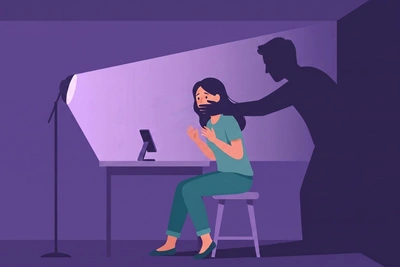
We'll Help You: How Scammers Overpower Their Victims
Clinical psychologist Konstantin Nebytov explained how criminal psychological manipulation works — a set of tactics used by scammers to subdue their victims« will. It is based primarily on the feeling of fear, which literally »shuts off« common sense and makes a person dangerously suggestible.
Phone scamming is not a recent phenomenon. In the late 1990s and early 2000s, the United States was hit by a series of incidents where someone posing as «Officer Scott» called small cafes and diners, telling managers about a supposed police operation requiring staff assistance. However, his methods were strange: he asked employees to undress and perform indecent acts on each other and in front of customers. And they believed him.
«Victims (let»s call them that) of «Officer Scott» are people of completely different backgrounds,« says Konstantin Nebytov. »They differ in gender, age, personal life, marital status, social history. Except, perhaps, for Walter Nix, they are all connected by workplace, but that factor is questionable. If we rely on that, it would mean all food service workers are susceptible to such influence. The category of victims is too diverse, and pigeonholing them into a specific group would be incorrect.«
The US incidents merely illustrate how effectively scammers can subdue their victims« will. Not everyone who receives a call from a fraudster becomes a victim, but there are certain patterns that scammers exploit.
Four main scenarios in which a person may fall victim to scammers:
External anonymous permission that allows one to unleash their criminal and cruel inclinations.
The prospect of receiving a reward, often a large one.
Assisting law enforcement agencies, participating in catching a criminal — in short, a noble goal.
An imagined threat that seems real in the moment.