Life Inside a Women's Prison Baby Home


A baby starts crying at the sight of a photographer. A caregiver takes his hand and tries to calm him down.
«We have an all-female staff; children rarely see men,» she explains the child«s reaction and adds: »And some mothers.«
The boy stops crying but keeps hiding his face with his hands. There are more than sixty such toddlers in the Mariinsk Correctional Colony (Kemerovo Oblast). Some are just a few weeks old, others about a year; the oldest, four-year-olds, are awaiting an unknown future in an orphanage. Meanwhile, here, behind high walls topped with barbed wire, many of them may be spending the best years of their lives.
How children spend their days behind bars while their criminal mothers sew clothing for law enforcement and rescue workers — in a report by our colleagues from NGS42.RU.
Inmates from across Siberia and the Far East are brought to Corrective Colony No. 35 (IK-35); there are only 11 correctional facilities in Russia that have a baby home. Many women committed crimes while pregnant, sometimes fully aware of what awaited them. As a result, their future children«s journey through the penal system begins before birth.
At one time, the colony had its own maternity ward; now, a single specially equipped room in the local city hospital suffices: barred windows, surveillance cameras, and total isolation from other women in labor. The picture is completed by a convoy that monitors the pregnant women around the clock. Constant supervision is also maintained over the newborns — but not out of fear of escape, solely out of care.
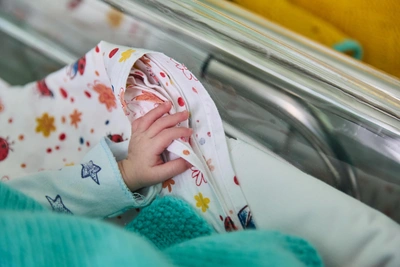
The first place an infant goes is the nursery group. It is a long, bright room with cribs along the walls, where children under one year sleep, cry, explore their own fingers, and the world around them.
Currently, there are 12 infants here; one of them, Alina, «checked into» the colony just a few hours before our arrival. She is only four days old, and in that time she has only seen her mother during the six daily feedings.
After childbirth, women are not given maternity leave, as the colony staff take on all duties of upbringing, care, and feeding.
«When a baby is born, our social worker processes all the necessary documents. The child is placed on full state support. Of course, we undergo all medical checkups; every year there is a medical examination,» says the head of the baby home, Tatyana Buglo.
She once swapped her pediatrician«s office at the city hospital for the confines of the colony»s baby home and has worked here for 13 years. Years later, Tatyana remembers the feelings when she first crossed this threshold.
«Morally, it was difficult. I have two children of my own; when you come here, tears well up. You want to give the children warmth, home comfort, the affection that their mother may not give them later. Many children spend the best years of their lives here,» she explains.
The head of the baby home has seen hundreds of mothers who swore never to return to the colony, were released on parole (conditional early release), and within a year or two found themselves behind bars again. Sometimes they held a newborn in their arms.
The inmates can see their children no more than six times a day: during feedings and before lights-out. The rest of the time, they work as seamstresses and cutters. Meanwhile, a child can be «released» earlier if relatives — grandmothers, grandfathers, or the father (if he himself is not serving a sentence) — take them out. But this rarely happens.
Living by the Schedule
When the little ones grow up, they are moved to the older group on the second floor. Like their mothers, they live according to the official schedule. But unlike their incarcerated relatives, who spend most of the day working, the children«s schedule consists solely of walks, games, and meals.
The groups have everything a typical city kindergarten can boast of: books, tables, chairs, educational toys, and various playthings, some of which are donated by caring entrepreneurs. There is also a mini-kitchen.
In another room, small, neatly made beds are lined up like in a barracks.
The largest hall is the assembly hall, where children have been gathered for a music class. The toddlers look at the guests with interest, while the more emotional ones hide or start crying.
«We have 120 staff members, and only the carpenter and the doctor are men,» explains the head of the baby home.
She adds that children, like their mothers, can see fathers and grandfathers a maximum of four times a year — during long visits, if such are allowed to the inmate. The rest of the time, only video calls via special phones remain.
Having calmed down, the children show off the skills they«ve acquired in the first years of life: they navigate an »obstacle course« and dance to familiar music.
It cannot be said that the children here are completely isolated from the world. A psychologist works with them daily; they have music and developmental classes — from drawing to clay modeling.
Birthdays and holidays are celebrated here: New Year, Christmas, Easter, and International Women«s Day on March 8. For each, a morning party is organized. Sometimes the inmates put on concerts for the children, staging fairy tales.
They Don«t Know Where They Are
For the children, the world does not end at the walls of the building constructed in the 1960s. They go outside for walks both winter and summer. Only relatively recently did they start doing so in comfort. A modern playground appeared here in the 2020s, purchased by a former regional governor who visited with his wife.
The whole area fills with loud laughter as a group of children runs out onto the playground: they climb the slide, ride scooters, run to the swings.
The nannies barely have time to keep order, occasionally shouting sternly: «Andrei, stop pushing, wait your turn for the slide,» «Anechka, slow down! You»ll knock someone over!« »Platon, don«t go too close to the swing.»
The playground, running, squealing, and laughter of the children clash with the surrounding backdrop, creating a stark contrast. Here it is — an ordinary kindergarten with children and teachers. And right there, beyond the gate, is a restricted facility with workshops and dormitories where more than 600 women serve sentences: murderers, drug dealers, robbers, and fraudsters.
But the children do not notice this. To them, the barbed wire and guard tower are as natural a backdrop as the trees and clouds. They were born into this scene and know nothing else.
«Do they ask about the barbed wire, the fence?» we ask the head of the baby home.
«Of course they ask, they»re curious about everything — they«re children,» she replies.
«And what do you tell them?» we ask.
«That they»re just in kindergarten. We answer that way so that they don«t remember where they are,» she says, with sadness in her voice.
«I Want to Wake Up in the Morning and See Him Next to Me»
A separate feature of the facility is the cohabitation unit. It opened in 2019, and since then, some mothers have had the opportunity not to part with their child at night, but this opportunity is not given to everyone — only to 12 women who do not violate the regime.
The conditions here are, of course, different. For starters, the rooms have regular beds, and next to them are cradles, chairs, tables, a shelf with books, and toys. But the essence is not in the items, but in the opportunities. Inmates can bathe, dress, comb, soothe their children when they are teething, freeze in delight at their first steps, and hear «mama» firsthand, rather than through the caregiver«s retelling.
Two inmates who live here told how they ended up in the colony and under what circumstances they became mothers. One of them is only 18. The second ended up here because she could not find a job with decent pay and decided to try «easy money».
A video story about Maria, the youngest inmate in IK-35, can be viewed in a separate article. NGS42.RU previously published an interview with Valentina, whose child«s father abandoned her on the child»s first birthday.