Ural Dairy Plant Recovers From Tornado, Floods Hit


The Kushva dairy plant processes 220 tons of dairy products every day.
Having weathered the consequences of a February quarantine due to a dangerous bacterium, agricultural enterprises and dairy plants in Sverdlovsk Oblast have faced new difficulties. The weather has created many problems: since the beginning of summer, the Urals have been plagued by downpours and floods, and once even a powerful tornado occurred. A fuel shortage adds to the troubles.

Alexander Zhukov has been the director of the dairy plant for many years.
E1.RU correspondent Irina Porozova spoke with Alexander Zhukov, director of the Kushva plant Molochnaya Blagodat (Milk Grace), about how enterprises are currently operating under such conditions. Details are in this interview.

Consumers recognize the plant«s products by its distinctive lion cub logo.
On the Aftermath of the Tornado

An interior view of the dairy plant«s production workshops after the tornado.
— Alexander Yuryevich, let’s start with the most pressing issue. How did the tornado that occurred in Kushva on June 22 affect the plant’s operations and its employees? How are you helping them recover from the tornado’s aftermath?

The plant director acknowledged a persistent shortage of qualified staff.
— This happened for the first time here and in Sverdlovsk Oblast as a whole. The tornado caused a power outage at the plant. From 19:00 to 20:30, the workshops were without electricity, but employees from all services and all section heads came to work. And throughout the entire time there was no power, they worked — receiving and processing all the milk that came to us. This demonstrated the cohesion of the team.

Hundreds of residents from Kushva and neighboring towns work at the plant.
In the tornado, unfortunately, 17 employees were injured. On the morning of the 23rd, we convened a headquarters, organized a fundraiser to help them, and people began to respond. We also allocated funds from Molochnaya Blagodat itself. We are providing not only financial assistance — our guys went out to clear the debris, and we organized the delivery of our dairy products for 160 volunteers.
I express my great gratitude to all the guys who are eliminating the consequences of the tornado in Kushva, to the employees of the Ministry of Emergency Situations (EMERCOM) and the power engineers. Governor Denis Pasler is monitoring the situation; he has visited us in Kushva several times.
— Did the plant being without power for several hours affect production volumes?
— We accepted all the milk from our agricultural producers. Not a single truck was redirected to another enterprise; there were no prolonged downtimes. Yes, there were delays because the equipment was not working, but as soon as electricity appeared, the processing of milk began.
All retail chains understood this because they knew that an unusual situation, a force majeure, had occurred. There were no fines from them. Our Ministry of Agro-Industrial Complex also helped us.
— How much money was raised through joint efforts — from employees and from the enterprise itself?
— So far, more than 200,000 rubles (about $2,200 at current rates) have been collected from employees. Molochnaya Blagodat itself also allocated 200,000 rubles, and funds are still coming in.
— And what about those employees who lost their homes?
— We have an employee who went to the special military operation in 2022. His house was very seriously damaged. He is now clearing the rubble. He has five children. While the house is being restored, the family is living with relatives. The other employees whose homes were damaged are purchasing construction materials with the funds we raised for them, and will then repair the roofs themselves.
On the Main Challenges for the Market
— What problems are dairy plants in the Urals currently facing? Under what conditions do they have to work?
— In February, a situation occurred that affected all processors and agricultural producers. We felt that we could accept and process milk that had previously been shipped outside the region.
In February 2026, pasteurellosis was detected on one of the dairy farms in Sverdlovsk Oblast, an acute infectious disease. Because of it, a quarantine was temporarily imposed in the region: raw milk could not be taken outside the oblast, so the Sverdlovsk dairy plants were placed under increased load, having to process 1.5 times more raw materials than before. This led to prices for dairy products falling.
Mass inspections began on farms. In addition, one farmer complained that he had to simply throw away his milk because one of the large plants refused to accept it. We reported more on the situation in this section.
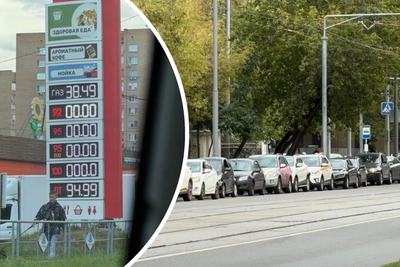
Now the industry is under pressure from rising packaging and fuel costs, which affects logistics. We are trying to keep prices stable and negotiate with agricultural producers and retail chains.
Plus, as you can see, the weather conditions are very severe — it is raining. This also affects us. I can’t say what the situation with feed will be for the farmers.
— Is it possible to estimate the losses the industry suffered from the February quarantine?
— Probably not, you can’t say losses. We started accepting more raw materials: previously, our enterprise processed 150 tons of raw materials per day, then we reached 250–270 tons.
— Why did you start processing more? Because raw materials couldn’t be shipped outside the region?
— Agricultural producers who used to export raw materials from the region ended up staying here, and this is very gratifying. They realized that our dairy enterprises are reliable partners, that we did not refuse and accepted their raw milk, and then made timely payments.
The situation even turned out to be a plus for us: the milk that is processed here now goes straight to the end consumer, whereas before it was shipped outside the region, processed there, and returned to our store shelves.
— Product prices are determined by many factors, and one of them, as you just said, is fuel prices, which have risen sharply recently. Will dairy products become more expensive because of this?
— So far we are keeping prices; for consumers they remain the same. Although our costs are rising, we are absorbing all expenses.
— Is there a shortage of raw milk on the market due to weather conditions?
— There is no shortage of raw milk on the Sverdlovsk Oblast market; prices for it remain stable. Accordingly, prices in retail chains and on store shelves are also holding steady. The production volumes we had remain the same, and we are increasing them.
On Market Position and New Products
— Dozens of dairy plants operate in Sverdlovsk Oblast. What market position does Molochnaya Blagodat occupy by production volume and sales?
— We rank second or third by production volume and sales, but in terms of quality, I believe we are first.
— Do you plan to increase production volumes?
— Currently we process 220 tons per day. By the end of 2026 or early 2027, we plan to process 300 tons. At the end of June, we launched a line of lactose-free dairy products — milk, sour cream, cottage cheese, butter. They have already appeared on store shelves. We will further expand the line, adding not only lactose-free but other types of products.
We currently employ 480 people, but since we have expansion plans, the number of employees may increase, and we will automate production.
— Do you currently supply your products only to cities in Sverdlovsk Oblast or also outside it?
— Also outside. These include Chelyabinsk, Tyumen Oblasts, Bashkortostan, Khanty-Mansi Autonomous Okrug, Yamalo-Nenets Autonomous Okrug, and Perm Krai.
— Are products delivered only by company vehicles or by third-party companies?
— Partly by our own trucks, and partly by transport company trucks.
— I ask this because we received a message from a reader who claimed that the vehicles delivering your products travel without refrigeration equipment. Is that possible?
— No, absolutely not. The products delivered both by our trucks and by transport companies are certified. Each driver monitors the temperature regime. All vehicles are equipped with refrigerators, as they transport dairy products that require a specific temperature.
On the Staff Situation
— The labor market is in turmoil: some companies are cutting staff, others are reporting a shortage. How are things going with you?
— There is a problem of staff shortages. There is a problem with IT specialists, 1C specialists, loaders, drivers; people are also needed in production. It is not easy to find good, highly qualified employees. Especially since we have a narrow specialization — milk processing.
We annually participate in job fairs from the Ural State Agrarian University, send employees for targeted training, and work with schoolchildren so that they want to return to Kushva and continue working there.
Young people are already starting to return. I have three sons; the middle one is 20, he is studying in college. He tells me: “I’ll finish my studies, then come back to Kushva, start a family.” And he even asks: “Where can I buy an apartment closer to a kindergarten?” That is the kind of thinking.
— What cities are your employees from?
— Mostly from Kushva and nearby towns — Verkhnyaya Tura, Barrancha, Krasnouralsk. The plant operates almost around the clock. The workshops responsible for production do not stop: the boiler room, compressor room, finished product warehouse, vehicle shop, and others. Employees are provided with bus transportation.
— How many employees exactly does the plant lack?
— I cannot give you the exact number now. Because the volume of work is increasing due to increased production volumes, new personnel are needed more to ease the burden on existing employees. We are increasing staff so that people from production and the laboratory can study and advance further up the career ladder.
— To attract new employees, the salary must at least match the cost of living in the city. How much do your workers earn on average?
— Salaries are comparable to the city. I don’t know how appropriate it is to state the average salary: managers have one salary, employees another.
Earlier, we discussed the problems of dairy plants with Yuri Okunev, director of Talitskoye Moloko, in an interview. In 2025, he spoke about the reasons for the wild rise in product prices and the critical shortage of drivers. He also answered questions about where products with expiration dates from the future come from in stores and where the honest liter of milk went.