Krasnoyarsk craftsman adopts Japanese technique to make toys
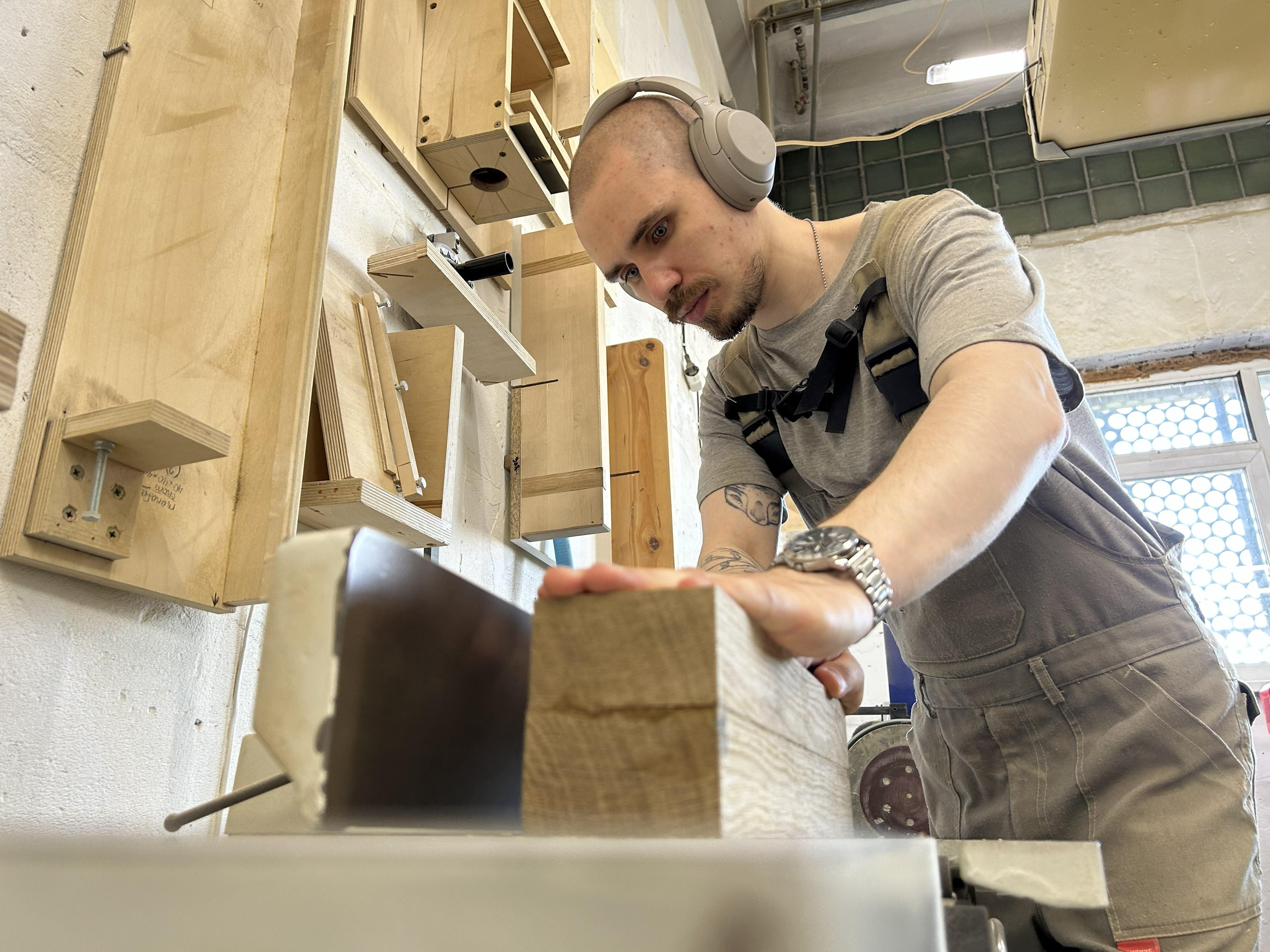

Semyon Klyuchantsev has worked with wood for many years, but he is only beginning to move toward his dream.
Semyon Klyuchantsev — a woodworker. He once started by sanding figurines for the Universiade, made flower boxes, tableware for restaurants, and later expensive furniture for wealthy clients. Yet he still had little money, and most importantly — a persistent feeling that he wanted something more. So Semyon decided to go all in. Today he creates toys using a Japanese technique and dreams of his own factory. The craftsman follows a philosophy: if a tree grew for 90 years, it should become an object that will last just as long. His remarkable story — in a piece by NGS24.RU journalist Alexey Tayganavt.
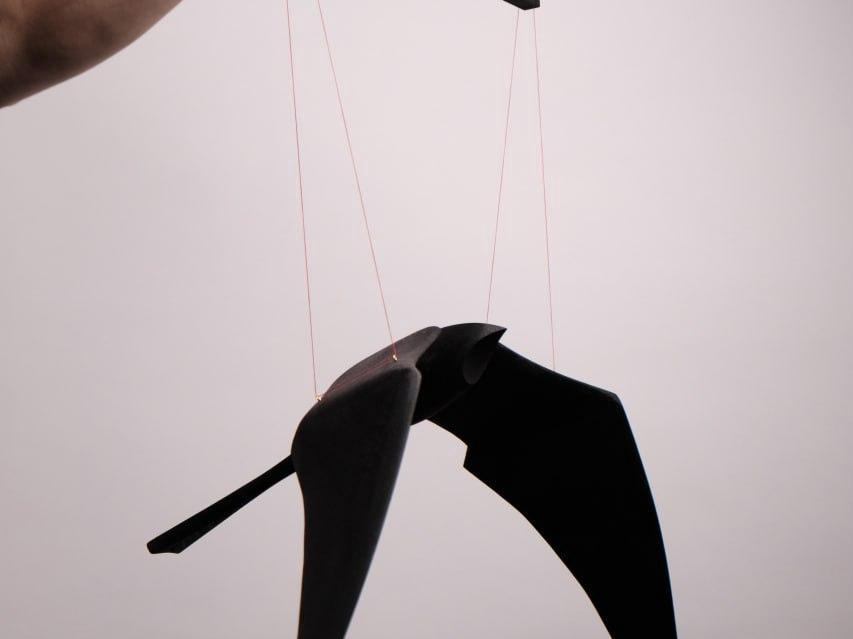
One of Semyon«s favorite creations.
Four days without leaving the workshop
The first prototype of the bird.
His workshop is in the city center. A bright, spacious bay with a high ceiling. Shelves hold toys; walls display tools. Notes. A camera tripod. On the tables — blanks for small wooden birds.
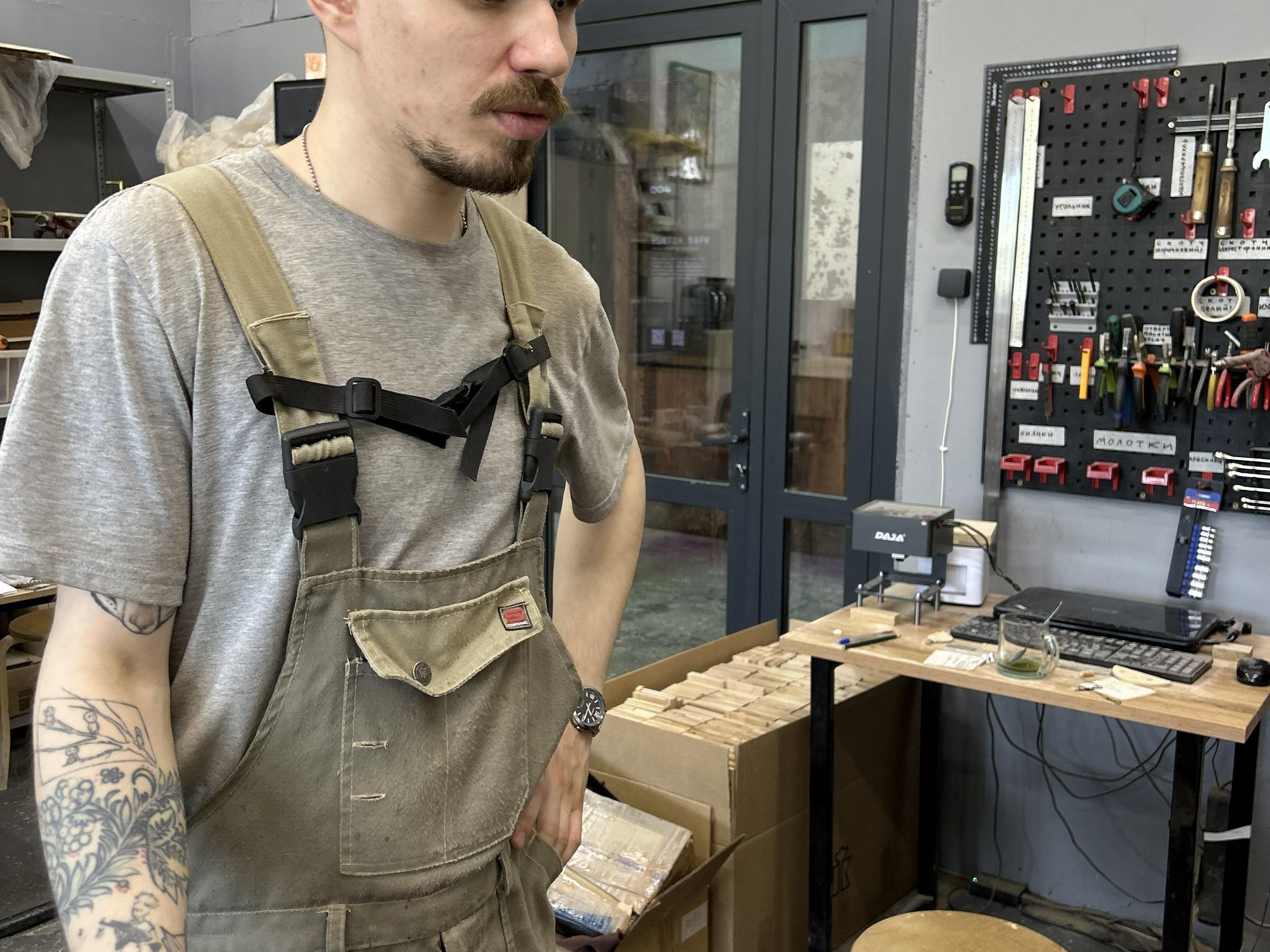
If an idea captivates Semyon, he can work on it for more than a day.
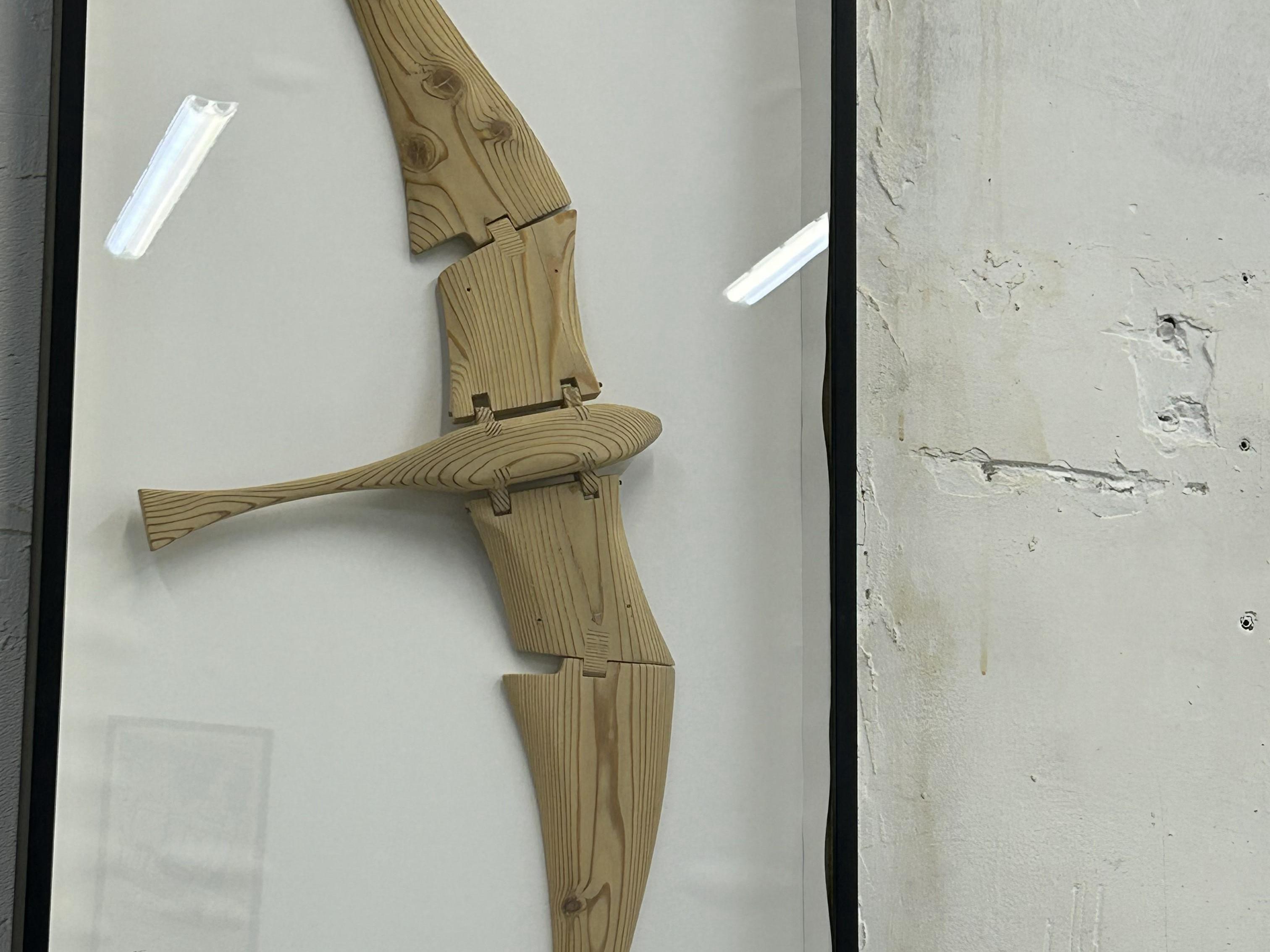
Another large bird with spread wings — framed behind glass on the wall. It was from this that the dream of a real Russian children«s toy factory began.
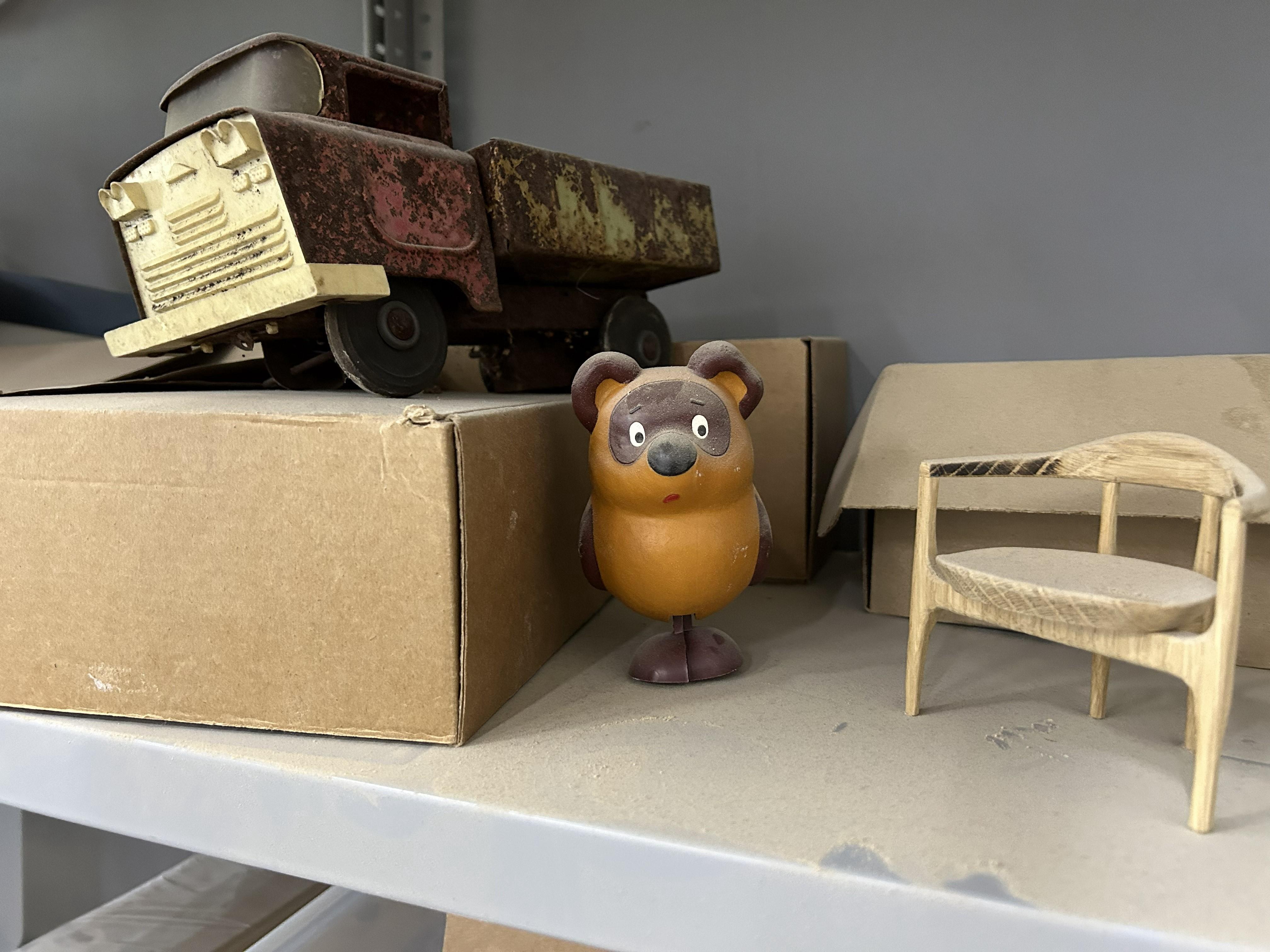
These toys were given to him as gifts.
— Seven years ago I came up with this bird first. I didn«t leave the workshop for four days. I didn»t need anything at all. But it didn«t fly, didn»t flap its wings, did nothing. It was all saggy, unbalanced, — recalls Semyon Klyuchantsev.
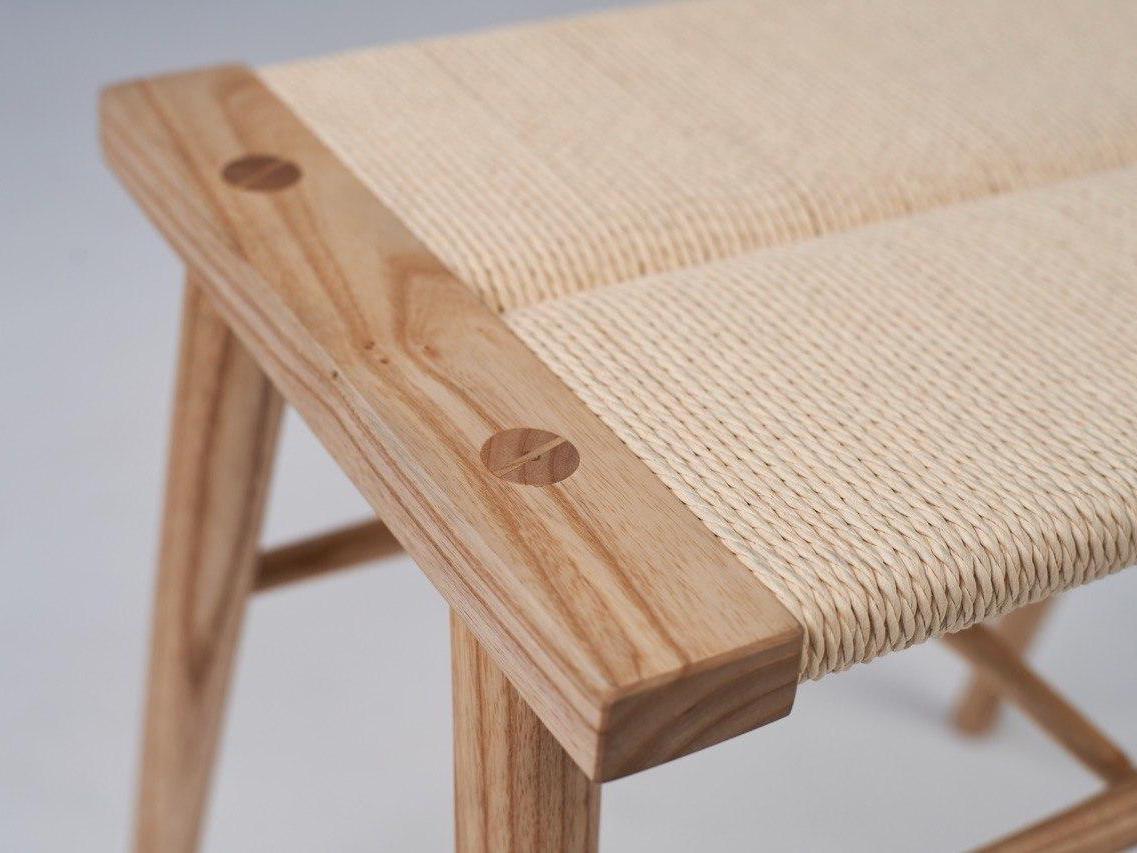
A stool for connoisseurs.
When Semyon talks, you immediately catch yourself thinking: adults don«t talk about toys like that. To him they seem almost alive.
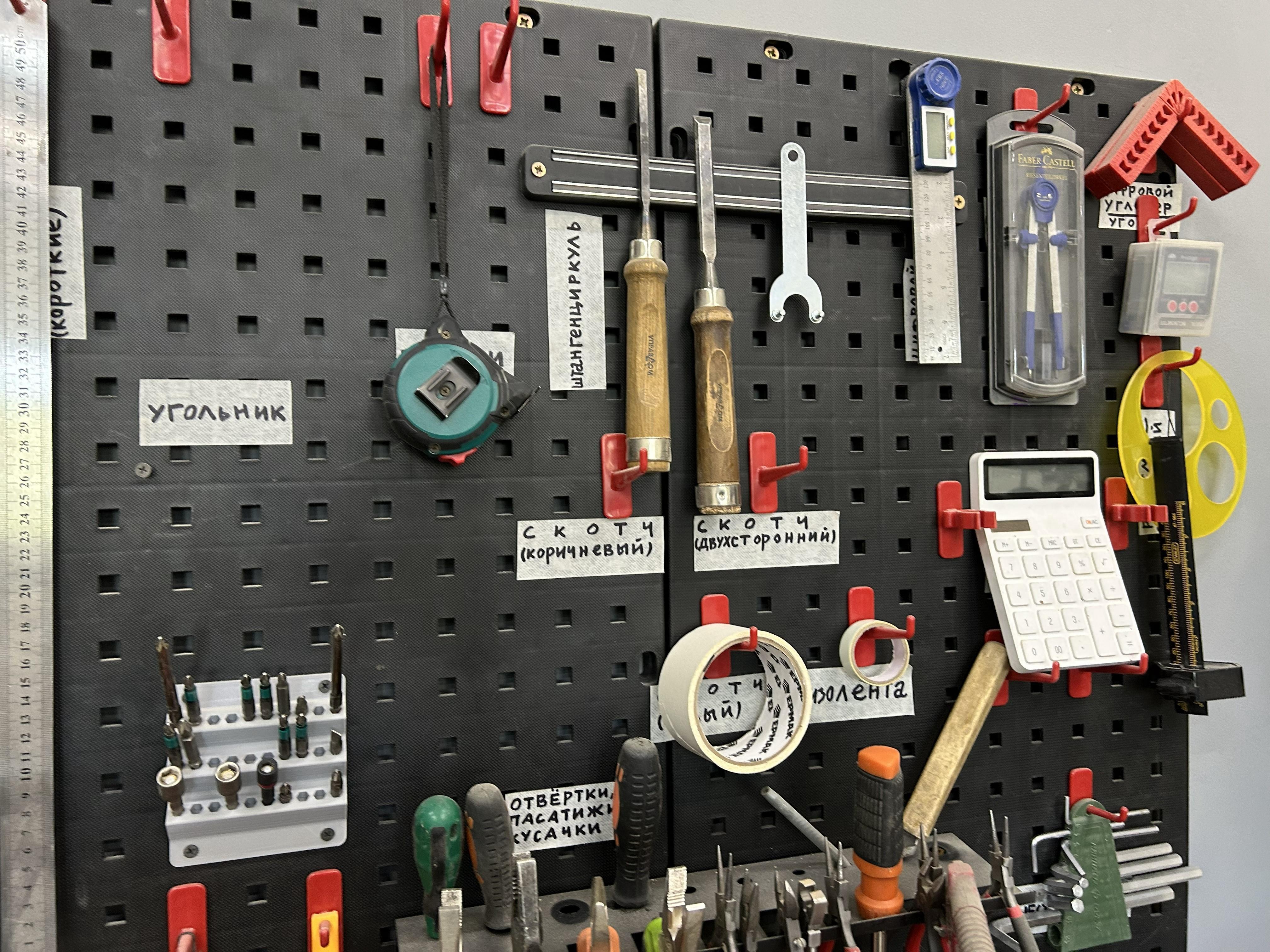
Such order can only be envied.
Death in the North is very close
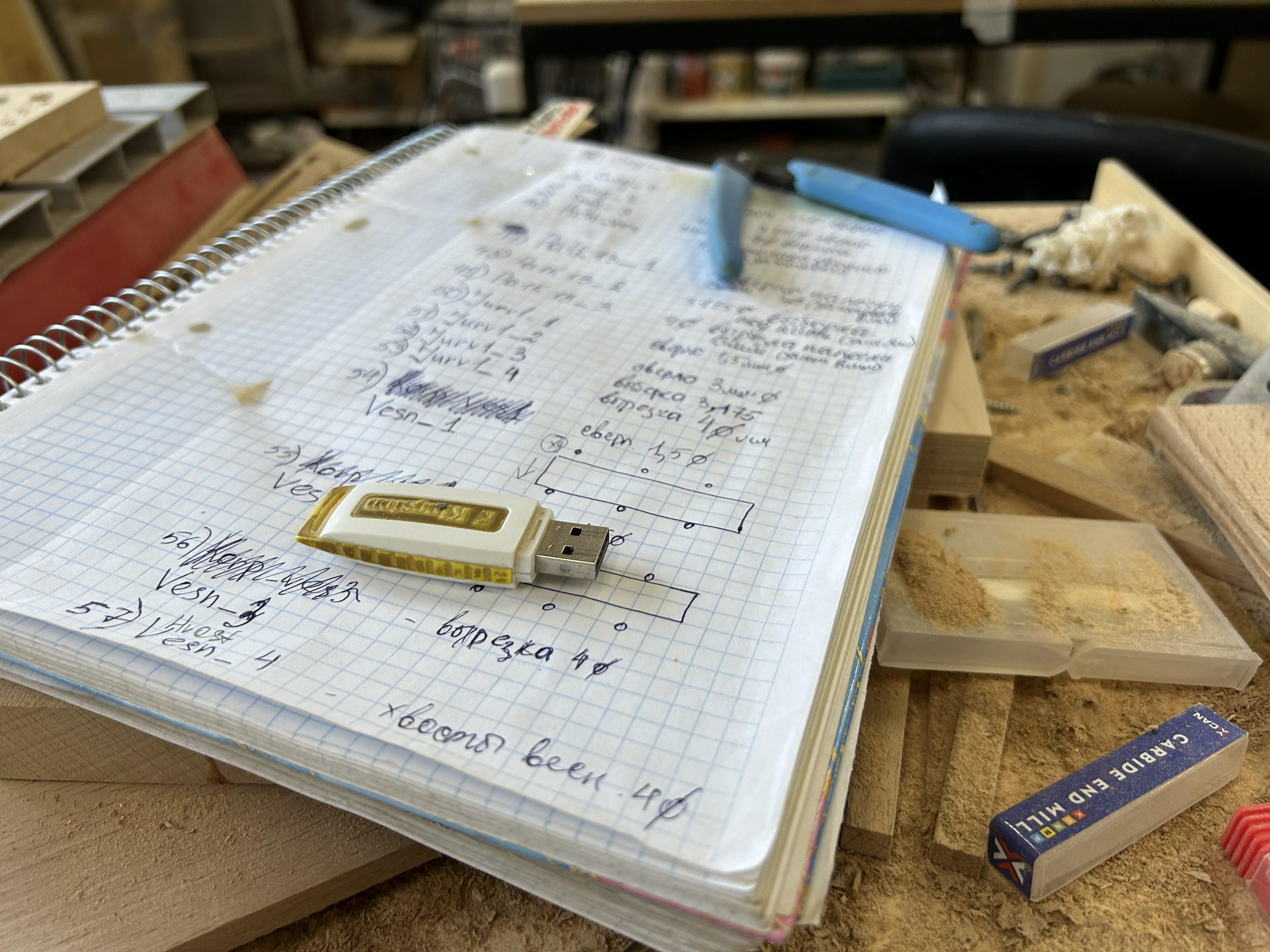
This is how the toys look on paper.
Semyon was born in Taimyr, in the village of Nosok. There, Krasnoyarsk is habitually called «the mainland.» His father is an engineer, his mother a teacher. They worked a lot, built, arranged their household — everything with their own hands.
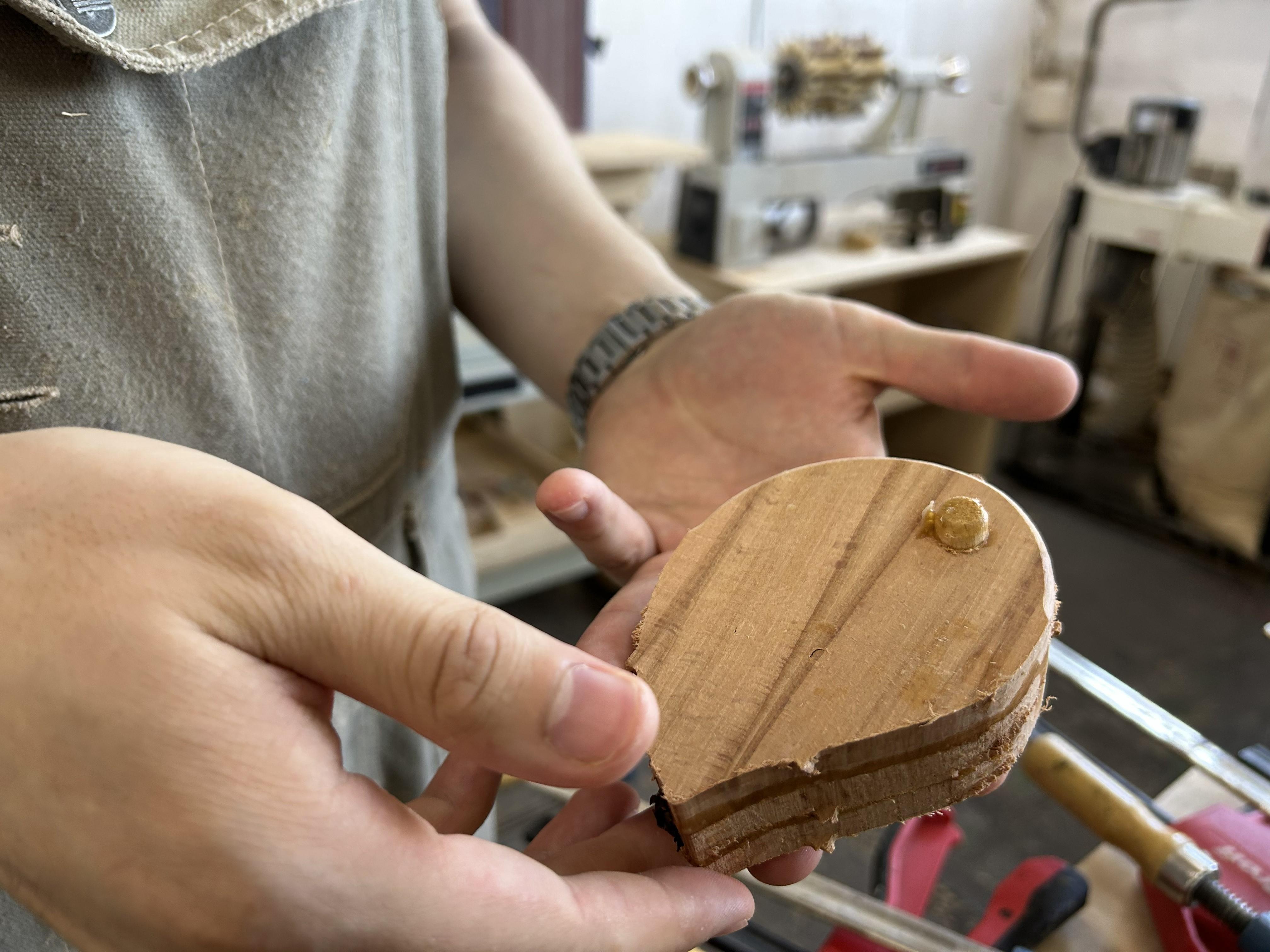
A blank.
In the North, there«s no other way to survive. A separate world: around is the polar tundra and the bank of a channel at the mouth of the Yenisei. You can only get there by helicopter or along a winter road. In the short navigation season — by ship.
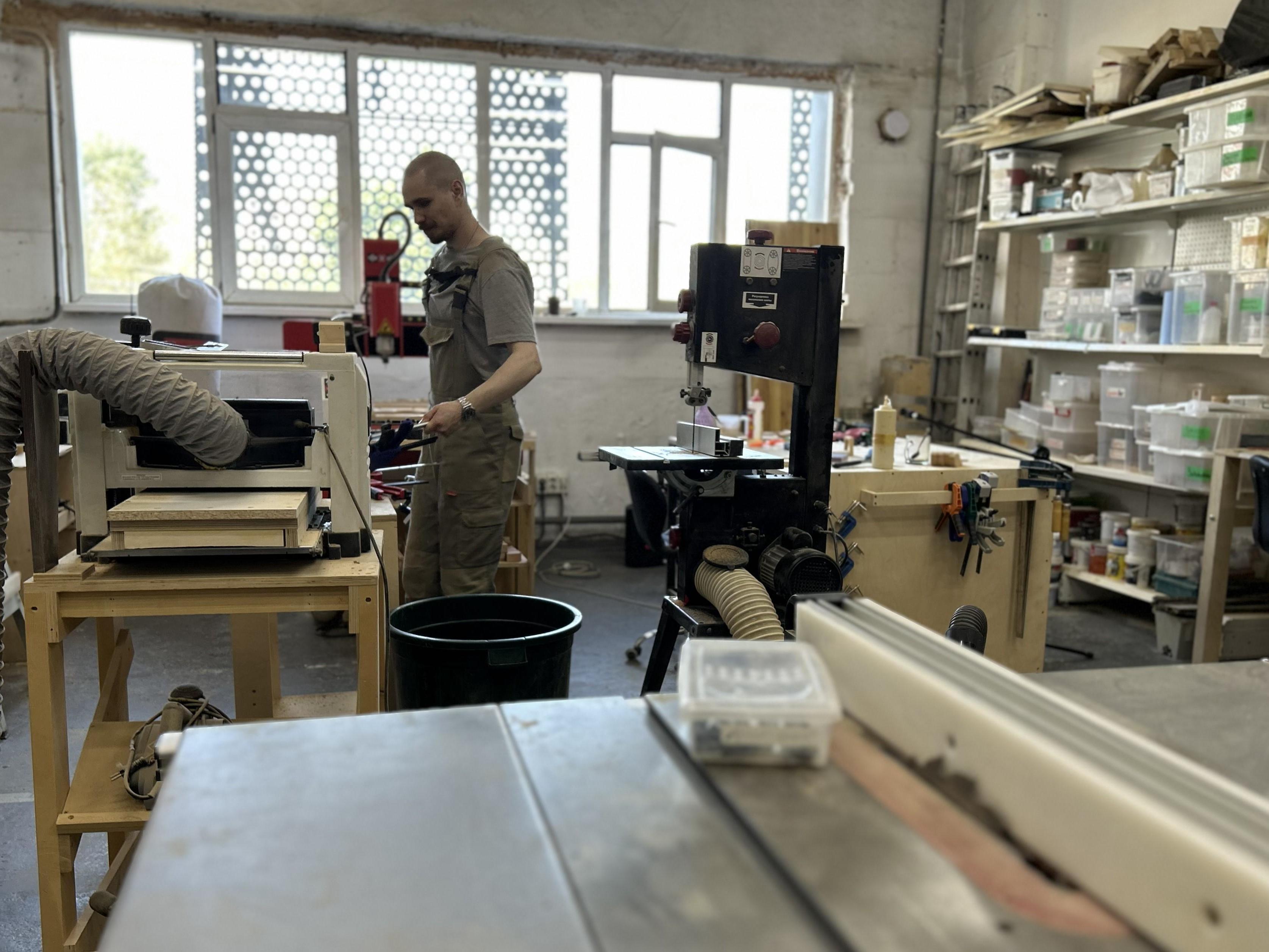
There is also a workshop at home.
Polar nights and days. In winter, frosts below minus 50 and prolonged blizzards.
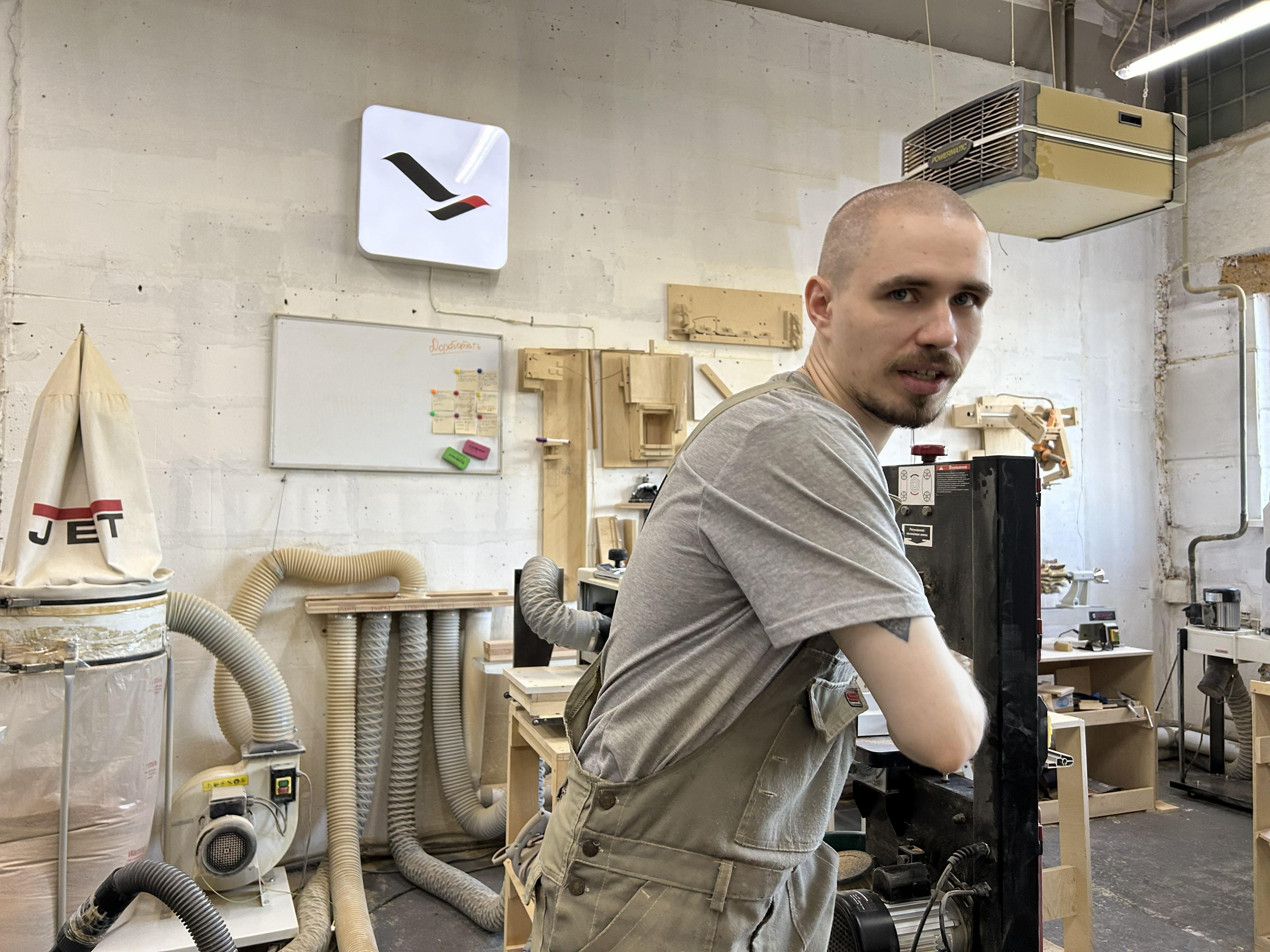
For a long time he couldn«t find work, and then he found himself.
— The North is actually about love. It«s about very kind people. In the North it»s customary not to lock the doors of winter cabins. And if something bad has happened to a person, he will come to you, pull the door, open it, warm up, eat. Food and fuel are always left there. Because there«s always one thing: death in the North is very close. That»s why people are closer to each other too, — explains Semyon.
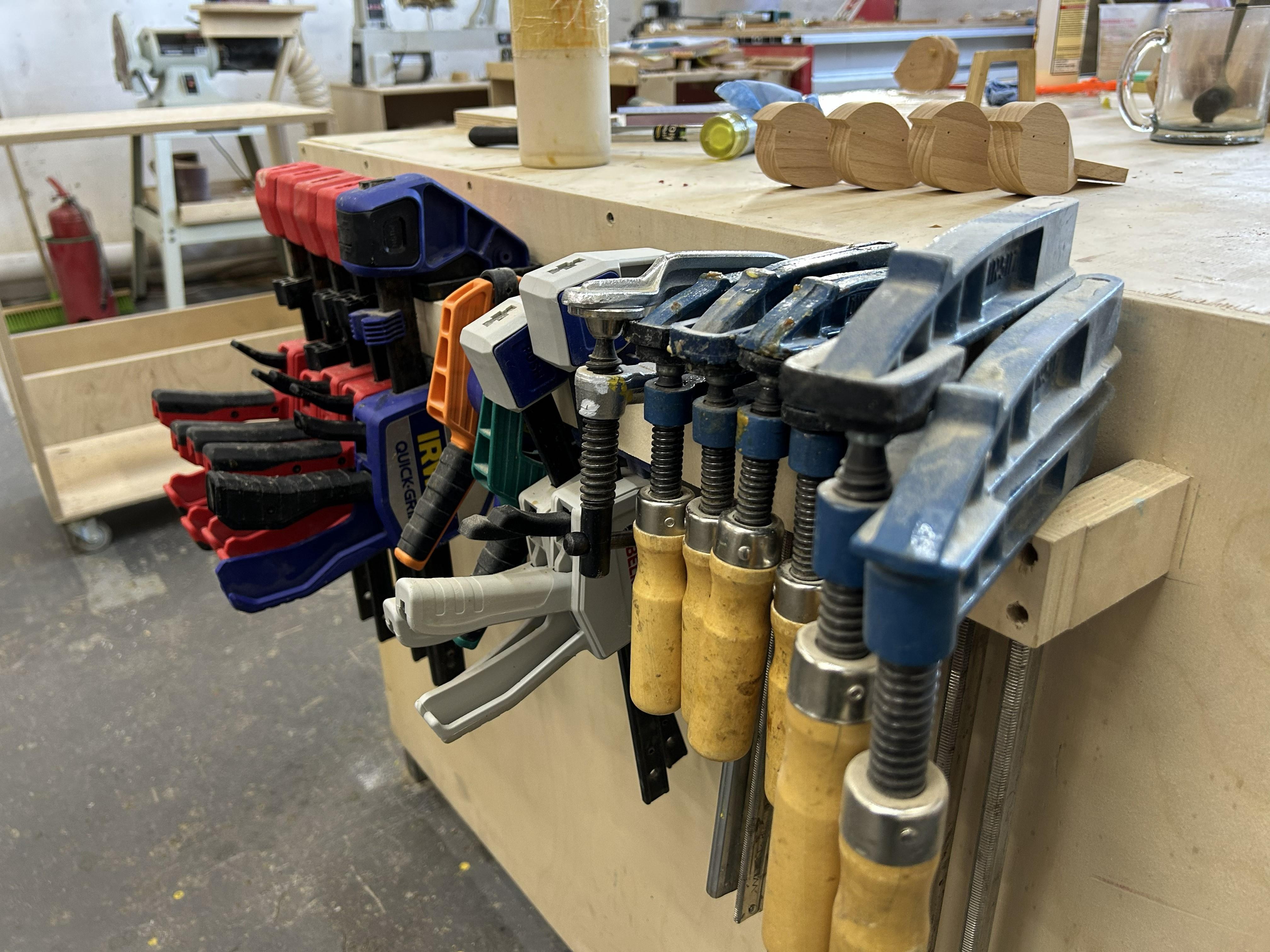
Tool for the blanks.
In the village, most of the population is Indigenous northern peoples. He grew up with them, went to the same school. Went hunting with his grandfather.
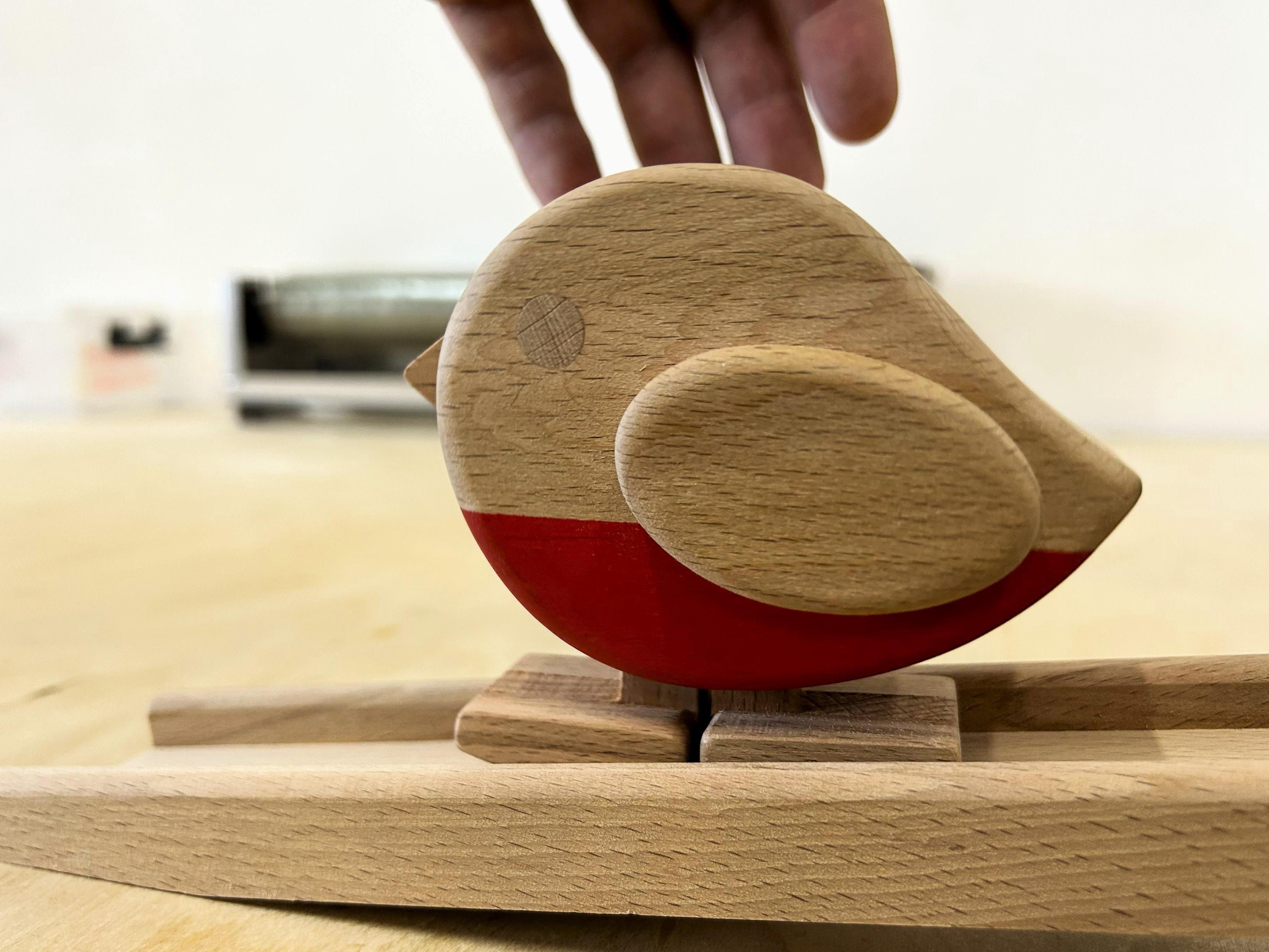
Kinetic bullfinch.
— He was a professional hunter. He worshiped nature. When we crossed the Yenisei, he would drop a small shot glass: «Father Yenisei, thank you for letting us pass today.» And there were people, many, whom it didn«t let pass. He believed, — says Semyon.
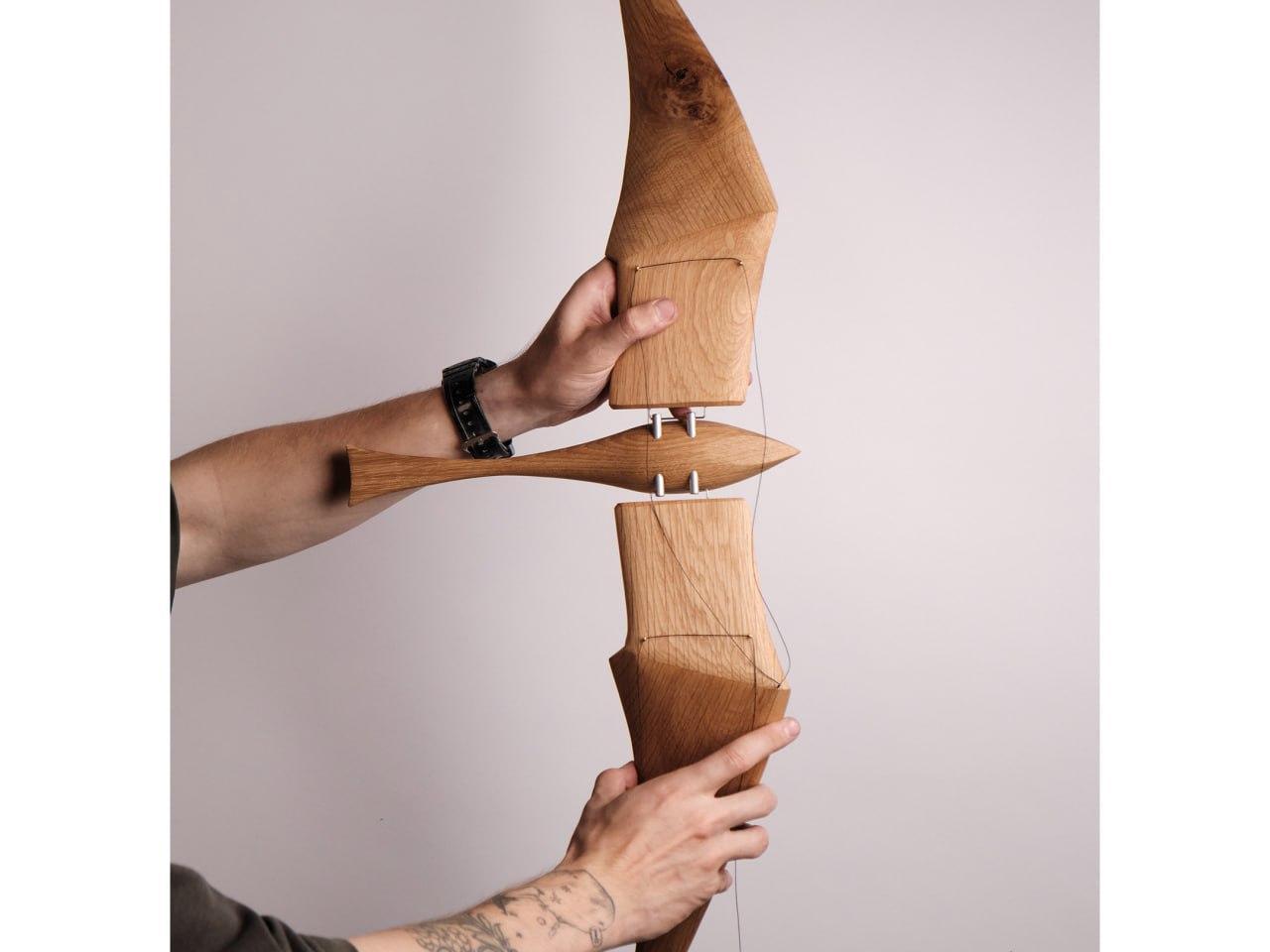
Birds come to life.
They are heralds of change. The beginning of a new stage
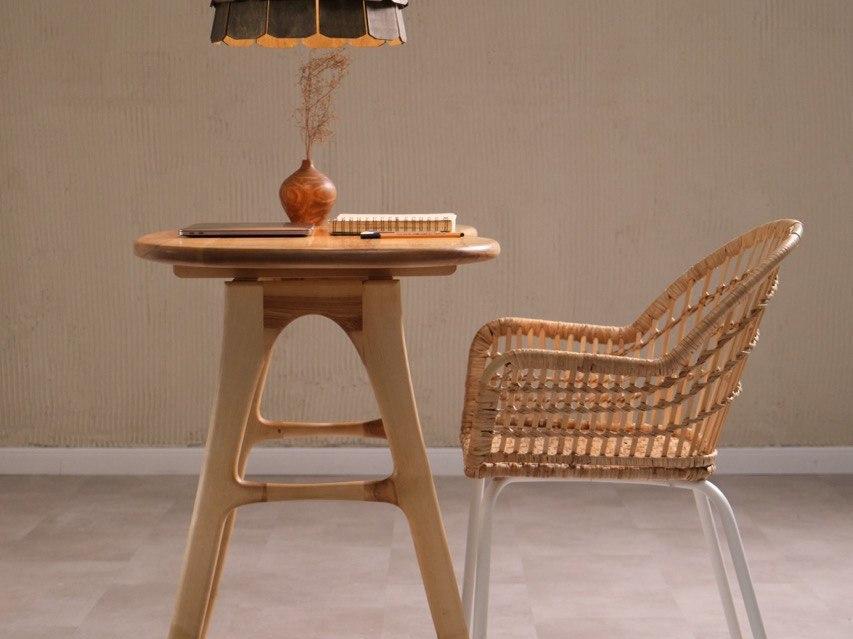
The table Semyon made.
— Grandfather met a bear one on one. I asked: «Well, how did you defeat it?» And he said: «What do you mean, defeat it? I took out a knife so it would know: I»ll give my life dearly. And I asked: I really want to go home. To my wife, to my grandchildren. Let me go, please.« And he just took and went, — recounts our hero.
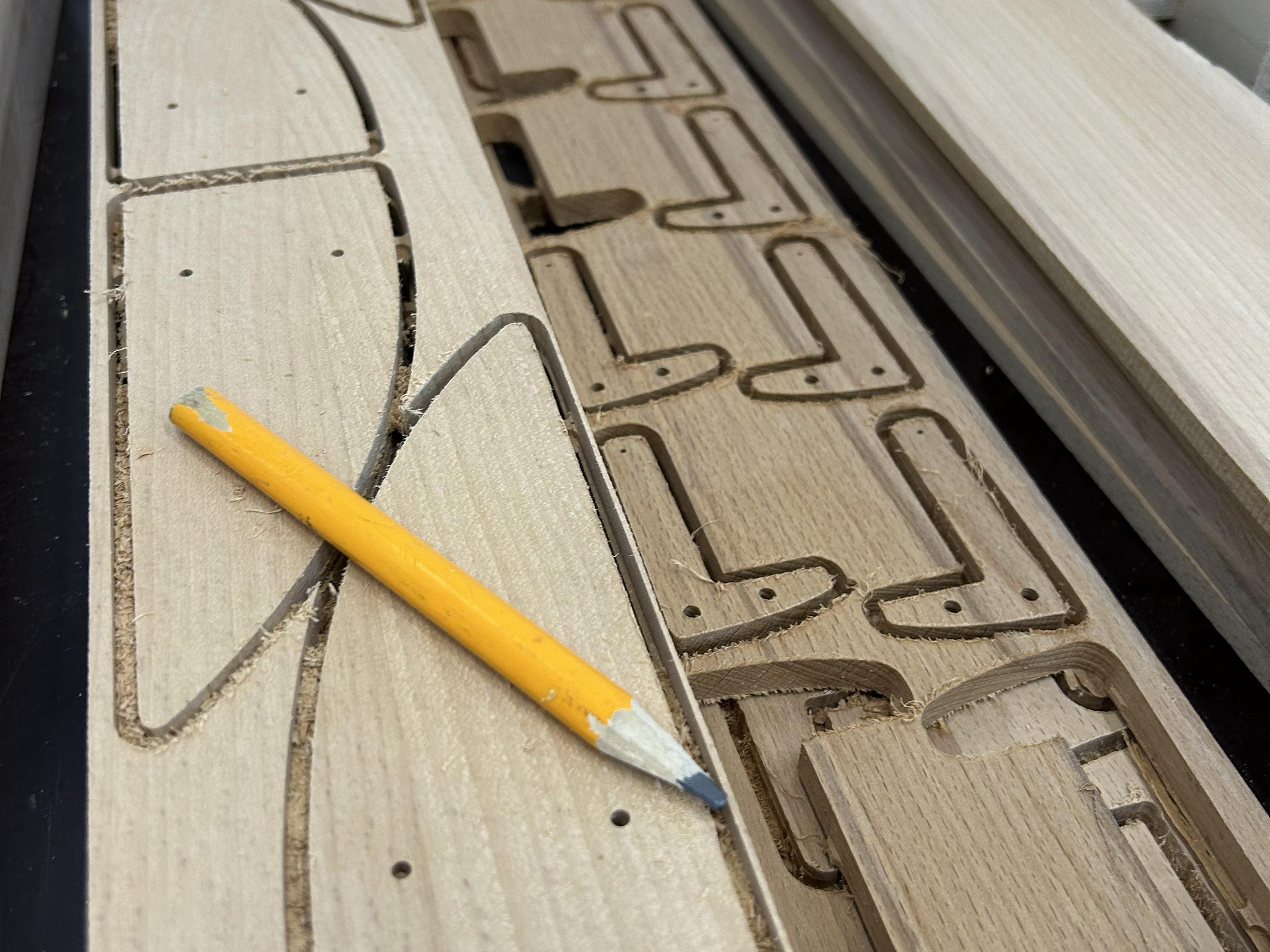
Everything is precise here.
Hunting in the North is to survive the long winters. The goose «arrived» — you have to shoot enough to have supplies. Then the deer, you have to get that too. That«s how you make it to summer.
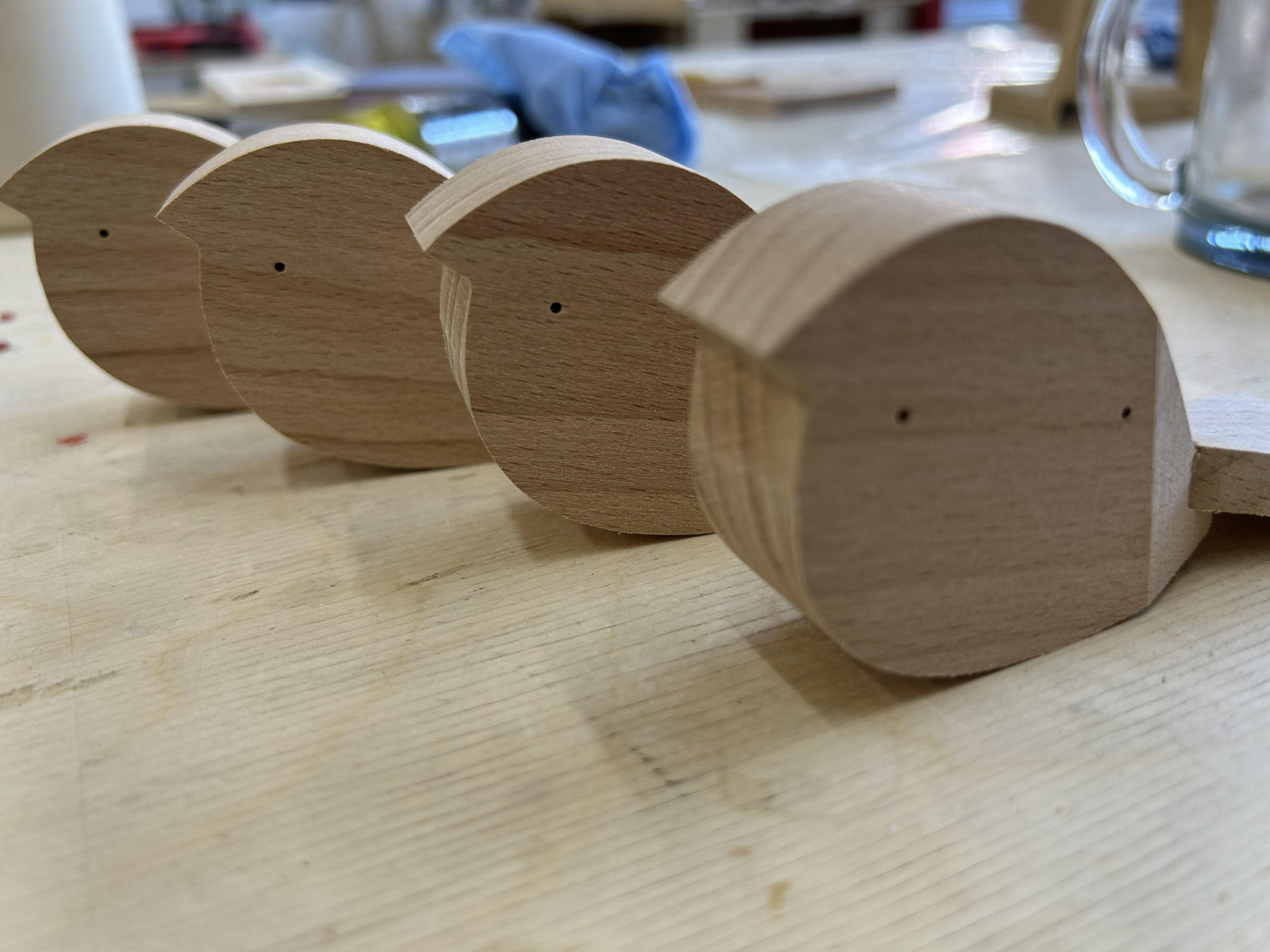
The outlines are already recognizable.
— Actually, in the North even winter is not a desert. If you look closely, there«s so much there. There are bushes that struggle out from under the snow, trying somehow to live. Ptarmigan that spend the night in snowdrifts. Wolverines that roam constantly back and forth. And so much more. Life is boiling there, — Semyon is sure.
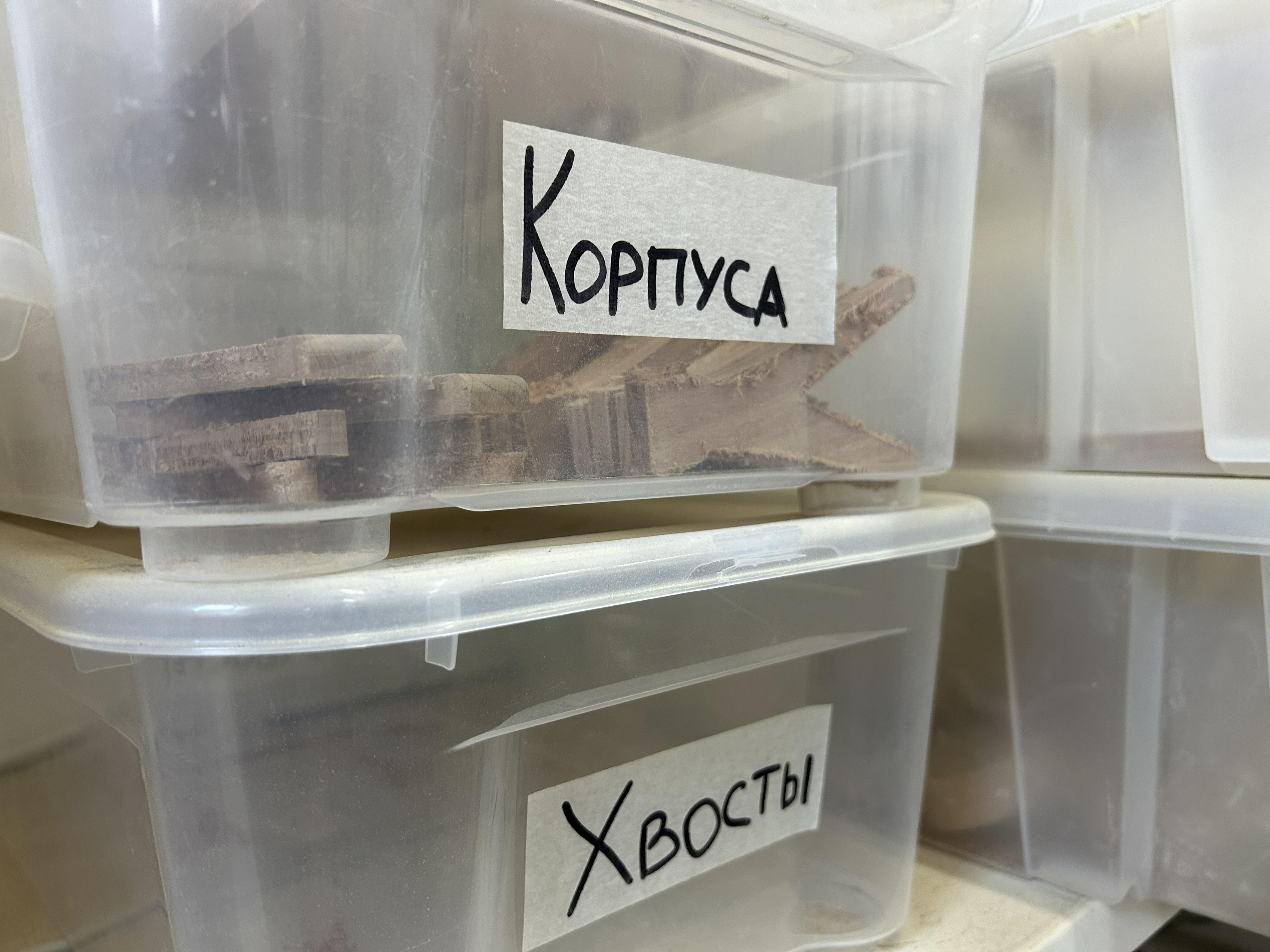
Birds separately, tails separately.
— After winter comes a very fast spring, the ice breaks. And the first to arrive are the gulls. If you see a gull after this long winter, they«re screaming something: that»s it, spring! They are heralds of this change. The beginning of a new stage, — Semyon says enthusiastically.
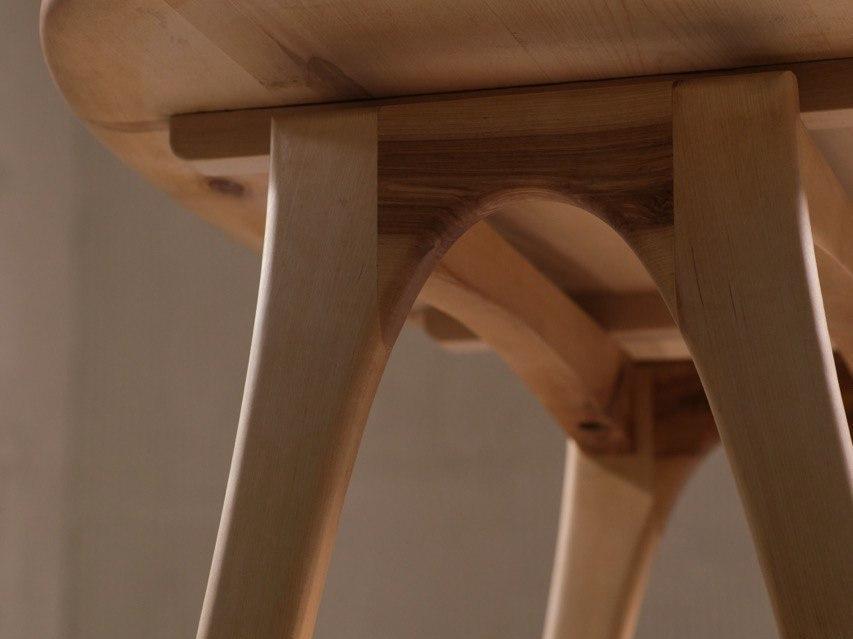
Furniture as art.
Many years later, birds will become harbingers of change in his life.
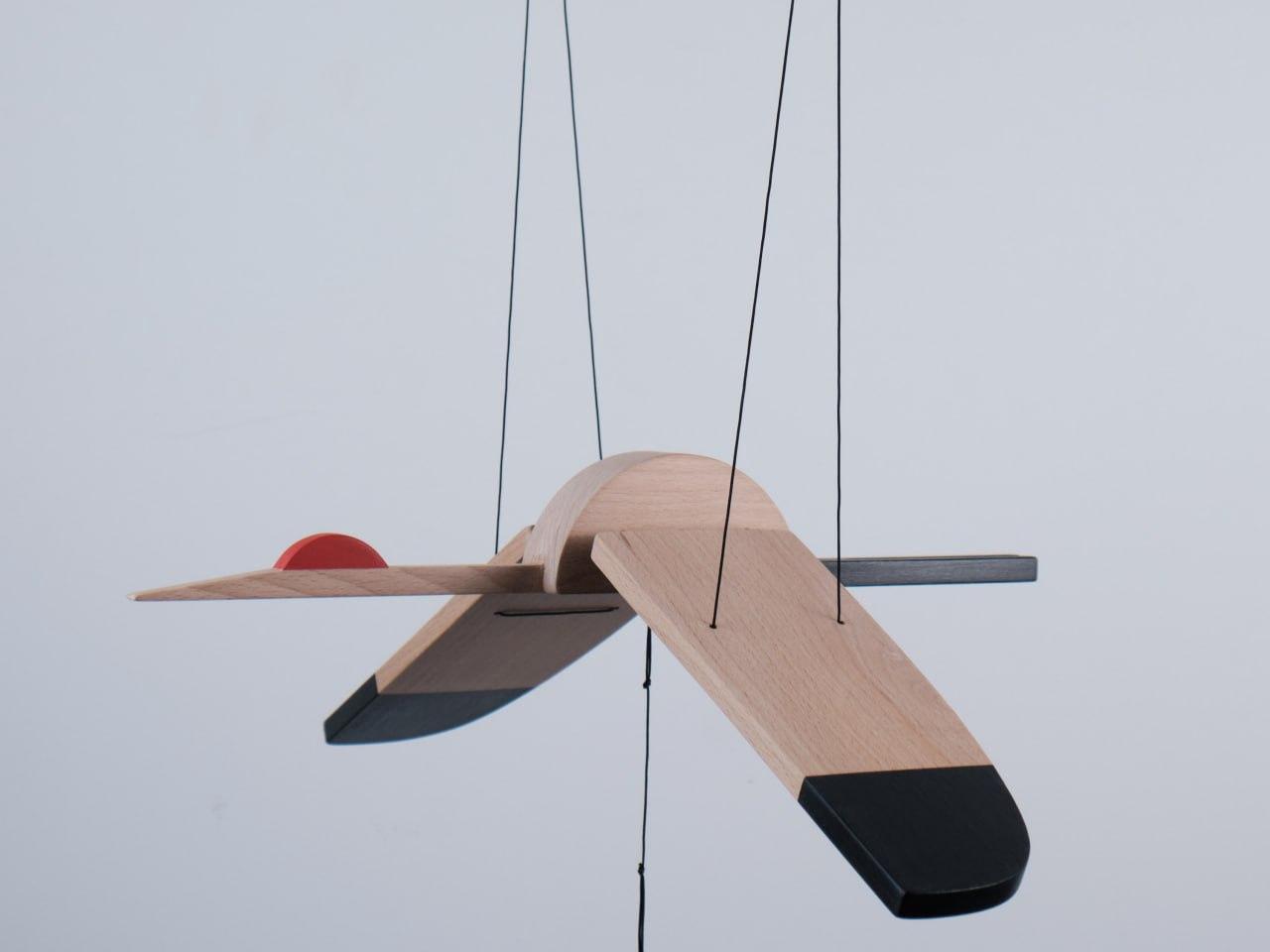
It can move its wings.
The only job he could get — carrying out trash
At eighteen, Semyon moved to Krasnoyarsk and enrolled at the Polytechnic to study engineering of artistic processing of materials. It turned out that living in the city was harder than in the Far North.
— I didn«t understand the local climate. Because here I»m colder than in the North. It«s because of the Yenisei, yes. And it was also wild to me that bam — and spring began. How did that happen, that there aren»t eight months of winter? Probably it«ll be super cold later? — says Semyon.
After the institute, he served in the army. Returned to Krasnoyarsk. But here he turned out to be needed by no one. He tried to get a job at the Ministry of Emergency Situations, at a non-ferrous metals plant, and even at a burger joint:
— I came back from the army, full of strength and ready to work hard. And the only place I could get hired was carrying construction trash in bags.
He despaired. Didn«t know what to do, got ready to go back to the army.
— And my friends literally took me by the hand and led me around workshops. At first, refusals everywhere. Then in one shop a guy took me on: to sand figurines for the Universiade. I stayed with him, — says Semyon.
A year later he quit. Rented a corner in the same workshop, started working for himself. His first investor was his father — he gave 50,000 rubles ($530) for machines.
He lived in a rented room. Almost like a communal apartment: shared kitchen, toilet, and bathroom.
— There were many rooms. Some down-and-outs, alcoholics lived there, but it was fun, actually. I often slept in the workshop. And it was totally fine with me. Because all day I only thought about how to turn a plate better or make something else, — he recalls.
He learned from other craftsmen. Took any orders, made seedling boxes for restaurants, tableware. And then the pandemic began.
— All orders were canceled, nothing at all at that moment. I have a little money, a bit of wood there, and two machines of some sort, — says Semyon.
A strange occupation — investing your youth
Just before Covid, friends told him about wooden birds with moving wings that they had seen in a store in Czechia. He started studying them. Made the first one. It didn«t work out. Semyon made a second bird, shot a video, and sent it to a competition for craftsmen held by a tool manufacturer.
— Back then I had almost nothing: a table, a chair, and two machines, — he lists. — I cut it out with a jigsaw on a chair. And I also used the chair as a stand for the machines.
His bird won. As a gift, Semyon received a machine. He still uses it. He gave the bird to his mother.
Around the same time, he came across a video about a Japanese woodworking technique. It grabbed him. Their approach turned out to be close to his: livelier, more artistic, compared to the European one — after machining, the Japanese finish the lines by hand.
— From Japanese masters I heard that if a tree grew and developed, say, for 90 years and then was cut down, you must make from it an object that will serve for at least 90 years too. And then, of course, a new cycle, rebirth, — says our hero.
In 2020, Semyon made an art object in Yudin Square on the Kacha — a flock of 60 birds suspended on trees.
In that strange period, he «fit in» with anything that was interesting. He worked for food and «the idea.» Back then it seemed to him there was nothing more important.
— I had no money for partying, and I wasn«t drawn to partying either. If I got money, I»d go and quickly buy myself some new gadgets for the machines, — the craftsman admits. — This is probably some kind of madness. After thinking a little, he adds. — A strange occupation — investing your youth, your golden years, in craftsmanship.
He himself lived on meager means
He started making furniture using his own technique. His first «complex» stool made it into a magazine. He was recognized. «In short, I entered the circle of well-known craftsmen,» Semyon recalls. But money was barely enough:
— I was a well-known half-pauper. In all the magazines, making expensive furniture and expensive birds for wealthy guys. I myself lived on meager means. How did that happen? I don«t know, it»s a secret to me.
Along with furniture, Semyon makes wooden toys. He created his own brand — «Zastrug,» which in the North is the name for a snow ridge that strong wind blows onto the surface. And he increasingly thinks that making toys is more interesting to him than anything else.
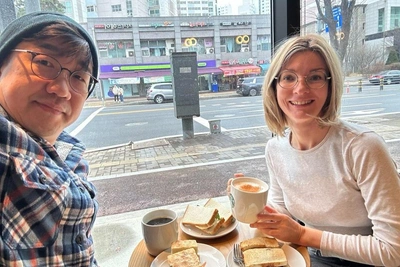
Then a woman appeared in his life who looked at the business quite differently. Victoria already had her own business; she was used to counting money and seeing the economics behind beautiful work. She showed him what Semyon himself didn«t want to notice: he wasn»t so much building a business as endlessly investing in his craft.
— I started earning well after we got married. Vika looked at my affairs and said: «Do you know that you»re becoming poor here?« — he says.
For Semyon this was almost a revelation. He thought that what mattered first of all were form, wood, machines, and ideas. His wife: numbers and order. She took on everything related to clients and finances. And gave him the opportunity to continue doing what he loved, even when it didn«t bring normal money.
Then Semyon decided to almost quit furniture and focus on toys.
— I absolutely love this, — he shares. — For some reason I get all shaken up by my new toys or some others. But of course this is a difficult stage, when you were paid 100,000 rubles ($1,100) for tables. And then you switch to something that no one buys at all.
His wife supported him. At times they had to live only on what she earned. Semyon set up a studio at home — he records Reels and long videos about his products. Without that, sales simply don«t happen, he says.
When you sit down to play yourself
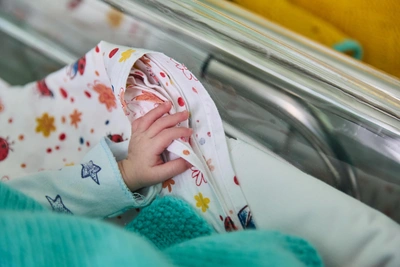
Nine months ago Semyon«s daughter was born. And with her came the feeling that there are things far more important than another perfectly executed detail.
— Right now everything has split for me. It«s either work or looking after my daughter. I really want to be an adequate father who spends a lot of time in the child»s life, — says Semyon.
His daughter also teaches him. To play with his own toys. To make them interesting.
— The simplest option is not when you push it at her and watch how she reacts. But when you sit down to play yourself, — the craftsman explains. — For example, why do I make such a cool bear construction set? Because I miss it, I want to build something, because I«m not having fun with others. And as soon as I»m having fun, the child reads it clearly and reaches for it herself.
That«s how »Vesnyanka« appeared — a bird Semyon designed specifically for infants: it is hung above the bed. Entertainment. And like a talisman.
From his workshop, Semyon dreams of growing to a children«s toy factory. He isn»t rushing. He says ironically: «It»s probably entrepreneurial vanity. That«s all.» But it looks more like a goal. One he will definitely reach.