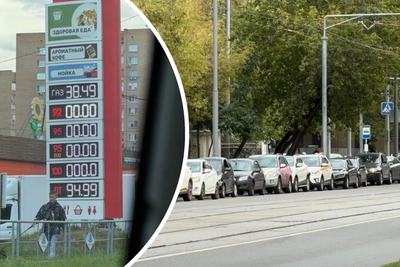
Fuel Crisis Hits Engines: Specialists on Check Engine, Detonation


In social media, reports have appeared about engine problems immediately after refueling cars with «scarce» gasoline: readers complain about the Check Engine warning light coming on and detonation. Many link this to the switch to Euro-3 gasoline standards or suspect the return of adulterated fuel. We asked technical specialists who work with European and Chinese cars whether they are seeing an increase in such complaints and how exactly bad gasoline affects modern engines. The question is especially relevant due to the proliferation of gasoline engines with direct fuel injection, including on Chinese cars.

Permission to sell Euro-3 standard gasoline in Russia has been in effect for a number of refineries since last year; in June 2026, it was extended and the list of enterprises eligible for the relaxations was expanded. We have separately explained the differences between gasoline of different classes. Selling Euro-3 fuel was allowed without notification, under the label of the fifth environmental class (K5). The main drawback of Euro-3 and lower-class gasoline is the increased sulfur content, which accelerates corrosive engine wear, adversely affects the catalytic converter, and increases carbon deposit formation. But Euro-3 is not the worst. In conditions of shortage, some gas stations may turn to homemade fuel «production», for example, boosting the octane number of straight-run gasoline with cheap banned additives (based on lead, manganese, iron, monomethylaniline, and so on).

Injectors Are Failing More Often

Artyom, a specialist in repairing engines of the Volkswagen Group, says his service has recorded an increase in fuel system problems, but not specifically now — since the beginning of the year. Most VW engines have direct gasoline injection into the cylinders, which react sharply to fuel quality.
«High-pressure injectors are failing more often: in all my years of working, I have never seen so many complaints,» he says. «What it«s connected to — it»s unclear. Lately, cars come in with the Check Engine light on; at first glance, everything seems harmless, but unstable engine operation is noticeable. You flush the injectors, and in 90% of cases the problem goes away.»

Artyom says there is no global destruction of engines, and flushing injectors is generally a simple procedure. The situation with diesels is worse, he says.
«There it«s noticeable that if the fuel is slightly off, you can grind the fuel equipment into shavings and incur big expenses,» he adds.
Artyom emphasizes that it is still difficult to directly link the increase in customer requests to the fuel situation.
«Maybe it«s the gasoline, or maybe the cars are just getting older and it shows more often,» he continues. «Every day we have cases with a glowing Check Engine and slight engine instability. You start reading the protocol: there are random misfires in the cylinders. You check the spark plugs, compression, coils — nothing major. You recommend flushing the injector — the problem goes away. So, most likely, over time they get dirty, and the spray quality deteriorates.»
Why direct injection is at risk? When gasoline is fed directly into the combustion chamber, the injector nozzles operate under high pressure and temperature, which promotes carbon deposit formation (soot, carbon deposits). Over time, this degrades fuel atomization and can lead to clogging of individual nozzles. Carbon deposit formation is facilitated by the presence in fuel of large amounts of resins, aromatic and heavy hydrocarbons, and a number of anti-knock additives. Sulfur itself does not form carbon deposits, but it accelerates the oxidative polymerization of carbon, turning it into hard, difficult-to-remove deposits.
Low-quality fuel can also affect the catalytic converter, but according to the specialist, the diagnostic computer more often registers increased exhaust toxicity not because of a broken converter, but due to the aforementioned fuel system malfunctions.
«But we have not yet seen any global problems with overheating or destruction of the piston group or anything like that,» says Artyom.
From the Life of Bavarians
Aleksei works at a service specializing in BMW and says that there have been no complaints with a Check Engine light from owners of Bavarian cars in recent weeks.
«But if we think ahead, the Check Engine light usually comes on when the computer detects deterioration in the engine«s environmental performance, and primarily the lambda probe (oxygen sensor in exhaust gases) may react, but diagnostics determine the exact cause. It may turn out that the catalytic converter could not cope with its work. If there are no other breakdowns and there are doubts about fuel quality, we usually recommend finishing the tank, refueling at a certified station — if the error disappears, the cause is the fuel.»
Aleksei notes that engines with direct injection react to fuel quality, but until now the rule has worked: if you refuel at well-known brand gas stations, there were no problems. However, if fuel quality deteriorates, engines with cylinder direct injection may experience progressively worsening issues.
«The first symptoms: engine trembling, unstable operation at idle, jerking during acceleration, slight pinging,» the specialist explains. «At this stage, the problem can usually be solved by flushing the injectors, and sometimes just by intensive highway driving (to burn off resin deposits in the combustion chamber). But if nothing is done, errors in the ignition system, misfires, and catalyst errors will eventually appear.»
In the worst case, the engine may «miss» on one or more cylinders. Aleksei says that in «smart» engines, like those in the German trio BMW, Audi, Mercedes, fuel supply is cut off in this case. Simpler engines may not have protection, and fuel burning in the exhaust stream can poison the catalytic converter.
The specialist emphasizes that if you fill up at normal gas stations, there will be no problems with the same catalytic converter even after 10 or 15 years, so its «preventive» removal, which some practice, Aleksei considers harmful.
«There are as many opinions as people, but I believe that as long as the catalytic converter is working properly, there is no need to remove anything,» he says. «Catalysts last for hundreds of thousands of kilometers without issues if the owner does not skimp on gasoline. Sometimes clients call and say that some service advised them to remove the catalyst; I ask, «And why did they advise you that?» If problems start, then remove it, but otherwise you will only disrupt normal engine operation.»
He says there are a number of models, particularly South Korean ones, where the catalytic converter is positioned such that if it fails, small particles can enter the engine cylinders, so after 100,000 kilometers (62,000 miles) they recommend removing it.
«But these are a handful of models; generally, you should prolong the catalyst«s life as much as possible by not pouring just any gasoline,» the specialist adds.
Aleksei believes that it is still not worth linking all engine problems to declining fuel quality.
«Hundreds of cars refuel at the same stations; if two or three of them get a Check Engine light after some time, it could also be a result of previous wear and many other factors the client did not take into account. Low-quality fuel usually does not cause instant wear.»
And What About the Chinese?
Ivan runs a service at one of the dealers of Chinese brands. According to him, it is difficult to draw conclusions about the impact of fuel on modern engines, including Chinese ones, right now: engine problems occurred before; it is just that now people are more inclined to link them to the fuel situation. He says that when a car arrives at the service with the Check Engine light on, diagnosticians read the errors, and then the mechanics work according to protocols. If misfires are detected, spark plugs, injectors, and ignition coils are checked.
«Regarding Euro-3 fuel, in my opinion, the fears are exaggerated: Euro-5 became mandatory in 2016, even though the same direct-injection engines were already widespread by that time,» says Ivan. «Sulfur in fuel affects the engine«s environmental performance to a greater extent.»
According to Ivan, no particular increase in complaints about injector problems, even in direct-injection engines, has been recorded yet.
«We have not yet needed to flush injectors, although the mileage of some client cars has already exceeded 60,000–80,000 kilometers (37,000–50,000 miles),» he says. «The flushing procedure puts stress on the engine, and it is not very clear how it will affect modern turbo engines. But so far, the need has not arisen.»
A bigger problem, according to him, is the declined quality of engine oils, which has led to mechanical wear of cylinder-piston group parts. He also notes difficulties with some consumables, such as air filters, which cannot handle the load and deform in the housing, disrupting air intake into the engine.
«As for Chinese engines in general, many of them are copied from well-known engines of the same Volkswagen Group, so the principles of working with them are similar,» Ivan continues. «I worked with Japanese and South Korean engines for a long time before Chinese engines, and so far I cannot say that «Chinese» engines have an abnormal failure rate. Malfunctions, up to serious ones, occur on both Toyotas and, say, Havals; I have not compared exact statistics, but it feels like there is no particular fragility in Chinese engines.»
At the same time, Ivan notes that regarding gasoline, it is important to follow the manufacturers« recommendations for octane number. For some »Chinacars«, AI-92 gasoline is acceptable; for others, strictly AI-95 is required.
«We have had examples of engines where detonation occurred during acceleration because the owner used AI-92,» Ivan recounts. «The electronics reduce the ignition timing to suppress detonation, but sometimes, during sharp acceleration, the computer does not have time to adjust the ignition timing, and characteristic sounds are heard. The only advice here is: use gasoline with the correct octane number.»
Why is detonation dangerous? Detonation is an abnormal, explosive combustion of the air-fuel mixture that occurs when using low-octane gasoline. Usually, detonation occurs at high loads (pedal to the metal) and low rpm (going uphill in a high gear). Detonation is characterized by strong shock loads on parts and overheating of combustion chamber elements. Detonation manifests itself as metallic knocking, nervous engine operation, and black exhaust. Even short-term operation in detonation mode is undesirable. Modern engines have a certain «immunity» to detonation: its onset is detected by special sensors, and the computer reduces the ignition timing. But this «immunity» is not infinite, and if the fuel octane number is even 2–3 units lower than recommended, abnormal combustion can occur.
Destroys the Piston Group
Alexander, a specialist in engine overhaul, also sees detonation as a threat to modern engines.
«Detonation destroys the piston group, and the question now is probably whether the gasoline matches the declared octane number,» he reasons. «It is possible that due to the shortage, they will boost it with some chemicals.»
According to Alexander, in recent years, gasoline in Russia has been of fairly high quality, and serious problems only came to him from those who refueled at «backyard» stations or somewhere in remote areas.
«As for the current situation, I do not have data yet,» he says. «But I do not think that high sulfur content will immediately disable the engine. Ten years ago, before Euro-5, there were injection engines and catalysts, and they somehow ran.»
Catalysts, he says, generally lose their properties over time, and it is difficult to say exactly how this relates to fuel quality.
«The catalyst still sinters and clogs, especially if the engine consumes a lot of oil that goes into the pipe — catalysts do not like that; degradation happens faster,» the specialist explains. «And this thing is expensive: now even for domestic cars it costs about 40,000 rubles ($400), for foreign cars a hundred thousand rubles ($1,000) or more. So, naturally, people simply remove the catalyst, and if it was clogged, they indeed feel that the car drives easier.»
Leftovers Are Not Sweet
Fuel market expert Anastasia Bunina highlights another important point: sediment in gas station tanks, which has a high content of resins and other contaminants. She emphasizes that gas stations are currently operating under increased load and often drain fuel «to the bottom», so the problem may not be as much the quality of the original fuel as the influence of resinous sediment.
In general, gas stations are required to wash tanks at certain intervals, and fuel intake does not occur at the very bottom. However, tank cleaning is one of the items on which they always want to save. Constant operation of gas stations in «empty to the last drop» mode can indeed increase the intake of heavier fractions that concentrate at the bottom. In addition, with constant filling and draining of tanks, mechanical impurities do not have time to settle, and engine specialists recommend changing fuel filters more often under these conditions.
While the effect of sulfur on the engine is spread over time, resins, water in the fuel, and mechanical particles, under unfortunate circumstances, can immediately cause problems.
But overall, the rule is the same: avoid dubious gas stations. However, today it is increasingly difficult to follow due to unreal lines at well-known brand stations.