The Cost of Owning a Horse Instead of a Car
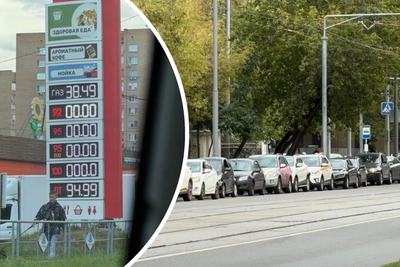
While drivers queue for fuel, St. Petersburg resident Alisa Carmody rides her horse to the store. An internet outage in April prompted her dream purchase, and now, amid fuel problems, it looks like a smart plan.
Jul 26, 2026 0
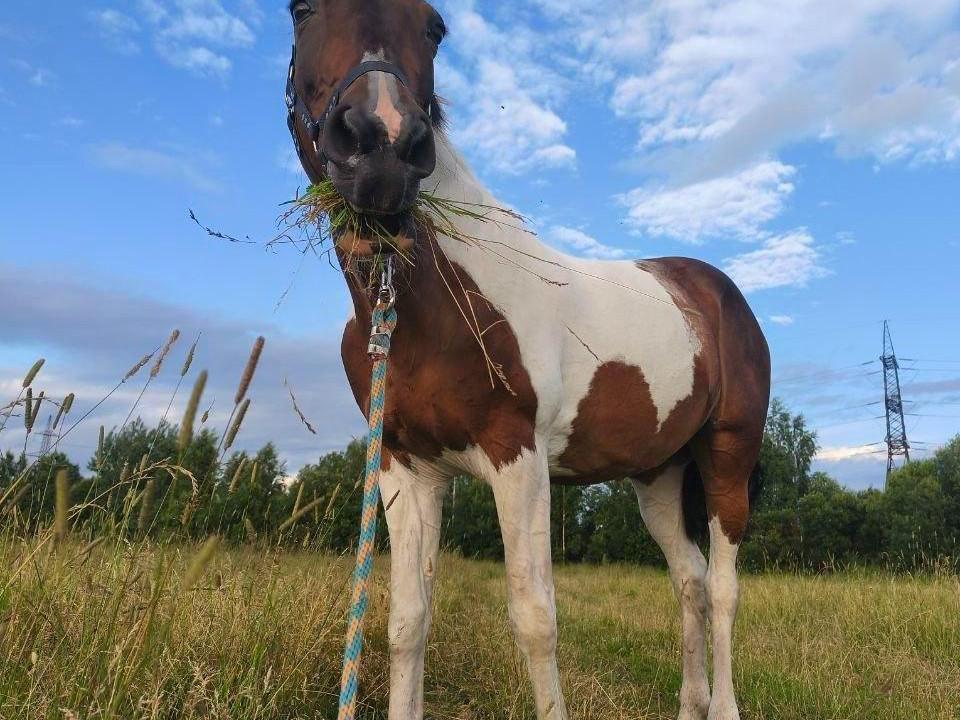

Alisa Carmody owns a horse named Lorencia which she uses for transportation.
Source:
While drivers are searching for gasoline and queuing for it, St. Petersburg resident Alisa Carmody rides her horse to the store. In April of this year, another internet outage triggered the purchase of a dream, and now, amid fuel problems, this purchase also looks like a plan. Fontanka found out what a horse is today — a luxury or still a means of transportation.
Alisa realized her lifelong dream by purchasing the horse Lorencia.
Источник:
Alisa Carmody lives in the village of Poroshkino (Leningrad Oblast), a few kilometers from the Parnas metro station. And the horse Lorencia lives at her home — in a specially built house in the yard.
In April, when the city once again had internet problems, Alisa was stuck in a traffic jam. The only available resource to pass the time was a free classifieds website.
«I open this site — and a horse of my dreams is looking at me,» Alisa told Fontanka. «The very one I dreamed of since childhood. The price is 90,000 rubles ($1,000). And I thought that in general I can afford such a luxury.»
Her condition is excellent, not crashed, not repainted. After the first owner, she ended up in a riding stable. From there, a horse has two paths: to slaughter or to be a pet. Lorencia was lucky — she was bought by a woman who understands horses and took up her rehabilitation. One could say, Alisa got the animal after a major overhaul. Lorencia«s breed is the most common — the Russian Trotter. She is 23 years old, which by horse standards is elderly. But with good care, horses live up to 30 years. Motorists would call this set of specifications a «workhorse.»
Like a car, a horse must be registered. But not with the State Traffic Safety Inspectorate (GIBDD), but in the Mercury system, where all farm animals are registered. Before moving a horse from one district to another, you must notify the local veterinary and sanitary-epidemiological services, and at the new location, call a district veterinarian who will assess the horse«s living conditions. Only after that will you be issued a permit for the animal»s relocation.
But, in fact, it can only move after a month, during which it must be in quarantine. The horse will be tested to ensure it is completely healthy and is moving from an epidemiologically safe area to an equally safe area.
So, from the 90,000 rubles ($1,000) that Alisa paid for the horse to its previous owner, the expenses were just beginning.
«The horse trailer for transporting Lorencia cost me about 20,000 rubles ($222),» the woman says. «The cost depends on the distance, roughly 80 rubles per kilometer ($0.89/km). You usually also have to pay for quarantine stays — on the classifieds site, such a service costs about 16,000 rubles ($178) for a month, plus feed and farrier services. I was lucky, and Lorencia was not only kept in quarantine for free, but also supplied with feed for the first time.»
The house — a garden tent lined with boards — cost about 14,000 rubles ($156), and the fencing of boards around the paddock (levada) — another 10,000 rubles ($111). Winterizing the house will cost another 15,000 ($167).
A separate expense item is tack. Basic minimum: halter — from 1,500 rubles ($17); bridle — 2,500 rubles ($28); saddle — about 20,000 ($222); numnah (under the saddle) — from 1,500 ($17); rain sheet — from 3,500 ($39); fleece cooler (put on after work when sweaty) — also from 3,500 ($39).
«I«m sure there will be equestrians who will say, »That«s impossible,»» Alisa says. «For equestrians in big sport, each saddle probably costs more than the horse. I bought a saddle that fits my horse from the previous owner for 25,000 rubles ($278) and a bridle for another 1,500 ($17). And now I have ordered another set of tack for 20,000 ($222).»
Even if the horse does not work on hard ground and does not need shoes, it still needs the services of a farrier. Hooves, like nails, grow and need to be trimmed (cleaned). This procedure costs from 2,500–3,000 rubles ($28–$33) depending on the farrier«s experience. Lorencia needs it every month and a half.
The basis of a horse«s diet is hay. If you buy hay not in season and in a hurry, it will cost 10,000 rubles ($111) per month. «Now they will bring me hay that is specially mowed for me in Karelia, 50 bales for 20,000 ($222). That will last until about October,» Alisa says.
Besides hay, compound feed and supplements are needed. Alisa uses the same classifieds site to get brewer«s grains for Lorencia. Supplements and compound feed — 2,500 rubles ($28) per month.
Every three months, the horse needs to be dewormed — that costs 600 rubles ($7). And once a year — vaccinated. Before moving to a new home, that cost 3,000 rubles ($33) including tests.
Another significant resource that will have to be spent on a horse is time. At least one hour a day: give exercise, interact, walk. A «horse babysitter» helps — a girl who walks the horse for free, just for the chance to ride her.
«Now I have to plan my life — business trips and vacations — keeping the horse«s interests in mind,» Alisa says. «But I have a neighbor who got a dog, and it seems she spends about as much on feeding and training that dog as I do on the horse, plus she has to walk it four hours a day because the dog is young and active.»
Overall, the level of expenses is quite comparable to maintaining a car. True, when it comes to speed and distance, the horse is certainly no match for a car.
«A trip to the store three kilometers from home takes me about 20 minutes on a horse or 35 minutes on foot,» she says. «While I«m in the store, Lorencia gets an »in-flight refueling«: everyone vies to offer her a carrot. The longest ride we»ve had so far took 3 hours and 25 minutes: we rode to the lake, swam, walked through the forest, and on the way back stopped at the store and returned home. But if fuel suddenly disappears entirely, Lorencia can fully meet all my transportation needs.»
As a bonus to the horse comes free «manure fitness» — regular physical exercise when cleaning the stall. And during walks and trips for groceries, if a sudden ballast dump occurs, Alisa stops and collects the droppings with a scoop into a bag. But, unfortunately, not all riders do this.
«In general, the story of Lorencia and me is about how I dreamed of getting a horse my whole life, when I grow up,» says Alisa. «And then I saw her and thought, «Well, I»ve already grown up, I«m 38. Can I have a horse now?» And I allowed myself this horse and became a million times happier than I was without her.»
Read more