Perm Protected Areas Ask Tourists to Stop Feeding Wildlife
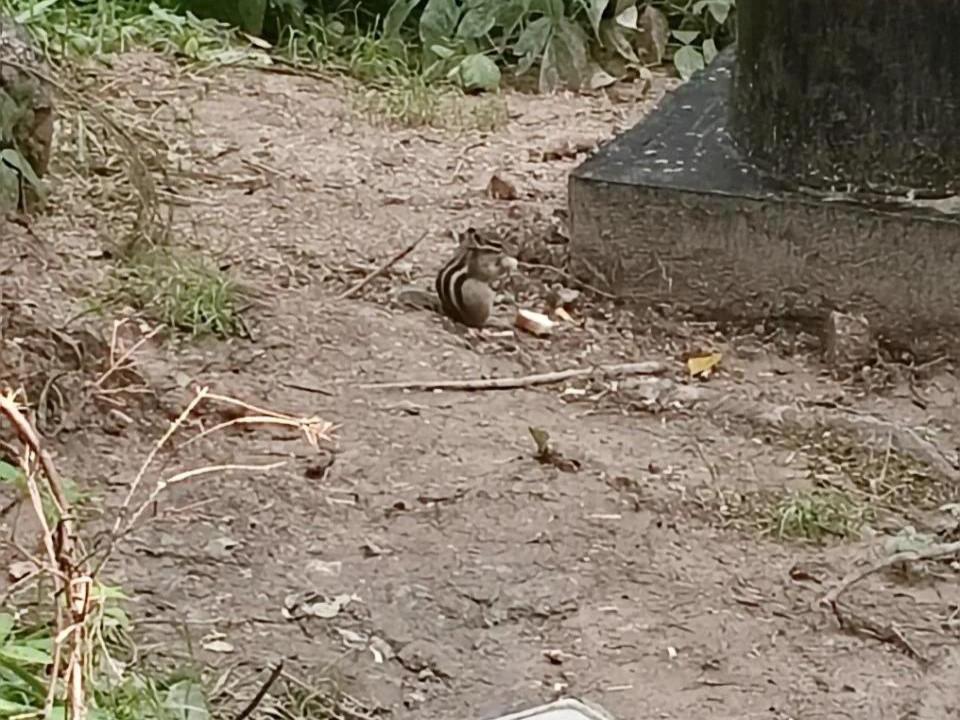

Wild animals (like this chipmunk) are not averse to trying leftovers, but such food is dangerous for them
Residents of Perm Krai have been urged not to feed wild animals and birds. The regional directorate of specially protected natural areas (SPNA) explained in detail how this can harm forest inhabitants.
“The photo shows a chipmunk finishing off bread thrown by tourists on the Vetlan rocks. Does it look cute?” the directorate addressed its social media followers. “From the point of view of biology and veterinary science, this frame captures the beginning of the animal’s slow death. Leaving food in the forest is not caring for our little brothers, and not even just piggish behavior toward nature. It is biological sabotage against the ecosystem.”
Human food can lead to five dangerous consequences, SPNA specialists said.
Physiological mismatch (the “angel wing” effect). The digestive system of a wild animal is evolutionarily tuned to a specific diet. For example, in birds (and, by the way, in chipmunks) the enzymatic base is designed for seeds, nuts and insects. Bread, especially yeast bread, causes fermentation in the stomach. As a result, birds that eat bread crumb develop an acute manganese deficiency and “angel wing” — the flight feathers curve outward. The bird permanently loses the ability to fly and becomes easy prey for predators.
Metabolic catastrophe and obesity. Human leftovers are ultra-processed products with extremely high calorie content, salt and sugar. Studies show that raccoons that regularly feed from garbage bins have significantly higher blood sugar levels. They more often suffer from obesity and tooth decay compared with their forest relatives. Bears accustomed to human food accumulate fat worse before winter and shorten their hibernation period, while their cells begin to age atypically fast. The animal gets fat, but its muscle tone drops, which prevents it from effectively hiding from predators and obtaining natural food.
Destruction of the microbiome and immunity. Wild animals have a specific set of intestinal bacteria that protects them from local parasites. Human food changes the composition of this microbiome. For example, urban squirrels that constantly snack on people’s cookies and French fries look fatter than forest ones, but are internally depleted: their immune system is suppressed, and the diversity of beneficial bacteria is critically reduced. In addition, remains of human food often contain preservatives, vinegar, spices and mold, which cause severe toxic hepatitis in rodents.
Cognitive degradation. Harmful food destroys the connection between the gut and the hippocampus — the part of the brain responsible for memory and spatial navigation. In the wild, survival depends on the ability to remember thousands of nut caches or the migration routes of edible insects. Rats that received food high in sugar and fat at an early age demonstrated irreversible weakening of this connection. Even when switched to a healthy diet, cognitive functions did not fully recover. An animal accustomed to easy bread literally becomes dumber and unlearns how to survive on its own.
Ethological shift: loss of fear and conflict behavior. A fed animal loses its natural fear of humans. A chipmunk (fox, bear) on Vetlan that ate your sandwich today will approach another tourist tomorrow. If there is no food, it will use its teeth. Addiction to an anthropogenic food source increases aggressive and conflict behavior, which is why such animals have to be captured and destroyed for people’s safety.
“SPNAs were created to preserve reference natural complexes,” the directorate recalled. “The remains of your lunch are a foreign chemical and biological invasion of this system. If you really feel sorry for the chipmunk, let it live its own complex, healthy forest life. Pack all your garbage, including apple cores, banana peels and bread crusts, in your backpack and carry it out to the nearest container. There are no street cleaners in the wild. Your chocolate wrapper will outlive you, your children and ten generations of these very chipmunks.”
Earlier, we reported that hedgehogs should never be given milk.