Oldest animals at Royev Ruchey zoo thrive in captivity


In 2025, the Royev Ruchey zoo in Krasnoyarsk turned 25 years old. A small anniversary by human standards. But for the animals living there, this period is sometimes their entire life. NGS24.RU decided to tell which animals in the park are the oldest and where they came from.
How did Royev Ruchey appear?
Today, many argue about zoo culture: some say it«s a relic of the past and cruel abuse of animals, while others »remain faithful to traditions.« But it»s hard to argue that the absence of a zoo in any sizable city seems strange.
It«s also hard to imagine Krasnoyarsk without a zoo, although until 2000, there wasn»t one here. Instead of a flora and fauna park, there was only a small live corner at the (then still) Stolby Nature Reserve, which was created back in the 1950s to protect animals from poachers — the «Doctor Aibolit Shelter» of James Dulkeit and Elena Krutovskaya.
By the way, its existence was not officially recognized until the thaw of the 1960s, and accordingly, it was not funded. But even after that, as they say at Royev Ruchey, it survived mainly thanks to enthusiasts and rock climbers (stolbisty) who «helped as they could.»
The decision to create a full-fledged zoo in Krasnoyarsk was made in 1999, reportedly on the initiative of Petr Pimashkov. The name «Royev Ruchey» was determined in a contest — in honor of the stream that flows nearby. In the 19th century, gold was washed there.
In the summer of 2000, the zoo was officially opened. Its first «residents» were animals from Novosibirsk Oblast, Krasnoyarsk Krai, and that very live corner at «Stolby» — a total of 86 animals.
Brown bear Masha
One of the first tenants of Royev Ruchey. The bear was brought to the zoo in its opening year, but she herself is significantly older.
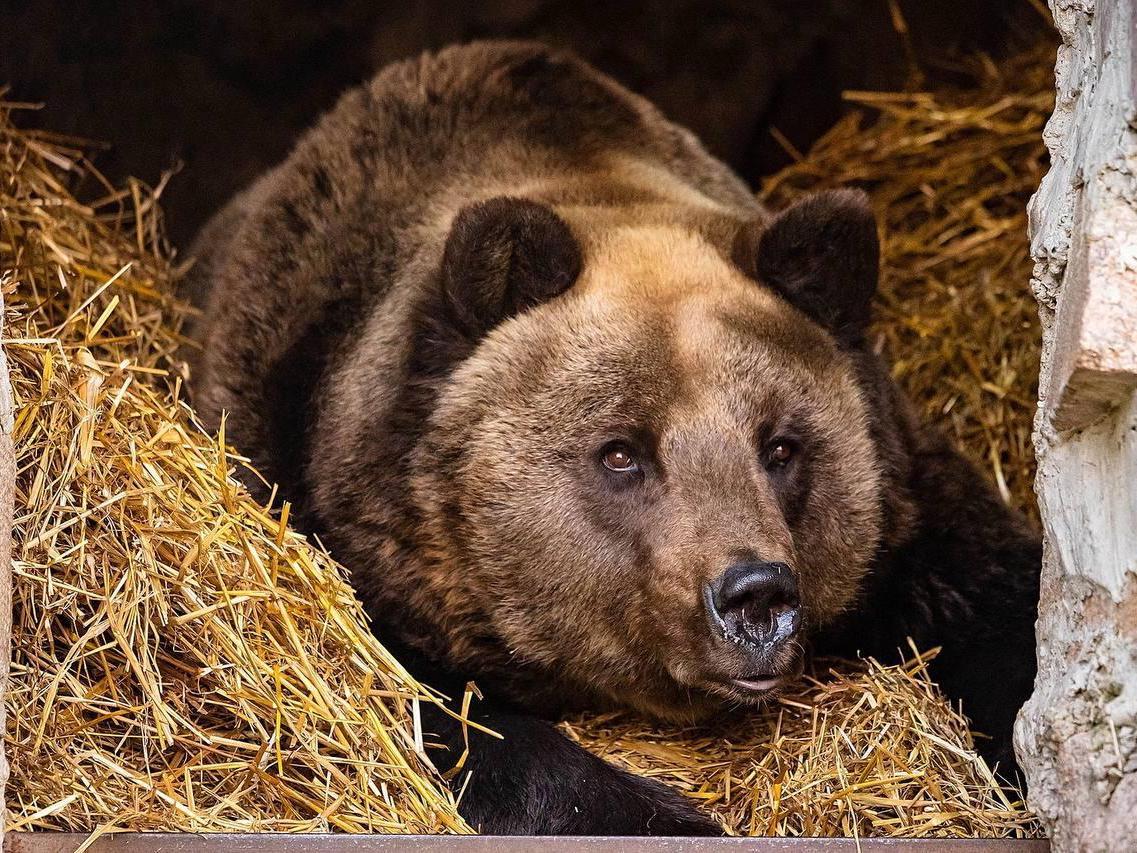
Masha was born in 1993 and arrived here already as an adult bear. She is now 32 years old, which is a lot by bear standards. The lifespan of brown bears in the wild ranges from 20 to 30 years.
In autumn, Masha lines her bed with straw and goes into hibernation. Over the years, she has started waking up earlier, zoo workers note. For example, in 2025, she opened her eyes in mid-March.
— Masha is a natural bear, she adheres to all bear traditions. In previous years, she emerged from hibernation a bit later, in late March — early April, — they said at Royev Ruchey.
Top facts about bears (not just brown ones) from Royev Ruchey:
bear milk is three times more caloric than cow«s milk;
bears can run at speeds of about 40 kilometers per hour (25 mph);
the color of bear fur is very diverse even within one region: there are light fawn, reddish, pure brown, and very dark individuals;
meat food makes up only about 25% of a bear»s diet; typically, it prefers berries and fruits.
Crane Zhuyla
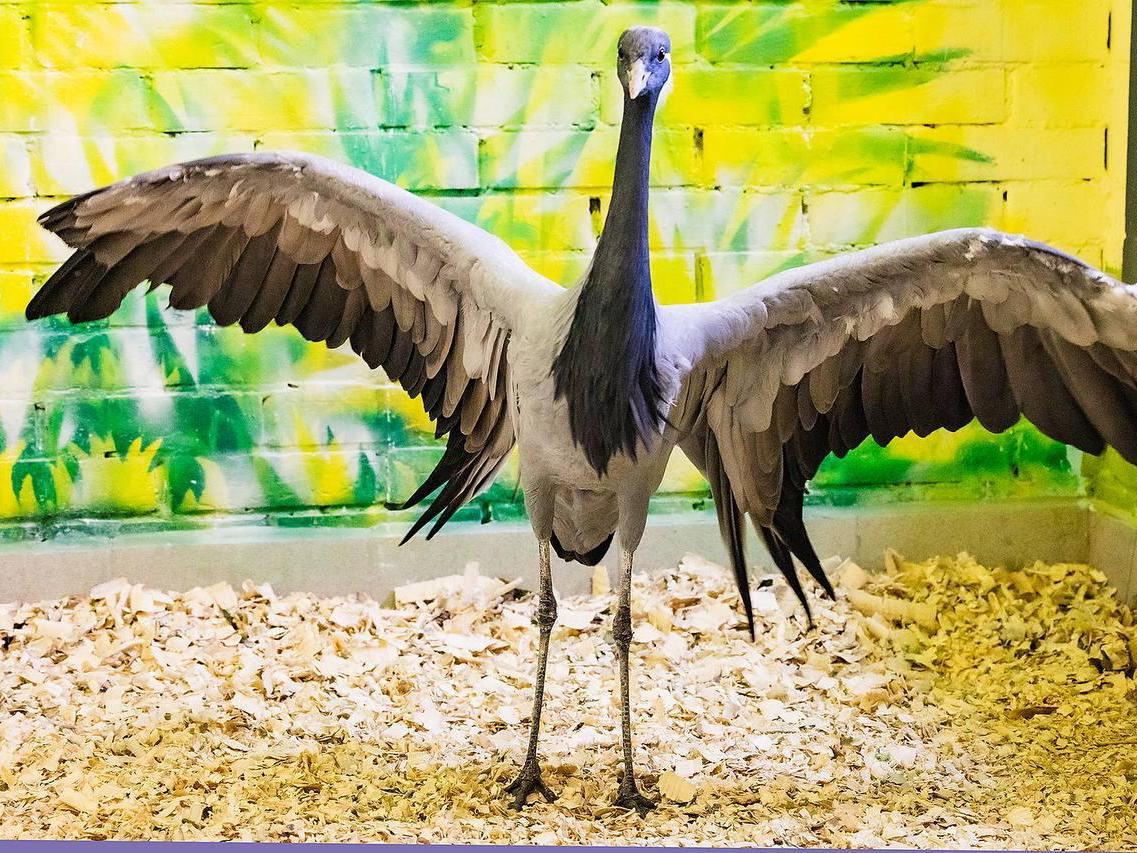
Another long-time resident of the zoo, who settled here from the beginning, is the demoiselle crane Zhuyla. She was also moved from the live corner at «Stolby.»
— She was also a sufficiently adult bird. Now the park is 25 years old, [and her] age we, unfortunately, do not know. But she was already adult [at the time when she moved to the zoo], — Royev Ruchey press secretary Oleg Chipura tells NGS24.RU.
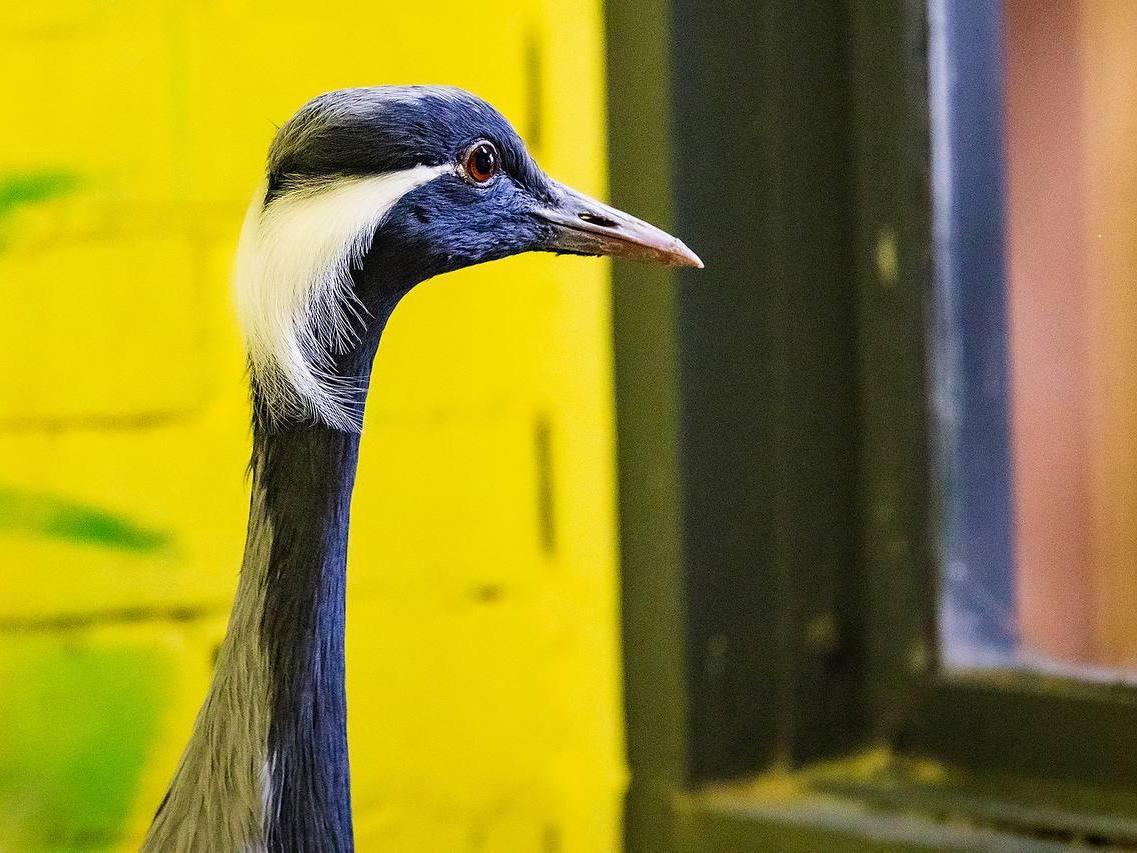
Usually, demoiselle cranes live about 30 years in the wild. Interestingly, this is the smallest of all cranes in the world, but in flight, it is capable of crossing the Himalayas and rising to altitudes up to eight thousand meters (nearly 26,000 feet) (almost like an airplane). It is also the most «land-based» crane.
— Unlike its relatives, it avoids marshy swamps, preferring dry steppes, semi-deserts, and even plowed fields, — they say at the zoo.
Another interesting fact — demoiselles have a kind of «wedding» when they form a pair and remain faithful to it for life.
— They form pairs for life, cementing the union with dances and duet singing. The dance of demoiselles is considered the most elegant and energetic among cranes. Chicks are born sighted and leave the nest within a few hours, embarking on a long journey following their parents, — add the flora and fauna park staff.
Gibbon Harvey
A synonym — the phrase «active Siberian longevity.» Harvey came to Royev Ruchey for the opening from Novosibirsk and already in 2000 was considered old. He was only 19 years old then — in the wild, they live about 25 years.
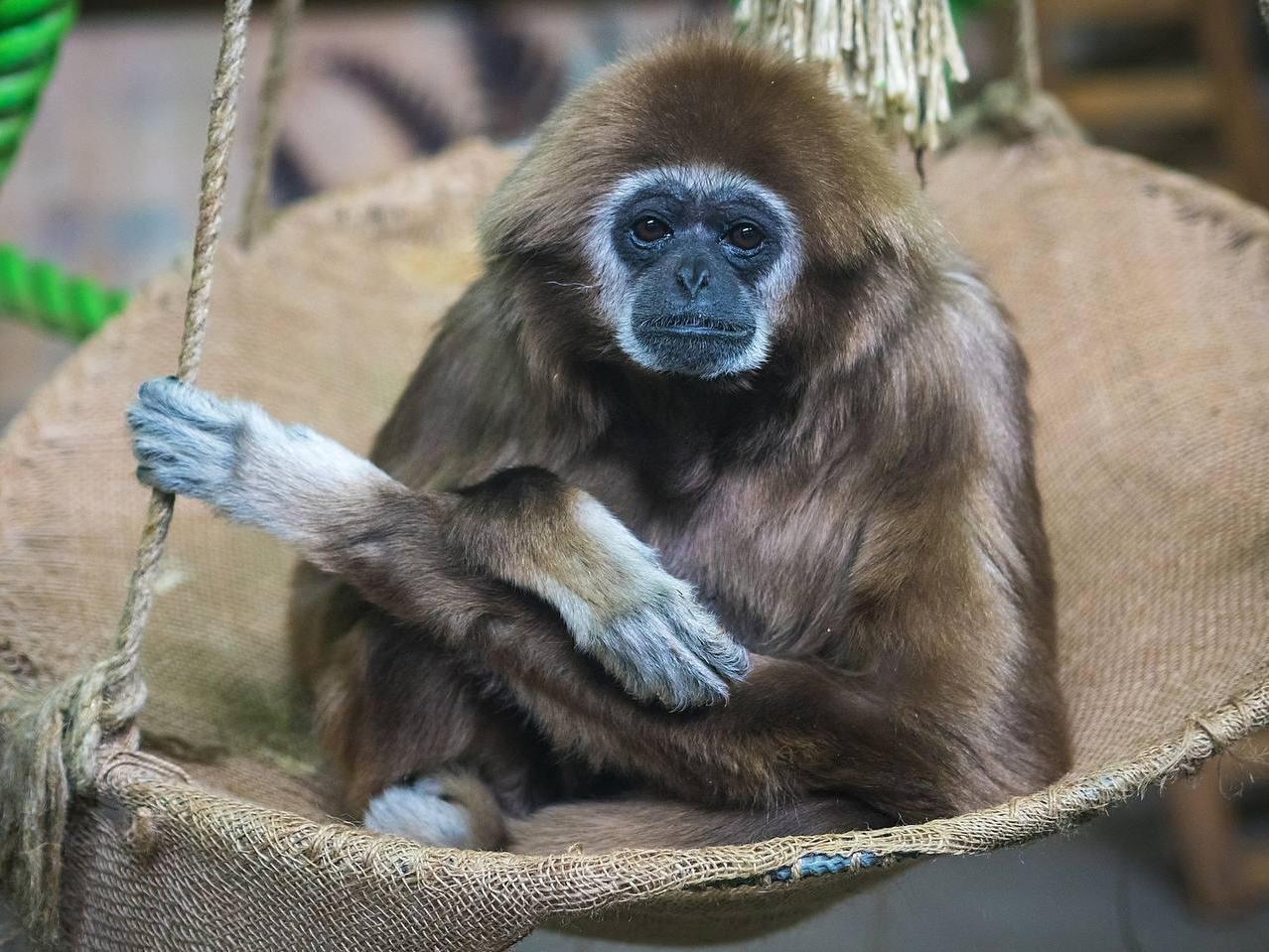
— Our third long-liver, who is in the top-3, is the white-handed gibbon named Harvey. He came precisely for the opening from Novosibirsk Zoo. He was 19 years old. They gave him to us for «living out his days,» — says Oleg Chipura.
However, Harvey, contrary to the standards of not only wild but also «zoo» nature, lives and enjoys himself at Royev Ruchey for 25 years already. He is now 44 years old. In captivity, his relatives usually live from 40 to 50.
— He has been living in the zoo for 25 years, lively, cheerful, delights visitors, healthy, active, — adds Chipura.
Every morning Harvey starts with singing, and also actively climbs and jumps on ropes. The video below was shot in 2024.
Why are they still alive?
What provides animals with such longevity, among other things, is the absence of stress, zoo staff believe. But despite the fact that the now elderly lodgers feel well, they are still under enhanced observation.
— Of course, special attention from zoologists, veterinary doctors. They all, as it were, feel quite well. The thing is, in the wild, these animals don«t live this long, and in the zoo, there is simply a veterinary doctor, there is regular constant nutrition, protection from stress. Basically, they have already gotten used to both visitors and staff, and probably, all this affects, — says Oleg Chipura.

And who else to see in the zoo?
Today, according to the organization«s website, over 9.3 thousand animals of 730 different species live in the zoo. One of the recent residents here is the »wild cat« Pallas»s cat Boris. NGS24.RU has written a lot about this animal, why it is dangerous and what habits it has, and recently filmed the process of its weighing — in autumn Pallas«s cats gain weight.
Also, they filmed how another «cat» spends its day — the lion Elish. Spoiler: sleeps for 20 hours.
Moreover, we recently wrote that in Royev Ruchey, a new pair might soon appear — camel Zhenka this year was brought a bride Rada.
Also read about the most frost-resistant animals of our zoo — one of them even outlived mammoths.