Horse vs. Car: The Cost of Switching

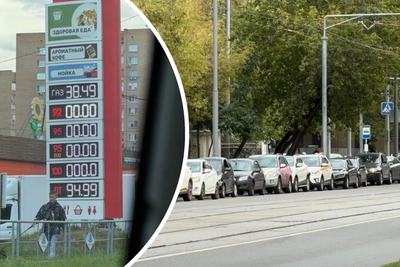
While motorists in Arkhangelsk search for gasoline and queue for it, St. Petersburg resident Alisa Karmodi rides her horse to the store. In April of this year, another internet outage triggered the purchase of a dream, and now, amid fuel problems, this purchase also looks like a plan. Our colleagues from Fontanka have found out what a horse is today — a luxury or still a means of transportation.
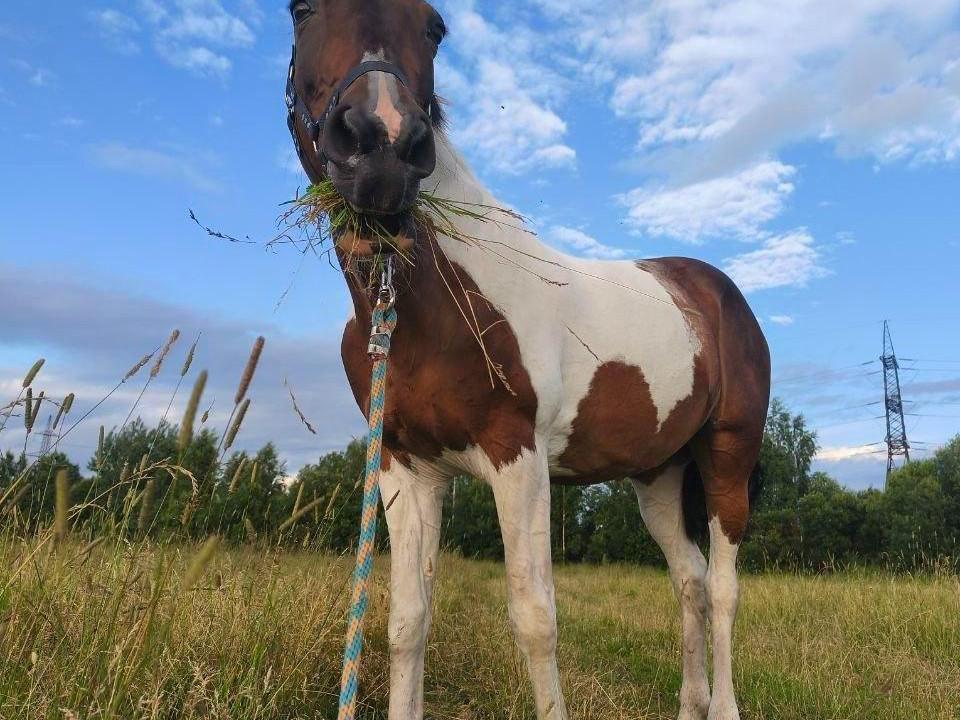
Alisa Karmodi lives in the village of Poroshkino (Leningrad Oblast), a few kilometers from the Parnas metro station. And the horse Lorentsiya lives at her home — in a specially built small house in the yard.
In April, when internet problems started in the city once again, Alisa was stuck in a traffic jam. The only available resource to pass the time turned out to be a free classifieds website.
«I open this site — and there is the horse of my dreams looking at me,» Alisa told Fontanka. «The very one I dreamed of since childhood. The price — 90,000 rubles ($1,000 at current rates). And I thought that overall I can afford such a luxury.»
Her condition is excellent — never wrecked or repainted. After the first owner, she ended up in rental service. From there, a horse has two paths: to slaughter or to be a beloved pet. Lorentsiya was lucky; she was bought by a woman who understands horses and undertook her rehabilitation. One might say Alisa got the animal after a major overhaul. Lorentsiya«s breed is the most common — the Russian Trotter. She is 23 years old, which is elderly by horse standards. But with good care, horses can live up to 30 years. Car enthusiasts would call this set of specifications a »workhorse.«
Like a car, a horse must be registered. But not with the traffic police (GIBDD), but in the Mercury system, where all farm animals are registered. Before moving a horse from one district to another, you must notify the local veterinary and sanitary-epidemiological services, and at the new location, call a district veterinarian who will assess the horse«s living conditions. Only then will you be issued a permit for the animal»s move.
But the actual move can only happen after a month, during which the horse must be in quarantine. Tests will be taken to ensure it is absolutely healthy and that it is moving from an epidemiologically safe area to an equally safe area.
So with the 90,000 rubles ($1,000) that Alisa paid the previous owner for the horse, the expenses were just beginning.
«A horse trailer to transport Lorentsiya cost me about 20,000 rubles ($222),» the woman says. «The price depends on the distance, roughly 80 rubles per kilometer ($0.89/km at current rates). For quarantine stay, you usually have to pay; on the classifieds site such a service costs about 16,000 rubles ($178) per month, plus feed and farrier services. I was lucky — Lorentsiya was not only kept in quarantine for free, but also supplied with feed for the first time.»
The house — a garden tent covered with boards — cost about 14,000 rubles ($156), and the plank fencing around the paddock another 10,000 rubles ($111). Insulating the house for winter will cost another 15,000 rubles ($167).
A separate expense item is tack. Basic minimum: halter — from 1,500 rubles ($17), bridle — 2,500 rubles ($28), saddle — about 20,000 rubles ($222), saddle pad — from 1,500 rubles ($17), rain sheet — from 3,500 rubles ($39), fleece sheet (put on after the animal has worked and sweated) — also from 3,500 rubles ($39).
«I am sure there will be horse people who will say, «That can»t be,«» says Alisa. «For horse people in big sports, each saddle probably costs more than the horse. I bought a saddle that fits my horse from the previous owner for 25,000 rubles ($278) and a bridle for another 1,500 rubles ($17). And now I»ve ordered another set of tack for 20,000 rubles ($222).»
Even if the horse doesn«t work on hard ground and doesn»t need shoes, it will still need farrier services. Hooves, like nails, grow and need to be trimmed (cleaned). This procedure costs from 2,500 to 3,000 rubles ($28 to $33) depending on the farrier«s experience. Lorentsiya needs it every month and a half.
The basis of a horse«s diet is hay. If you buy hay out of season and in a hurry, it will cost 10,000 rubles ($111) per month. «Now they are bringing me hay that is specially mown for me in Karelia, 50 bales for 20,000 rubles ($222). That should last until about October,» Alisa says.
In addition to hay, compound feed and dietary supplements are needed. Alisa uses the same classifieds site to get brewers« grains for Lorentsiya. Supplements and compound feed — 2,500 rubles ($28) per month.
Every three months, the horse needs to be treated for parasites — this costs 600 rubles ($7). And once a year, vaccinations; before moving to a new home, this cost 3,000 rubles ($33) including tests.
Another significant resource you have to spend on a horse is time. At least an hour a day: to exercise, socialize, walk. A «horse nanny» helps out — a girl who walks the horse for free, just for the opportunity to ride it.
«Now you have to plan your life — business trips and vacations — taking the horse«s interests into account,» says Alisa. «But I have a neighbor who got a dog, and apparently she spends about the same amount on the dog»s care and training as I do on the horse, plus she has to walk it four hours a day because the dog is young and active.»
Overall, the level of expenses is quite comparable to maintaining a car. However, when it comes to speed and distance, a horse is no match for a car, of course.
«A trip to the store three kilometers from home takes me about 20 minutes on horseback or 35 minutes on foot,» she says. «While I«m in the store, Lorentsiya gets »aerial refueling«: everyone vies to treat her with carrots. The longest ride so far took us 3 hours and 25 minutes: we rode to the lake, swam, walked through the forest, and on the way back stopped at the store and returned home. But if fuel suddenly disappears altogether, Lorentsiya can fully meet all my transportation needs.»
As a bonus to the horse, there is free «manure fitness» — regular physical exercise from cleaning the stall. And during walks and trips for groceries, if there is a sudden release of ballast, Alisa stops and collects the droppings with a scoop into a bag. But unfortunately, not all riders do this.
«Overall, my story with Lorentsiya is about how I dreamed all my life of getting a horse when I grew up,» says Alisa. «Then I saw her and thought, «So, I»ve already grown up, I«m 38. Can I have a horse now?» And I allowed myself this horse and became a million times happier than I was without her.»
Read also
In the current fuel situation, one can«t help but think about alternative means of transport. Searching for gasoline and hours-long queues have become commonplace for residents of Arkhangelsk. We talked to drivers at city gas stations and learned how they have adapted to the new reality.
92 fuel tankers have been sent to the Arkhangelsk Region. Some are to be delivered to remote districts, including Pinezhye (Arkhangelsk Oblast), where only two gas stations remain, which are temporarily servicing only special vehicles and buses.
The authorities of Arkhangelsk have published a list of useful services and phone numbers where you can find out about fuel availability at city gas stations. The administration said whether there is enough fuel to maintain the city.
Moreover, at the Tatneft gas station in Arkhangelsk, starting July 16, gasoline is no longer sold in cans. Previously, gas stations had a restriction — only 20 liters could be filled at a time.
The regional Ministry of Fuel and Energy and Housing and Communal Services denied rumors about mobile gas stations: officially, they do not exist.
High gasoline prices were noted at gas stations in Pinezhye, Onega, Arkhangelsk, and also in Leshukonsky District (where it is the most expensive — 150 rubles per liter, about $1.67 at current rates).
In Onega District, authorities decided to temporarily reduce passenger transport by sea due to a shortage of diesel fuel.
Fuel queues form daily not only in the capital of Pomorye, but also in Severodvinsk, as well as throughout the region. They are being captured on video.
In the queues at gas stations, not only cars but also special equipment are standing.
An official from Kotlas called for saving on grass mowing in the city due to the gasoline shortage.
Small aircraft in Russia have faced problems due to the fuel shortage: we found out what is happening in Arkhangelsk.
We are collecting all information about the fuel situation in the Arkhangelsk Region in a separate story.