Priest discusses why Epiphany ice bathing is marginal
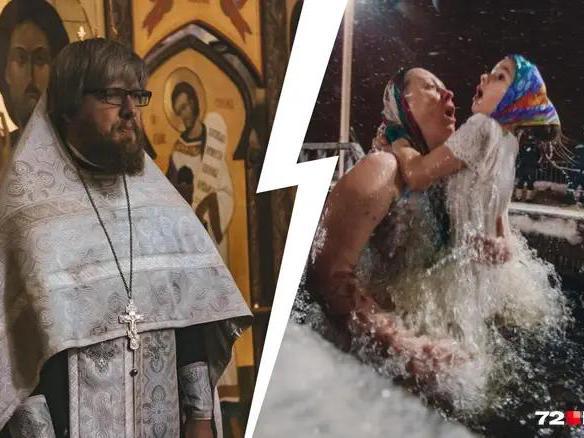

Alexei Yazyev is a 51-year-old rural priest and rector of two churches — in the village of Barabanovo and the settlement of Yemelyanovo — in Krasnoyarsk Krai. Yazyev holds rather progressive views and, unlike many «colleagues in the trade,» actively maintains social media. Yazyev is known, among other things, for his position regarding Epiphany ice swimming: he emphasizes that on the territory of his churches, fonts have never been equipped.
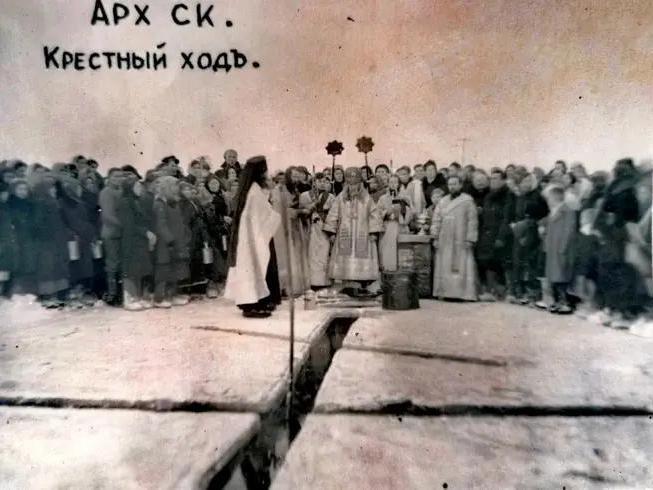
A couple of years ago, Yazyev already spoke out about Epiphany ice swimming, noting that just over a hundred years ago it was considered mainly a marginal tradition. His words then caused a media stir, although clergy have for years publicly expressed their disapproving attitude towards Epiphany ice swimming.
So why do they then bless the fonts and why will you never see a priest diving at −40°C (−40°F)... or will you actually see it? Details in the material by NGS24.RU journalist Maria Zarukina.
«A Para-Church Tradition»
Alexei, during our conversation you mentioned the phrase «marginal tradition» several times in relation to Epiphany ice swimming. Three years ago you described the swimming in the same way, and this led to public resonance. Do you intentionally phrase it this way or are these careless statements?
I really do consider it a marginal phenomenon, but I emphasize: not the fact of immersion itself, but when «I remember Christ once a year,» I come to the font drunk or, for example, a man comes to immerse himself in a thong — that is a marginal phenomenon. Not the fonts themselves, I emphasize, but such an attitude towards this para-church tradition.
What do you mean by «para-church»?
The thing is, this action (swimming — Author«s note) has no soteriological* depth, it absolutely does not affect my salvation. It is nothing more than a quasi-Orthodox »entertainment for people« who do not take it seriously. That is, it»s a very controversial issue. One can have many opinions about it — explains Alexei Yazyev.
Soteriology (from Greek σωτηρία — «salvation» and λόγος — «teaching») — is a discipline about the salvation of the soul, studying the doctrine of saving humans and the world from evil, sin, and death, as well as the paths to achieving this salvation, which is considered the ultimate goal in various religions, especially in Christianity.
That is, first and foremost, a Christian is called to salvation, and all our actions should be directed towards achieving the salvation of our soul — continues the clergyman. In this matter: I can swim, or I may not swim — it will not help me to be saved or, conversely, will not deprive me of salvation. I am precisely thinking and writing about how one should not turn this action into entertainment, especially coupled with excesses, understandably of what kind (meaning alcohol — Author«s note), and superstitious conjectures.
Is your point of view popular in your circles?
You know, for me, as a priest, to say: «The Church believes that one should do this and that,» an Ecumenical Council must be convened. The last Ecumenical Council was held in the mid-8th century. This is too minor an issue to discuss at an Ecumenical Council, because it mainly concerns Russian Orthodoxy. The Greeks and Serbs, for example, have other problems with this. This is our local rattle.
Ecumenical Council — is the highest assembly of bishops of the entire Christian (mainly, Orthodox and Catholic) church, convened to resolve the most important questions of faith, theology, and church governance, defining dogmas and canons, whose decisions are binding for all local churches. In Orthodoxy, seven Ecumenical Councils (325–787 AD) are recognized, establishing the foundations of doctrine, including the Creed, and affirming the veneration of icons. The last seventh Ecumenical Council took place in 787 AD, the last full-fledged Ecumenical Council in church history has not been held since then, although attempts and debates about the Eighth continue to this day.
And in general, there is an opinion among clergy that such a massive surge of attention to these entertainments coincided with the rise in the importance of social networks. A person needs content that «clicks» — so they churn out this content. Because I scrolled through the network and constantly saw: «I dived,» «and I surfaced.» Without social networks — there would be no such attention. Someday all this will change.
As soon as social networks change or we lose the desire to «show off» on social networks, like current youth, as soon as the generation changes and the demand for this disappears — yes, Epiphany ice swimming will exist, but it will not be so massive. This is my opinion, I could be wrong.
I have two younger children: they categorically forbid posting themselves on social media. They say they want to be anonymous and don«t need it, although they have accounts.
By linking mass interest in swimming to the growth of social networks, are you basing this on your observations or is it statistically noticeable?
I«ve been in the church for only about 18 years, honestly, I can»t build any dynamics over the last 30–40 years. Older priests told me: on the Bazaiha River, when they started blessing water in the «90s, no one swam there — they just collected water. You see, we have a very big problem with 21st-century humans: we don»t understand what Epiphany is for, what this holiday is and how this day traditionally passed.
I would describe it as in that film: «Everyone ran — so I ran.» That«s all. (quote from the cult Soviet film »Gentlemen of Fortune,« 1971 — Author»s note.)
That is, in people«s perception, the font, the Jordan on the river — is always for immersing the body, although that was never the case. Or rather, it was, but it was considered a marginal phenomenon in the church and not perceived as the norm.
On the contrary, in the «Handbook for Clergy» it says that only those who told fortunes during the Christmastide swim, attributing some cleansing power to this action, which the church actually does not believe. Moreover, the church always says: guys, be careful, it«s cold, it»s dangerous, think about your health. And I«m now quoting Archpriest Sergei Bulgakov — this is the late 19th century.
«Those who dressed up, told fortunes, etc., during the Christmastide swim, superstitiously attributing cleansing power from these sins to this swimming» (p. 24).
«Handbook for Clergy». S. V. Bulgakov.
You see, on one hand it saddens me, on the other — it pleases. At least once a year, perhaps, some of them will think about what Epiphany is. And this push, impulse will go, and the person will develop. Not just as a model for an Instagram* (extremist organization, activities prohibited on the territory of the Russian Federation) page — isn«t that wonderful?
You also mentioned thongs. What«s wrong with thongs?
Well, a man in a thong personally evokes in me... You see, what«s the matter? We need to look at where this tradition came from. Where did they swim originally? On the Jordan. And this tradition is already many hundreds of years old. Pilgrims came to Palestine and there, and it still exists — piously, in beautiful white robes, which are then kept as a memory, understand? And they immersed themselves in the waters of the Jordan on any day.
That is, it«s not a church sacrament, it»s a pious tradition: to enter the water with a prayer, as a remembrance — the baptism of the Savior in these waters. Well, that«s normal, right? Normal. But all this is spread throughout the Ecumene. The Greeks have a slightly different tradition: they also dive, but they dive for the cross. There, the archbishop throws a cross into the water, and whoever retrieves it first — becomes king for a day. Everyone loves that one. And here, it has acquired its own traditions. But I repeat again: the church has been saying for not one hundred years that people should think about their health first and foremost.
If it«s not a church tradition, why do you bless the fonts?
So that people don«t drown. Simply put. So that they don»t cut their feet when they go into the Yenisei anywhere. So that they aren«t searched for for a long, long time afterwards. That»s the only reason the church blesses fonts in equipped places — to minimize harm.
We all remember that horrible video, when a woman, a mother of two children, in front of her children and husband, dived and did not surface. Moreover, I emphasize, it was an alternative font. Nearby was a font blessed by local priests, with Emergency Situations Ministry (EMERCOM) personnel. But how are our people? We know better what to do. In the end, the person died. Imagine what will happen to the children when they remember that their mother dived and didn«t surface? It»s a catastrophe.
A woman wrote to me literally the other day: at minus 43°C (−45°F) she almost drowned, she had a cold shock, she was somehow pulled out of the font. That killed all my desire to ever immerse myself.
Any priest can tell such cases — not a huge number, but, you see, there«s such an interesting thing: »Well, God won«t allow me to get sick and drown!» — well, don«t tempt the Lord your God. Don»t tempt. That shouldn«t be done.
At the same time, I myself had an experience of immersion. Well, I felt like it after vespers: I«m not sick, it»s −15°C (5°F) outside, the font is equipped. Why can«t I dive? Lord, bless — and that»s it. That is, there«s nothing bad in it. But if I suddenly remembered that today is Epiphany, and Epiphany — is the point... I»m very often told: «Happy Epiphany to you, Father,» or: «Merry Christmas.» And Merry Christmas to whom? Petya, Masha, Kolya, or actually Christ«s? So add — and immediately meaning appears!
So I emphasize once again: from my point of view, if I fill church traditions with my own meaning — that is their marginalization. Not the fact of immersion itself, I emphasize, according to your faith — it will be done for you. But when it«s for a photo, and often the outfits of both men and women are quite provocative... Why do we shove our children there? Guys, he»s five years old — where did you drag him, why?
You«re 51 now, and when you had the immersion experience — how old were you then?
Well, the last time — about eight years ago, I think.
So, it wasn«t just once?
No, no, no.
Why did you do it?
You see, sometimes you want to do something. I emphasize again: there is such a tradition. Well, I felt like it. Someone jumps with basejumping, someone goes to poles at minus 50°C (−58°F), someone does skysurfing, someone races on a motorcycle — dangerous. Well, I wanted to get an adrenaline rush. I calculated the risks: I wasn«t alone, wasn»t sick, was relatively young, the temperature was normal, so I allowed myself to do it. But I was sober, not provoking anyone with my naked appearance. And that«s it — why not?
I saw a person who dipped a plastered arm into the font. Said it would heal faster. From the church«s point of view, is this somehow explained?
That is precisely an example of a completely non-church tradition. You see, in this case, no mechanics occur. If I have a headache, it«s not enough for me to dip it in the Epiphany font. If I have a stomach ulcer, I need to stop drinking, not lie in the font and drink holy water. I need to correct my soul first and foremost, and then the Lord, in the form of correcting my soul, can correct my body.
What, to heal faster, must one necessarily dip in water, or what? And if I live where there«s no font, for example, and I have a fracture — that»s it? God won«t heal me, or what? Won»t help me? That is, you know, it«s from the category of primitive magic: I»ll dance with a tambourine, say a certain word, blow-spit — and it will happen as I wished. That«s called primitive magic, the most primitive human religious beliefs. And we can»t say anything else about it.
So, from the church«s point of view, consecrated water has no healing properties, or is a different approach needed here?
That is precisely a question that has great depth. I have a personal testimony, a story about how in my youth my Russian language and literature teacher, a churchgoer, gave me a bottle of holy water, which I forgot about. It stood on my shelf for about 15–18 years. I thought it had gone bad long ago, especially since it was in a vodka bottle — this was the mid-«90s. I found it well into the 2000s, and the water was perfect, although physically it couldn»t have preserved. A miracle? — A miracle. Please, that«s my personal miracle. I»m not going to prove anything to anyone — that«s what I saw with my own eyes.
I understand that the Lord can perform miracles, and this very agiasma, holy water — is for us, the weak, some strengthening, help. But, when I come to the font with a cast, with stomach problems, and demand: «I»ll jump, and you heal me« — that is precisely bare paganism.
Agiasma (from Greek ἁγίασμα — «shrine») — is an Orthodox term for consecrated water, especially Epiphany (Theophany) water, which is consecrated according to the rite of the Great Blessing of Waters on the eve and on the day of the Feast of Theophany (January 19) and is considered a great shrine. It has gracious properties, is used for drinking (often on an empty stomach) and sprinkling, and symbolizes spiritual renewal, being «the lowest degree of Communion.»
Generally, the term «paganism» has church origin, however much it may irritate pagans. In Church Slavonic, «yazyki,» «yazyk» — means people, and paganism — folk faith. A human — is such a being that cannot exist without religious views. And when he has no sound teaching (I specifically speak about Christianity, for me it«s sound teaching), he starts engaging in paganism — constructing his personal religious norms himself.
But we don«t self-medicate. No one picks their own treatment composition for some disease, we don»t treat pneumonia ourselves — we use the experience of others, go to a doctor, a specialist. But when a person starts treating their soul, for some reason they consider it possible to cure themselves: from here a piece, from there a piece — «well, I think so.» Well, keep thinking. That«s your problem.