Kemerovo «clown in a cassock» becomes monk
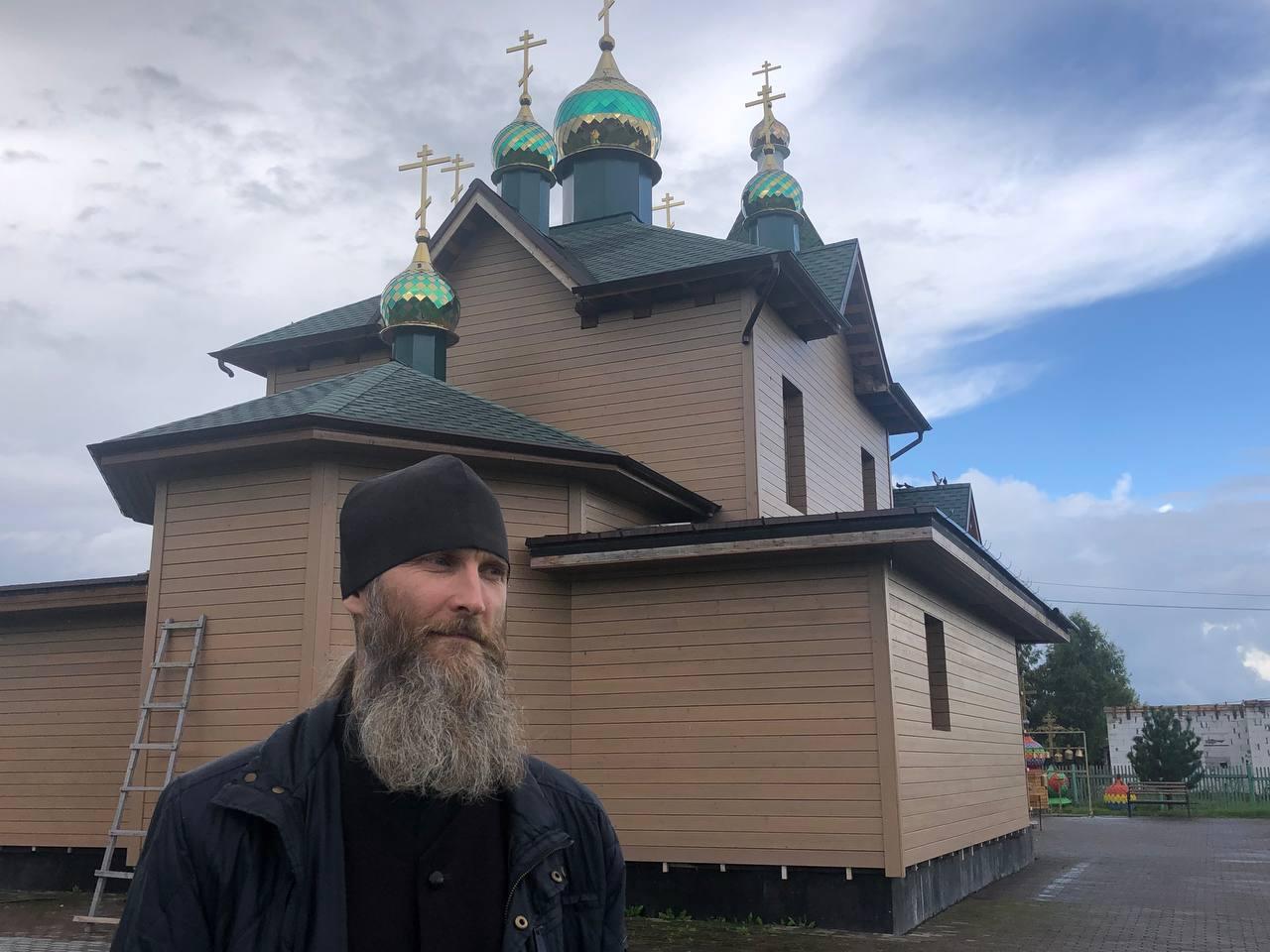

Father Sofrony oversees building a new monastery from scratch in a remote Kemerovo village.
In the recent past, Father Sofrony was known in Kuzbass (Kemerovo Oblast, Russia) as Vitaly Vydriganov — a hospital clown who helped children and adults within the walls of medical facilities. At one point he created a “circus in white coats,” and at the start of the pandemic he disappeared. As it turned out, he became a monk. A well-known Kemerovo performer decided to change his life and is now, with his own hands, raising a men’s monastery, continuing to help everyone — not with laughter, but with prayers. Why he changed from a clown suit to a cassock and how, with his past, he was able to become a priest.
«I was ashamed to come to church»
From childhood, Vitaly was a boy with unusual interests. Then as now, it is rare to meet people who, at seven, decide on their own to be baptized without prompting or pressure from relatives. But he wanted to: the church aroused the boy’s genuine interest.
His second passion was the captivating, exhilarating world of the circus. At 10, before he had even finished a single club class, the schoolboy began performing in real arenas as a merry clown. In his student years it became his main source of income.
His interest in religion did not fade in youth, but returning to church, as he himself describes it, felt shameful and terribly awkward. Wild student years ran counter to Orthodox commandments.
He managed to take a step toward God only as an adult, when hospital clowning entered his life.
Healing with laughter
By 2013, Vitaly was already an experienced circus performer in a big top, a well-known event host in Kemerovo, and a teacher at the local College of Culture: he taught future performers juggling, physicality, and magic tricks.
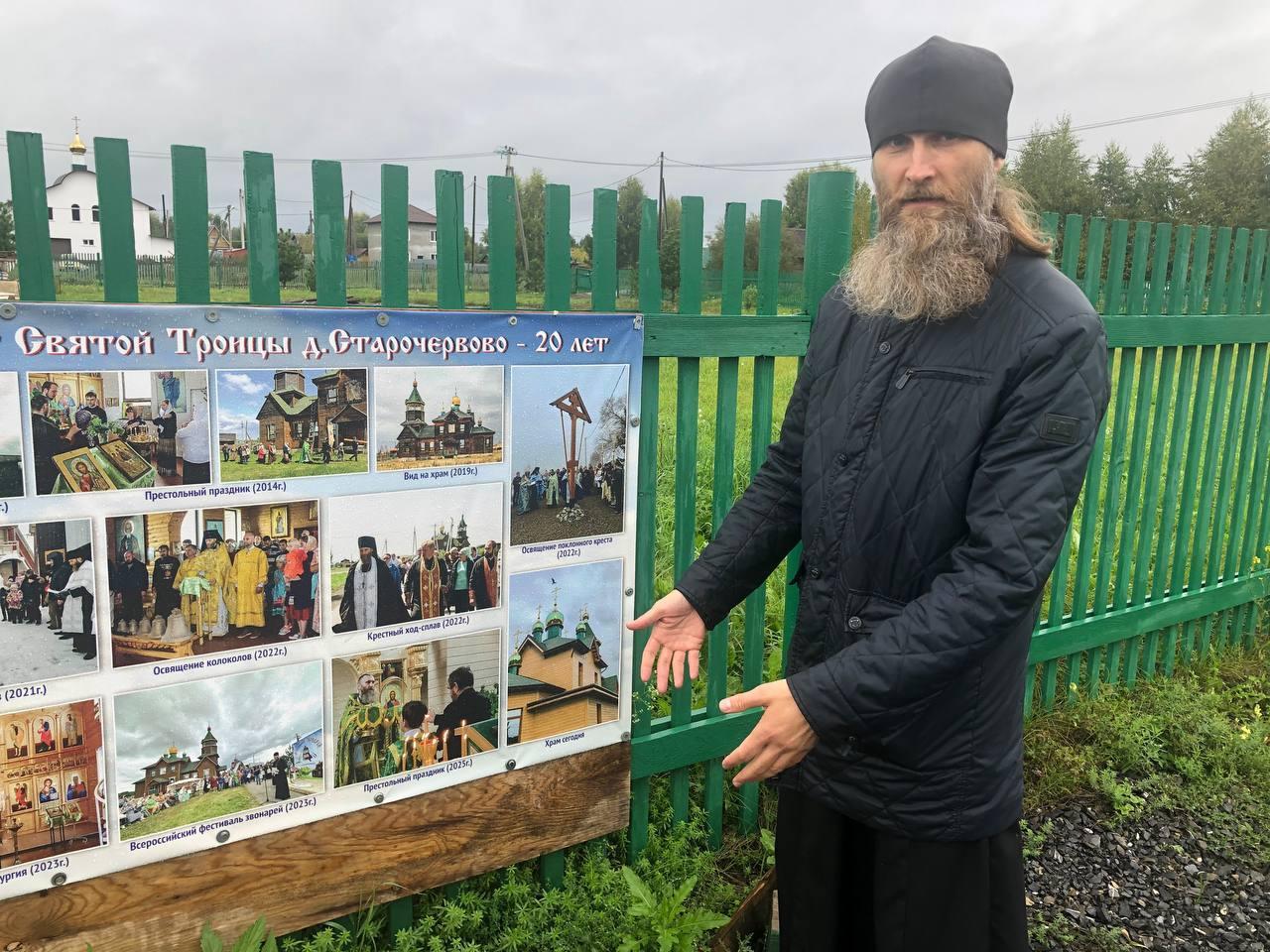
The priest expresses no shame about his past career on stage and in the circus.
His graduates opened their own theater in the city — Solnechny Gorod (“Sunny City”) — and, having read online about hospital clowning, decided under Vydriganov’s guidance not only to make children laugh but to help them heal.
In those years, the idea of circus shows in hospital wards was only beginning to develop. In Kuzbass, clowns were met in medical centers with caution and distrust. But the response and benefit turned out to be so great that doctors softened. Laughter truly helped children confined within four walls around the clock, and they recovered much faster.
— At first we weren’t allowed to see the children, and the Church, social workers, and parish sisterhoods helped us. Then they took a closer look and began inviting us to various medical facilities. Recent studies showed that where hospital clowns interact with children, recovery goes faster and fewer medications are needed, — the clergyman notes.
Touching, sweet videos of laughing young patients quickly spread through the city, and many performers wanted to join the project. Thus a school arose in Kemerovo to train people to communicate with children whose days pass in hospital beds.
Costumed performers could have gone on cheering children to this day, but the pandemic arrived. The need for hospital clowning remained, so Vitaly — now Monk Sofrony — is reviving the program in the region and gathering people.
He himself cannot go through hospitals in bright clothes and face paint: his status as a priest does not allow it. In return, he prays for all sick children.
He applies the experience gained in the region’s medical centers even now, when, as a representative of the diocese (eparchy), he speaks with participants in the special military operation and with lonely pensioners. With the latter, at times, you also have to talk as with children and coax a smile.
«He called clowning prostitution»
In the 2010s, Vitaly still did not know he would swap a clown suit for a cassock. He married, a son was born, he had a stable income, and overall his life, aside from the profession, differed little from others’.
— But I probably saw signs everywhere. We went to Egypt as a family and for a day, by chance, went on to Jerusalem, where the day before my birthday I bought myself a cross. I was born on the day when the Most Holy Mother of God was born (according to tradition, the Mother of God was born in one of Jerusalem’s suburbs), — the man recalls.
Returning to Russia, the Kemerovo native ran to church.
— I told myself: if a priest comes out toward me, then I’ll dare to go up and talk. I arrived, and a clergyman was coming down from the porch — a second sign! He told me first simply to stand through the service, start reading the Bible with commentary, and prepare for confession, — the former performer remembers.
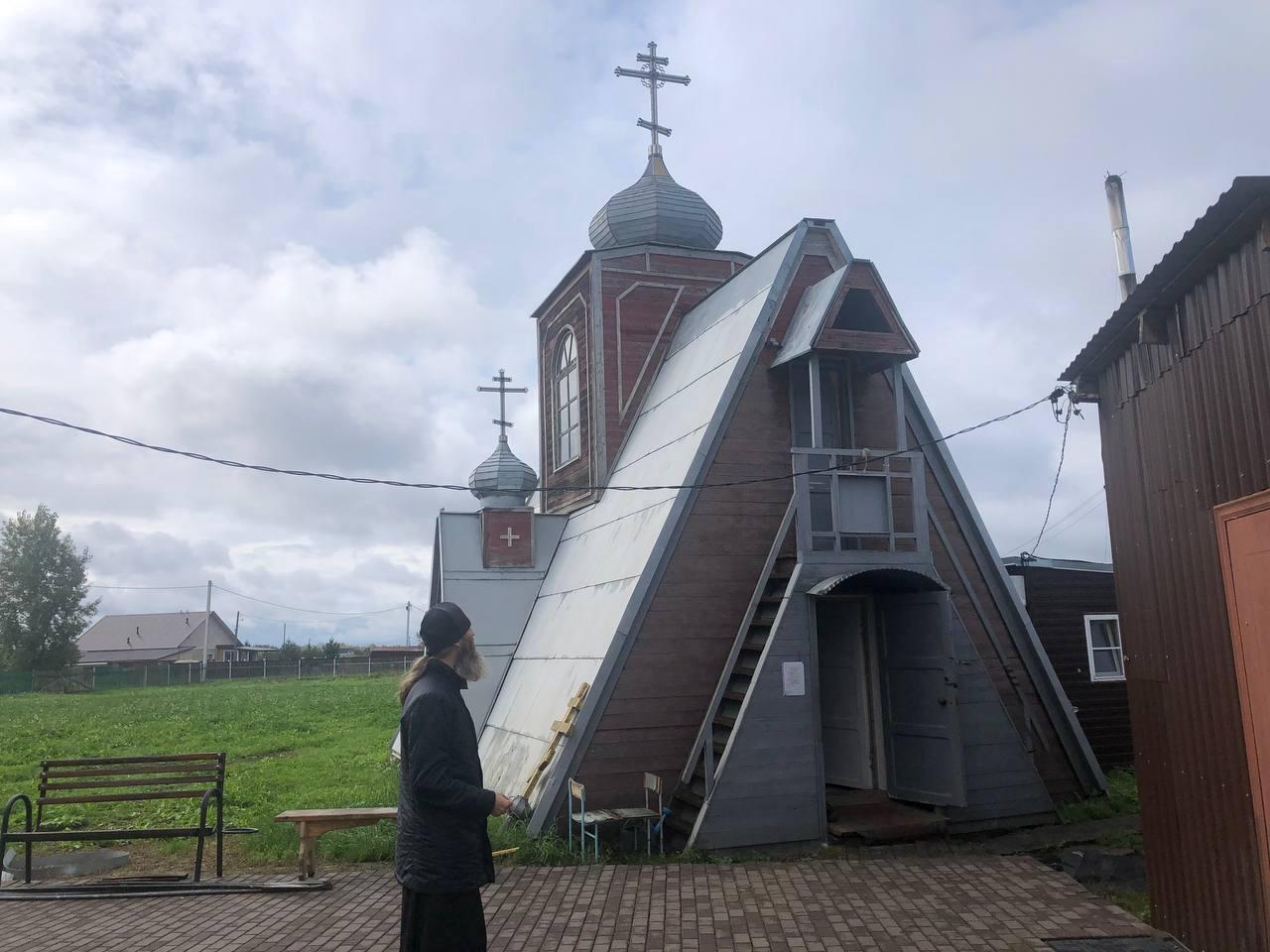
He says a path toward God can be found at any age or circumstance.
Thus, at 30, the man decided to confess for the first time. For the sacrament he wrote on a sheet a list of sins he believed he had committed. In truth, he could not read everything because of the emotions and nerves that overwhelmed him.
— My first confession was with the priest who earlier, during my son’s baptism, compared clowning to prostitution. Of course, he shouldn’t have put it that harshly. But I really did start to wonder how much he was right, — says the clergyman.
Vitaly did not cut ties with the circus abruptly. His new life developed in parallel: he spent all his free time in church, became a priest’s assistant, and even considered entering seminary. His wife opposed these plans.
— It was hard for me, because the main work fell on holidays and weekends. It turned out that in the morning I was in church, at night — in a club, and there were drinking and partying, sometimes strippers changing clothes nearby — all of it a temptation. I began to swing back and forth inside, — Vydriganov admits.
For a while the man calmed himself with the thought that he donated to churches the money earned in night venues. Later that stopped helping; his soul grew very restless. The decision that turned his life upside down — monastic tonsure — he made only when his marriage fell apart.
— I thought I would go to a monastery in old age, when the children grew up. It turned out the way it turned out. I entered seminary, partly to distract myself from worries. I left its walls once a week — only to see my son. In my final year I was tonsured a monk and immediately ordained a deacon; a month later — a priest, — says Father Sofrony.
«Why did I get myself into all this»
When Vitaly became Father Sofrony, one of the rectors of Znamensky Cathedral (Znamensky sobor) in Kemerovo nudged him toward building churches and monasteries in Kuzbass. That is exactly what he is doing now, almost 50 km from Kemerovo, in the dead-end village of Starochervovo (near Kemerovo, Kemerovo Oblast, Russia), on the edge of which lies the taiga.
There is no church shop in the parish. The clergyman does not understand how one can ask for money for candles from people who come to confess. Expenses for building the monastery are covered by donations.
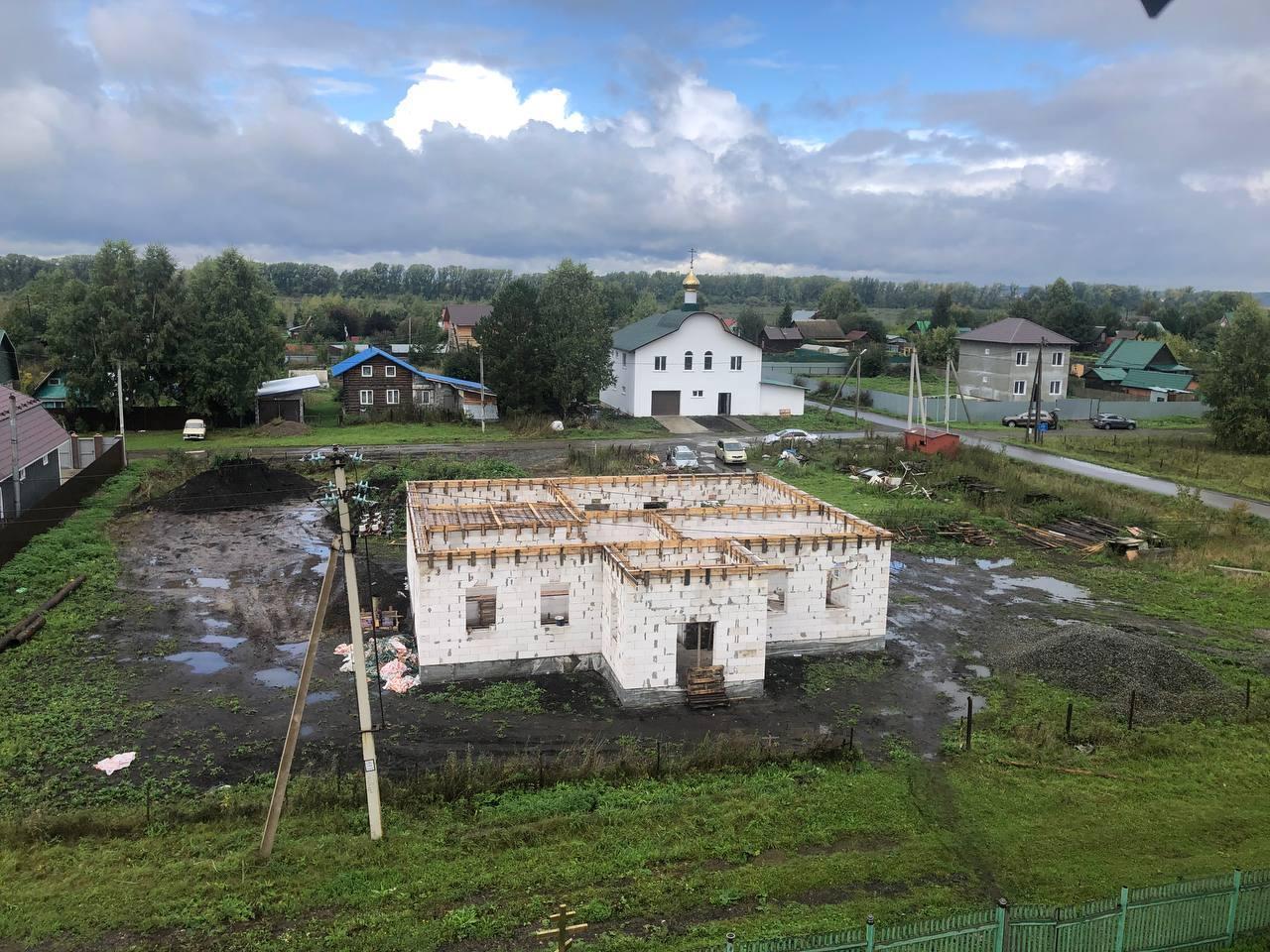
Beyond the village lie vast taiga forests, complicating transport of materials for construction work.
The building for the future monastery already exists; anyone may come — to help or to attend services. A boiler house is now being erected: the walls are up, but there is no roof. Sofrony worries they may not manage to cover it before winter: a lot of money is needed. There have been cases when funds appeared by “God’s will.”
— Once we needed an overwhelming sum of 150 thousand rubles (about $1,600 at current rates) for fire safety systems and earthworks. I wondered what to do, where to turn. In the morning I came to the church, looked into the donations box, and there was an envelope. Inside — it gave me goosebumps — the amount was exact to the last kopeck. There were several such cases; it shows that the Lord does not abandon us, — Sofrony explains.
Construction takes almost all of the clergyman’s time; not a day passes without a new task and a search for materials. He admits that at times exhaustion nearly turned into burnout, but the Lord saved him.
— «We priests suffer burnout, too. When it’s hard, you think: “Why did I get myself into all this? There was an apartment in the city center — I could have just lived.” And on other days: “How good it is.” You talk with someone a little, simply give some time, and he feels better, he turns to God. What could be more valuable than a soul?» — says the clergyman.
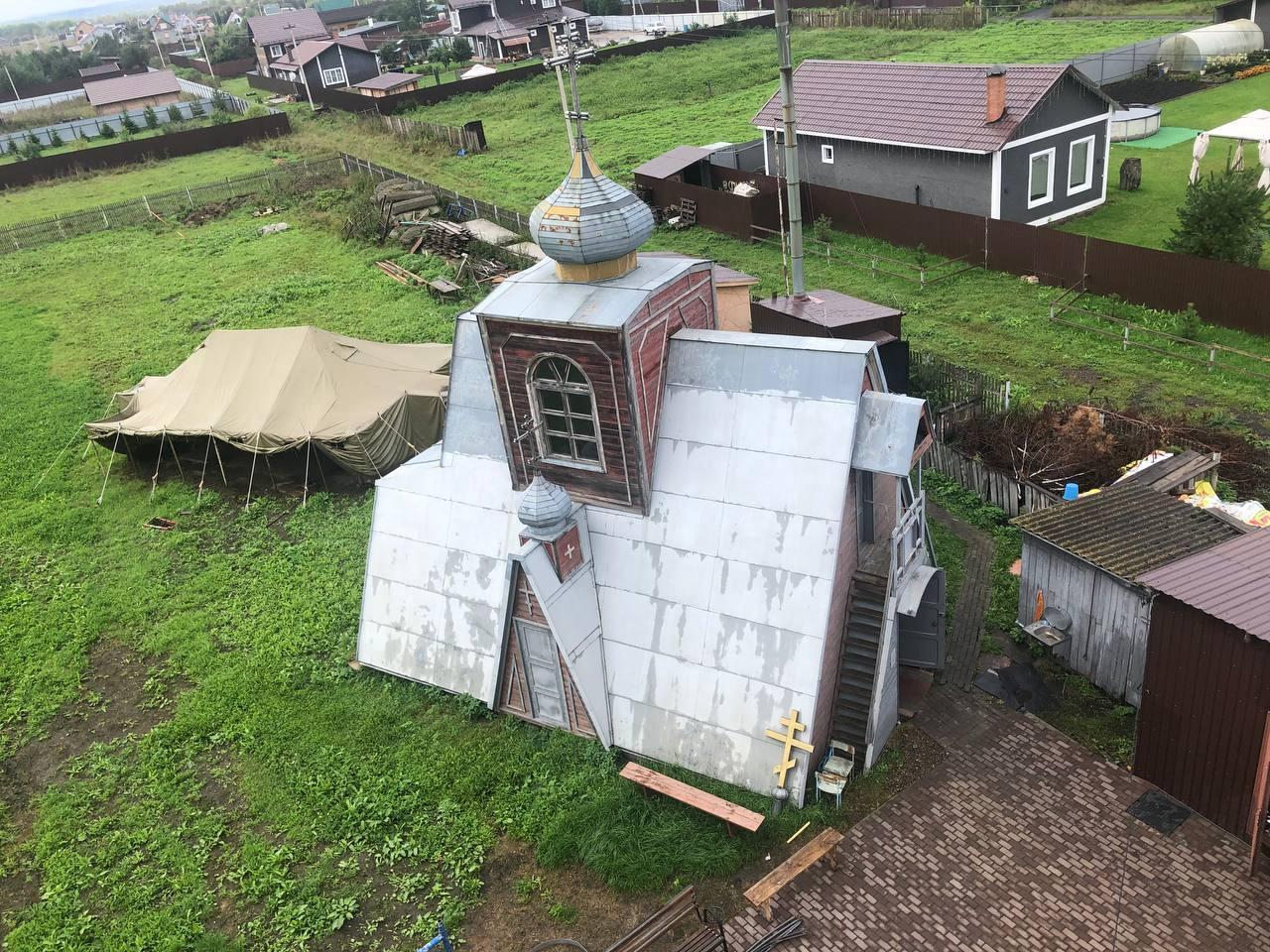
Workers and Father Sofrony currently share a small triangular chapel while building the main complex.
Father Sofrony still blames himself for not having managed, because of busyness, to hear the confession of one of his parishioners, whose illness he did not know about. When he arrived at the man’s home, he had departed this life just minutes earlier. Since then the priest has tried to speak with everyone who comes to him, even if sometimes there is no time left for sleep.
Last year Sofrony left the monastery construction and went to the special military operation (SVO) zone. For a month he lived four kilometers from the line of contact — daily hearing explosions and incoming artillery. He admits the habit of scanning the sky for drones has remained to this day.
— At night on the last day before returning, a ‘Baba Yaga’ — a huge drone — came toward us. If it hadn’t been shot down, I don’t know how it would have ended. It carried a powerful charge, — Sofrony recalls. He plans to come to the troops again, but for now he is actively raising the monastery and restoring another parish.
He does not want to return to the life of an ordinary Kemerovo resident — find a wife and have more children. In his words, a monk has his own large family — brothers and parishioners.
Father Sofrony’s only son is now studying in Saint Petersburg and, like his father once did, has drifted away from the faith. The priest does not regret having lived through student days, work in clubs, and the circus.
— On the one hand, I think I’m not in my place, not worthy. I played the fool in life — what kind of priest am I? — he laughs. — On the other hand, the Lord shows me through events that this is no accident and He is guiding me.
Sofrony takes calmly the fact that he is sometimes called a clown in a cassock. He is not ashamed of his past.
— A clown is a philosopher who, through his tools, mocks sins and shows virtues. Not all clowns are vulgar — there are those like Leonid Yengibarov. He created such soulful little scenes! He made people think about something. A priest also shows that one must turn away from sin and come to virtue, to come to Christ, — Sofrony concludes.