Novosibirsk doctor explains anxiety and treatment
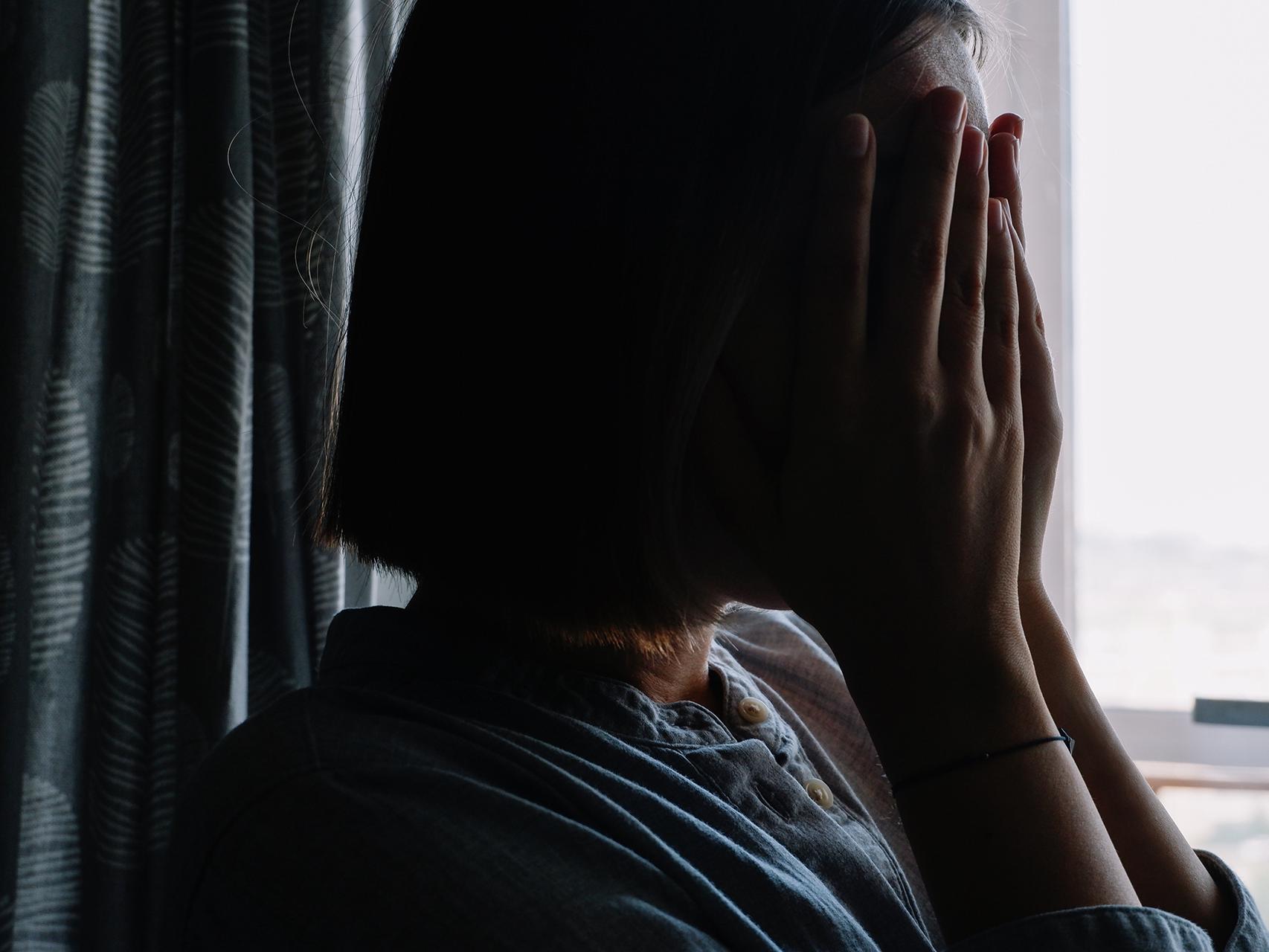

According to the Vsemirnaya organizatsiya zdravookhraneniya, World Health Organization (WHO), anxiety disorder is identified in 4.4% of the global population. In 2021, more than 359 million people suffered from it. Novosibirsk psychotherapist Inna Starikova explained how to overcome anxiety and named the groups most vulnerable.
What is anxiety
According to the specialist, anxiety is not an illness but rather a psychological trait. A person can be called anxious if they feel worry in situations that do not cause concern in others.
«Outwardly a person may look calm, but inside they run through different options for what to do. They are likely to dwell for a long time on the same thought: “What if? What then?”, while imagining frightening, catastrophic scenarios», — explains Inna Starikova.
Anxiety itself is not a pathology but a natural response of the body to stress. For example, while awaiting something that determines one’s fate, or in a life-threatening situation.
Symptoms of anxiety disorder
If anxiety occurs too often and intensely, interfering with a person’s work, study, or daily life, it may be a disorder. Only a psychotherapist can say for sure what is happening to you.
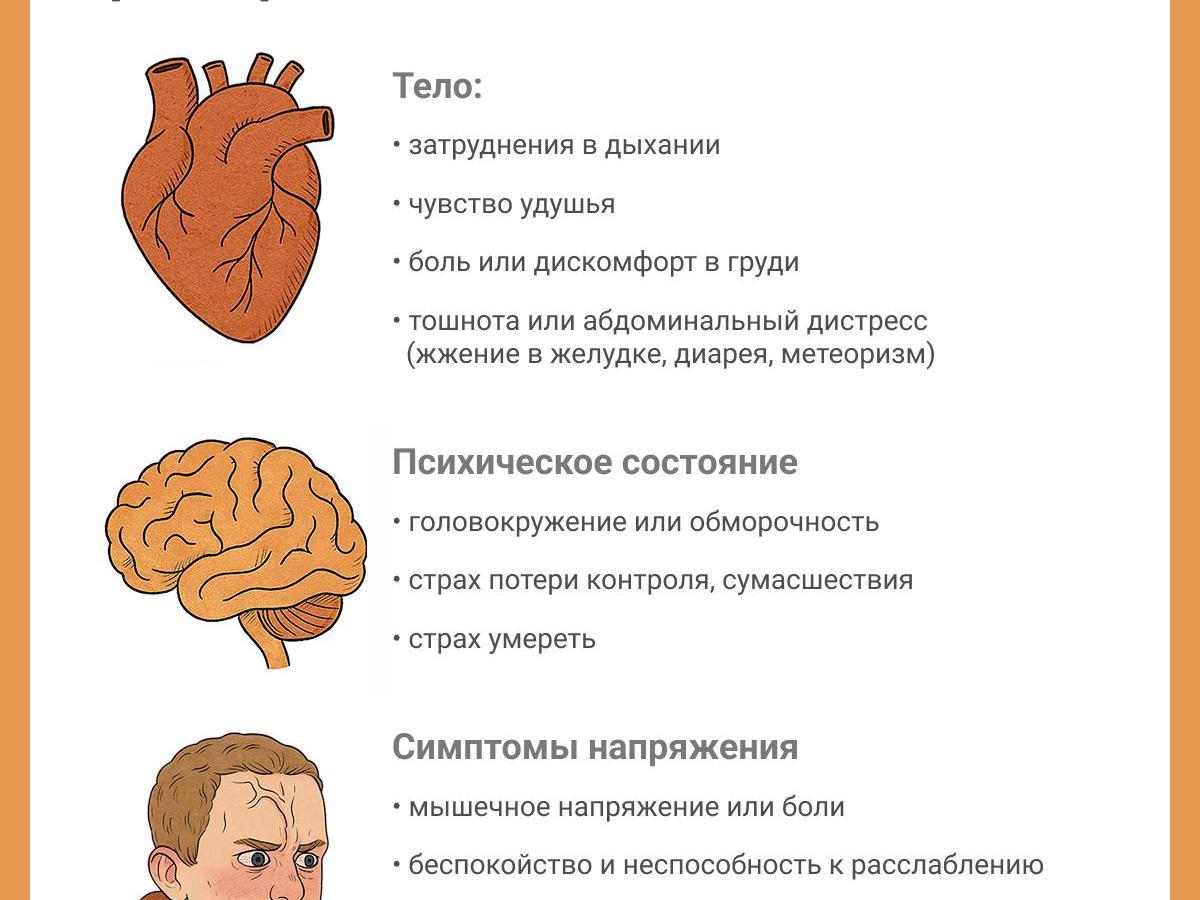
Anxiety can be background, or it can manifest as panic attacks. Worry can also arise from phobias — for example, fear of enclosed spaces. Anxiety can also manifest as mutism — amid very strong anxiety, a person cannot speak.
Who develops anxiety and how it arises
According to Inna Starikova, anxiety disorders are widespread worldwide: 4% in Europe and 11% in the United States per year. There is also a high likelihood of recurrence over a lifetime.
Several factors can provoke an anxiety disorder. According to the psychotherapist, a psychoemotional disorder can arise from childhood trauma: the absence of a safe adult and a lack of attention to the child’s thoughts, feelings, and needs.
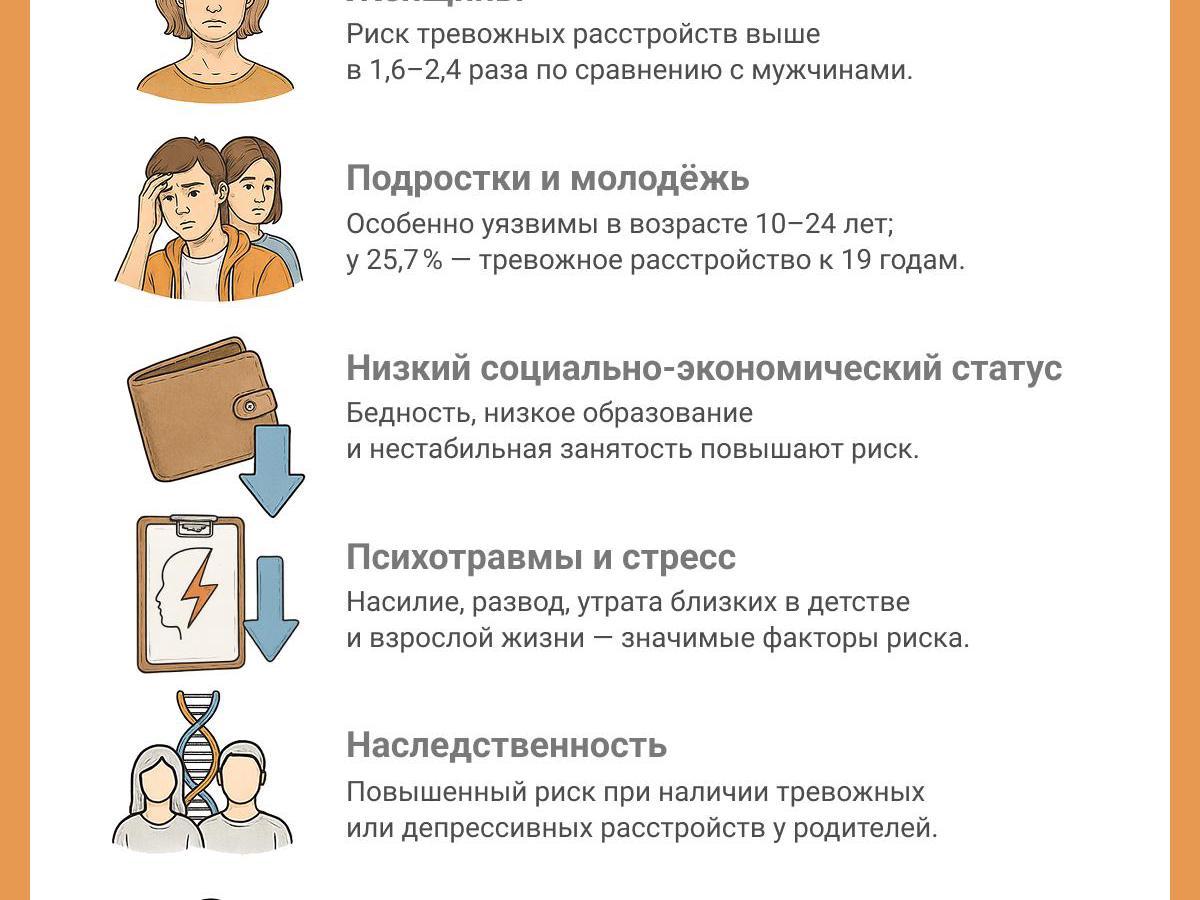
Anxiety can also appear in a person with a family predisposition. For example, mental disorders in parents (anxiety, depression) increase the risk in children. In addition, anxiety may be found in people with high sensitivity, perfectionism, and a tendency toward self-criticism.
Can anxiety be cured
Treatment for anxiety disorders should be systematic. It is necessary to work on thinking and lifestyle. Medication is prescribed for moderate or severe disorders. Studies show the best effect is achieved by combining psychotherapy and pharmacotherapy. However, taking medication is not mandatory.
The most studied form of psychotherapy for anxiety disorders is Cognitive Behavioral Therapy (CBT). According to Inna Starikova, anxiety therapy is built on four main areas:
Understanding anxiety through psychoeducation;
Working with thinking — changing destructive beliefs: «I must be perfect» or «Anxiety helps»;
Exposure — gradually overcoming frightening situations under a specialist’s supervision;
Self-control techniques — breathing exercises and attention management.
Psychotherapists can also prescribe medication — antidepressants. Not everyone finds “their” medication the first time. If a drug is not suitable, the doctor will prescribe a different line of treatment.
«There is evidence that CBT achieves remission in 50–70% of patients over 12–16 weeks of therapy, and pharmacotherapy leads to a significant reduction in symptoms in 60–80% with proper dosing and treatment duration», — explains Inna Starikova.
It is impossible to eliminate anxiety completely, since it is a natural reaction of the brain. But quality of life can improve if you recognize the problem and the mechanisms of anxiety, gain new positive experiences overcoming difficulties, and master skills for managing emotions.
Earlier, NGS discussed why people romanticize mental disorders. Novosibirsk specialists explained how to protect yourself.