Neonatologist: Some in Sierra Leone received first medical aid
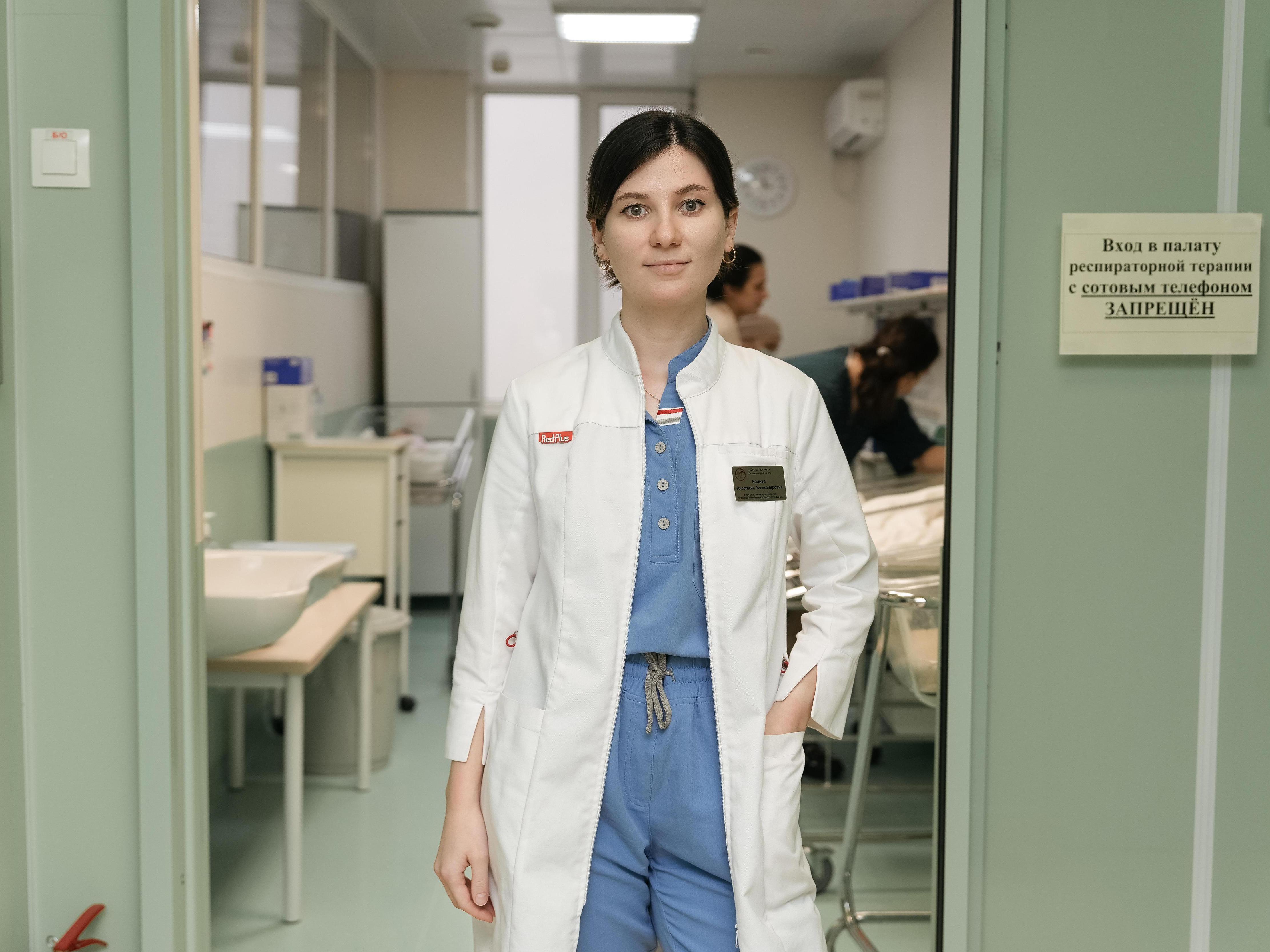

Anastasia Kalita works in a perinatal center in Krasnodar.
Anastasia Kalita works as a neonatologist in the Regional Clinical Hospital No. 2 in Krasnodar in the neonatal intensive care unit. At 25, she became a participant in a humanitarian mission to West Africa. She spent three weeks in Sierra Leone and helped hundreds of people. Anastasia told 93.RU about how the trip went and what she had to face.
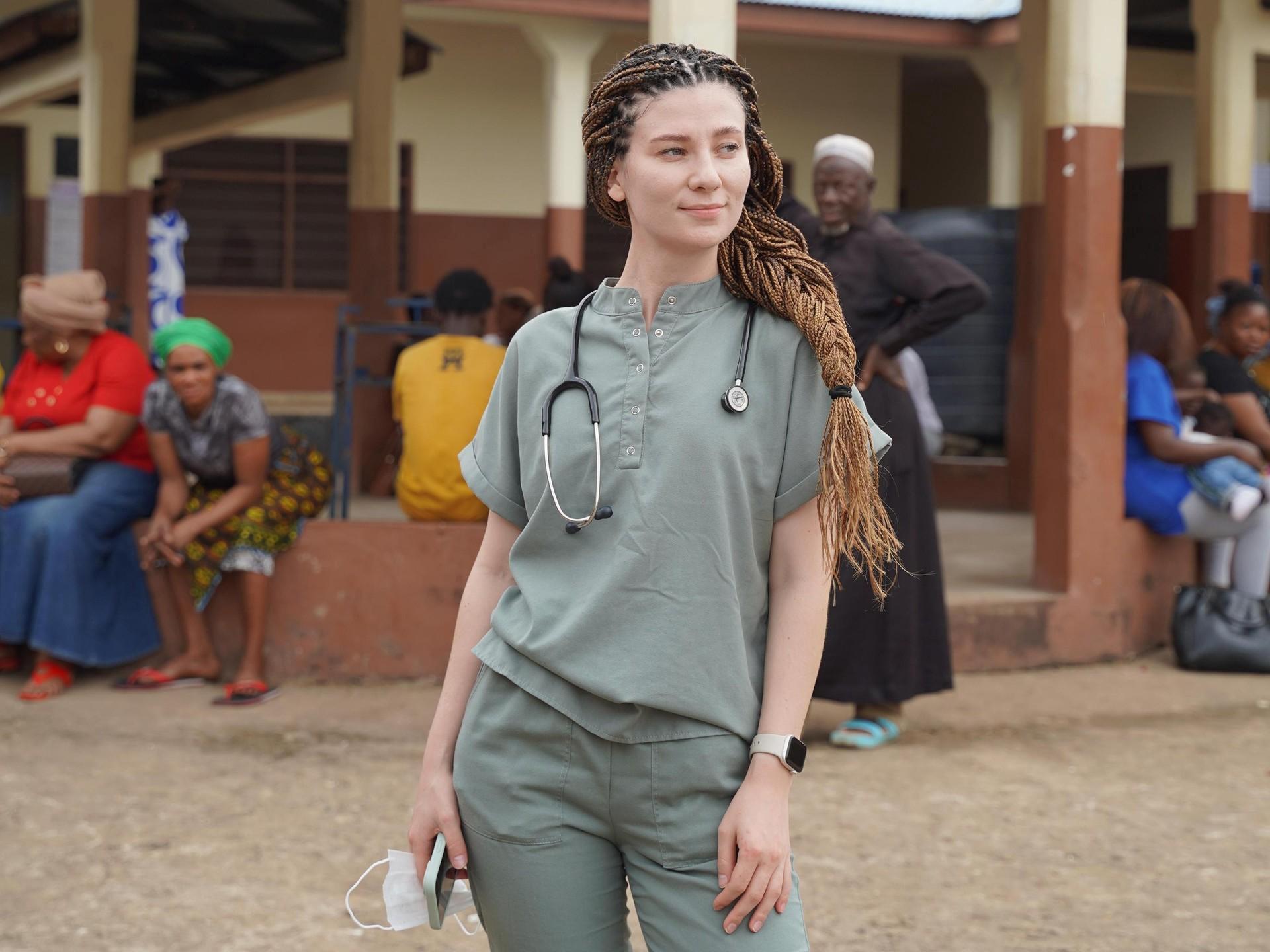
Upon arrival, Anastasia befriended locals, and the girls braided her hair.
Sierra Leone is a country in West Africa, bordering Guinea and Liberia. Its population is about 8 million people. According to the UN Human Development Index in 2025, Sierra Leone ranks 185th out of 193 countries. The unemployment rate exceeds 50%. The average life expectancy is 55 years. The majority of the population is employed in agriculture and the service sector.
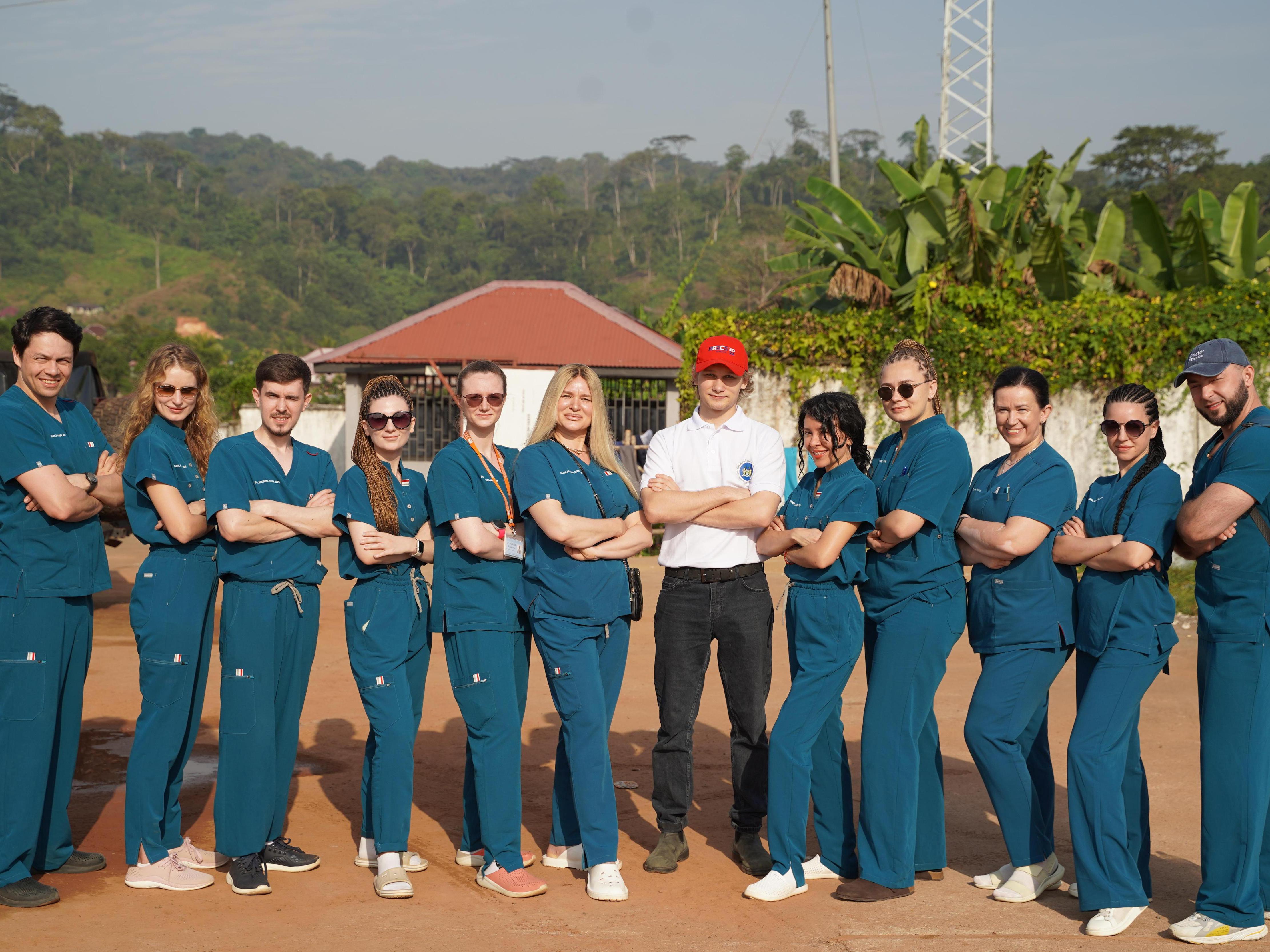
The composition of the humanitarian mission. Anastasia is fourth from left in the photo.
— How did you become a participant in the humanitarian mission?
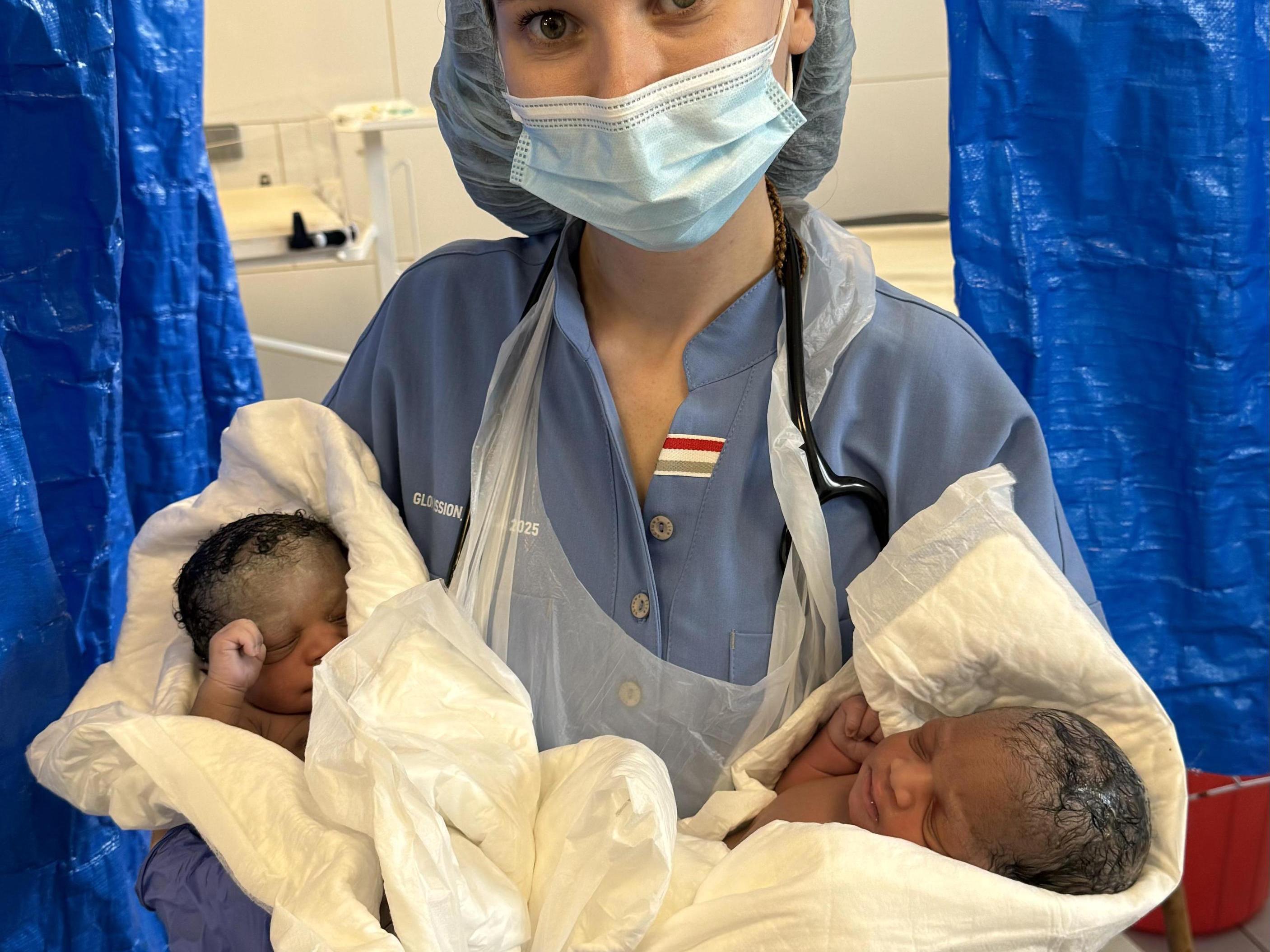
Anastasia assisted in delivering babies.
— My dream of traveling to a remote continent to help, to save people, appeared long before medical university. Work and university instilled in me the confidence that I could do it. So, when such an opportunity arose, I almost without thinking sent an application to participate in the humanitarian-medical mission of Ekaterina Glock, a midwife known worldwide.
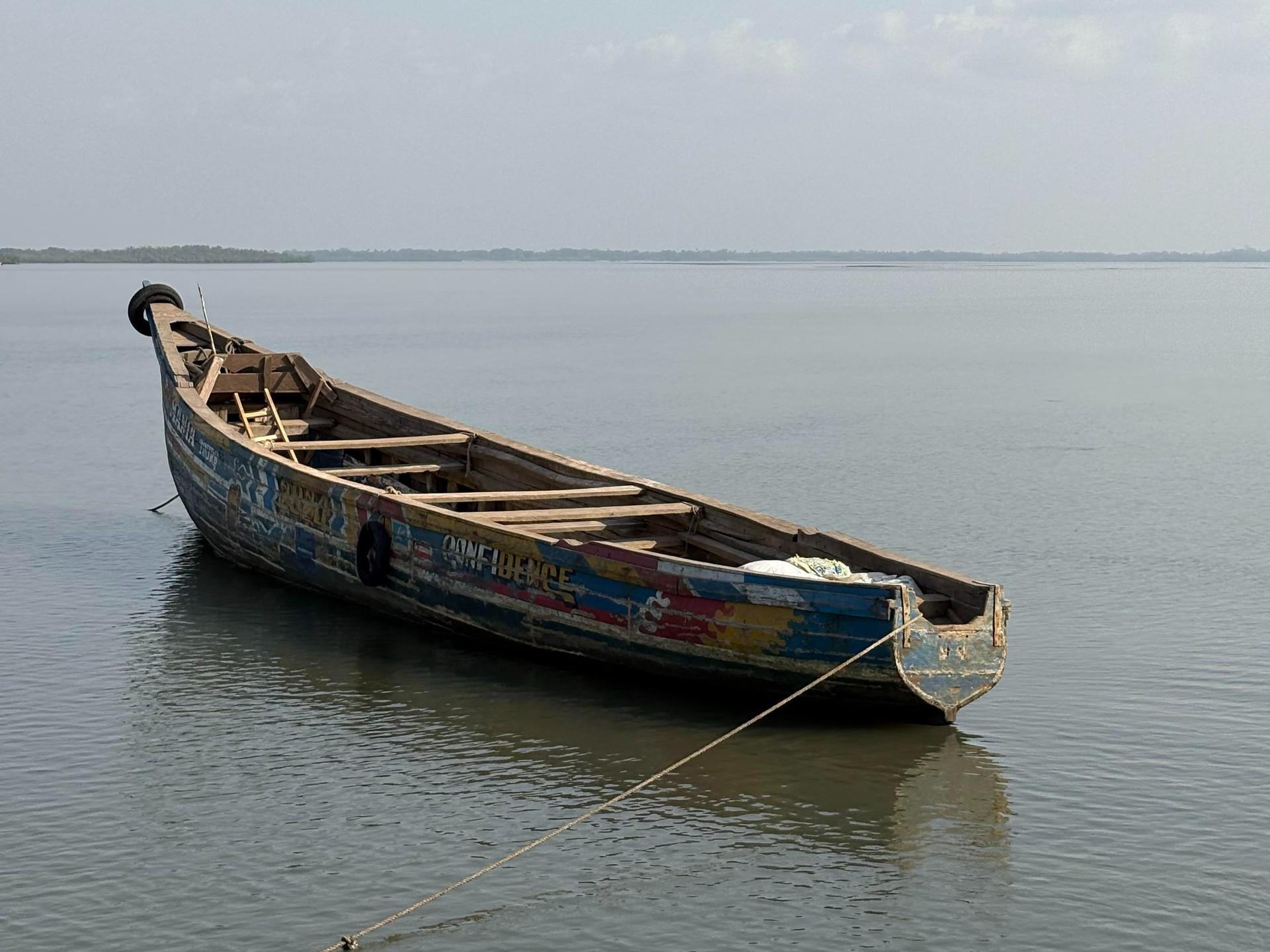
The boat on which doctors reached patients.
I didn«t have to persuade the management for long. The head doctor approved the idea, saying it was a wonderful experience.
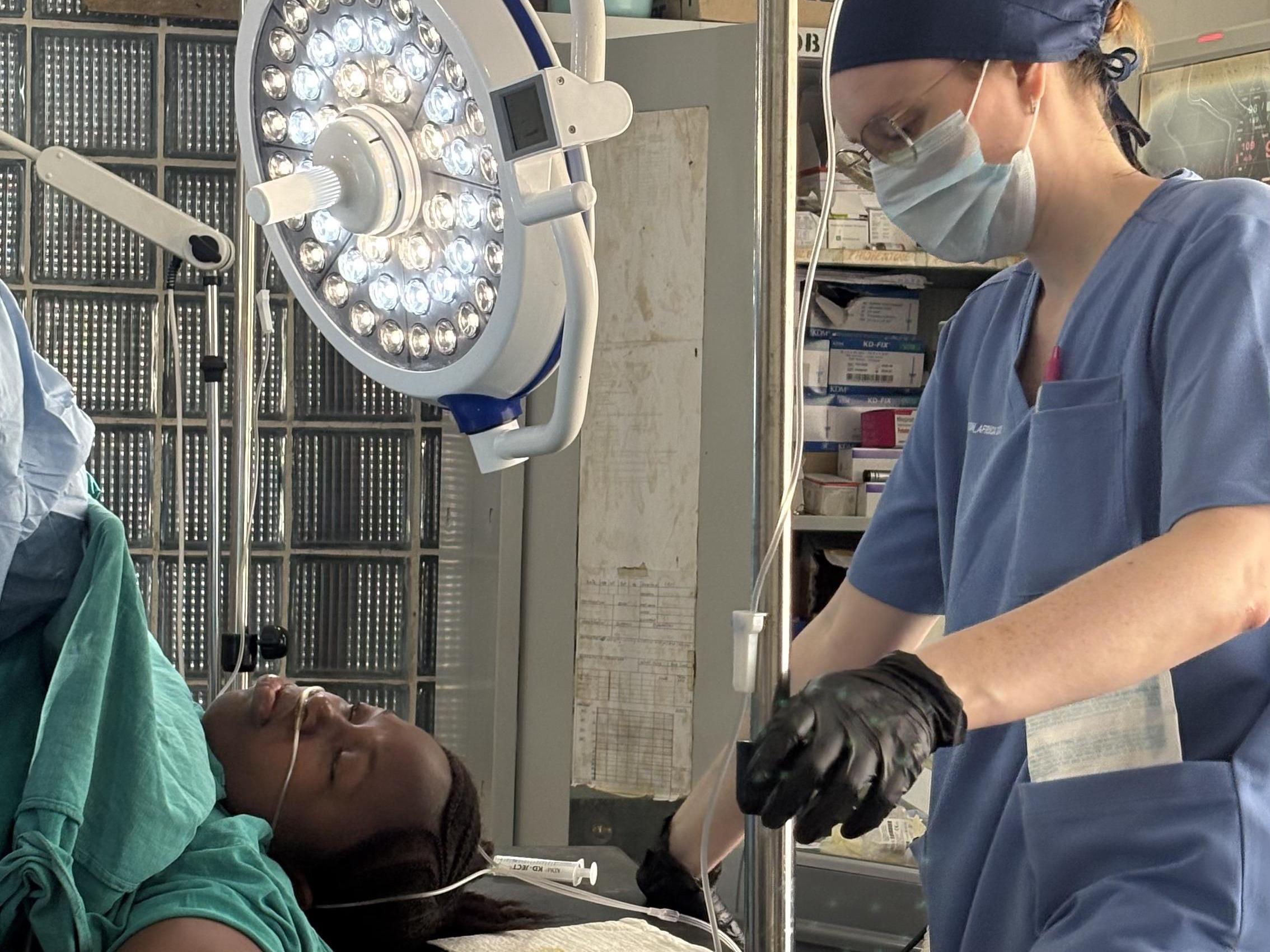
Medical conditions in Africa are on a completely different level.
— What documents and vaccinations were required for the trip?
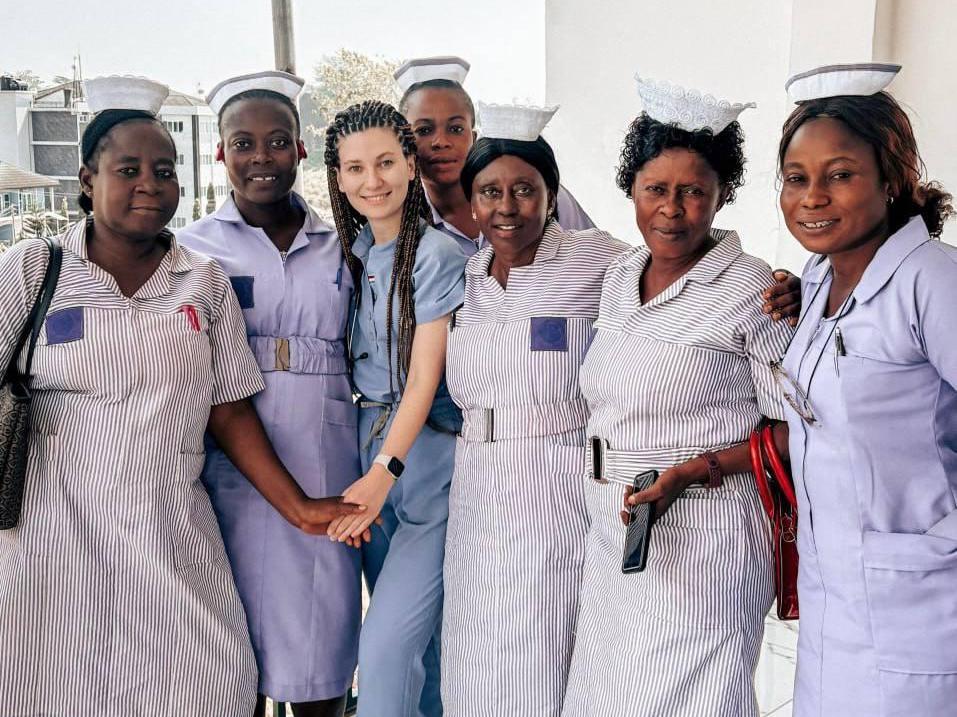
The Krasnodar resident spent three weeks in West Africa in December 2025.
— First and foremost, it«s a matter of personal safety, so before going to an area endemic for yellow fever, I needed to get vaccinated. We also prepared documents proving I am indeed a certified doctor, so that the government of Sierra Leone would issue me a work permit.
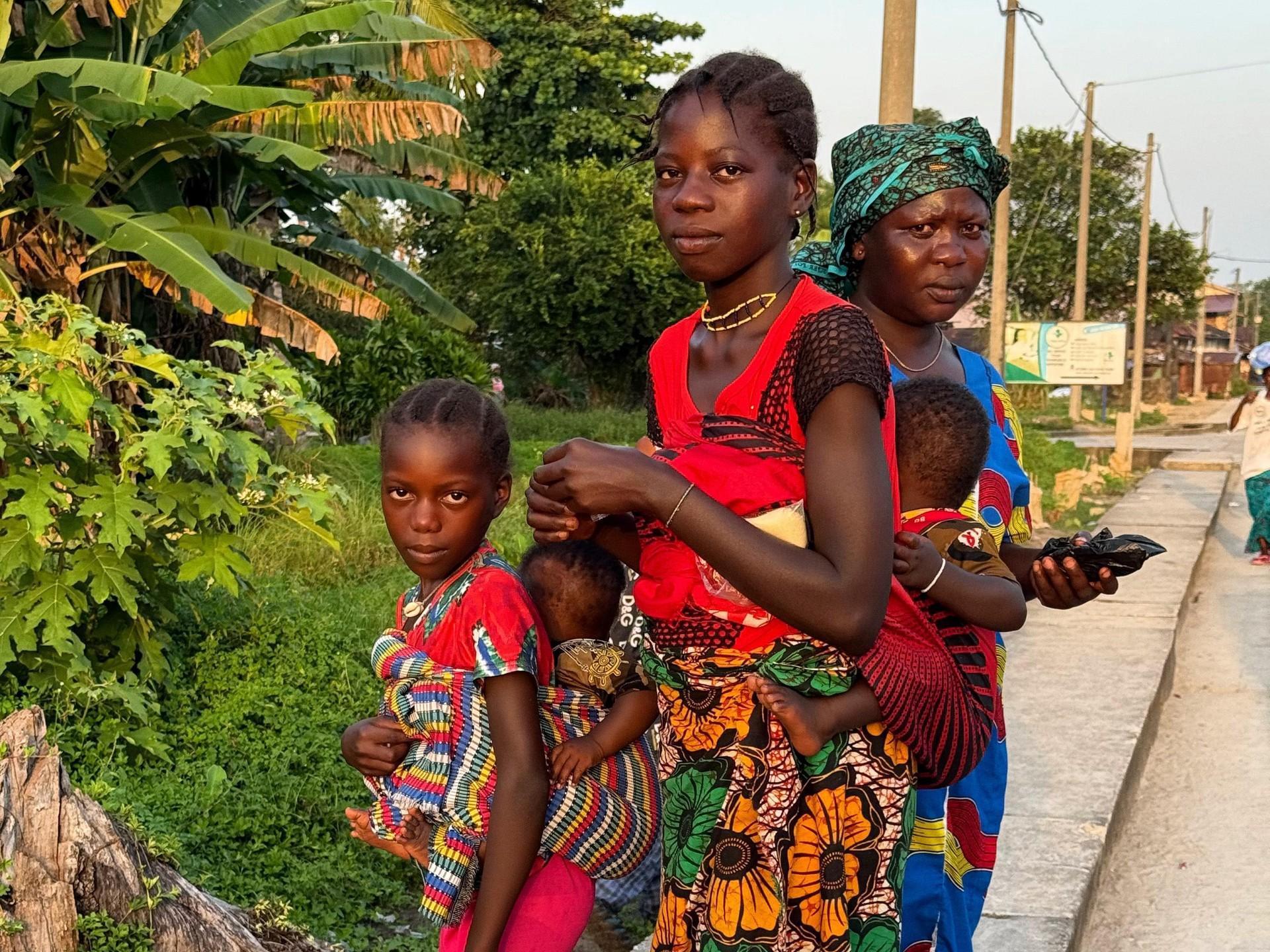
Local residents understand English.
The mission grows every year, and if the first consisted of only three people, the fourth humanitarian mission included 13 specialists. There was a surgeon, oncologist, dentist, gynecologist, midwife, neonatologist, and so on. Our mission is growing, more and more specialists are joining.
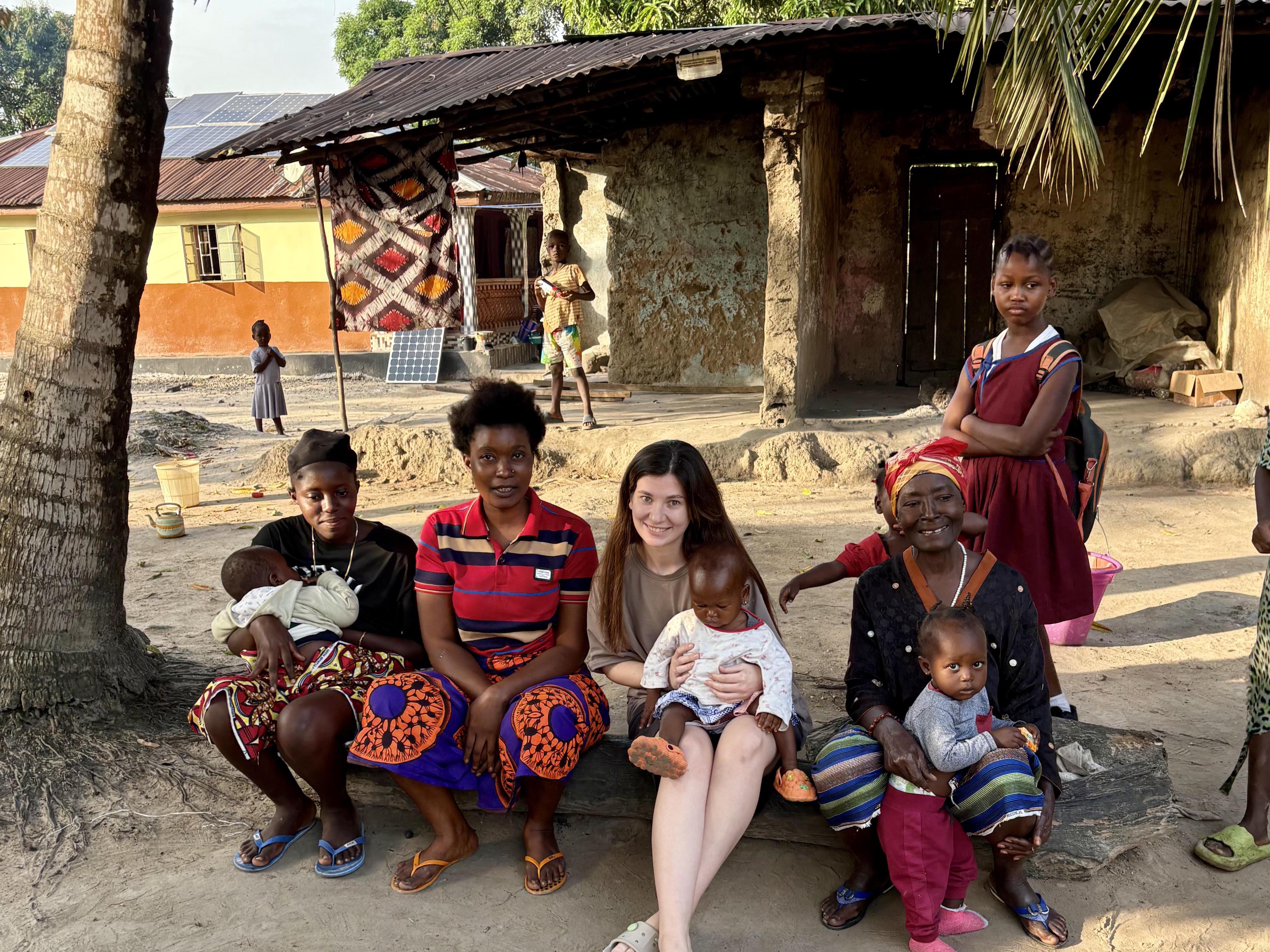
Anastasia with local residents.
— Were you prepared for what you would see? What surprised you?
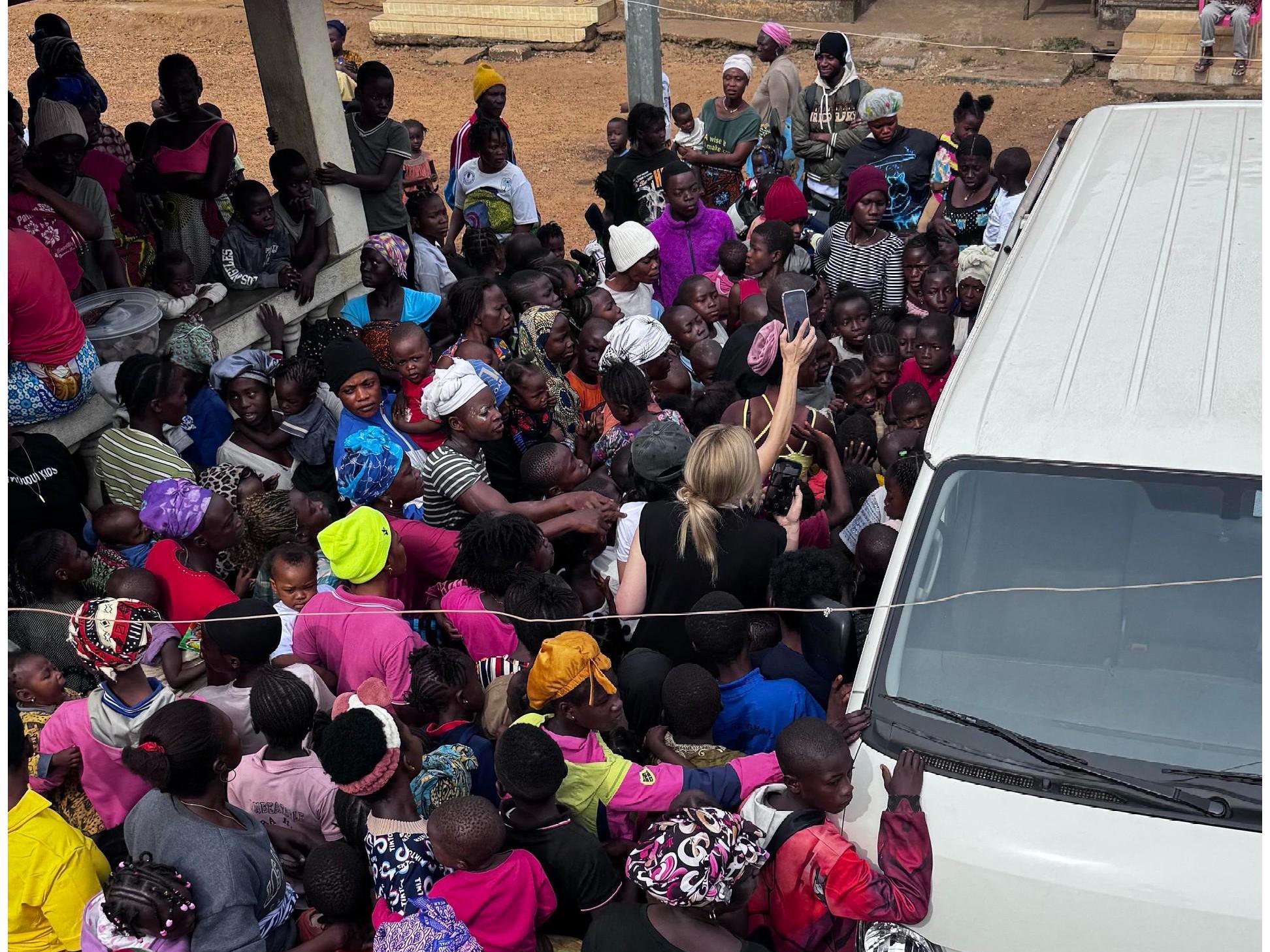
Locals at the bus of the mission«s medics.
— You definitely need to prepare for such a trip, and the footage I saw initially, of course, instilled fear somewhere, uncertainty somewhere, but I overcame all my worries. The conditions are different, starting from natural ones and ending with the hospital«s equipment.
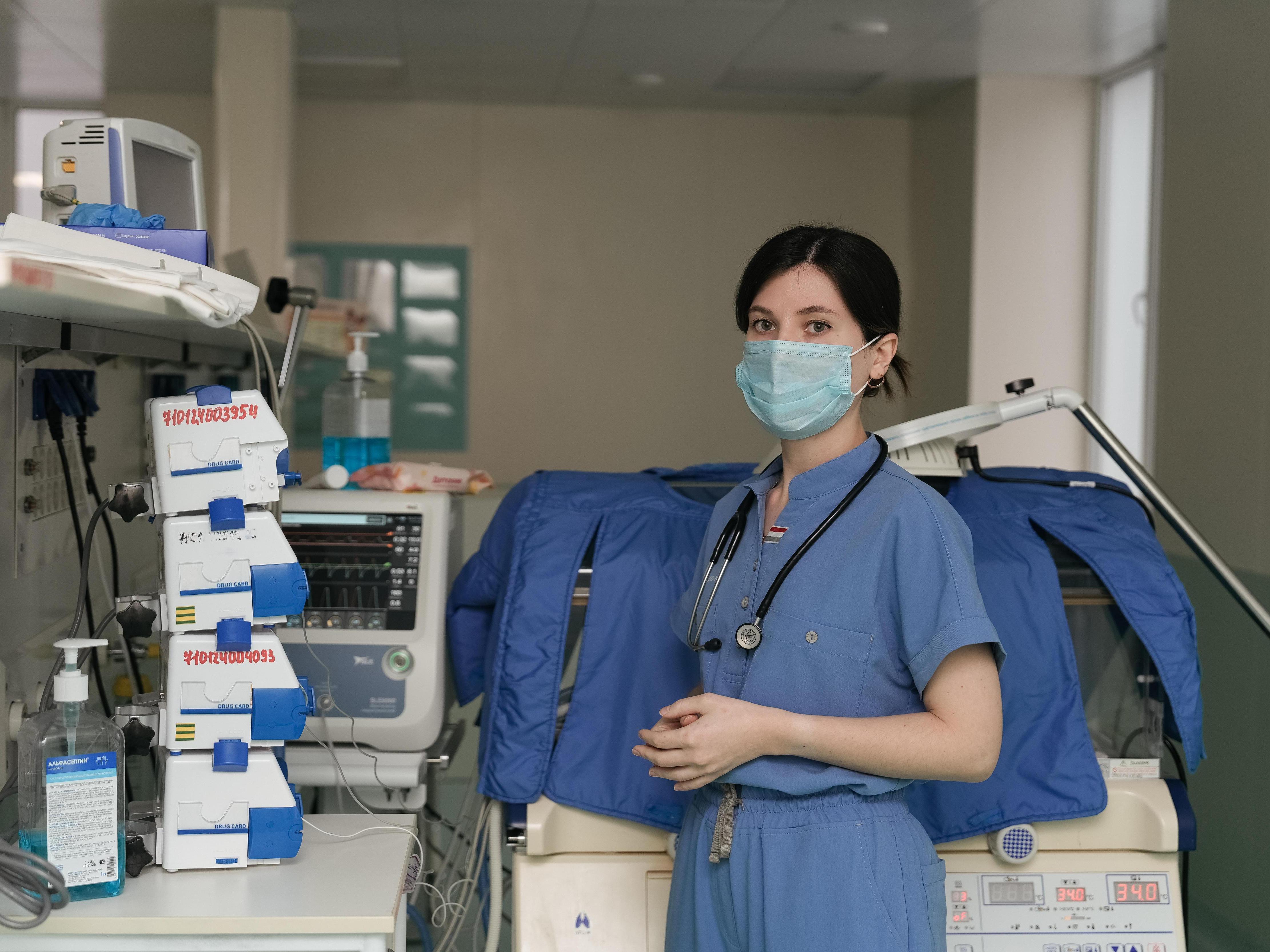
In the photo, Anastasia at her regular job in the perinatal center of Regional Clinical Hospital No. 2 in Krasnodar.
Actually, it«s an incredibly beautiful country on the Atlantic coast. I was surprised by how warm it is there. As for wildlife, there were huge spiders that frightened us, but in hotels we slept in special nets so that no one would get to us at night. We also used protection against malaria mosquitoes.
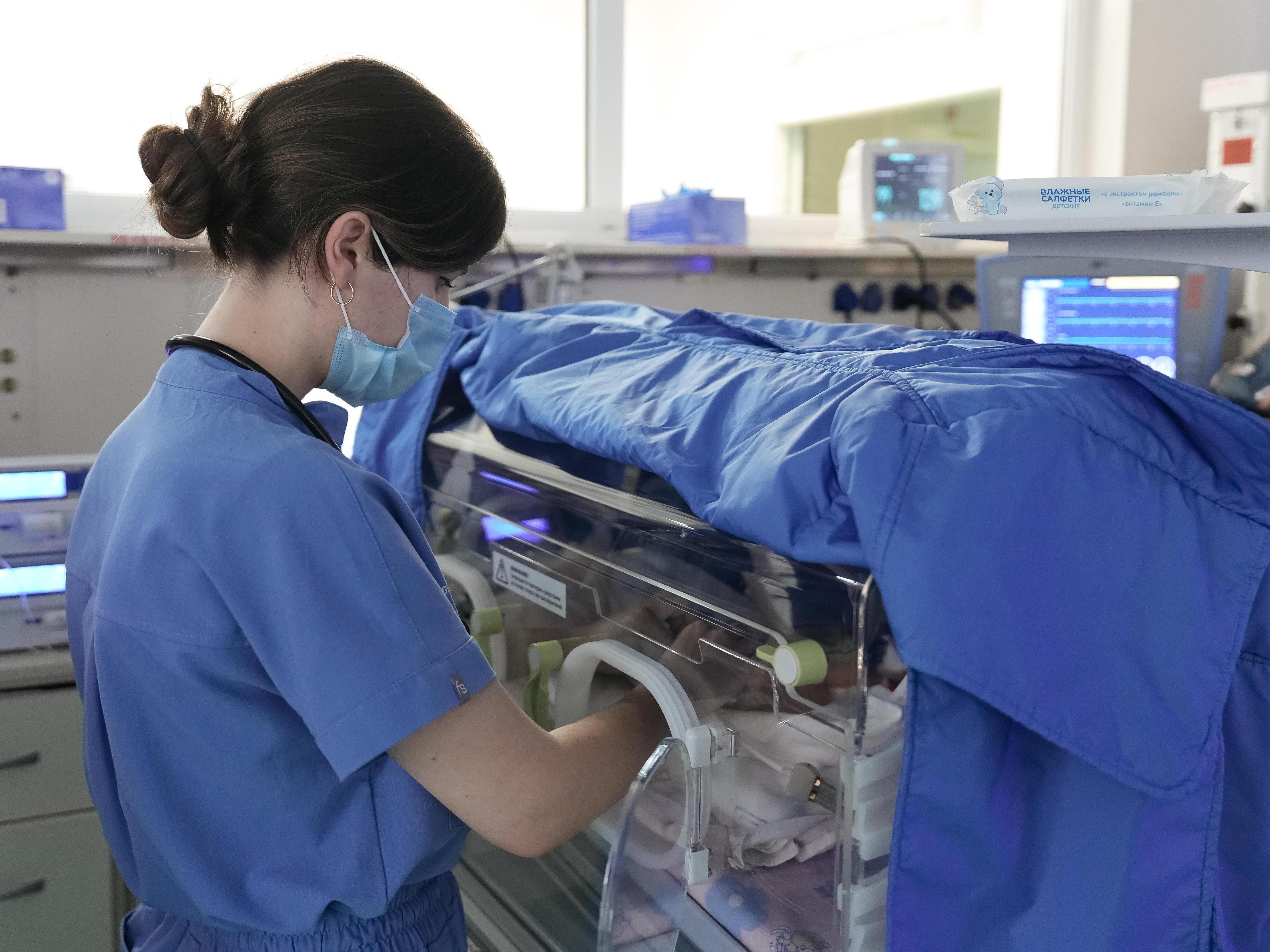
The young woman plans to continue working in Krasnodar.
Regarding hospital conditions, yes, there are colossal differences. First and foremost, our tools were our hands, eyes, and clinical thinking; we had to rely not on technology, but on our own knowledge and experience.
— How did you get to your patients? Which «call» do you remember most?
— During the project, we visited four cities, one island, and several villages. There were hard-to-reach places where we had to travel in special off-road vehicles. Also, the local Ministry of Health allocated us a whole bus for our team and suitcases with humanitarian aid.
We sailed to the island for two hours on a boat, from which we simultaneously bailed out water. These are indescribable emotions, cooler than any extreme amusement rides.
During the trip, we provided assistance to 716 patients. Probably one of the most memorable cases: when our team of gynecologists discovered a woman in serious condition during their rounds. At night, we transported her by boat for several hours, even though time was of the essence, and the patient needed to be operated on urgently. We definitely have several saved lives to our credit, and that is something I will never forget.
— What are the medical conditions like there, you say you had to operate urgently—where did the operations take place?
— We worked on the basis of hospitals. That is, in certain cities they have clinics, there are hospitals where patients are brought. Yes, of course, these are conditions unusual for us, but nevertheless we had the opportunity to provide assistance in a hospital, there were operating rooms as well.
Motherhood and birth are the same on any continent, it«s physiology. But for example, in Sierra Leone there were no artificial lung ventilation devices, and at present this is an integral part of caring for premature newborns.
As part of the humanitarian mission, we brought clothes, shoes, toys for children for the population, but also medical equipment—ultrasound machines, CT scanners, and so on. We left the equipment behind.
— How did you communicate with patients, were there any problems with mutual understanding?
— In Sierra Leone, the main language is English, as well as the interethnic Creole. There was a language barrier, but we managed to overcome it with the help of sign language, and local doctors also helped us. There were, by the way, many medics who received education in Russia, they also spoke Russian. So we found a common language fairly quickly and provided assistance in teamwork.
— Did you have to explain some basic things to the locals in terms of hygiene?
— Our dentists even brought a huge brush from Orenburg and taught the local population how to brush their teeth properly, held master classes, after which they gave each person a personal brush for oral hygiene.
— Did you have free time, did you manage to see the country? In some photos from the trip you have braids, did they braid them there?
— We had free time when we first arrived and the paperwork was being processed. Government representatives received us pleasantly, took us to beaches of incredible beauty. We also managed to visit a park with chimpanzees. We got acquainted with the local culture, people, this is an incredibly kind people with great strength of spirit.
Otherwise, actually, the schedule was quite tight, every two or three days we moved to another city. As a rule, we entered the hospital at 08:00 and stayed there until victory, until our help was needed, until the queue at the hospital ended, we remained at our workplaces.
— Were the queues for medical help large?
— Yes, the queues were incredible, especially in the first days when we came and started at the hospital. Huge crowds of people were waiting for us because it was an opportunity for some to receive medical care for the first time in their lives. In the country, medical care is free for pregnant women and children under five, after that—it«s paid. So when we said we would help for free, there were a huge number of willing people.
— Was your work in West Africa paid?
— This is a volunteer project, so there was no talk of any salary. Moreover, we bought most of the humanitarian aid ourselves. Caring people also helped us, bought medicines, clothes, equipment and sent them to us.
— In the future, would you like to return to this country?
— Yes, I think that soon Sierra Leone must definitely become a tourist country that will receive guests, because the views, the nature they have, is simply incredible. Everyone should visit there.
As for medical work, I would like to return with more experience and bring more equipment, technology, and aid. The best thing is that our mission is open to new specialists. You can apply and go as a volunteer doctor, or you can participate in purchasing humanitarian aid. For 2026, coordination is already underway for the following countries.
The International Mission of Ekaterina Glock is a humanitarian project aimed at developing cooperation between Russia and African and BRICS+ countries, training medical specialists, and providing assistance to those in need. The trip to Sierra Leone took place from 6 to 26 December. According to the plan until 2028, participants of the humanitarian mission will also visit Guinea, Congo, Senegal, India, Brazil, Indonesia, Rwanda, and other countries.