Infection risk from petting dogs: how to prevent echinococcosis


The parasitic disease echinococcosis is primarily spread through contact with animals, especially dogs.
In Russia, several hundred cases of echinococcosis are recorded each year — this is a parasitic disease caused by the larvae of tapeworms. This parasite forms cystic formations in the liver, lungs, brain, and bones. As doctors warn, echinococcus may not show any symptoms for a long time until the cyst reaches impressive sizes — up to 50 cm or more.
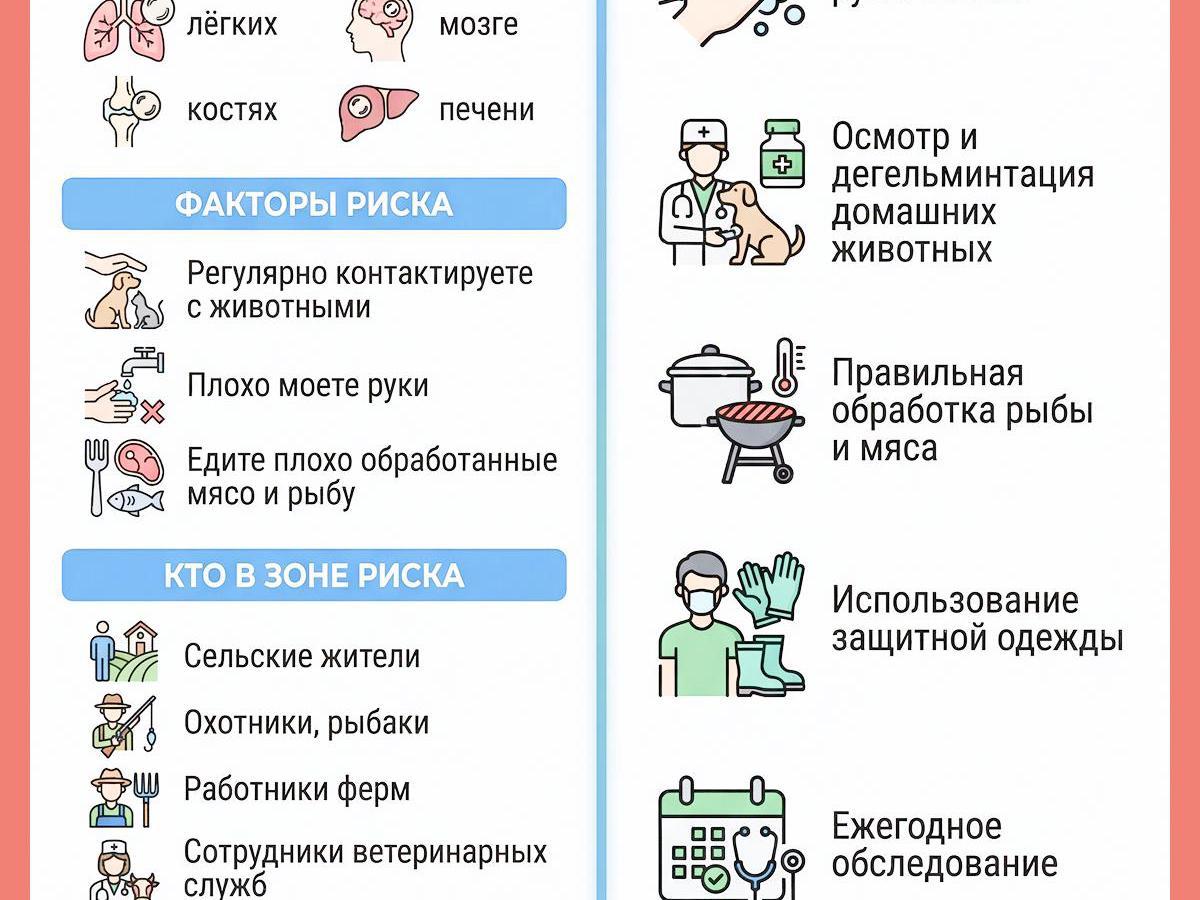
Simple preventive measures, such as hand washing and proper food handling, can help avoid echinococcosis.
In Russia, echinococcosis is most often registered in Yakutia, Buryatia, the Yamalo-Nenets Autonomous Okrug, Novosibirsk, Tomsk, and Omsk regions, as well as in Transcaucasia. How to protect yourself from the dangerous disease was investigated by NGS.RU.
Often, domestic animals, especially dogs, are carriers of echinococcosis. Less commonly, infection can occur from cats and foxes. At-risk groups include rural residents, hunters, fishermen, farm workers, and veterinary station employees. The likelihood of infection is also present in people living in unsanitary conditions.
«People are at increased risk if they regularly contact animals, poorly observe hand hygiene, and consume insufficiently processed meat and fish,» added Rospotrebnadzor (the Federal Service for Surveillance on Consumer Rights Protection and Human Wellbeing).
To avoid contracting echinococcosis, one should regularly wash hands with soap, inspect domestic animals, and give them medications to destroy parasites. Also, Rospotrebnadzor recommends not neglecting the thermal processing of meat and fish. Those engaged in agriculture should do so in gloves and closed clothing.
By the way
There are known cases where people were infected with the parasite from domestic pets. In 2025, a 17-year-old girl was operated on in Moscow — her echinococcal cyst grew to gigantic sizes, destroying half of her left lung, reports Doctor Peter. The disease developed for two years until the girl began having difficulty breathing and chest pain.
The cyst measuring 10 by 10 centimeters was successfully removed — now the girl breathes without problems, but it will take time for the lung to recover.