Experts Warn of Deadly Black Berries in Volgograd
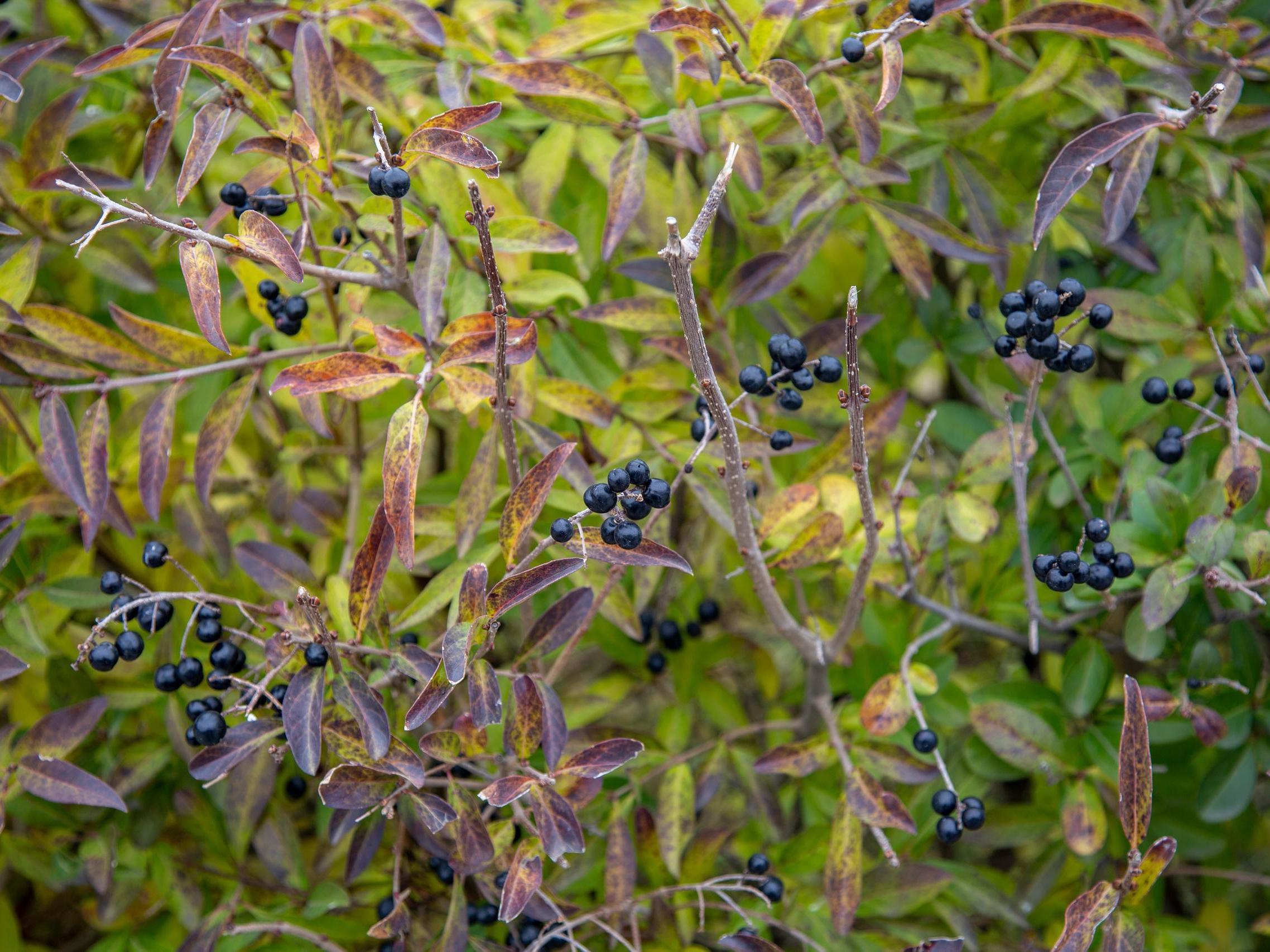

Biologists and doctors have warned city residents about the deadly danger of black berries that are growing abundantly in Volgograd. Externally similar to currant fruits, they cause nausea, vomiting, diarrhea, and in severe cases lead to paralysis of the respiratory center and heart. They can be found in the Central Park of Culture and Recreation, on Mamayev Kurgan, on the lower terrace of the central embankment. However, there are no informational signs explaining what these berries are and what will happen if you try them. This was learned from experts.
“And if a child tries them?”
Luxurious green shrubs with small but eye-catching bright black berries were noticed by V1.RU readers who were walking in the Central Park of Culture and Recreation.
“I noticed beautiful shrubs, neatly planted. I came closer, and there were black berries, very edible-looking at first glance. They somewhat resemble currants, nightshade, and a bit like serviceberry. But I have no idea what they are,” say city residents. “There’s no sign saying what this is, whether you can touch them or especially taste them. An adult might pass by, remembering the danger of wolfberry (also a beautiful shrub with berries, it even grew in our school, teachers always warned that you can’t eat them, you could die), but a child? They’ll come up, pick one, put it in their mouth while the parent is distracted, and that’s it.”
“What will happen if you eat it? You’ll die”
We sent a photo of the shrub with berries to a well-known biologist, research fellow at Volgograd State University (VolSU) Nikolai Onistratenko, who reported that the picture shows common privet (Ligustrum vulgare), which is used in decorative landscaping. There’s nothing special about the shrub itself, but the berries contain poisonous alkaloids and cardiac glycosides.
“Privet is a fairly common plant in most of our cities. It has been used in decorative landscaping for not the first century. It grows quickly, creates a dense hedge, and is easily shaped by pruning. The berry is inedible, and bees collect nectar from the flowers. However, the honey isn’t very tasty and can cause digestive upset,” explains the biologist. “The berry contains poisonous alkaloids and cardiac glycosides. You can be fatally poisoned by the berry. The fruits of privet are exactly what are called wolfberry, as are some others.”
Nausea, vomiting, diarrhea — and these are not the most severe consequences
A participant in the “FactCheck: Health Without Myths” project, associate professor of the Department of Pharmaceutical, Toxicological Chemistry, Pharmacognosy and Botany at Volgograd State Medical University (VolgSMU) Inna Zemlyanskaya, in a conversation with a V1.RU correspondent, reported that consuming even a few berries can lead to severe consequences, up to a fatal outcome.
“The fruits of the shrub are drupes. Very beautiful, shiny, black, they attract attention. However, they are very poisonous to humans, and you cannot eat them even in small quantities,” warns the doctor. “In case of poisoning, nausea, vomiting, diarrhea are observed, kidney damage and depression of the central nervous system may occur. In severe cases — paralysis of the respiratory center and heart. Fortunately, they are not tasty at all. Bitter and nasty. But if an adult somehow tries them, it’s necessary to rinse the mouth, stomach, and see a doctor. If a child eats the berry, you need to see a doctor urgently. As for fans of alternative medicine, they need to use their heads. They think they’re being lied to. And that plants are safer than pills. They should be reminded that all the most terrible and deadly medieval poisons were made from plants and were very natural.”
“We are relocating them to less crowded areas”
The director of the Central Park of Culture and Recreation, Andrei Yerkin, said that these shrubs have been growing in the park since 2018. In spring, fragrant white inflorescences appear on them, and closer to the beginning of autumn, green berries appear. According to him, he does not recall any cases where any visitors ate these berries.
“We planted privet back in 2018 near the Ferris wheel on the territory that we are now going to use for setting up a fountain. For the last four years, we haven’t been planting privet. We plant other types of shrubs: both deciduous and coniferous. These are decorative cotoneaster, white and red dogwood, barberry, and ninebark. Beautiful shrubs, some without berries, and those with berries are not as dangerous compared to privet,” says Mr. Yerkin. “Now we are transplanting it from the central part of the park to a new place, along the fence between the park and Batalionnaya Street, where there are practically no people. You can still see it near the ‘Cyclone’ slides.”
When asked why there are no informational signs near the shrubs, Andrei Yerkin answered that he will think about this issue.
“We have considered this issue regarding informational signs for trees or shrubs that might be unknown to people. But how much will an informational sign affect a child? Most likely, minimally. It’s more aimed at parents. And a parent’s behavior is usually about constantly warning the child against something unknown. The sign is useful, of course, at least it gives an answer to the question of what it is,” says the director.
After the conversation with the V1.RU correspondent, Andrei Yerkin wrote a post on his Telegram channel warning that it’s better not to eat these berries.
“But it evokes emotion!”
Privet can also be found on Mamayev Kurgan, near the “Kefir” restaurant, in the area of the historical staircase in the Coventry alignment, on the lower terrace of the central embankment, in the courtyards of apartment buildings, and even on the outskirts of the city. Former landscaper of Volgograd, and now director of the Municipal Budgetary Institution “Severnoye” Pavel Tselkovsky named the advantages of this green planting.
“The main advantage of privet is that it’s absolutely unpretentious, easily pruned — you can make any shape or figure from the shrub. It doesn’t require watering in our arid climate. And most importantly — it pleases the eye, it’s very beautiful externally. We live by emotions. It evokes a positive emotion,” says Mr. Tselkovsky. “Well, it’s really beautiful! Every time I pass by, I look and think: ‘What a beautiful shrub.’ And by the way, it’s very resistant to diseases. I don’t remember us ever spraying it for pests or anything else. We’ve never received any complaints from people. And it blooms beautifully in spring, without causing allergies.”