Exhibition in Nizhny Novgorod Explores Psychiatry Development

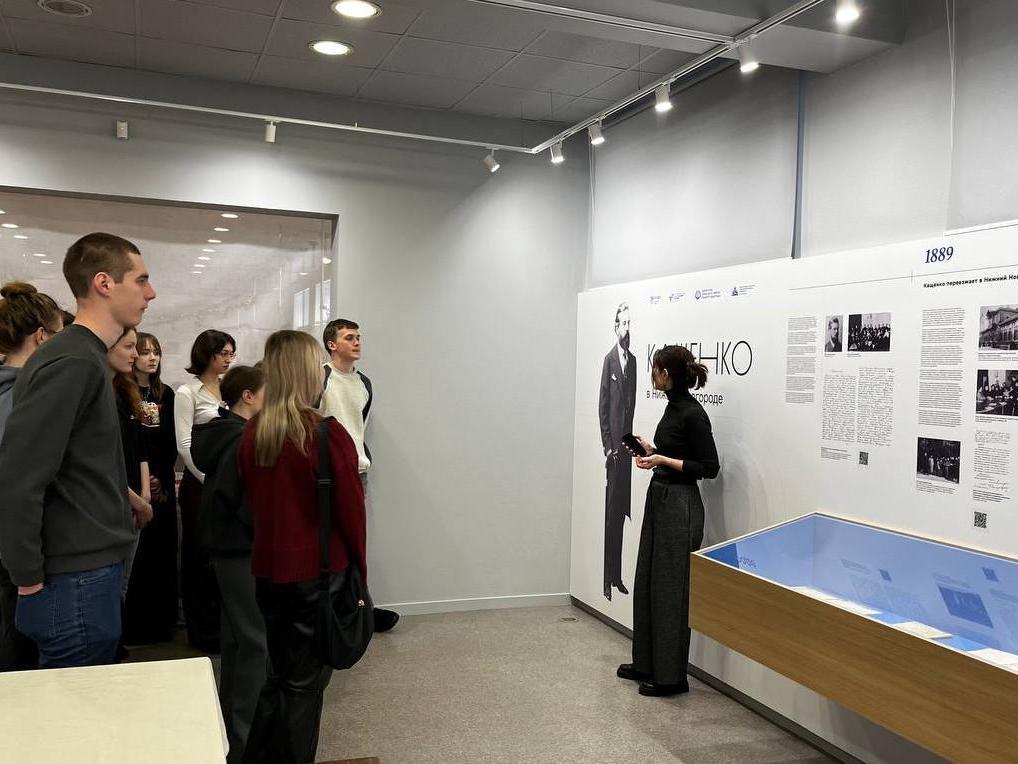
The exhibition «Kashchenko in Nizhny Novgorod» is a museum project dedicated to the history of psychiatry in the city and the work of the psychiatric hospital, popularly known as Kashchenko.
It tells about the development of psychiatric care in Nizhny Novgorod, about doctors and patients, and how society«s attitude towards mental illness has changed. The exhibition materials help understand not only the medical but also the social and cultural aspects of this history, breaking stereotypes and showing psychiatry as an important part of the city»s history and medicine in general.
The project was launched by Yevgenia Petukhova, director of the library system in the Prioksky District, and Anna Matveyicheva, a specialist in exhibition activities at the Prioksky District Museum.
How did the idea for the project «Kashchenko in Nizhny Novgorod» come about?

The Prioksky District is home to a unique psychiatric hospital where Pyotr Petrovich Kashchenko worked. He came to Nizhny Novgorod in 1889 to take up the position of chief physician of the psychiatric department of the Nizhny Novgorod Zemstvo Hospital and to carry out a reform of the organization of psychiatric care here. He wanted to improve the quality of life for patients and help them become full-fledged members of society.
One of the stages of the reform was the opening of a new type of hospital in the village of Lyakhovo. It practically did not use drug therapy. The main methods of treatment were occupational therapy (work on the farm, in the garden and vegetable garden, furniture making, sewing), cultural therapy (reading, musical evenings, theatrical performances) and environmental therapy (healthy lifestyle, walks, and a warm family atmosphere).
During his 15 years of work in Nizhny Novgorod, Kashchenko created the best system for organizing psychiatric care in the country. The complex of hospital buildings in Lyakhovo has been preserved almost in its original form and is a true architectural masterpiece. But this page of the district«s history was completely unknown to the residents of Nizhny Novgorod and even more so to visitors to the city.
What task did you set for yourselves when addressing this topic?
Through the exhibition «Kashchenko in Nizhny Novgorod,» we invited visitors to look at the issue of mental health through the prism of the biography and professional path of a brilliant doctor and talented person — Pyotr Petrovich Kashchenko. His personal story, humanistic views, and tireless struggle for the human dignity of patients serve as a powerful example that breaks stereotypes. It is important to note that the project was born with the support of the «Museum Without Borders» program of the Potanin Foundation. Its goal is to talk about mental health not as something abstract, but through the history of a real person whose life was dedicated to mercy and scientific progress in this field.
In your opinion, what is the main mission of the project?
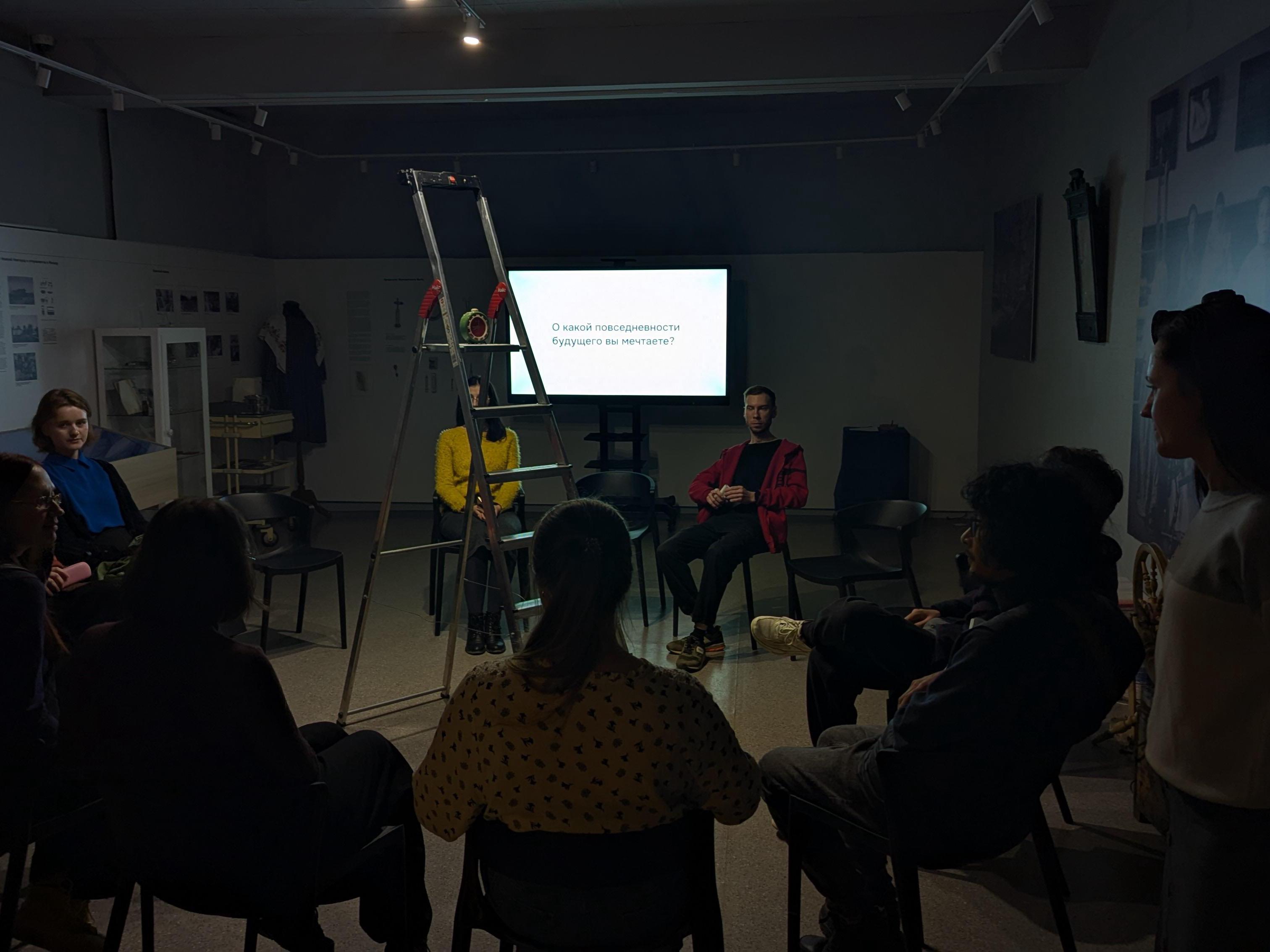
We show a certain continuity: our conversation about mental health is a direct continuation of Pyotr Petrovich Kashchenko«s work in destigmatizing mental disorders, only in the language of a museum. Around the exhibition, we created a safe space for talking about mental health, but with an emphasis on evidence-based approaches.
For a long time, any mental disorders were considered either possession, the evil eye, a curse, or a sign of character weakness, something shameful for the family. These attitudes are passed down from generation to generation. In our society, the myth still lives on that any psychological condition can be dealt with by pulling oneself together, thinking positively, or simply resting. This places a colossal burden of guilt on the person: if you didn«t cope, it means you didn»t try hard enough. Moreover, difficulties with mental health cannot be as visibly proven as, for example, a broken leg. Everything that is not obvious and not easily measurable in our rational world often causes distrust and fear.
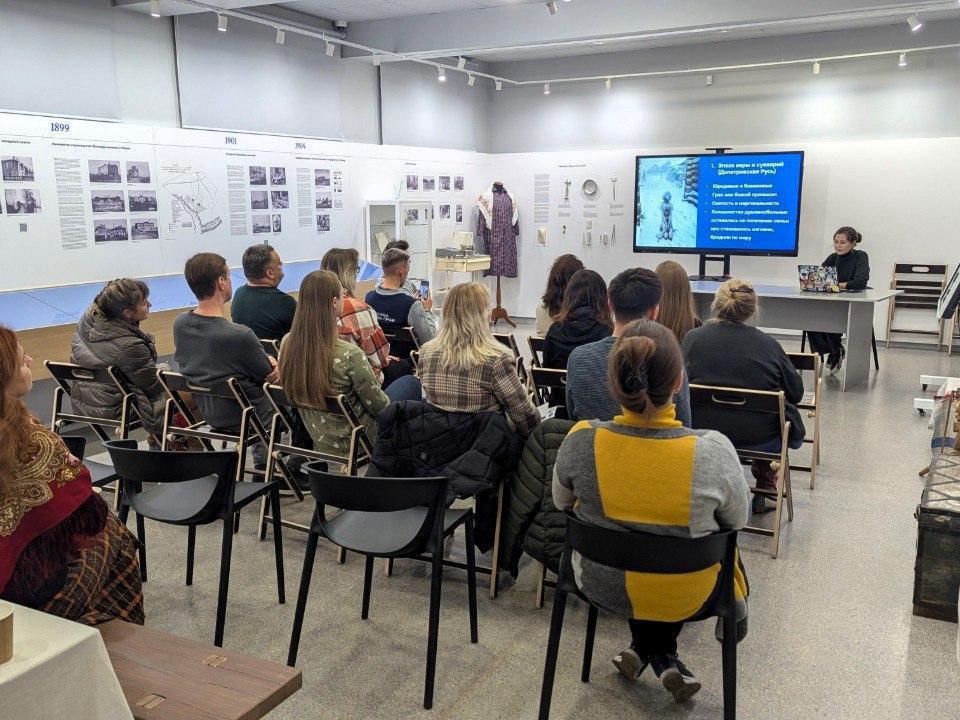
Our project is an attempt to work with all these layers simultaneously. We want the phrase «I go to a psychologist» to sound as natural as «I go to the dentist.» Caring for one«s mental state is not a luxury or a privilege, but basic hygiene for a modern person. Through the project »It«s Not Customary to Talk...» we lifted the taboo on conversations about different mental states, gathering these conversations around the figure of Pyotr Petrovich through various cultural formats. The project combines both cultural significance and educational value.
How does the exhibition reveal Kashchenko«s personality and work?
The first part of the exhibition is dedicated to Kashchenko«s professional formation. Pyotr Petrovich was born and raised in a Cossack environment, which undoubtedly influenced his freedom-loving character. Then he entered Moscow University, studied very well, but joined a Marxist circle and was expelled in his fifth year just before graduation exams for participating in an anti-government protest. Two years later, he was able to continue his studies in Kazan, received a medical diploma, and went to work in Tver Province, at the progressive psychiatric hospital in the village of Burashevo. There he gained invaluable experience and began to gain popularity in the medical community.
In Nizhny Novgorod, Kashchenko flourished as a professional; he was noticed at the highest level and invited to work at the Alekseevskaya Hospital in Moscow, and from there — to the capital, St. Petersburg, where he created a suburban hospital based on the model of the Lyakhovo village. Our exhibition also tells about this.
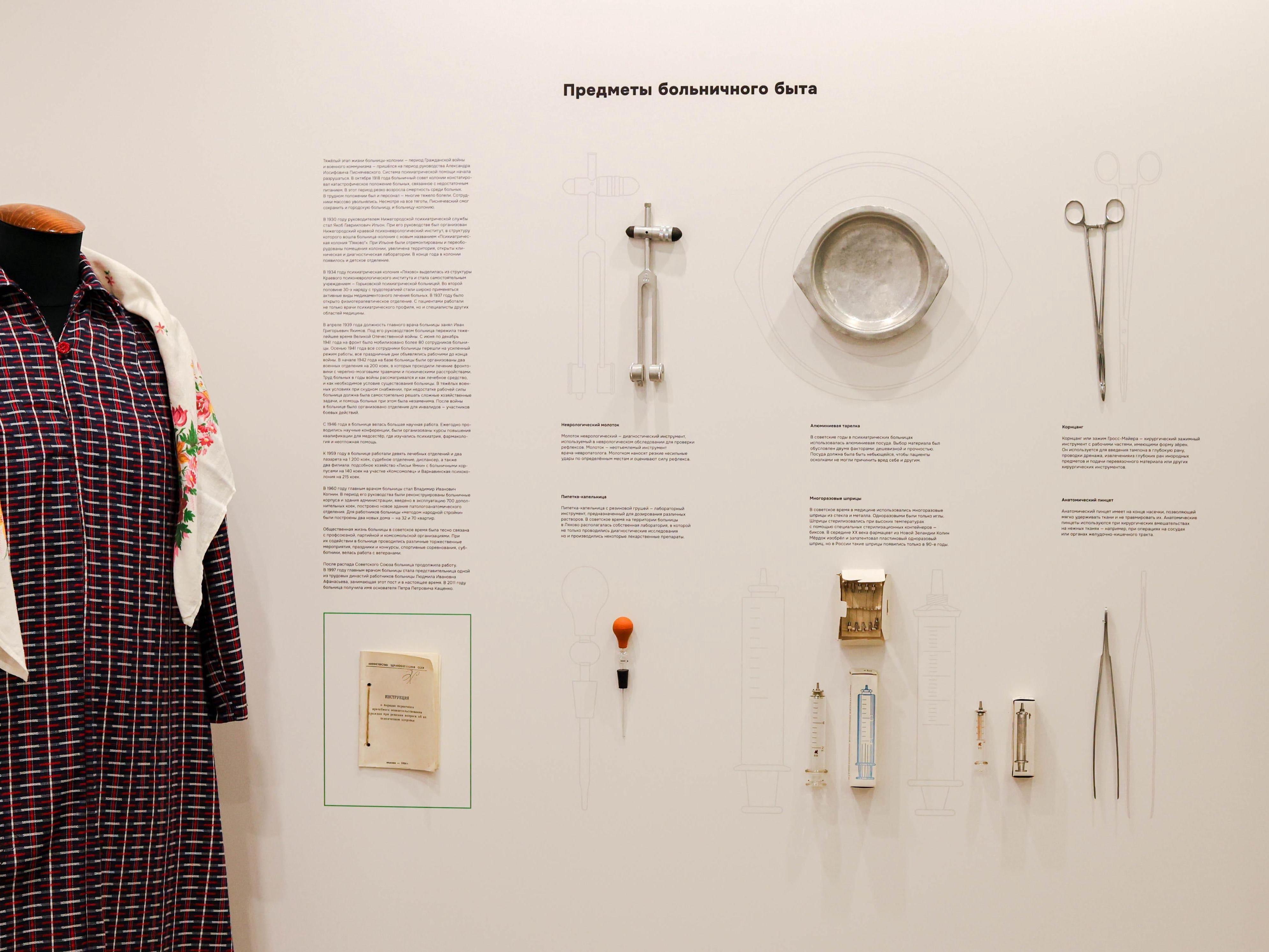
Another small part of the exhibition is dedicated to how the hospital in Lyakhovo developed during Soviet times. We tried to show Kashchenko not only as a professional — a brilliant doctor and organizer of the medical system — but also as a person: he was an educated, well-mannered, well-read individual, a talented musician, and in his youth participated in revolutionary activities, maintaining sympathies for the socialist movement until the end of his life.
Perhaps there are aspects of Pyotr Kashchenko«s biography, professional path, or worldview that played a key role in creating the exhibition?
The main part of the exhibition tells about Kashchenko«s work in Nizhny Novgorod, where he went after working in Burashevo. He actively fought both against prejudices prevailing in society and against the bureaucratic machine that hindered the development of psychiatry.
Here he communicated with the local progressive intelligentsia, for example with Gorky and Korolenko, and participated in public life. It was in Nizhny Novgorod Province that Kashchenko conducted the first census in the Russian Empire of the population with mental health problems, collecting data not only on the number of patients but also on attitudes towards them.
At the center of the exhibition, we placed the principles of organizing psychiatric care formulated by Kashchenko during his work in Nizhny Novgorod: the main goal is the well-being of the patient, not the interests of public safety; personal freedom, care for living conditions, and the patient«s quickest recovery — these are the most important parts of therapy.
Did you use original materials, archives, artifacts in the project?
Our pride is the unique reports by Kashchenko and his colleagues, one of which — with a dedicatory inscription by Pyotr Petrovich. These documents were lent to us for the duration of the exhibition by the hospital. When we first received them, we thought the most interesting thing about them was their age, as they were published in the late 19th — early 20th centuries.
But then we started reading them and were simply amazed. We expected them to be just dry tables with the number of sick and recovered, hospital expense estimates. But these reports contain everything: descriptions of attitudes towards the mentally ill in society, Kashchenko«s reflections on the nature of diseases and treatment methods, a detailed history of the struggle for hospital funding, and much more.
How do they help convey the spirit of the era and the ideas of the hero?
In all the reports, the attitude towards patients first and foremost as individuals is evident. Here, for example, is a quote from one report: «One peasant went mad about inventing a perpetual motion machine, already about 30 years ago. He wants to make the world happy. He spent all his household on this, now lives in a mud hut. In it, all kinds of wheels, levers of rough work and drawings are arranged. Next to the hut is a model of this imaginary machine: a mill wheel and levers about three sazhen long. Everything he earns, he uses to bring his model to its final form. Fellow villagers mock him, but he treats their antics with apostolic patience.» All documents have been digitized; they can be viewed at the exhibition itself using an interactive panel, or by using QR codes on the stands that direct visitors to the exhibition«s electronic resources.
Museum visitors are invited to familiarize themselves with the full text of Pyotr Petrovich Kashchenko«s certificate of graduation from Kazan University and the faculty promise. In pre-revolutionary Russia, future medics gave a faculty promise, the full text of which was placed on the back of the university graduation document. The promise served as a reminder of medical duty. Also on display is a unique photo archive: photographic documents that testify to the atmosphere in the hospital, to the kind, attentive, individual attitude of Kashchenko both to the sick and to the staff.
Speaking of Kashchenko«s legacy, what long-term changes in society and medicine does the project reveal?
Kashchenko managed to change the attitude of the medical community, and indeed society as a whole, towards the mentally ill; sympathy and compassion, a desire to help, became predominant.
In an era when patients were often kept in conditions more reminiscent of prisons, his approach was bold and ambiguous, highly spiritual and humane. The abolition of restraint measures, the organization of labor workshops, respect for the patient«s personality — this is a policy of compassion that overcomes the barriers of the system of public prejudices. Kashchenko was a figure of titanic scale, and his name deserves to stand alongside the most famous humanists of Russia. But his name is still known only as a synonym for »madhouse.« This is astonishing and unfair. Our project is also a way to return Kashchenko»s name to the public sphere, to make it a symbol not of psychiatry as something frightening, but of mercy, perseverance, and faith in humanity.
Returning to the exhibition itself, what methods of museum and exhibition design did you use to enhance perception?
Our exhibition is not only a story about Kashchenko and his hospital but also an immersion into the atmosphere. In the exhibition, we used photographs of different sizes. For example, visitors are greeted by a life-size figure of Pyotr Petrovich Kashchenko; he seems to welcome them and invite them to immerse themselves in this amazing story. We partially recreated several photographs: in the center of the exhibition stands a table identical to one in a common room of the hospital, on the table — a samovar. Visitors can sit there, read books. On one wall — a large photograph of female patients engaged in occupational therapy. In front of the photograph, we displayed the same items as in it: a spinning wheel, a bench, a chest. Thus, visitors are as if immersed in past and often forgotten times.
What role should this exhibition play in the contemporary cultural space of the city?
We wanted to move away from abstract conversations and place the topic of mental health, personal comfort, in a very specific, tangible context — in the history of our own district, our city. The history of the hospital in Lyakhovo is a blank spot for many. We literally wanted to «return» Kashchenko to Nizhny Novgorod, to show that his legacy is not something distant and abstract, but part of our local, Nizhny Novgorod identity. His humanistic principles were born and embodied right here, on our land. By linking medicine, culture, and history in the exhibition, we make the topic of mental health closer and more understandable. We speak to the townspeople in the language of their streets, their history. When complex experiences are inscribed into a familiar place, they lose the aura of something alien and unknown. Thus, the exhibition combines several powerful layers: local history (our local history, which we can be proud of), humanistic (Kashchenko«s legacy as a symbol of compassion), and contemporary (our project as a living development of the ideas of the humanist doctor).