Anna Yakimova-Dikovskaya: The revolutionary in the 1917 Chita photo
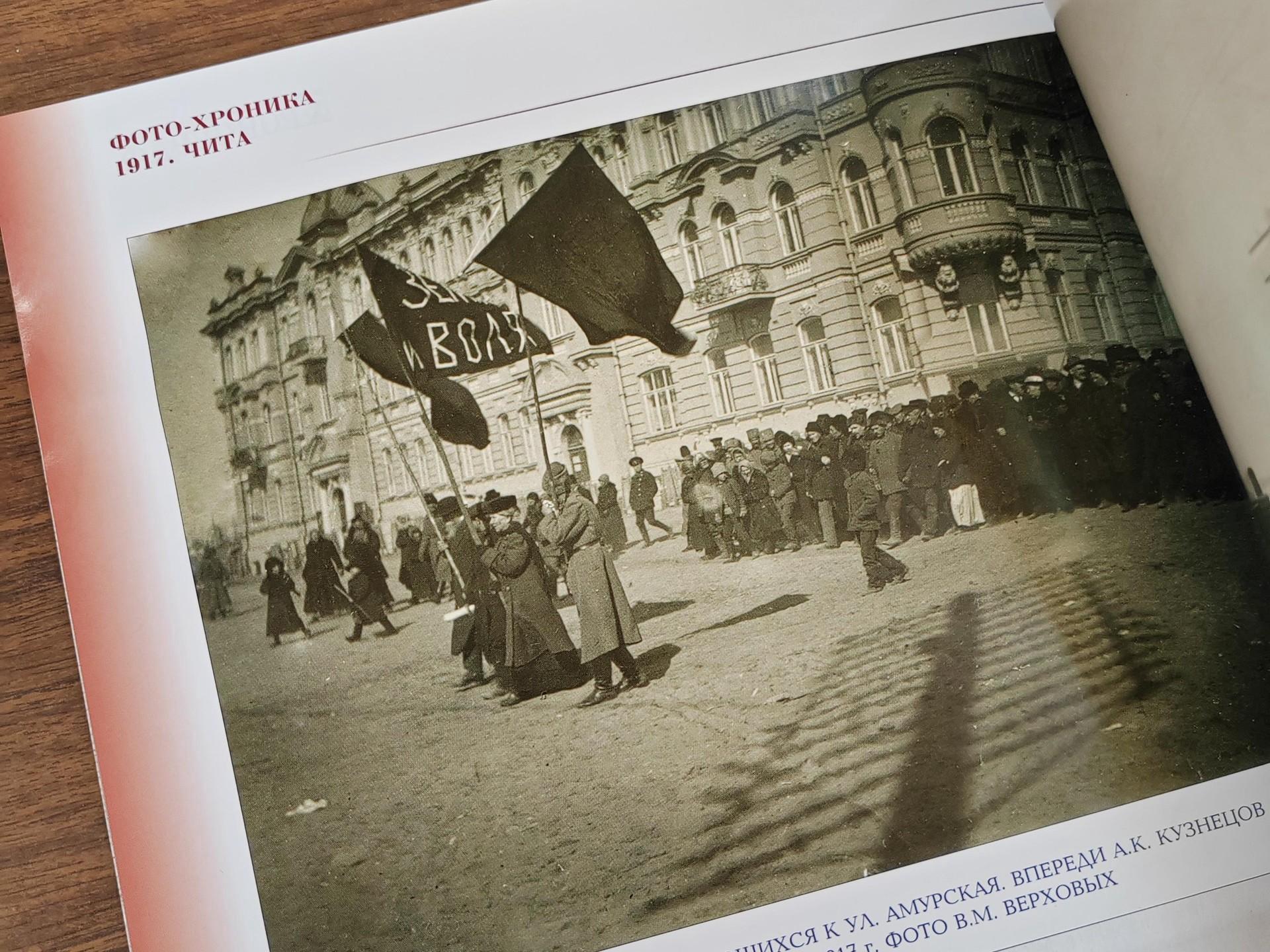

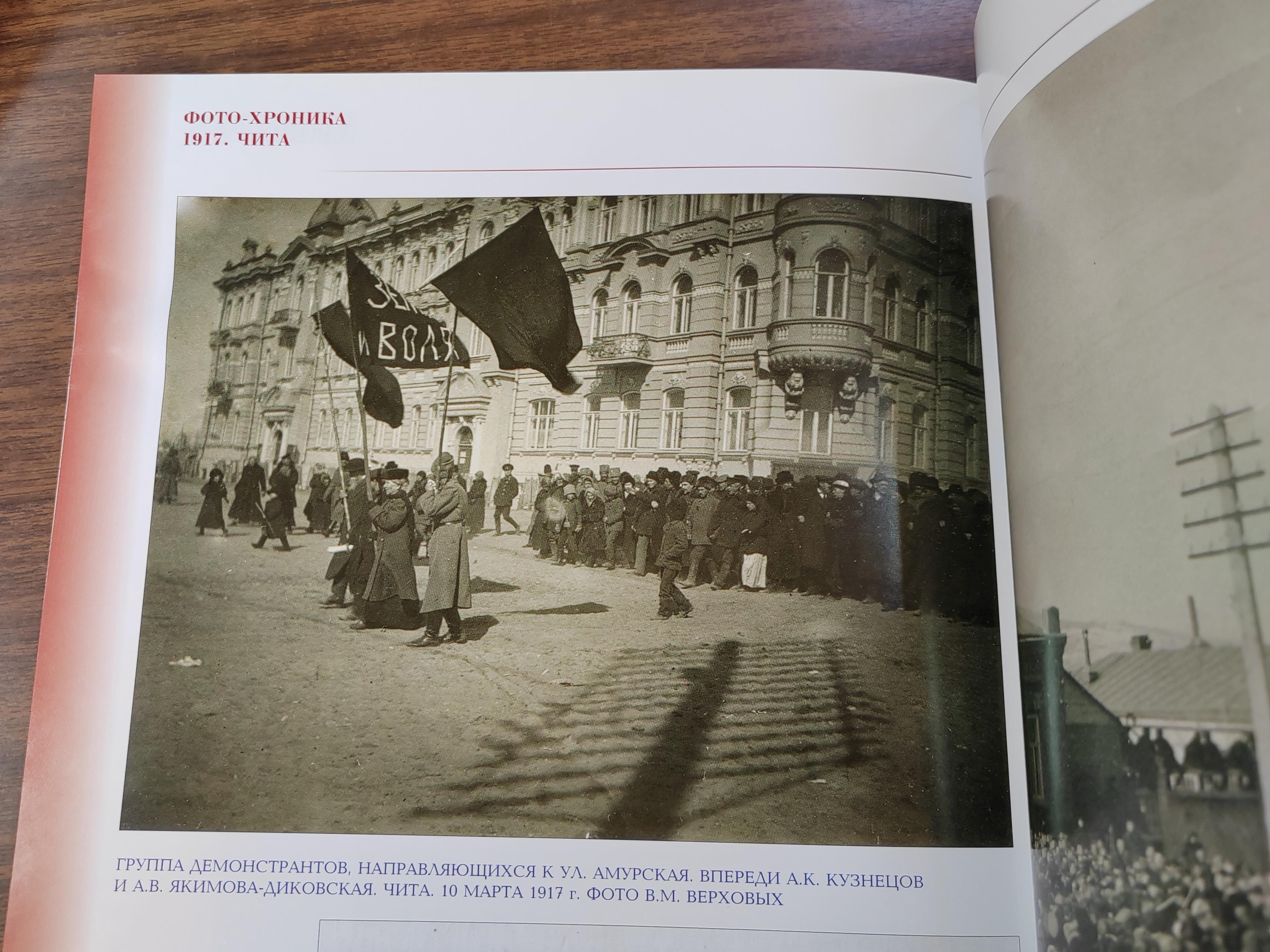
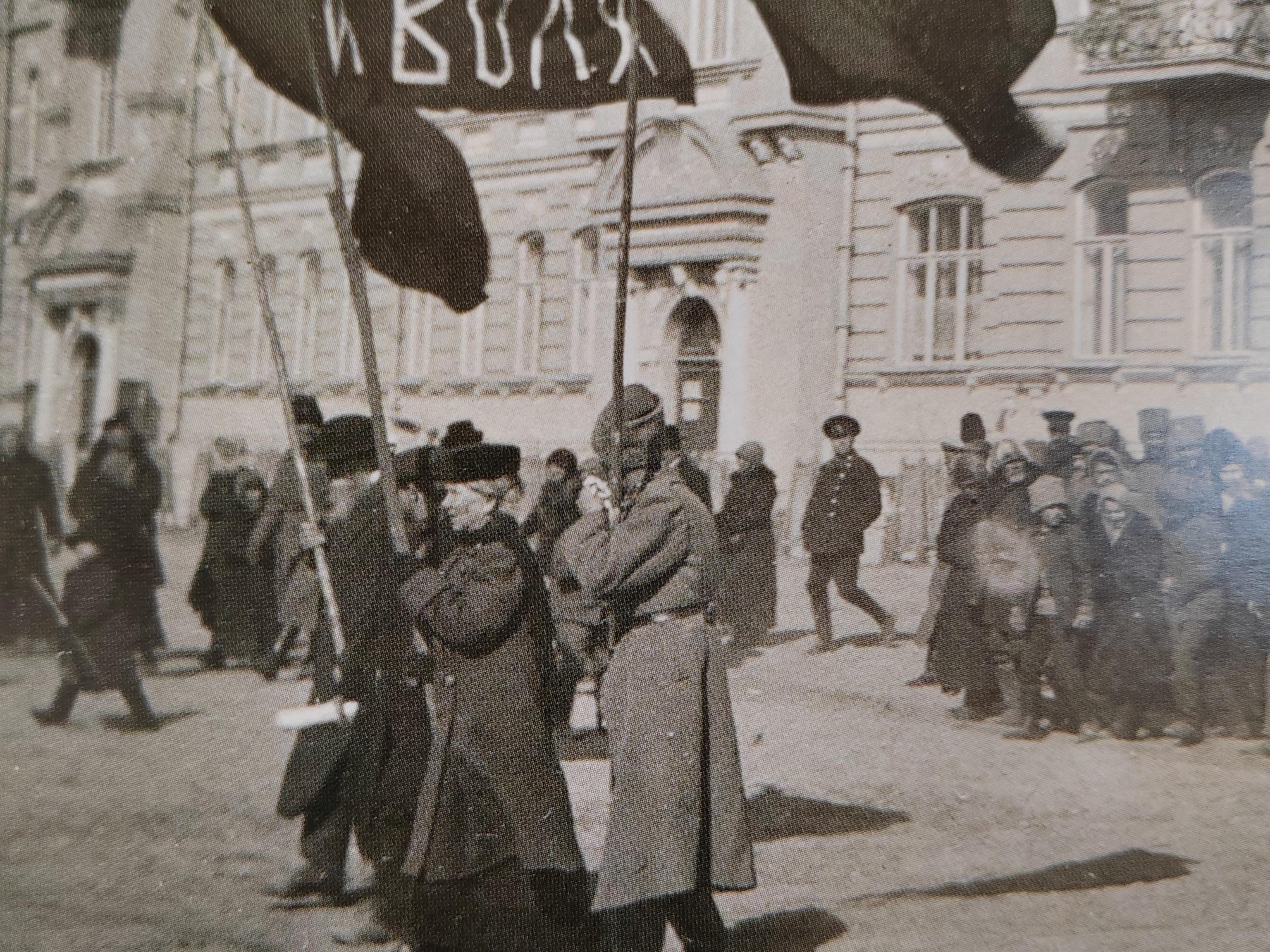
The black-and-white photo from a Chita rally on May 10, 1917, dedicated to the revolution, has once again caught my attention. At the end of 2025, a text was published claiming that the woman carrying the banner was one of the most famous Socialist Revolutionary Party (SR) members in the country, Maria Spiridonova. Several history experts I know agreed on this — at that time she was supposed to arrive in the city from hard labor, and the SR slogan «Land and Freedom» suited her. However, recently, Doctor of Historical Sciences Alexander Konstantinov contacted me and said that confusion about the woman in the photo often arises, but in fact, it shows another Russian revolutionary — Anna Yakimova-Dikovskaya, who took part in the assassination attempt on Alexander II. How did fate bring her to Chita?
Why not Spiridonova?
Alexander Vasilyevich shared that he had also heard the version that the black-and-white photo captured Maria Spiridonova. However, he doubted this when he enlarged the photo and saw that the woman was of a different build and older. In 1917, Spiridonova was only 33 years old, while Yakimova was 61. Konstantinov said that his version was confirmed by Doctor of Historical Sciences Zoya Moshkina, the leading expert on the history of political hard labor and exile in Transbaikalia, who unequivocally stated that it was Yakimova at the rally.
The correct caption is also found in the 2017 issue of the journal «Khronograf.» The archival photo is signed: «A group of demonstrators heading to Amurskaya Street. In front are A.K. Kuznetsov and A.V. Yakimova-Dikovskaya. Chita. March 10, 1917. Photo by V.M. Verkhovykh.»
A revolutionary with the pseudonym Baska
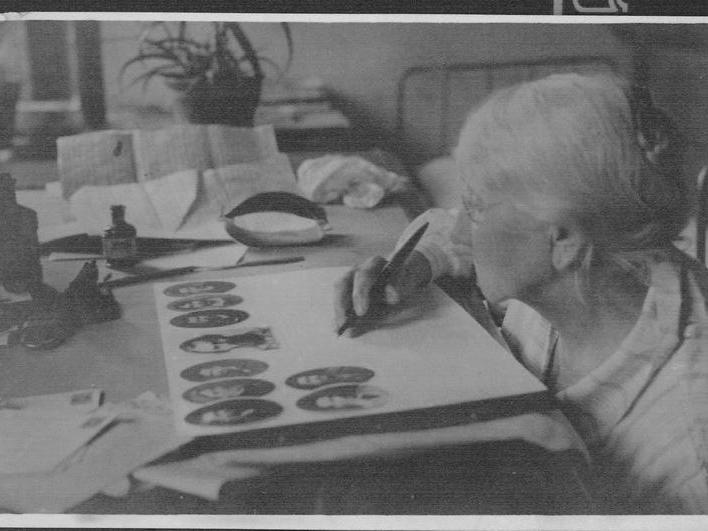
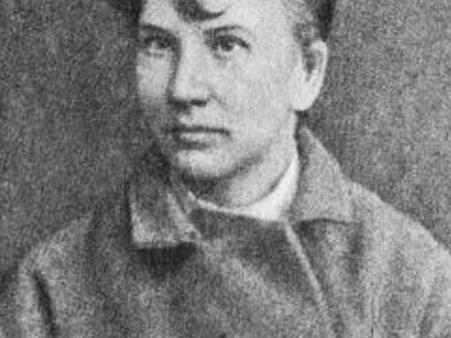
Anna Yakimova was born 28 years earlier than Maria Spiridonova and helped carry out the regicide when the latter was not even born. Anna Vasilyevna was born on June 12 (24), 1856, into a priest«s family in the village of Tumyumuchashcha, Vyatka Province (now Kirov Oblast).
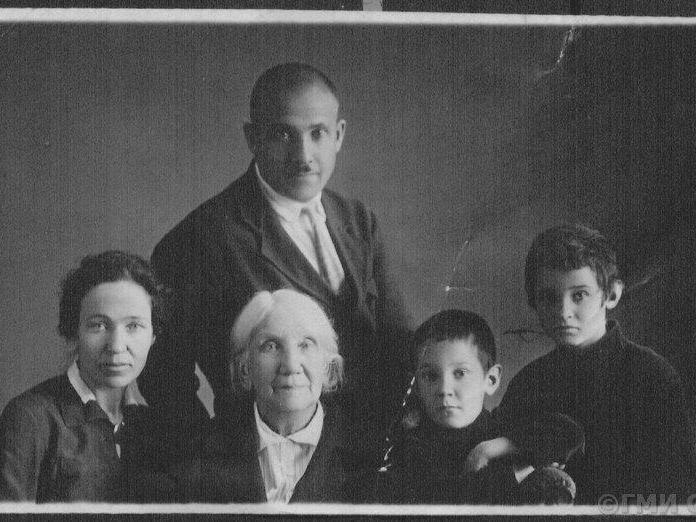
The girl studied at a diocesan school. One of her teachers, Anna Kuvshinskaya, was a nihilist who brought illegal literature into the school and brought an illegal propagandist to them. When this was found out, the teacher was fired. But she managed to sow the seeds of revolution in the hearts of several students, including Anna Yakimova.
After her studies and a one-year pedagogical course, Yakimova became a village teacher and simultaneously conducted propaganda among peasants. For this, she was arrested and spent three years in the Peter and Paul Fortress. After her release, she joined the organization «Land and Freedom» (Zemlya i Volya) and was the keeper of their first dynamite workshop in St. Petersburg. Her pseudonym was Baska, and at different times she had several cover husbands. The woman hid from the authorities, living under different names.
Yakimova took part in preparing four assassination attempts on Alexander II. In March 1881, the bomb that killed the emperor was not placed by her — the tsar turned onto a street where other bombers were waiting. At first, 25-year-old Anna managed to hide together with her common-law husband Martyn Langanson, but they were arrested a month and a half later and tried along with 20 other organizers of the attempts. She was among ten other participants sentenced to death.
When it was discovered in prison that Yakimova was pregnant, Alexander III commuted the death sentence to indefinite hard labor. Her son was born in prison, and on the way to hard labor, the mother had to leave him in Krasnoyarsk with the family of an exiled doctor.
She served her hard labor at the Kara katorga (Kara penal colony) in Transbaikalia — there, on a tributary of the Shilka River, prisoners mined gold. After seven years, in 1892, she was allowed to live in a «volnaya komanda» (free command). This was what political prisoners were called who lived in separate huts, rented private apartments, and had relative freedom of movement. Here, Anna married political exile Moisei Dikovsky. They had a daughter, Elizaveta, who soon died. Then, in 1896, a son, Andrei, was born, who later became a therapist and balneologist, a Candidate of Medical Sciences. He worked at one of the Moscow institutes.
In 1899, Anna Vasilyevna went to settle in Chita, where her husband worked as a bookkeeper on the construction of the Transbaikal Railway, and she worked as a clerk. But in December 1904, she left her husband and fled to European Russia to work in the Socialist Revolutionary Party (SR) and participated in the first Russian revolution.
In the summer of 1905, she was arrested and imprisoned for 8 months in the Peter and Paul Fortress. In 1907, she was returned to live in Chita, where Yakimova-Dikovskaya remained until 1917 — until the overthrow of the government and the amnesty for political prisoners.
At the rally on May 10, 1917, Baska was entrusted with carrying the banner — she walked at the head of the column. To her right walked a hard labor prisoner, a prisoner of Kara and Akatuy, Alexei Kuznetsov. In July 1917, Yakimova left Chita forever.
From autumn 1917 to autumn 1941, she lived in Moscow, working in cooperative institutions. She was a member of the Society of Former Political Prisoners and Exiled Settlers, wrote articles and edited the journal «Katorga i Ssylka» (Hard Labor and Exile), and published a collection «Kara and Other Prisons of the Nerchinsk Hard Labor.» In 1923, for her services to the people, she was awarded a personal union-level pension of 400 rubles a month (about $4 at current rates), the same as secretaries of city party committees.
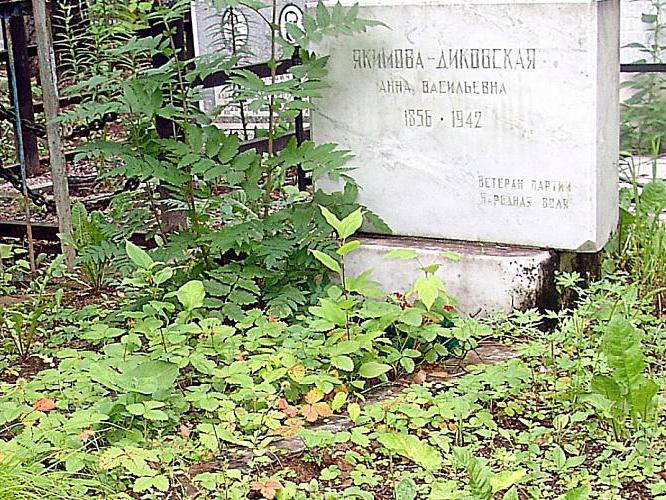
In autumn 1941, the elderly Anna Yakimova-Dikovskaya was evacuated from Moscow on a hospital train to the rear to her son in Novosibirsk. She died on her birthday in 1942 in Novosibirsk — she was 86 years old. The pedestal on her grave is recognized as a historical monument of regional significance.
In preparing the text, the following were used: the article «Baska: The Most Famous Chita Woman?» by Alexander Konstantinov in the newspaper «Chitinskoye Obozreniye» and the texts by Igor Maranin «The Emperor and the Bomb Thrower: A Meeting on the Banks of the Ob», «The Emperor and the Bomb Thrower: Continuation of the Story, Our Time» on the portal «Iskry.»