Six sea buckthorn recipes for winter
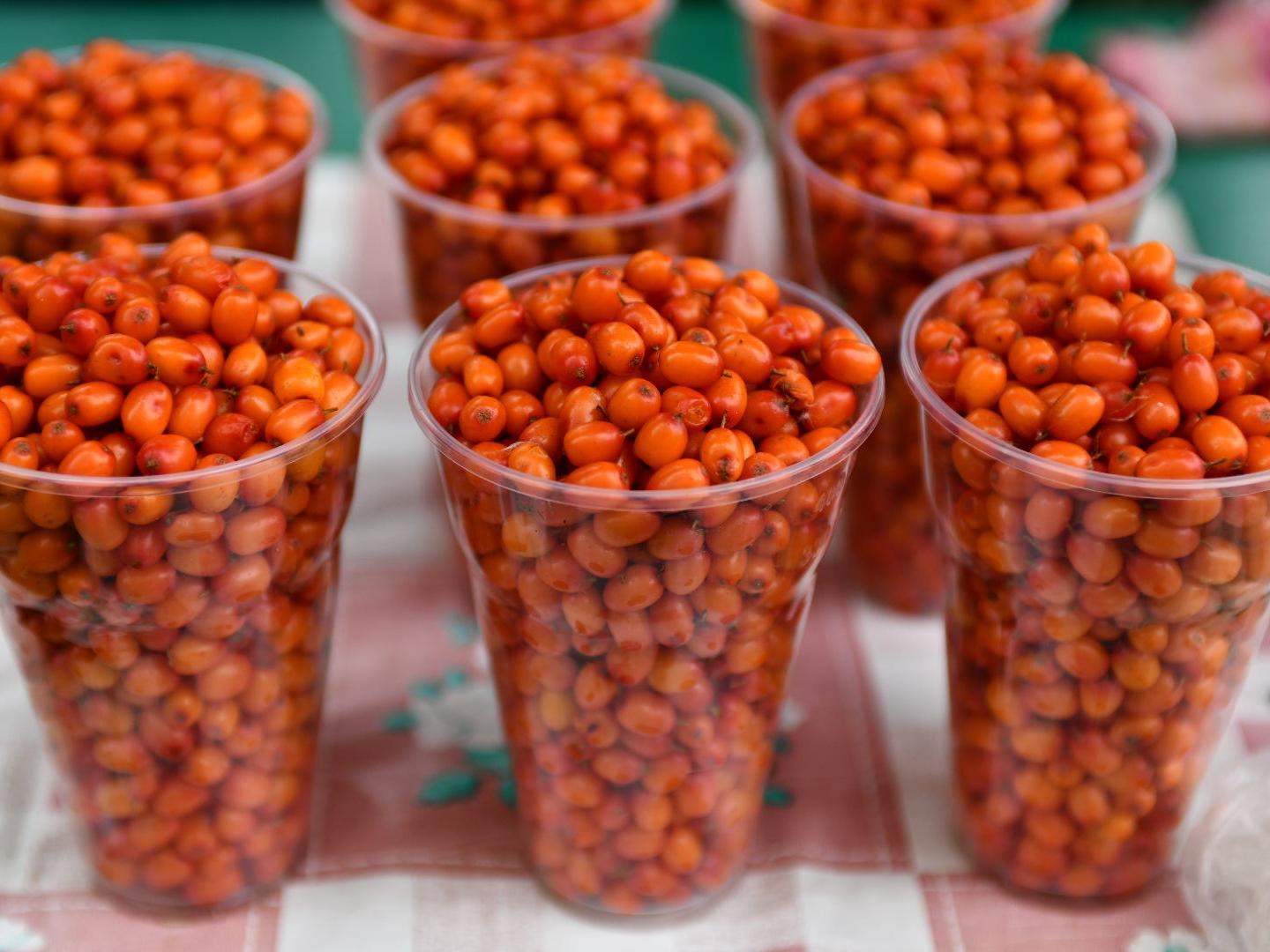

It’s hard to imagine anyone scarfing down sea buckthorn by the handful — this berry usually goes into cooking. And preserving. For winter. In fact, sea buckthorn is especially good in winter, thanks to its many beneficial properties. To keep them all and enjoy its flavor anytime, note our five recipes for preparing sea buckthorn for winter.
Frozen sea buckthorn for tea
The simplest way to freeze sea buckthorn for winter is to toss it fresh into the freezer and let it sit. But we don’t take the easy route and prefer more interesting options — for example, freezing it puréed. To prepare it this way you need very little: sea buckthorn (as much as you need) and sugar (2 tablespoons for every 300 grams of berries).
First, wash the sea buckthorn thoroughly and remove leaves, debris, and spoiled fruit. This applies to every recipe, not just this one. After washing, it’s helpful to dry the berries, but it’s not essential, so you can proceed right away.
To freeze sea buckthorn for tea, follow these simple steps:
Combine the sea buckthorn with sugar and blend until completely smooth.
Spoon the mixture into an ice cube tray and cover with a lid or plastic wrap.
Freeze for 5–12 hours until the cubes set completely.
Transfer the sea buckthorn ice to a plastic container and return it to the freezer for long-term storage.
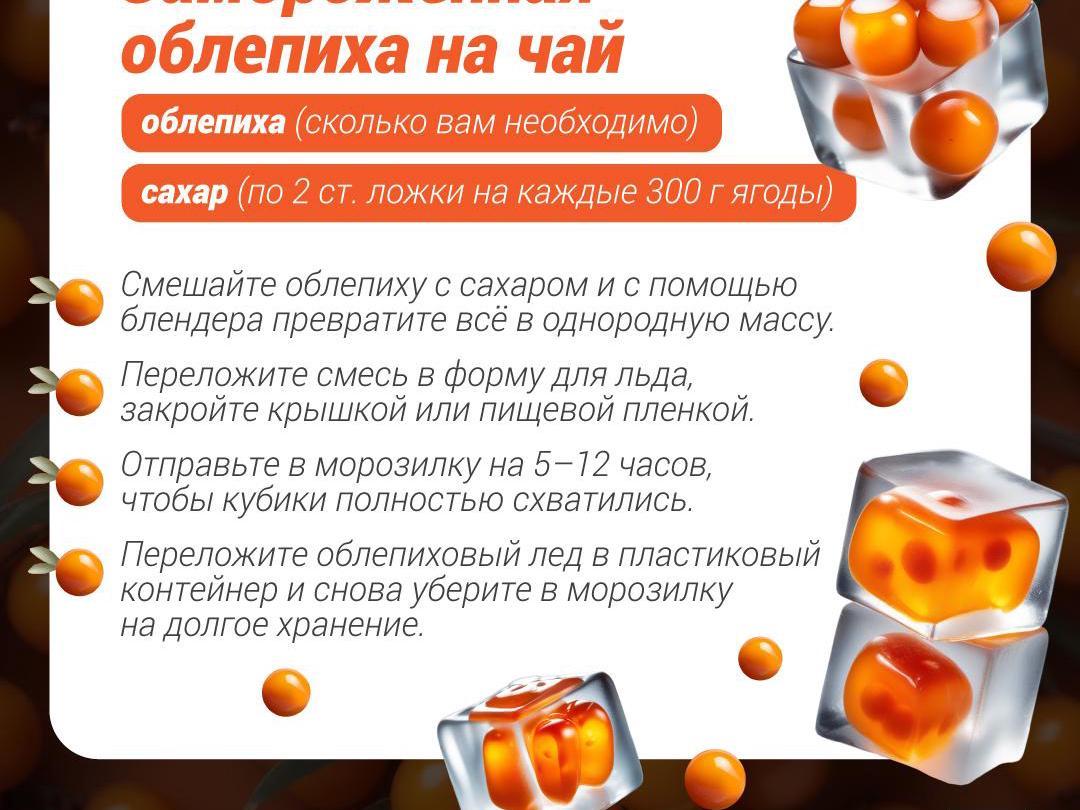
Sea buckthorn cubes are very convenient for making winter tea. One cube is enough for a full cup of an aromatic, wholesome drink.
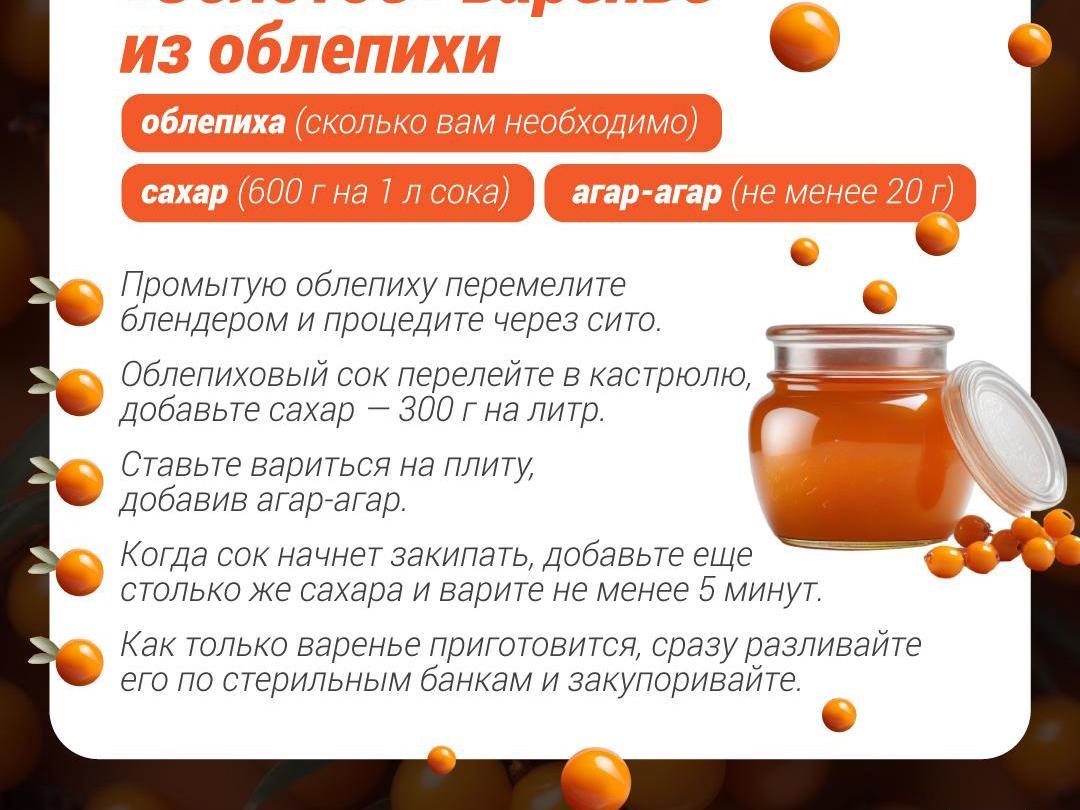
«Golden» sea buckthorn jam
To make «golden» sea buckthorn jam, besides the berries you’ll need sugar (600 grams per 1 liter of juice) and agar-agar (at least 20 grams). Proceed as follows:
Blend the washed sea buckthorn and strain through a sieve.
Pour the sea buckthorn juice into a saucepan and add sugar — 300 grams per liter.
Put it on the stove to cook, adding the agar-agar.
When the juice begins to boil, add the same amount of sugar again and cook for at least 5 minutes.
As soon as the jam is ready, immediately pour it into sterilized jars and seal.
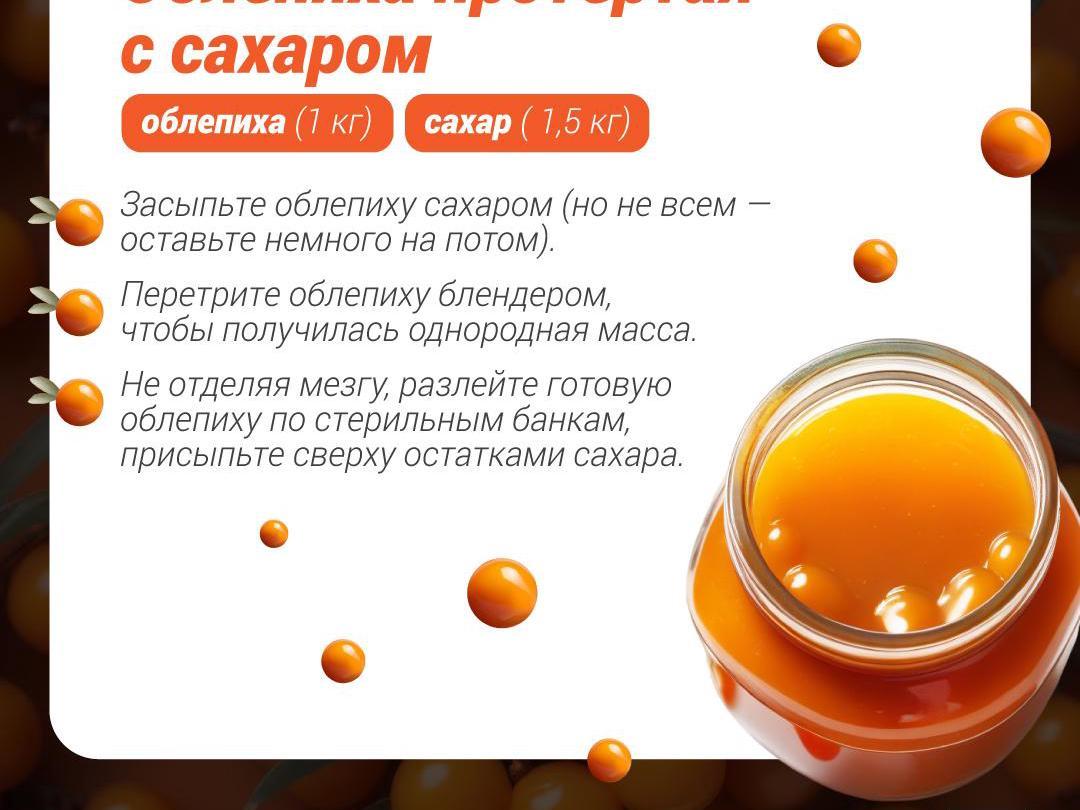
Sea buckthorn puréed with sugar
Raw sea buckthorn preserve is made at a ratio of 1 kg berries to 1.5 kg sugar. You’ll only need an immersion blender. Then do the following:
Cover the sea buckthorn with sugar (not all of it — reserve a little for later).
Blend the sea buckthorn into a homogeneous mixture.
Without separating the pulp, pour the finished sea buckthorn into sterilized jars and sprinkle the remaining sugar on top.
This raw “jam” should be stored at temperatures no higher than +4 °C (39 °F), that is, in the refrigerator. By the way, once winter sets in, you can move it to the balcony; with sugar added, sea buckthorn won’t freeze solid even in severe frosts.
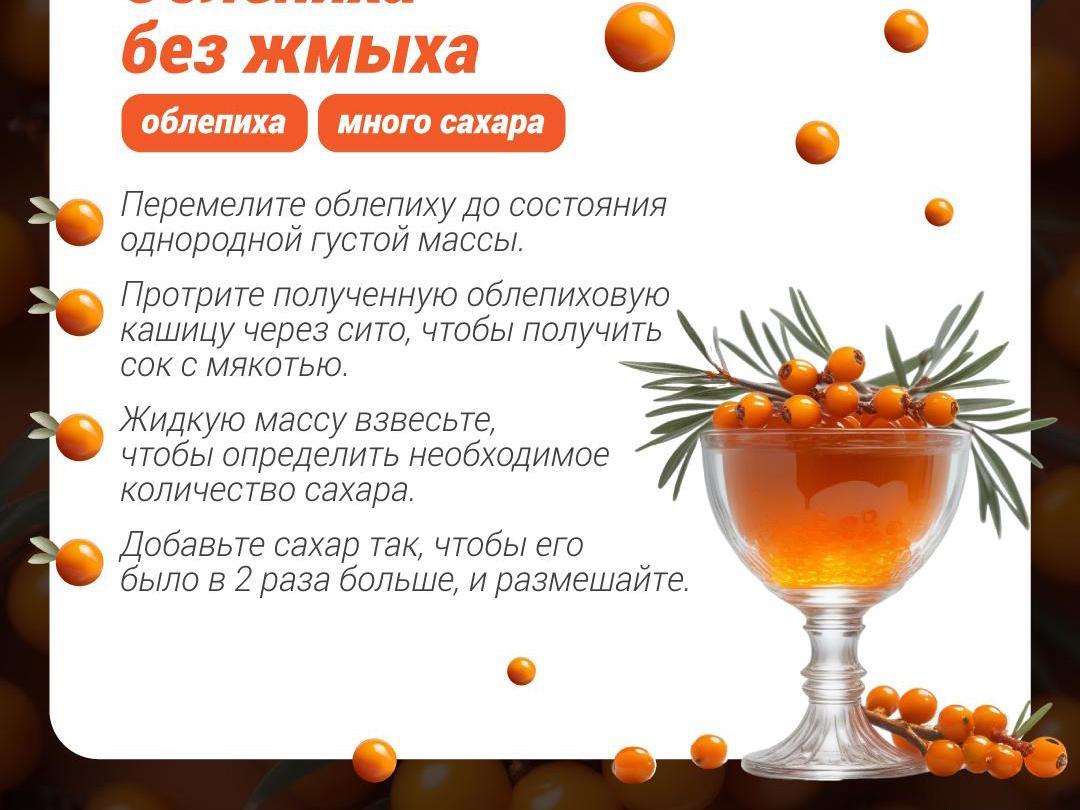
Sea buckthorn without pomace
To prepare a preserve this way you’ll need sea buckthorn berries, any type of blender, a sieve, a large pot, and plenty of sugar. The steps are:
Blend the sea buckthorn to a thick, uniform purée.
Press the purée through a sieve to obtain a pulpy juice.
Weigh the liquid to determine the amount of sugar needed.
Add sugar in an amount twice the weight of the liquid and stir.
Stir the pulpy juice for a long time — about 5 hours — until the sugar dissolves. Do not boil this preserve so the sea buckthorn retains its beneficial properties. Store sealed in sterilized jars.
Sea buckthorn jelly
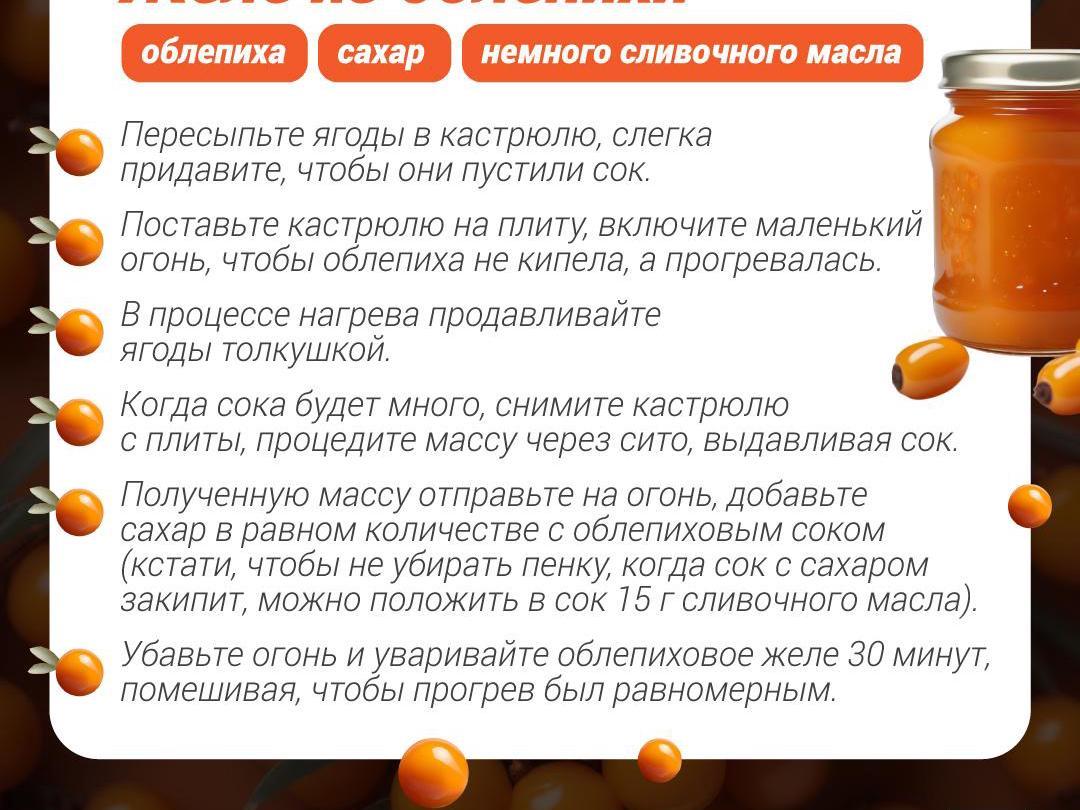
You can make a delicious sea buckthorn jelly for winter without added gelling agents. This recipe includes only the berries, sugar, and a small amount of butter. Steps:
Transfer the berries to a saucepan and lightly crush them to release some juice.
Set the pan on the stove over low heat so the sea buckthorn warms without boiling.
As it heats, mash the berries with a masher.
When there is plenty of juice, remove the pan from the heat and press the mixture through a sieve, extracting the juice.
Return the liquid to the heat and add sugar in an amount equal to the sea buckthorn juice. By the way, to avoid skimming foam when the sugary juice boils, you can add 15 grams of butter.
Reduce the heat and cook the sea buckthorn jelly for 30 minutes, stirring occasionally for even heating.
When the jelly is ready, immediately ladle it into sterilized jars. After that, cover the jars with cheesecloth, let the jelly cool completely, and seal with lids.
Sea buckthorn oil
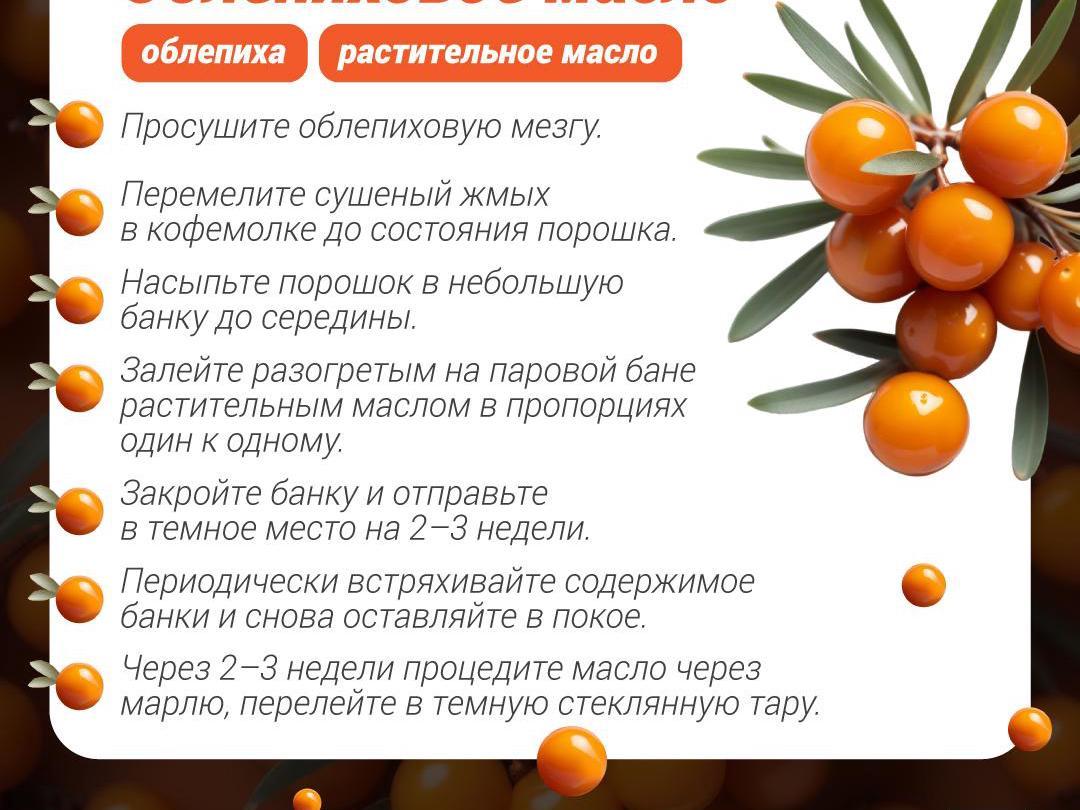
Making sea buckthorn preserves produces quite a lot of pomace. Don’t throw it away — put it to use. For example, dry it and store in dry jars to add to tea later, ground in a coffee grinder or as is. Another option is to make sea buckthorn oil. Here’s how:
Dry the sea buckthorn pulp.
Grind the dried pomace in a coffee grinder to a powder.
Pour the powder into a small jar to halfway.
Pour in vegetable oil warmed in a double boiler in a 1:1 ratio.
Seal the jar and place it in a dark place for 2–3 weeks.
Periodically shake the contents and leave it to infuse again.
After 2–3 weeks, strain the oil through cheesecloth and decant into dark glass containers.
You can use any oil, though cold-pressed is highly preferable. Store the finished product in a cool, dark place. Don’t make too much at once; it’s better to prepare more as you use it.