Samara grower cultivates 100 grape varieties
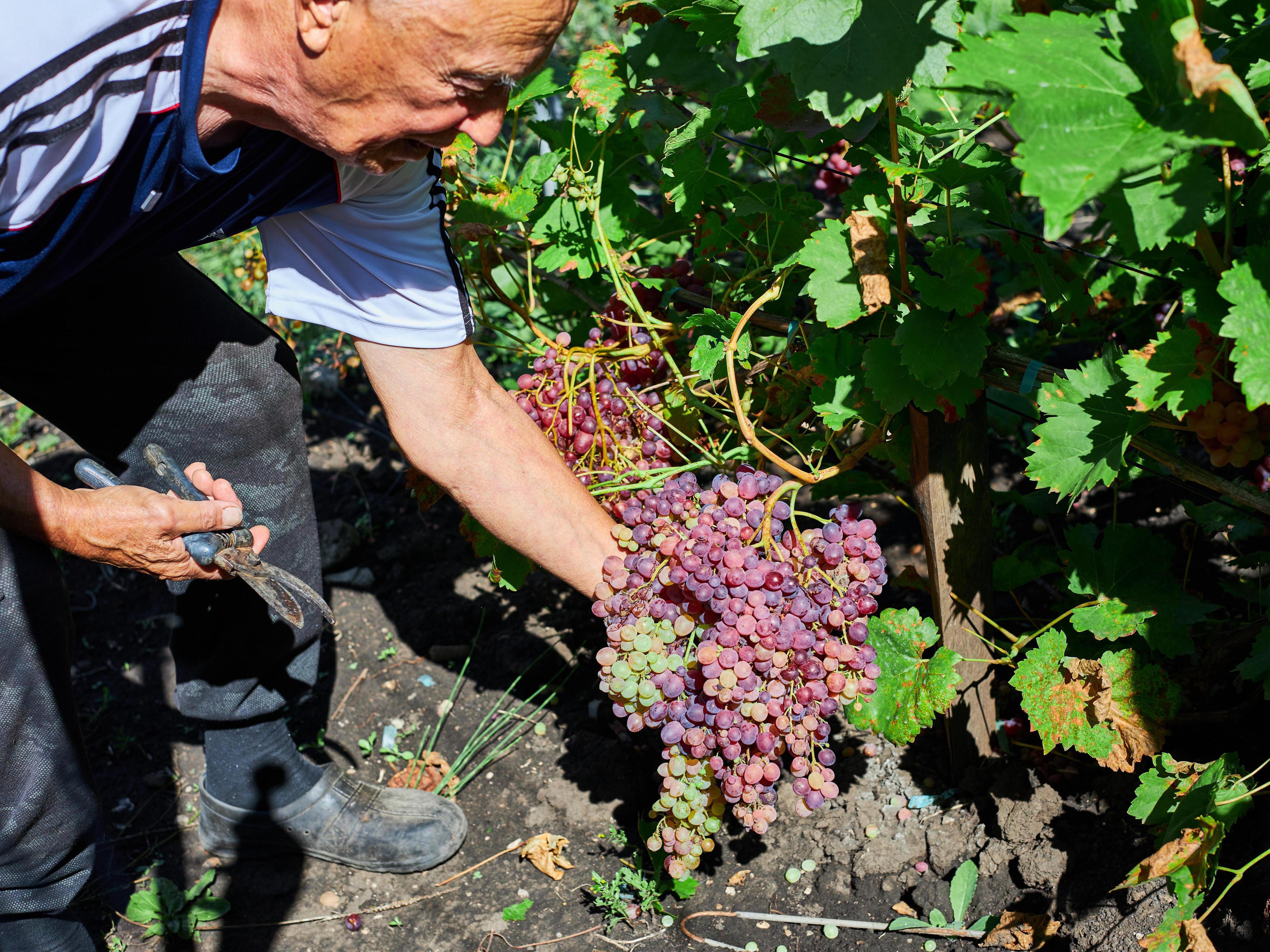

Yuriy Kazakov has cultivated grapes for more than thirty years near Samara.
«Etalon», «Furore», «Sensation». These grand words — the official names of grape varieties — are the perfect description for the juicy clusters of green, purple, burgundy, and other colors amid powerful yet supple vines. A 63.RU film crew visited a true grape kingdom that veteran of a Samara factory Yuriy Kazakov has tended for 30 years. By the end of the visit our eyes were literally dazzled by the number of berries we had seen. And the owners of the vineyard told us how to grow and treat these unusual plants, what risks there are in this business, and what unexpected things you can do with grapes.
Additional images by Aleksey Noginskiy accompany the feature on Kazakov’s vineyard and practices.
«I won three seedlings. It was the first time in my life I managed to win anything»
Yuriy Pavlovich Kazakov devoted most of his life to working at a branch of the Fourth State Bearing Plant (Chetverty Gosudarstvenny Podshipnikovyy Zavod, Fourth State Bearing Plant, GPZ‑4). As a diligent Soviet man, he worked in one place his entire life. In the 1990s he and his wife bought a dacha. But Yuriy Pavlovich went beyond gardening as a simple hobby. He took up grape growing seriously and on a large scale.
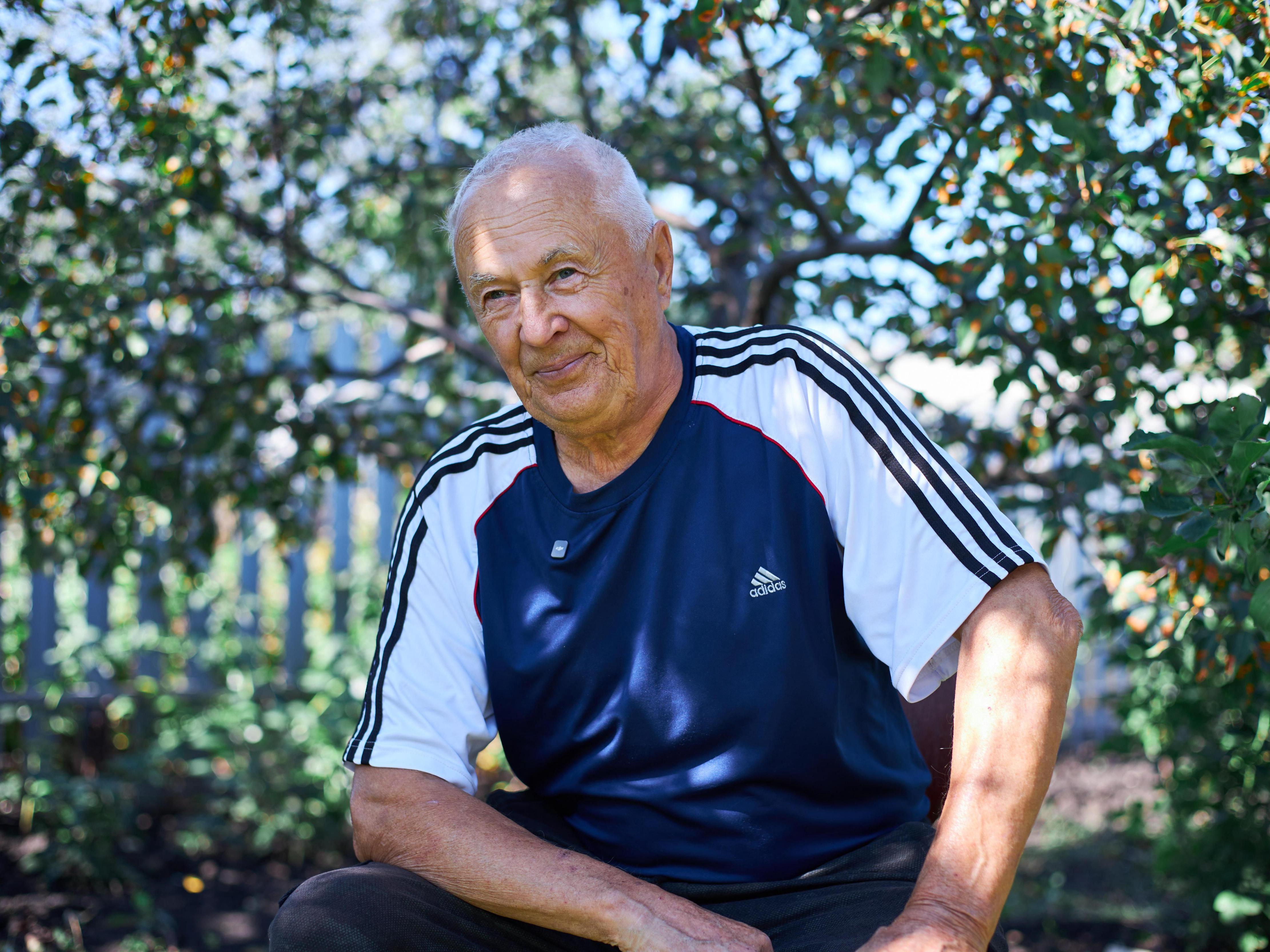
Yuriy Pavlovich is a veteran of the Fourth State Bearing Plant, GPZ‑4.
— It was 1993–1994. At first I planted six little bushes. Then I didn’t like that variety — I bought another. I didn’t like that one — I bought another. And gradually I started picking up more seedlings, more varieties, — recalls Yuriy Pavlovich.
The plantation expanded and eventually even took a piece of the dacha plot belonging to the Kazakovs’ son. Now the vineyard covers a total of 10 sotkas of land on two plots. Walking to the far end of the Kazakovs’ dacha, you enter a small labyrinth whose walls are woven from long canes covered with large leaves and crowned with multicolored clusters of various sizes. Some clusters are covered with nets. That’s protection against wasps and birds.
And Yuriy Pavlovich cares for all this magnificence almost single‑handedly. He had to acquire the know‑how the hard way — by practice:
— There’s a fruit‑and‑berry nursery at the 18th kilometer of Moskovskoye Highway (near Samara). They had good consultants there: Minin, then Kuznetsov, the chief agronomist. I got brief consultations from them. And now the internet helps.
It was at that nursery that Yuriy Pavlovich bought his first grape seedlings. Then he began broadening the geography — going to Tolyatti for seedlings. Later he started ordering from Voronezh and Belgorod.
— Not so long ago I won three seedlings in Kinel (Samara Oblast). A young bush has already grown from them. The variety is «Kinel’skiy Rafinad». It was probably the first time in my life I managed to win something. Usually the most I’d ever win in a lottery was a ruble (about $0 at current rates), — says Yuriy Kazakov.
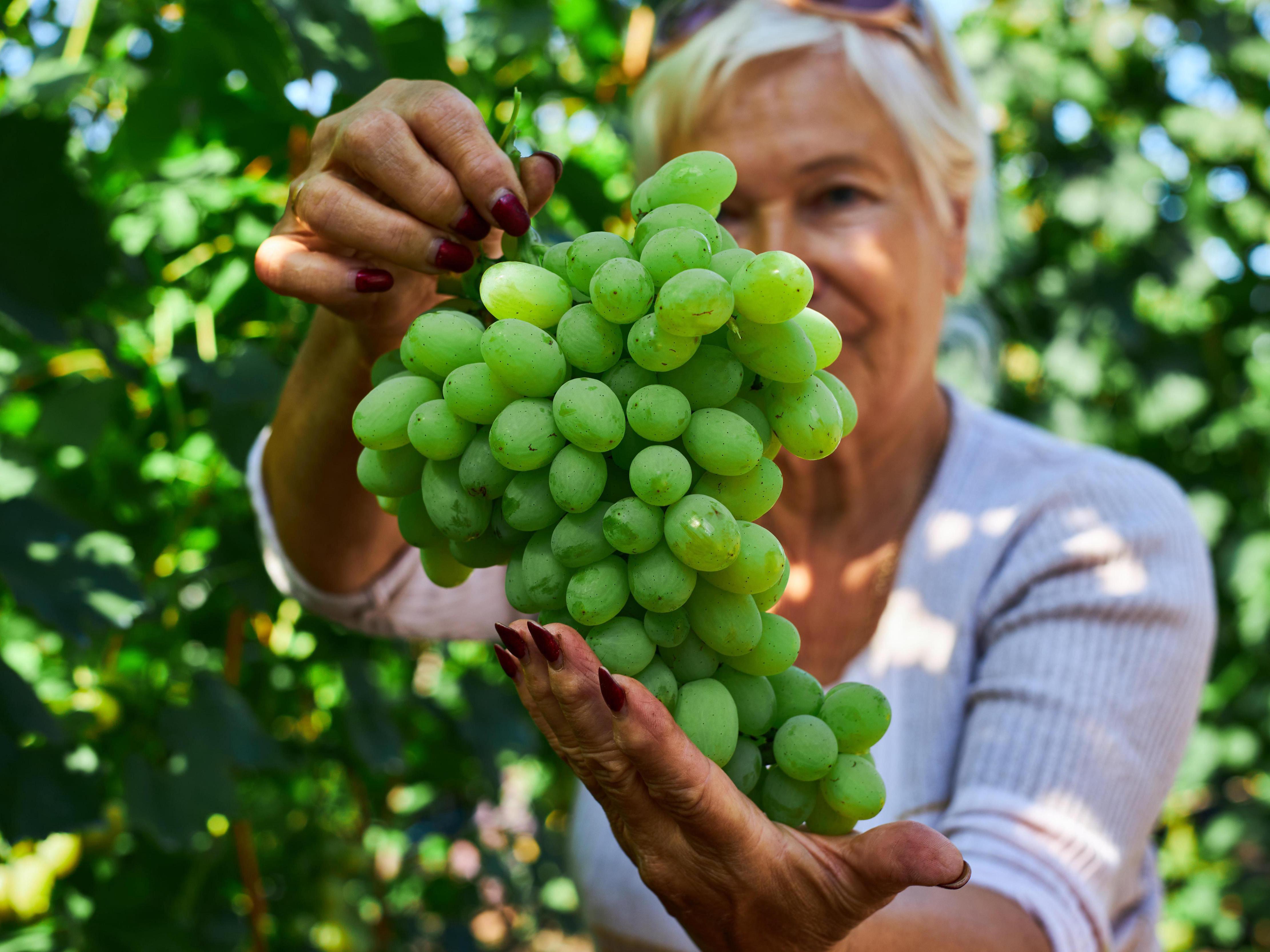
Some clusters weigh nearly two kilograms, requiring strong trellises and careful thinning for ripening.
Grapes take three years to bear
A grape seedling is a cutting with 5–6 buds. For it to grow into a bush with several canes, the viticulturist must first and foremost arm himself with patience. The vine will produce fruit only in the third year after planting, and will start bearing fully from the fourth year:
— First you dig a hole, very deep: 70 by 70 and 70 deep (cm). Then you make planting soil, place the seedling, and cover it with earth. In the third year it will give a control cluster so you can confirm the variety — maybe they slipped you a different one. And from the fourth year it gives full fruiting.
If you order seedlings from the south, you can get cuttings that have been rooted for two years. Then fruit will arrive earlier. Such seedlings will already have developed roots. You’ll need to carefully spread them out and lay them when planting. What’s convenient about caring for grapes is that they are not fussy about watering.
— You plant a seedling, pour on, say, four buckets of water, and I leave it for two weeks. That’s enough. If it’s hot, then I water once a week. And if the weather is cool, I don’t water at all. It seeks water on its own. Its roots go very deep, it draws water by itself, — the viticulturist says.
If you flood grapes with water, the berries can start to rot. And that, in turn, leads to diseases: white rot, black rot. Excessive rains wash the sugar out of grapes. An even more critical skill is pruning. Here you need to know exactly when and how much to remove, and how much to leave:
— Prune too much — you won’t get fruit next year. Leave too many canes — the wood won’t ripen and the clusters will be smaller.
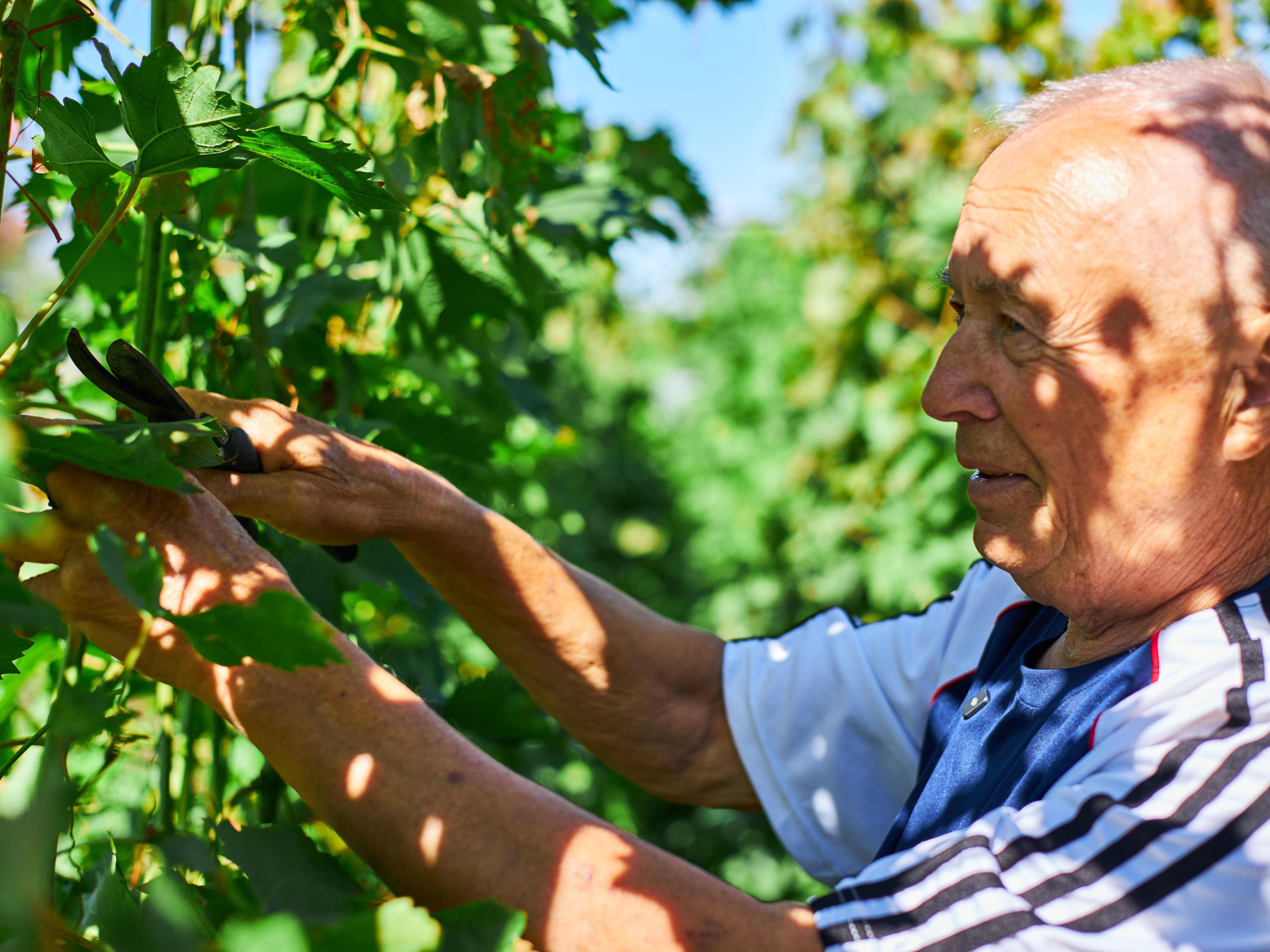
Remove excess leaves, shoots, and even extra clusters to balance growth and yield.
In the first two years, before covering for winter, you cut back almost everything that has grown. Two to three buds remain at the surface. Only in the third year do you leave canes that will bear fruit in the fourth year. A mature vine is pruned before winter to 6–8 buds on one cane. Thus about 45 buds remain on one bush.
— There are fruiting varieties that can be pruned short — you remove all that “forest.” They set fruit from the first bud. And there are varieties that require long pruning. That means leaving 14 buds on a cane, and only at the end do the fruits appear — short pruning doesn’t work, — says Yuriy Pavlovich.
«We are in a risky farming zone»
There are now about 100 varieties on Yuriy Pavlovich’s plantation. And the bushes he planted 30 years ago still bear fruit. Some are more tart, some sweeter. There’s «kishmish» (seedless type), grapes with a pear flavor, with a pineapple flavor, with pineapple and banana flavor. That one is even called «Bananas». As soon as you bite the berry, a pineapple note hits first, followed by a soft banana aftertaste.
— I also have many wine varieties: «Cabernet Sauvignon», «Cabernet Cortis», «Pinot Noir», «Citronnyy Magaracha», «Druzhba», «Taezhnyy», «Ananasnyy Ranniy». I’d also include «Jupiter» — you can make good wine from it too.
Yes, grape variety names can be unexpected. Even more surprising is that Yuriy Pavlovich knows all his varieties by heart and can recognize them at a glance:
— And here’s «Etalon», a sibling of «Baikonur». But it needs to hang longer. Its astringency hasn’t gone yet. And look at this «Furore». The berry is up to 25 grams (about 0.9 oz), but it’s still green — it should be fully plum‑colored. To me they’re all favorites. Absolutely.
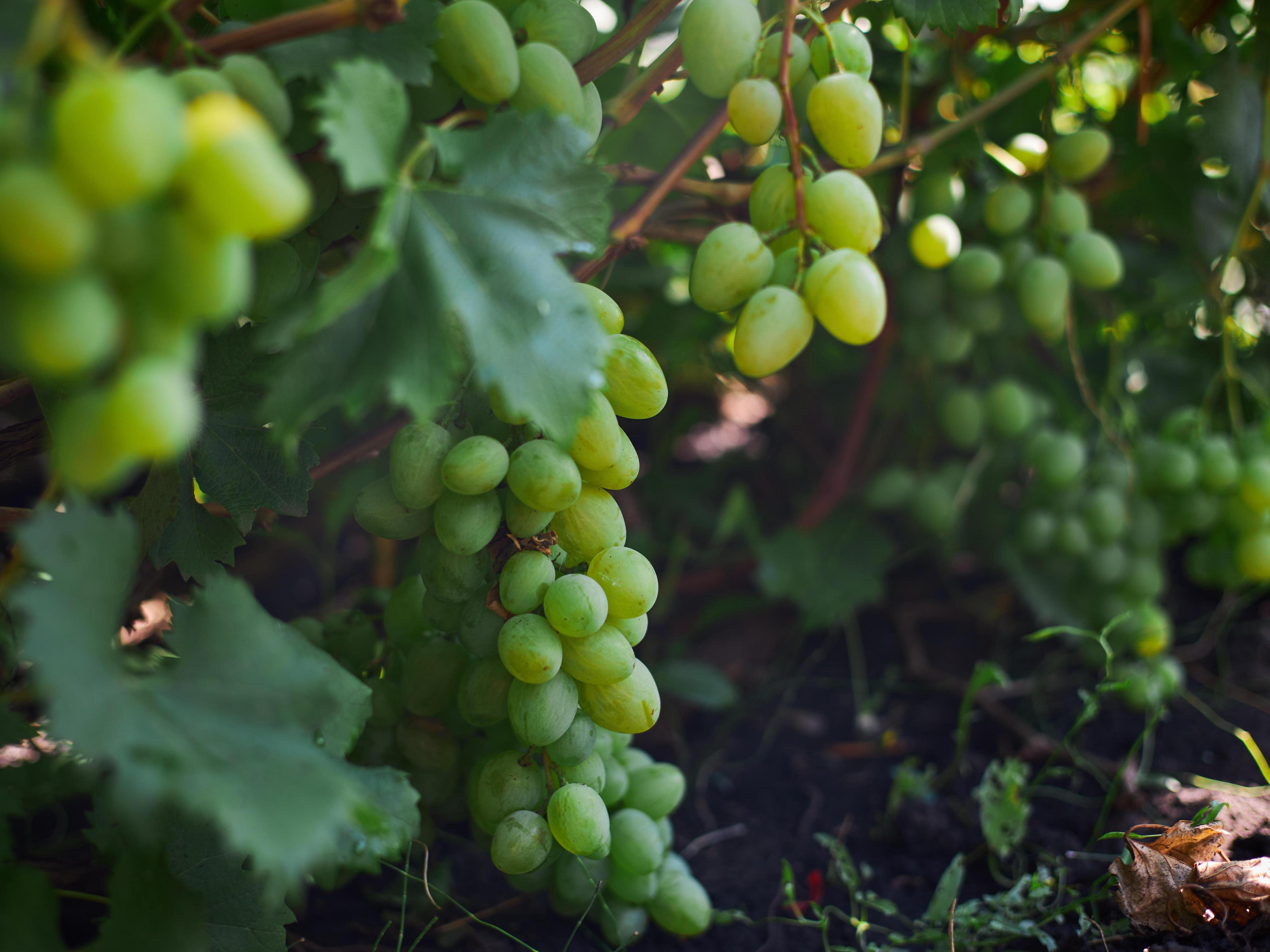
Kazakov’s vineyard now includes around one hundred varieties of table and wine grapes.
And that’s not all. We were shown «Yulian», «American Spartan», «Isabella», «Pamyat Uchitelya», «Sensation», «Madonna», «Rochefort», «Rubinovyy Yubiley». There’s even «Rambo», long — about half a finger. Truly a Stallone among grapes.
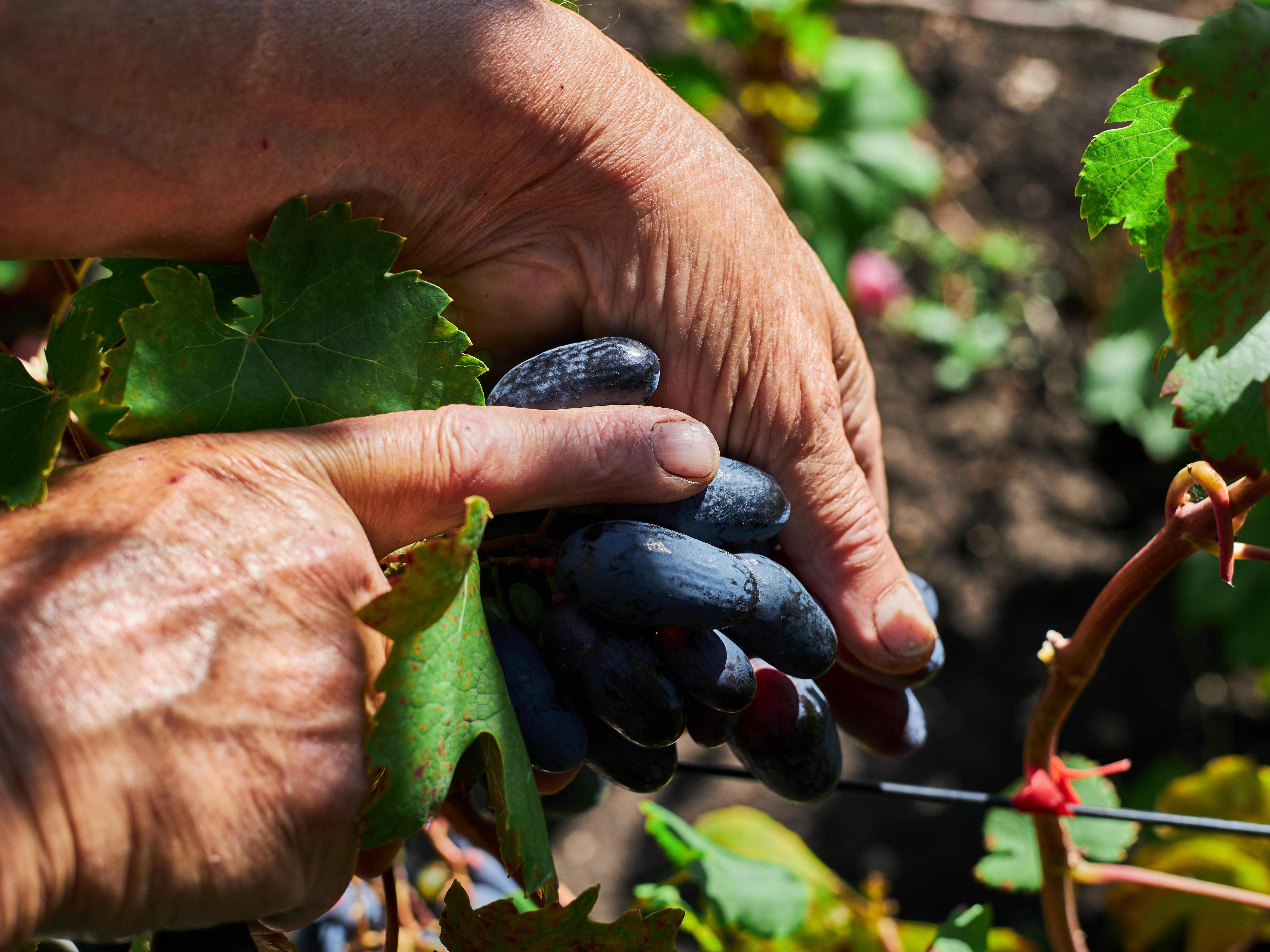
«Rambo» shows its first harvest, with elongated berries and firm, crunchy flesh.
The grape canes are arranged on trellises — posts with wire, string, or similar material stretched between them in several levels. Trellises can be single‑plane or two‑plane. The second option is two trellises standing opposite each other, with the canes of one bush distributed between them.
The trellises are taller than a person, but the tips of the canes are trimmed so they don’t overgrow and the nutrients go to the clusters, not the leaves. Despite the length of the canes, clusters grow only on their lower parts.
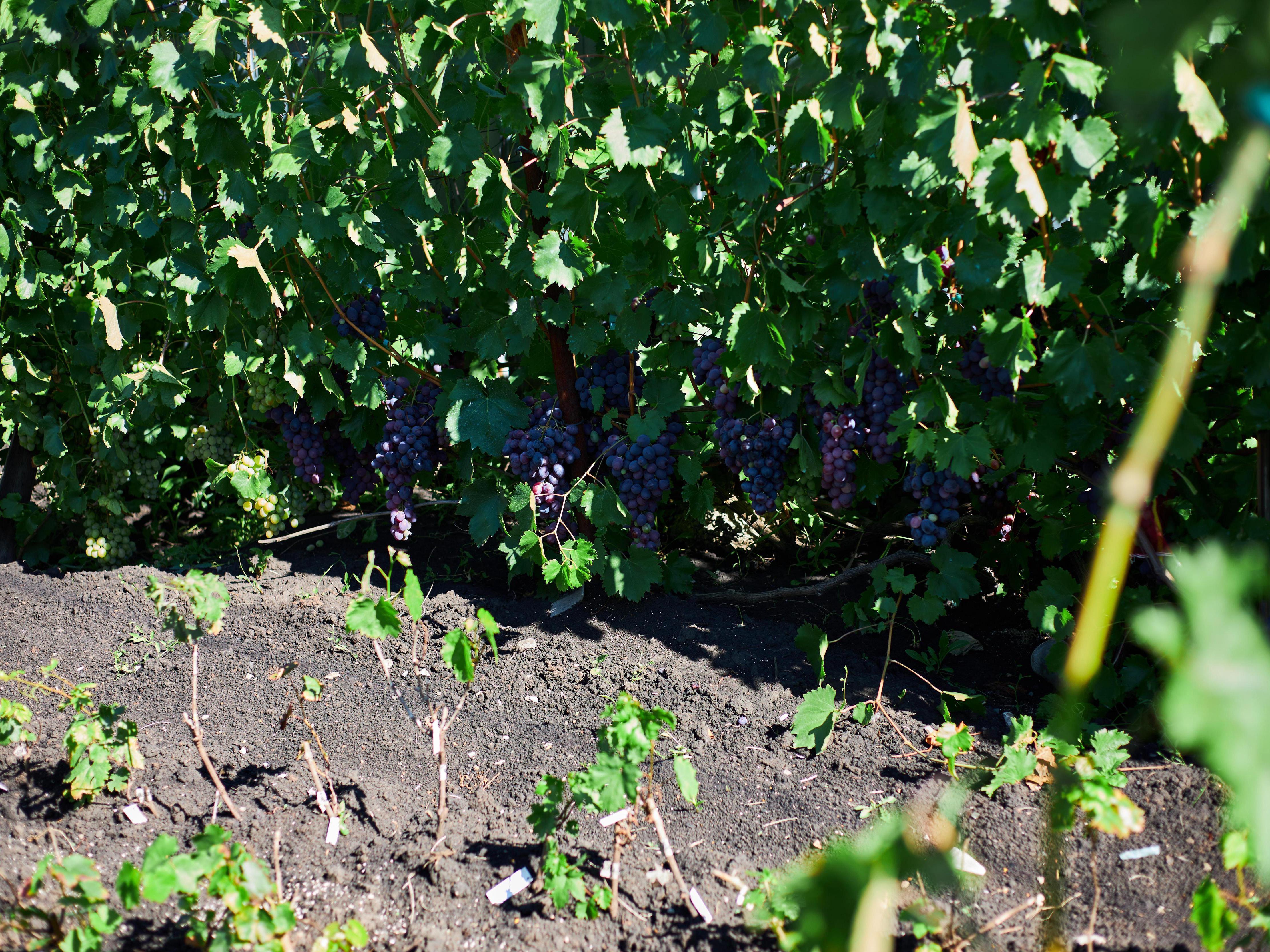
In these latitudes, clusters form low on the canes despite vigorous vegetative growth.
— We grow grapes in a risky farming zone. In the south it grows like a tree — upwards, — explains Yuriy Pavlovich.
A risky farming zone is an area where natural and climatic conditions impede efficient agriculture, creating risks of lower yields due to droughts, sharp temperature swings, and other stress factors. The greater part of Russia lies in a risky farming zone.
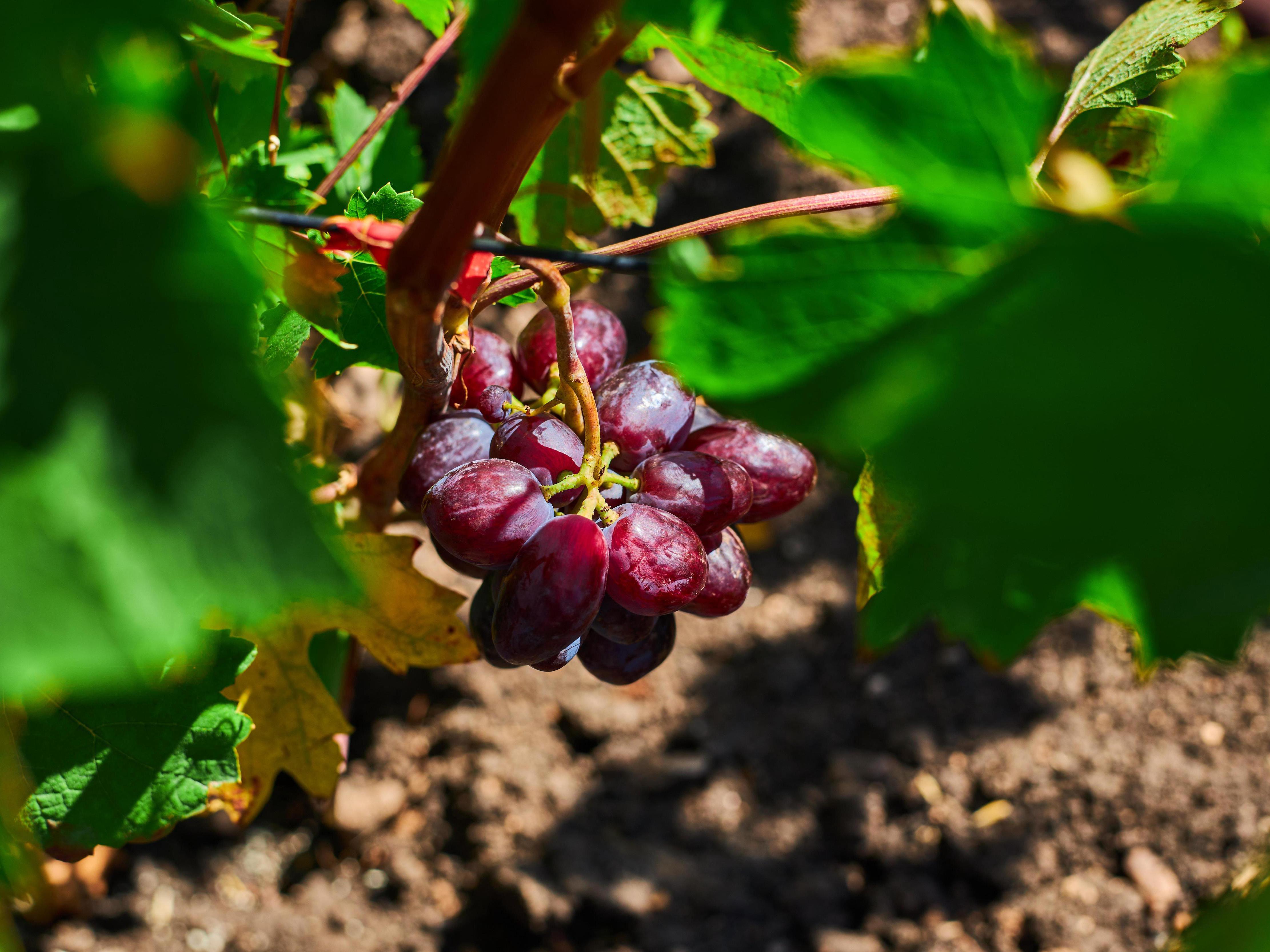
Even the Samara climate supports large-berried varieties when pruning and protection are diligent.
The number of clusters depends on the variety. Some produce two or three clusters from one bud. But the extra ones must be removed. If you leave all four clusters, the grapes won’t ripen in time.
«Cold struck, and in one day it killed all the grapes»
Knowing how to cover grapes for winter is another key skill in a viticulturist’s work. Mistakes here are costly. For example, if you cover the vine incorrectly, it can heat up and rot away.
— I cover the vines when all the leaves have fallen, when night frosts are 3–5°C (37–41°F). I use double spunbond, grade sixty. And on top, laminate underlayment — five or three millimeters. That keeps moisture from getting in from above. And all winter it lies safely. Once snow falls, it’s covered, and no frosts are scary.
Spunbond is a polymer nonwoven fabric used as a covering material in agriculture. Manufacturers produce fabric with densities from 15 g/m² up to 160 g/m².
According to Yuriy Pavlovich, grape buds withstand temperatures down to −8°C (18°F). At the dacha he also has the «Marquette» variety, which withstands down to −38°C (−36°F). But if you’re late, everything will freeze.
— Last year I lost a lot of vines to frost. We didn’t keep on top of it. One day — and everything was gone. The last day of cold, and I went and opened up. And that day the cold hit — it killed all the vines, — recalls Yuriy Pavlovich with bitterness.
When to open the vines depends on how the snow melts. As Yuriy Pavlovich says, in spring you must open the vines once to ventilate them so the canes don’t overheat and rot, and you can wrap them again. But after you finally open the vines, daily vigilance begins:
— It’s not so much expensive as it is labor‑intensive. I, for example, spend whole days dancing around them. A disease hits — you have to cure it. Then wasps, then birds. You have to fend off everything somehow.
«Whether a person or a plant — not everything responds the same to treatment»
Right after opening the canes, you must spray them with copper or iron sulfate. When the first three to five leaves appear, spray with Bordeaux mixture. Before flowering, you need to spray against diseases.
— Their most serious disease is oidium (powdery mildew). That’s when they’re covered with a gray coating and berries begin to crack. Downy mildew — yellow, blurry spots appear on the leaf, and underneath a gray webbing. Anthracnose — that’s when the leaves become hole‑ridden, — lists Yuriy Pavlovich.
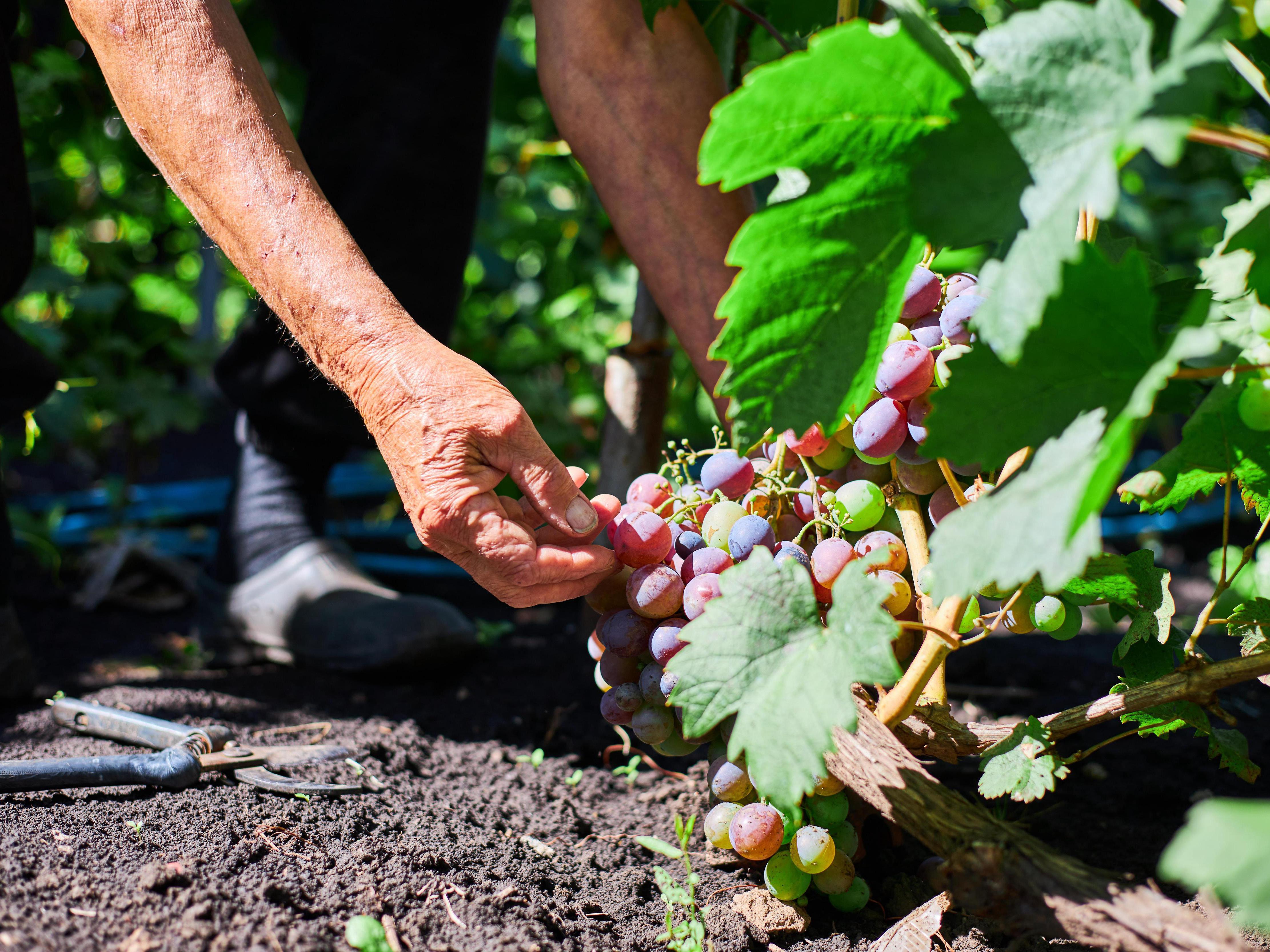
Diseases and pests threaten both leaves and clusters, demanding preventive sprays and monitoring.
As the dacha owner says, care for grapes should be the same for all varieties. The only difference is that some varieties are more susceptible to disease, so it’s better to spray everything thoroughly to prevent problems:
— Mostly tank mixes — they cover everything at once. You can use Topaz, Falcon, Bordeaux mixture. And when a disease appears, then I treat. But treatment, you know how it is… Whether a person or a plant — not everything responds the same to treatment. A bush can be lost completely.
The timing of leaf‑out also depends on the weather. As soon as it warms well, the buds quickly begin to swell. In the viticulturist’s observations, leaves appear at daytime temperatures of 15–20°C (59–68°F).
The vines bloom in late May — early June. Before that, Yuriy Pavlovich fertilizes them:
— I steep chicken manure in a separate vessel. I soak the bush with water — then two ladles of chicken manure. And that’s it, that’s the end of my feedings. But in years when the wood doesn’t ripen, I have to use monopotassium phosphate — for wood ripening and sugar in the grapes.
Another little trick of Yuriy Pavlovich’s is to treat seeded grapes with gibberellin. That elongates the berry and the seed resorbs.
«Rambo» next to «Rochefort» and «Madonna»
This year the vines at the Kazakovs’ dacha bloomed at the end of May thanks to a warm April. But a cold June spoiled things.
— At ground level it went down to −8°C (18°F). I had to cover them right over the leaves and flowers. Some things snapped, some clusters fell off. What can you do? — sighs Yuriy Pavlovich. — It’s a risky farming zone.
To ripen, grapes need from two to three thousand hours of sunshine. Naturally, bigger berries need more time. At Yuriy Kazakov’s dacha there is the «Rombik» variety, an early ripener. It can ripen by late July or early August. However, this year the weather won’t allow an early harvest:
— All of June was cold and rainy, and the vines stalled. They began to color only at the end of June. Imagine — for a month and a half they were just coloring because of the weather. And even now some varieties are still lagging in coloration.
Still, you can hear the perfectionist in Yuriy Pavlovich. Whatever grapes he gave us to taste, we liked them all, while the owner would say: «Not ripe yet», «This one needs to hang longer», «This one’s still firm», «This one still has to finish», «This one’s still downright sour».
At the same time you feel Yuriy Pavlovich’s great love for his plants. He proudly shows how a cluster doesn’t fit into two hands: in the «Livia» variety, clusters can weigh up to one and a half kilograms (about 3.3 lb)!
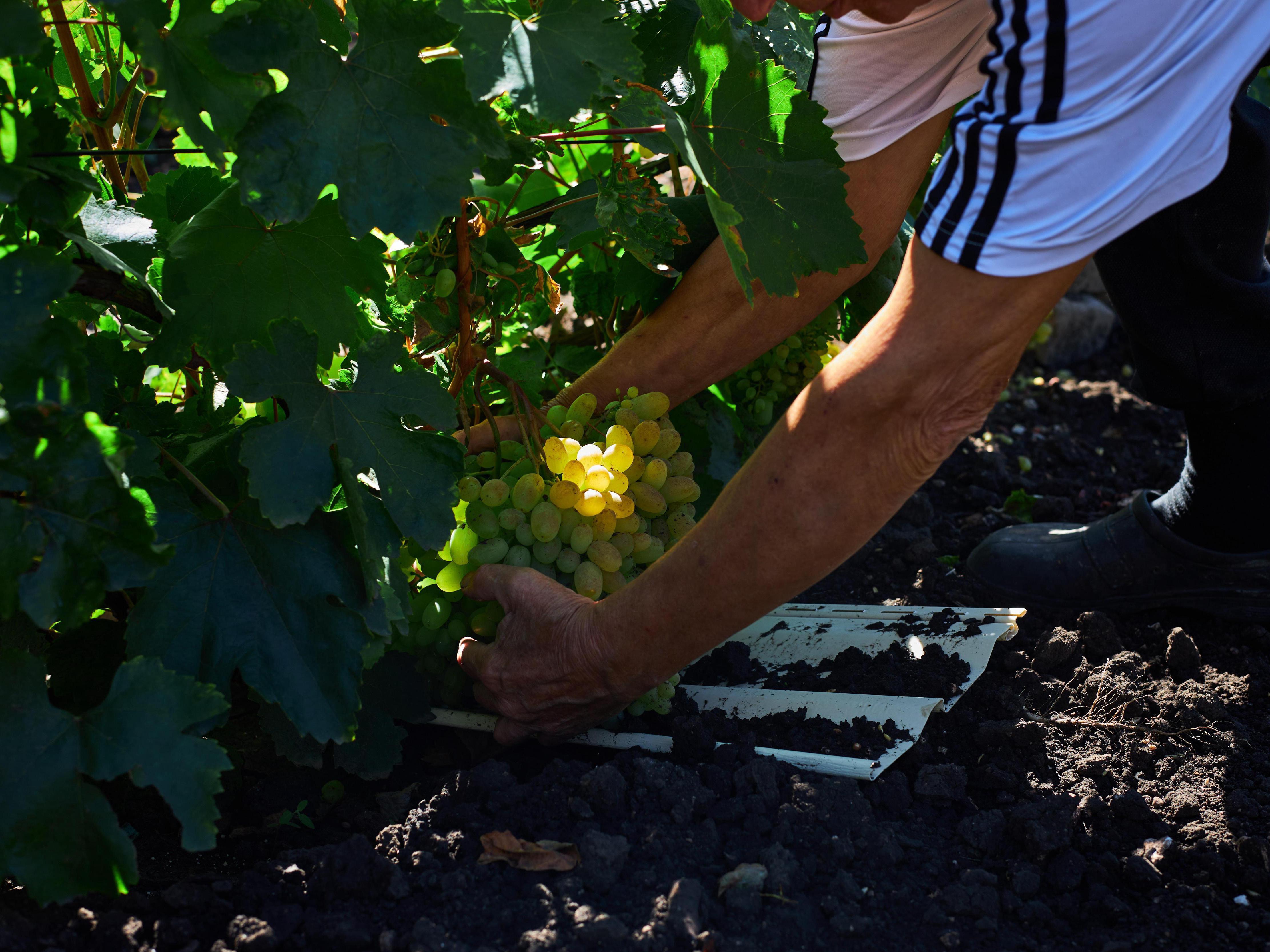
Many varieties are heavyweights, with berries starting around twenty grams per berry.
And in the «Monarch» variety, a single berry weighs 32 grams (about 1.1 oz). The vineyard owner describes different varieties with admiration:
— Here’s «Dubovskiy Rozovyy». It’s an absolutely amazing grape. There’s a small town of Dubovka near Volgograd, and a breeder named Gusev is there. He grows it. When it ripens, it becomes as large as «Lady Finger».
Marinated «Pharaoh» and what to serve it with
Naturally, a plantation like this yields a big harvest. Yuriy Pavlovich and his wife Tatyana sell their grapes, give them away, dry them into raisins, and make wine, kagor (sweet dessert wine), and chacha (Georgian pomace brandy):
— I make 120–140 liters of wine. That’s in a good year. Wine isn’t made from all varieties. Although there’s «Kodryanka», a Moldovan variety. They supposedly make wine from it, but I’ve never done it and don’t want to. I have wine varieties that really produce wine, not a mere semblance of it.
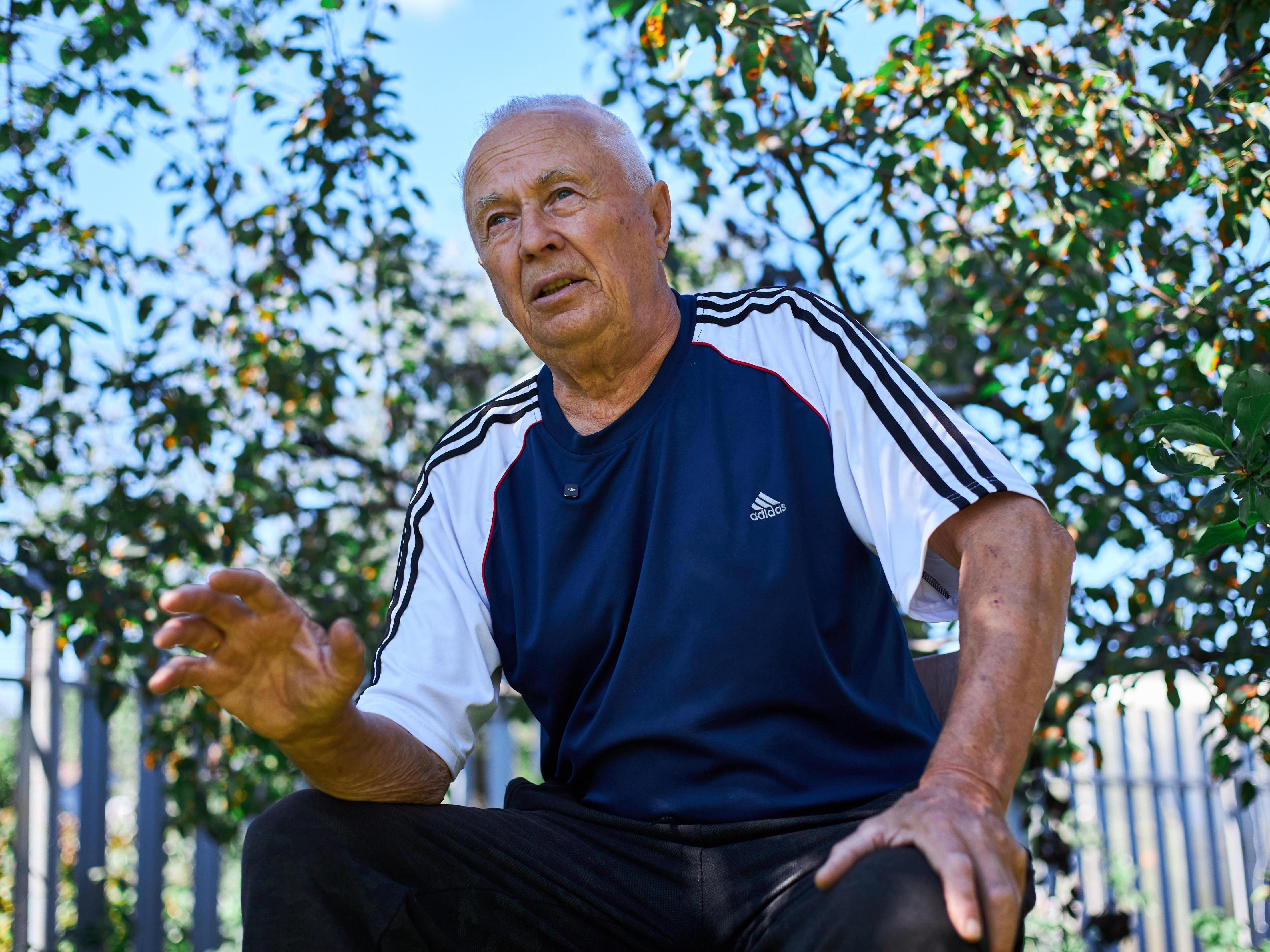
Yuriy Pavlovich favors wine cultivars for sugar accumulation and balanced acidity in fermentations.
To measure sugar in grapes, Yuriy Pavlovich has a refractometer. The device looks like a spyglass. You place a drop of grape juice on the sensor and look through the device to see what sugar percentage it shows.
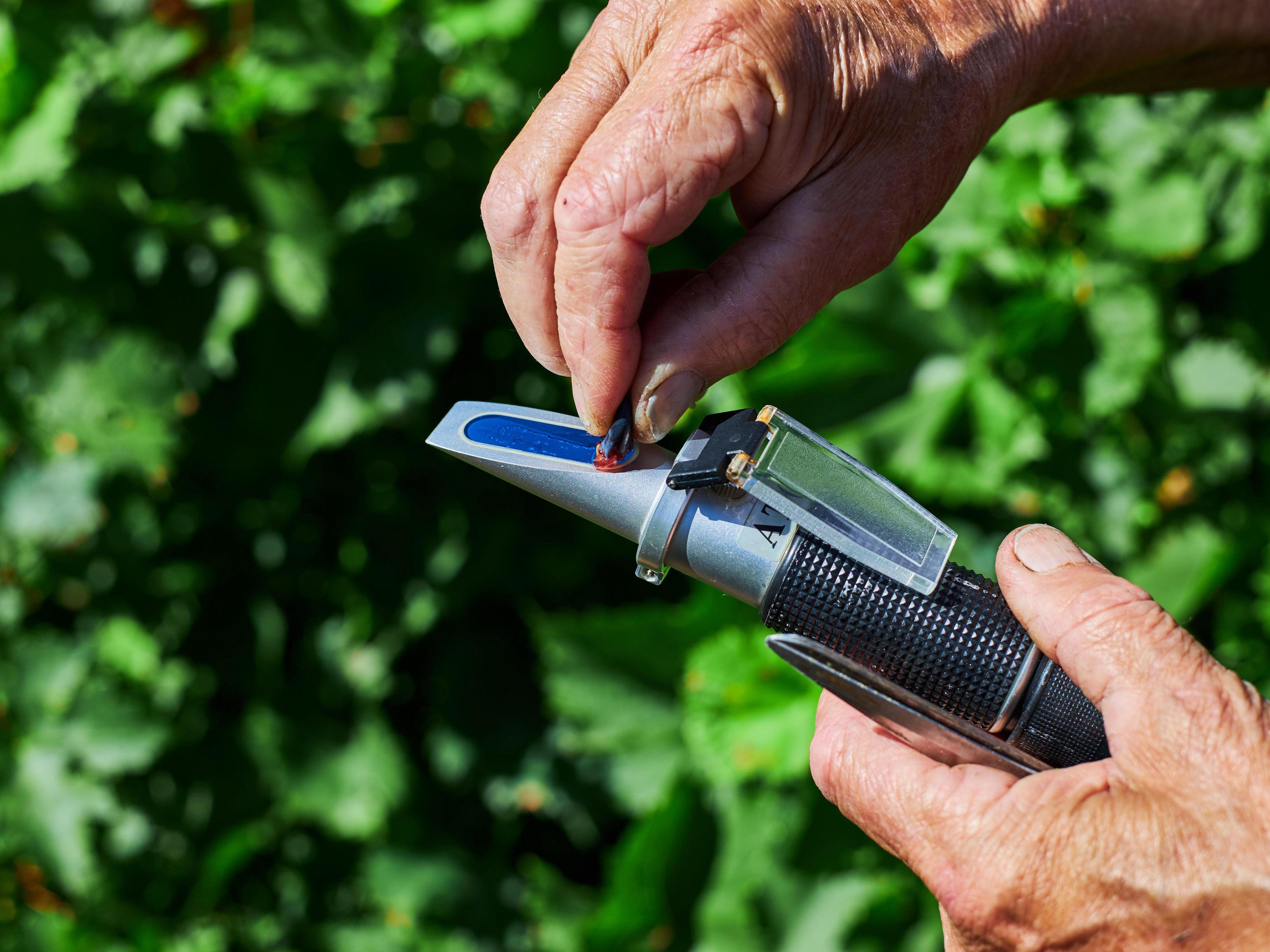
Place a drop of juice on the prism to start a simple sugar test.
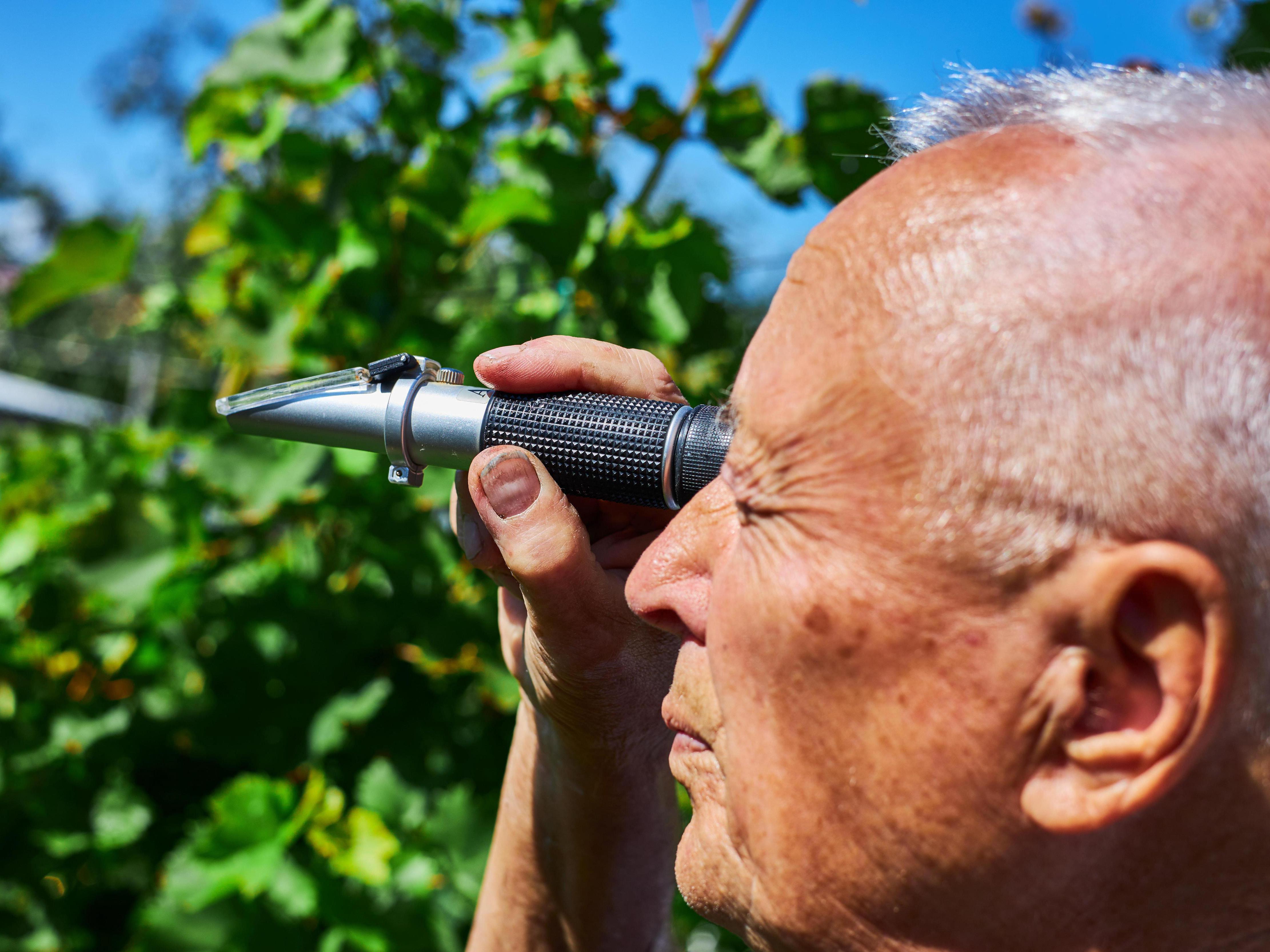
Raise the refractometer to the eye and align the boundary to read Brix.

The scale shows grape sugar content, helping determine harvest timing and expected alcohol.
— My «Cabernet Sauvignon» and «Cabernet Cortis» reach 25% sugar. That’s a lot. And the wine turns out 14–15 degrees of alcohol. Without fortification, without extra sugar, without anything. From «Cabernet Sauvignon» you can get a rosé. And if you age it, keep it on the pomace for a week, you’ll get a dark wine, — Yuriy Pavlovich praises his product.
* Pomace is the mass of crushed grapes, including juice, pulp, skins, and seeds, and sometimes the stems. It is the base product of winemaking for producing wine.
But what shocked us most was… marinated grapes! Tatyana Kazakova makes them and then uses them instead of olives.
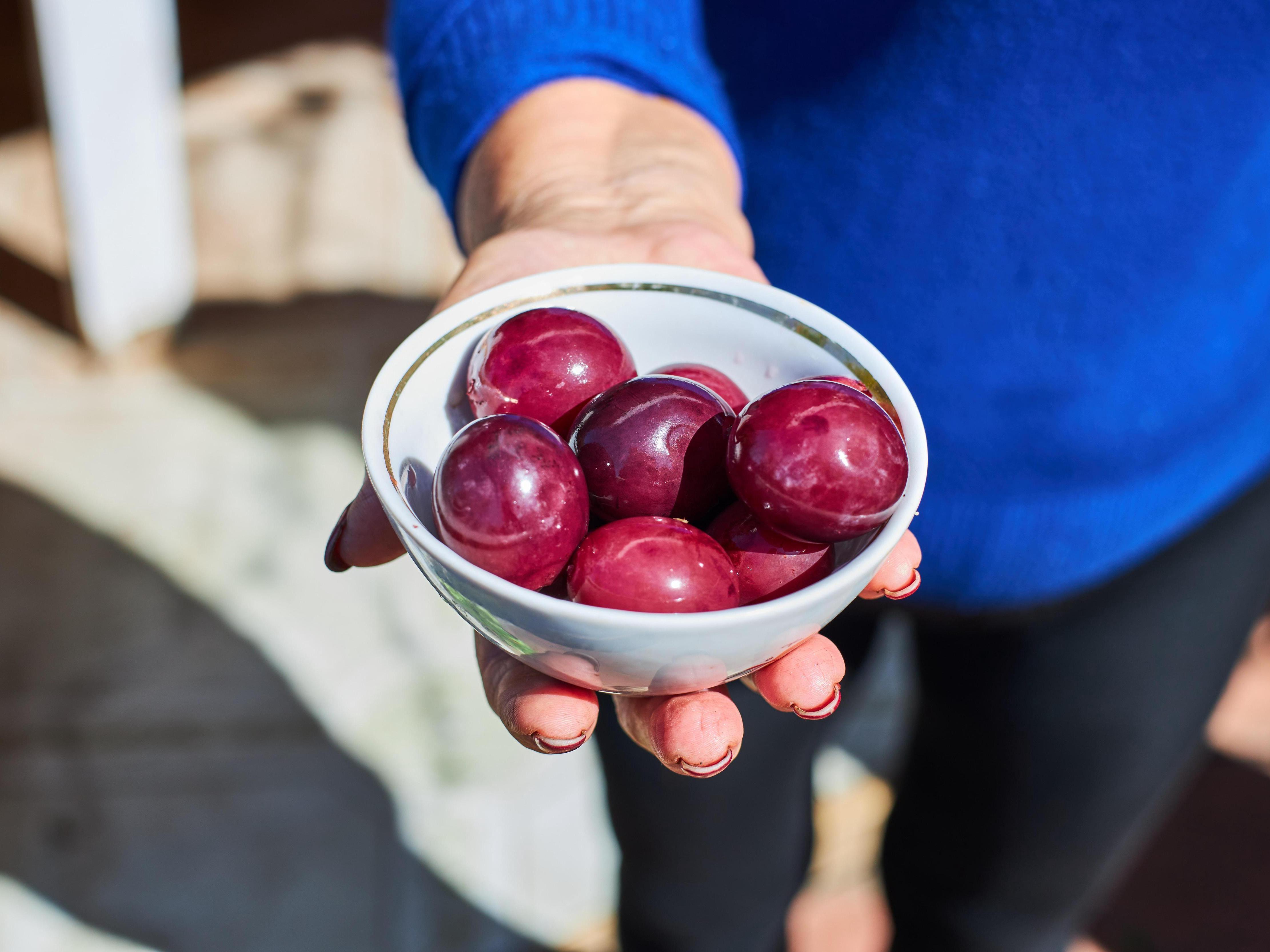
This is how the marinated grapes look after curing with garlic and mustard.
— I salt grapes using the cold method. I make brine as for tomatoes: three tablespoons of salt and two tablespoons of sugar per liter of water. I add garlic slices to the grapes and pour over this cold brine. Then I lay a cloth on top, sprinkle dry mustard, and close with a lid. That’s it. And it keeps in the cellar or refrigerator, — Yuriy Pavlovich’s wife shared her recipe.
Mostly Tatyana marinates «Kodryanka» and «Pharaoh». The latter tastes like something between an olive and a pickled tomato. If the variety is sweeter, sweet notes will come through.
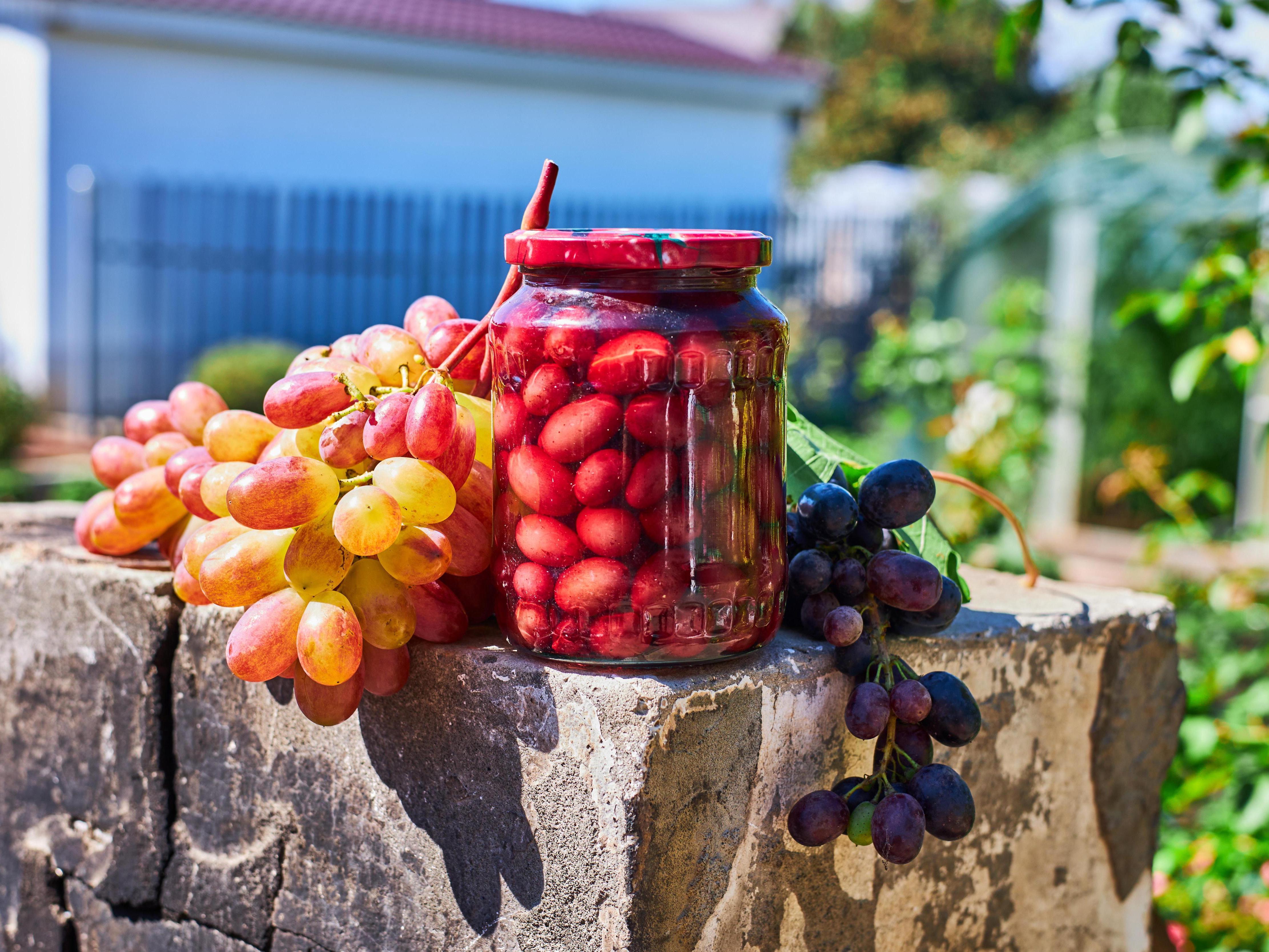
The couple brings home bountiful, colorful clusters from their backyard vineyard each season.
Yuriy Pavlovich now also propagates seedlings from cuttings and sells them. He has a special nursery bed for the youngsters. The seedlings winter there, and in spring and autumn he sells them.
— A cutting is grown like this: I soak a stick with several buds in water for two days. I simply put it in water, then treat it with rooting hormone, trim it, and stick it into plowed soil. Then from each bud I get a seedling, — says Yuriy Pavlovich.
Dacha owners come for seedlings from Bogatoye and Borsky (both in Samara Oblast). Descendants of Yuriy Pavlovich’s vines are growing even in the capital: through Avito he sent seedlings to the Moscow Region and to Moscow itself. A two‑year‑old seedling costs 500 rubles (about $5 at current rates), a one‑year‑old — 350 rubles (about $4 at current rates), and «kishmish» — 400 rubles (about $4 at current rates).
— We stopped by the market in Novosemeykino (near Samara) — seedlings there sell for one and a half thousand rubles (about $16 at current rates). I say to my husband: «That’s instant income — and you need to sell six seedlings to make that amount», — Tatyana chides her husband jokingly.
The Kazakovs sent the 63.RU film crew off with several kilos of grapes of different varieties. Our entire newsroom ate them with pleasure and praised them…