Young Ural Worker Rebuilds Life After Crushing Accident

We first met Alexander Lyskov two years ago. At that time, he had just pulled through—survived a horrific injury and amputation. Irina Volkova, the head of the rehabilitation center, has seen hundreds of people«s destinies, and they all accepted misfortune differently. Alexander»s story moved the doctor.
In her 36 years of work, Irina Gennadyevna had only once encountered a patient who had not only lost his legs but also his hip joints. The first was a disabled veteran of the Great Patriotic War, and the second was 26-year-old Alexander Lyskov, a worker at the Nizhny Tagil plant, who survived after being crushed by a 2.5-ton beam. Before the accident, he was a strong, healthy, athletic guy with a height of 178 centimeters (5 ft 10 in). After the amputations, his height became 83 centimeters (2 ft 9 in).
Two years later, we visited Alexander in Nizhny Tagil to find out how his life had unfolded.
Alexander was brought to rehabilitation in very serious condition. It was too early to start rehab; he was barely conscious: open wounds, unable to sit upright, his blood pressure dropping, he was fed with a spoon like a child—«for mommy, for daddy.»
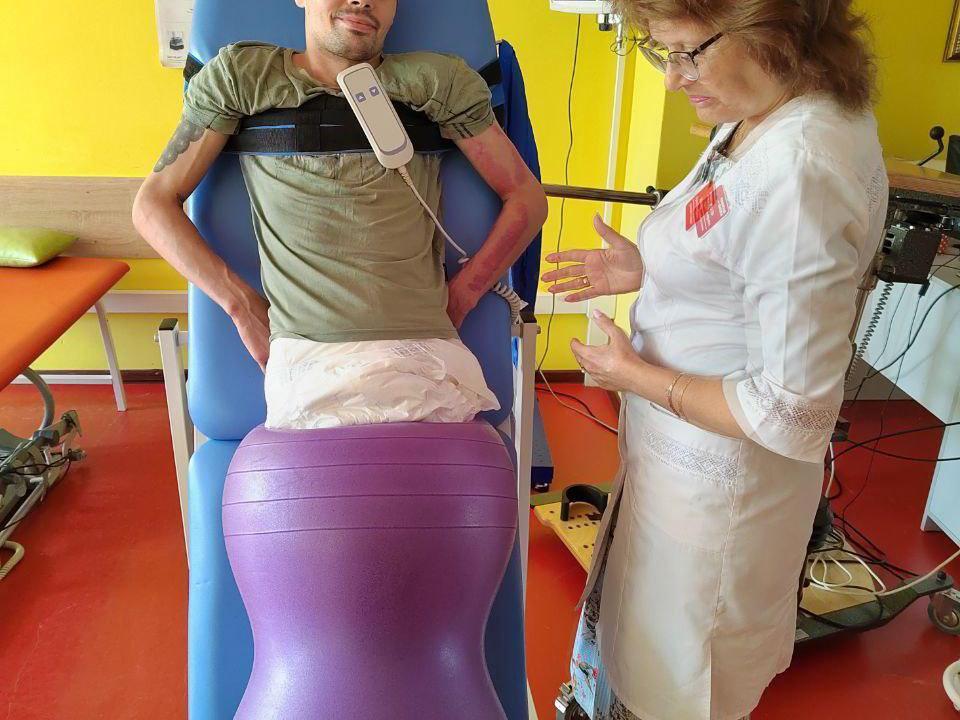
Later, when Sasha could speak, he said he was from an orphanage. Then he was transferred to the burn unit of Hospital No. 40, where they performed complex skin graft surgeries. Everything took hold, and he began to recover, exercising and training to return to a normal life as much as possible.
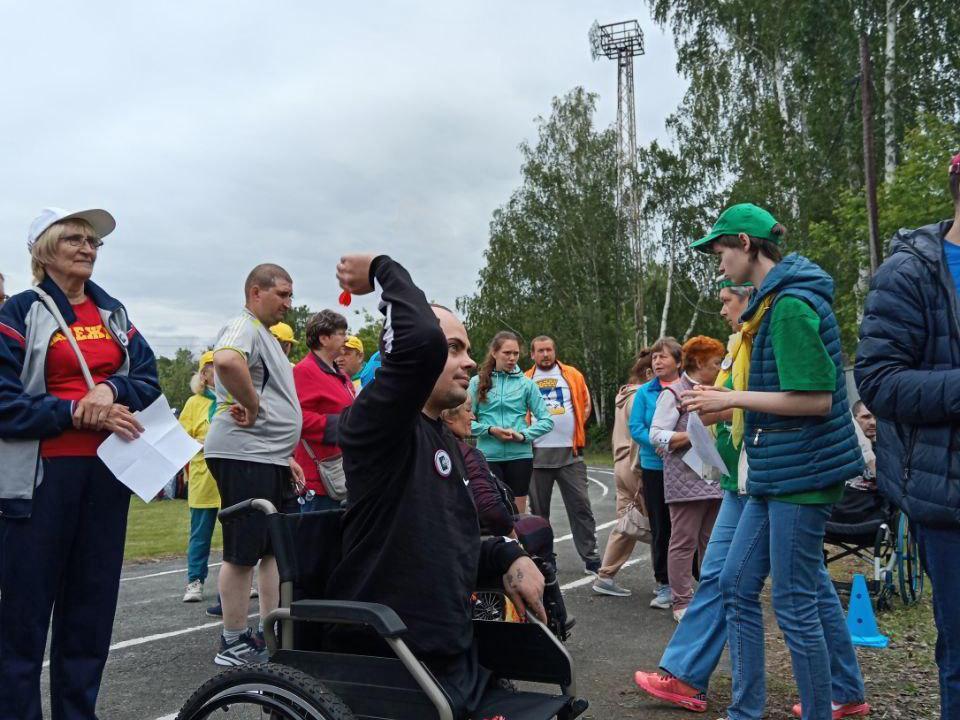
«How many acquaintances do you have who always have everything good?» Irina Volkova shared her thoughts about the new patient then. «And genuinely good. I walk into one of the wards and ask from the doorway the guy lying by the window: »Sasha, how are you doing today?« In response: »Everything«s fine, Irina Gennadyevna.» A beautiful smile and some perplexity: what could be wrong? Look at him and think: are we glad to be alive, do we not complain over trifles, do we not whine unnecessarily, and do we even have problems?«

Returned to the Factory
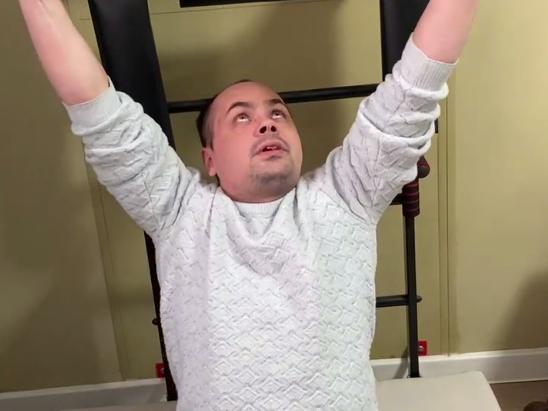
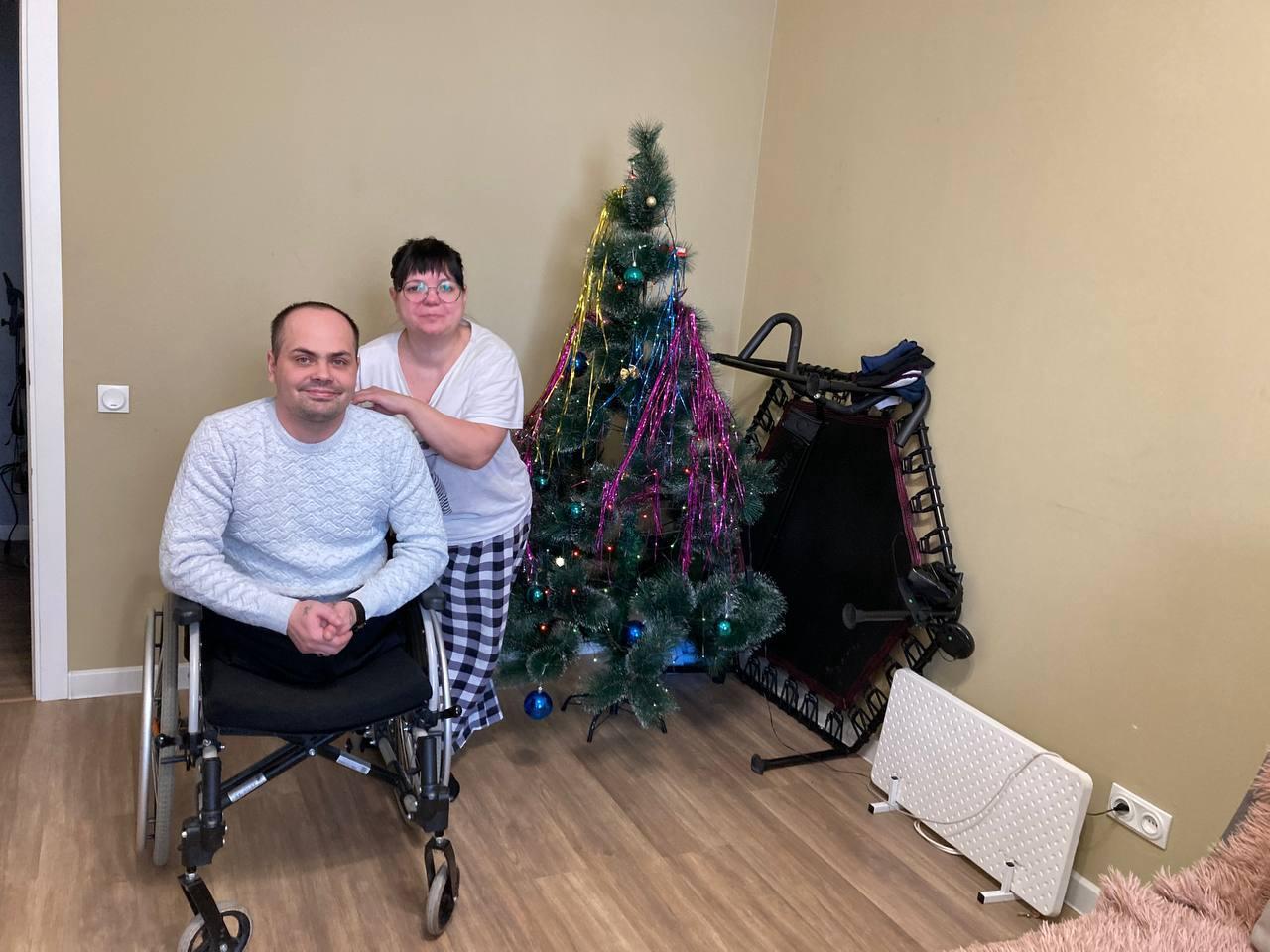
Sasha meets us together with his wife Svetlana. They live with their son in an old two-story house built in the post-war years, very close to the factory. It«s clean, cozy, and spacious: wide doorways—the wheelchair easily passes everywhere.
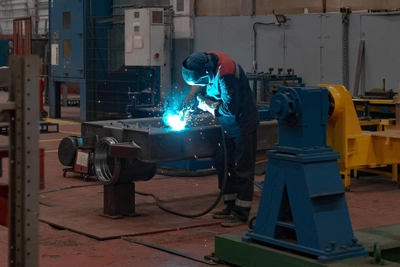
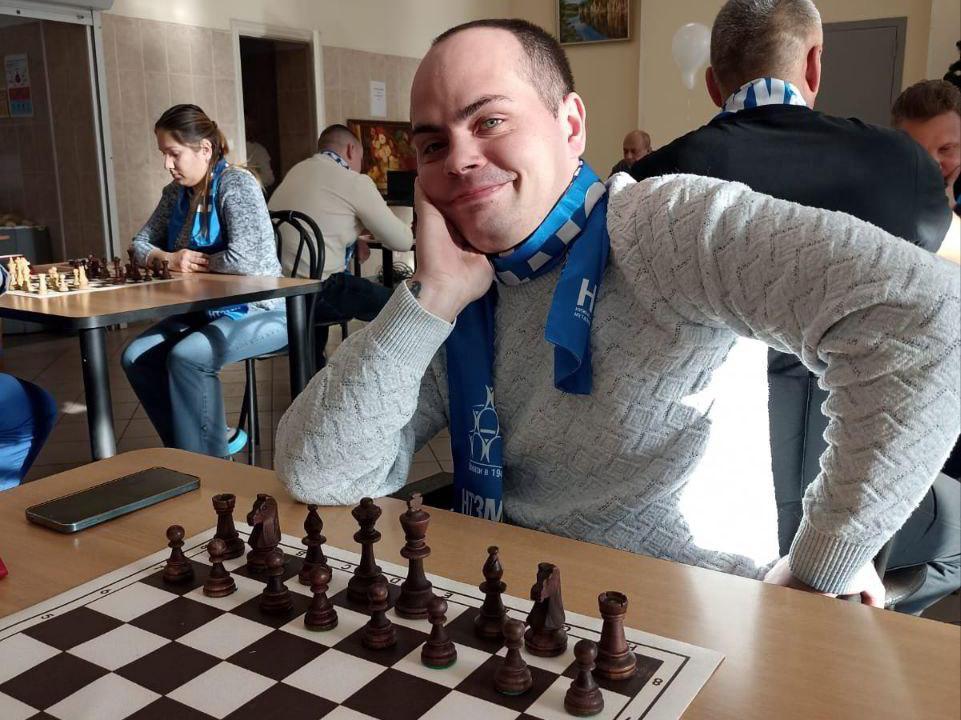
Sasha just returned from work; he has part-time hours. He receives a pension and all disability payments, in his case his full previous salary, because the injury was work-related. But, as he admits, he couldn«t just sit at home and not work. Alexander is a trainee in the industrial safety service at the same metal structures plant, conducting safety briefings. He understood how important they are from his own hard experience, when a combination of errors led to the emergency.
«Sometimes, very young guys come, around 18 years old. I roll out from behind the desk in my wheelchair and say: see how important it is for everyone to follow safety rules? And I explain, conduct the briefing,» our hero says.
Alexander was injured in 2023. He was working as a slinger, securing loads. A 2.5-ton beam slipped from the crane hook and crushed him. The worker remembers all the details: how he lay, at first not feeling strong pain due to shock, how they extracted him, how he rode in the ambulance with his wife to the hospital, talking about some trifles, like his phone was broken. He didn«t yet know how difficult everything would be. In the hospital, Sasha fell into a coma and spent three weeks in that state.
«The factory helped a lot then: both the management and the trade union. Our boss there is a woman, a wonderful, caring person. She visited the hospital, brought supplies. And then she was by our side, supporting us,» Alexander recalls.
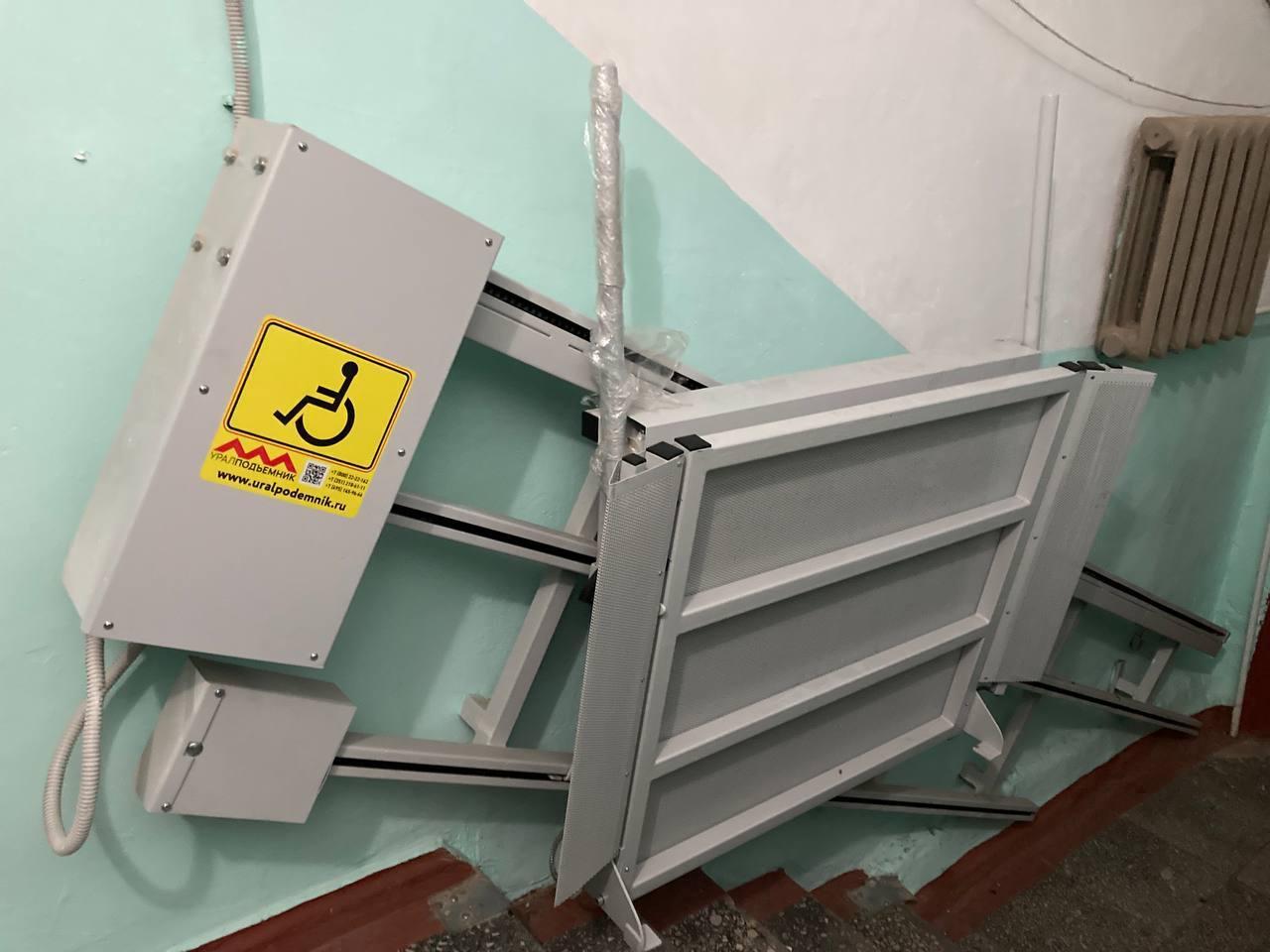
At that time, he and his wife had just bought an apartment with a mortgage. To avoid delays, the factory immediately paid off the bank debt, and then helped buy a new apartment, more spacious and on the first floor, where the family now lives. They also installed a modern ramp with remote control, so Alexander could get out of the house on his own. Every morning, a company car picks him up, takes him to work, and then brings him home.
And they paid for surgeries—those that couldn«t be done under the compulsory health insurance (OMS):
«I lived at first with urine bags. Everything was damaged, and this is a very important moment, an important part of a full life. Even when the beam fell, I thought about it in the first moment. Without legs, you can adapt if your head is in the right place. But... for a man, not only legs are important, any guy will understand me. Here in the region, they couldn»t help me with anything. I remember sitting at an appointment, and a doctor, a candidate of sciences, tells me he can«t restore anything. And I don»t understand why. I say: you have an academic degree, how can you not? And he: «I can»t.«»
Apparently, the genital injuries after the trauma were serious, not everyone was ready to undertake the complex surgery. A full restorative urological reconstruction surgery was performed at a major commercial medical center in the Moscow region, where some of the best specialists work. The surgery important for normal life was also paid for by the factory.
«I was operated on by a doctor from Israel. Apparently, he also collaborates with this center. He restored everything excellently. I was discharged after just five days. They drove me from home to Moscow in a car specially equipped for bedridden patients; I can»t sit for long. My wife had just returned home—I call: and I«m already discharged, and she went to pick me up again,» Sasha says.
Been Through Thick and Thin
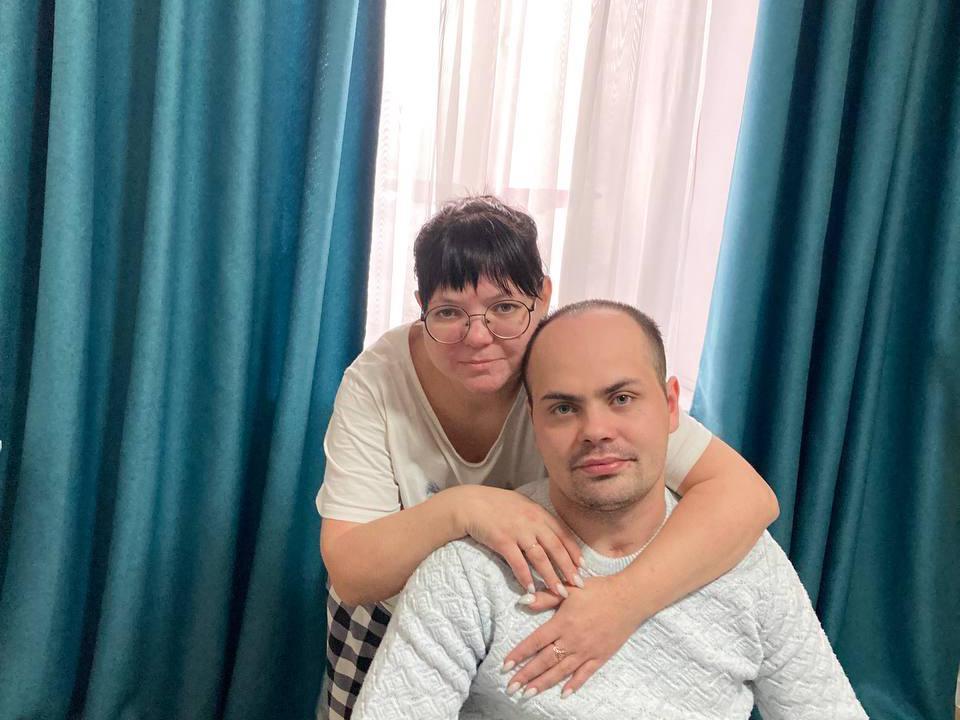
Alexander is now 28 years old. His wife Svetlana has been his main helper all these years: accompanying him to all commissions and surgeries, helping with important daily tasks: bathing, carrying him down from the sixth floor to the street on her back.
They met six years ago: Alexander saw Svetlana«s page on social media, wrote to her, she replied. First, they corresponded, then met, and a year later got married. He accepted her son from her first marriage as his own. Sveta worked as a salesperson for many years; Sasha invited her to his factory. And three years later, the disaster struck.
Svetlana was also home during our meeting.
«We»ve been through thick and thin,« she recalls. »The first weeks were very scary, my hands were shaking. Doctors said: if you know any prayers, pray. I went to a psychologist. The psychologist explained everything to me, about the stages of acceptance: denial, anger, described all the steps. And that«s exactly how I experienced it, all spectrums of feelings.
I was very scared for the person, how he would live in this world, because our infrastructure and environment aren«t designed for such people with disabilities: streets where you can»t drive a wheelchair, snow in winter, high curbs. At first, there was confusion, you don«t know what to do. And when he regained consciousness, I already had an action plan: rehabilitation, the VTEC commission, establishing disability.
Mom was very worried about Sasha then, supported him. No talks like: how will you live with a disabled person now? She is as faithful as I am. And my dad, and brother, all relatives. We are a family, and there can be no other options. Friends helped too. We have such people around us, no others.«
Sasha continues the conversation:
«The most important thing is when you are loved and supported. So many friends responded when they found out what happened to me. Wrote, asked how to help.»
«And your mom?» (Sasha ended up in an orphanage at age ten when his mother was deprived of parental rights. — Ed.)
«Mom needs help herself. Even if at the beginning of life she didn»t do much for me, but a mom is a mom. I help morally and try to help with money. She is raising my younger brother alone. He is only eight years old, and it«s hard for her.»
«I»ll Learn Everything«
Over these two years, Alexander relearned the simplest and most important things: getting into the shower, washing himself, and then doing house cleaning on his own to help his wife.
«Washing floors is still hard, the apartment is big. I»m lazy, but I do it,« Sasha admits.
He not only returned to work but also enrolled in a construction technical school by correspondence, to become a specialist from a trainee. Svetlana also started studying with Alexander. Together, they listen to lectures, take exams. Their son Danil finished school during this time and entered a medical college for the «nurse» specialty. He dreams of becoming a surgeon and will apply to a medical university.
«We bought a garden plot,» Alexander shares another simple joy. «We wanted it for a long time, fulfilled our dream. We»ll work tirelessly. We«ll make a workshop, a pool, a sauna. I can»t wait for summer to go there, start working.
Also in the plans: get a driver«s license, get behind the wheel. I»m ready even now, but the problem is that in Tagil, there isn«t a single driving school that teaches people with disabilities, only in Yekaterinburg. Options: either travel for driving lessons, and take theory remotely, or rent an apartment in Yekaterinburg during the courses. But we»ll solve it. Also, I want to get a higher education to develop further in the profession. But my nearest goal is to stand on prosthetics.«
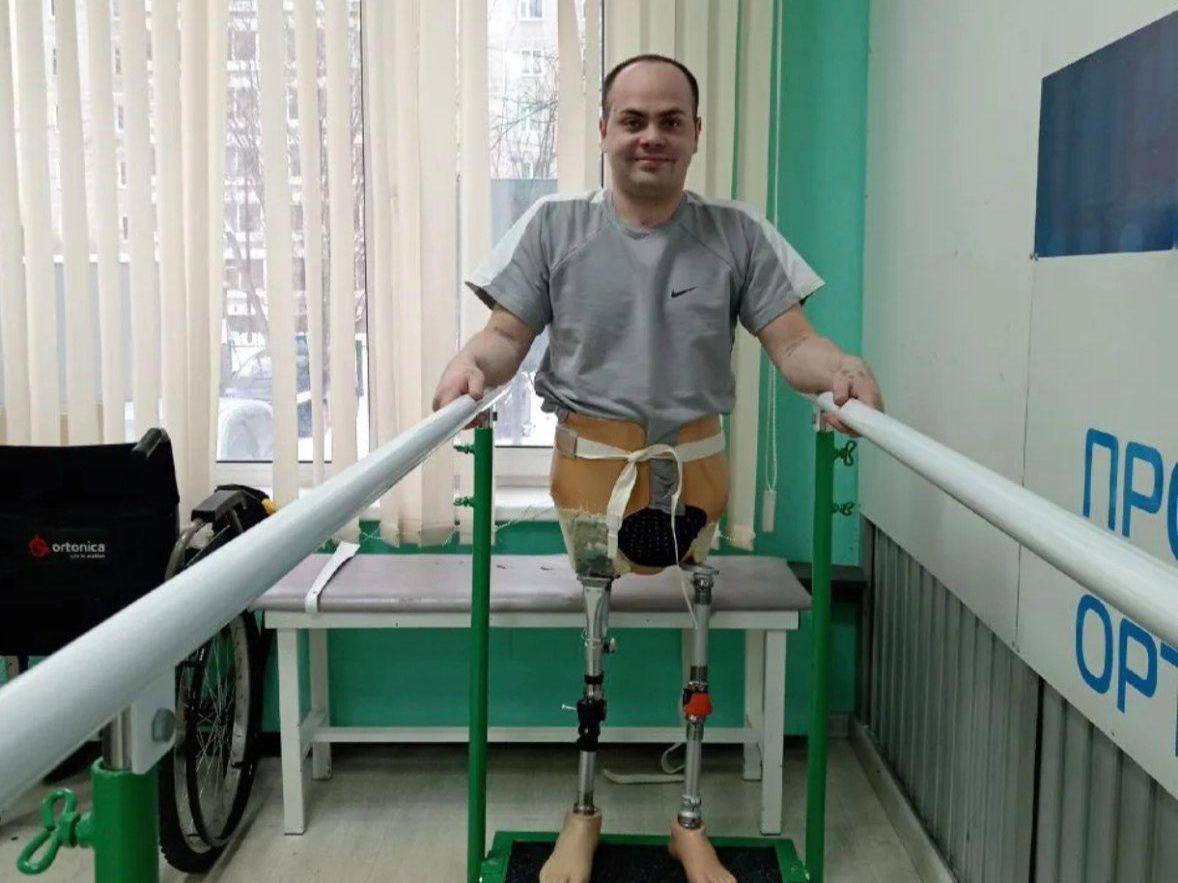
Now, thanks to technological advancements, prosthetics can be installed even in such a severe case where there are no hip joints. The prosthetics themselves are attached to a special, very complex structure, similar to a basket, although movement will still require crutches.
«Recently, I tried on these prosthetics, they were made in Yekaterinburg, at a prosthetic enterprise, there are very good specialists there. I stood up immediately. Took two steps forward, two back. Now they»ll finish them completely, and everything will be fine. I«m not worried, I»ll learn everything,« Sasha says.
We also told the story of a legless taxi driver from the Ural village of Konevo. He grows potatoes and grapes in his garden and raises his grandchildren.