Mother recounts medical failures raising her son with disabilities

The topic of disability in modern society has ceased to be taboo only relatively recently. Each year, more inclusive conditions are being created to allow people with special needs to integrate smoothly into society. However, the path for such people in Russia is still very difficult.
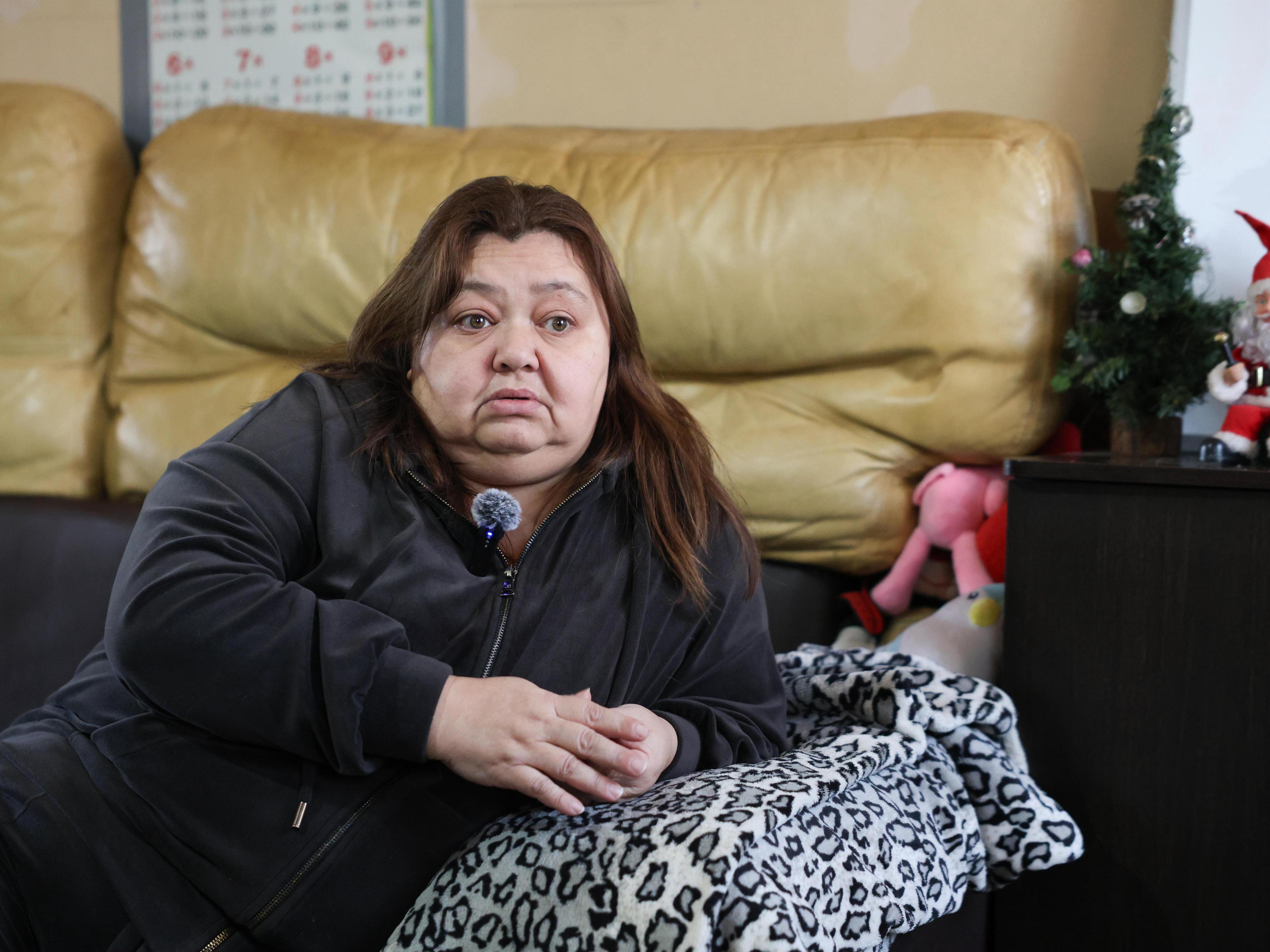
Reporters NGS55.RU Anna Ivanina and Yevgeny Sofiychuk met with a woman who is raising a special needs child. We learned about the difficulties she faced, how she realized her child was ill, and how comfortable they are living within the existing system.
«Everything Pointed to Me Having a Healthy Child»
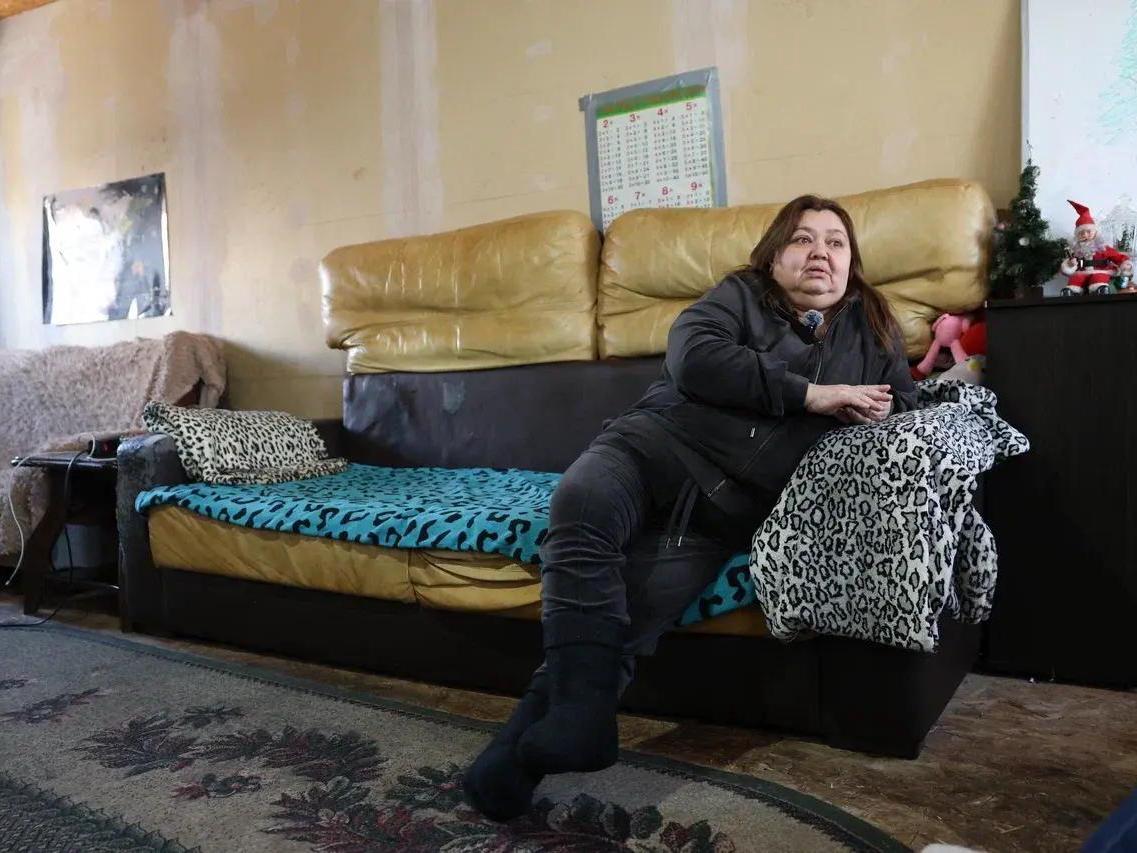
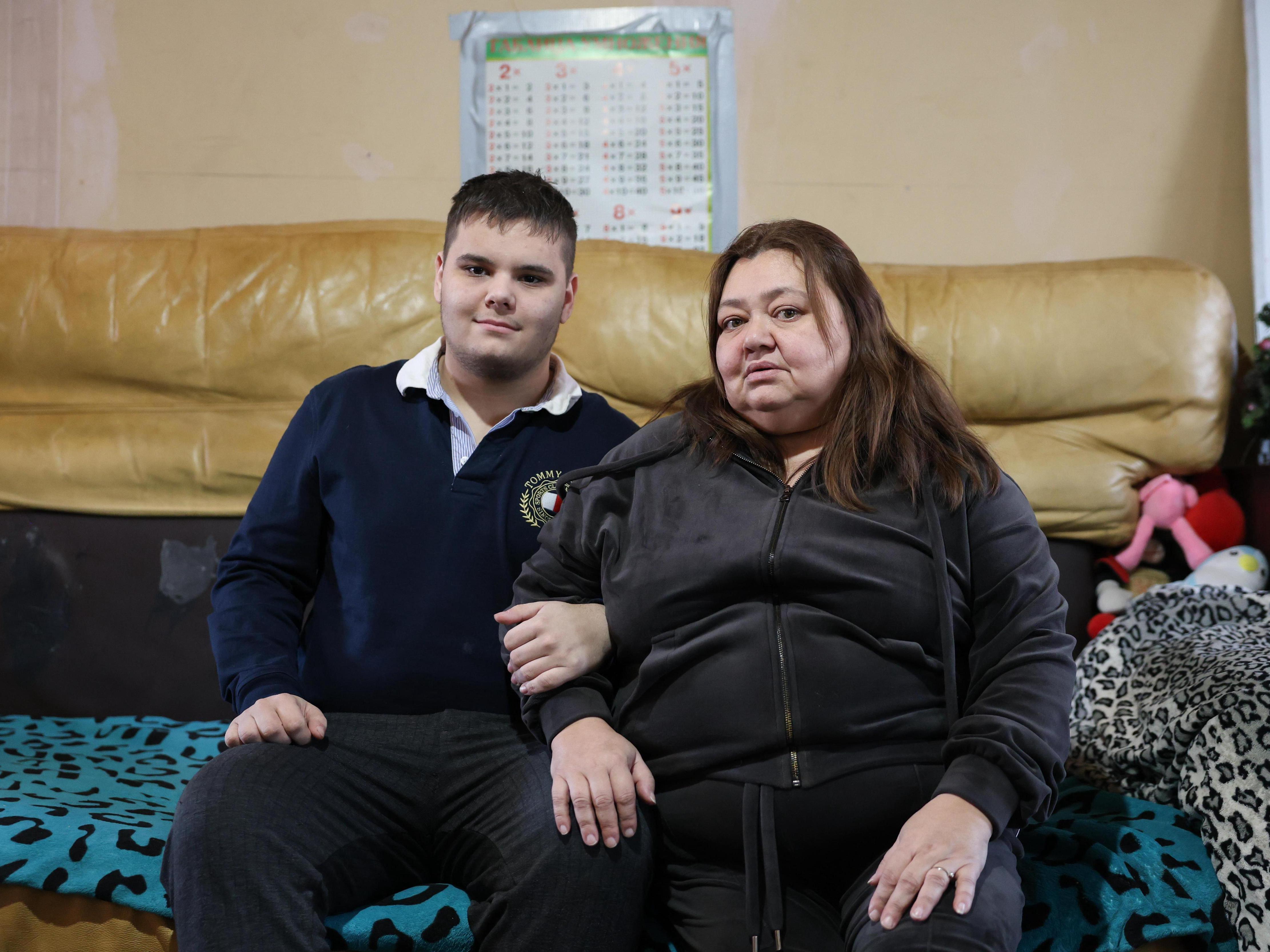
Our heroine is Marina Kovalenko from Omsk. She is now 49 years old and raises her son alone. She was born in Omsk. Her childhood was like everyone else«s: she went to kindergarten and school. She was a teenager in the nineties and, as she admits, lived in not the most prosperous conditions.

Marina«s parents divorced when she was only 10 years old — difficult personalities, different temperaments. Marina and her older brother Sasha lived with a stepfather who loved children very much and denied them nothing.
During her studies, at 16, she met her future husband Slava. They lived in the same district and first met at a friend«s birthday party. Describing their relationship, one could say it was complicated: they often broke up and got back together.
«We were friends, then we weren»t. I was studying in college, he was working. And I continued my education and later enrolled in a financial university,« our interviewee recounts.
They married after 5 years, when they learned that Marina was pregnant with their first child — a daughter, Kristina. The girl was born absolutely healthy, developed and behaved like all normal children. She is now 27 years old, works in medicine, but no longer communicates with her mother.
«Slava really wanted a second child, and specifically a son. But I couldn»t make up my mind for another one because I had a C-section the first time. The surgery was difficult for me, the scar took a long time to heal,« the mother explains.
After 10 years, a second pregnancy finally happened — Dima was born.
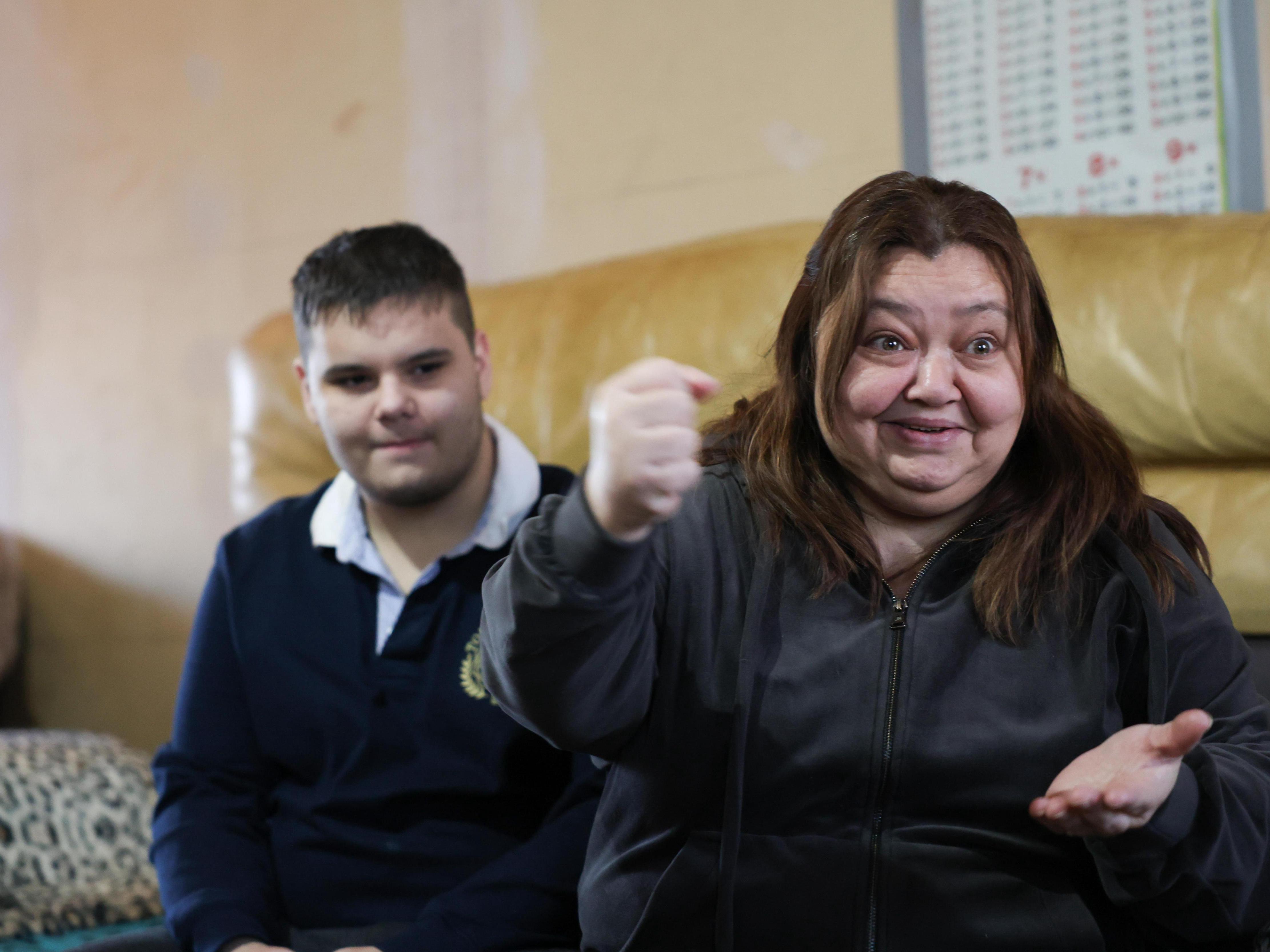
«I was fully prepared for childbirth and took all the tests. Everything was in order and pointed to me having a normal, healthy child,» Marina recalls.
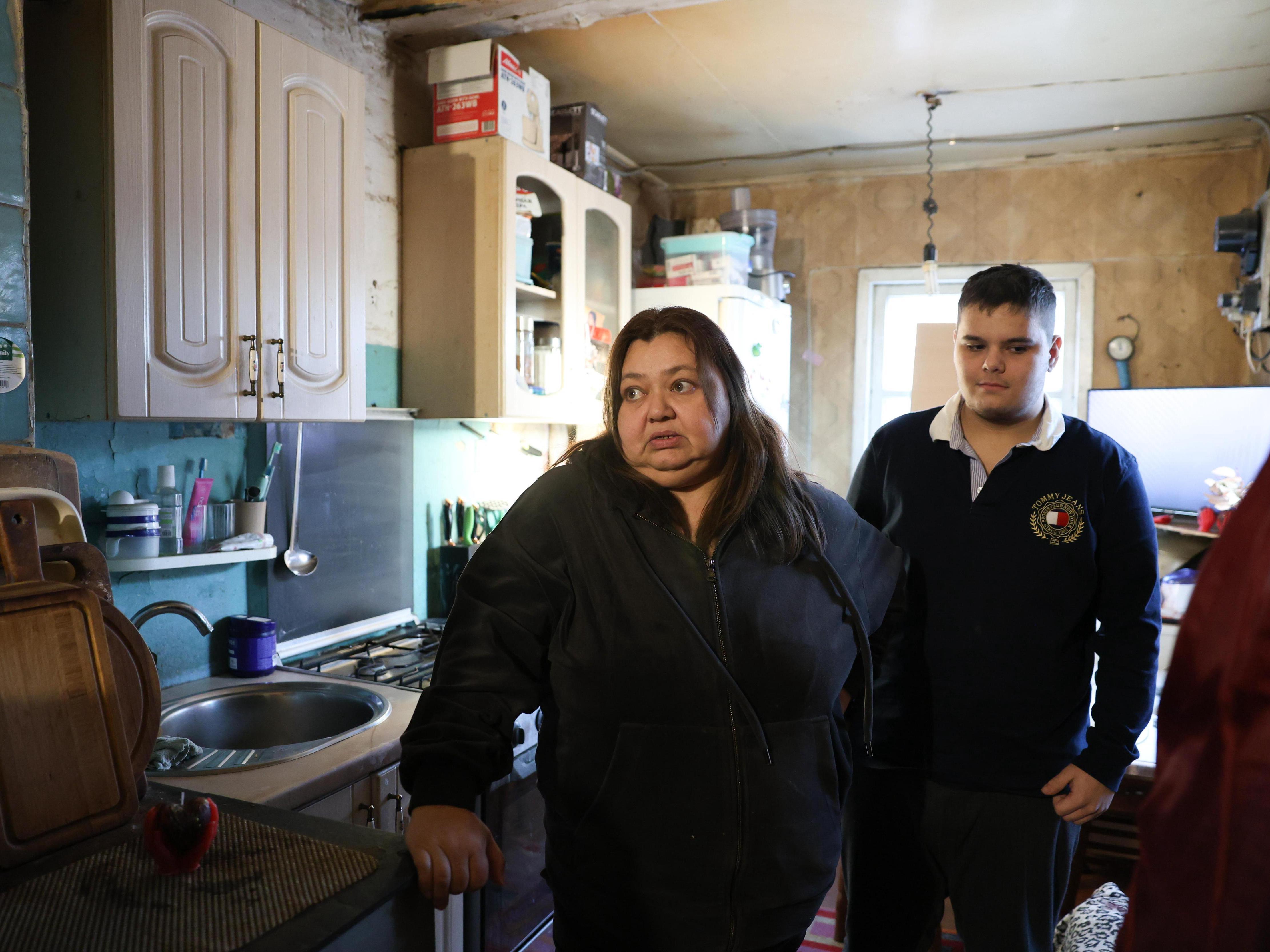
How the Illness Was Identified
Dima was born healthy and grew up without serious illnesses. As his mother recalled, the child sometimes caught colds, but everything passed quickly. There was even a case when after a vaccination, the baby«s legs temporarily became paralyzed, but he recovered quickly.
Marina first realized something was wrong with her child when her son was six months old.
«He caught a cold, and I took him to the hospital. When we entered with other mothers, the other children reacted to the injections, but Dima was silent. I thought: how strange, everyone is crying but mine isn»t. I noticed he had a dulled sense of pain. That was the first warning sign,« she says.
The situation worried the mother. After some time, she made an appointment with a neurologist. She told the whole story, but only got a smirk from the doctor.
«I complained about the situation, and the doctor just laughed at me. She told me not to talk nonsense and that my child was healthy. He was very small then, and I calmed down,» Marina continues.
When Dima was one and a half years old, the family decided to start a furniture business. Someone needed to look after the son — this was entrusted to a qualified pediatric nurse. The specialist analyzed the baby«s behavior and said that the boy often withdrew into himself and didn»t speak. This became the second warning sign.
«By around 3 years old, I was already taking him to specialists. They told us: »Wait, the child will start talking. Boys — they«re like that, they develop slower.» They were essentially just reassuring us. But then we understood that not everything was normal. This was a more serious situation. We spent a month in the hospital, and there they diagnosed him: speech and intellectual impairment, simply put — intellectual disability,« the woman finds it painful to talk about even now.
Marina then found herself in a horrible situation: first her mother died of cancer, then her son«s diagnosis was revealed. Her stepfather also died — he took his own life, unable to bear the loss of his beloved wife. From the terrible stress, Marina ended up in the hospital with neurosis, and then spent another 4 years working with psychotherapists and taking strong medication.
«For 4 years I learned to accept the situation and it took me a long time to come to terms with it. At the same time, I had to work. We needed to live somehow. Slava and I were trading furniture. We had our own workshop and production,» Marina shakes her head.
The father of the special needs child reacted to the diagnosis more calmly than the mother. But internally he didn«t accept the situation — he simply didn»t understand how this could happen to them.
«I Could Only Love This Child»
Raising a special needs child was difficult. She didn«t know how to approach him, and sometimes it was unbearably hard.
«A child changes: from a little person he becomes a teenager. You have to reveal the world to him yourself, and each time you adapt yourself. There are people who are gifted at communicating with special children: they have patience and know how to contact them. But for me it wasn»t like that: I didn«t know how to approach him. I could only love this child,» the woman says.
It was hard simply to accept that your child doesn«t understand information immediately, that you need to teach him to think and act correctly. When raising her daughter, she grasped everything on the fly and learned quickly. With her son, everything was different. Over time, the mother realized that if she took what happened too seriously, she simply wouldn»t withstand it psychologically.
Marina is sure: if the doctors hadn«t reassured their family, but had been alarmed immediately and made the correct diagnosis, started therapy in time, Dima could have learned to speak fully. The boy only started pronouncing words a little at the age of 7.
Education for the Special Boy
In 2015, when Dima entered the 1st grade at the 6th Adaptive School, the state paid them an allowance — 15,000 rubles per month (about $167 at current rates). The family spent the money on paying for education. They lived on income from the business, but for four people their earnings weren«t enough.
«I believe the state needs to approach this problem more seriously. If certain moments hadn»t been missed, if I could have stayed at home — and I wasn«t allowed to — I would have fully engaged with the child. We lacked one husband»s salary. In our country, raising a special needs child is a huge labor,« Marina believes.
From the 6th Adaptive School, Dima transferred to Kirill and Methodius School — his intelligence was more developed than other children«s, and the new institution promised an individual approach and enhanced learning. The boy studied there for 3 years, but the family saw no result.
«Initially we were supposed to enter Speech School No. 19, but due to corruption we weren»t allowed in. They accepted those who didn«t fit for money, because the institution itself was considered very good,» resentment seeps into the mother«s voice.
The most painful thing was the realization that at the school someone «took Dima»s place« and her son lost the chance to study together with normal, healthy children.
«When we managed to get into the school, the homeroom teacher analyzed him. She observed him for 2 weeks and delivered a verdict: »If you had come to us in the 1st grade, then by the 4th grade I would have transferred him to a regular school.« This is the most painful — to hear that everything before that was wrong. Medicine — it does all this incorrectly,» our interviewee says bitterly.
«He Found Himself a Young Woman»
Marina separated from Dima«s father when her son was 10 years old. They divorced after 21 years of marriage.
«He found himself a young woman and left. I went through it very hard. Of course, I cried a lot at first. Then I calmed down and didn»t try to find out anything. I«m a proud girl. I filed for divorce, we were divorced, and we divided the property,» the woman shrugs.
The main stress turned out to be the loans that the mother of the special needs child took out for their joint business, totaling one million rubles (about $11,100 at current rates). All obligations were placed on her.
«They refused to divide the loans in the appellate court. The judges didn»t consider that I have a child — a category 2 disabled person. For 7 years I paid off the loans. The last payment was in December 2025,« she sighs.
What is happening with the father now — no one knows. He stopped communicating even with Dima, although earlier they were inseparable. He doesn«t congratulate the child on holidays, doesn»t communicate, and doesn«t help his once beloved and long-awaited son in any way.
«Dima was very sad when dad stopped communicating with him, he missed his father. He still misses him. We try to take it calmly. We are a family — mom and son,» now the single mother speaks about the divorce calmly.
«Russia Is Not Adapted to Special People»
Now the state pays Marina a social pension of 24,000 rubles (about $267 at current rates). Of course, this isn«t enough to live on. She has to work part-time as a courier for dental clinics. In the spring, Marina plans to go on a caregiving pension for the child, which will be about 15,000 rubles (about $167 at current rates). In her free time, she makes candles and sews cosmetic bags, which she then sells on marketplaces.
She doesn«t intend to give up side jobs, as you can»t live on the allowance. And she can«t take on full-time work: she must always be free, in case something happens to Dima. The only way to cope with the difficult financial situation is to maintain a frugal budget. She admits that there are debts for utility payments and they live in constant arrears.
With sadness in her eyes, she says that for special people, especially those with a diagnosis more severe than Dima«s, it is difficult in Russia.
«Our country is not adapted to such people. I believe that in every city there should be special boarding houses where they could develop socially, work on themselves, learn something and live like everyone else,» the woman is sure.
«Everything in the System Needs to Be Changed»
«Everything in the system needs to be changed, honestly. We should move correctly in the field of disability, but it is defined only by doctors. They told us: »Wait, wait, he«ll start talking, he»ll start talking.« And that»s how we waited. The corruption here is terrible,« the mother»s resentment towards medics hasn«t gone away even after many years.
It«s unlikely that Dima»s speech will be restored, but there is hope that by age 30 his development will level out a bit. Now he tries to speak, but internal barriers prevent the words from sounding clearly — thoughts break off, phrases come out incomplete. Empty promises and reassuring words from doctors turned into a bitter loss for him: the young man remains a category 2 disabled person and doesn«t know how to clearly express what he feels and thinks.
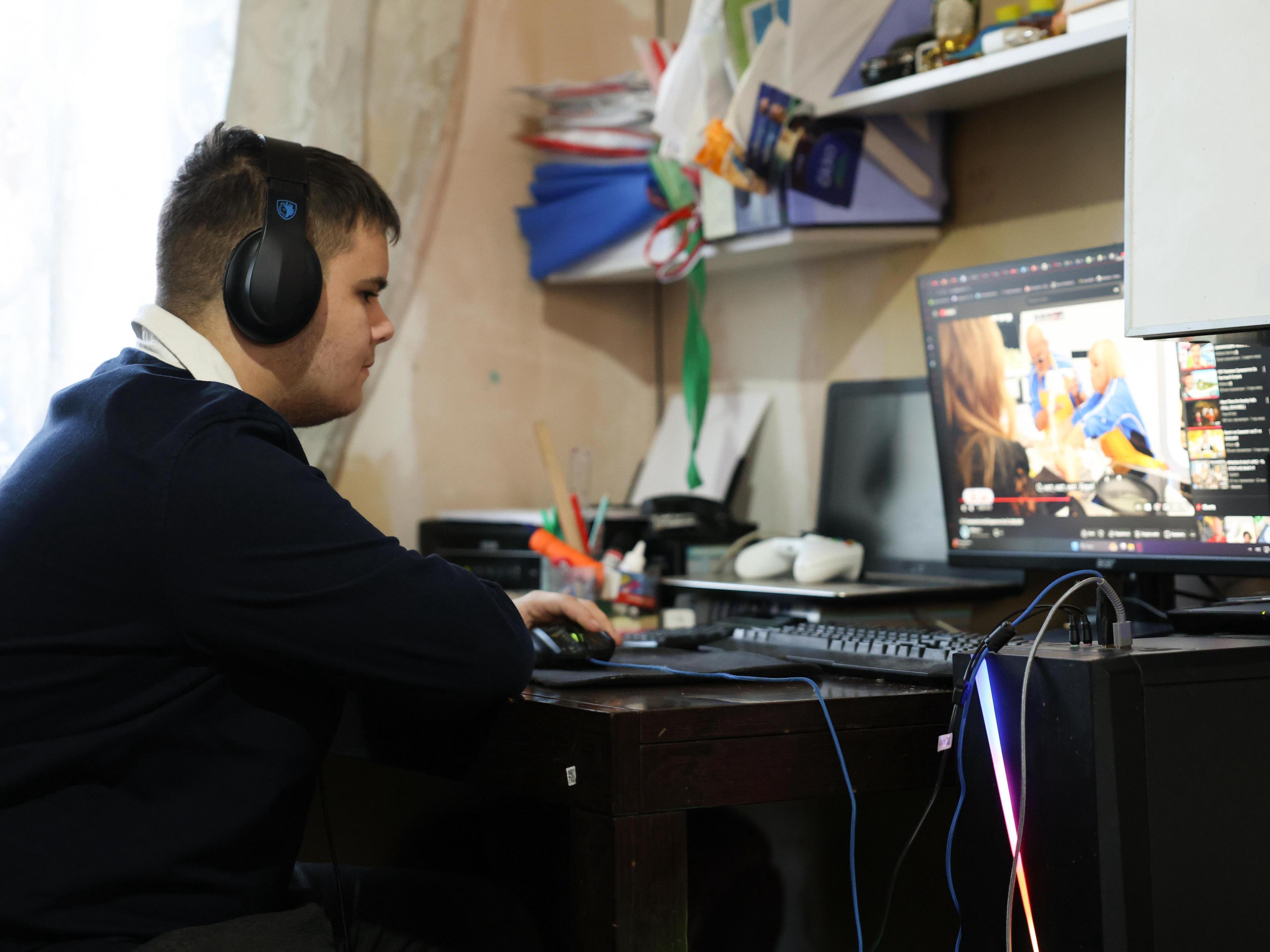
In a year and a half, the guy will finish school. He will be 20 years old. Dima likes computer science and English the most, and he spends all his free time on computer games.
«Oh, I really dream that he can go to college and study to be a programmer. Maybe in this profession he can become first,» the mother of the special needs child hopes.