Masaru Ibuka: The Engineer Who Built Sony

After World War II, Japan lay in ruins. To transform from an economic underdog into a leader, the country needed not only new technologies but also a completely different approach to labor organization and fresh ideas in production ethics. People emerged who combined the talent of an engineer-inventor with profound humanity in an amazing way. One such person was Masaru Ibuka.
The Young Technician
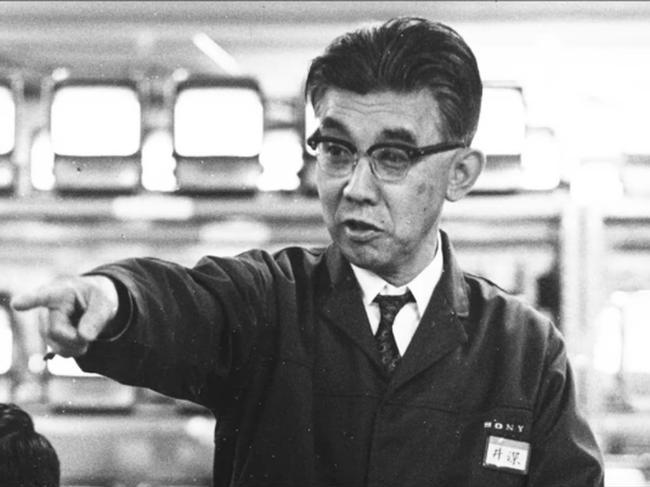
Masaru Ibuka was born on April 11, 1908 in the city of Nikko, about a hundred kilometers from Tokyo. His father, a hydroelectric engineer, died tragically when the boy was two years old. His mother moved to Kobe, leaving her son in the care of his grandfather and grandmother. Although Ibuka did not remember his father, he clearly inherited his engineering streak.
His childhood curiosity was boundless. Once, trying to understand how mechanical clocks work, he took apart an alarm clock down to the last screw. He couldn«t put it back together. His grandfather, following the Japanese tradition of upbringing that allowed his grandson to do anything that did not threaten the destruction of the house, bought a new one. It met the same fate. Only on the third attempt did the young researcher figure out the intricacies of gears and springs. By the age of sixteen, he was already experimenting with crystal radio receivers.
His grandfather channeled his energy into studies. Ibuka entered the Department of Electrical Engineering at Waseda University, where his classmates nicknamed him the «genius inventor.» In 1933, his graduation thesis on signal modulation in a cathode-ray tube won a prize at the Paris Industrial Exhibition.
From 1933 to 1940, he worked at a photochemical laboratory and the Japanese Optical and Acoustic Company, engaged in promising developments. In 1940, Ibuka founded his own firm — the Japan Precision Instruments Company, which during the war years fulfilled military orders. It was there, while reviewing lists of graduates, that he invited a young physicist, Akio Morita, for an interview. Thus began the alliance that changed everything.

The Birth of a Legend
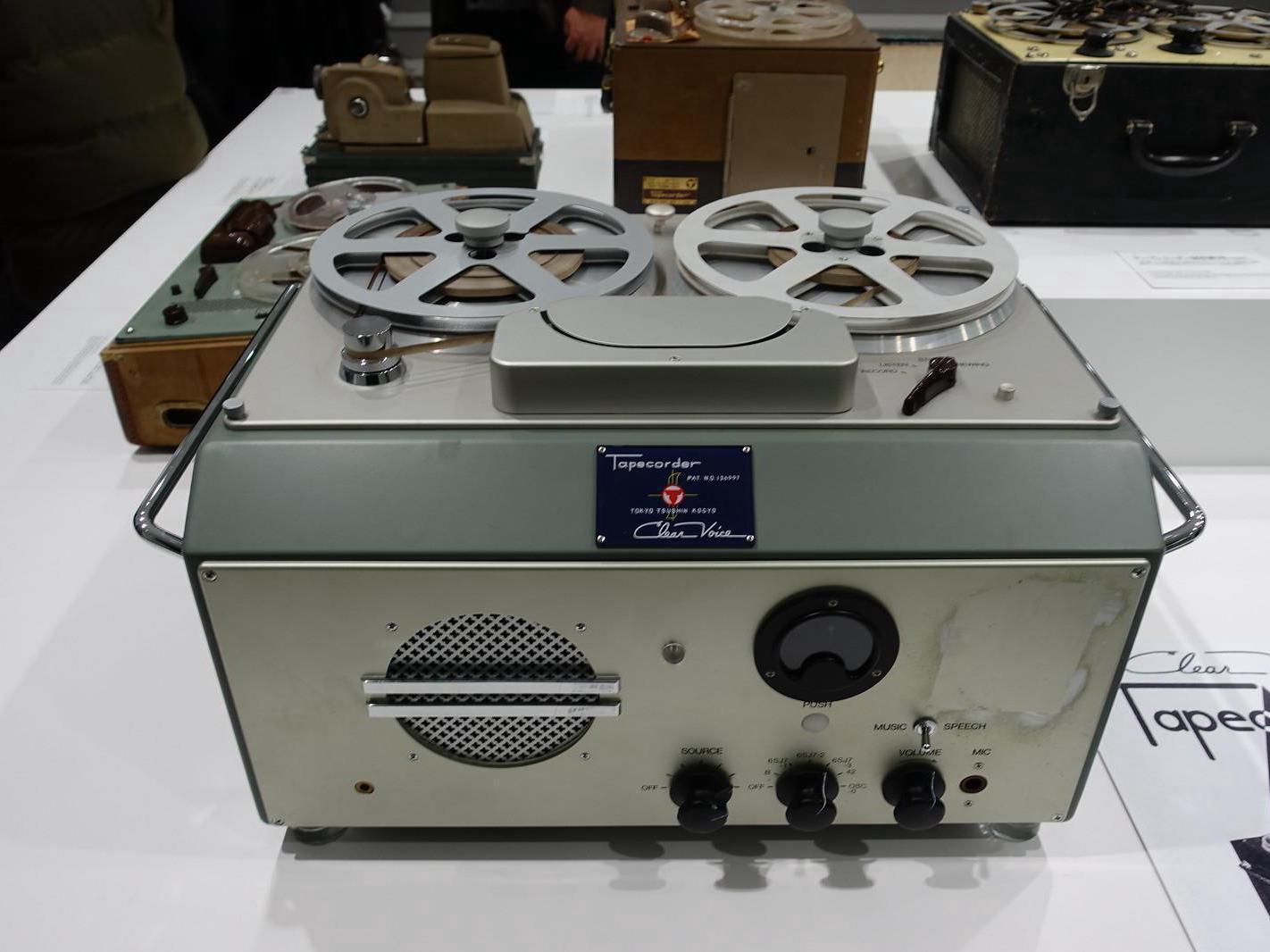
On May 7, 1946, a day celebrated in the USSR as Radio Day, Masaru Ibuka and Akio Morita pooled their money and registered the company Tokyo Tsushin Kogyo (Tokyo Telecommunications Engineering Corporation). At first, with twenty engineers, they assembled adapters for radio receivers, but Ibuka quickly became bored. He became excited by the idea of creating a tape recorder, which his colleagues considered a fantasy. However, the «genius inventor» managed to convince everyone.
In 1949, the bulky reel-to-reel tape recorder G-Type, weighing 35 kg (77 lbs), was ready. On the global stage, where such devices were already appearing, this was not a breakthrough. But for devastated Japan, without normal components, it was a real engineering feat. The problem was the price and weight. The cunning Morita proposed a solution: he convinced the Supreme Court of Japan to buy the tape recorders to replace stenographers. In 1950, Ibuka became president of the company.
The name Sony appeared later, in 1958, when the company began to enter the American market. The founders were looking for a short and sonorous name. They combined the Latin word sonus («sound») and the English word sunny («sunny»), dropping one letter for euphony.
The Age of Electronics
A turning point came in 1953, when the company bought from the American Western Electric for $25,000 a license to produce transistors. A year was spent mastering the technology, and in 1955 the first Japanese transistor radio, the TR-55, the size of two thick encyclopedia volumes, appeared.
Ibuka showed strategic acumen: he began selling transistors to competitors, ensuring a stable income, and for assembling precision electronics, he started mass hiring young unmarried women, considered more meticulous performers. Corporate dormitories were built for them — this was one element of the special management philosophy that Ibuka and Morita were creating.
An Effective Tandem and Philosophy
Ibuka was not only an engineer but also a deep thinker. A personal tragedy — his first child«s autism — led him to questions of upbringing. He consulted with violinist and educator Shinichi Suzuki and eventually wrote the international bestseller Kindergarten Is Too Late! Later, he founded the Japanese Association for Early Childhood Development.
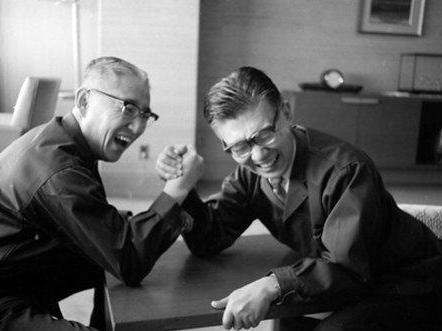
In managing Sony, the Ibuka–Morita duo created a unique blend of Eastern and Western traditions. While maintaining paternalism and care for employees, they encouraged open discussions, allowing younger employees in age and position to criticize their elders. This culture became a breeding ground for innovation.
The Path of Innovation
The following decades were a series of breakthroughs that shaped Sony«s image as a pioneer in consumer electronics.
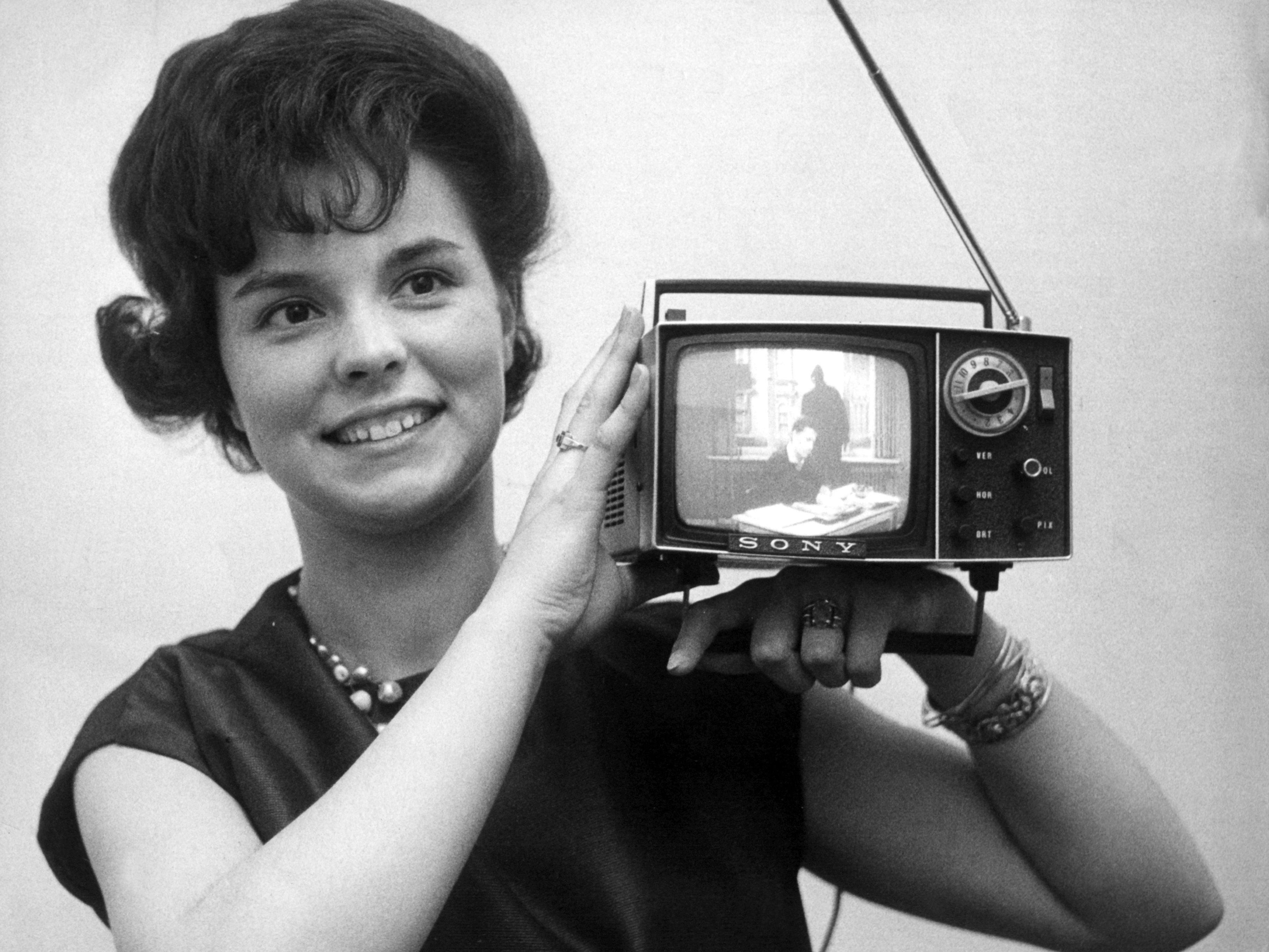
- 1960: the world«s first transistor television TV8-301.
- 1963: the first home reel-to-reel video recorder CV-2000.
- 1968: the first color transistor television Trinitron — an iconic development personally overseen by Ibuka.
- 1975: the first home cassette video recorder Betamax (later the format lost the war to VHS).
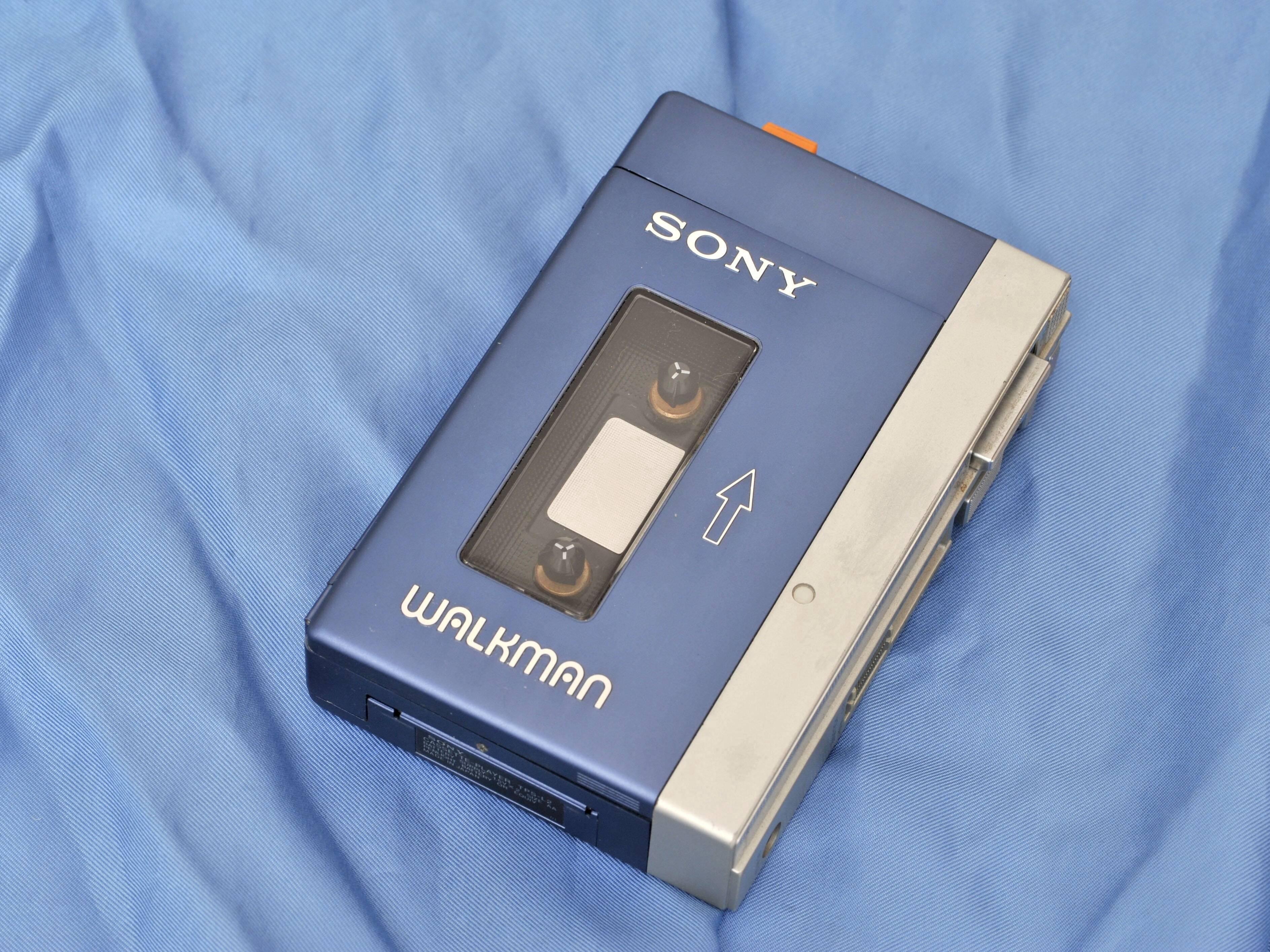
But the main icon became the Walkman (1979). Legend has it that Ibuka, passing by developers working on a portable tape recorder, proposed a brilliantly simple solution: remove the recording function and speakers, leaving only playback through headphones. Thus was born a device that defined the lifestyle of entire generations and sold hundreds of millions of copies.
It was followed by other iconic products: the compact disc (co-authored with Philips), the digital camera Mavica, the game console PlayStation, Vaio laptops. In the late 1980s, Sony went beyond hardware, buying the recording company CBS Records and the film studio Columbia Pictures, creating a huge media conglomerate.
Masaru Ibuka died on December 19, 1997 from heart failure. The principles laid down by him and Morita — a passion for innovation, boldness of ideas, and a special corporate culture — continue to live on. Today Sony remains a global leader not only in electronics production, from televisions to professional cameras, but also in the world of games, music, and film. Ibuka«s story is the story of how curiosity, embodied in technology, can change the world, starting with a disassembled alarm clock in the Japanese provinces.