From Kaffa: How Coffee Conquered the World


The history of coffee began long before people learned to brew an aromatic drink from its beans. The journey from a wild plant to the primary morning ritual for billions is full of dramatic turns: coffee was repeatedly outlawed, fought against in the name of both Islam and Christianity. But persecution only fueled the passion: devotees of the drink were ready to defend it even under threat of death, organizing real riots.
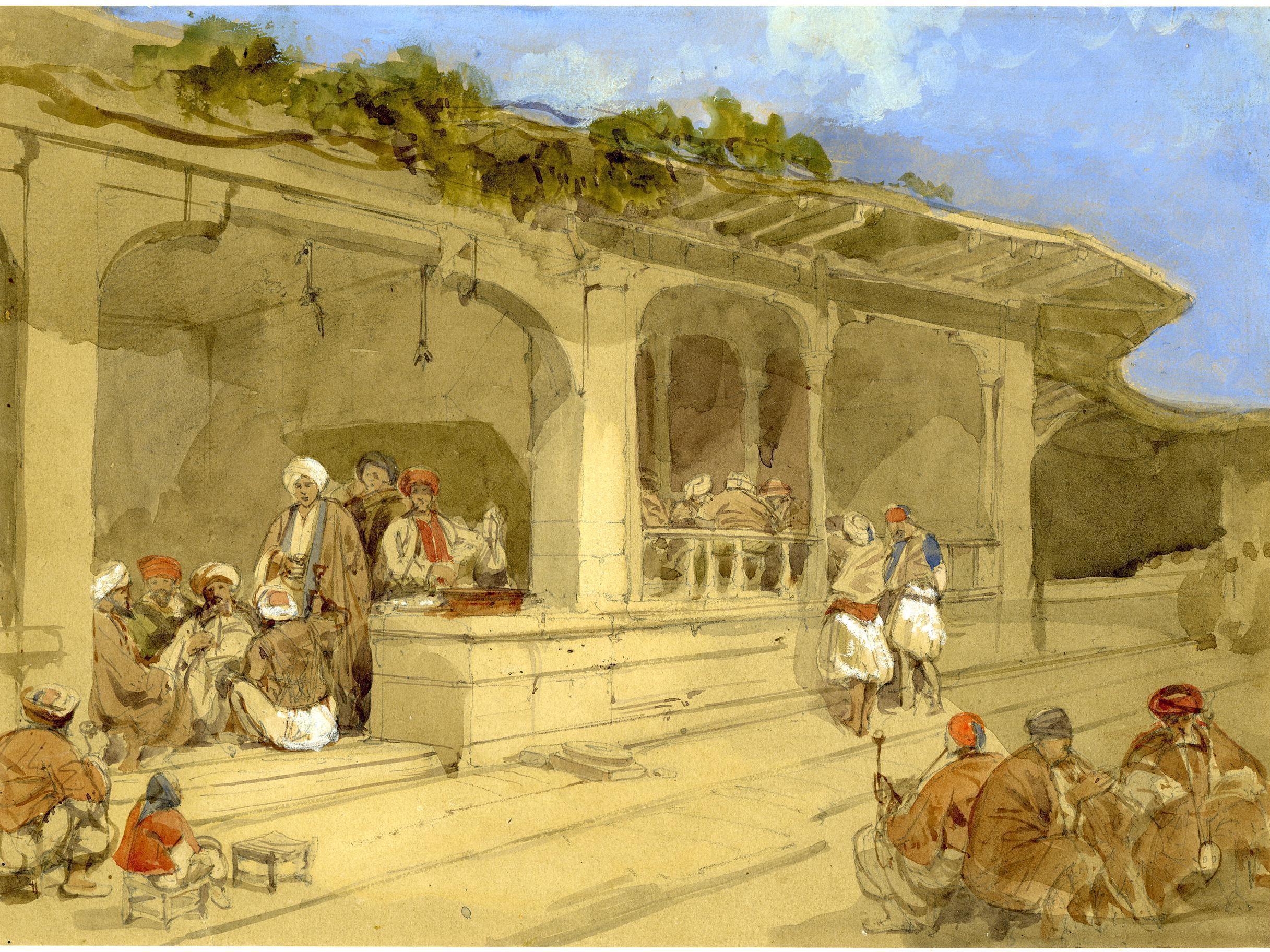
However, all attempts at bans proved futile. Coffee mania spread across continents with fantastic speed, becoming an integral part of daily life for a huge portion of humanity.

It is not known exactly who and when first discovered the invigorating properties of the leaves and fruits of the evergreen shrub. There are many legends on this account. One tells of a shepherd who noticed that his goats, after eating shoots from an unfamiliar tree, began to frolic instead of sleeping. Another mentions the biblical King David, who was supposedly gifted coffee beans. And in Muslim tradition, there is a story of how the archangel Gabriel gave the prophet Muhammad a drink that granted him unprecedented strength. People tend to believe in miracles, especially when it comes to something as extraordinary as coffee.
From Africa to the World

It is believed that the drink came to us from the Ethiopian province of Kaffa—this is one hypothesis explaining its name. From there, coffee reached Yemen and then rapidly spread throughout the Muslim world. Its popularity became so great that it aroused the anger of the clergy, who wished to control all aspects of life.

In 1511, at the Council of Jurists in Mecca, coffee was cursed in the name of Allah, and the drink from its beans was declared a «devil»s intoxicating potion.« Violators of the ban faced cruel punishments: they could have their tongues cut out, and sometimes were sewn into sacks used for coffee beans and thrown into the sea.
The conflict between supporters and opponents of coffee lasted more than two hundred years and claimed many lives. But the forbidden fruit was sweet: even the fear of death stopped few. The authorities, realizing the futility of the struggle, eventually lifted the curse, citing that there is no direct prohibition of coffee in the Quran.
From this moment, the triumphant march of coffee across the world began. It reached Europe in the first half of the 16th century and quickly gained popularity. Local clergy also tried to combat the «black blood of the Turks,» seeing it as a threat to Christian souls. However, the drink appealed to the powerful and became an important source of revenue for the treasury. Supplies grew, consumption increased, and coffee mania engulfed France, England, Holland, and other European countries.
In Russia, the main popularizer of coffee is considered to be Peter I, who became addicted to it in Holland. But as early as 1665, the physician of Tsar Alexei Mikhailovich, Samuel Collins, prescribed «boiled coffee» to the sovereign as a medicine for a runny nose and headache. At that time, the drink remained an exotic potion for the select few. Peter the Great introduced the custom of drinking coffee at assemblies, and then the nobility followed his example. The import of beans gradually increased, and coffee drinking became a sign of good taste in high society.
How Coffee Grows
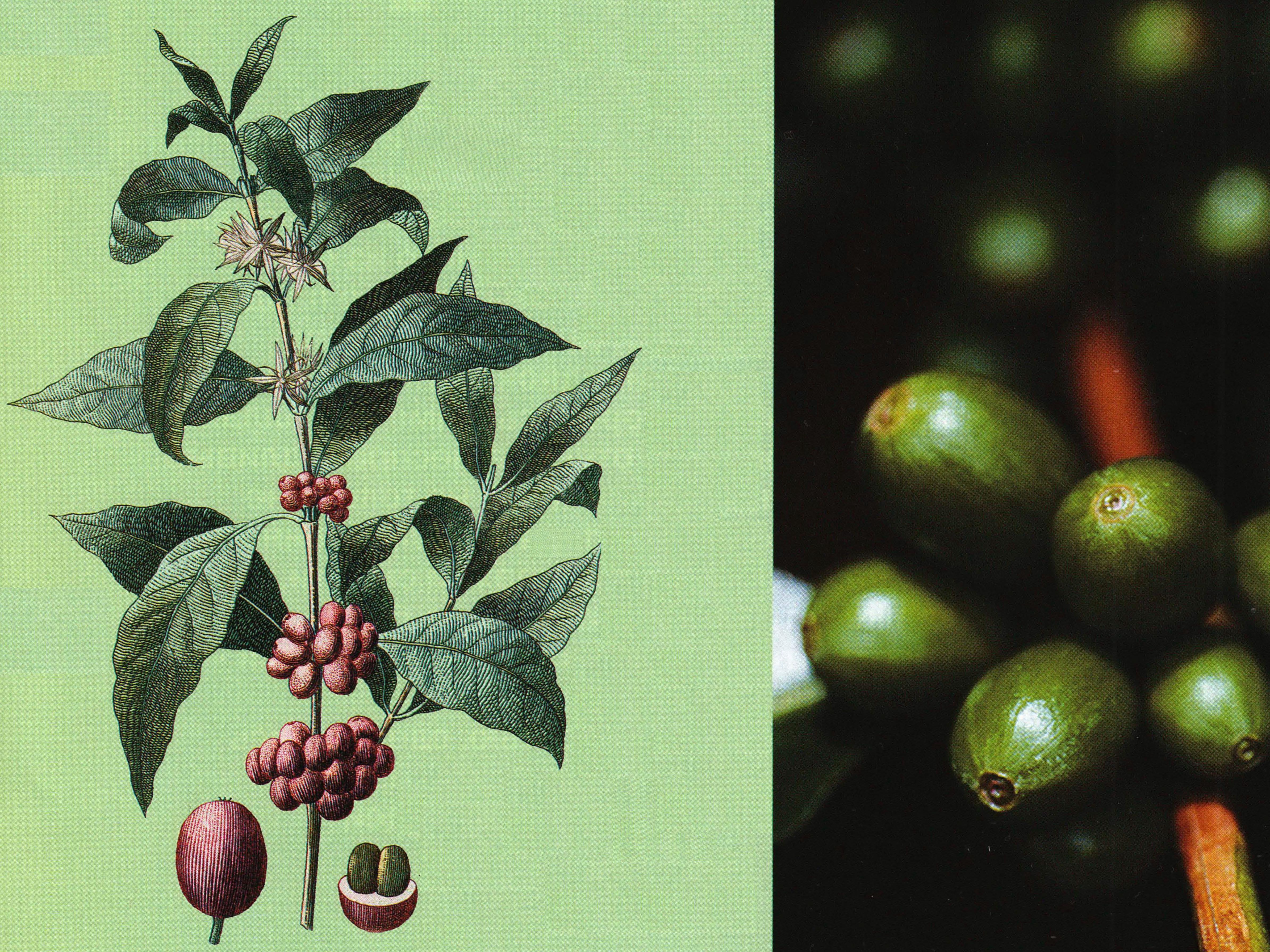
Coffee is a genus of evergreen trees and shrubs in the Rubiaceae family. The plant with shiny dark green leaves prefers altitudes from 400 to 2000 meters above sea level (1,312 to 6,562 feet) and temperatures not lower than 20–25°C (68–77°F). In nature, coffee trees can reach 6–8 meters (20–26 feet), but on plantations they are usually pruned to 4 meters (13 feet) for easy harvesting. There are also dwarf varieties less than a meter (3 feet) tall.
There are about 40 known species of coffee, but commercial significance is mainly held by four:
- Arabica (Coffea arabica) — the most common species, accounting for approximately 70% of world production. Grown in Brazil, Ethiopia, Colombia, India, and other countries.
- Robusta (Coffea canephora) — a stronger and more caffeinated species, comprising about 30% of production.
- Liberica (Coffea liberica) and Excelsa (now considered a subspecies of Liberica) — have limited economic importance.
Harvesting of ripe fruits is done manually or mechanically. The manual method is labor-intensive but allows selecting only ripe berries, while mechanical harvesting includes unripe fruits in the yield.
Processing and Roasting
After harvesting, the beans undergo processing. The pulp is removed by dry or wet method. In the dry method, the fruits are dried in the sun or in dryers, and then stripped. After this, the beans are cleaned of shells and roasted—it is this process that unveils the familiar aroma and taste.
Instant Coffee
Debates about the merits and demerits of instant coffee have not subsided since its invention. However, the fact remains: for many, it is an indispensable product. According to some data, in Russia, this type of coffee is preferred by more than half of consumers.
In the production of granulated coffee, extraction is reduced, and drying is carried out at reduced pressure. Freeze-dried (freeze-dry) coffee is made differently: the finished extract is frozen and then dried in a vacuum, which better preserves the taste and aroma.
Diversity of Preparation Methods
Coffee traditions are astonishing in their diversity. The same beans are boiled in a cezve to a thick foam in Turkey, passed under pressure for espresso in Italy, filter coffee is preferred in France, and light roasts in Scandinavia. Each culture has brought its unique features to coffee preparation.
Caffeine and Health
The stimulating effect of coffee was long explained by magic, until in 1828 French chemists Pierre Joseph Pelletier and Joseph Caventou isolated the alkaloid from the beans—caffeine. Eighty years later, scientists established its exact formula and synthesized it artificially.
As a medicine, coffee was used in Arab countries as early as the 10th century, and with the discovery of caffeine, these practices gained new development.
Today, coffee is one of the most researched products. According to modern data, moderate consumption (2–3 cups a day) can bring benefits: caffeine improves concentration, memory, and overall tone. Some studies link it to reduced risk of cardiovascular diseases, type 2 diabetes, and age-related cognitive impairments. There is even data that coffee in moderate doses may promote longevity.
However, there is a flip side to the coin. Coffee can be dangerous for glaucoma, as it increases intraocular pressure. Abuse (more than 5 cups a day) can lead to dependence, nervousness, insomnia, tachycardia, and also impair the absorption of micronutrients, such as calcium. Overdose of caffeine (over 250 mg at once) causes a range of unpleasant symptoms—from digestive disorders to muscle cramps.
For those who love the taste of coffee but want to avoid caffeine, there is decaf—decaffeinated coffee. Modern methods of caffeine removal use treatment of beans with compressed carbon dioxide, which helps preserve the aroma.
A cup of black coffee without additives contains only about 2 calories, making it a low-calorie drink.
Today, coffee is more than just a drink. It is a global cultural phenomenon, a morning ritual, a reason for meeting, and an entire industry that continues to develop, offering new varieties, brewing methods, and consumption formats.