Samara's Quiet Maniac: Hunted, Tried, Found Insane

Winter 2007–2008 in Samara was remembered not only for severe frosts. A quiet, silent horror settled in the Kuibyshevsky and Samarsky districts. Men disappeared one after another. They vanished on their way from work, from the garage, after a modest drink at a bar. They were not found for months.
Relatives filed reports, investigators checked leads, but the streets continued to swallow people without a trace. A chilling fear became part of daily life: “Don’t stay out late, watch out so you don’t run into him…” Locals had already given him a nickname—the Kryazhsky Maniac.
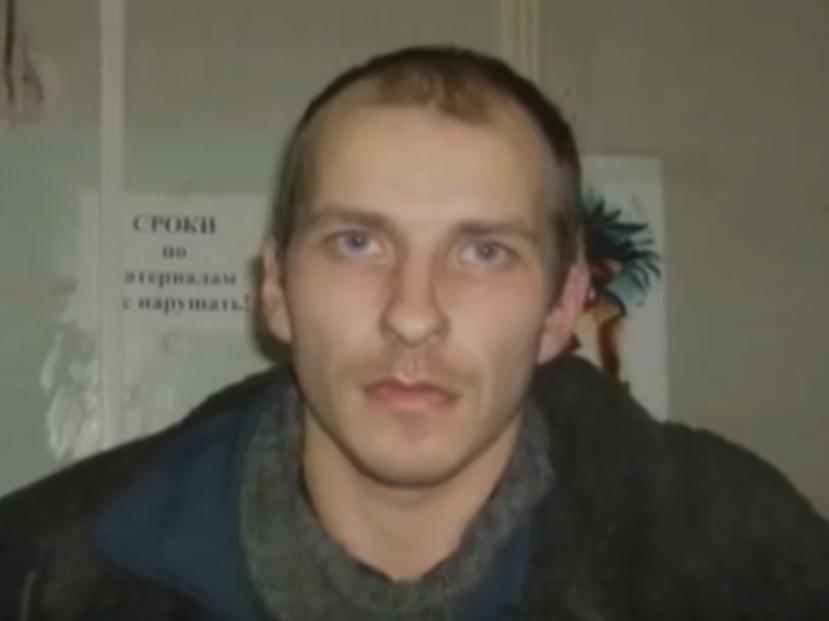
The resolution came in February 2008, and it turned out to be more terrifying than any rumors. The detained 34-year-old Sergey Kuznetsov was not a classic villain, but a living illustration from a textbook on social psychiatry. 63.RU recalls this high-profile story from past years.
The Missing Pensioner Oreshkin
It all began with a routine check. In early 2008, investigators working on the case of pensioner Alexander Oreshkin, who went missing in November 2007, discovered that calls from his SIM card were still being made. The subscriber turned out to be Olga Tabachkova. She was unemployed and led a marginal lifestyle. During interrogation, Olga gave confused but valuable testimony. As it turned out, the phone had been given to her by her live-in partner, a certain Sergey Kuznetsov, with whom she lived in a threesome with another girl, Maria Tareeva, in the village of Kirovsky Zavod (Kirov Plant settlement) in an old house.
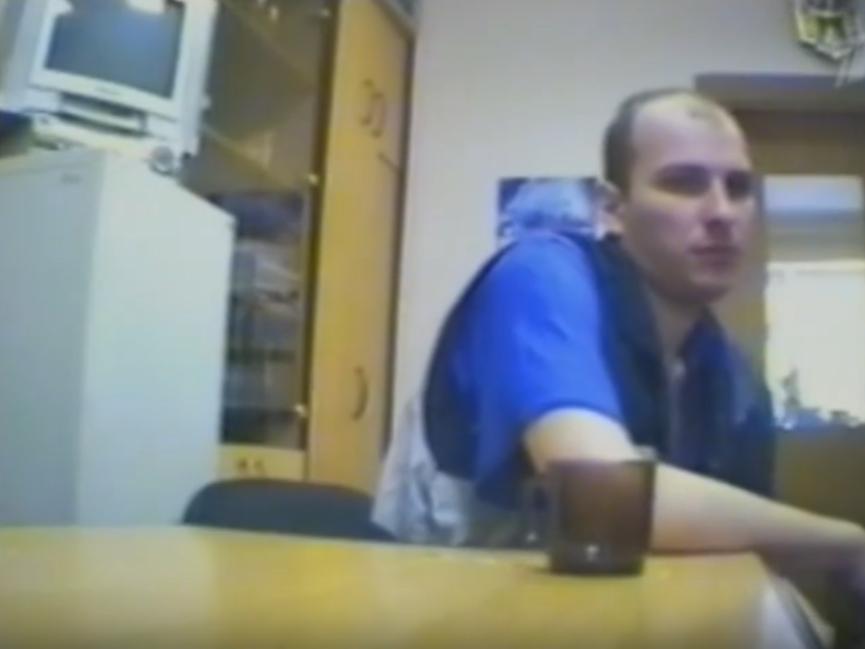
“He often brought home various junk,” Tabachkova later recalled during the investigation. “Bags of clothes, sometimes dirty, stained… Boots, jackets, phones. He said he found them. But once, when I asked about blood on a shirt, he just muttered: ‘Took them off people.’ I didn’t pry anymore.”
The key witness was Maria Tareeva. It was she, who had known Kuznetsov a bit longer, who told investigators about his second life—in the village of Kupino in Bezenchuksky District, Samara Oblast. She called his dwelling there nothing less than a “bunker” or “warehouse.”
“The windows were boarded up with sheets of iron, inside there was such a smell… He dragged everything he brought there. He didn’t let us in, said it was his business,” Maria recounted.
This testimony became the basis for a search. What the operatives saw upon entering the entrance of the house in Kupino is unforgettable.
The «Bunker» in Kupino
Irina Makushina, a neighbor from the first floor, still recounted to the operatives with a shudder about that ill-fated apartment of Kuznetsov.
“My sister and I thought he had corpses there. Continuously, day after day, that smell came from under the door—sweet, heavy, like in a morgue. We complained to both the administration and the local police officer. We said: ‘Look what he has there!’ But for several months, no one ever came.”
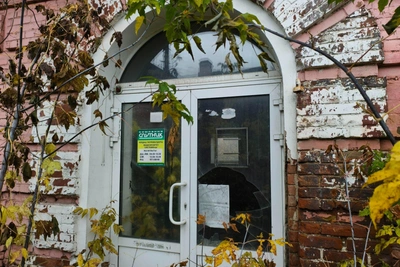
When the door was opened, the stench hit the investigators in the face. There were no corpses. But the scene was, perhaps, even more sinister in its domestic absurdity.
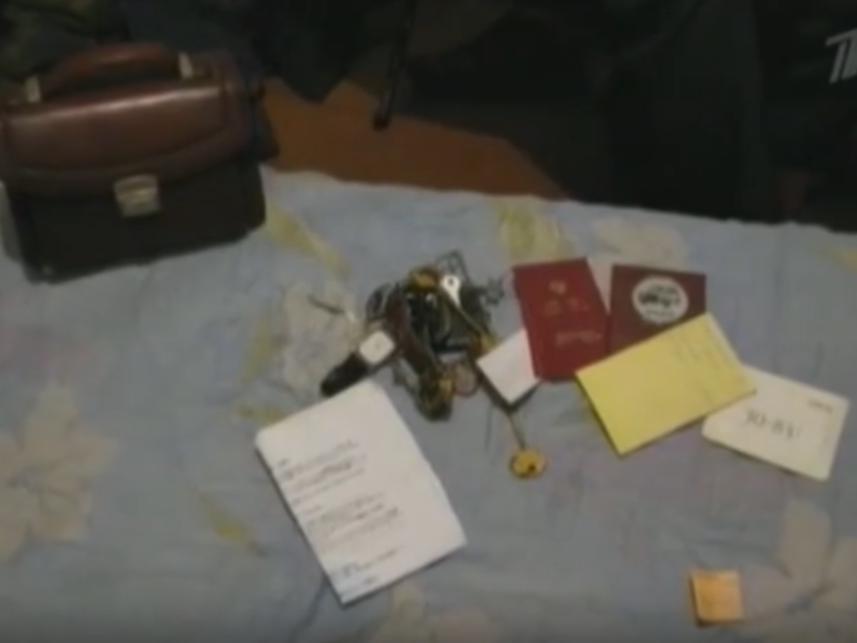
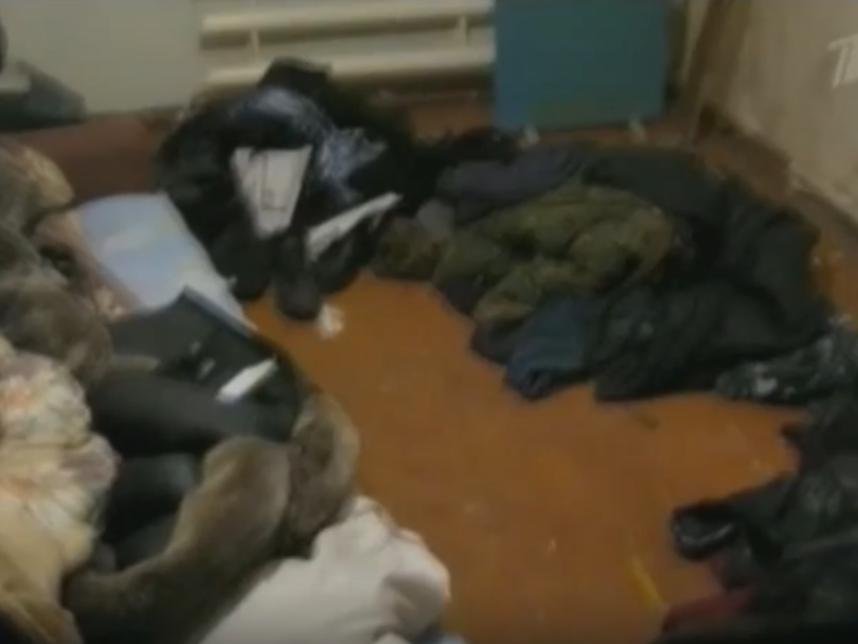
“It wasn’t an apartment, it was a dump,” Galina Shilina, a clerk from the local administration who was present at the search as a witness, later described. “Mountains of empty bottles, bags of rags, knee-deep dirt. And… suitcases. Many large suitcases and bags. When they started opening them, we were stunned. They were stuffed to the brim with clothing: jackets, pants, shoes, hats. Everything neatly folded. Separately, they found a whole backpack of old push-button phones, about thirty or forty. And on the sofa—a stack of passports. I’ve never seen anything like it. I asked the investigator: ‘What, is he a collector?’ He didn’t answer me, only his face was very serious.”
Traces of blood were also found on some items. The windows, boarded up with sheets of tin, indeed created the effect of a bunker full of “trophies.” Why? That was the question everyone asked then.
Cocktail with an Antipsychotic
The investigation, comparing the finds in the “bunker” with databases of missing persons, quickly identified six specific episodes. The scheme, reconstructed from Kuznetsov’s own testimony and that of rare survivors, was simple and deadly.
Mikhail Demakhin, a trolleybus driver on the route to the Volgar state farm, accidentally became a key witness who could specifically describe the killer’s portrait.
“He often rode on my trolleybus. Tall, thin, always in the same fur hat and red scarf. And with a huge checkered bag, which he never let out of his hands. Once, it was closer to the end of winter, I noticed at the terminus how he literally dragged a drunk man out of the cabin. The man resisted, moaned. I shouted: ‘Hey, what’s going on?’ Kuznetsov turned around, he had an absolutely empty, glassy gaze. He said: ‘Friend, helping him get home.’ I didn’t believe it and called the police on the radio. They arrived, took that drunk man away. Kuznetsov then silently left. Now I understand that I possibly saved that man’s life.”
Kuznetsov’s method was simple and very insidious. He mixed a powerful antipsychotic with a sedative effect into alcohol. The victim would lose will and consciousness within 20–30 minutes. At the same time, Kuznetsov, physically strong, calmly led or drove the man to a deserted forest belt near “Volgar.” There followed the final act. Kuznetsov either strangled or simply left his victim in the cold in a undressed state. Death occurred from general hypothermia or asphyxia. The loot was meager: 500–3000 rubles (about $5–30 at current rates), clothing (investigators even assessed its value in the indictment: jackets from 400 to 10,000 rubles, or about $4–100), simple phones.
The only one lucky enough to survive, Igor Petrov, gave clear testimony in court that formed the basis of the charge under the article “Infliction of grievous bodily harm.”
“In September 2007, I was standing by a bar on Vodnikov Street. I was drunk. A stranger approached me, asked for money for a bottle of beer. I gave him a hundred rubles. He left, and then returned with that same checkered bag. He took out an open bottle of Zhigulyovskoye beer, said: ‘Here, drink, thank you.’ I drank about half. The last thing I remember—his face in the light of a streetlamp. Then a blackout. I woke up in the hospital, in intensive care. They told me I was found late in the evening in an industrial zone, in just my underwear, with a body temperature of 28 degrees Celsius (82°F). There were abrasions on my back, as if I had been dragged on the ground. The doctors said I had severe intoxication from an unclear substance and general hypothermia. I miraculously survived.”
“He Scavenged in Dumps”
The social portrait of Kuznetsov, pieced together from the words of neighbors, acquaintances, and administration representatives, was full of contradictions.
Nadezhda Doronina, a specialist from the Kupino village administration: “He was like a ghost. He always walked in the same worn-out coat, often rummaged in the dump, collecting bottles. In the store, he could count change for five minutes to buy bread and a can of stew. It gave the impression of utter poverty. And we all lived with that impression. Therefore, when after the arrest it turned out that he owned two apartments here in Kupino, and five more—in Samara, everyone’s hair stood on end. Why? He rented one out, stored this horror in another, and apparently lived in a third. It was mind-boggling.”
Irina Makushina adds a detail noted by everyone who ever knew him: “He had a terrible gaze. Empty, like a fish’s. He never looked you in the eyes, but rather through you. We women in the entrance were terrified of him. I told my sister: ‘Lisa, don’t start a conversation with him, step away, he might kill.’ It was at the level of instinct. Not that he threatened, no. But he exuded such a cold, inhuman danger.”
Court Between Kazan, Moscow, and a Diagnosis
The trial, which began in May 2009, from the very start delved into legal-psychiatric complexities. The evidence was ironclad: the victims’ belongings were found in his home, he gave confessional statements, and even indicated places where he left the bodies.
But already in the first sessions, the question of sanity was raised. The lawyer hired by the accused’s mother insisted on his inadequacy. Kuznetsov himself behaved detachedly in court, answered questions monosyllabically, and sometimes even with complete nonsense.
He was sent for a forensic psychiatric examination in Kazan. The conclusion of the Kazan experts stunned many: sane, capable of realizing his actions and controlling them. It seemed he wouldn’t escape a real prison term.
However, Judge Mikhail Medvedev and state prosecutor Natalya Ragulya doubted. The defendant’s behavior, his biography, including registration at a psychoneurological dispensary since age 14 after an attack on a taxi driver, and the very absurd nature of the crimes (why kill for things that aren’t sold?) suggested otherwise. At the prosecution’s request, Kuznetsov was sent for a repeat, commission examination at the Serbsky Federal Medical Research Center for Psychiatry and Narcology in Moscow. This was a rare case where the prosecution itself insisted on a mitigating circumstance.
The Moscow luminaries of psychiatry did not rush. They requested time for inpatient observation. Kuznetsov spent two years in a specialized closed-type clinic. The final verdict, delivered to the court in 2011, was now categorical: schizophrenia, paranoid form. At the time of committing the incriminated acts, he could not realize the actual nature and social danger of his actions. Sergey Kuznetsov was declared insane.
Natalya Ragulya later explained the state prosecution’s position: “Criminal law in such cases provides not for punishment, but for a measure of a medical nature. Our task, as the prosecution, is not just to obtain a guilty verdict, but to ensure that a socially dangerous person is isolated and cannot cause new harm. The diagnosis from the Serbsky Center is exhaustive. Kuznetsov will be placed in a hospital with intensive observation.”
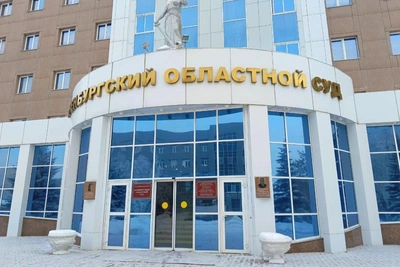
On November 17, 2011, the Samara Regional Court made a historic decision and found Sergey Kuznetsov guilty of committing six murders, dozens of robberies, and other crimes, but released him from criminal responsibility and sent the maniac for compulsory treatment.
Shadow of the Past
The case of the Kryazhsky Maniac has long been archived at the Samara Regional Court. Folders with photos of the “bunker,” interrogation protocols, and psychiatric conclusions rest on shelves. For the legal system, the story is over: guilt established, measure determined. For the families of the six victims, it is an unhealing pain where there is and cannot be an end.
But for those who remember that chilling fear, the main, tormenting, and legally correct question remains: where is Sergey Kuznetsov now?
By law, the condition of a person undergoing compulsory treatment is regularly reviewed by a forensic psychiatric commission. If experts conclude that as a result of treatment, changes have occurred such that the person no longer poses a social danger, the court may decide to terminate this measure. The patient may be transferred to a regular psychoneurological dispensary for outpatient observation or even removed from the register.
But does this mean the Kryazhsky Maniac could be free? Theoretically yes. This story never received a final period, and only a commission of psychiatrists once a year asks the question: “Is he dangerous now?”