Raising wages, breaking even: Saratov restaurants survive VAT hike
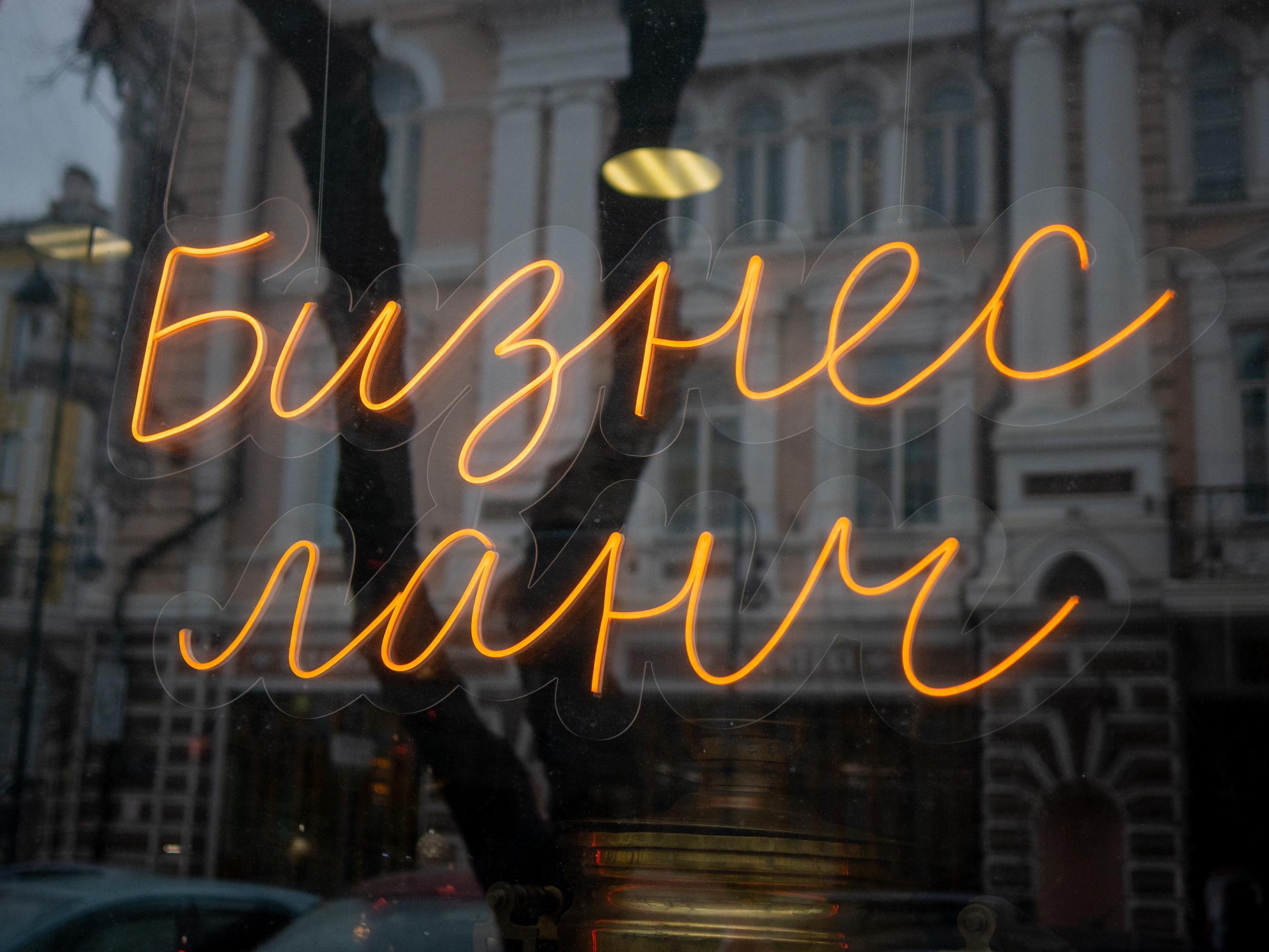

In January 2026, 45 popular venues closed in Moscow—a worrying signal for the entire industry. The wave of closures began back in 2024 against weakening demand, and in 2026 a new factor was added—the VAT increase and tightening of benefit conditions. Businesses have to resort to tricks to avoid falling under the new taxes: not exceeding turnover, raising employee salaries, strengthening control over the economy, and hoping that this crisis will end. For now, deliveries and kiosks like “Far from Wives” are coping with the crisis.
A two-percent blow to the gut
From 1 January 2026, the main VAT rate was increased from 20% to 22%. Simultaneously, the income threshold for businesses on the simplified taxation system (STS), after which companies become VAT payers, was lowered: from 60 million rubles (approximately $667,000 at current rates) in 2025 to 20 million rubles (approximately $222,000 at current rates) in 2026. The catering industry retains a special VAT exemption, but only if three conditions are met: revenue for the previous year does not exceed 3 billion rubles (approximately $33.3 million at current rates), the share of revenue from catering services is at least 70%, and the average employee salary is not below the industry average for the region.
“If the conditions are not met, the establishment will be charged VAT under the general procedure—and this becomes a direct blow to the outlet«s economy,” comments Marat Samitov, head of the accounting company Samitov Consulting.
Saratov restaurateur Mamuka Topchishvili (“Myasnoy No. 1”, Mostra, “Belochka”) notes that his establishments retained the benefit by raising employee salaries from 43,000 rubles (approximately $478 at current rates) last year to 53,000 rubles (approximately $589 at current rates) in 2026, although this reduced profitability by 25%. But it«s still better than paying VAT. “For 90% of Russia»s restaurants, paying VAT is the brink of closure in 2026,” he says. His colleague Irina Tsoy (“Akhali”, “Mr.Kim”, “Mindal”) also operates without VAT by maintaining the salary threshold, but notes a serious drop in weekday revenue and rising costs.
Why regions may have it harder
“If even in Moscow business is having a hard time, then in the regions the situation may be even more acute. There, margins are traditionally lower, the average check is smaller, and the share of fixed costs is higher,” says Gulnaz Sharipova, an expert on restaurant business digitization. According to her estimates, 15 to 25% of establishments could be at risk of closure in 2026, especially in the segment of independent cafes and family restaurants.
Marat Samitov adds that in the regions it is harder to pass on cost increases to guests due to more sensitive demand. A vivid example is Novosibirsk, where since the beginning of the year the cafe “Taet”, the wine bar Le Pin, and the bar-restaurant Mishkin & Mishkin have closed, while in Tatarstan, Craft House and the Vietnamese cafe Chao have been put up for sale. The situation in Saratov is similar. The lounge cafe “Lounge 26 Place”, the cafe “Sosedi”, and many others are offered for sale.
What helps them survive
Experts agree: there is no universal solution, but there is a set of measures that increase business resilience. You need to start with the menu and cost price. It«s not just about raising prices, but also reviewing portion sizes, recipes, and assortment. “Often you can reduce the cost price by 5–10% without losing quality through sales analytics,” notes Gulnaz Sharipova. Marat Samitov advises removing low-margin items and focusing on dishes with manageable cost.
In addition, focus should be on turnover. “Better to have fewer items, but with high margin and stable demand. «A menu for the sake of having a menu» is becoming a luxury today,” says Sharipova. Fast formats are trending: street food, to-go, dark kitchens, which are easier to scale and less dependent on rent and payroll.
Beyond this, serious accounting is a must. “Without numbers, managing profit in 2026 is practically impossible,” emphasizes Sharipova. Restaurateurs are also actively cutting costs: reducing staff, revising contracts with suppliers and landlords, saving on non-core expenses.
Loyalty must also be maintained. “Any plus at the end of the month is a victory,” says Topchishvili. Irina Tsoy adds that she raises prices very cautiously so as not to lose guests. “We won«t reduce portion sizes, we don»t know how and it«s not our image,” the restaurateur explained.
In the end, the most resilient overcome the crisis: chain projects with centralized purchasing and strong analytics; formats with fast turnover and manageable cost; establishments that consistently meet the VAT benefit criteria; projects where the owner manages the numbers, not just the atmosphere. In Saratov, these are the well-known “Vkusno i Tochka”, “Rostix”, “Starik Khinkalych”, “Dodo”, and others.
“The tax reform itself does not kill business, but it sharply exacerbates all the old problems: inefficient processes, weak control, bloated expenses,” summarizes Gulnaz Sharipova. In 2026, the survivors will not be the “prettiest” concepts, but the most manageable ones. For many players, this is a moment not just to weather the storm, but to completely reconsider their business model.
Mamuka Topchishvili adds that his team adopted a declaration— “every crisis passes, and this one is not the last.”